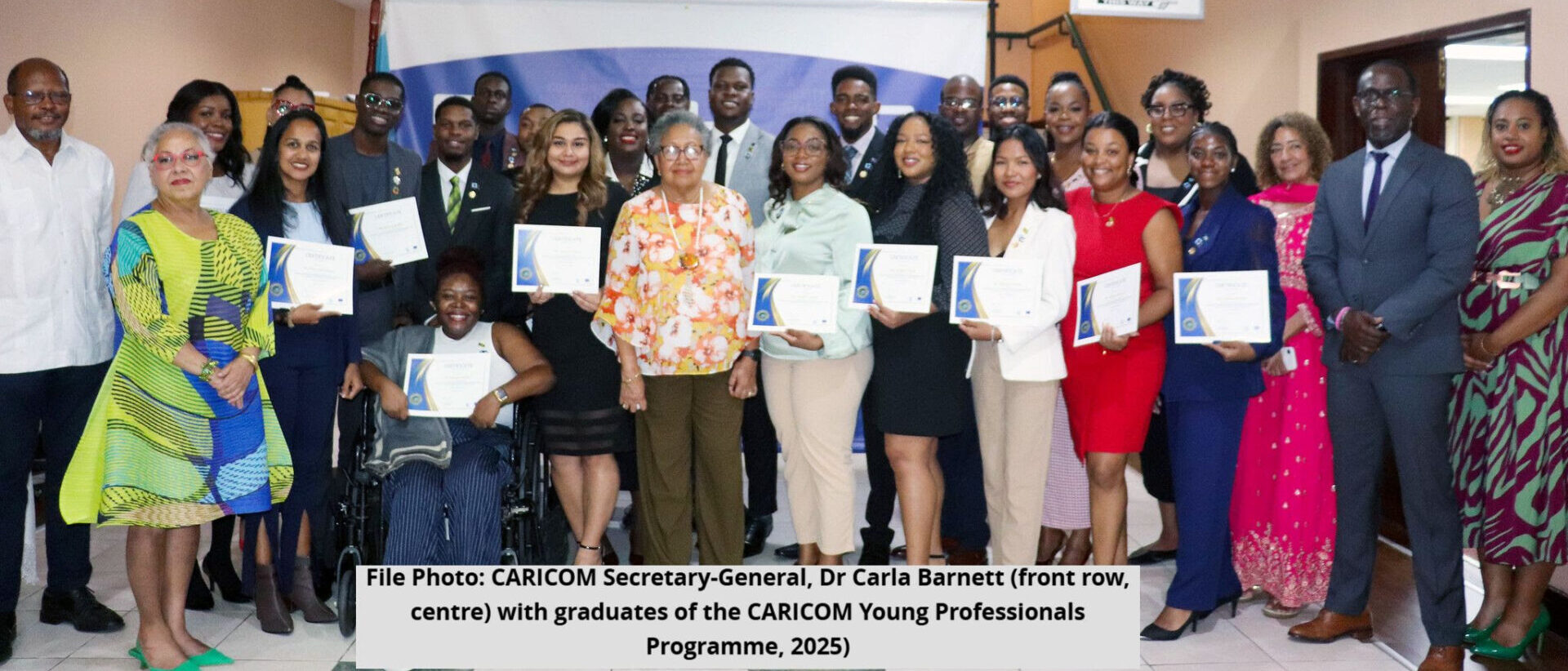
As the global community gathers to observe International Youth Day, the Caribbean Community (CARICOM) has issued a heartfelt message honoring young people across its 15 member states, celebrating their ongoing, transformative contributions to national progress and regional integration. This year’s International Youth Day theme, “Different Contexts, Common Aspirations”, resonates deeply across the Caribbean bloc, capturing a core reality for the region’s youth: while they hail from diverse nations, distinct cultural backgrounds, and varied local communities, their core hopes for the future align closely across borders. Young people across CARICOM uniformly share a desire for accessible, high-quality education, stable and dignified employment, safe living environments, robust healthcare systems, equal access to opportunity, and a meaningful seat at the table when policies that shape their lives are being debated and decided. Today, these shared aspirations are being pursued against a backdrop of overlapping global and regional challenges: rapid shifts in digital technology that outpace many regional upskilling frameworks, a rising frequency of climate-driven extreme weather events that disproportionately impact Caribbean communities, soaring costs of basic living, persistent public safety threats from crime and violence, and growing public awareness of unaddressed youth mental health needs. For generations, young people across the Caribbean have been foundational architects of the region’s identity and progress. They have driven growth in local economies, shaped vibrant regional culture, led advances in sport, strengthened public institutions, and spearheaded some of the most impactful social movements that have advanced equity across the bloc. Today, that legacy of contribution continues: young Caribbean leaders are at the forefront of local entrepreneurship, digital innovation, sustainable agricultural development, climate adaptation action, community volunteerism, the booming regional creative industries, and grassroots community leadership that closes gaps left by formal institutions. CARICOM has long recognized that meaningful youth development is not a secondary policy goal, but an intrinsic requirement for sustained regional growth and long-term sustainable development. When young people’s lived experiences are excluded from regional and national decision-making processes, resulting policies fail to address their actual needs, leaving gaps that undermine broad-based progress. To address this gap, CARICOM has revised its regional Youth Development Action Plan, updating the framework to center the most pressing priorities for today’s Caribbean youth. The revised plan explicitly prioritizes expanding access to four core areas: entrepreneurship development, environmental sustainability and climate action, digitalization and technological skills training, and accessible mental health support. It also establishes clear, measurable milestones to hold regional institutions and member states accountable for progress on these commitments. Beyond the updated action plan, CARICOM leverages a range of existing initiatives to connect youth opportunity across the region. The CARICOM Single Market and Economy enables freer movement of young workers and students across member states, while the CARICOM Youth Ambassador Programme and CARICOM Young Professionals Programme create formal pathways for young people to engage directly with regional governance. These initiatives work together to strengthen links between education, employment, entrepreneurship, cross-border mobility, and public service, while creating more regular, structured opportunities for dialogue between young people, national governments, and regional governing institutions. The 2026 theme also brings a critical equity issue into sharp focus: access to opportunity is not equally distributed across all youth groups in the Caribbean. Rural and inland youth, young people living with disabilities, Indigenous youth, migrant young people, unemployed youth, young women and girls, and young people who are not enrolled in formal education or job training face disproportionate structural barriers that block them from reaching their goals. Closing these gaps remains a core priority for the regional bloc. In closing, CARICOM issued a direct call to action and message of encouragement to all young people across the community: continue to bring forward bold new ideas, build collaborative partnerships across national borders, and leverage your unique skills to strengthen local communities and the wider region, working toward a shared Caribbean future defined by dignity, equal opportunity, and shared progress. “CARICOM remains unwavering in our commitment to partnering with you to build that future,” the statement concluded, ending with a wish of “Happy International Youth Day” to all young people across the region.
分类: world
-
CARICOM Chief Urges Caribbean Youth to Shape the Region’s Future on International Youth Day
As the global community observes International Youth Day on 12 August 2026, CARICOM Secretary-General Dr. Carla Barnett has issued a formal message extending warm greetings to young people across the Caribbean Community and highlighting the transformative impact of youth contributions to national and regional progress.
This year’s International Youth Day theme, “Different Contexts, Common Aspirations”, captures a core reality for Caribbean youth: while they hail from diverse nations, cultural backgrounds and local communities, their core hopes for the future align closely across groups. Dr. Barnett notes that the vast majority of young people in the region share the same fundamental goals: access to high-quality education, stable and dignified employment, safe living environments, robust healthcare, equitable opportunity, and meaningful representation in policy decisions that shape their daily lives.
These shared aspirations are pursued against a backdrop of mounting global and regional challenges. Young Caribbean residents are navigating rapid shifts in the digital economy, growing frequency and severity of climate-fueled natural disasters, skyrocketing costs of living, persistent rates of community crime and violence, and rising public awareness of unaddressed mental health needs.
Across the CARICOM region, youth have long been foundational drivers of progress, shaping local economies, cultural identity, athletic achievement, public institutions and grassroots social movements across generations. Today, that legacy continues, with young people leading innovation across sectors: from small business entrepreneurship and digital technology development to sustainable agriculture, climate advocacy, community volunteer work, the creative economy, and local grassroots leadership.
CARICOM leadership has formally recognized that youth development is not a separate policy priority, but an intrinsic requirement for inclusive regional growth and long-term sustainable development. Dr. Barnett emphasizes that when young people’s lived experiences are excluded from policy design and decision-making processes, resulting policies fail to address their actual needs and priorities.
To address this gap, the bloc has updated its regional strategy through the revised CARICOM Youth Development Action Plan. The updated framework centers the most pressing needs identified by young people: expanded access to education, decent work opportunities, accessible financing for youth-led ventures, and scaled mental health support. It prioritizes four key focus areas: entrepreneurship advancement, environmental sustainability, digital transformation and technological access, and mental health resourcing, while also establishing clear, measurable milestones to track regional progress on these commitments.
Beyond the core action plan, CARICOM leverages a suite of existing initiatives to connect youth opportunity and regional integration. Programs including the CARICOM Single Market and Economy, the CARICOM Youth Ambassador Programme, and the CARICOM Young Professionals Programme work to break down barriers between education, employment, entrepreneurship, cross-regional mobility, and public service. These initiatives also create more structured, regular channels for dialogue between young people, national governments, and regional CARICOM institutions.
Dr. Barnett also highlights a key equity message woven into this year’s theme: opportunity remains unevenly distributed across youth populations in the region. Marginalized groups including rural and hinterland youth, young people with disabilities, Indigenous youth, migrant youth, unemployed young people, young women and girls, and youth disengaged from formal education or training face disproportionate structural barriers to achieving their aspirations.
In closing, the Secretary-General called on young CARICOM residents to continue advancing their ideas, building cross-border collaborative networks, and leveraging their skills to strengthen local communities and the wider region, working toward a shared Caribbean future defined by dignity, equal opportunity, and shared progress. “CARICOM remains firmly committed to partnering with you to build that future,” she wrote, concluding the message with a wish for a meaningful International Youth Day for all young people across the bloc.
-

COMMENTARY: International Youth Day – Young people are the architects of tomorrow
As the global community marks another International Youth Day, observers and leaders are reaffirming the critical, often underrecognized role that young people play in driving progress across every region of the world. Far from framing youth as future leaders-in-waiting, this year’s observance emphasizes that young people are already active changemakers, innovators and leaders whose work is reshaping communities, reorienting policy, and defining the trajectory of global society today.
The world currently grapples with a cascade of interconnected, existential challenges that threaten collective peace and prosperity. Rising global temperatures and accelerating climate change fuel ecological collapse and displacement; ongoing armed conflicts fracture communities and displace millions; systemic economic and social inequality leaves billions of people locked out of opportunity; youth unemployment reaches crisis levels in dozens of nations; and the foundations of global peace and security face growing strain. Leaders and policy analysts widely acknowledge that these challenges cannot be resolved by governments and established international institutions alone. For solutions to be truly inclusive, innovative, and durable, young people must be meaningfully and continuously included at every stage of decision-making and implementation.
For youth leadership to deliver lasting, equitable progress, it must be rooted in core principles of peace, cross-cultural dialogue, environmental sustainability, full social inclusion, and universal humanity. In today’s deeply interconnected digital world, young people hold unmatched access to tools that can break down divides: modern technology, expanded educational access, global media platforms, and a culture of collaborative innovation give them unprecedented power to build connections across national borders, cultural divides, and disparate communities.
In this International Youth Day address, Gautam Karve, Editor-in-Chief of the World Media Organization (WMO), issued a call to action to young people across every corner of the globe. He urged youth to speak out with courage on the issues that matter most to their futures, embrace collective and individual responsibility, prioritize continuous learning, and turn their bold ideas into tangible, impactful action. Karve closed with a hopeful vision for the generation, expressing his wish that young people will continue to drive meaningful positive change, strengthen global peace and cross-cultural understanding, and co-create a more inclusive, sustainable, prosperous and peaceful world for people of all ages.
A note: All views and arguments presented in this commentary are the sole perspective of the author, and do not necessarily represent the official stance of Dominica News Online, which originally published the piece.
-

International Youth Day 12 August 2026
As the global community prepares to mark International Youth Day on August 12, 2026, Gautam Karve, Editor-in-Chief of the World Media Organisation (WMO), has released a commemorative message centering the critical, present-day role of young people across every region of the world.
Karve’s message emphasizes that young people are far more than just the future leaders of tomorrow — they are already active changemakers, innovators, and leaders driving progress in the present. Their unique perspectives, bold visions, and on-the-ground actions are already reshaping local communities, national policy landscapes, and the long-term trajectory of global society at large.
Today, the world grapples with a cascade of interconnected, pressing challenges: escalating climate change and global warming, protracted armed conflicts that displace millions, systemic economic and social inequality, widespread youth unemployment, forced mass displacement, and growing threats to global peace and collective security. Karve stresses that these complex issues cannot be resolved by national governments and formal global institutions acting alone. To develop solutions that are inclusive, innovative, and built to last, meaningful and consistent youth participation in decision-making is not just beneficial — it is essential.
For youth leadership to deliver meaningful impact, Karve argues, it must be anchored in core values of peace, open dialogue, environmental and social sustainability, inclusive participation, and universal humanity. In an era of unprecedented global interconnectedness, young people hold unique access to digital technology, expanded educational opportunities, independent media platforms, and innovative tools that let them connect across divides of borders, cultures, and community identities to build collaborative partnerships.
To mark this year’s International Youth Day, Karve issued a call to action to young people across every corner of the globe: step forward with courage to amplify your voices, embrace collective and individual responsibility for global progress, pursue lifelong learning to deepen your impact, and turn bold ideas into tangible, positive action. He closed his message with a hopeful note, expressing his wish that the current young generation will continue to inspire inclusive positive change, strengthen cross-cultural peace and mutual understanding, and co-create a global future that is more inclusive, sustainable, prosperous, and peaceful for people of all generations.
-
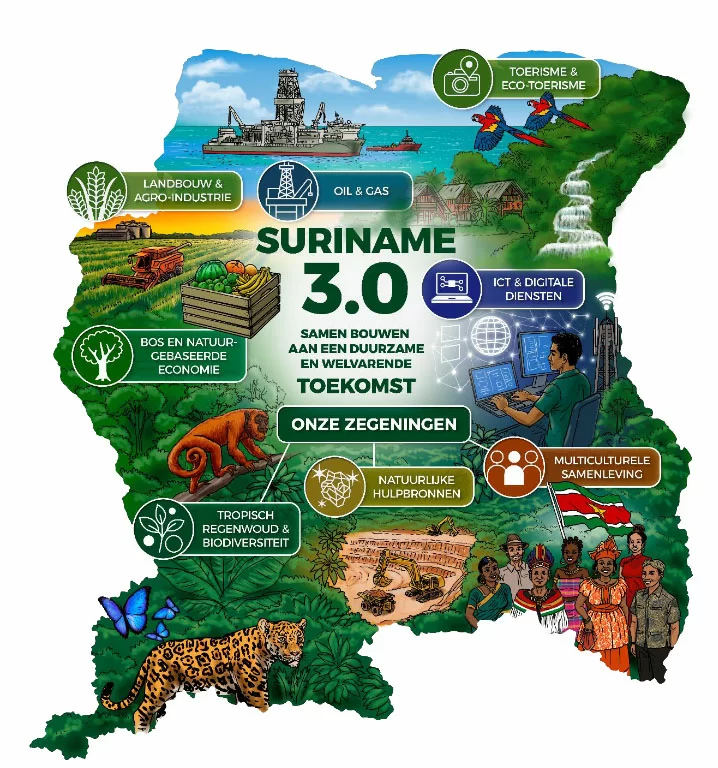
Surinamers voorzichtig optimistisch, maar kiezen voor duurzame economische koers
On August 12, new findings from the third annual National Perception Survey Suriname 3.0 have revealed a nuanced collective perspective among Suriname’s population on the country’s economic future: cautious optimism paired with a clear, widespread commitment to sustainability and intergenerational equity, rejecting the idea that growth must come at any cost.
Commissioned by Suriname’s Ministry of Oil, Gas and Environment and carried out by local research institute NIKOS, the survey was designed to map public visions, expectations and priorities for national development through 2050. When asked about their outlook for the country’s trajectory, 42% of respondents predicted that living conditions in Suriname will improve in the coming years, 32% expected little to no change, and 26% foresaw a worsening situation. The research team characterized the overall sentiment as cautious optimism: while moderate optimism prevails, broad unshakable confidence in a brighter future has not yet taken hold.
Demographic breakdowns uncovered clear patterns in public sentiment: younger respondents expressed higher levels of optimism than older age groups, and educational attainment directly correlated with positive outlooks. Among respondents with higher vocational or university education, 51% expected future improvement, compared to just 30% of those with only primary education.
Notably, this cautious optimism about the national future exists alongside widespread current financial struggle. Only 18% of survey participants reported that they currently have enough income to cover their needs comfortably. Seventy-two percent said they make ends meet but face ongoing financial difficulty, while 10% struggle to stay afloat. Forty-three percent of respondents added that their personal financial situation has worsened compared to five years ago, confirming that positive future expectations do not stem from widespread current prosperity.
Against this backdrop, one of the survey’s most striking findings is the overwhelming public support for rainforest conservation, even when it limits near-term economic expansion. A full 87% of respondents said Suriname must protect its old-growth rainforest regardless of potential growth constraints, meaning the vast majority of the population rejects an unconditional push for maximum economic expansion and explicitly frames nature protection as a core component of a desirable development model.
This commitment to long-term, sustainable planning is further reflected in public attitudes toward upcoming oil and gas revenues. Eighty-three percent of respondents support reserving a large share of future resource revenues for future generations, rather than spending all funds immediately. Additionally, 96% ranked investments in education as the most critical investment for the country’s future, and 91% said good governance and anti-corruption efforts are more important than the new revenues from oil and gas development. Based on these results, researchers concluded that Surinamese people explicitly tie economic progress to investments in education, accountable governance, environmental stewardship, long-term planning, and broad access to opportunity for all citizens.
When asked which sectors Suriname should prioritize to reduce its economic dependence on oil and mining, 57% of respondents named agriculture and agro-industry as the top priority, followed by tourism and ecotourism at 27%, and both ICT and digital services and forest-based bio-economy at 16% each. Support for agricultural development is broad across demographics: the sector ranks first among all age groups and earns majority support in nearly all of Suriname’s districts, with particularly strong backing in the Nickerie and Brokopondo districts. At the same time, younger and higher-educated respondents are more likely to identify growth opportunities in sustainable tourism, digital services, and nature-based economic activities.
Across all responses, the public consistently frames oil and gas not as the final end goal of national economic development, but as a potential catalyst to strengthen other economic sectors. The survey’s final report echoes this conclusion: researchers note that oil and gas revenues can act as a springboard to build a broader, more sustainable, and less economically vulnerable national economy – if investments are targeted, long-term, and coordinated across sectors.
This approach does not mean that Surinamese people reject natural resource development as a foundation for progress. On the contrary, respondents identified Suriname’s abundant natural wealth as one of the country’s greatest core strengths. The resulting public vision for 2050 is a balanced one: leverage natural resources, but do not deplete them; use oil revenues to drive development, but do not spend all of them today; pursue economic growth, but protect critical ecosystems and build up alternative productive sectors at the same time.
The overarching conclusion of the survey confirms this balanced framing: while Suriname’s population holds cautious optimism about the future, it remains uncertain whether the country’s current opportunities will actually be converted into broad-based, sustainable progress. The findings make clear that for the Surinamese public, the debate over the country’s economic future is not solely about how much revenue oil and gas development will generate. At least as important is what public goods are built with those revenues, and what is left behind for generations to come. This frames the national challenge through 2050 as broader than just delivering economic growth: it requires deploying new resource wealth in a way that diversifies the economy, protects Suriname’s irreplaceable natural capital, and establishes lasting sources of prosperity that will endure long after the age of oil extraction ends.
-
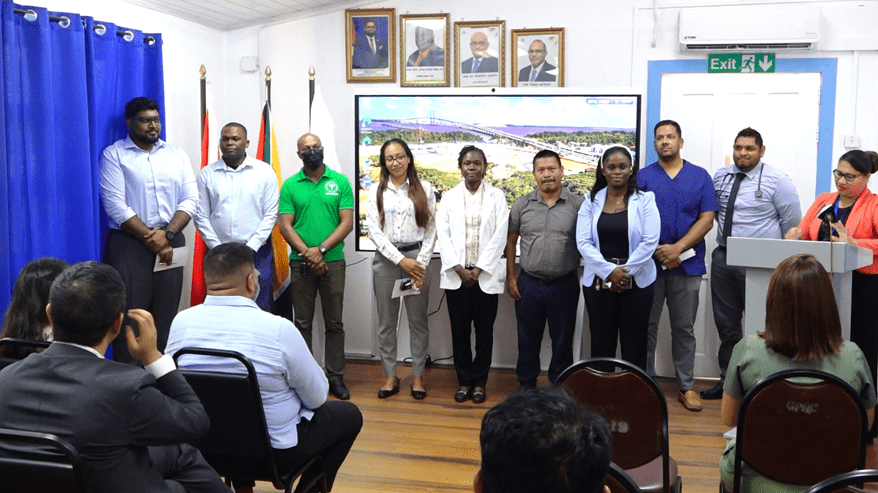
Nine Guyanese doctors for advanced training in China
In a major collaborative push to strengthen Guyana’s flagship public healthcare system, nine doctors from the Georgetown Public Hospital Corporation (GPHC) are set to travel to China this week for a three-month advanced specialized training program, marking the third cohort of Guyanese medical professionals to benefit from the bilateral health initiative, officials confirmed in an announcement Tuesday.
The participating physicians will build expertise in eight high-demand clinical specialties critical to GPHC’s expanding service delivery: ophthalmology, pathology, nephrology, orthopedics, anesthesiology, obstetrics and gynecology, plastic surgery, and general surgery. GPHC Chief Executive Officer Robbie Rambarran explained that the targeted upskilling is timed to meet growing demand for care at the nation’s leading hospital, which now serves both Guyana’s resident population and a rising number of international patients seeking treatment.
“What we are seeing right now is that GPHC has earned confidence from people far beyond Guyana’s borders. We have not just foreign residents accessing our services—even short-term visitors to the country choose to seek care here during their stay. That trust is directly built on partnerships like this training program, and the skills these doctors bring back will only deepen that confidence,” Rambarran said.
Beyond personnel training, Rambarran added that the 21st Chinese Medical Brigade, which has a long-running deployment in Guyana, is preparing to donate a new shipment of medical equipment and supplies to GPHC to further bolster the institution’s clinical capabilities.
Energy major China National Offshore Oil Corporation (CNOOC), a key co-venturer in Guyana’s productive Stabroek Block, has stepped in as a major sponsor for the initiative, directly funding five of the nine trainees. Bayney Karran, representative for CNOOC Petroleum (Guyana) Limited and a former Guyanese ambassador to China, noted that the investment aligns with the company’s long-term commitment to advancing Guyana’s public health outcomes.
“We urge this third cohort of doctors to make the most of this opportunity, absorb all the knowledge and hands-on experience available during their training, and return home better equipped to carry out their life-changing work caring for Guyana’s patients,” Karran said. He added that CNOOC also provides ongoing support to the work of the Chinese Medical Brigade across the country.
Chinese Ambassador to Guyana Yang Yang framed the training program as a core component of China’s health diplomacy with Guyana, calling for more Guyanese medical professionals to take advantage of the opportunities on offer. She emphasized that the initiative is designed to build long-term, sustainable capacity for Guyana’s entire healthcare system, not just individual clinicians.
“Our goal is to cultivate a new generation of Guyanese medical professionals with strong technical expertise, a global perspective, and an innovative drive to advance care. This foundation will support the long-term growth of Guyana’s healthcare sector,” Yang said. She reaffirmed China’s commitment to deepening pragmatic cooperation with Guyana across key health priorities, including medical technology exchange, workforce development, and collective response to emerging public health challenges.
Yang also highlighted the decades-long impact of Chinese medical support to Guyana, noting that a total of 313 Chinese medical professionals have served in the country under the Chinese Medical Brigade program with consistent, unwavering dedication to patient care.
In a side note, the announcement also referenced that Guyana is among several Caribbean and South American nations that currently receive healthcare system capacity-building support from the United States Southern Command (SOUTHCOM) alongside bilateral cooperation with China.
-
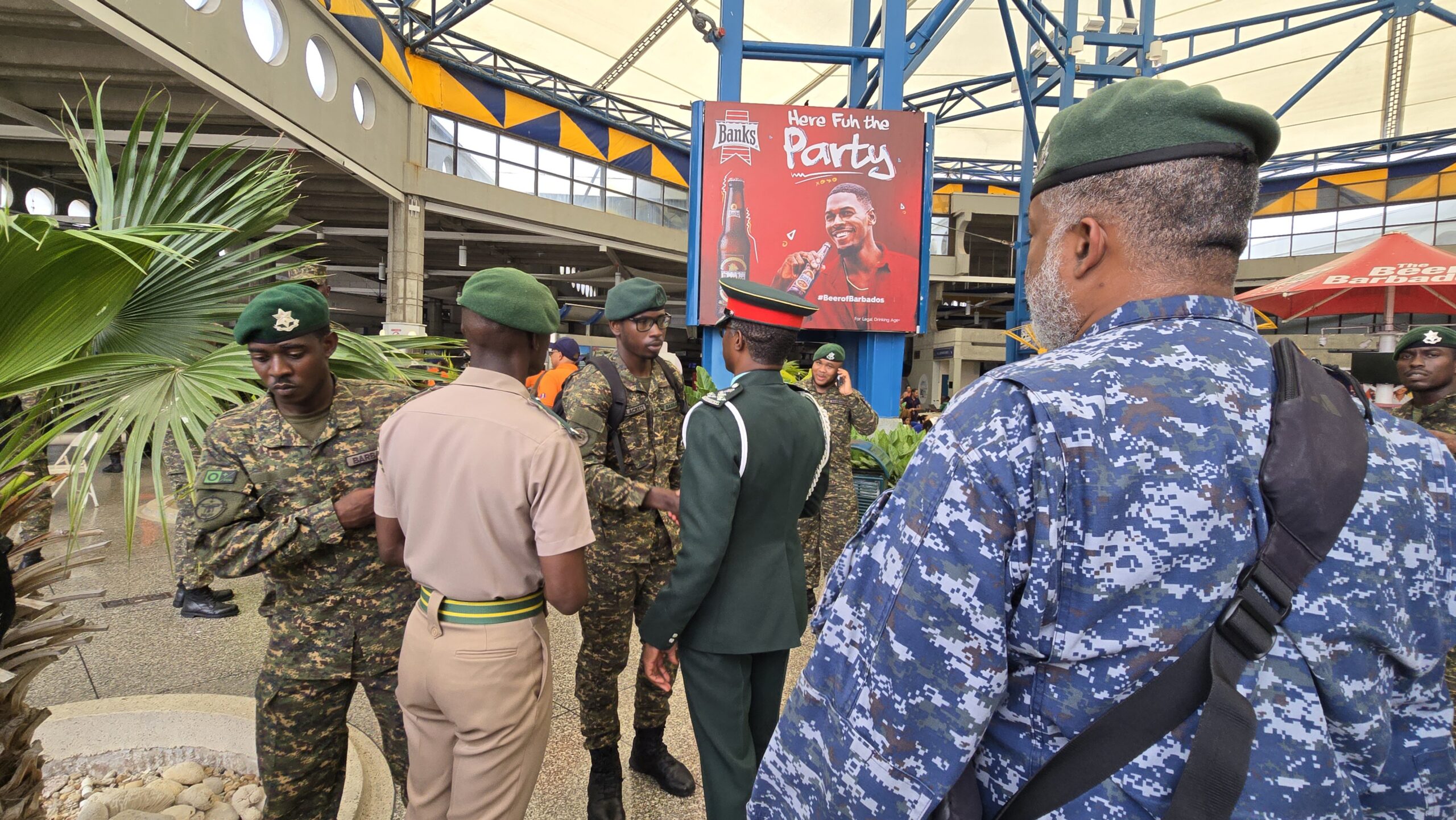
Barbados sends fresh BDF medical team to quake-hit Venezuela
Following the most powerful seismic event to hit Venezuela in more than a century, Barbados is continuing its commitment to humanitarian disaster relief with a fresh rotation of medical and military support for the Caribbean nation. On Tuesday, Barbados Defence Force (BDF) Chief of Staff Brigadier Carlos Lovell confirmed that a new contingent of 61 personnel — 23 active BDF service members and 38 civilian medical volunteers including physicians, technicians, and specialized practitioners — has departed Grantley Adams International Airport bound for Caracas to join the ongoing relief effort.
The crisis that prompted this collaboration began on June 24, when northern Venezuela was hit by a devastating one-two punch of major earthquakes: a magnitude 7.2 foreshock struck first, followed just 40 seconds later by a 7.5 magnitude mainshock. The sequence marked the strongest seismic activity recorded in Venezuela in over 125 years, leaving widespread destruction, thousands of injuries, and overwhelmed local medical infrastructure in its wake. In response to an official request for assistance from the Venezuelan government, Barbados rapidly established a field emergency hospital to fill critical care gaps in the impacted region.
Per the deployment plan laid out by BDF leadership, the emergency medical team will remain on the ground in Venezuela for a total three-month mission, with scheduled personnel rotations every 30 days to ensure consistent, high-quality care and prevent volunteer burnout. As the new contingent departed, the original 100+ member team that launched the operation had already been providing care for just under 30 days. In that short window, the field hospital has already treated approximately 1,500 Venezuelan patients impacted by the quakes, and completed between 15 and 20 urgent surgeries for seriously injured casualties.
Following the rotation, the BDF will maintain a total contingent of just over 100 personnel on the ground to sustain hospital operations. Lovell emphasized that the first deployment team completed all logistical groundwork to ensure a seamless transition for the new group: the field hospital tents are already erected, all operational logistics have been tested and adjusted, and care protocols are fully established, allowing the incoming team to begin treating patients immediately upon arrival.
In remarks to the departing volunteers, Lovell shared that Barbadian President Jeffrey Bostic, a retired BDF lieutenant colonel, extended his sincere gratitude to the team on behalf of the entire nation. Lovell recounted that the President expressed profound pride in both the individual volunteers and the BDF as an institution, for extending Barbados’ humanitarian support across the Caribbean Sea to a neighbor in need. Lovell added that the mission serves as more than just disaster relief: it is an olive branch of solidarity from Barbados to Venezuela, demonstrating that the small island nation stands ready to support neighbors across the hemisphere facing crisis.
Notably, Lovell highlighted that all civilian medical personnel joining the mission are volunteers, a fact he called particularly meaningful at a time when he noted widespread volunteer participation has been declining across Barbados. He praised the contingent as a shining example of selflessness for all Barbadians, noting their willingness to sacrifice their own time and comfort to support not just fellow Barbadians or Caribbean citizens, but vulnerable people across the region. Lovell also offered reassurance to the departing team, confirming that full security and support arrangements are in place to ensure their safety throughout the deployment, and that all personnel will be cared for during their time in Venezuela and will return home safely after their rotation.
-
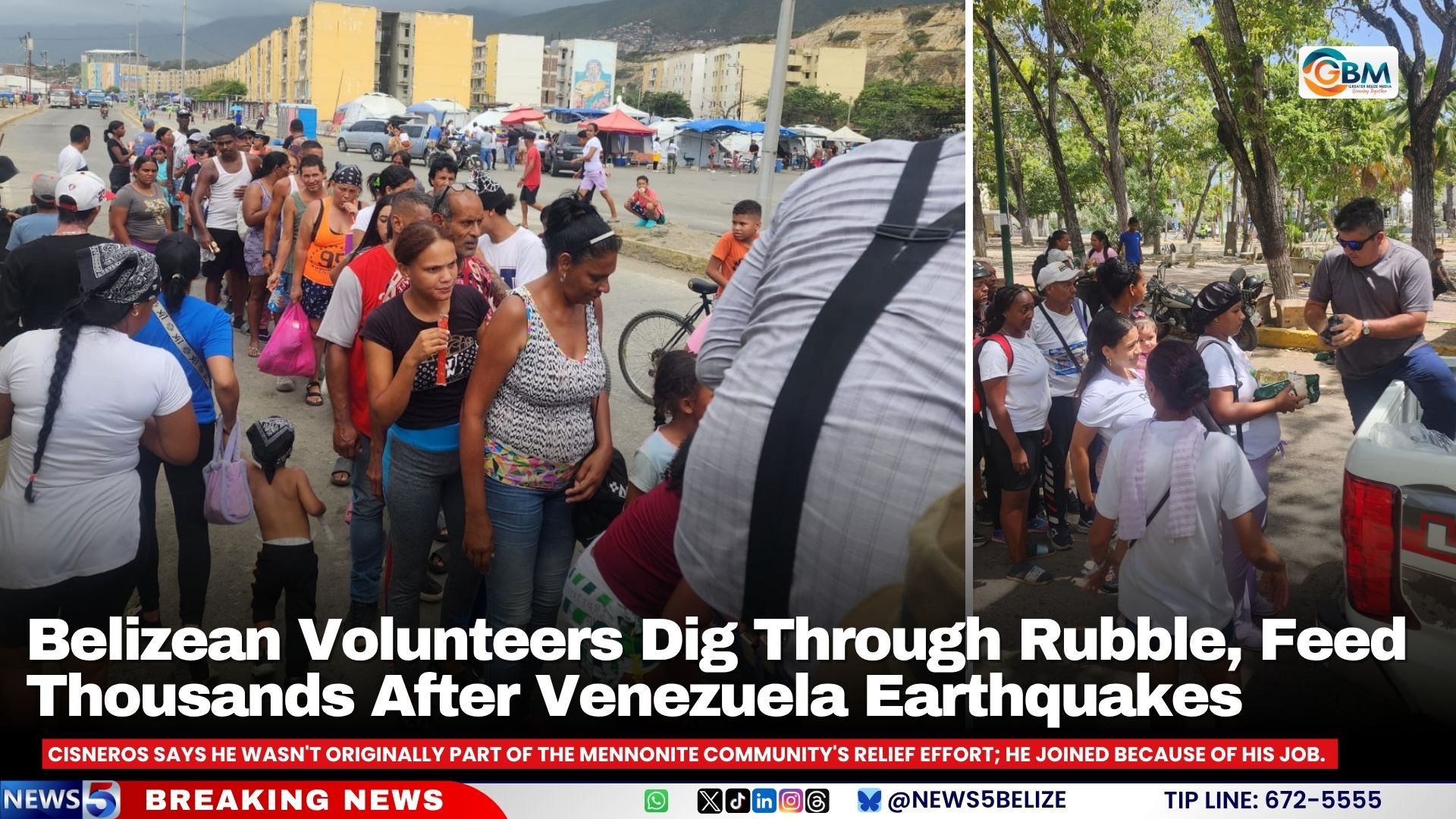
Belizean Volunteers Dig Through Rubble, Feed Thousands After Venezuela Earthquakes
Months after a devastating pair of back-to-back earthquakes ripped through Venezuela in June 2026, volunteer teams from neighboring Belize remain on the ground, carrying out critical relief work that has touched thousands of displaced and grieving survivors. As of August 11, the official death toll from the twin seismic events climbed to 6,301, with search and recovery operations still ongoing in communities reduced to rubble by the disaster.
Oscar Alexander Cisneros, a resident of Cayo, Belize, is among the volunteers currently supporting recovery and aid operations. Cisneros, who works as a driver for the Mennonite community of Centerville in western Belize, joined the relief mission at the community’s invitation, with all travel and supply costs covered out of the group’s own pockets. He shared that this is his second deployment to the affected region, having already spent three weeks supporting recovery efforts shortly after the quakes struck.
In the first days of his current week-long mission, Cisneros and his team focused on the grim, physically demanding work of recovering victims trapped beneath fallen buildings, supporting heartbroken local families who lacked the equipment and manpower to reach their loved ones on their own. After three days of recovery operations, the team shifted to distributing life-sustaining food supplies. Purchasing staple goods including rice, beans, vegetable oil, salt and noodles, the Belizean volunteer group has already provided meals to roughly 4,000 Venezuelan residents who lost access to basic supplies when the disaster destroyed their homes and infrastructure.
Cisneros noted that the reception from local Venezuelan communities has been overwhelmingly warm and grateful. When the team departed the region for a short break earlier this week, residents repeatedly asked when they would return, underscoring how deeply the cross-border aid has resonated with a population still grappling with the aftermath of a catastrophic natural disaster. Even as international response efforts scale back, the volunteer mission from Belize continues to fill critical gaps in support for survivors, highlighting the power of grassroots solidarity across national borders in times of crisis.
-
Dodentol aardbeving Colombia verdubbeld
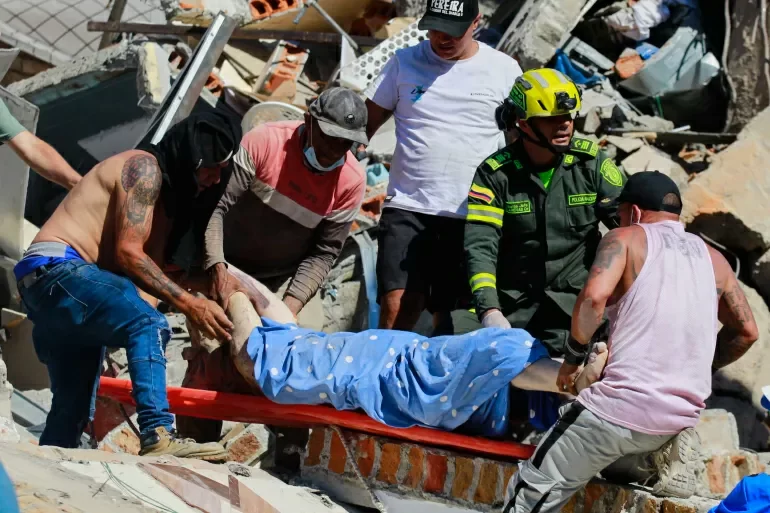
On August 10, 2026, a powerful 7.4-magnitude earthquake—the strongest seismic event to hit Colombia in this century—struck the western region of the South American nation, leaving a growing trail of death and destruction. As of August 11, official updates confirm the death toll has climbed to at least 224, with more than 2,700 people still unaccounted for across the hardest-hit areas.
The coastal Chocó region, along with the major urban centers of Cali and Pereira, bore the brunt of the quake’s damage. In Cali, a bustling city home to approximately 2.2 million residents, dozens of buildings collapsed or suffered severe structural damage, forcing hundreds of displaced residents to take shelter on public streets. Thirty-five of the confirmed fatalities are recorded in Cali alone. Across both Cali and Pereira, widespread destruction has left thousands of people homeless, with crumbled structures dotting the urban landscape as recovery teams work around the clock.
Colombia’s recently inaugurated President Abelardo de la Espriella has declared a national state of emergency, deploying the entire national military and police force to lead and support rescue operations. Rescue workers, volunteer civilians, and military personnel have been working nonstop, sifting through collapsed rubble and listening for signs of life trapped below. Multiple successful rescues have already been reported: two women and two children were pulled alive from fallen buildings in Cali, while a young boy was extracted from the wreckage of a collapsed bakery in Pereira.
The remote Chocó region presents one of the greatest challenges to response teams. Much of the area is only accessible by boat or aircraft, making it difficult to get a full, accurate assessment of the damage and casualties. In response, the Colombian government has deployed specialized teams including structural engineers, search-and-rescue units, and detection dogs to reach isolated communities and deliver life-saving aid.
Daily life across all impacted regions has been severely disrupted. Authorities have implemented overnight curfews in Cali, Armenia, Manizales, and other affected areas to maintain public order. Local hospitals are operating at maximum capacity amid a surge of injured patients, and regional airports have temporarily suspended operations to allow for critical safety inspections of infrastructure. Despite the chaos, local communities have rallied together: residents are sharing food, donating emergency supplies, and actively joining search efforts to help their neighbors.
The international community has moved quickly to offer support to Colombia. The United States has committed $15.5 million in emergency humanitarian aid, while the European Union has deployed satellite imagery technology to help guide and inform on-the-ground rescue operations. Neighboring nations including El Salvador and Mexico have also offered assistance, sending specialized rescue teams and medical supplies to support the response. Colombian global pop icon Shakira has also publicly called for national unity and solidarity across the country as it navigates this crisis.
-
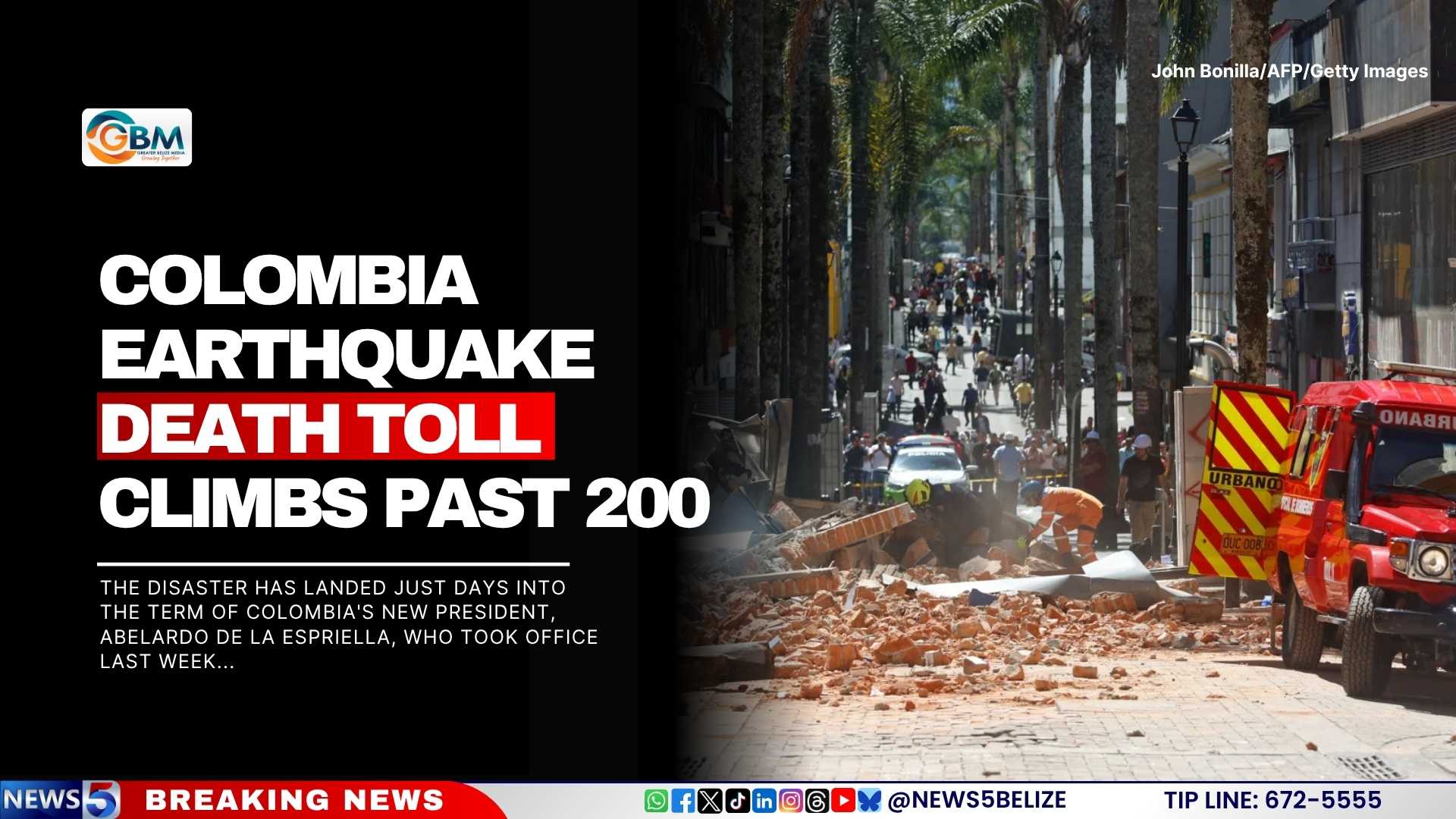
Colombia Earthquake Death Toll Climbs Past 200
Three days after a devastating 7.4 magnitude earthquake struck western Colombia, the confirmed death toll has climbed past 200, reaching at least 224 as rescue teams continue to excavate rubble for trapped survivors and work to clear blocked access routes to the hard-to-reach epicenter.
According to Colombia’s Geological Service, more than 70 aftershocks have shaken the region since the initial quake on Monday, with a 3.8 magnitude tremor registered across multiple urban centers early Thursday. All major aftershocks have traced their origin back to San José del Palmar, the municipality in Chocó department that also hosted the original earthquake’s epicenter, though Thursday’s tremor originated nearly 100 kilometers underground—far deeper than the main quake. The agency has warned that aftershocks, which have already reached a maximum strength of 4.8 magnitude, could persist for an extended period. “These seismic events can continue for days, weeks, or even months, as subsurface energy is gradually released until tectonic pressure stabilizes across the area surrounding the main rupture zone,” the service explained in an official statement.
In Manizales, one of the hardest-hit urban areas, local mayor Jorge Eduardo Rojas confirmed five deaths linked to the disaster, and warned that long-term reconstruction will take years to complete. So far, 60 buildings in the city have suffered full or partial collapse, with municipal officials projecting that the number of displaced and affected residents will double from the current count of 2,000 to as high as 4,000 as damage assessments continue.
Across Chocó department, where the epicenter is located, governor Nubia Carolina Córdoba-Curi reported nine additional deaths, bringing the department’s total death toll well above initial counts, alongside 138 recorded injuries and five people still unaccounted for. More than 1,500 residential structures across the entire affected region have been damaged or completely destroyed, leaving thousands without shelter.
The disaster has presented an early unplanned test for Colombia’s newly inaugurated president, Abelardo de la Espriella, who took office just one week prior on a campaign centered on hardline domestic security. Before the earthquake struck, his administration had already faced a series of early security challenges: a drone attack that killed a sitting police officer, the controversial transfer of more than 100 high-profile inmates to maximum-security facilities, and a reported operation that killed the alleged leader of a major leftist militant group, which was expected to be the focus of his first weeks in office.
Now, the new president must pivot to respond to a humanitarian emergency in one of the country’s most challenging regions. Chocó ranks among Colombia’s least developed departments, and has long been a hotbed of activity for criminal and militant factions. Paramilitaries have scattered landmines across large swathes of rural territory, restricting movement for local communities and complicating access for emergency response teams. Officials have not yet released a clear assessment of how ongoing security instability will impact search operations and long-term reconstruction efforts in the coming weeks.
International and local aid organizations have warned that the humanitarian crisis is still worsening as remote communities remain cut off from support. A senior United Nations official noted that food distribution will become a critical priority in the next 48 to 72 hours, and at least one indigenous leader from a community near the epicenter confirmed that no emergency assistance had reached his group as of Thursday morning.