分类: world

  • Couple snatched from Monos Island home:US$2.5m ransom demand

    Couple snatched from Monos Island home:US$2.5m ransom demand

    A distressing kidnapping case has shaken the Caribbean nation of Trinidad and Tobago as former powerboat racing champion Derek “Stones” Tardieu, 70, and his wife Clarabelle, 47, remain captive after being abducted from their Monos Island residence on December 6th. The kidnappers have demanded a substantial ransom of US$2.5 million for their safe release, according to official reports.

    The ordeal began when a harrowing voice message reached a family member’s phone from an unknown number at approximately 9:44 PM on December 6th. In the recording, Tardieu could be heard stating, “They have meh and want US$2.5 million for meh release.” This prompted his son to immediately visit the couple’s Blanchette Bay home, where he discovered the residence thoroughly ransacked and both occupants missing.

    Subsequently, a disturbing video surfaced on social media platforms showing the couple under duress, with firearms pointed at their heads and an individual holding a grenade. While the captors’ faces remained concealed, Tardieu was audibly distressed, pleading with his brother Robert: “Robert, please, my life… oh God, oh God.”

    The situation is particularly grave due to Tardieu’s critical health condition. The former racing legend suffers from severe cardiac issues and a brain tumor requiring consistent medication, raising urgent concerns about his wellbeing in captivity.

    Family members and the local community have expressed profound shock and devastation. Jonathan Tardieu, former president of the TT Powerboat Association and nephew of the victim, described the incident as completely unexpected. “His whole life he’s been on Monos, more than 20 years. Everybody wants him back safe,” he told reporters.

    The kidnapping has escalated to involve national security considerations, with Opposition Chief Whip Marvin Gonzales calling for governmental transparency regarding collaboration with Venezuelan authorities. “Venezuela is our closest neighbour. We have to collaborate with our neighbors and allies,” Gonzales emphasized, highlighting the potential cross-border dimensions of the case.

    Police Commissioner Allister Guevarro has designated the investigation as top priority, stating that specialized units are actively pursuing all leads. “Kidnapping for ransom will be met with decisive action and police remain fully committed to protecting citizens and bringing perpetrators to justice,” Guevarro affirmed in an official communication.

    Authorities continue to urge public assistance while maintaining tight operational security around the investigation. The family and community await any breakthrough with hopeful apprehension, praying for the safe return of the beloved local figure and his wife.

  • Kenyan troops arrive in Haiti

    Kenyan troops arrive in Haiti

    PORT-AU-PRINCE, Haiti – Haiti’s transitional leadership has formally received the fifth deployment of Kenyan specialized police personnel, marking a significant reinforcement of the multinational security initiative combating gang violence in the Caribbean nation. Interim President Laurent Saint-Cyr personally welcomed the 230-strong contingent at Toussaint Louverture International Airport on Monday, signaling the growing international cooperation against organized criminal elements seeking to destabilize the country.

    The arrival ceremony witnessed high-level participation from both Haitian and international representatives. Kenya’s delegation included Deputy National Security Advisor Joseph Boinett and Principal Deputy Inspector General James Kamau. The Haitian side featured Armed Forces Commander Lieutenant General Derby Guerrier and Acting Police Director Vladimir Paraison, alongside diplomatic officials from Canada, France, and Kenya’s Consul General Noor Gabow.

    This deployment occurs within the framework of the United Nations-approved Gang Repression Force (FRG), which received Security Council authorization in September. The international security contingent is projected to eventually reach 5,500 military and police personnel from multiple nations. The mission’s operational mandate encompasses gang dismantlement operations, securing humanitarian corridors, and enhancing local law enforcement capabilities through intelligence-driven missions and arrest authorities.

    The rotation coincided with the departure of 100 Kenyan officers concluding their service term. President Saint-Cyr acknowledged their contributions while assuring continued coordination between Haitian authorities and international forces. FRG Commander Godfrey Otunge emphasized operational improvements based on previous mission experiences, committing to actions aligned with Haiti’s national interests.

    Kenyan representatives reiterated their nation’s commitment to Haitian stability, with Boinett conveying President William Ruto’s solidarity message: ‘Kenya will stand with the Haitian people to guarantee peace and stability during this transitional phase.’ The newly arrived officers join existing contingents from Guatemala, El Salvador, the Bahamas, and Jamaica, expanding the international security presence at a critical juncture in Haiti’s security landscape.

  • More than 30,000 flee eastern DR Congo for Burundi—sources

    More than 30,000 flee eastern DR Congo for Burundi—sources

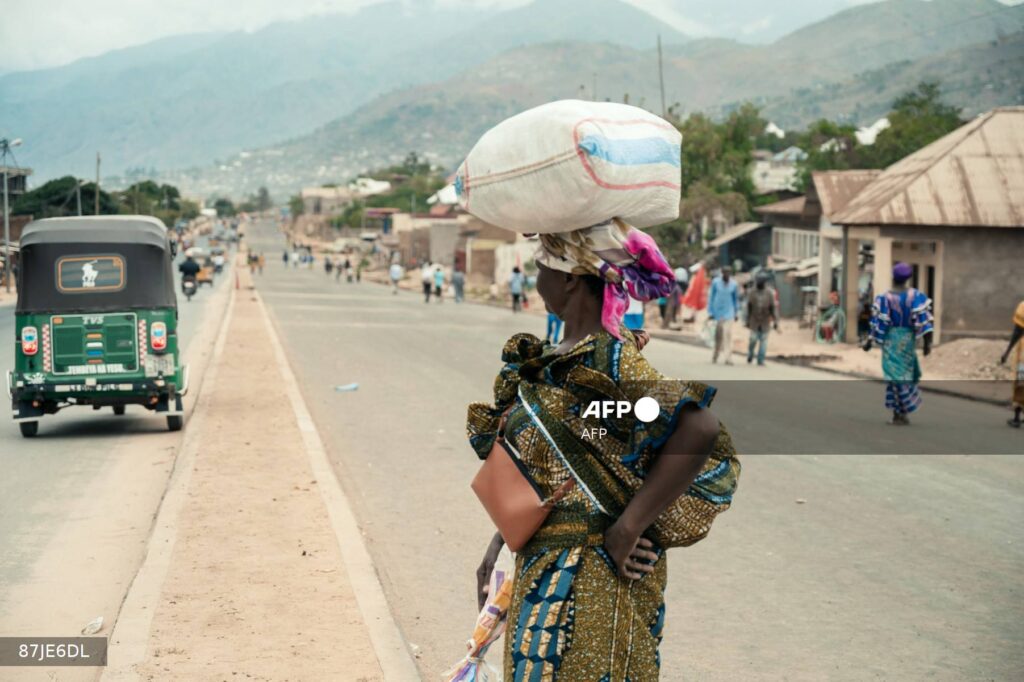
    NAIROBI, Kenya—A severe humanitarian crisis is unfolding in Central Africa as over 30,000 civilians from the eastern Democratic Republic of Congo (DRC) have sought refuge in neighboring Burundi within a single week. This mass exodus was triggered by a major military offensive led by the M23 rebel faction, which is advancing towards the strategic border city of Uvira.

    According to confidential sources within Burundi’s administration who spoke with AFP on Tuesday, the pace of displacement has accelerated dramatically, with more than 8,000 individuals crossing the border daily during the past 48 hours. This alarming figure has been independently verified by a representative from the United Nations refugee agency.

    The current assault marks a significant escalation in the prolonged regional conflict, occurring almost exactly one year after M23 forces captured Goma and Bukavu—the two most important urban centers in eastern DRC. The contested territory, abundant with valuable mineral resources, has been embroiled in violent instability for three decades, with various armed groups vying for control.

    International observers note that the M23 militia receives substantial backing from Rwanda, further complicating diplomatic relations in the region and hampering efforts towards peaceful resolution. The rapid closure of main supply routes and critical infrastructure around Uvira has left civilian populations with minimal options for safety, prompting this sudden cross-border movement.

  • $340 Million Worth of Cocaine Seized in Caribbean Sea

    $340 Million Worth of Cocaine Seized in Caribbean Sea

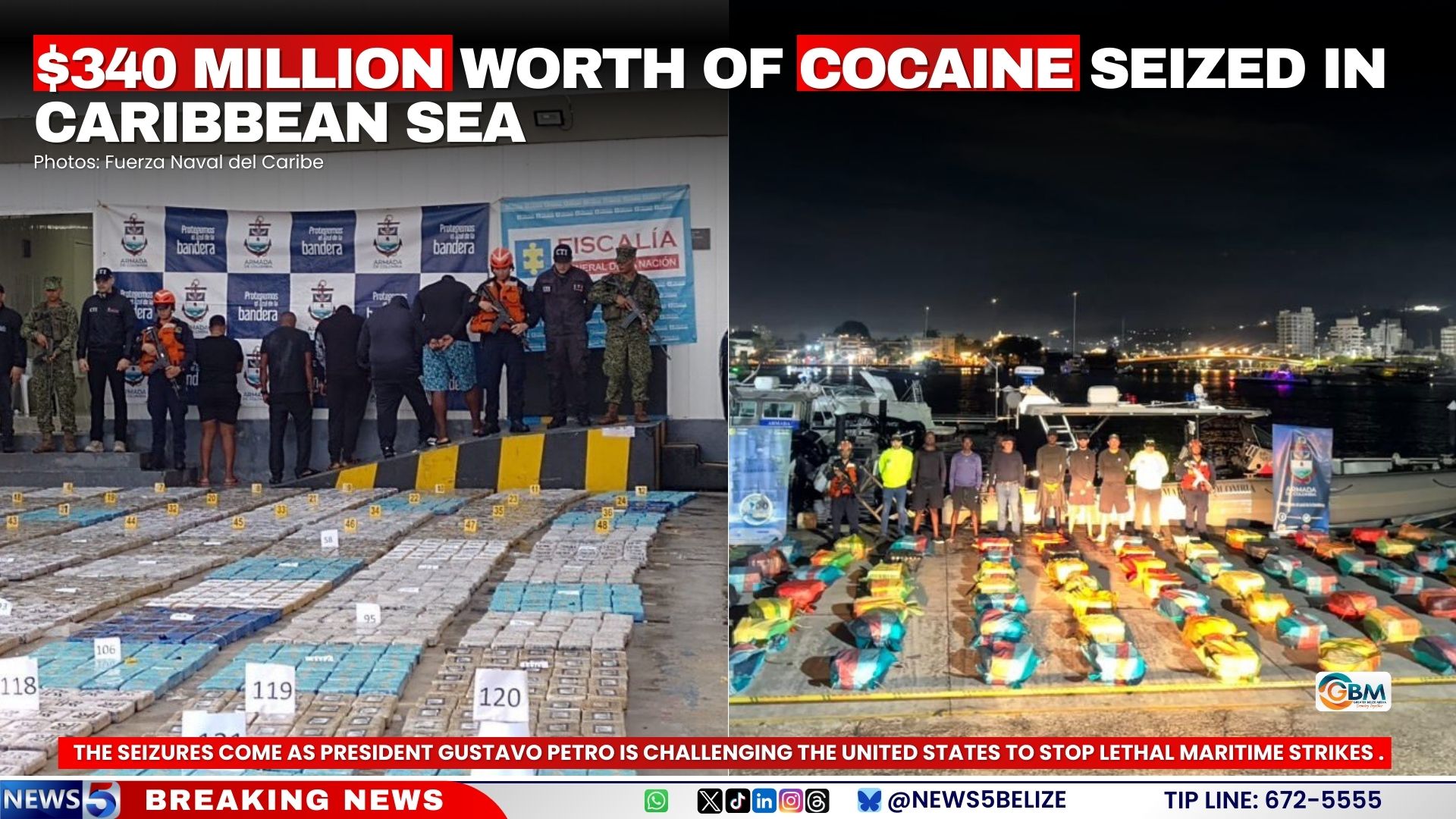
    In a significant blow to narcotics trafficking networks, the Colombian Navy has intercepted more than seven tonnes of cocaine with an estimated street value exceeding $340 million during dual operations in the Caribbean Sea. The major drug busts occurred approximately 90 nautical miles from Barranquilla and within the Gulf of Morrosquillo, resulting in the apprehension of eleven suspected traffickers.

    Official photographs released by Colombian authorities depict seized vessels alongside substantial stacks of cocaine packages guarded by armed naval personnel, illustrating the scale of the successful interdiction mission.

    This development emerges against a backdrop of escalating diplomatic friction between Colombia and the United States regarding maritime counter-narcotics strategies. Colombian President Gustavo Petro has openly challenged the legality of US-led lethal strikes targeting suspected drug-running vessels, asserting that these operations have resulted in civilian casualties and violate international law.

    According to available data, United States forces have conducted at least 22 maritime strikes since September, resulting in approximately 87 fatalities. The US administration defends these actions as necessary measures to disrupt and dismantle sophisticated drug trafficking organizations, maintaining that targeted vessels were confirmed to be transporting illicit substances. The White House has consistently denied any misconduct in these operations.

  • Ongoing runway issues force flight cancellations, downgrade of AIA (+video)

    Ongoing runway issues force flight cancellations, downgrade of AIA (+video)

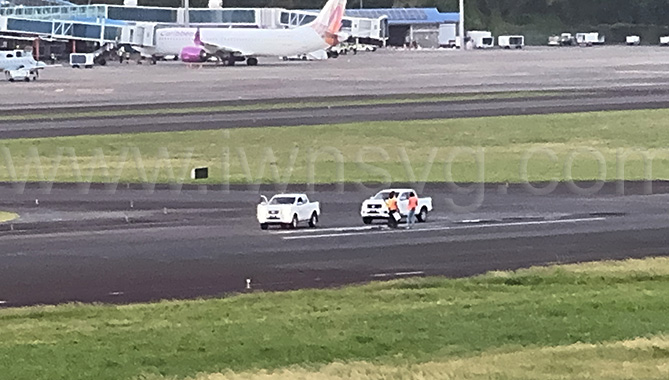
    Argyle International Airport in St. Vincent has been temporarily downgraded by aviation authorities following persistent runway surface issues that have caused significant flight disruptions. The problems, involving recurring holes appearing on the runway surface, culminated this weekend with multiple incidents that forced flight cancellations and operational changes.

    On Saturday evening, an American Airlines Boeing 737-823 bound for Miami aborted takeoff procedures and returned to the ramp after crew identified a newly formed hole in the runway. Airport personnel responded with emergency vehicles to address the surface hazard, collecting debris into plastic buckets. The incident resulted in the cancellation of flight AA3098 as crew duty time limitations were exceeded, while a Caribbean Airlines flight to New York experienced substantial delays.

    The situation escalated on Sunday when the U.S. Federal Aviation Administration issued a Notice to Airmen/Air Missions (NOTAM) temporarily restricting the airport to aircraft with maximum take-off weights below 225,000 pounds. This regulatory action forced the cancellation of Virgin Atlantic’s scheduled service between London and St. Vincent via Barbados.

    The runway issues have been ongoing since at least February, with airport management implementing repeated temporary patches while reportedly hesitant to pursue more comprehensive repairs that would require complete airport closure. According to sources familiar with the situation, authorities have attempted to avoid shutdowns for over a year, but the recent developments may necessitate more drastic action.

    Of particular concern to aviation experts is a reportedly defective area near the runway’s touchdown zone, which presents additional safety considerations. The newly installed New Democratic Party administration has not yet commented on the situation, while former Prime Minister Ralph Gonsalves had previously stated that airport management had ‘everything in hand’ regarding both temporary fixes and planned permanent solutions.

  • Jamaica to benefit from Hurricane Melissa Recovery Funding

    Jamaica to benefit from Hurricane Melissa Recovery Funding

    WASHINGTON, DC — A monumental international recovery effort is taking shape for Jamaica following the catastrophic impact of Hurricane Melissa, with global financial institutions mobilizing a support package approaching US$6 billion. This collective response marks one of the largest disaster relief initiatives in Caribbean history.

    The International Monetary Fund has taken a leading role in the financial response, confirming US$415 million in emergency financing through its Rapid Financing Instrument (RFI). According to IMF Director of Communication Julie Kozac, the executive board is expected to approve this single-disbursement funding early next year, providing immediate liquidity without conditional requirements.

    The staggering scale of devastation became apparent through preliminary assessments from the Global Rapid Post-Disaster Damage Estimation (GRADE) initiative. Jointly conducted by the World Bank and Inter-American Development Bank, these evaluations indicate physical damage estimates reaching US$8.8 billion—representing approximately 41% of Jamaica’s entire economic output. Kozac characterized Hurricane Melissa as “the costliest hurricane in Jamaica’s recorded history.”

    Jamaica’s pre-established disaster risk financing framework has emerged as a critical factor in the immediate response phase. The system enabled rapid activation of US$662 million in emergency liquidity through multiple channels: US$37 million from national reserve funds, US$91 million from regional insurance mechanisms, US$150 million from catastrophe bonds, US$300 million from contingent credit facilities, and additional scalable funding from World Bank instruments.

    The comprehensive recovery package, currently under development through coordination between international partners and Jamaican authorities, aims to provide up to US$6.7 billion over a three-year reconstruction timeline. This sustained support will address infrastructure restoration, economic stabilization, and long-term resilience building.

    While financial mechanisms mobilize, ground operations continue across the island nation with emergency teams conducting search and rescue missions, debris clearance, and victim recovery efforts in the most severely affected regions.

  • Five Killed in Explosion Outside Police Station in Mexico

    Five Killed in Explosion Outside Police Station in Mexico

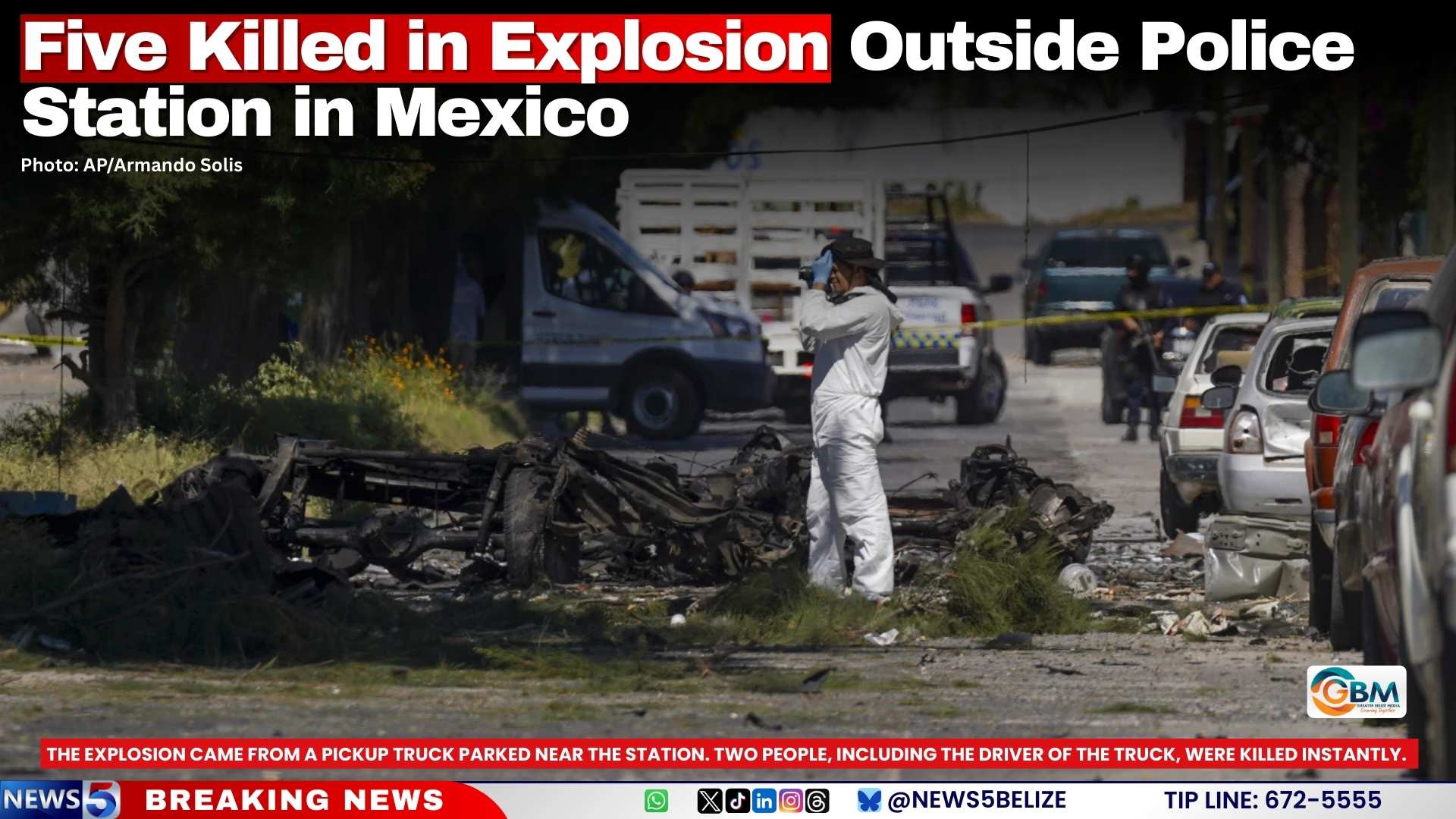
    A devastating vehicle-borne explosive device detonated outside a police headquarters in the western Mexican state of Michoacán on Saturday, resulting in five fatalities and five additional casualties requiring hospitalization. The midday blast occurred in the coastal municipality of Coahuayana, an area where federal authorities had recently intensified security operations to combat persistent criminal activity.

    Official reports indicate the explosion originated from a pickup truck strategically positioned near the station’s perimeter. The detonation proved immediately lethal for two individuals, including the vehicle’s operator. Emergency services transported eight wounded victims—all identified as members of the local community police force—to medical facilities, where three subsequently succumbed to their injuries.

    Héctor Zepeda, commanding officer of the community police unit, characterized the explosion’s magnitude as unprecedented, noting that forensic teams recovered human remains dispersed across considerable distances from the epicenter. While criminal factions operating throughout the region frequently employ drone-dropped explosives and roadside improvised devices, the deployment of vehicle-borne weaponry represents a significant tactical escalation.

    The violence occurs against the backdrop of ongoing territorial conflicts between rival cartels vying for control of Michoacán’s strategic narcotics transportation corridors. Intelligence assessments confirm that at least three of the six drug trafficking organizations formally designated as terrorist entities by the U.S. government maintain active operational presence throughout the region, which serves as a critical thoroughfare for precursor chemicals utilized in synthetic drug manufacturing.

  • Family of man slain in a US boat strike in the Caribbean lodges complaint

    Family of man slain in a US boat strike in the Caribbean lodges complaint

    The relatives of Alejandro Carranza Medina, a Colombian national killed in a US military operation targeting suspected drug smuggling vessels, have formally lodged a human rights complaint with the Inter-American Commission on Human Rights (IACHR). Filed on Tuesday and reported by AFP on Wednesday, the legal submission contends the United States violated Carranza’s fundamental rights to life and due process during a September 15th maritime strike conducted as part of President Donald Trump’s intensified counter-narcotics campaign.

    The family’s complaint explicitly accuses US Secretary of Defense Pete Hegseth of authorizing the bombing without verifying the identities of those aboard targeted vessels, resulting in what they characterize as extra-judicial killings. They maintain Carranza was an innocent fisherman whose boat was disabled and adrift at the time of the attack, denying any involvement in drug trafficking.

    This incident has sparked significant diplomatic tension, with Colombian President Gustavo Petro publicly condemning the strikes as violations of sovereignty and murder. Petro has pledged governmental support for Carranza’s family in their pursuit of justice. The case has emerged as a focal point for criticism against US military actions in the region, with reports indicating over 83 fatalities across 21 known strikes since early September.

    Legal experts and human rights organizations have raised alarms about the operation’s legality under international law, noting that drug trafficking does not constitute combat and thus doesn’t justify military engagement. Scrutiny intensified following revelations of a ‘double-tap’ strike on September 2nd, where the US military allegedly launched a second missile after survivors were spotted following an initial attack—a tactic potentially constituting war crimes under the Pentagon’s own guidelines.

    While the Trump administration has defended the strikes as necessary measures against ‘narco-terrorists’ and continues to threaten expanded operations—including possible land incursions into Venezuela—the IACHR now faces pressure to review the complaint and potentially refer the case to the Inter-American Court of Human Rights.

  • WHO says 114 killed in strikes on Sudan kindergarten, hospital

    WHO says 114 killed in strikes on Sudan kindergarten, hospital

    GENEVA, Switzerland — The World Health Organization (WHO) has issued a stern condemnation of devastating aerial strikes that targeted a kindergarten and hospital in Sudan’s South Kordofan state, resulting in massive civilian casualties. According to verified reports, the attacks last Thursday claimed 114 lives, including 63 children, with an additional 35 individuals sustaining injuries.

    The assault occurred in the army-controlled town of Kalogi, where paramilitary forces conducted multiple drone strikes. Local administrator Essam al-Din al-Sayed described the horrific sequence of events to AFP: initial explosions hit a kindergarten, followed by strikes on Kalogi Rural Hospital, and finally a third attack as rescue efforts were underway to save trapped children.

    WHO Director-General Tedros Adhanom Ghebreyesus, citing the UN agency’s Attacks on Health Care monitoring system, revealed disturbing details of the incident. Emergency responders faced additional violence while attempting to transport injured children to medical facilities. Survivors have been relocated to Abu Jebaiha Hospital for treatment, with urgent appeals circulating for blood donations and medical supplies.

    This tragedy unfolds against the backdrop of Sudan’s devastating conflict, which has raged since April 2023 between the national army and paramilitary Rapid Support Forces (RSF). The violence has already claimed tens of thousands of lives and displaced nearly 12 million people. The RSF’s recent eastward push into the oil-rich Kordofan region following their October capture of El-Fasher has intensified hostilities.

    The WHO documented that the attacks occurred between 6:00 am and noon, involving heavy weapons that damaged healthcare infrastructure and deliberately obstructed medical assistance. The organization’s incident report specifically notes psychological violence and intimidation tactics against healthcare workers.

    UN Secretary-General Antonio Guterres expressed profound dismay through spokesman Stephane Dujarric, urging influential nations to leverage their positions to halt combat operations and stem weapons flows fueling the conflict. The WHO has recorded 63 separate attacks on healthcare facilities in Sudan this year alone, resulting in 1,611 fatalities and 259 injuries across 52 personnel incidents, 45 facility impacts, and 32 patient-directed assaults.

    While the WHO verifies and documents attacks on medical infrastructure, the organization emphasizes it does not assign blame as it lacks investigative authority. The international health agency continues to demand immediate ceasefire implementation and expanded humanitarian access to address what it describes as entirely preventable suffering among the Sudanese population.

  • Ex-chief supt faces NY court in shackles

    Ex-chief supt faces NY court in shackles

    In a dramatic courtroom appearance that has reverberated across the Caribbean, former Royal Bahamas Police Force Chief Superintendent Elvis Nathaniel Curtis stood shackled before a New York judge on Friday, facing serious charges in an international drug trafficking operation that implicates high-level Bahamian officials.

    The 51-year-old ex-law enforcement commander, who once oversaw security at Lynden Pindling International Airport and other critical Bahamian transit hubs, appeared calm and attentive during the proceedings despite wearing faded brown prison attire and restraints. Curtis and four co-defendants—William Simeon (52), Luis Fernando Orozco-Toro (58), Ulrique Jean Baptiste (53), and Lorielmo Steele-Pomare (59)—face multiple charges including cocaine importation conspiracy and firearms offenses.

    According to federal prosecutors, the sophisticated trafficking scheme operated from May 2021 through late 2024, allegedly leveraging corrupt officials to facilitate cocaine shipments from The Bahamas to the United States. The most explosive allegation claims Curtis solicited a $2 million bribe on behalf of an unnamed ‘high-ranking Bahamian politician’ who promised to ensure law enforcement cooperation.

    The hearing revealed evidentiary challenges, with defense attorneys noting the ‘voluminous’ nature of discovery materials, including untranslated Spanish conversations. Prosecutor Jonathan Bodansky acknowledged that additional evidence had emerged since the August hearing, prompting the adjournment.

    Donna Newman, representing recently extradited Colombian national Steele-Pomare, requested additional preparation time, stating she would be ‘under pressure’ to review the extensive materials by the new February 25 conference date. Other defense attorneys did not object to the timeline.

    The case expands beyond the five defendants, with at least eight additional alleged conspirators remaining at large, including former RBPF Sergeant Prince Albert Symonette. Court documents allege Curtis and Symonette accepted a $10,000 down payment in 2023 to facilitate a future 600kg cocaine shipment through Nassau airport.

    The proceedings follow the guilty plea of Darrin Alexander Roker, a former Royal Bahamas Defence Force chief petty officer who faces up to 20 years imprisonment after admitting to cocaine importation conspiracy. His sentencing is scheduled for January 21.