分类: world

  • Caribbean ports face chemical risks despite no domestic threat – officials

    Caribbean ports face chemical risks despite no domestic threat – officials

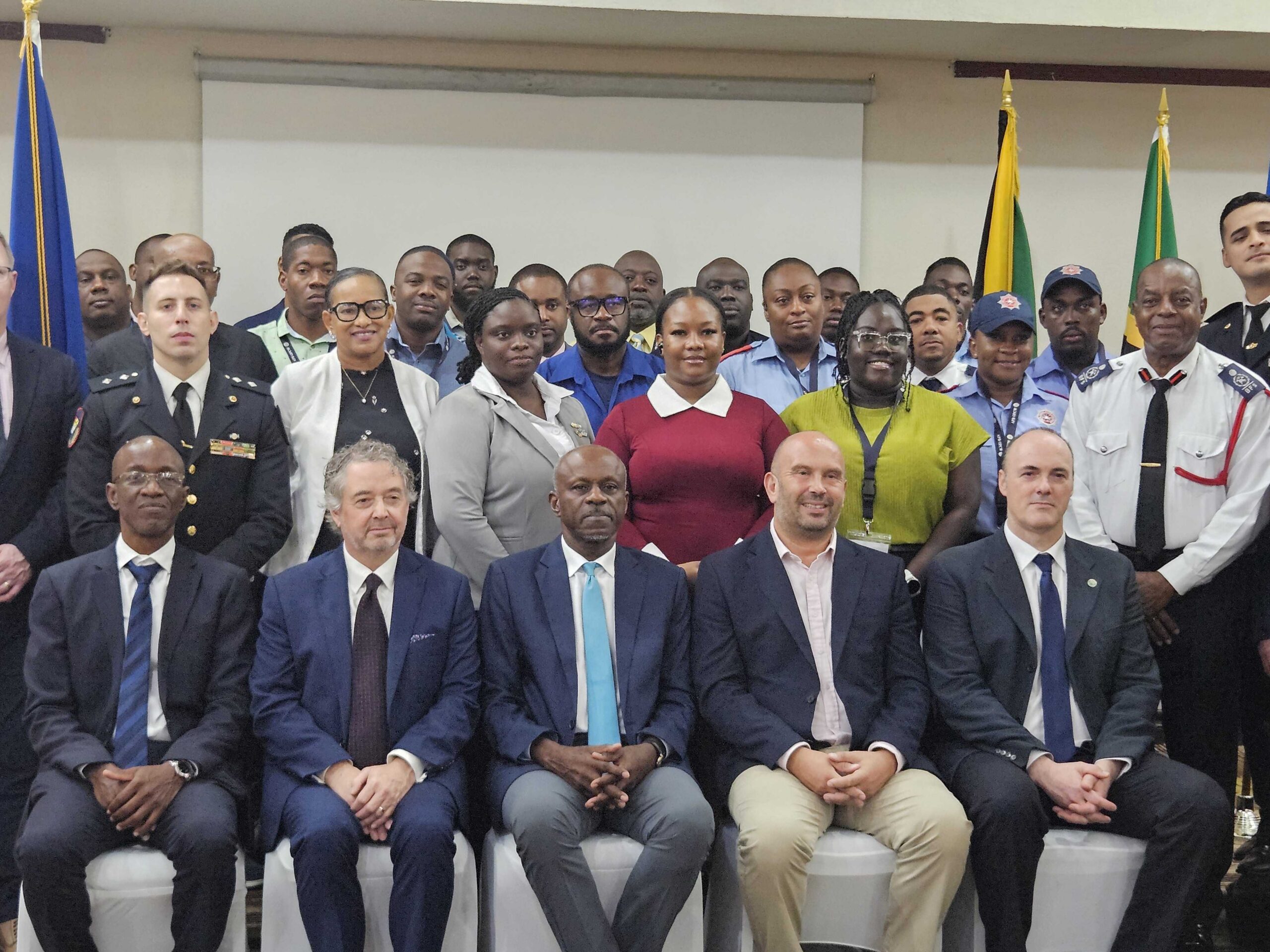
    Barbados is hosting a critical multinational training initiative to enhance chemical threat response capabilities across the Caribbean region. The program, organized by the Organisation for the Prohibition of Chemical Weapons (OPCW) with UK government support, brings together emergency responders from multiple Caribbean nations for advanced technical training.

    Despite the absence of active chemical weapons threats or stockpiles in the region, experts emphasize the Caribbean’s strategic vulnerability as a major transit corridor for hazardous materials. Anthony Headley, Director of Barbados’ Environmental Protection Department, explained that while chemical warfare terminology may seem unusual for service-based economies, the detection and response methodologies remain identical for both weapons and industrial accidents.

    The intensive training program provides hands-on experience with specialized detection equipment, protective gear, and contamination management techniques. Participants from various Caribbean states learn practical skills from international instructors representing North America, Europe, and Argentina.

    Headley highlighted the region’s particular vulnerability: “The Caribbean serves as a significant trans-shipment point. While we don’t manufacture chemical weapons, the precursor chemicals used in their production transit through our waters regularly. This makes technical preparedness absolutely critical.”

    UK Ministry of Defence representative Clive Rowland clarified that while no imminent chemical weapons threat exists in Barbados, the 2018 Salisbury attack demonstrated how chemical incidents can occur unexpectedly anywhere. He noted that dangerous substances can be improvised from common agricultural products, making comprehensive training essential.

    The collaboration builds on Barbados’ longstanding partnership with UK authorities dating to 2007, which has already trained 68 professionals including three instructor-level experts. The program’s effectiveness was demonstrated during actual incidents including a white powder scare at the National Union of Public Workers and a recent chemical fire.

    British High Commissioner Simon Mustard reaffirmed the UK’s commitment to global chemical weapons prevention, noting London’s £2.8 million contribution to OPCW operations in Syria. He reiterated the UK’s condemnation of chemical weapons use “by anyone under any circumstances,” emphasizing that the threat persists despite near-universal adherence to the Chemical Weapons Convention.
  • Cartel Boss Dead: Are Belizeans in Mexico Safe?

    Cartel Boss Dead: Are Belizeans in Mexico Safe?

    In a significant blow to organized crime, Mexican security forces have eliminated Nemesio “El Mencho” Oseguera Cervantes, the notorious leader of the Jalisco New Generation Cartel (CJNG), during a meticulously planned military operation in Jalisco state on Sunday. The raid, which involved multiple branches of Mexico’s security apparatus and included international cooperation, resulted in intense firefights that claimed the lives of four cartel members. El Mencho and two of his personal security detail sustained critical injuries during the confrontation and subsequently died while being medically evacuated to Mexico City via aircraft.

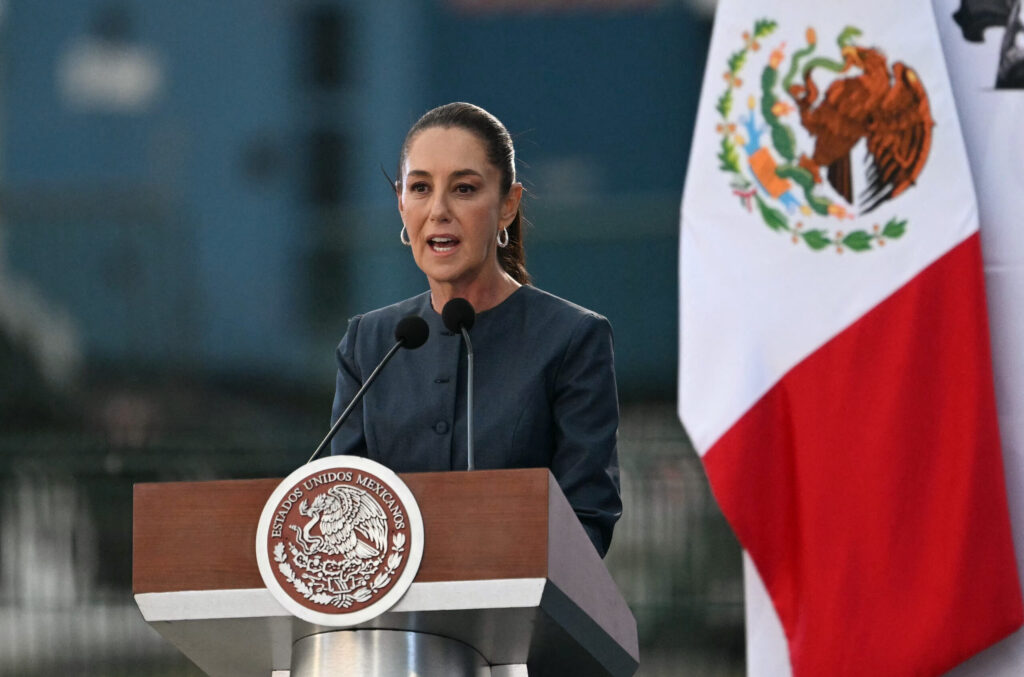
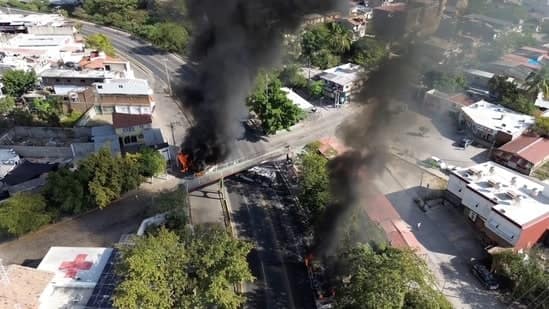
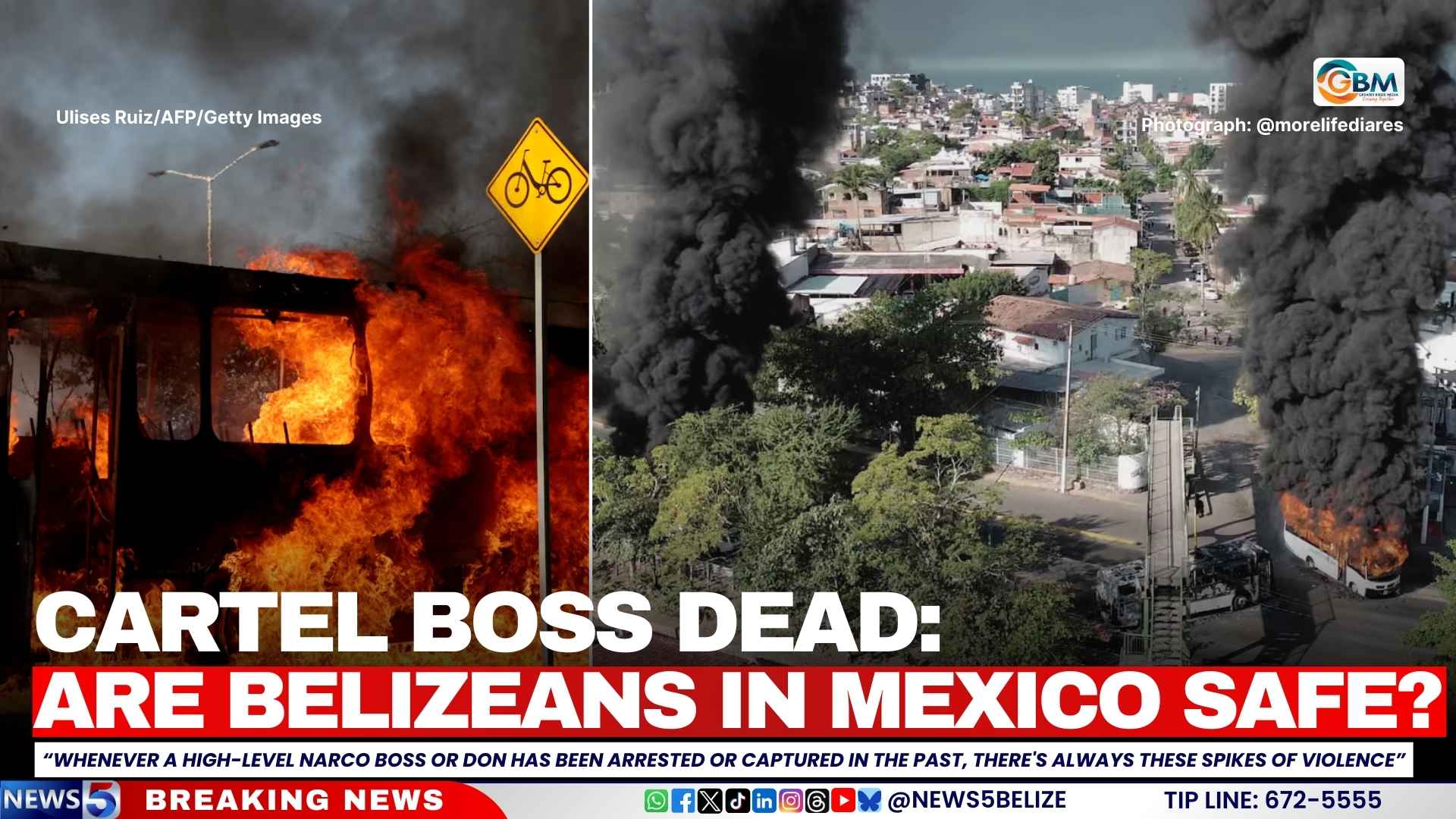
    The demise of Mexico’s most powerful drug lord has triggered widespread retaliatory violence across twenty states, with criminal elements torching commercial vehicles and businesses, forcing the suspension of flight operations in Puerto Vallarta, and prompting widespread school closures. Despite the escalating chaos, Mexican President Claudia Sheinbaum maintained that the situation remained under control, emphasizing her administration’s commitment to national security while acknowledging isolated attacks on National Guard personnel.

    Belizean officials have responded to the crisis by issuing travel advisories warning citizens to avoid highway travel in affected regions. Ambassador Oliver Arnold, Belize’s diplomatic representative to Mexico, characterized the violent backlash as predictable, noting that such outbursts routinely follow the capture or elimination of high-level cartel leadership. The ambassador confirmed that the operation culminating in El Mencho’s death had been in development for several months, involving coordinated intelligence and tactical planning.

    The escalating violence has particularly impacted the Belizean student community in Mexico, with educational institutions canceling classes and many students opting to return home. Social media platforms have circulated firsthand accounts of the deteriorating security situation, including one student who abandoned her studies in Guadalajara after videos emerged showing armed confrontations at the local airport. While U.S. defense officials acknowledged providing support for the operation, they unequivocally credited Mexican military forces with the successful outcome.

  • The U.S just killed 3 more “narco-terrorists” on Vessel in Caribbean

    The U.S just killed 3 more “narco-terrorists” on Vessel in Caribbean

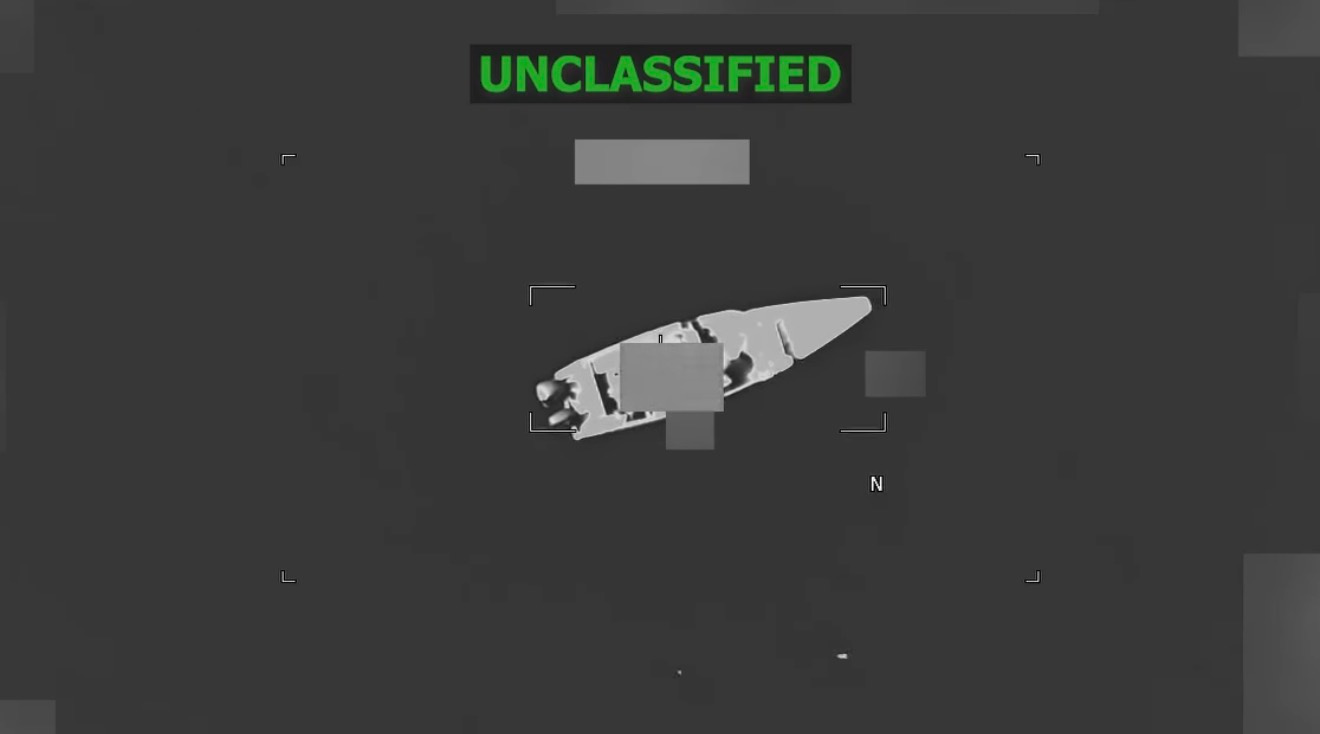
    In a targeted military operation, the United States Southern Command (SOUTHCOM) executed a precision strike against a vessel linked to designated terrorist organizations in Caribbean waters on Monday, February 23rd. The action, authorized by SOUTHCOM Commander General Francis L. Donovan, resulted in the elimination of three suspected narco-terrorists aboard the ship, which was actively engaged in illicit narcotics trafficking along established smuggling routes at the time of the engagement. Codenamed #OpSouthernSpear and carried out by the specialized Joint Task Force Southern Spear, the mission employed lethal kinetic force to disable the threat. U.S. military officials confirmed that all personnel involved returned safely without injury. This decisive intervention underscores ongoing multinational efforts to combat the convergence of narcotics trafficking and terrorism, which poses a significant threat to regional security and stability in the Western Hemisphere.

  • Torrential rains leave 20 dead in Brazil, dozens missing

    Torrential rains leave 20 dead in Brazil, dozens missing

    Southeastern Brazil is confronting a severe humanitarian crisis following catastrophic rainfall that triggered devastating floods and landslides, resulting in a confirmed death toll of 20 individuals with dozens more reported missing. The state of Minas Gerais has borne the brunt of the extreme weather, which commenced on Monday with torrential downpours displacing over 400 residents from their homes.

    The municipality of Juiz de Fora, a city of approximately 500,000 inhabitants, has been hardest hit, recording 16 fatalities. Just two hours away, the city of Uba reported four additional deaths. The disaster unfolded through multiple channels: the Paraibuna River burst its banks, catastrophic landslides buried areas, and multiple buildings succumbed to structural collapse under the force of the elements.

    Mayor Margarida Salomao has declared a state of emergency for Juiz de Fora, which is experiencing its wettest February since records began. She described the situation as ‘extreme,’ with at least 20 separate landslides isolating entire neighborhoods. Official communications from her office on social media platform X confirmed that 440 displaced persons are receiving municipal support for temporary shelter and accommodation.

    Emergency response efforts, led by the Minas Gerais fire department, are intensely focused on search and rescue operations. Lieutenant Henrique Barcellos, a department spokesman, confirmed that firefighters are addressing incidents of flooding, landslides, and structural instability near the overflowing Paraibuna River. Distressing imagery from social media depicts rescue crews operating heavy machinery to dig through deep mud where homes once stood, while other footage captured by residents shows buildings crumbling in real time. Streets have been transformed into raging torrents, necessitating the use of specialized equipment to evacuate stranded citizens to safety. In response to the danger, state authorities have suspended classes across all municipal schools.

    This tragedy is the latest in a series of extreme weather events to plague Brazil in recent years, which experts increasingly attribute to the broader impacts of climate change. The nation is still recovering from a historic flood in its southern region in 2024 that claimed over 200 lives and affected two million people. Furthermore, a 2022 deluge in Petropolis, near Rio de Janeiro, resulted in 241 deaths. The current disaster in Juiz de Fora—a city previously known in international headlines as the site where former President Jair Bolsonaro was stabbed in 2018—now adds another somber chapter to Brazil’s ongoing struggle with climate-related emergencies.

  • Mexico president offers ‘full guarantees’ for safety of World Cup games

    Mexico president offers ‘full guarantees’ for safety of World Cup games

    MEXICO CITY—In the wake of severe cartel violence that erupted across Jalisco state, Mexican President Claudia Sheinbaum has issued a firm pledge to ensure absolute safety for international football spectators attending World Cup matches in Guadalajara this June.

    The assurance comes after a weekend of intense conflict triggered by the Mexican military’s operation that resulted in the death of notorious drug lord Nemesio Oseguera, known as ‘El Mencho,’ leader of the Jalisco New Generation Cartel (CJNG). The firefights between cartel members and security forces resulted in significant casualties on both sides, causing widespread panic among tourists and local residents.

    Despite the recent turmoil, President Sheinbaum emphasized that the situation is now under control, stating unequivocally that visitors face ‘no risk’ during the tournament. The Mexican government is implementing enhanced security protocols to protect the four scheduled matches in Guadalajara, one of three host cities in Mexico for the 2026 World Cup, jointly organized with the United States and Canada.

    FIFA, football’s global governing body, has maintained silence regarding the security concerns, offering no official comment on the violent incidents. Meanwhile, normalcy gradually returns to Jalisco as businesses resumed operations Tuesday, with educational institutions scheduled to reopen Wednesday.

    The successful hosting of World Cup matches represents a critical test for Mexico’s ongoing battle against organized crime and its ability to guarantee security for major international events.

  • SIDS Centre of Excellence Launches Official Website

    SIDS Centre of Excellence Launches Official Website

    Antigua and Barbuda is poised to host the formal physical inauguration of the Small Island Developing States Centre of Excellence (SIDS CoE) in the coming months. This institution represents a concrete operational framework designed to bolster the efforts of Small Island Developing States in achieving the objectives outlined in the Antigua and Barbuda Agenda for SIDS (ABAS).

    The Centre’s mission is executed through a strategic framework of four synergistic pillars: a Global Data Hub for enhanced information access, an Innovation Technology Mechanism to foster digital advancement, an Island Investment Forum to catalyze financial flows, and a Debt Sustainability Service to address fiscal challenges. This integrated approach is specifically engineered to fortify the capabilities of SIDS nations, enabling them to accelerate progress toward sustainable and climate-resilient development pathways.

    The upcoming launch event will serve as a pivotal gathering for regional stakeholders and international partners. Its primary objectives are to officially mark the establishment of the Centre and to galvanize further collaborative action in direct support of SIDS-specific priorities. Organizers have indicated that comprehensive details regarding the event’s agenda and participation will be disclosed in the near future.

  • Countries Issue Travel Advisories As Cartel henchmen unleash violence after top drug lord killed in Mexico

    Countries Issue Travel Advisories As Cartel henchmen unleash violence after top drug lord killed in Mexico

    A catastrophic wave of retaliatory violence has engulfed at least 20 Mexican states following the death of Nemesio Oseguera Cervantes, alias ‘El Mencho’, leader of the Jalisco New Generation Cartel (CJNG). The notorious kingpin, Mexico’s most wanted man, died in military custody on Sunday after sustaining severe injuries during a fierce firefight between his personal security detail and Mexican special forces during his capture in Tapalpa, Jalisco.

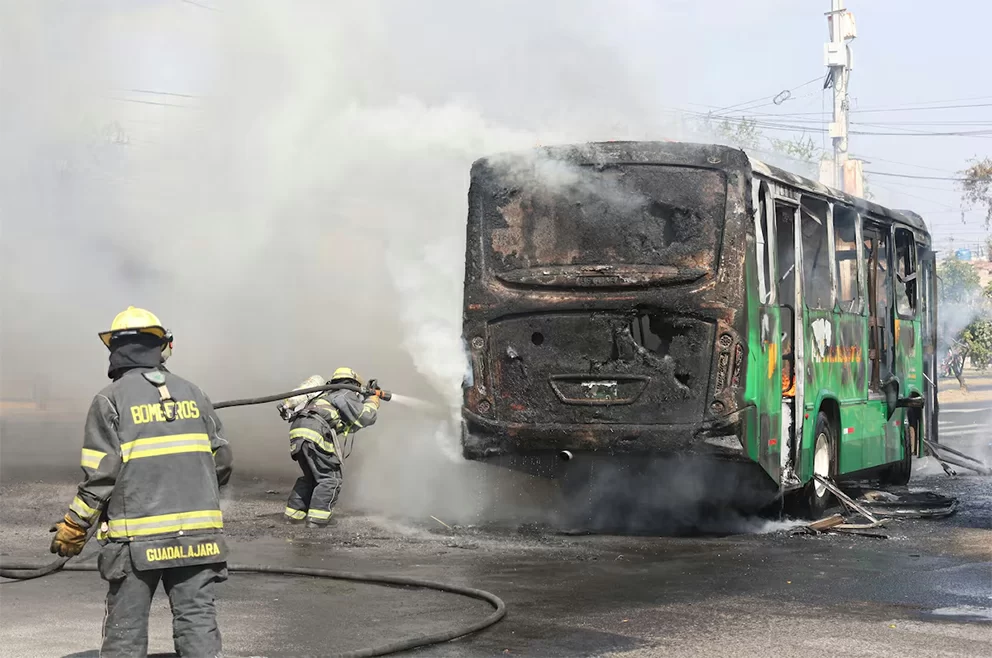
    The cartel’s response was immediate and brutal. CJNG operatives orchestrated a coordinated campaign of terror, erecting over 250 burning blockades by commandeering and incinerating buses and vehicles. Dozens of banks, pharmacies, and local businesses were set ablaze, casting plumes of black smoke over cities including the major tourist destination of Puerto Vallarta and the World Cup host city, Guadalajara. At Guadalajara’s airport, panicked travelers were sent scrambling for cover amid reports of nearby gunfire.

    The chaos evoked memories of the 2019 Sinaloa cartel uprising following the capture of Ovidio Guzmán López. In response, authorities enacted drastic measures: Jalisco’s governor declared a ‘Code Red,’ suspending all public transport, mass gatherings, and in-person classes. The U.S. State Department issued shelter-in-place advisories for its citizens across multiple states, while the UK Foreign Office urged extreme caution. Approximately 300 tourists were evacuated from Puerto Vallarta’s airport under heavy police escort after flight cancellations.

    Mexican President Claudia Sheinbaum praised the security forces’ operation while urging public calm, asserting that most of the country continued normal operations. The operation, supported by U.S.-provided intelligence, marked a significant victory; the U.S. had offered a $15 million reward for El Mencho, whom U.S. officials identified as a top fentanyl trafficker. While security forces have since lifted 90% of the blockades and made 25 arrests, tensions remain critically high in the cartel’s stronghold.

  • Powerful winter storm slams US north-east as NYC issues travel ban

    Powerful winter storm slams US north-east as NYC issues travel ban

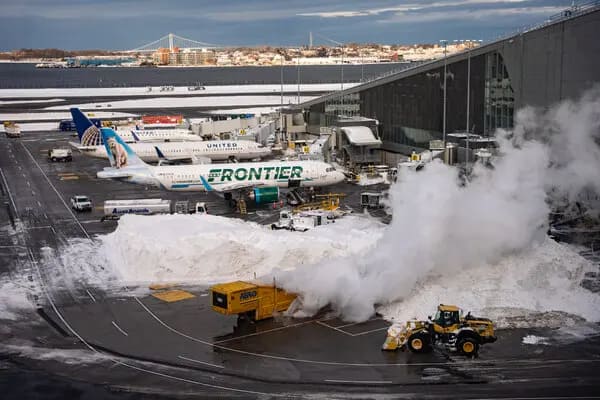
    A formidable winter storm has unleashed its fury across the northeastern United States, triggering widespread disruption and prompting severe emergency measures. In an unprecedented move, New York City authorities have imposed a mandatory travel ban, effectively grounding all non-essential vehicles to safeguard public safety.

    The tempest, characterized by blinding blizzard conditions and hurricane-force wind gusts, has precipitated a near-total shutdown of metropolitan transit systems. Air travel has been thrown into chaos, with thousands of flights canceled at major hubs including JFK, LaGuardia, and Newark airports. The severity of the conditions has rendered roadways impassable, leading to the closure of critical infrastructure and posing significant hazards to emergency response operations.

    Meteorological reports indicate the storm system is generating historically low barometric pressures, rivaling the intensity of a major hurricane. This has resulted in rapid snow accumulation rates exceeding two inches per hour in some regions, combined with coastal flooding threats due to accompanying storm surges. Utility companies are reporting escalating power outages as heavy, wet snow and powerful winds bring down power lines across multiple states.

    State governments from New York to Maine have declared states of emergency, mobilizing National Guard units for rescue and recovery missions. Residents are being urged to shelter in place as emergency services struggle to respond to calls amidst whiteout conditions. The storm’s timing during a holiday period has amplified its disruptive impact, stranding travelers and overwhelming municipal resources.

    This extreme weather event underscores growing concerns about climate volatility and its effects on urban infrastructure in northern population centers. The coordinated regional response represents one of the most comprehensive winter weather emergency actions in recent history.

  • Severe weather in northeast U.S. impacts air travel to the Dominican Republic

    Severe weather in northeast U.S. impacts air travel to the Dominican Republic

    Santo Domingo witnessed significant aviation disruptions as approximately 25 flights to and from the Dominican Republic were canceled on Sunday, February 22nd, following the onslaught of winter storm Ernesto. The powerful weather system unleashed heavy snowfall across multiple northeastern U.S. states, creating travel chaos for hundreds of passengers.

    The National Weather Service (NWS) had escalated forecasts for the intensifying storm, which particularly targeted the Mid-Atlantic and Appalachian regions. Major metropolitan areas including Philadelphia, Delaware, Boston, and New York faced anticipated snow accumulations ranging from 23 to 45 centimeters. Meteorological authorities cautioned that the storm would gain strength throughout Sunday, delivering persistent heavy snow accompanied by vigorous winds, with weather alerts extending through Monday.

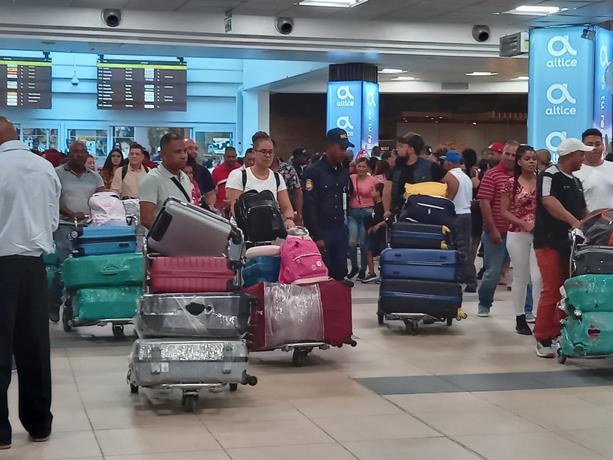
    Aeropuertos Dominicanos Siglo XXI (Aerodom) confirmed that the cancellations primarily impacted JetBlue and Delta Air Lines operations. The disrupted flights involved critical aviation hubs such as John F. Kennedy International Airport, Logan International Airport, and Fort Lauderdale-Hollywood International Airport. Initial reports indicated eight Sunday cancellations, with an additional sixteen JetBlue flights suspended for Monday, February 23rd, specifically affecting air routes connecting the Dominican Republic with New York and Boston.

    New York City officials, under the leadership of Mayor Zohran Mamdani, urgently advised residents to minimize non-essential travel amid forecasts predicting snowfall rates reaching five centimeters per hour. The city experienced its first blizzard warning in nine years, according to Listín Diario. Transportation authorities continued to recommend that travelers vigilantly monitor airline communications as winter conditions persisted throughout the region.

  • Mexicaanse kartelbaas ‘El Mencho’ gedood bij militaire inval

    Mexicaanse kartelbaas ‘El Mencho’ gedood bij militaire inval

    Mexican security forces have confirmed the death of notorious drug cartel leader Nemesio Oseguera Cervantes, widely known as ‘El Mencho,’ during a military operation in western Jalisco state. The high-profile raid marks a significant victory for Mexico’s ongoing battle against powerful drug trafficking organizations.

    According to Mexico’s Defense Ministry, Oseguera sustained critical injuries during an intense firefight with government troops and subsequently died while being airlifted to Mexico City for medical treatment. The operation, which benefited from intelligence cooperation with United States authorities, represents the culmination of increased pressure from the Trump administration on Mexican President Claudia Sheinbaum to intensify anti-narcotics efforts.

    The death of the Jalisco New Generation Cartel (CJNG) leader has triggered immediate retaliatory violence across multiple Mexican states. Criminal elements have responded with coordinated attacks involving burning vehicles and armed highway blockades, creating widespread disruption in more than half a dozen regions. Social media footage shows plumes of black smoke rising from incendiary roadblocks throughout Jalisco and neighboring areas.

    Oseguera, a former police officer, had transformed the CJNG from a regional organization into one of Mexico’s most powerful international criminal enterprises within a remarkably short timeframe. The cartel had been competing with the Sinaloa Cartel, formerly led by imprisoned kingpin Joaquín ‘El Chapo’ Guzmán, for dominance in drug trafficking operations.

    United States Deputy Secretary of State Christopher Landau characterized Oseguera’s demise as a “major development” for both nations and the broader Latin American region. However, security experts warn that the power vacuum created by his death could unleash prolonged violence as competing factions struggle for control.

    In response to the security crisis, Jalisco Governor Pablo Lemus Navarro has urged residents to remain indoors while authorities work to restore order. The U.S. Embassy has issued similar precautions for American citizens, and multiple airlines including Air Canada, United Airlines, and American Airlines have suspended or canceled flights to popular tourist destinations Puerto Vallarta and Guadalajara.