分类: world

  • News report: Maduro planning guerilla response if US invades

    News report: Maduro planning guerilla response if US invades

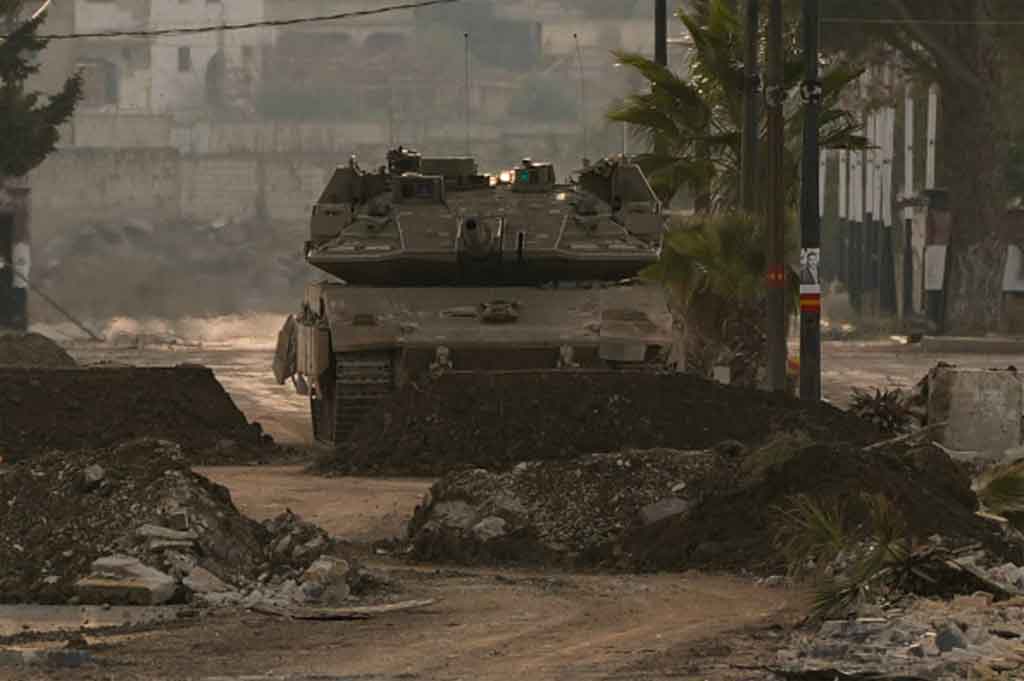
    Venezuela is bracing for a potential confrontation with the United States as the USS Gerald R. Ford, the US Navy’s advanced aircraft carrier, arrived in the southern Caribbean Sea on November 11. In response, Venezuelan President Nicolás Maduro has ordered the military to prepare for guerilla-style resistance, deploying decades-old Russian-made weapons and planning sabotage operations at over 280 locations. The strategy, termed ‘prolonged resistance,’ also includes ‘anarchisation,’ a tactic aimed at creating chaos in Caracas to make the country ungovernable for foreign forces.

    Defense Minister Vladimir Padrino López announced a ‘massive mobilisation’ of military personnel and equipment, with land, air, naval, and reserve forces conducting exercises through November 13. López described the deployment as a response to the ‘imperialist threat’ posed by the US military presence.

    The US has been increasing its military assets in the Caribbean since August, citing the need to combat narco-terrorism and drug trafficking, particularly from Venezuela. Since September 2, the US has conducted 19 airstrikes in the Caribbean and Eastern Pacific, resulting in at least 75 deaths. The USS Gerald R. Ford carrier strike group, which includes over 4,000 sailors and dozens of tactical aircraft, is the latest addition to the region.

    US Secretary of War Pete Hegseth redirected the carrier strike group from the Mediterranean to the Caribbean on October 24, in line with President Trump’s directive to dismantle transnational criminal organizations. Chief Pentagon Spokesperson Sean Parnell emphasized that the enhanced force presence would bolster efforts to disrupt narcotics trafficking and dismantle criminal networks.

    Meanwhile, Trinidad and Tobago’s Prime Minister Kamla Persad-Bissessar has endorsed the US military actions, dismissing the Caribbean’s ‘zone of peace’ concept as ineffective. However, a recent peace vigil in Port of Spain, attended by 200 people, was labeled a ‘dismal failure’ by Persad-Bissessar. Attempts to reach her and Defense Minister Wayne Sturge for comments on the USS Gerald R. Ford’s arrival were unsuccessful.

  • UN food agencies warn of 16 hunger hotspots

    UN food agencies warn of 16 hunger hotspots

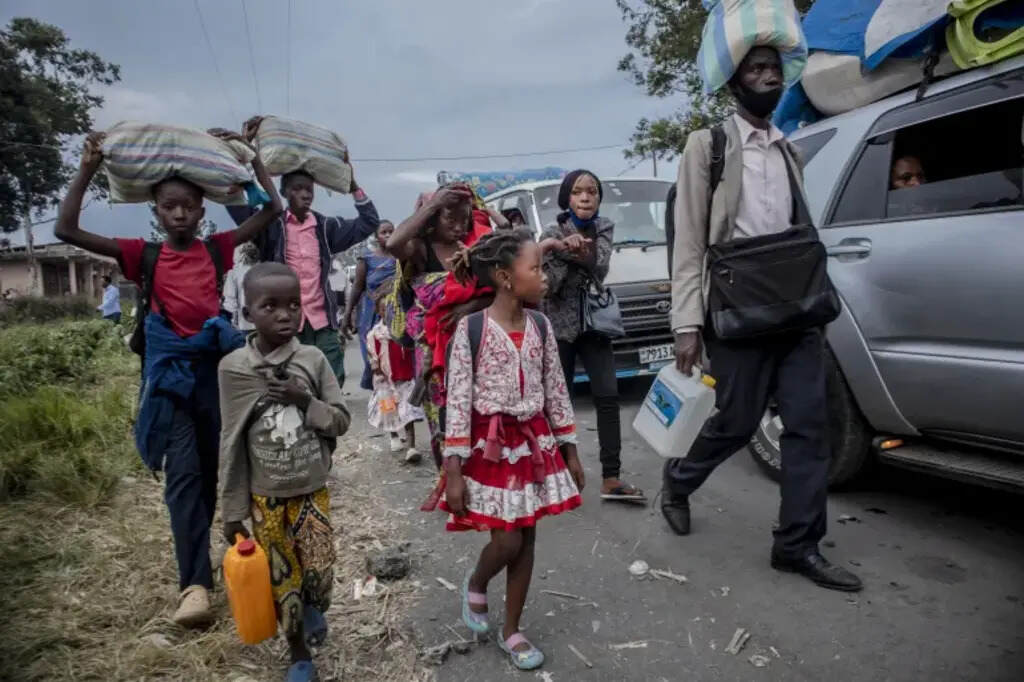
    ROME, Italy – Two prominent United Nations (UN) food agencies, the Food and Agriculture Organisation (FAO) and the World Food Programme (WFP), issued a dire warning on Wednesday, highlighting the escalating risk of famine for millions worldwide. The agencies attributed the crisis to severe funding shortages, which are exacerbating already critical conditions in vulnerable regions.

  • Guyana and Suriname to raise US$1 billion for infrastructure projects

    Guyana and Suriname to raise US$1 billion for infrastructure projects

    In a landmark initiative, seven Amazon nations—Guyana, Suriname, Bolivia, Brazil, Colombia, Ecuador, and Peru—have launched the Amazonia Forever Facility for Cities and Resilient Infrastructure. This ambitious project aims to mobilize over $1 billion to enhance water security, promote clean energy, and build resilient urban infrastructure across the Amazon region. The initiative was formally announced during COP30 in Belém, Brazil, under the leadership of the Amazonia Network of Ministers of Finance and Planning, with strong backing from the Inter-American Development Bank Group (IDB).

    The facility will employ innovative financial mechanisms, including blended financing, performance-based concessionality schemes, and credit-substitution guarantees, to support infrastructure projects in urban and peri-urban areas. It also includes technical assistance to ensure effective implementation. Brazil’s Planning and Budget Minister, Simone Tebet, emphasized the dual focus on forest conservation and urban development, stating, ‘This tool enables us to address both environmental and urban challenges, which are critical for the region’s future.’

    IDB Group President Ilan Goldfajn highlighted the initiative’s broader impact, noting that ‘building resilient infrastructure protects the 60 million people who call the Amazon home, while creating livelihoods and jobs in cities is the best way to preserve the forest.’ The Amazon region faces significant gaps in water, sanitation, energy, and risk management, with over 70% of its population residing in cities and peri-urban areas.

    The initiative has garnered substantial international support. Denmark, Norway, and Sweden have committed to an $800 million guarantee to boost clean-energy projects under the Amazonia Forever program. Additionally, the IDB’s Water Security and Climate Resilience Program, in partnership with the Green Climate Fund, will deploy $162 million for resilient infrastructure projects. The Clean Energy Access Accelerator, supported by the Climate Investment Funds, will provide $215 million to expand clean energy access and promote emerging technologies. The Spanish Agency for International Development Cooperation has also contributed €6 million to focus on water and sanitation in the Amazon.

  • Antigua and China sign agreement for solar powered street lights

    Antigua and China sign agreement for solar powered street lights

    In a significant move toward sustainable development, Antigua and Barbuda has inked a landmark agreement with China to enhance its renewable energy infrastructure. The deal, signed during the 30th Conference of the Parties (COP30) to the United Nations Framework Convention on Climate Change (UNFCCC) in Belém, Brazil, includes the provision of 1,500 solar-powered street lights and 200 residential photovoltaic (PV) and energy storage system (ESS) units. Ambassador Diann Black-Layne, Director of the Department of Environment, represented Antigua and Barbuda in signing the Memorandum of Understanding (MoU) with China’s Ministry of Ecology and Environment. This initiative marks a pivotal step in the Caribbean nation’s renewable energy transition, aligning with its broader goals of reducing greenhouse gas emissions, improving energy efficiency, and bolstering climate resilience. The solar street lights are expected to enhance public safety and visibility in communities while reducing reliance on fossil fuels and lowering electricity costs for local authorities. Meanwhile, the residential PV and ESS systems will empower households to generate and store clean energy, fostering energy independence and ensuring stability during power outages caused by extreme weather events. Ambassador Black-Layne emphasized that this partnership highlights the importance of international collaboration in tackling the global climate crisis and reflects China’s ongoing commitment to supporting small island developing states (SIDS) in achieving their sustainable development and energy transition objectives.

  • Venezuelan specialists support recovery in Santiago de Cuba (+Fotos)

    Venezuelan specialists support recovery in Santiago de Cuba (+Fotos)

    Cuba’s Transportation Minister, Eduardo Rodriguez Davila, announced via his Facebook profile that a flight from the Bolivarian Republic of Venezuela has landed at the Antonio Maceo Grajales International Airport in Santiago de Cuba. The arrival of the Venezuelan contingent was met by First Deputy Transportation Minister Luis Roses and Deputy Construction Minister Ricardo Carbajo Chelala, alongside provincial authorities. This Venezuelan technical mission is tasked with providing specialized support for the diagnosis and rehabilitation of road and bridge infrastructure in regions severely affected by Hurricane Melissa. The brigade comprises a diverse team of experts, including bridge specialists, civil engineers, road maintenance professionals, road construction technicians, and transportation specialists. Additionally, a group of power workers has joined the mission, bringing crucial expertise to restore essential services in the hurricane-ravaged areas.

  • Brazil: COP30 encourages consensus and signs of global cooperation

    Brazil: COP30 encourages consensus and signs of global cooperation

    In a significant milestone for global climate efforts, COP30 President Ambassador Andre Correa do Lago expressed gratitude to delegations for the landmark agreement achieved on Sunday. This pivotal understanding sets the stage for intensive work and aims to highlight the critical importance of additional climate-related issues to the global community. Correa do Lago lauded the commitment forged over the weekend, emphasizing its role as a crucial foundation for initiating formal discussions. With the agenda now approved, negotiations are underway in the Blue Zone, a restricted area where diplomats from nearly 200 nations are meticulously debating the texts that will define global climate commitments. Over the next two weeks, more than 100 documents will be scrutinized, addressing key areas such as the new climate finance target, mitigation policies, adaptation strategies, and loss and damage frameworks. COP30 Executive Director Ana Toni revealed in an interview with GloboNews that 145 issues are on the table, with at least twenty deemed strategic. Natalie Unterstell, president of the Talanoa Institute, highlighted the achievement as a testament to exceptional coordination, which successfully navigated sensitive topics like climate finance and emissions reduction targets. A primary focus of the negotiations will be the review of Nationally Determined Contributions (NDCs) for 2035, ensuring alignment with global climate goals.

  • Antigua and Barbuda Calls for Regional Solidarity and Global Action on Climate Mobility at COP30

    Antigua and Barbuda Calls for Regional Solidarity and Global Action on Climate Mobility at COP30

    At the High-Level Session on Climate Mobility in the Greater Caribbean, held during COP30 in Belém, Brazil, Antigua and Barbuda reaffirmed its commitment to climate justice and resilience. Her Excellency Ruleta Camacho Thomas, the Ambassador for Climate Change, delivered a compelling keynote address, urging enhanced international collaboration, regional solidarity, and robust financing mechanisms to safeguard the rights, culture, and livelihoods of Caribbean communities grappling with climate change.

    Ambassador Camacho Thomas highlighted the immediate reality of climate-induced displacement in the region, citing examples such as Dominicans seeking refuge in Antigua after Hurricane Andrew and the evacuation of Barbuda’s entire population to Antigua following Hurricane Irma. These incidents underscore the vulnerability of communities already forced to relocate, often at the cost of their homes, heritage, and sense of belonging.

    She emphasized that most residents of Small Island Developing States (SIDS) wish to remain in their ancestral lands due to deep cultural and historical ties. To support this, she called for increased investments in resilient infrastructure, innovative housing technologies, and community-based adaptation strategies.

    The Ambassador also addressed the broader implications of climate mobility, describing it as the human face of loss and damage. She stressed the need for financing mechanisms that not only aid recovery but also preserve cultural identity, livelihoods, and community cohesion. “Justice without finance is delay by another name,” she asserted.

    Referencing the Advisory Opinions of the International Court of Justice (ICJ) and the International Tribunal for the Law of the Sea (ITLOS), Ambassador Camacho Thomas reiterated the legal obligation of states to prevent environmental harm and uphold the right to a healthy environment. She firmly declared that rising sea levels must not erode sovereignty or maritime rights, stating, “Loss of land must never mean loss of nationhood — nor loss of identity.”

    She also advocated for regional cooperation, emphasizing the necessity of a unified Caribbean approach to address mobility, social protection, and relocation planning. “No island can face this crisis alone,” she said. “Collaboration and solidarity are the foundation of our survival — we do not want cultural displacement; we want support to stay rooted, resilient, and proud of who we are.”

    Antigua and Barbuda continues to lead efforts to integrate climate mobility into National Adaptation Plans, Nationally Determined Contributions (NDCs), and Loss and Damage frameworks. The nation remains a staunch proponent of the Multidimensional Vulnerability Index (MVI) to guide concessional finance and ensure direct funding reaches affected communities efficiently.

  • COP30: VN waarschuwt voor miljoenen ontheemden door klimaatverandering

    COP30: VN waarschuwt voor miljoenen ontheemden door klimaatverandering

    As the United Nations prepares to convene its 30th annual climate conference (COP 30) in Brazil, a stark warning has been issued regarding the escalating global crisis of climate-induced displacement. The UN High Commissioner for Refugees (UNHCR) revealed in a newly published report that weather-related disasters have forced approximately 250 million people to flee their homes over the past decade, equating to over 67,000 displacements daily. The report, titled *No Escape II: The Way Forward*, underscores the compounding challenges faced by displaced populations, particularly in conflict-ridden and vulnerable regions. Climate change exacerbates existing hardships, with floods in South Sudan and Brazil, record-breaking heatwaves in Kenya and Pakistan, and water shortages in Chad and Ethiopia cited as recent examples. By 2040, the number of countries facing extreme climate-related risks is projected to surge from three to 65, housing over 45% of the world’s conflict-displaced populations. UNHCR chief Filippo Grandi emphasized the devastating impact of extreme weather, which destroys homes and livelihoods, forcing families—many already displaced by violence—to flee again. The report also highlights the dire conditions in refugee camps across Gambia, Eritrea, Ethiopia, Senegal, and Mali, where residents are expected to endure nearly 200 days of dangerous heat stress annually by 2050. Despite the growing urgency, global commitment to addressing climate change appears to wane. The UNHCR aims to reinvigorate efforts during COP 30, particularly as traditional donor nations, including the United States under former President Donald Trump, have significantly reduced foreign aid. Grandi stressed the need for climate financing to reach communities on the brink, urging COP 30 to deliver tangible action rather than empty promises. The conference, attended by 50,000 participants from over 190 countries, will also address contentious issues such as the European Union’s Carbon Border Adjustment Mechanism (CBAM), which critics view as protectionist. Developing nations express concerns over the disproportionate financial burden of climate action.

  • Dominican Navy conducts international maritime navigation training with Spanish collaboration

    Dominican Navy conducts international maritime navigation training with Spanish collaboration

    The Dominican Republic Navy, in collaboration with the Spanish firm Mediterráneo Señales Marítimas SL (MSM), successfully hosted an international training course on Maritime Aids to Navigation (IALA Aton Level 2) from November 3 to 7. The event, held in Santo Domingo, saw participation from the Dominican Navy, local private sector representatives, and delegations from Mexico, Chile, Panama, and Ecuador, marking a significant step in regional maritime safety cooperation. The training program, designed in accordance with the International Association of Marine Aids to Navigation and Lighthouse Authorities (IALA) standards, focused on equipping specialized technicians with the skills necessary to improve the safety and efficiency of maritime navigation. During the course, Vice Admiral Juan B. Crisóstomo Martínez, Commander General of the Dominican Navy, engaged in discussions with MSM instructors and the Director of the Hydrographic, Oceanographic, and Navigation Aids Service to explore current initiatives and future strategies for sustainable maritime management. This initiative underscores the Dominican Navy’s dedication to modernizing its technical capabilities and fostering international partnerships in maritime operations. By adhering to global standards and advancing specialized training, the Dominican Republic solidifies its position as a regional leader in promoting safe and sustainable maritime navigation.

  • Abinader highlights air connectivity as key to Dominican Republic’s tourism success

    Abinader highlights air connectivity as key to Dominican Republic’s tourism success

    The Dominican Republic has solidified its status as a regional leader in civil aviation, thanks to its robust air connectivity, dedication to sustainable development, and continuous modernization of airport infrastructure. President Luis Abinader underscored this achievement during his weekly press conference in Punta Cana, stating, ‘Without air connectivity, there is no success in tourism.’ The International Civil Aviation Organization (ICAO) has lauded the country’s liberalization policy, urging other member states to follow suit. Since joining the Chicago Convention in 1944, the Dominican Republic has maintained a strong partnership with ICAO and remains an active member of the Latin American Civil Aviation Commission (CLAC). As part of the upcoming ICAN 2025 conference, the nation will engage in 18 bilateral meetings to sign or update air services agreements with countries such as Oman, Paraguay, El Salvador, and Greece. Additionally, it will negotiate new agreements with Korea, Malaysia, and Scandinavian states, while leading discussions on memoranda of understanding with Switzerland and Panama. According to the 2024 World Economic Forum, the Dominican Republic ranks first in the region for infrastructure and tourism prioritization and third in air infrastructure. Between 2020 and 2025, 1,310 air routes were authorized, supporting the operations of 305 active airlines and a 49% increase in connectivity across Latin America and the Caribbean. With over 11 million visitors in 2024—equivalent to 103.7% of its population—the Dominican Republic stands as the regional leader in per capita tourism.