分类: world

  • Guyana president says SIDS must be given a seat at the table to discuss impact of climate change

    Guyana president says SIDS must be given a seat at the table to discuss impact of climate change

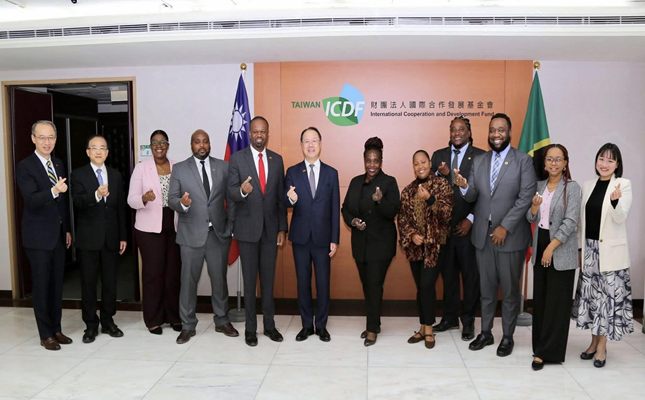
    BELMOPAN, Belize – In a powerful address to the Belize Parliament, Guyana’s President Dr. Irfaan Ali issued a compelling call for Small Island Developing States (SIDS) to secure formal representation in global climate change discussions. Speaking during his official three-day visit to the Caribbean Community nation, President Ali emphasized that climate change presents the most urgent existential threat confronting vulnerable island nations across the world.

    The Guyanese leader detailed the severe consequences already impacting SIDS, including rising sea levels, intensifying storm systems, prolonged drought periods, and extensive coastal erosion. These environmental crises directly endanger human lives, economic stability, and long-term development prospects for millions of citizens in climate-vulnerable regions.

    President Ali presented a transformative vision for SIDS engagement in climate solutions, explicitly rejecting the concept of charitable handouts. Instead, he advocated for market-based approaches that properly value the natural assets these nations protect. “We possess real assets,” President Ali declared. “Our natural resources form part of the global ecosystem that sustains life on Earth, and this value must be appropriately recognized and compensated.”

    The president highlighted the exemplary environmental stewardship demonstrated by both Guyana and Belize, noting their critical contributions to global ecosystem services including carbon sequestration, biodiversity protection, and climate regulation. He revealed alarming global statistics, noting that approximately 60% of biodiversity assets have been lost worldwide over the past six decades.

    Guyana’s pioneering Climate Biodiversity Alliance and innovative Low Carbon Development Strategy were presented as model approaches. Through jurisdictional carbon credit mechanisms, Guyana has demonstrated that preserved forests generate greater economic value standing than when cleared, creating sustainable revenue streams while maintaining ecological integrity.

    President Ali further addressed the interconnected crisis of food security, noting that over 700 million people currently face hunger globally with billions experiencing moderate or severe food insecurity. He praised Caribbean nations for establishing ambitious targets to reduce regional food import bills by 25%, emphasizing the need for sustained agricultural investment, technological adaptation, climate-resilient farming practices, and enhanced agro-processing capabilities.

  • Ghost ship threatens reef as inclement weather stalls removal

    Ghost ship threatens reef as inclement weather stalls removal

    A major environmental crisis is unfolding off the coast of Barbados as the abandoned cargo vessel MV Christina Debora remains lodged on a fragile coral reef, causing ongoing ecological damage while rough seas prevent salvage operations. According to Dr. Leo Brewster, Head of the Coastal Zone Management Unit (CZMU), the ship has already caused significant harm since running aground on the reef crest at Sam Lord’s Castle coastline.

    The 100-foot vessel poses a continuous threat through its constant rocking motion from wave action, which is actively damaging the reef structure in its immediate vicinity. Dr. Brewster reported divers have observed substantial seabed alterations, including sand displacement from beneath the hull that threatens to create channeling across the reef rooftop or cause harmful sedimentation.

    The situation is compounded by the risk of the vessel settling permanently on the reef structure if not removed promptly. This has prompted the Department of Emergency Management (DEM) to mobilize a multi-agency response team to address the escalating environmental threat.

    Salvage experts are planning a carefully controlled extraction operation that would pull the vessel backward along its original path onto the reef. Dr. Brewster emphasized that attempting to drag the ship over the reef crest would cause additional irreparable damage to the coral ecosystem.

    However, adverse weather conditions have forced authorities to pause removal efforts. Major Robert Harewood, Deputy Director of DEM, reported that drone surveillance missions were aborted due to inclement weather, though low-altitude footage confirmed the vessel remains stationary on the reef.

    With a flood watch in effect and unfavorable sea conditions persisting, agencies are maintaining constant coordination while awaiting a weather window to resume operations. Major Harewood indicated that towing operations may recommence later today or early tomorrow depending on improving conditions, with the primary objective being the safe removal of the vessel to prevent further reef degradation.

  • Cubanen schakelen over op overlevingsmodus

    Cubanen schakelen over op overlevingsmodus

    Cubans across all social strata have shifted into survival mode as they confront prolonged power blackouts and skyrocketing prices for essential goods, fuel, and transportation. This escalating crisis unfolds amid heightened pressure from the United States on the communist-led island nation.

    Interviews conducted by Reuters with over thirty residents across Havana neighborhoods reveal a population pushed to its limits. Street vendors, private sector workers, taxi drivers, and government employees alike describe increasingly desperate circumstances as basic commodities become both scarce and prohibitively expensive.

    While rural regions have long endured Cuba’s fragile and aging energy infrastructure, the capital Havana had previously managed relative stability. Now, the city known for its classic 1950s automobiles and colorful colonial architecture faces imminent collapse due to critical fuel shortages. These shortages intensified following Venezuela’s and subsequently Mexico’s cessation of oil deliveries to the island.

    The economic pressure compounds as the Cuban peso has plummeted more than 10% against the dollar within three weeks, dramatically inflating food prices. “This puts me in an impossible situation,” explains Yaite Verdecia, a Havana homemaker. “No salary can keep up with this inflation.”

    Daily life has become consumed with securing basic necessities. Lengthy queues form for gasoline, and since the U.S. blocked Venezuelan oil exports to Cuba in December, nearly all fuel now sells at higher dollar-denominated prices—a currency most Cubans cannot access. Public transportation systems strain under reduced bus services and rising fares, forcing commuters to rely on costlier private taxis.

    Even electric vehicles, once promoted as solutions during fuel shortages, sit idle due to insufficient charging capabilities during frequent power outages. The electrical grid failures have additionally created hazardous urban conditions with malfunctioning traffic lights causing accidents.

    The Cuban government, tracing its roots to the 1959 revolution, has maintained control through strict repression and significant emigration that has diminished organized domestic opposition. While mass protests haven’t materialized, residents acknowledge the unsustainable reality. Mirta Trujillo, a street vendor, emotionally confessed: “I can no longer afford to eat. I’m not against my country, but I don’t want to die of hunger.”

    For older generations like 69-year-old housekeeper Julia Anita Cobas, who makes daily expensive commutes amid transportation cuts, resilience persists but hope dwindles. “We’ve always lived with hardships,” she notes, “but we’re still here.” Yet as 32-year-old Aimee Milanes summarizes: “We’re drowning, but we can’t do anything. It’s about survival. Nothing else.”

  • Globalisation, power and the rewriting of economic rules

    Globalisation, power and the rewriting of economic rules

    The global economic landscape is undergoing a fundamental transformation as geopolitical competition increasingly dictates economic policy and international relations. Nations are strategically deploying trade policies, monetary tools, and technological controls as instruments of power rather than efficiency, creating complex challenges for smaller economies like Jamaica and other Caribbean states. These developments represent a significant departure from the post-World War II consensus that championed globalization as the pathway to prosperity.

    The traditional neoclassical economic paradigm, which promoted free trade as an unquestioned virtue, concealed inherent asymmetries in global economic architecture. Multilateral agreements and UN frameworks systematically disadvantaged developing nations, often locking them into permanent roles as raw material exporters while limiting their capacity for industrial advancement. This institutional hierarchy masquerading as neutral globalization has created enduring structural inequalities.

    China’s remarkable ascent exemplifies this shift. While Western nations outsourced manufacturing for efficiency gains, China methodically built industrial capacity and technological prowess, now accounting for approximately 30% of global manufacturing output. The Belt and Road Initiative, extending to over 150 countries, represents more than infrastructure investment—it fundamentally alters global connectivity and gives developing nations enhanced bargaining power in an increasingly logistics-driven world economy.

    The Western response has been equally transformative. The same powers that previously evangelized liberalization now embrace strategic protectionism, employing tariffs and technology export controls as geopolitical weapons. This insecurity-driven behavior has accelerated global supply chain reorganization, with nations prioritizing self-sufficiency in critical sectors including technology, energy, and defense.

    Emerging alliances reflect this new reality. BRICS members pursue divergent national interests rather than coherent opposition to Western dominance. Similarly, Canada’s expanding engagement with China demonstrates how traditional alliances are being recalibrated according to national interest rather than ideological alignment.

    Geographical significance is being revalued globally. Iceland’s strategic importance grows with Arctic shipping expansion, while Caribbean nations gain renewed relevance due to their positioning at critical trade intersections. For Jamaica, this presents both challenges in navigating competing superpower interests and opportunities to transform from periphery to pivot in the global economy.

    The new world order rewards strategic positioning over sheer size, offering smaller nations unprecedented opportunities to mediate global flows rather than merely absorb external shocks. Those who understand this new geoeconomic logic earliest stand to benefit most from the ongoing renegotiation of globalization.

  • ‘At least 200’ feared dead in DR Congo landslide — gov’t

    ‘At least 200’ feared dead in DR Congo landslide — gov’t

    A catastrophic landslide at a militia-controlled mining operation in the eastern Democratic Republic of Congo has resulted in what government officials fear could be at least 200 fatalities. The disaster struck the coltan-rich Rubaya mine in North Kivu province, an area under the control of the M23 rebel group since its April 2024 capture with alleged Rwandan support.

    The communications ministry expressed profound dismay in an official statement, confirming that massive earth movements had buried artisanal miners working under perilous conditions. According to multiple accounts, the initial collapse occurred Wednesday afternoon, followed by a second substantial landslide on Thursday morning.

    Eraston Bahati Musanga, the M23-appointed provincial governor who visited the site, corroborated the death toll estimate, noting that recovery efforts had yielded numerous bodies from the debris. The remote location and compromised communication infrastructure have severely hampered verification efforts, with information trickling in via motorcycle couriers across the region.

    The Rubaya mine represents a crucial node in global electronics supply chains, producing 15-30% of the world’s coltan—a vital mineral component in mobile phones and laptops. Thousands of informal miners typically work the pits with minimal equipment, facing extreme safety risks daily.

    Humanitarian sources report that injured survivors are receiving treatment at severely under-resourced local health centers. The tragedy occurs against a backdrop of three decades of persistent violence in eastern DRC, where mineral wealth has fueled prolonged conflict.

    The Congolese government has accused Rwanda of using the M23 militia to systematically plunder national resources, noting that between 112-125 tons of coltan are extracted monthly and exclusively routed to Rwanda. UN experts estimate the rebel group generates approximately $800,000 monthly through a taxation system imposed on mineral production and sales.

    Kinshasa has called upon the international community to recognize the scale of both the human tragedy and what it describes as organized looting enabled by armed occupation, despite an official ban on mining activities in Rubaya effective February 2025.

  • Former CDB president Dr Warren Smith has died

    Former CDB president Dr Warren Smith has died

    The Caribbean Development Bank (CDB) announced the passing of its fifth President, Dr. Warren Smith, on Friday, triggering an outpouring of tributes from the institution’s leadership and staff. Dr. Smith, a distinguished Jamaican economist, led the regional financial institution from May 2011 to April 2021 through a transformative decade marked by significant global and regional challenges.

    During his ten-year tenure, Dr. Smith navigated the institution through what the bank described as a period of profound global shocks, including two major international crises that substantially impacted Caribbean nations. Under his strategic guidance, CDB strengthened its position as a trusted development partner, successfully mobilizing resources to foster sustainable growth, build regional resilience, and drive socioeconomic transformation across Borrowing Member Countries.

    Dr. Smith’s leadership placed particular emphasis on climate resilience, disaster risk management, and pioneering development financing mechanisms. He championed the design of innovative financial instruments specifically tailored to help Caribbean states respond to and recover from natural disasters and external economic shocks.

    In recognition of his exceptional service to regional development, Dr. Smith received several honors, including Jamaica’s prestigious Order of Distinction (Commander Class), conferred during the nation’s 54th anniversary of Independence celebrations.

    Current CDB President Daniel Best remembered Dr. Smith as both a mentor and guide who “devoted his life’s work to the proposition that Caribbean people deserve strong, modern institutions that are fully on their side.” Best noted that Dr. Smith demanded excellence from his colleagues based on his profound belief in their collective responsibility to serve the Caribbean with integrity, rigor, and purpose.

    The CDB community described Dr. Smith as a thoughtful and principled leader whose decisions were consistently guided by an unwavering commitment to the people of the Caribbean. His legacy endures through the institution he helped strengthen, the professionals he mentored, and the development trajectory he helped establish for the region.

  • 3.7 Magnitude Earthquake Recorded North-Northeast of Antigua

    3.7 Magnitude Earthquake Recorded North-Northeast of Antigua

    A minor seismic event registering a preliminary magnitude of 3.7 struck the northeastern Caribbean region in the early hours of Friday, January 31st. According to automated monitoring systems operated by the University of the West Indies Seismic Research Centre, the tremor occurred at 4:46 a.m. local time (08:46 UTC) with an estimated focal depth of 12 kilometers.

    The epicenter was precisely geolocated at coordinates 17.58 degrees north latitude and 61.73 degrees west longitude, placing it approximately 53 kilometers north-northeast of St. John’s, Antigua and Barbuda. The seismic activity was also detected 102 kilometers northeast of Brades, Montserrat, and approximately 115 kilometers east-northeast of Basseterre, Saint Kitts and Nevis.

    Initial assessments from regional monitoring authorities indicate no immediate reports of structural damage, injuries, or significant impact on local communities. The Seismic Research Centre emphasized that preliminary magnitude and location data are automatically generated by sophisticated computer algorithms and remain subject to potential revision following comprehensive scientific analysis by their expert seismologists. Such minor tremors are considered common occurrences within the seismically active Caribbean region, where tectonic plate interactions frequently generate detectable but typically harmless seismic activity.

  • Magnitude 3.7 Earthquake Recorded Near Antigua Early Saturday Morning

    Magnitude 3.7 Earthquake Recorded Near Antigua Early Saturday Morning

    A minor seismic event measuring 3.7 on the Richter scale occurred in proximity to the Caribbean nation of Antigua and Barbuda during the early hours of Saturday morning. The earthquake’s epicenter was located near the islands, though precise geographical coordinates remain unspecified in initial reports.

    The tremor, while measurable by seismic instruments, appears to have caused minimal disruption to the twin-island nation. Early indications suggest no significant structural damage or injuries resulting from the geological activity. Earthquakes of this magnitude typically produce noticeable shaking of indoor items and rattling noises but rarely cause substantial damage to well-constructed buildings.

    The Eastern Caribbean region, where Antigua and Barbuda are situated, experiences frequent seismic activity due to its position along the boundary of the Caribbean and North American tectonic plates. This geological setting makes minor tremors a relatively common occurrence throughout the region.

    Local authorities and disaster preparedness agencies routinely monitor such seismic events, though no tsunami warnings were issued following this particular incident. Residents reported feeling mild vibrations but otherwise described the event as passing without major concern.

    The timing of the earthquake—during early morning hours—likely contributed to the limited public reaction, as many residents were asleep when the tremor occurred. Seismologists continue to monitor the region for potential aftershocks, though none have been reported thus far.

  • FLASH : Nearly 6,000 dead and 3,000 injured by 2025 due to insecurity

    FLASH : Nearly 6,000 dead and 3,000 injured by 2025 due to insecurity

    A stark United Nations assessment has revealed Haiti’s escalating humanitarian catastrophe, with nearly 6,000 fatalities and over 2,700 injuries documented throughout 2025. The comprehensive report from the UN Integrated Office in Haiti (BINUH) details a devastating fourth quarter alone, recording 1,523 killings and 806 injuries between October and December.

    The analysis indicates that criminal gangs maintained persistent control over portions of Port-au-Prince throughout 2025, though law enforcement operations successfully prevented further territorial expansion. These armed groups continued systematic human rights violations including targeted assassinations, widespread kidnappings, extortion networks, property destruction, and child trafficking for criminal exploitation.

    Beyond the capital, rural regions including Artibonite and Centre departments faced indiscriminate assaults as gangs attempted to consolidate power. Agricultural communities suffered particularly severe targeting, with attacks on farmers and their livelihoods triggering mass displacement, economic collapse, and intensified humanitarian needs.

    The report identifies a complex security landscape where approximately 6% of casualties resulted from actions by self-defense groups and participants in the ‘Bwa Kalé’ movement targeting alleged gang collaborators.

    Notably, over 62% of recorded casualties occurred during law enforcement operations, some conducted with support from a private military company employing drone technology and helicopter strikes. This foreign security contractor significantly expanded its operational reach beyond Port-au-Prince and Kenscoff into new territories including Cabaret and Pétion-ville. Airstrikes resulted in at least 32 civilian casualties, including two young girls.

    The UN document further highlights ongoing allegations of summary executions involving police personnel, while noting three officers killed and five wounded during the quarter, alongside one injury within the FRG forces.

  • Have you made plans yet? This is what the weather will be like this weekend

    Have you made plans yet? This is what the weather will be like this weekend

    Meteorological authorities in the Dominican Republic have issued warnings about a significant temperature drop expected to commence this Sunday, with unusually cold conditions predicted to persist for nearly a week across most territories. According to meteorological analyst Jean Suriel, who made the announcement on Friday, this weather phenomenon results from the combined impact of two approaching cold fronts and an extensive polar air mass currently moving toward the Caribbean region.

    The cooling pattern represents indirect effects of winter storms that have recently affected the United States. Suriel indicated that the polar air mass would begin influencing Dominican territory by Saturday night, with the most dramatic temperature decreases anticipated in mountainous regions and the Cibao area. Forecast models suggest possible frost conditions and sub-zero temperatures in elevated zones including Valle Nuevo, Valle del Tetero, Valle de Bao, and Valle de Lilís.

    Current weather patterns show a trough system affecting the nation alongside cold front number 23 positioned north of the Caribbean. Meteorological models indicate potential moderate to heavy rainfall developing this afternoon across northern, northeastern, northwestern, and eastern regions, including the Central Mountain Range.

    While precipitation is expected to diminish Friday as the initial trough moves away, isolated showers may still occur. Saturday forecasts predict partly cloudy conditions with moderate rainfall developing during late afternoon hours in southern and southeastern areas.

    The weather system will intensify Sunday with the approach of cold front number 24 and a new trough system, potentially increasing shower activity throughout morning, afternoon, and evening hours. Meteorological authorities have highlighted concerns about urban flooding potential due to expected significant rainfall accumulation.