分类: world

  • Record-Breaking Cold Swept Across Belize

    Record-Breaking Cold Swept Across Belize

    A severe and unprecedented cold front descended upon Belize on February 2, 2026, shattering long-standing meteorological records for the month of February. The nation experienced a dramatic plunge in temperatures, creating unusually frigid conditions for the region.

    The most extreme cold was concentrated in northern and western territories, with coastal regions including the Belize District experiencing comparatively milder, yet still unseasonably cold, weather. Preliminary meteorological data confirmed that the small communities of Libertad in the Corozal District and Gallon Jug in the Orange Walk District registered the nation’s lowest temperatures, an astonishing 5.4°C (41.7°F). This reading is preliminarily confirmed as a new all-time national low for the month.

    This historic event was not isolated. Multiple weather stations across Belize documented record-breaking lows. The town of Tower Hill recorded 7.8°C (46.1°F), while the official reading at the Philip S.W. Goldson International Airport near Belize City was 10.5°C (50.9°F). In the elevated terrain, Baldy Beacon dropped to 6.6°C (43.8°F), and the station at Melinda also matched the airport’s reading of 10.5°C (50.9°F), all setting new February benchmarks for their respective locations.

    The National Meteorological Service of Belize has provided a forecast indicating that this arctic blast is temporary. Officials anticipate a gradual return to seasonal norms, with temperatures expected to steadily climb over the ensuing days, offering relief from the exceptional chill.

  • CARICOM Highlights Barbuda’s Codrington Lagoon on World Wetlands Day

    CARICOM Highlights Barbuda’s Codrington Lagoon on World Wetlands Day

    ST. JOHN’S, Antigua – The Caribbean Community (CARICOM) marked World Wetlands Day 2026 by emphasizing the ecological significance of Antigua and Barbuda’s Codrington Lagoon, recognized as a wetland of international importance under the Ramsar Convention. This designation places the lagoon among 16 protected Ramsar Sites throughout the Caribbean region.

    The annual observance, celebrated globally on February 2nd, carried the thematic focus ‘Wetlands and Traditional Knowledge: Celebrating Cultural Heritage.’ CARICOM’s official statement underscored the vital functions wetlands serve in maintaining biodiversity, enhancing climate resilience, ensuring food security, and providing coastal protection. These ecosystems create essential habitats for marine and avian species while simultaneously supporting sustainable development and local livelihoods.

    Beyond Codrington Lagoon—Antigua and Barbuda’s sole Ramsar-listed site—CARICOM highlighted multiple protected wetlands across member states. These include Inagua National Park in The Bahamas, Graeme Hall Swamp in Barbados, Crooked Tree Wildlife Sanctuary and Sarstoon Temash National Park in Belize, Levera Wetland in Grenada, and various wetland systems in Jamaica. Saint Lucia’s Mankòtè Mangrove and Savannes Bay, Suriname’s Coppenamemonding Nature Reserve, and several wetland complexes in Trinidad and Tobago complete the regional network of conserved areas.

    CARICOM reiterated its urgent call for enhanced protection, restoration, and sustainable management practices to preserve these critical ecosystems for current and future generations. The organization’s advocacy aligns with global efforts to raise awareness about wetland conservation challenges and opportunities.

  • Cuban Ambassador to Dominica meets with solidarity group and Cuban graduates

    Cuban Ambassador to Dominica meets with solidarity group and Cuban graduates

    In a significant demonstration of international camaraderie, the Cuban Embassy in Dominica orchestrated a diplomatic gathering on January 29th, uniting Ambassador Miguel Fraga with representatives from the Solidarity Group with Cuba and the Association of Graduates in Cuba. The assembly served as a platform for comprehensive dialogue regarding Cuba’s contemporary socio-economic landscape.

    Ambassador Fraga delivered a thorough exposition of Cuba’s ongoing economic and political difficulties, highlighting the profound consequences of the prolonged economic, commercial, and financial blockade. He articulated how these sanctions have precipitated substantial hardships for the Cuban populace and contributed to the nation’s economic constraints and global marginalization.

    The convocation further illuminated the robust educational partnership between the two nations. Since the initiation of academic exchanges in 1979, more than 400 Dominican scholars have completed advanced studies in Cuba. This academic pipeline has yielded exceptional dividends for Dominica’s public health infrastructure, with over 120 medical professionals returning to enhance domestic healthcare services and national development initiatives.

    The timing of this diplomatic engagement holds particular significance, coinciding with two imminent historic milestones: the 30th anniversary of formal diplomatic relations between Dominica and Cuba, and the centennial commemoration of Fidel Castro Ruz’s birth. Attendees deliberated appropriate commemorative activities to honor these occasions and reinforce the nations’ shared historical bonds.

    The proceedings culminated in a mutual reaffirmation of sovereignty, international solidarity, and cooperative partnership. Both parties expressed unwavering commitment to maintaining their bilateral relationship, which remains grounded in mutual respect and enduring friendship despite external pressures and global challenges.

  • CariCOF warns of severe weather activity as early as April

    CariCOF warns of severe weather activity as early as April

    BRIDGETOWN, Barbados – The Caribbean Climate Outlook Forum (CariCOF), headquartered in Barbados, has issued a significant weather advisory warning of severe meteorological events across the region. According to their latest three-month forecast covering February through April, unusually warm temperatures in the Tropical North Atlantic Ocean will trigger extreme weather patterns commencing as early as April.

    The forecast indicates heightened risks for southern Belize, the Guianas, the Greater Antilles, and mountainous regions of the Lesser Antilles. These areas face potentially catastrophic flooding, flash floods, and cascading environmental hazards with impacts expected to intensify after March. The period marks the annual peak of the Caribbean Dry Season in March and transitions into the region’s heat season.

    Simultaneously, the abnormal ocean warmth will create contradictory conditions elsewhere. The ABC Islands (Aruba, Bonaire, and Curaçao) and parts of the Lesser Antilles will experience increasingly frequent short dry spells. Temperature patterns will shift dramatically from comfortable February conditions to episodes of significant heat discomfort by March, particularly affecting inland areas of Belize, the Guianas, and Trinidad.

    The report highlights concerning drought developments. While rainfall totals from February to April are projected to be normal or above average in the Bahamas, Barbados, Grand Cayman, Trinidad and Tobago, and the Windward Islands, this precipitation will prove insufficient to alleviate long-term drought impacts. The ABC Islands, St. Kitts and Nevis, and the Windward Islands continue to suffer from substantial rainfall deficits dating back to the 2023 Wet Season.

    CariCOF identifies specific drought developments: short-term drought is currently evolving in northern Haiti, St. Kitts, and St. Lucia, with potential development in the northwestern Bahamas, northern Dominican Republic, Guadeloupe, Martinique, St. Martin, and St. Barts. More critically, long-term drought has been classified as imminent in the ABC Islands, Grenada, and St. Lucia, while already evolving in Dominica, Martinique, and St. Kitts.

  • Antigua and Barbuda Welcomes Ghanaian Health Workers in Healthcare Partnership

    Antigua and Barbuda Welcomes Ghanaian Health Workers in Healthcare Partnership

    In a significant move to fortify its national healthcare infrastructure, the Caribbean nation of Antigua and Barbuda has officially welcomed a contingent of more than 100 medical professionals from Ghana. The historic arrival marks a strategic partnership rooted in shared heritage and a common purpose to enhance public health services.

    The formal welcoming ceremony, held on Saturday evening, was attended by a high-level delegation including Governor General Sir Rodney Williams, senior health officials, and members of the diplomatic corps. Speakers at the event underscored the deep historical and cultural connections between Africa and the Caribbean, framing the collaboration as more than a simple workforce transfer.

    Sir Rodney Williams, himself a medical doctor, articulated the profound symbolism of the initiative. He characterized the arrival of the nurses and health workers as a powerful testament to international cooperation and a celebration of a common ancestry, noting that the partnership is fundamentally built upon a foundation of mutual respect and aligned objectives.

    From a operational standpoint, Health Minister Sir Molwyn Joseph outlined the strategic intent behind the deployment. The infusion of approximately 120 skilled professionals is a calculated effort to significantly boost the capacity and resilience of the nation’s hospitals and clinics, addressing critical gaps in the healthcare system.

    Looking beyond immediate healthcare needs, Minister Joseph revealed potential for a broader bilateral relationship, suggesting the collaboration with Ghana could expand into other strategic sectors such as education and trade. This sentiment was reinforced by Permanent Secretary Stacey Gregg-Paige, who personally assured the newly arrived professionals of the government’s full institutional support as they integrate into their new roles within the Antiguan and Barbudan health system.

  • Police say decapitated women found in Elías Piña were killed in Haiti

    Police say decapitated women found in Elías Piña were killed in Haiti

    Dominican authorities have confirmed that the gruesome discovery of decapitated Haitian women’s bodies in border areas originated from crimes committed in Haiti. National Police spokesperson Diego Pesqueira clarified Monday that the victims were murdered in Haitian territory before being discarded in the Binational Caña River, where currents carried them across the border into the Dominican Republic’s Elías Piña province.

    The macabre case involves at least three confirmed instances where dismembered bodies have been recovered on Dominican soil near the town of Macasías. Pesqueira detailed the transnational nature of the investigation, emphasizing that while the crimes occurred in Haiti, the downstream movement of bodies has created a complex binational law enforcement challenge.

    Law enforcement coordination between the two nations has intensified, with three suspects currently under investigation. In a significant development, the Dominican Republic Army apprehended one individual on January 27, who was subsequently transferred to Haitian authorities for questioning. The spokesperson stressed that ongoing cooperation remains essential given the river’s role as a natural border between the two countries.

    Authorities acknowledge that critical questions remain unanswered, including the identities of the victims and the precise circumstances surrounding their deaths. The investigation continues as both nations work to address this disturbing pattern of violence affecting their shared border region.

  • Fighting fuels deepening humanitarian crisis in Sudan’s South Kordofan

    Fighting fuels deepening humanitarian crisis in Sudan’s South Kordofan

    The United Nations has issued a grave warning that escalating military confrontations in Sudan’s South Kordofan state are triggering massive population displacements and creating conditions for a full-scale humanitarian disaster. According to assessments from the UN Office for the Coordination of Humanitarian Affairs (OCHA), civilian populations are enduring intensified violence, critical supply shortages, and the near-total breakdown of essential services as combat persists between the Sudanese Armed Forces (SAF) and the paramilitary Rapid Support Forces (RSF).

    UN Deputy Spokesperson Farhan Haq reported that security conditions in the strategic city of Dilling have deteriorated dramatically in recent weeks, with widespread artillery bombardments and drone strikes targeting residential areas. Communication blackouts throughout the region have prevented independent verification of casualty numbers, though local sources indicate potentially significant civilian fatalities.

    The conflict has forced approximately 117,000 residents—nearly half of Dilling’s population—to flee their homes. Those remaining face severe food shortages, collapsed economic systems, and depleted medical facilities. Similarly, the state capital Kadugli has witnessed the exodus of over 80% of its population, with an estimated 147,000 people displaced to other regions.

    Humanitarian assessment teams visiting Abu Jubaiha documented a continuous stream of displaced families arriving from conflict zones, with 250-300 individuals reaching the area daily. Many survivors reported journeying for weeks under perilous conditions, with some fatalities occurring during escape attempts.

    Across the broader Kordofan region, recent fighting has displaced more than 88,000 people since late October. Relief operations face severe constraints due to security risks, supply chain disruptions, and movement restrictions. A critical aid convoy destined for Dilling and Kadugli remains immobilized in El Obeid, North Kordofan, awaiting security guarantees.

    The crisis extends beyond South Kordofan, with the International Organization for Migration reporting over 127,000 people displaced from North Darfur’s capital El Fasher between October and January. Most remain within North Darfur while others have fled to neighboring states, overwhelming already strained resources.

    UN officials are demanding immediate cessation of attacks on civilian infrastructure and urging all conflict parties to permit safe, unimpeded humanitarian access. With needs escalating across Sudan, OCHA has launched an urgent funding appeal for $2.9 billion to support approximately 20 million vulnerable people throughout 2026.

  • FLASH : Canoe capsizes in French Guiana, 2 Haitians rescued and 4 missing

    FLASH : Canoe capsizes in French Guiana, 2 Haitians rescued and 4 missing

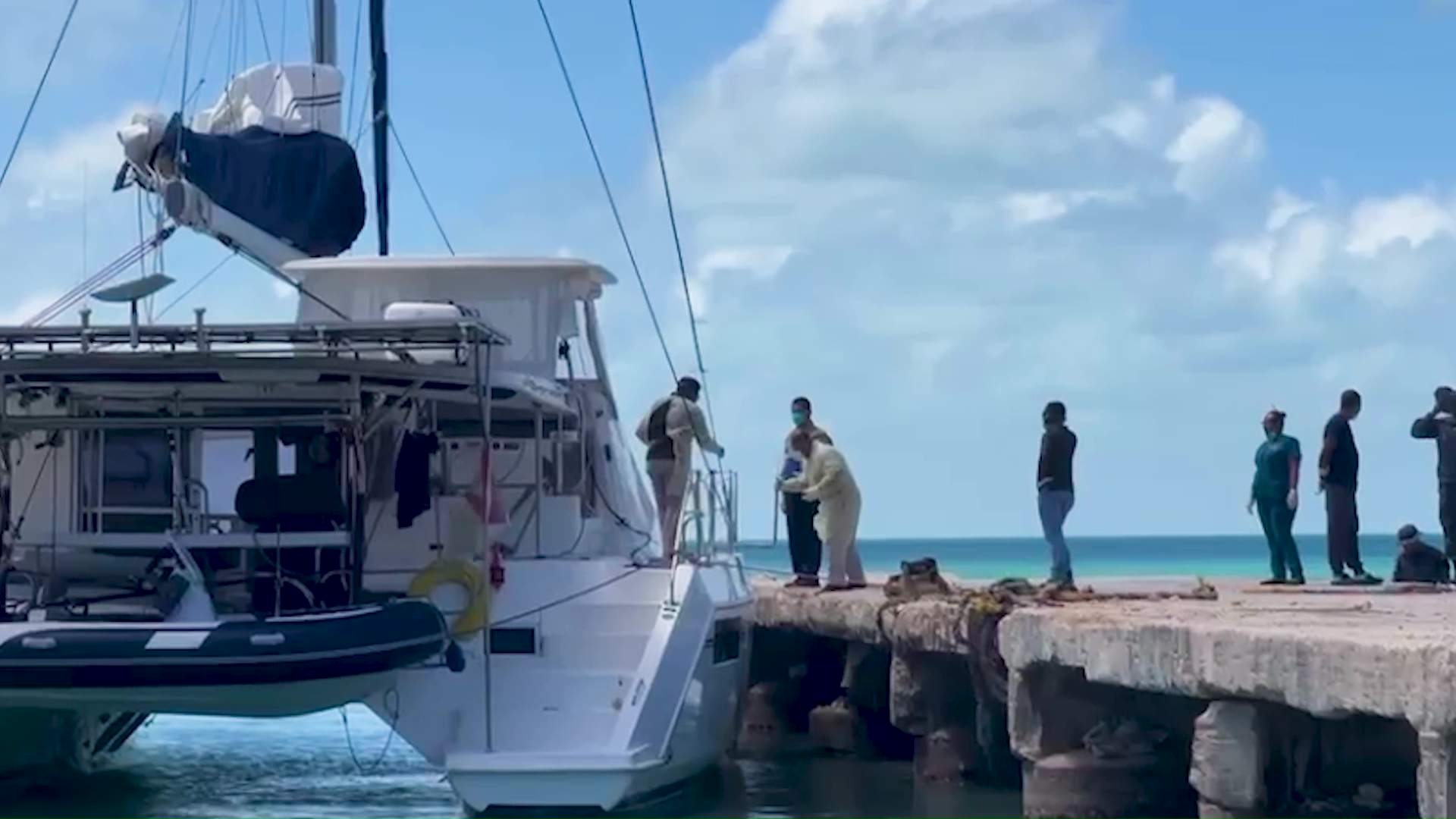
    A devastating maritime incident has unfolded in French Guiana, resulting in significant casualties among Haitian nationals. On the morning of Saturday, January 31st, at approximately 6:15 AM, an aluminum-hulled canoe transporting six Haitian teachers met with tragedy on the Maroni River near Grand-Santi. The vessel encountered critical engine failure, rapidly taking on water before ultimately sinking beneath the surface.

    According to official reports from the Haitian Ministry of Foreign Affairs, which expressed profound dismay at the incident, two passengers alongside the canoe operator were successfully rescued by emergency response teams. Tragically, four individuals remained unaccounted for in the immediate aftermath. Subsequent developments confirmed the recovery of two bodies on Sunday, with identification procedures currently underway as confirmed by French Guiana Prefect Antoine Poussier. The damaged canoe has also been retrieved from the waterway.

    The survivors’ testimonies revealed concerning circumstances preceding the accident. Prosecutor Aline Clérot of Cayenne disclosed that the group had spent the previous evening at a bar in neighboring Suriname before attempting their return journey to Grand-Santi. Critical safety violations were noted: none of the passengers wore life jackets despite mandatory regulations effective since January 1st, 2026, and the navigation occurred during prohibited nighttime hours.

    Authorities have launched comprehensive search operations involving approximately thirty rescue personnel, including divers, with river and aerial assets coordinated extensively. The Civil Security helicopter Dragon 973 continues aerial surveillance while firefighters, gendarmerie units, and approximately ten additional canoes participate in the mission. Technological reinforcement through drone deployment commenced Monday to enhance search capabilities.

    The Surinamese canoe operator now faces serious legal consequences, having been charged with involuntary manslaughter and endangering lives due to flagrant violation of safety protocols. Meanwhile, the Haitian government has demonstrated active engagement through its Consulate General in Cayenne, maintaining constant communication with French Guianese authorities throughout the ongoing operations.

  • Paus Leo dringt aan op oprechte dialoog tussen VS en Cuba

    Paus Leo dringt aan op oprechte dialoog tussen VS en Cuba

    Pope Leo XIV has expressed profound concern regarding the deteriorating relations between the United States and Cuba, calling for genuine diplomatic engagement to prevent further humanitarian consequences. The pontiff’s remarks came during his weekly Angelus prayer at St. Peter’s Square, where he endorsed the Cuban bishops’ appeal for constructive dialogue between the nations.

    The Vatican’s intervention follows President Donald Trump’s recent announcement of impending import tariffs on countries supplying oil to Cuba. This economic measure represents Washington’s latest effort to intensify pressure on the Cuban regime, particularly following the January ousting of Venezuelan President Nicolás Maduro, Cuba’s principal regional ally.

    President Trump justified the tariff threat as essential to “protect U.S. national security and foreign policy interests against the malicious actions and policies of the Cuban regime.” The president previously predicted Cuba’s imminent collapse, noting that Venezuela—historically the island’s primary oil supplier—had ceased both petroleum exports and financial support to Havana.

    Cuban Foreign Minister Bruno Rodríguez characterized the U.S. measures as constituting an “international emergency,” describing them as an “unusual and extraordinary threat” to Cuba’s stability. Meanwhile, aboard Air Force One en route to Florida, President Trump reiterated his call for negotiations with Cuba, asserting that “it doesn’t have to be a humanitarian crisis.”

    The geopolitical tension marks a significant reversal from the brief period of détente experienced during the Obama administration, returning to the historically strained relations that have characterized most of the six-decade-long standoff between the two nations.

  • US Embassy invites Jamaicans to apply for visas ahead of World Cup 2026

    US Embassy invites Jamaicans to apply for visas ahead of World Cup 2026

    KINGSTON, Jamaica — The United States Embassy located in Jamaica has initiated a campaign encouraging local residents to submit visa applications for attendance at the highly anticipated 2026 FIFA World Cup. Utilizing the social media platform X, the diplomatic mission announced that the United States stands ready to host international visitors for what it describes as potentially the greatest World Cup in history. The embassy’s statement emphasized, “Be a part of history and apply for your US visa today!” while also underscoring the necessity for all applicants to fulfill eligibility criteria as mandated by U.S. immigration laws.

    The 2026 tournament is set to be an unprecedented cross-continental event, jointly hosted by Mexico, Canada, and the United States. Official reports indicate that the event has already spurred record-breaking ticket demand, highlighting immense global anticipation.

    However, this promotional effort unfolds against a backdrop of significant apprehension among potential attendees. On various social media channels, users have voiced hesitancy about traveling to the U.S., specifically referencing the nation’s current stringent immigration policies and heightened enforcement measures. Adding a layer of complexity to the situation, prominent football figures, including ex-FIFA president Sepp Blatter, have endorsed discussions surrounding a potential fan boycott of matches held in the United States.

    Further intensifying the diplomatic atmosphere are recurrent remarks from former U.S. President Donald Trump regarding the potential annexation of Greenland, which have contributed to international tensions. Conversely, Trump has separately and publicly voiced strong confidence that the 2026 World Cup will set a new benchmark for excellence in the tournament’s history.