Two leading Caribbean climate research institutions, the Caribbean Institute of Meteorology and Hydrology (CIMH) and the University of the West Indies Climate Studies Group Mona (UWI CSGM), have issued an urgent early call for regional governments, private enterprises, agricultural producers and households to implement proactive preparations for extreme climate events. Forecasters project a developing El Niño will bring prolonged hotter, drier conditions across the Caribbean throughout 2026 and 2027, bringing cascading, compound climate risks that threaten lives, livelihoods and regional economies.
分类: world
-
Region moves to strengthen disaster response data systems
As climate change intensifies the frequency and severity of natural hazards across the Caribbean, the region’s growing exposure to catastrophic disaster impacts has pushed regional cooperation bodies and national governments to prioritize improvements in how they track and respond to population displacement. Over the past 10 years alone, more than 5 million people in the region have been forced to leave their homes following major disasters, a statistic that underscores the urgent gap in consistent, actionable data for response efforts. To address this critical shortcoming, a two-day collaborative workshop opened this week at Bridgetown’s Courtyard by Marriott, bringing together a cross-sector group of stakeholders from 13 member states of the Caribbean Disaster Emergency Management Agency (CDEMA). Attendees include representatives from national disaster management offices, regional intergovernmental agencies, United Nations partnership bodies, and independent technical experts, all united by a shared goal: drafting universal standard operating procedures (SOPs) for collecting and analyzing displacement data as part of end-to-end disaster management.
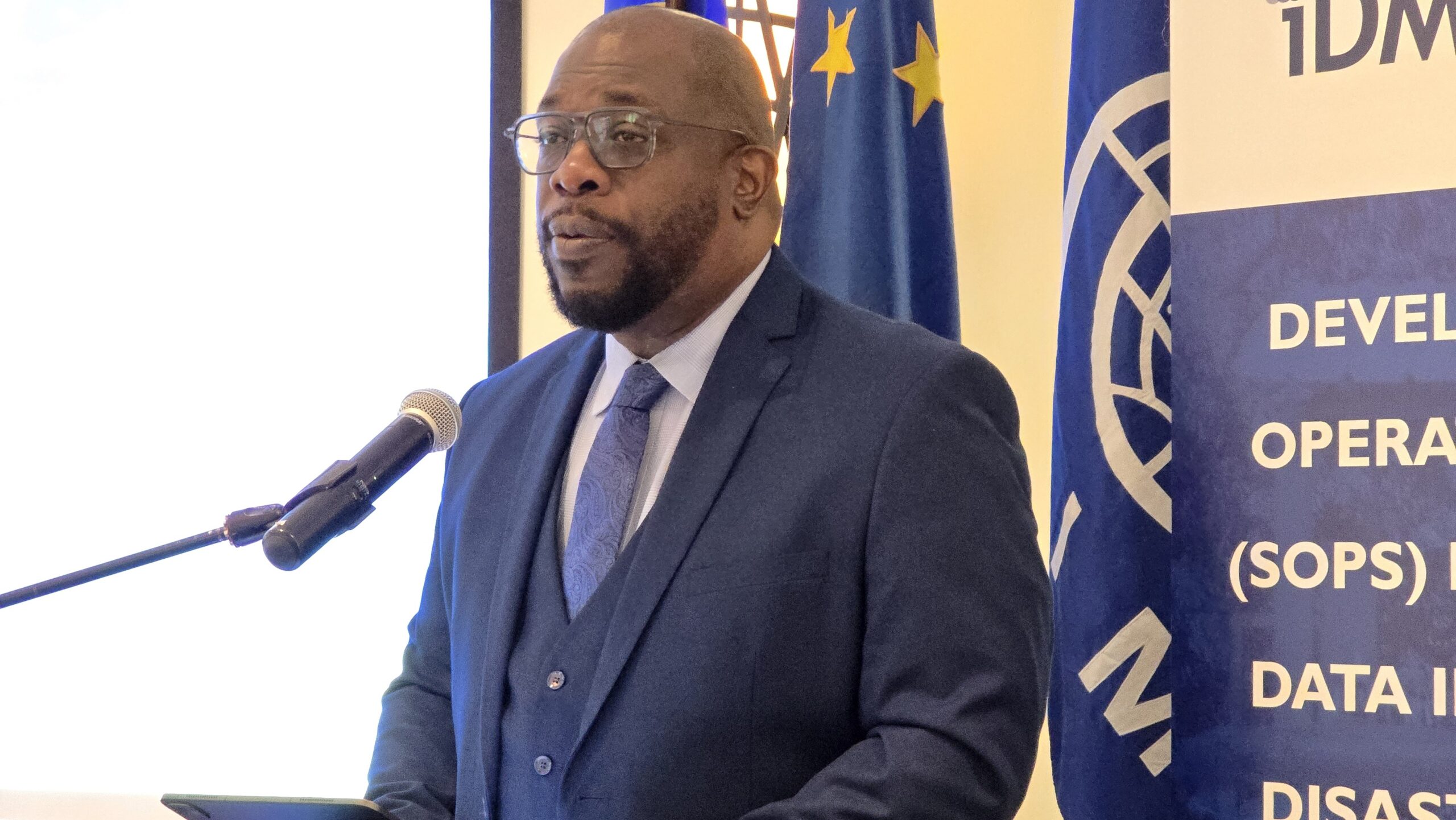
Barbados’ Minister of Home Affairs and Information Gregory Nicholls opened the workshop with official endorsement of the initiative, outlining Barbados’ existing approach to integrated disaster displacement management. “Comprehensive disaster management in Barbados addresses the displacement of individuals through a coordinated, policy-driven system that integrates preparedness, emergency response and long-term recovery,” Nicholls stated.
Mandela Christian, CDEMA’s Programme Manager for Preparedness and Response, emphasized that the lack of standardized displacement data has long created bottlenecks for effective response across the region. After every major hazard event, he explained, the same fundamental questions go unanswered without consistent tracking: How many people have been displaced? Where are they currently residing — in official emergency shelters, informal community settlements, or with host families across the island or national boundaries? What specific humanitarian needs do they have, and what planning is in place to address those needs and make displacement more manageable? “These are things that we need to know in order to provide critical support to our population or citizens,” Christian noted. He added that reliable standardized data is not only critical for immediate humanitarian aid delivery, but also for logistics coordination, civilian protection, public health response, and the dignified long-term recovery that must follow any emergency.
Christian detailed the core objectives of the workshop, explaining that the new SOPs will be embedded within CDEMA’s existing damage assessment and needs analysis data framework. The protocols will cover three key stages of disaster response: pre-impact baseline data assessment, initial shelter operations management, and early post-disaster damage and humanitarian needs evaluation. The SOPs will also establish common terminology for displacement tracking, uniform data collection standards, cross-system interoperability rules, and clear delineation of roles and responsibilities for everyone from local shelter managers to national emergency operation centers and regional coordination bodies. “It will establish common definitions, data collection standards, interoperability protocols, and enhance clarity on lines of responsibilities across shelter managers, emergency operation centres, and regional systems that depend on that information to coordinate an effective response,” Christian said. He added that the harmonized protocols will also directly strengthen the information management infrastructure of the Caribbean Development Partners Group and regional coordination centers, ensuring that when regional response mechanisms are activated, the data shared across coordination structures is consistent, reliable, and usable for immediate action.
Nicholls echoed the importance of people-centered data practices, stressing that reliable displacement data exists first to serve affected communities, not bureaucratic processes. “Good data helps respondents locate families faster, match assistance to real needs, and protects dignity. Especially when systems are under stress, displacement data must always serve people and not processes,” he said. Standardized data also eases the burden on frontline communities and responders, he explained, by allowing for more targeted aid distribution, more efficient management of shelter occupancy flows, and reduced strain on both host families that take in displaced people and the first responders working on the ground.
The minister also highlighted the often-overlooked impact of disaster displacement on education, noting that most emergency shelters in the region are repurposed school buildings. While using school facilities as shelters is sometimes unavoidable, Nicholls explained, the government of Barbados prioritizes minimizing disruption and returning schools to their core educational function as quickly as possible. “Recovery is not only about infrastructure but also about children returning to safe, stable learning environments without delay. Better displacement and shelter data is key to enabling that transition,” he stressed.
Looking ahead, Nicholls outlined Barbados’ ongoing work to link disaster displacement management with broader regional migration governance and the CARICOM free movement framework. As climate change increasingly drives cross-border mobility across the Caribbean, the country is developing a new modernized facility to support displaced people from across the region. “We have deliberately streamlined our integration processes, strengthening coordination with disaster preparedness, response and recovery frameworks, recognising that climate-related hazards increasingly shape mobility across our region as we move forward together with continued collaboration to address the remaining vulnerabilities,” he said.
-
Dominica revokes citizenship of second son of Iranian political adviser
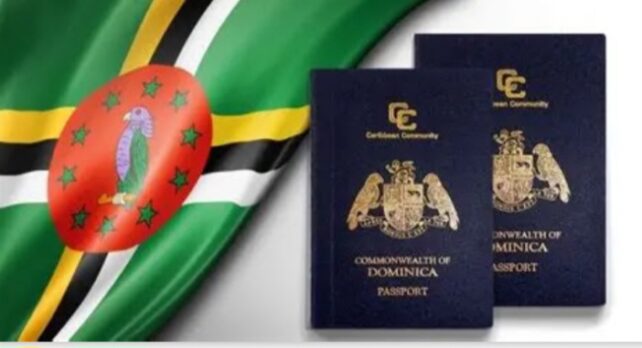
The Caribbean island nation of Dominica has taken the unusual step of revoking citizenship from Abolfazl Shamkhani, the younger son of the late Iranian political adviser Ali Shamkhani. This move marks the second time in eight months that a member of the high-profile Shamkhani family has lost their citizenship obtained through Dominica’s controversial Citizenship by Investment (CBI) program.
According to an official document obtained by the Organized Crime and Corruption Reporting Project (OCCRP), the revocation order was formally signed on March 27, 2026 by Daren Pinard, Dominica’s State Minister. Dominican authorities have formally accused Abolfazl of failing to disclose critical material information when he secured citizenship through the CBI pathway back in 200, applying under the false alias “Sami Hayek”. Under local regulations, Abolfazl retains the right to file a formal request for an official inquiry into the revocation order within a 25-day window from the notification date.
This action follows a nearly identical decision taken against Abolfazl’s older brother, Hossein Shamkhani, who was stripped of his Dominican citizenship back in August 2025. As first reported by Dominica News Online at the time, Hossein had also obtained his citizenship through the same investment program operating under an assumed name, “Hugo Hayek”. Just weeks before Hossein’s citizenship was revoked, Western governments had imposed sweeping sanctions on him, alleging that he oversaw a multibillion-dollar transnational oil smuggling network that generates illicit revenue for both the Iranian and Russian governments.
The U.S. Treasury’s Office of Foreign Assets Control (OFAC) has publicly outlined that members of the Shamkhani family systematically use investment-based citizenship programs to obtain second passports, allowing them to hide their direct connections to Iran while carrying out large-scale international commercial activities that violate global sanctions regimes.
An independent OCCRP investigation published in March 2026 uncovered that the two brothers collectively own at least four high-end luxury villas in Dubai, with a combined estimated value of nearly 29 million U.S. dollars. All of these properties are registered under the false Dominican aliases the brothers used to obtain their citizenship. Cross-referenced corporate records also link the alias “Sami Hayek” to a Cyprus-based investment fund, while both brothers share ties to a Turkish chemical manufacturing company that was later added to OFAC’s sanctions list.
On March 6, 2026, the U.S. Department of Justice filed civil forfeiture complaints seeking to seize more than 15.3 million U.S. dollars in assets that prosecutors have linked directly to the Shamkhani network. Court documents name Abolfazl as the manager of multiple corporate entities tied to his older brother’s sanctioned operations, though Abolfazl himself has not yet been personally sanctioned or criminally charged by U.S. authorities.
In a policy shift implemented just days before Abolfazl’s revocation order was signed, Dominica moved to suspend all new citizenship applications from Iranian nationals through its CBI program, with the new rule taking effect on March 24. Under the updated policy, Iranian nationals are only eligible to apply for CBI citizenship if they have maintained residency outside Iran for a minimum of 10 consecutive years, hold no tangible assets within Iranian borders, and have not conducted any commercial activity with Iranian entities over that period.
Since June 2024, Dominican authorities have revoked a total of 68 CBI passports on the grounds of fraud or intentional misrepresentation on applications. Data shows that Iranian applicants account for six percent of these revocation cases.
Dominica’s CBI program, which grants citizenship in exchange for qualifying investment into the country, has recently faced growing international pressure and heightened scrutiny from both the United States and the European Union. In response to concerns over misuse of the program for illicit activity, Washington has implemented new visa restrictions on Dominican citizens traveling to the United States, while Brussels has issued formal warnings that the operation of the program as currently structured could lead to Dominica being removed from the EU’s visa-free travel scheme.
-

Two Jamaicans among Commonwealth young leaders honoured as part of Queen Elizabeth II’s centenary
KINGSTON, Jamaica — In a milestone recognition for youth leadership across the Commonwealth, two Jamaican change-makers have earned a spot among the 100 outstanding young leaders named in the 2026 Queen Elizabeth II Commonwealth Trust (QECT) 100 Young Leaders Awards, the British High Commission in Kingston announced Tuesday.
The honorees bring vastly different but equally impactful work to the cohort: Nicholas Kee, founder and executive director of Kee Farms Jamaica, who has pioneered regenerative climate solutions that span both ocean and land ecosystems; and Zantaye Thomas, founder and executive director of Sign Clubs of Jamaica, a leading advocate for marginalized deaf communities across the island.
Kee’s initiatives bridge local fisher communities, regional academic institutions and global industry partners to turn ambitious climate action frameworks into tangible outcomes: sustainable livelihoods for coastal populations, rigorous biodiversity research, and new green investment opportunities that benefit both people and the planet. Beyond his on-the-ground work, he also dedicates time to mentoring the next generation of young leaders, encouraging youth to take charge of climate and tech-focused innovation.
For her part, Thomas has centered her work on advancing deaf inclusion, cultural recognition, and accessibility across Jamaica. A First-Class Honours graduate of The University of the West Indies Mona campus and a sitting National Youth Parliamentarian, Thomas leverages media outreach and targeted advocacy to amplify the voices of marginalized groups, while motivating young people to lead with authenticity, clear purpose and unwavering passion.
Established to mark what would have been the 100th birthday of the late Queen Elizabeth II, the founding patron of the QECT, the awards honor the late monarch’s long-held conviction that young people hold the power to strengthen communities and build a better future for all, the British High Commission statement explained. The 2026 cohort was selected from thousands of applications submitted from every corner of the Commonwealth, with honorees chosen for their impactful work across priority sectors including education and employability, environmental action, food and agriculture, public health, and social inclusion.
British High Commissioner to Jamaica Alicia Herbert praised the selection of the two Jamaican leaders, noting that their work showcases the creativity, resilience and innate leadership potential of Jamaica’s youth. “We are proud to support initiatives that empower young people to shape their communities and contribute to a stronger future for all,” Herbert added.
Stephen Ball, Chair of the QECT, echoed that sentiment, emphasizing that celebrating these young leaders is a fitting tribute to Queen Elizabeth II’s lifelong commitment to service, community building and expanding opportunity for all. “These 100 young leaders represent the very best of the Commonwealth, and their work is shaping a more inclusive and hopeful future, with empowered young people at its heart,” Ball said.
In the months ahead, all 100 awardees will take part in tailored professional engagements, targeted capacity-building programs, and global networking events designed to help them scale their work and deepen their positive impact on their communities. Recognition events will also be hosted across the Commonwealth in partnership with local British High Commissions, to celebrate the young leaders’ achievements and strengthen connections between youth-led innovation and the broader global development community.
-

Migrants deported from US stranded, ‘scared’ in DR Congo
Fifteen Latin American migrants who sought asylum in the United States now find themselves trapped in a restricted airport-area compound in Kinshasa, the capital of the Democratic Republic of Congo, the latest group caught in a deeply controversial Trump-era immigration policy that deportes undocumented migrants to third-party nations thousands of kilometers from their home regions.
What was supposed to be a path to safety in the US has turned into an ordeal of uncertainty and poor treatment for the group, who told AFP they endured a 27-hour transcontinental flight with their hands and feet bound in shackles before being deposited in the central African country. For 30-year-old Colombian migrant Gabriela, the situation has been nothing short of terrifying. She only learned her final destination one day before the deportation, and now struggles to navigate a country where she does not speak the official French language.
“I didn’t want to go to Congo. I’m scared, I don’t know the language,” Gabriela explained, summing up the despair shared by the entire group.
DR Congo is one of at least seven African nations that have agreed to accept deported migrants under the US scheme, which typically offers the host countries financial or logistical backing in exchange for taking in deportees. Other participating nations include Cameroon, Equatorial Guinea, Eswatini, Ghana, Rwanda and South Sudan. The first cohort of deportees arrived in Kinshasa last Friday, and to date, host country authorities have released almost no public information about what will happen to the migrants after their arrival.
The International Organization for Migration (IOM), which manages the migrants once they are issued short-stay visas, says it only offers assisted voluntary return for migrants who formally request the service. Since their arrival, all 15 South American migrants have been confined to a gated compound near Kinshasa’s main airport, barred from leaving the premises even as they wait for their fate to be decided.
The compound itself consists of rows of small, plain white-walled cabins where the group sleeps. Uniformed police and military vehicles are stationed outside the perimeter, and unidentified private military contractor personnel have also been spotted on site. Confined to the grounds, the migrants pass their days glued to their mobile phones, desperately trying to reach family members back home with no local language skills to help them navigate their new surroundings.
The group says they have each received roughly $100 in aid from IOM officials, but are not allowed to receive outside visitors. Multiple migrants, including Gabriela, have already fallen ill with fevers, vomiting and severe stomach issues since arriving. While some have been given basic medication, Gabriela says no licensed healthcare worker has ever come to the compound to examine the sick migrants.
Four of the migrants confirmed they have only been issued seven-day short-stay visas, which can be extended for a maximum of three months. Once the initial week-long visa period expires, however, the migrants say they have been told all official support will end, leaving them to survive on their own in one of the world’s poorest nations. The World Bank estimates nearly 75% of DR Congo’s 102 million population lives below the international poverty line, and Kinshasa, a megacity of 17 million, suffers from widespread lack of access to consistent running water and electricity, with dilapidated infrastructure across most residential areas.
“They’ve got us cornered because they tell us: if you don’t accept the repatriation programme, you’ll be stuck in a mess here in Congo,” Gabriela said, visibly distressed. “That is inhumane and unfair.”
For 25-year-old Colombian Hugo Palencia Ropero, who spent five months in US immigration detention before being deported, the situation in DR Congo is more frightening than the instability he left behind in his home country. Though he acknowledged the compound provides basic meals, room cleaning and security, he says the uncertainty of his future makes every day unbearable.
“I’m more afraid of being here in Africa than in Colombia,” Ropero said. “If the seven days go by and we don’t receive any further assistance, things will get very difficult for us, especially since we don’t have work permits.” He added that he would accept any travel document offered to him just to leave DR Congo as soon as possible.
The arrival of the Latin American deportees has already sparked fierce pushback from Congolese civil society and social media users, who question why their already resource-strapped nation should absorb migrants deported from the US. The scheme, first implemented under the Trump administration, continues to draw widespread criticism from human rights groups over its lack of transparency and disregard for migrant wellbeing.
-
Three ships targeted in Hormuz, Iran seizes two, says Guards
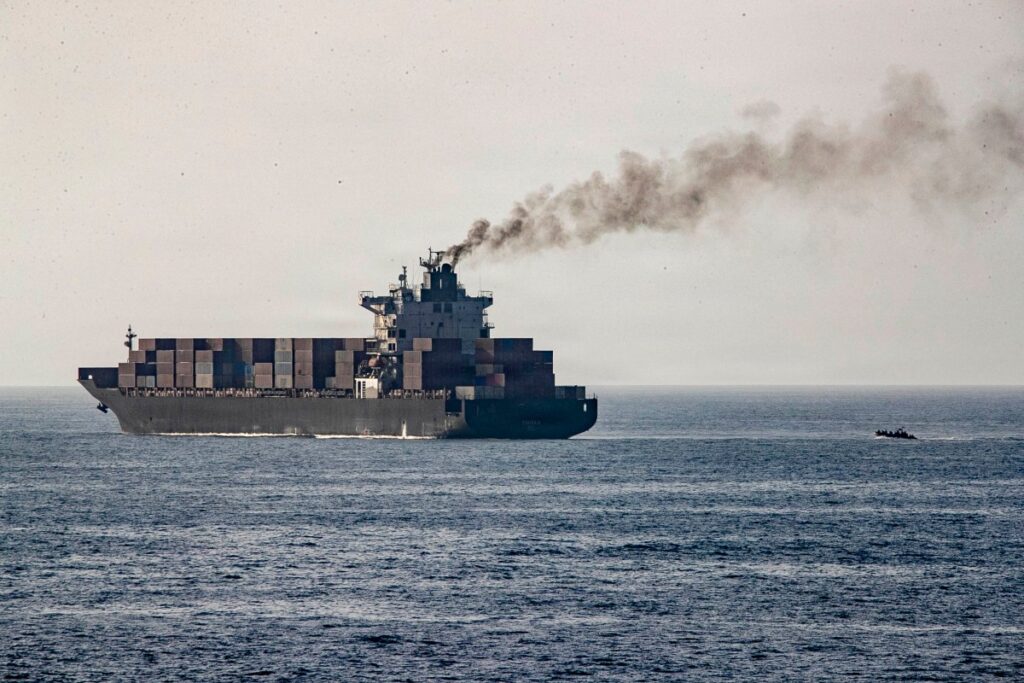
Tensions in the critical Middle Eastern waterway the Strait of Hormuz flared once again on Wednesday, as Iranian military forces seized two container vessels and opened fire on a third, escalating security risks for global shipping at the heart of the ongoing regional conflict. Multiple maritime security monitors and Iranian official sources have confirmed the series of interconnected incidents.
The United Kingdom’s Maritime Trade Operations (UKMTO), a leading British maritime security agency, first reported that an Iranian gunboat opened fire on a container ship roughly 15 nautical miles northeast of Oman’s coast. In its official briefing, UKMTO noted that the ship’s captain reported the IRGC gunboat approached the vessel before opening fire, causing significant structural damage to the ship’s bridge. No fires or oil spills that would impact the surrounding marine environment were reported, and all crew members on board escaped unharmed.
According to assessments from British maritime security firm Vanguard Tech, the targeted vessel was sailing under the flag of Liberia, and had received prior confirmation that it had official permission to traverse the Strait of Hormuz. Iranian state news agency Tasnim pushed back on this account, claiming the ship had repeatedly ignored explicit warnings from Iranian armed forces to change course.
In a separate official statement, Iran’s Islamic Revolutionary Guard Corps (IRGC) confirmed that its naval units intercepted two vessels attempting to cross the Strait of Hormuz, seizing both and escorting them into Iranian territorial waters. The IRGC said the ships violated a naval blockade Iran imposed on the strategic waterway following the outbreak of open conflict on February 28, when the United States and Israel launched joint airstrikes on Iranian targets.
Iranian state broadcaster IRIB shared the identities of the two seized vessels via its Telegram channel: the MSC Francesca and the Epaminondas, both container ships. The IRGC claimed the MSC Francesca has ties to Israel, while the Epaminondas was held for lacking required transit permits and allegedly tampering with its onboard navigation systems. Data from global ship-tracking platform MarineTraffic confirms both vessels came to a stop near the Iranian coast shortly after the interception on Wednesday.
A second separate shooting incident was also documented Wednesday: UKMTO reported that a cargo container vessel sailing eight nautical miles off Iran’s western coast came under fire and was forced to stop in the water. “A master of an outbound cargo ship reports having been fired upon and is now stopped in the water. Crew are safe and accounted for. There is no reported damage to the vessel,” the agency’s statement read.
Vanguard Tech identified this vessel as the Panama-flagged container ship Euphoria, which was traveling outbound through the Strait of Hormuz at the time of the incident. Unlike the two seized ships, MarineTraffic data later confirmed the Euphoria was allowed to continue its journey, and had departed the strait en route to Jeddah, Saudi Arabia.
The Strait of Hormuz, one of the world’s most critical chokepoints for global oil and commercial trade, has seen heavily restricted shipping access since Iran implemented its blockade at the start of the conflict with Israel and the United States. In a countermeasure, the U.S. military has enforced its own blockade of major Iranian ports. In a separate announcement Wednesday, U.S. President Donald Trump confirmed that a temporary truce between the warring parties, first implemented on April 8, would be extended.
-
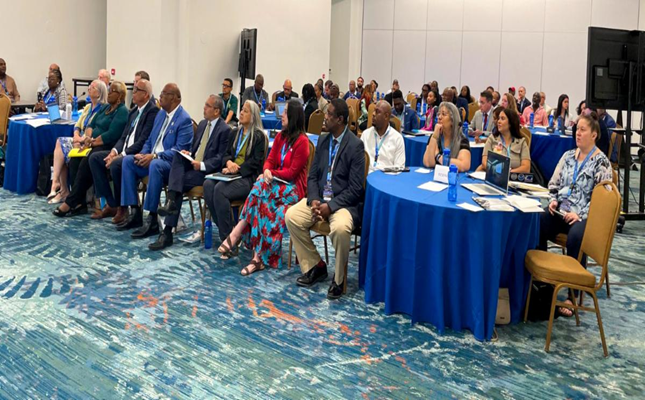
Curaçao opens second tsunami ready summit to strengthen Caribbean Coastal Resilience 20-21 April 2026
WILLEMSTAD, Curaçao – On April 20, 2026, more than 30 national and territorial governments kicked off the second global Tsunami Ready Recognition Program (TRRP) Summit in Curaçao’s capital, uniting government officials, regional policy leaders, disaster science experts and international stakeholders around a shared goal: strengthening tsunami preparedness, early warning infrastructure and community-level climate resilience across the Caribbean basin and adjacent coastal regions. The U.S. State Department has provided core funding to support the two-day gathering, which is set to conclude April 21.
Hosted by the government of Curaçao, the summit draws participants from a broad range of key institutions, including UNESCO’s Intergovernmental Oceanographic Commission (UNESCO-IOC), the International Tsunami Information Center Caribbean Office (ITIC-CAR), national disaster management agencies, national meteorological services, academic research bodies, and global development partners. Over the course of the event, attendees will conduct a comprehensive review of progress made across the region since the first summit, and advance actionable steps to expand implementation of the TRRP across at-risk coastal communities.
In his opening keynote address, Hon. Charles Cooper, Curaçao’s Minister of Traffic, Transport, and Urban Planning, emphasized that the gathering is far more than a procedural diplomatic meeting. “This summit is more than a meeting. It is a commitment to work together, to share knowledge, and to build stronger and safer communities for the future,” Cooper said. He noted that while tsunamis are rare events in the region, their potential for catastrophic destruction makes sustained investment in preparedness, public outreach and coordinated cross-border planning non-negotiable.
Matthieu Péroche, Chair of the ICG/CARIBE-EWS Task Team on Tsunami Ready, opened the official summit ceremony by highlighting that despite the Caribbean’s wide diversity of coastal geographies and governance structures, all nations and territories in the region share a common, persistent exposure to tsunami risk. “Tsunami Ready is first about saving lives — today and tomorrow. But it is also about strengthening regional solidarity. Better-prepared communities are better able to support others after a crisis, contributing to collective resilience,” Péroche said. He encouraged attendees to use the summit to exchange on-the-ground implementation experiences, address unmet barriers to progress, and draft concrete practical recommendations to guide future regional action.
Welcoming delegates on behalf of the Curaçao government, Dr. Albert Martis, Director of Curaçao’s Meteorological Department and the nation’s Tsunami National Contact, noted that the turnout of cross-sector specialists from dozens of countries reflects the depth of regional and international commitment to building safer Caribbean coastal communities. “This summit provides us with a vital platform to continue our discussions on how to best prepare our communities, reduce vulnerabilities, and ultimately minimize the loss of life and property,” Martis said. He also extended gratitude to supporting governments and partner institutions, whose combined financial, technical and logistical support made the summit possible.
Speaking from the perspective of the global TRP initiative, Dr. Laura Kong, Chair of the UNESCO-IOC Tsunami Ready Coalition, outlined the significant progress the program has made since the first regional summit in 2010, noting that the initiative has expanded steadily across every ocean basin at risk of tsunamis. “Today, we have nearly 110 recognized communities in about 30 countries around the world, and another 75 that are in progress,” Kong said. She reminded delegates that tsunami risk remains an ongoing threat for the Caribbean and adjacent regions, where multiple destructive, deadly tsunami events have been recorded throughout history, stressing that sustained cross-generational public awareness and preparedness is critical to avoiding future catastrophe.
The summit’s working agenda covers a wide range of priority topics, including a full review of regional TRP implementation progress, mapping of unrecognized at-risk communities, evaluation of program performance indicators, and discussions on inclusive resilience planning that centers the specific needs of marginalized groups including people with disabilities, youth, and migrant populations, as well as gender-responsive disaster preparedness. Delegates will also explore how to better align the TRP with broader regional and global early warning frameworks to create more cohesive disaster response systems.
Led globally by UNESCO-IOC, the Tsunami Ready Recognition Program supports at-risk coastal communities in meeting internationally agreed standards for core preparedness functions, including early warning dissemination, public tsunami education, formal evacuation planning, and emergency response capacity. For Small Island Developing States and low-lying coastal territories across the Caribbean, the program has emerged as an increasingly critical tool to turn general hazard awareness into measurable, actionable community-level preparedness.
The summit is scheduled to conclude with a set of formal recommendations for the Intergovernmental Coordination Group for the Tsunami and Other Coastal Hazards Warning System for the Caribbean and Adjacent Regions (ICG/CARIBE-EWS), which will guide the next phase of programming for the group’s member states.
-
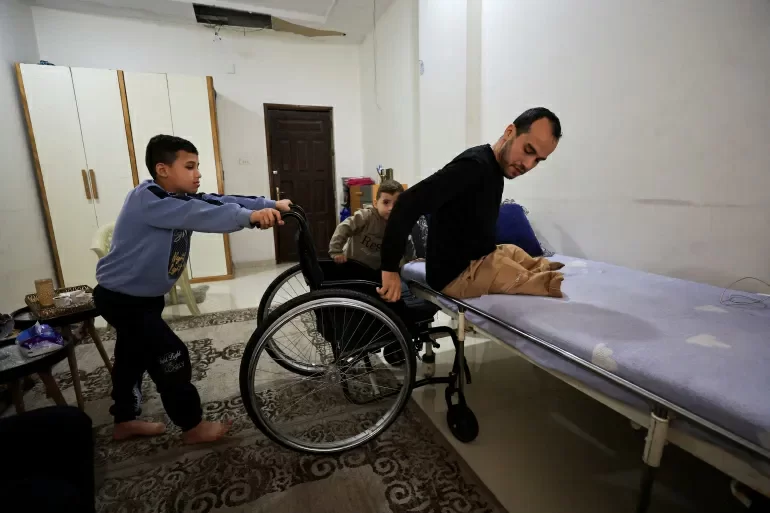
Amnesty noemt Netanyahu, Putin en Trump vraatzuchtige roofdieren
In its 2025 annual global human rights assessment published Tuesday, Amnesty International has identified Israel, Russia, and the United States as the primary actors responsible for a dramatic erosion of fundamental human rights protections across the globe. The leading global human rights organization has labeled the three nations’ top leaders — Israeli Prime Minister Benjamin Netanyahu, Russian President Vladimir Putin, and US President Donald Trump — as “greedy predators” that pursue economic and political dominance at the direct expense of core human freedoms.
Amnesty Secretary-General Agnes Callamard told reporters at a London press briefing that the fragile international order painstakingly constructed in the aftermath of World War II suffered sharp, destructive reversals over the course of 2025. “A global environment where primitive cruelty can flourish has been building for a long time,” Callamard said, warning that the deterioration of rights protections has reached a critical tipping point.
Callamard criticized the global community’s muted response to these power holders, noting that most governments have chosen to appease rather than confront the three major nations accused of widespread abuses. She further cautioned that a growing number of countries have even begun to replicate the authoritarian and rights-violating behavior of these major powers. Spain was singled out as a rare exception, recognized for its open, unflinching criticism of Israeli military operations in Gaza and joint US-Israeli attacks on Iran.
The 100+ page report devotes extensive coverage to three major conflict zones where international law has been systematically discarded: the ongoing Israeli campaign in Gaza that Amnesty classifies as genocide, Russia’s ongoing commission of crimes against humanity in Ukraine, and the escalating military confrontation against Iran led jointly by the US and Israel. Beyond these high-profile conflicts, the report documents a global rise in authoritarian governance and widespread violations of civilian rights in dozens of nations.
Notable examples of ongoing abuses cited include systematic exclusion of women from education and employment by the Taliban regime in Afghanistan, inadequate investigations into gender-based violence against Dalit women in Nepal, and heavy-handed government repression of pro-Palestinian solidarity movements in the United Kingdom. The report lays out devastating human costs of the ongoing crises: since Israel launched its military campaign in Gaza in October 2023, more than 72,500 people have been killed in Israeli airstrikes, with over 40,000 more suffering life-altering, permanent injuries. In Ukraine, more than 15,000 civilians have been killed since Russia’s full-scale invasion began, while broader regional conflicts across the Middle East have left tens of thousands dead and millions forcibly displaced from their homes.
Callamard emphasized that these ongoing wars and mass atrocities are rooted in a shifting global norm that has normalized violence against civilian populations, adding that no meaningful, effective action has been taken to hold Israel accountable for its repeated violations of international human rights standards. Despite the grim overall assessment, the report also identifies glimmers of progress that offer cautious hope for the future. These include widespread mass protests against human rights abuses and war crimes held across the globe, the growing number of nations backing South Africa’s genocide case against Israel at the International Court of Justice, and ongoing legal action by the International Criminal Court targeting accused perpetrators including former Filipino leaders and Taliban commanders.
-
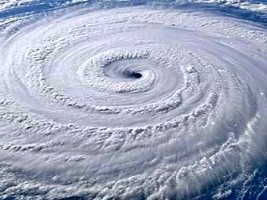
FLASH – First major forecasts for the 2026 hurricane season in Haiti
As the Atlantic hurricane season, which officially kicks off on June 1, draws near, two leading U.S. meteorological institutions have released their first preliminary forecasts for 2026, with specific implications for hurricane-vulnerable Haiti.
The Tropical Meteorology Project team at Colorado State University (CSU) notes that the combined forces of a projected strong El Niño event and near-average Atlantic sea surface temperatures will create conditions that are far less conducive to the formation and intensification of tropical storms and hurricanes. In their inaugural 2026 forecast, the CSU team predicts 13 named storms will form across the Atlantic basin this season. Of these, 6 are expected to strengthen into hurricanes, with just 2 reaching Category 3 intensity or higher on the Saffir-Simpson scale. These projected numbers mark a slight dip from the 30-year seasonal average, which stands at 14 named storms and 7 full hurricanes annually.
The U.S. National Oceanic and Atmospheric Administration (NOAA) echoed this outlook in its latest monthly climate update, confirming that there is roughly a 50% probability that the ongoing El Niño event will strengthen into a powerful event that will dominate atmospheric and oceanic conditions across the Atlantic through hurricane season. The agency added that overall conditions across the basin, especially the Caribbean region where Haiti is located, are broadly unfavorable for tropical cyclone development.
Historical data supports the expectation that a strong El Niño will suppress hurricane activity. Past climate records show that standard El Niño events typically reduce overall accumulated cyclone energy (ACE), a key metric measuring total seasonal cyclonic activity, by 32%. For so-called “Super El Niño” events, that reduction jumps to 58%, sharply cutting the likelihood of frequent or intense storm formation.
A second contributing factor to the projected below-average activity is the relatively cool sea surface temperatures recorded across large swathes of the Atlantic this year. A widespread cooling trend has been observed across the North Atlantic since mid-February 2026, with broad regions of the eastern Atlantic and key sections of the Atlantic’s main hurricane development zone registering water temperatures at or below long-term averages.
That said, forecasters note a conflicting signal in current conditions: much of the western Atlantic remains significantly warmer than the 30-year average, creating a mixed picture between tropical and subtropical zones of the basin. In recent hurricane seasons, widespread warm Atlantic waters have offset the storm-suppressing effects of El Niño, leading to more active seasons than initially predicted. As of early April 2026, however, overall basin-wide conditions do not point to a sharp uptick in significant tropical cyclone activity before the season gets underway.
-
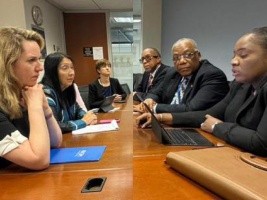
Washington : Haiti’s Minister of Planning met with the IOM Directorate
On April 21, 2026, high-level diplomatic discussions took place in Washington D.C. between Haiti’s top planning official and leadership from the International Organization for Migration (IOM), centered on addressing Haiti’s deepening migration challenges and aligning international support with the country’s national development priorities.
Sandra Paulemon, Haiti’s Minister of Planning and External Cooperation, convened the meeting with an IOM delegation headed by Director General Amy E. Pope. The delegation also included Michele Sison, director of IOM’s Washington-based global office, and Laura D’Elsa, Senior Advisor on Multilateral Partnerships.
Haiti is currently grappling with a cascading set of interconnected crises that have reshaped its migration landscape: rising rates of internal displacement driven by instability, mounting pressure from large-scale forced returns of Haitian migrants from other countries, and growing strain on local communities that host displaced populations. Opening the talks, Paulemon publicly commended IOM for its unwavering commitment to supporting Haiti through these turbulent times, and laid out the Haitian government’s vision for future collaboration.
Paulemon emphasized that any joint work between Haiti and IOM must center the Haitian government’s stated national priorities, particularly those outlined in the country’s National Pact for Stability and the Organization of Elections. She called for far better coordination of international interventions across the country, stressing that all programming must align with the pact’s core economic and social recovery objectives.
Three core practical priorities anchored the discussions: expanding protection and support for internally displaced Haitians, strengthening reception services and assistance for returning migrants especially along border regions, and upgrading Haiti’s national migration management infrastructure.
A key gap Paulemon highlighted during the meeting is the persistent geographic imbalance in existing international aid: the vast majority of current interventions are concentrated in Haiti’s capital, Port-au-Prince, leaving the country’s strategically critical border regions vastly under-served. She underscored that these border territories play an irreplaceable role in Haiti’s long-term economic and political stability, making increased investment there non-negotiable.
Beyond addressing immediate migration challenges, Paulemon outlined a new development-focused vision that leverages the country’s diaspora to revitalize border economies. She noted that border zones are uniquely positioned as strategic hubs for cross-border investment, trade, and local value creation, and that deeper integration between the Haitian diaspora and these regional economies could unlock significant growth. To turn this vision into action, she proposed launching targeted pilot projects to support diaspora-led small and medium-sized enterprises, revitalize underperforming cross-border markets, and build out robust local value chains in key sectors including agriculture, trade, and logistics.
For these initiatives to deliver long-term impact, Paulemon stressed that they must be embedded into existing national development pipelines, aligned with the Ministry of Planning’s existing monitoring and implementation frameworks, and backed by coordinated funding and support from the broader international community to ensure coherence and the ability to scale successful projects.
The talks also covered opportunities for enhanced trilateral cooperation between Haiti, IOM, and the neighboring Dominican Republic. Key areas of potential collaboration include joint management of migrant returns, improved protection for vulnerable migrants on both sides of the border, and more streamlined coordination at official border crossings. Paulemon noted that stronger cross-border collaboration in these areas would boost the effectiveness of humanitarian response across the island and improve overall migration governance for both nations.
Closing the meeting, Paulemon reaffirmed the Haitian government’s unwavering commitment to deepening its longstanding partnership with IOM, built on a foundation of mutual trust and shared responsibility for addressing Haiti’s most pressing challenges.