
During the COP30 session in Belém, Brazil, Antigua and Barbuda’s Prime Minister Gaston Browne issued a compelling appeal to global leaders, urging them to elevate their climate ambitions and fulfill long-standing commitments. Browne emphasized that small island nations remain disproportionately vulnerable to the escalating climate crisis. Despite a notable decline in attendance—with only 57 heads of state or government present compared to over 150 at previous summits—Browne stressed the importance of achieving tangible outcomes. He attributed the lower turnout to logistical challenges, including Belém’s remote location and the high costs of travel, which even extended his own journey to nearly 30 hours. Financial constraints further compelled some nations, including Antigua and Barbuda, to reduce delegation sizes. However, Browne praised the dedication of those in attendance, highlighting their genuine commitment to advancing climate action. He warned that the world is nearing the critical threshold of a 1.5°C temperature rise, which could trigger irreversible damage and intensify extreme weather events. Browne called for swift updates to national climate plans and urged major emitters to drastically reduce emissions. Addressing the criticism of unfulfilled promises from past COP summits, Browne advocated for a cultural shift, emphasizing the need for societal accountability to drive meaningful change. He welcomed early progress at COP30, including Norway’s pledge to support Brazil’s Amazon rainforest conservation efforts, and expressed hope for stronger commitments on ambition, finance, and accountability. The summit continues this week with a renewed focus on implementing the Paris Agreement and bolstering support for climate-vulnerable nations.
分类: world
-

Drone attack hits power plant east of Moscow
In a recent incident, the Shatura hydroelectric power plant in Russia was targeted by a drone attack this Sunday. While air defense systems successfully intercepted and destroyed several drones, some managed to breach the plant’s perimeter, igniting a fire that has since been brought under control. The governor of the region, Andrei Vorobyov, confirmed the details via his Telegram channel, emphasizing that the attack did not disrupt the electricity supply to Shatura, a city with a population of approximately 36,000.
Vorobyov highlighted the swift activation of backup power lines to ensure uninterrupted service. Additionally, mobile modular boiler units were deployed to the municipality to provide heating support until the situation stabilizes. The governor reassured the public that the head of the Shatura municipality and emergency response teams are actively managing the situation on-site, stating, ‘The situation is under control; there is no danger to residents.’
This incident follows a broader escalation in drone warfare, as the Russian Defense Ministry reported shooting down 75 Ukrainian attack drones over the past day. These drones were allegedly targeting multiple regions in the European part of Russia, underscoring the growing tensions in the ongoing conflict.
-

Several international airlines cancel their flights from Venezuela after US warning
Three major international airlines have suspended their flights departing from Venezuela following a safety advisory issued by the US Federal Aviation Administration (FAA). The FAA warned of a ‘potentially hazardous situation’ in Venezuelan airspace due to deteriorating security conditions and heightened military activity in the region. TAP Air Portugal confirmed the cancellation of its flights scheduled for Saturday and next Tuesday, citing the FAA’s alert as the primary reason. Similarly, Spain’s Iberia announced the suspension of its flights to Caracas starting Monday, though its Saturday flight from the Venezuelan capital to Madrid proceeded as planned. Copa Airlines and Wingo, however, maintained their Saturday departures from Maiquetia. The FAA’s notice highlighted risks to aircraft at all altitudes, pointing to the escalating security situation and increased military presence in and around Venezuela. Recent months have seen a significant buildup of US military assets in the region, including the deployment of the US Navy’s largest aircraft carrier, eight additional warships, and F-35 fighter jets. Latam Airlines also canceled its Sunday flight to Bogota, according to Flightradar24. The situation remains fluid, with airlines closely monitoring developments to determine when it will be safe to resume operations.
-

Environment : COP30 produces a «minimal» agreement
The 30th Conference of the Parties (COP30), held in Belém, Brazil, concluded on November 21, 2025, with a ‘minimal’ agreement that fell short of the ambitious goals set for climate and biodiversity protection. Despite prolonged negotiations extending into the night of November 22, the final consensus was widely regarded as underwhelming, if not a complete failure. The agreement, while bolstering climate finance, only indirectly addressed fossil fuels—oil, gas, and coal—the primary drivers of climate change. Tensions between industrialized and emerging nations, particularly oil and gas exporters, thwarted any binding commitments to phase out fossil fuels. Key elements of the agreement include a pledge to mobilize $1.3 trillion annually by 2035, with a tripling of adaptation funding for developing countries like Haiti. However, the non-binding nature of the measures raises concerns about their tangible impact. International reactions were mixed: the European Union expressed disappointment over the lack of a fossil fuel phase-out plan, while emerging and exporting countries celebrated the avoidance of binding obligations. Civil society organizations and Amazonian Indigenous groups criticized the agreement as ‘insufficient’ in addressing the escalating climate crisis.
-

Life for enslaved Africans in Tobago
From the 17th to the 19th century, Tobago became a battleground for European powers vying for control, with enslaved Africans thrust into the heart of this turmoil. The Courlanders, Dutch, French, and British imported Africans to meet their labor demands, not only for agricultural production but also for military purposes. These enslaved individuals were instrumental in building forts, clearing land, and even fighting in wars that were not their own. Their lives were shaped by the relentless competition among European settlers, who relied on slave labor to establish and defend their settlements. Between 1656 and 1807, thousands of Africans were forcibly brought to Tobago, with the British alone transporting 51 shiploads. Despite their significant contributions, the history of these Africans was often erased with the departure of their European captors. The island’s forts, such as Fort Jacobson and Fort King George, stand as enduring reminders of their forced labor. Enslaved Africans were also tasked with clearing paths, carrying supplies, and supporting their owners in battles, often becoming the first casualties. The lack of records for African casualties underscores the dehumanization they endured. Beyond warfare, they were subjected to harsh plantation labor, producing sugar, cotton, and dyes under oppressive conditions. Despite their exploitation, some Africans were trained as gunner assistants and even formed part of the Tobago Black Corps, a militia unit. Their multifaceted roles highlight the brutal realities of colonialism and the resilience of those who endured it.
-

Lutchmedial: FAA warning on flights over Venezuela airspace, a pre-caution
The US Federal Aviation Administration (FAA) has issued a precautionary advisory to US airlines regarding potential risks when flying over Venezuela, citing a ‘worsening security situation and heightened military activity.’ The notice, released on November 21, requires airlines to provide 72 hours’ advance notice of planned flights but does not impose a complete ban on overflights. Ramesh Lutchmedial, former director general of civil aviation and a Newsday columnist, emphasized that this measure is a standard precaution in conflict-prone areas and does not signal imminent military action. He highlighted that the FAA’s advanced aerial navigation and intelligence systems enable it to assess such risks effectively. Lutchmedial also noted that US airlines are permitted to transit Venezuelan airspace under the International Air Transit Agreement (IATA), which includes over 170 signatory nations, including the US, Venezuela, and Trinidad and Tobago (TT). He cited examples of no-fly zones in Afghanistan, Ukraine, and Syria, where hostilities have led to similar restrictions. Lutchmedial stressed that the advisory is a routine safety measure, allowing the FAA to evaluate flight paths and advise airlines accordingly. Should the situation escalate, designated no-fly zones could be established. The FAA’s notice comes amid ongoing US-Venezuela tensions in the southern Caribbean, marked by recent US military strikes targeting suspected narco-traffickers and the deployment of naval assets, including the USS Gerald R Ford strike group. Trinidad and Tobago’s Prime Minister Kamla Persad-Bissessar has supported the US anti-narcotics efforts but assured that TT would not serve as a launchpad for any attack on Venezuela.
-

Patterson urges G20 leaders to prioritise climate justice
Former Jamaican Prime Minister PJ Patterson has urged global leaders at the G20 summit in Johannesburg, South Africa, to prioritize climate justice as they address the pressing challenges faced by the world’s poorest nations. Patterson’s appeal comes in the wake of Hurricane Melissa’s devastating impact on Jamaica, which has left hundreds homeless, destroyed critical infrastructure, and severely affected key industries like tourism and agriculture. The Category 5 hurricane, which struck Jamaica’s southwestern coast on October 28, has been linked to 45 deaths and caused an estimated $8.8 billion in damages, equivalent to 41% of Jamaica’s GDP. The World Bank has labeled Melissa as the costliest hurricane in the country’s history.
-
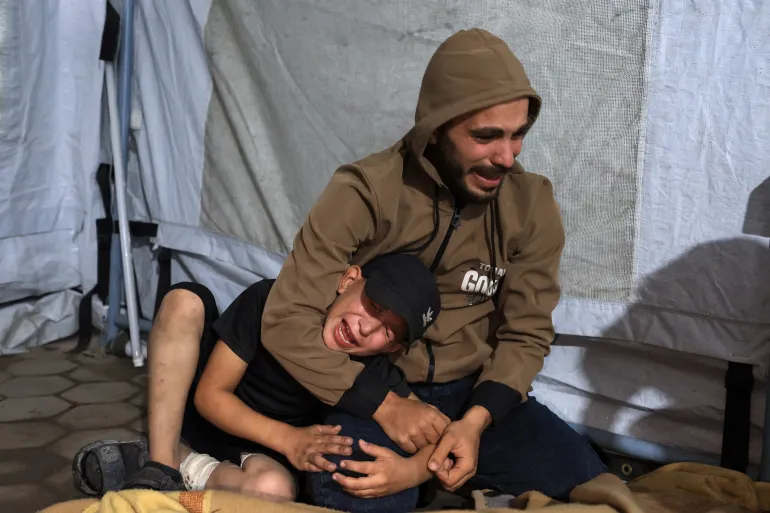
Israel kills at least 28 Palestinians in wave of Gaza ‘ceasefire’ attacks
In a significant escalation of violence, at least 28 Palestinians have been killed in a series of Israeli attacks on the Gaza Strip, according to medical sources cited by Al Jazeera. This marks one of the most severe breaches of the US-brokered ceasefire that took effect last month. The Palestinian Health Ministry in Gaza reported that 77 others were wounded in the bombardment, with the toll expected to rise. The strikes targeted key areas, including southern Gaza’s al-Mawasi region, a junction in eastern Gaza City’s Shujayea district, and a building in the Zeitoun neighborhood, where an entire family was among the victims. Al Jazeera’s Hani Mahmoud described the attacks as intensifying panic across Gaza, where daily horrors persist despite the ceasefire. Israel justified the strikes as a response to alleged fire on its troops in Khan Younis, a claim Hamas dismissed as a pretext for further violence. The Palestinian group accused Israeli Prime Minister Benjamin Netanyahu of seeking to resume a ‘genocide’ against Palestinians. Meanwhile, tensions flared in Lebanon following Israeli bombings of a Palestinian refugee camp, killing over a dozen people. The violence coincides with the UN Security Council’s recent resolution endorsing a US-backed peace plan for Gaza, which Hamas and other Palestinian factions have rejected, calling it a threat to Palestinian self-determination. Critics argue that Israel’s repeated violations of the ceasefire—totaling at least 393 incidents since October 10—undermine international efforts for peace. Khaled Elgindy of the Quincy Institute warned that without US enforcement, the ceasefire risks becoming a facade for continued war.
-

Hunger and war: The oldest crime the world still permits
A recent UN report has unveiled a grim reality: the world’s most powerful nations have grown indifferent to human suffering, prioritizing military expenditures over addressing global hunger. The World Food Programme estimates that ending hunger by 2030 would require just $93 billion annually—less than 1% of the $21.9 trillion spent on militaries over the past decade. Yet, hunger continues to escalate, with 318 million people projected to face crisis-level hunger by 2026, double the figure from 2019. While wealthy nations enjoy food security, regions like Gaza, Sudan, the Democratic Republic of Congo, and Haiti bear the brunt of conflict-driven famine. In Gaza, despite ceasefire talks, children starve amidst Israeli blockades and bombardment. Sudan and Congo face catastrophic food shortages due to violence and displacement, while Haiti’s hunger crisis is exacerbated by gang dominance and political instability. Latin America and the Caribbean offer a glimmer of hope, with hunger declining for the second consecutive year in 2023, thanks to economic recovery and social programs. However, climate change poses a growing threat, with extreme weather events exacerbating food insecurity. The war in Ukraine has underscored the interconnectedness of global food systems, as stalled grain exports triggered price spikes and social unrest worldwide. UN agencies like the World Food Programme and the UN Human Rights Office work tirelessly to address these crises, but chronic underfunding and political inaction hinder their efforts. The UN Security Council’s failure to treat hunger as a geopolitical threat highlights the lack of political will to allocate resources effectively. Ending hunger is not just a moral imperative but a prerequisite for global peace and security. As UN Deputy Secretary-General Amina Mohammed warned, “there can be neither peace where people are starving, nor security where hunger drives conflict.” This stark reminder demands urgent action from the international community.
-

Israel arrests dozens of Palestinians after raids in the West Bank
In a series of coordinated operations across the West Bank, Israeli forces have arrested 55 individuals in Beit Ummar, located in the southern Hebron Governorate, alongside nine arrests in Nablus and one in Tulkarm. Concurrently, a military checkpoint was established in the village of Al-Mughayyir, where soldiers conducted extensive vehicle searches, leading to significant traffic disruptions. These actions come amid a surge in violent incidents involving Jewish settlers targeting Palestinian communities, exacerbating existing tensions in the region. Palestinian sources report that extremist settlers carried out 766 attacks against Palestinians in October alone. The situation further intensified yesterday when Israeli forces killed two young men in Kafr Aqab, a town north of occupied East Jerusalem. According to the NGO Defense for Children Palestine, over fifty Palestinian children have lost their lives due to Israeli fire since the start of the year, highlighting the escalating humanitarian crisis in the territory.