The Knowledge and Technology Management Company (GECYT), a collaborative entity formed by the InnoMAX Business Group and the Havana Delegation of the Ministry of Science, Technology, and Environment (CITMA), is set to host a significant Congress from November 4 to 7. The event aims to foster the exchange of ideas and experiences among participants in the fields of knowledge management, innovation, and technology. Yadira Carrillo Frias, General Director of GECYT, emphasized to Prensa Latina that the Congress will serve as a platform for diverse stakeholders, including entrepreneurs, government officials, innovators, scientists, academics, and students, to collaborate and share insights. Additionally, representatives from universities, information centers, science and technology parks, and various economic sectors are expected to attend, making it a comprehensive gathering for advancing technological and innovative endeavors.
分类: technology
-

Caribbean firms to prioritise AI for cybersecurity – PwC study
Caribbean enterprises are gearing up to integrate cutting-edge artificial intelligence (AI) technologies into their cybersecurity frameworks by 2026, as revealed by PricewaterhouseCoopers’ (PwC) 2026 Global Digital Trust Insights Survey. Despite this forward-looking approach, the survey underscores a stark reality: only a minuscule six percent of global organizations are fully equipped to combat the escalating wave of cyber threats. The study, which gathered insights from nearly 4,000 business and technology executives across 72 countries, highlights that 78 percent of organizations plan to bolster their cybersecurity budgets in the coming year, with AI investments leading the charge at 36 percent. However, significant challenges persist, including a glaring skills gap in AI application for cyber defense (50 percent) and a lack of relevant expertise (41 percent). The financial stakes are high, with 27 percent of businesses reporting that their most damaging data breach in the last three years cost at least $1 million. In the Caribbean, where digital adoption and cross-island connectivity are on the rise, the urgency for robust cyber resilience is more pronounced than ever. Tracie Greenidge, Director of Risk Assurance at PwC East Caribbean, emphasized the region’s opportunity to lead with innovation and resilience by investing in smart technologies and fostering cross-island collaboration. The survey also revealed that nearly half of cybersecurity leaders face workforce shortages, particularly in securing operational technology and industrial Internet of Things (IoT) systems, which are critical to infrastructure, transport, and industry.
-

LIVE: National Day Observance Ceremony 2025
In a groundbreaking development, a new AI technology has emerged, promising to redefine the way we interact with digital platforms. This innovative system, showcased in a recent demonstration, leverages advanced algorithms to enhance user experience and streamline digital processes. The technology, which has been in development for several years, is now ready for public release, marking a significant milestone in the field of artificial intelligence. Experts believe that this breakthrough will not only improve efficiency but also open up new possibilities for digital innovation. The demonstration, which included a series of interactive features, highlighted the system’s ability to adapt to user needs in real-time, offering a glimpse into the future of digital interaction. As the technology becomes more widely available, it is expected to have a profound impact on various industries, from e-commerce to social media, and beyond.
-

LIVE NOW: Dominica National Cultural Gala 2025
In the ever-evolving landscape of digital communication, social media platforms have emerged as transformative tools, reshaping how individuals and organizations interact globally. The integration of features like sharing, tweeting, pinning, and more has not only enhanced user engagement but also fostered a new era of connectivity. These platforms have become indispensable for real-time information dissemination, enabling users to share updates, opinions, and multimedia content seamlessly. The rise of social media has also revolutionized marketing strategies, with businesses leveraging these channels to reach broader audiences and build brand loyalty. Moreover, the ability to pin important content ensures that critical information remains accessible, further enhancing user experience. As these platforms continue to innovate, they are set to play an even more pivotal role in shaping the future of digital communication.
-

Dealing with deepfakes
In response to growing concerns over the rise of deepfake technology, Dominic Smith, Minister of Public Administration and AI, has announced the formation of specialized committees to address the risks associated with artificial intelligence. As the current president of the Caribbean Telecommunications Union, Smith emphasized the urgency of combating AI-enabled fraud and disinformation campaigns. This initiative follows his earlier announcement in September of an inter-ministerial committee focused on cybersecurity threats and AI scams. However, critics argue that the proposed committees are overly bureaucratic, with too many marginally-related stakeholders involved. Key agencies like the Attorney General’s Office, the police service’s cyber and social media unit, and the TT Cybersecurity Incident and Response Team (TTCSIRT) are expected to play pivotal roles in this effort. The TTCSIRT, in particular, is positioned to lead in issuing website takedown notices and countering falsehoods on social media platforms. The widespread use of AI to create fake images and videos, termed ‘AI slop,’ has exacerbated the problem, with deepfakes being used to promote scams and distort historical events. Despite the committees’ formation, the rapid evolution of AI technology demands faster, more focused action to prevent sophisticated deepfakes from deceiving even the most skeptical individuals. A technology-savvy task force, rather than a slow-moving committee, is seen as essential to effectively combat this escalating threat.
-

#MelissaAftermath: Starlink to be used to resolve ATM and ICT issues
In response to the devastating impact of Hurricane Melissa, the Jamaican government has initiated an emergency deployment of Starlink satellite internet units to restore critical communication and financial services, particularly in the hardest-hit western regions. Telecommunications Minister Daryl Vaz announced over the weekend that 600 Starlink units are en route to the island, complementing other charitable contributions to ensure prioritized distribution. The primary focus is on reviving the financial sector, enabling ATMs to function, and ensuring residents can access cash for essential needs such as fuel and food. Vaz emphasized the urgency of this effort, stating that without operational ATMs, daily life grinds to a halt. The Starlink units will also be allocated to police stations, government ministries, and agencies involved in relief operations, leveraging the expertise of Starlink’s disaster response team to identify and prioritize critical services. Additionally, the medical relief organization Medic Corps is utilizing Starlink technology to restore communication at damaged hospitals, further supporting recovery efforts. Vaz underscored the importance of this technological intervention to alleviate the suffering of affected communities and rebuild essential infrastructure.
-
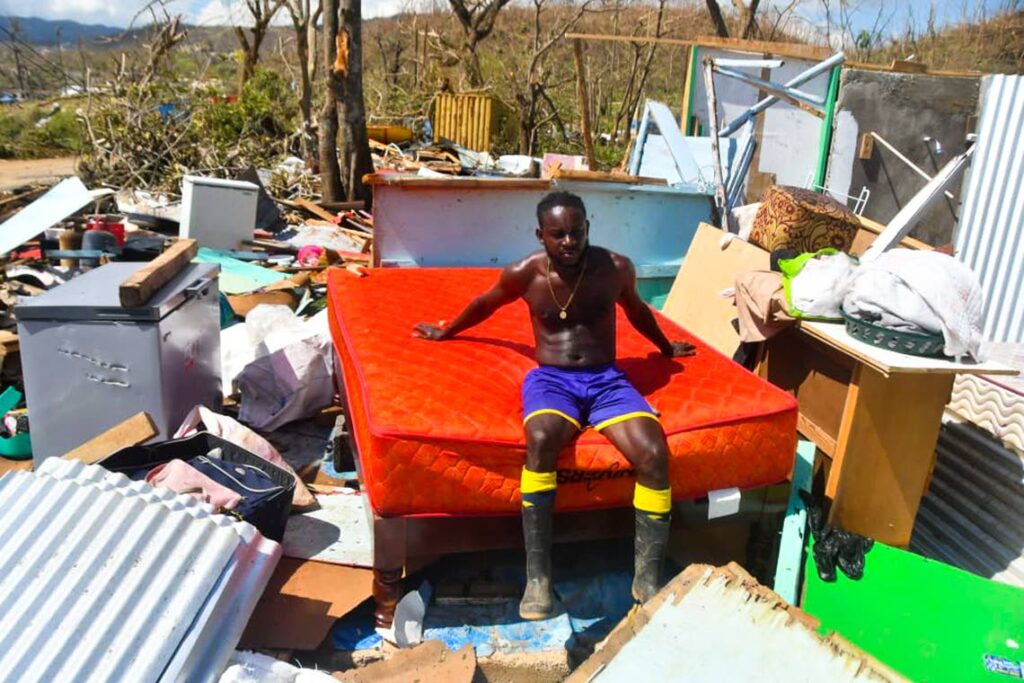
Efforts underway to reconnect families
In the aftermath of Hurricane Melissa, Jamaica’s Ambassador to the United States, Major General (Ret’d) Antony Anderson, has highlighted the critical role of Starlink satellite-based Internet systems in reconnecting families and alleviating concerns among the Jamaican diaspora. The hurricane, which struck on October 28, left 70% of the country without electricity and disrupted communication networks, prompting an influx of calls to the Jamaican Embassy in Washington, DC, from worried relatives seeking information about their loved ones.
Anderson announced that a team from Starlink’s headquarters is set to deploy Wi-Fi sites across Jamaica, enabling affected communities to access the internet and communicate with their families. While acknowledging the challenges faced by first responders, he urged patience and emphasized that the lack of communication does not necessarily indicate harm. He also praised the resilience of Jamaicans, noting that many have already found creative ways to inform the world of their safety.
The ambassador assured that the Jamaican government is prioritizing the restoration of communication and power infrastructure, with the Jamaica Public Service working to restore electricity in areas where the grid remains intact. Energy, Transport, and Telecommunications Minister Daryl Vaz confirmed that the Universal Service Fund (USF) is rolling out Starlink systems to provide immediate broadband coverage in key western communities while terrestrial infrastructure is repaired.
Anderson expressed gratitude for the international support Jamaica has received and cautioned against fraudulent donation schemes, urging individuals to use verified channels for contributions. He emphasized the importance of unity and resilience as the country transitions from rescue to recovery efforts, stating, ‘We are a strong people, and as supplies flow in and relief efforts intensify, we will see that resilience in action.’
-
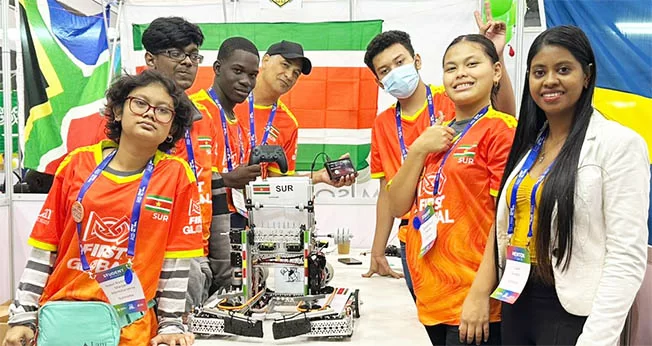
Jonge tech-talenten op wereldrobotica-wedstrijd in Panama
The FIRST Global Challenge 2025, an international robotics competition often dubbed the ‘Olympics of Robotics,’ is currently underway in Panama, drawing young participants from 190 countries. Representing Suriname are Rechero Godlieb, Shivish Ramkhelawan, Ndari Mertotaroeno, Zayenn Soebarman, and Jason Wong Loi Sing. This talented team, aged between 14 and 18, received their invitation just a month ago. Despite the tight timeline, they managed to design and build a fully functional robot in just ten days, meeting all international standards to qualify for the competition. The event, held at the Panama Convention Center, focuses on the theme ‘Eco Equilibrium,’ encouraging participants to develop robots that address pressing environmental issues and promote biodiversity conservation. This marks Suriname’s sixth participation in the prestigious event. The team, guided by Julie Sundar of the Codettes Foundation and Theo Boomsma of IoTLab Suriname, expressed a mix of excitement and nervousness. ‘It’s such a big stage. We’re absolutely ecstatic,’ they shared. The journey to Panama was no small feat, requiring meticulous preparation of travel documents and technical verifications in a short span. The team extended their gratitude to parents, the U.S. Embassy, and key supporters like Giovanni Mertotaroeno and Rody Kartowirjo for their invaluable assistance. Suriname’s young innovators are proud to represent their nation on this global platform and are determined to make their mark in the competition.
-

Nick Lue’s top 5 reasons EVs are taking over Jamaica’s roads
Nick Lue, renowned for his SKVNKLifestyle brand rooted in speed and performance, is now at the forefront of Jamaica’s electric vehicle (EV) movement. As the nation increasingly considers the transition from gasoline to electric, Lue has become a pivotal voice, test-driving the latest models and simplifying the EV experience for Jamaicans. In a recent interview, he shared the top five reasons why EVs are gaining momentum in Jamaica. Firstly, the instant torque of EVs offers an exhilarating driving experience, with immediate acceleration that surpasses traditional combustion engines. Secondly, soaring gas prices have made EVs a financially attractive alternative, with significant savings on charging costs. Thirdly, the EV market has diversified, with brands like BYD, MG, and Audi offering models tailored to local needs and budgets. Fourthly, the advanced technology in EVs, from intelligent navigation to remote control via smartphone apps, provides a futuristic driving experience. Lastly, the cultural shift towards embracing something new and stylish has fueled the EV hype. Lue believes that the combination of performance, savings, and innovation ensures that EVs are not just a trend but a lasting transformation in Jamaica’s automotive landscape.
-
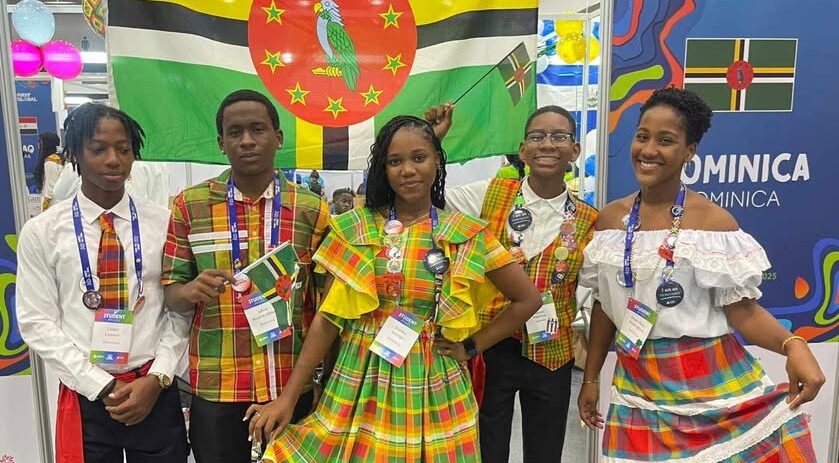
Dominican students to represent country in first Global Robotics Challenge 2025 in Panama
The Dominica Robotics Association, bolstered by a coalition of sponsors and community partners such as Create Caribbean, NTRC, 767.Dev, Jaydees Naturals, and Astaphans, has proudly announced that a team of Dominican students will represent the nation at the prestigious FIRST Global Robotics Challenge 2025 in Panama. This international event brings together young innovators from across the Caribbean and the globe, inspiring them to create robots that address pressing real-world challenges through cutting-edge science and technology. The Dominican delegation consists of five exceptionally talented students from Dominica State College and St. Mary’s Academy, each excelling in fields like computer science, mechanical engineering, information technology, and scientific research. The team members include Dianka George, Cadel Casimir, Khae-Ryan Shillingford, Jahim Riviere-Alfred, and Kaelan Matthew. They will be mentored by Phoenix Jacques and Co-Mentor Odessa Dinnard. The association expressed its confidence in the team’s ability to showcase Dominica’s innovation and technical prowess on the global stage. Additionally, the organization has extended an invitation to other passionate students aged 13 to 18 with an interest in robotics, engineering, or technology to join the national team or related projects by contacting them via email at [email protected].