分类: sports

  • Round of 16 action set to kick off in the NSC Primary School Football

    Round of 16 action set to kick off in the NSC Primary School Football

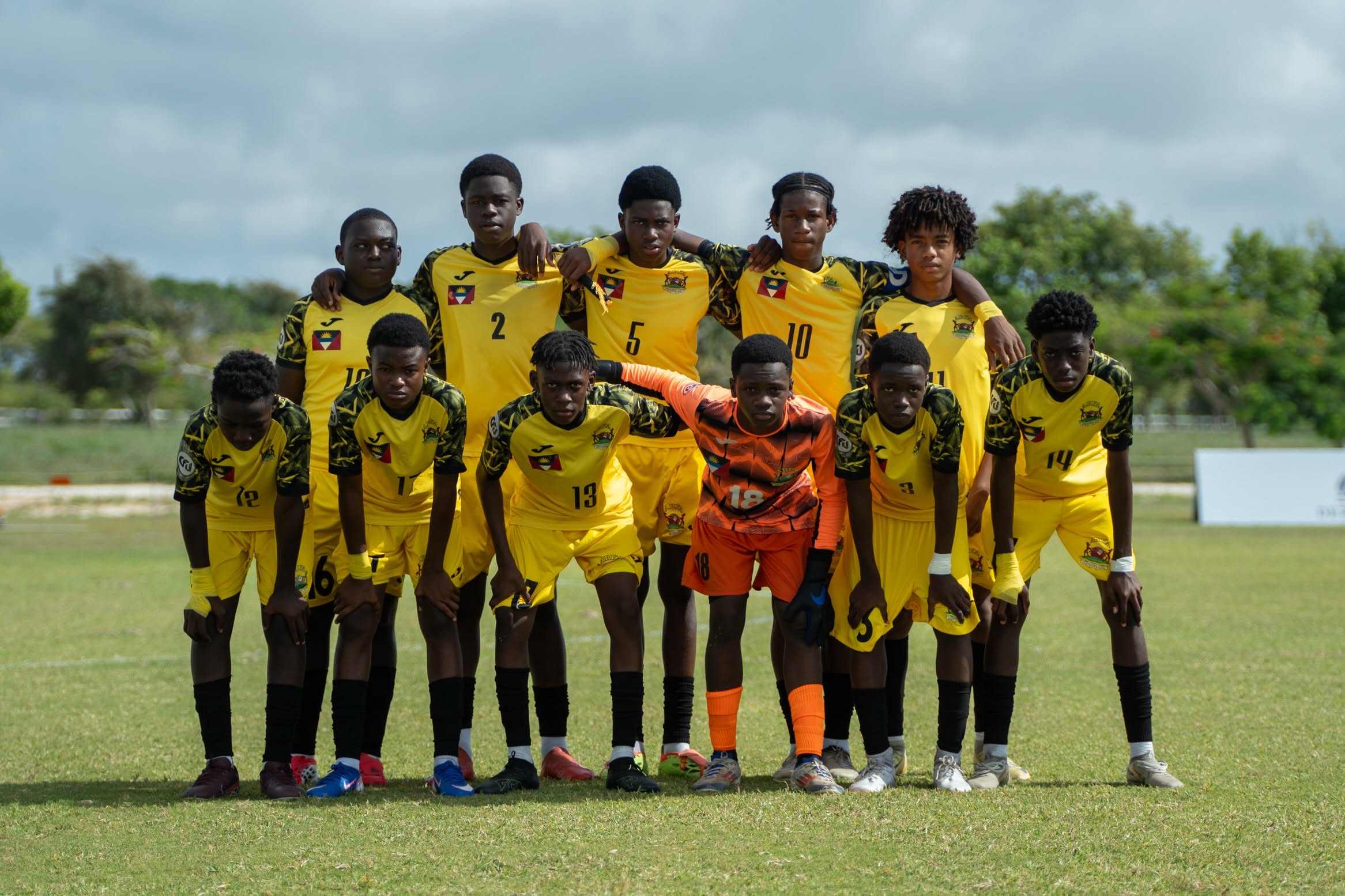
    As the BICO Primary School Football Competition, organized by Barbados’ National Sports Council (NSC), advances to its highly anticipated Round of 16 this Thursday, a mouthwatering potential quarterfinal clash between the tournament’s top two sides from last season has fans and organizers buzzing. Defending title holders West Terrace Primary and 2023 runners-up Arthur Smith Primary have both navigated their group stages without a single defeat, finishing atop their respective groups to keep their dream finals rematch alive in the knockout rounds.

    Zahir Motara, senior coach with the NSC, confirmed that the stage is set for a historic showdown if both sides continue their winning runs through the Round of 16. Beyond the headline potential matchup, he added that another tantalizing quarterfinal could pit St Cyprian’s against Wesley Hall, should both teams get past their first knockout opponents. Motara praised the overall quality of play across this year’s tournament, noting that a growing number of young players are gaining regular experience outside of school competition through local youth academies and community clubs, playing consistently on weekends and even during school vacation periods.

    This increased off-season practice has translated to a noticeable jump in competitive intensity across the board, Motara explained. “All the Round of 16 games are going to be pretty competitive from the get go, even if we have one or two blowouts,” he said. However, ongoing unseasonably dry weather across Barbados has created unexpected logistical hurdles for tournament organizers, forcing a last-minute change to the originally planned competition schedule and venue.

    Initially, organizers had scheduled all Round of 16 matches to take place on June 11 at Blenheim, with four games set to run concurrently. But severe drought conditions left the Blenheim pitch cracked and unplayable, forcing the NSC to relocate all knockout round fixtures to Greens in St George. Motara noted that Greens, one of the island’s purpose-built mini stadia, boasts one of the most well-maintained grass surfaces in the country, making it the ideal backup location. All Round of 16 and quarterfinal matches will be held at Greens before the competition moves to the artificial turf at the BFA Technical Centre for the later stages, he confirmed.

    One of the tournament’s most notable successes this year comes off the pitch, as organizers hit a key diversity target by significantly increasing female participation in the co-ed competition. Motara revealed that multiple schools are now fielding up to five girls in a single match, with teams in Zone 8 – the Adrian Donovan/Michael Foster zone based at King George Park – standing out for their commitment to integrating female players. “Biologically at that age the girls sometimes are a little more physically imposing than the boys, so it’s really a bit of a clash and it’s very lovely to see,” Motara said. “The girls are having so much fun and enthusiasm, they’re not afraid and are going into the challenges. I think I saw a couple score a goal or two as well so overall, I’m really impressed with the turnout from the ladies.”

    In response to the surge in interest from female players, the NSC is already developing plans to launch an annual standalone girls’ football competition. As a first step, a Girls’ Futsal tournament will kick off next week at the Wildey Gymnasium.

    Thursday’s opening Round of 16 fixtures at Greens will see St Cyprian’s Boys’ take on Providence, Bay Primary face off against Wesley Hall, All Saints go up against Milton Lynch, and Blackman & Gollop battle St Stephen’s.

    Tournament coordinator Luke St John shared Motara’s positive assessment of this year’s competition, noting a dramatic improvement in the overall standard of play compared to past editions. Not only has on-pitch skill improved, but officiating has also stepped up to match the higher intensity of matches, he said. “The boys seem to be more direct and there’s more technical skill being shown. There has been improvement in the type of goals being scored, the build up play and even the camaraderie amongst the boys, you’re seeing maturity in the tournament, so I would say overall, there has been a great improvement,” St John explained.

    St John attributed the rising standard of play to collaborative investment in youth football across multiple Barbadian stakeholders. First, he credited NSC coaches, who run regular training sessions at primary schools across the island throughout the year. Local private youth clubs also deserve recognition for developing player talent outside of school programs, he said, along with school physical education teachers, who begin working with teams from the start of the academic term. “You could definitely see everybody’s more committed to it,” he added.

  • Column: Voetbalplezier

    Column: Voetbalplezier

    The 23rd edition of the FIFA World Cup, the world’s biggest quadrennial football spectacle, officially gets underway today, marking an unprecedented milestone in the tournament’s 96-year history. For the first time ever, 48 nations will compete for football’s most coveted trophy – a 50% expansion from the previous 32-team format that has been in place since 1998.

    This expanded format brings far-reaching ripple effects across the globe. With more national teams qualifying for the final tournament, millions more fans are traveling to the host venues to cheer on their sides, while billions more across every continent are tuning in via television, radio, traditional media outlets and digital streaming platforms to follow their nations’ progress. More people than ever before have a personal connection to the tournament, whether a friend or family member competing on the pitch, or a local community tie to one of the participating federations. Also making history, this iteration is the first to be co-hosted by three countries – the United States, Mexico and Canada – meaning three separate national economies will directly reap the economic benefits of this massive global event, from increased tourism to infrastructure investment.

    For football fans around the world, daily routines are being upended to make time for matches: many rearrange work and personal schedules to catch their favorite stars in action, while casual viewers gather with friends and family to enjoy the communal excitement of the tournament. Even for those who do not follow football regularly, the World Cup’s cultural omnipresence makes it impossible to avoid. Global brands and retailers have seized on the tournament’s unparalleled popularity to drive sales, rolling out co-branded products, themed marketing campaigns and special promotions in nearly every country, even those whose teams failed to qualify for the final round. This widespread commercialization has led many observers to note that the World Cup is gradually shifting from a purely sporting competition to a massive global commercial enterprise.

    This year’s tournament also breaks new ground in fan engagement: it is the first World Cup that allows supporters across the planet to follow every moment of action in real time across a wide range of digital and social media platforms, with instant live updates, behind-the-scenes content and interactive fan discussions bringing the tournament closer to global audiences than ever before. Social media data from pre-tournament buildup shows that billions of fans around the world have been eagerly anticipating the kickoff, with World Cup fever reaching even nations that did not qualify. In Suriname, for example, hype for the tournament remains high despite the men’s national team missing out on the final round, and most local fans find the match kickoff times perfectly aligned with their daily schedules. The excitement does present one challenge for local communities though: the tournament’s opening coincides with the start of final secondary school exams, requiring young student fans to practice strong discipline to keep their studies as a top priority.

    While the 2026 World Cup is poised to deliver weeks of joy and sporting drama for global audiences, this expanded, multi-nation iteration is not without its growing challenges that could dampen the celebratory atmosphere if left unaddressed. In recent weeks, reports of planned public demonstrations have emerged in co-host Mexico, while the United States has boosted security deployments across its host venues to prevent potential civil unrest. To date, third co-host Canada has remained the least controversial of the three host nations, with no major security or political disruptions reported in the lead-up to kickoff.

  • Derde helft WK 2026: de opvallendste cijfers van WK 2026

    Derde helft WK 2026: de opvallendste cijfers van WK 2026

    The 2026 FIFA World Cup, the most ambitious iteration of men’s football’s flagship global tournament, is set to kick off this Thursday after years of planning, qualifying campaigns and pre-tournament warm-up matches, as 48 of the world’s best national teams prepare to compete for the sport’s most coveted prize.

    Breaking multiple records before a single ball is even kicked, the 2026 edition marks a historic first for the competition: for the first time in World Cup history, matches will be hosted across three nations – Canada, Mexico and the United States. The expanded format, which grew from the 32-team bracket used for the past four tournaments, will see 104 matches played across 16 host cities, with a total prize pool that also hits an all-time high. While FIFA projects that the tournament will break the 1994 World Cup’s 3.5 million spectator record – an edition also hosted by the U.S. – slow ticket sales have raised questions about lower-than-expected public interest so far.

    As fans across the globe count down to kickoff, we’ve compiled the most notable historical and 2026-specific statistics to set the stage for the month-long spectacle.

    ### Historical Standings and Records
    When it comes to all-time World Cup titles, no nation has dominated the competition quite like Brazil. The South American powerhouse has claimed five world championships (1958, 1962, 1970, 1994, 2002) and remains the only country to have qualified for every iteration of the tournament since its launch in 1930. Across its history, Brazil has reached seven finals and 11 semi-finals. Germany and Italy trail Brazil with four titles apiece, though Italy will be absent from the 2026 tournament, marking the third consecutive World Cup the Azzurri have failed to qualify. Only Germany remains in contention to add another title to its trophy case this year.

    Individually, Brazilian legend Pelé holds the record for the most World Cup titles won by a player, claiming gold three times in 1958, 1962 and 1970. Two of his 1958 and 1962 teammates, Bellini and Castilho, share two titles, while former Brazil captain Cafu also won two titles in 1994 and 2002.

    For all-time tournament scoring, Germany’s Miroslav Klose sits atop the leaderboard with 16 goals across 24 matches over four World Cup appearances. He is followed by Brazil’s Ronaldo (15 goals), Germany’s Gerd Müller (14), France’s Just Fontaine (13), Argentina’s Lionel Messi (13), France’s Kylian Mbappé (12) and Pelé (12). The record for most goals scored in a single tournament belongs to Just Fontaine, who netted 13 goals across just six matches at the 1958 World Cup in Sweden.

    ### 2026 Tournament Specifics
    For the 2026 edition, the records for the youngest and oldest competing players are already notable. Mexico’s Gilberto Mora will be just 17 years and 240 days old when the tournament kicks off on June 11, making him the youngest player in this year’s field. Mora made his senior national team debut at just 16 years old, and is one of 22 players under the age of 20 competing in this year’s tournament. At the opposite end of the spectrum, Scotland’s goalkeeper Craig Gordon, who will make his World Cup debut at 43 years and 162 days old, is the oldest player in the 2026 field. The all-time record for oldest World Cup player remains with Egypt’s Essam El Hadary, who played at the 2018 World Cup at 45 years old.

    Seven players aged 40 or older are competing in 2026, including Portugal’s Cristiano Ronaldo (41), Mexico’s Guillermo Ochoa (40), Germany’s Manuel Neuer (40) and Croatia’s Luka Modrić (40). Ronaldo also holds another notable 2026 distinction: with an estimated net worth of $1.4 billion according to Forbes, he is the wealthiest player in the tournament, and the first professional footballer to reach the billion-dollar milestone, thanks to lucrative endorsement deals and his contract with Saudi club Al-Nassr.

    This year’s tournament also sees four nations make their World Cup debut: Cape Verde, Uzbekistan, Jordan and Curaçao. This marks the highest number of first-time qualifiers since the 2006 World Cup. In total, 891 players across all squads will be competing in their first World Cup. Among these debuting nations, Curaçao stands out as the smallest country to ever qualify for the World Cup, with a total population of just 158,000.

    When it comes to squad age demographics, Ivory Coast boasts the youngest average squad age at 25.48 years, while Colombia has the oldest at 29.98 years. Six nations – Cape Verde, DR Congo, Ivory Coast, Curaçao, Senegal and Uruguay – have selected squads made up entirely of players plying their trade at foreign clubs, while Qatar and Saudi Arabia sit on the opposite end of the spectrum: 25 of their 26 squad members play in domestic leagues.

    Argentina’s Lionel Messi holds the record for the most World Cup appearances by any player, with 26 matches across five tournaments between 2006 and 2022. He is closely followed by Germany’s Lothar Matthäus (25 appearances) and Miroslav Klose (24 appearances).

    In terms of club representation, England’s Manchester City has more players at the 2026 World Cup than any other club, with 19 representatives. They are followed by Bayern Munich (18), Paris Saint-Germain and Arsenal (16 each), FC Barcelona (15), and Manchester United, Crystal Palace, Atlético Madrid and Al Hilal (12 each). In total, players from 71 national associations across all continents are competing, with Europe contributing 35, Asia 14, South America 8, North and Central America 7, Africa 6 and Oceania 1.

    The 2026 World Cup’s total prize pool also hits a new record of $727 million, far surpassing the $440 million total offered at the 2022 World Cup in Qatar. The tournament champions will take home $50 million, compared to the $42 million received by 2022 champions Argentina. Even the lowest-ranked finishing teams will receive a minimum of $10.5 million each.

    As the world prepares for a month of world-class football, the 2026 World Cup is already shaping up to deliver unmatched drama, passion, and unforgettable moments that will define the next chapter of global football. The wait is almost over – the biggest World Cup in history is finally upon us.

  • Alfred delivers birthday victory in Oslo

    Alfred delivers birthday victory in Oslo

    Paris Olympic sprint champion Julien Alfred delivered a memorable birthday gift to herself on June 10, crossing the finish line first to claim top honors at the Oslo Bislett Games Diamond League meet in Norway. The 25-year-old sprinter’s dominant performance extended her undefeated streak this outdoor season, marking her fourth consecutive win overall and her second Diamond League title in just a fortnight, while also notching the sixth-fastest 100m time of her career across all racing conditions.

    Running with a 3.2 meters-per-second tailwind, Alfred clocked a wind-assisted 10.76 seconds to secure the top spot on the podium. Amy Hunt, the silver medalist of the 2020 Tokyo Olympic Games 200m event, finished a clear second with a time of 10.99 seconds, becoming the only other competitor in the field to clock a time under 11 seconds. New Zealand’s Zoe Hobbs rounded out the top three with a personal competitive run of 11.03 seconds.

    Alfred’s winning streak stretches back to early April, where she claimed two back-to-back victories at the Texas Invitational. Just one week before her Oslo triumph, the Olympic champion defeated reigning world champion Melissa Jefferson-Wooden to take the 200m title at the Rome Diamond League stop, proving her versatility and dominance across both short sprint distances.

    In post-race interviews, Alfred expressed gratitude for her current form and the opportunity to compete at the highest level of the sport. “I am healthy, and I am happy to get the win here,” she said. “I would say I am trusting myself a lot more. And I am having so much more fun. Before I came here, my mental coach said to me: ‘When you be yourself, it is the most powerful thing that you can do.’ And I think I learn more and more from my experiences.”

    The sprinter emphasized that her priority remains staying healthy as she builds toward future major competitions, highlighting the years of hard work that have brought her to this stage of her career. “As long as I come in the finish healthy, I am happy about it. I worked very hard to get to this point in my life. Just being here, racing amongst the best athletes in the world, like I said, I am appreciating every chance I get to run.”

    Alfred also spoke positively about the rising depth of competition in the women’s 100m, saying the tight competitive field pushes her to continually raise her own standards. “I love the competitiveness in the 100m right now. It keeps me on my toes to go out there and compete and be at my best every single time I line up. So I have no complaints right now.”

  • WI Women lose second warm up game

    WI Women lose second warm up game

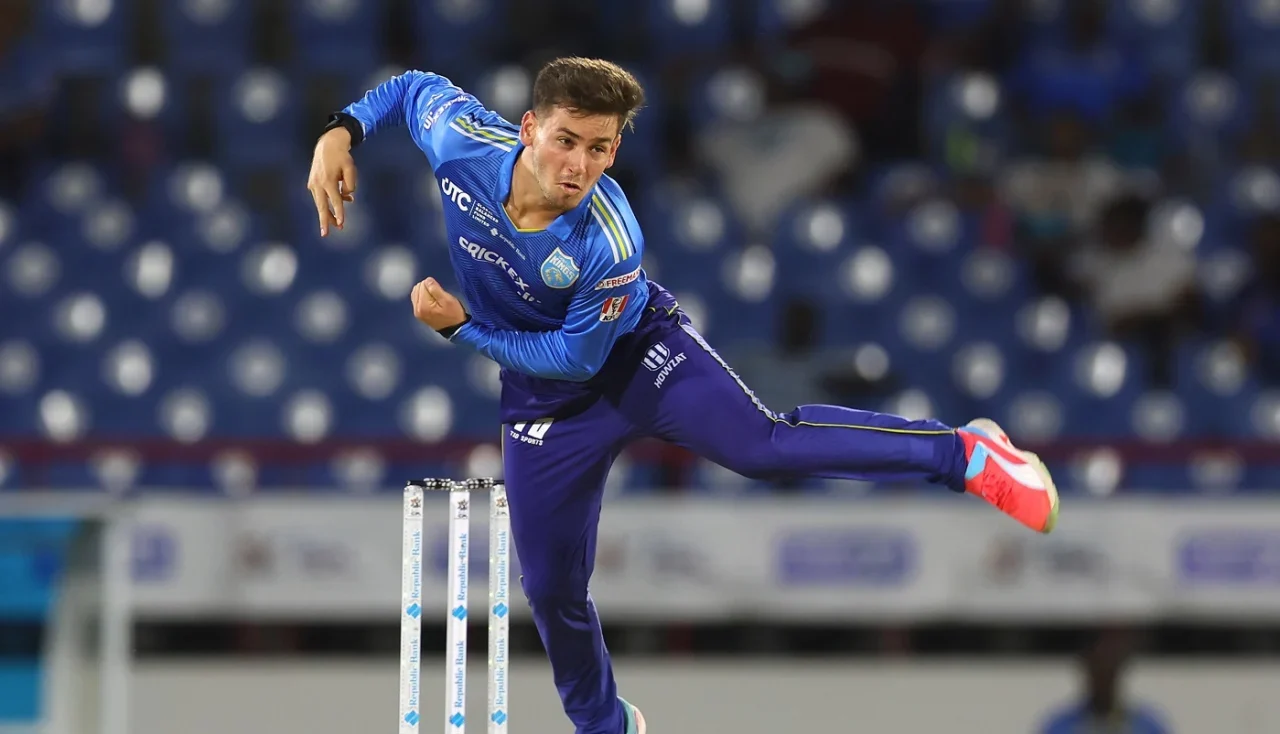
    On Wednesday at Cardiff’s international cricket ground, Australia delivered a second consecutive defeat to West Indies Women in their ICC Women’s T20 World Cup warm-up fixtures, leaving the Caribbean side underprepared heading into their tournament opener. The six-wicket loss comes on the heels of a 26-run defeat to India just two days prior, setting an underwhelming foundation for West Indies’ first match against defending 2024 champions New Zealand this coming Saturday.

    West Indies captain Hayley Matthews won the pre-match coin toss and opted to bat first, a decision that quickly backfired for her side. By the end of the second over, the Caribbean team was already 7/1 after all-rounder Qiana Joseph fell for five runs. Troubles compounded by the eighth over, when the score slipped to 52/3, with Aaliyah Alleyne (10 runs) and Matthews herself (15 runs) both back in the pavilion.

    With batters falling consistently around her, veteran all-rounder Deandra Dottin offered West Indies’ only substantial resistance of the innings. The powerhouse stroked a characteristically fluent 48 runs off just 38 deliveries, punctuated by six crisp boundaries, but her run out in the 17th over left West Indies reeling at 112/6. No lower-order batters could step up to steady the innings, and the entire regional side was bowled out for just 131 runs. Seven of the eight Australian bowlers who took the ball claimed at least one wicket, with Ashleigh Gardner leading the attack with figures of 2/17, while Lucy Hamilton added 2/19 to the dominant bowling performance.

    Chasing a modest total, Australia got off to a blistering start that immediately put West Indies on the back foot. Opener Beth Mooney put on a brutal display of power hitting, smashing 34 runs off only 18 deliveries, including three fours and a six before retiring out at the end of the sixth over. Fellow opening batter Georgia Voll picked up where Mooney left off, finishing with an unbeaten 77 runs off 48 balls, with 10 boundaries and two maximums. Australia cruised past the target in the 15th over, finishing on 132/4 to secure the comfortable win.

    For a West Indies bowling attack that struggled to find consistency or pressure all day, Joseph stood out as the most economical bowler, claiming one wicket for just six runs across her two overs. Karishma Ramharack took 1/19 from two overs, while Matthews finished with 1/35 from her four-over allocation.
    Australia enters the 2025 tournament as one of the clear pre-tournament favorites, holding a formidable historic record in the Women’s T20 World Cup: the side has claimed the world title six times across the nine editions of the event held to date, most recently winning the 2023 championship before New Zealand took the top spot in 2024. Heading into Wednesday’s warm-up, the two sides had faced off five times in T20 World Cup warm-up matches dating back to 2014, with Australia claiming three wins, West Indies securing one, and one abandoned fixture washed out by rain.

  • World Cup 2026 Kicks Off. Here Is Everything You Need to Know

    World Cup 2026 Kicks Off. Here Is Everything You Need to Know

    The 2026 FIFA World Cup, the most expansive and groundbreaking edition in the tournament’s 96-year history, is set to get underway this week, marking a new chapter for global football. For the first time since the World Cup’s inception in 1930, three North American nations – the United States, Mexico and Canada – will co-host the event, after their unified “United As One” bid secured FIFA’s hosting approval back in 2018.

    The opening match will kick off at 1 p.m. local time on Thursday, June 11 at Mexico City’s legendary Estadio Azteca, a venue steeped in World Cup history. The matchup will see Mexico face off against South Africa, a rematch of the two nations’ 2010 World Cup opening game held in Johannesburg, which ended in a 1-1 draw. An estimated sellout crowd of 80,000 fans is expected to pack the iconic stadium for the tournament’s opening clash.

    A 90-minute opening ceremony will precede the first kickoff, headlined by global music superstars. Four-time Grammy Award winner Shakira will top the bill, joined by Colombian reggaeton icon J Balvin and breakout South African hitmaker Tyla, bringing a cross-continental celebration of culture to the opening of the tournament.

    Expanded from the previous 32-team format, the 2026 World Cup features a record 48 competing nations and will host a total of 104 matches across the three host countries. That marks 40 more matches than the 2022 tournament held in Qatar, making this the largest World Cup ever staged. Beyond the on-pitch action, the event is projected to be the most lucrative sports competition in history: the World Trade Organization estimates the tournament will generate a combined $80.1 billion in gross output across the United States, Mexico and Canada. For football fans around the globe, this historic tournament delivers an unprecedented celebration of the world’s most popular sport.

  • Gregg climbs rally table after BCIC RB26

    Gregg climbs rally table after BCIC RB26

    The fifth running of the Barbados Rally2 Championship has already cemented its status as the most competitive iteration in the series’ history, with unprecedented parity among top contenders turning the title race into a nail-biting contest ahead of the final two rounds. After four completed rounds, the championship table reflects the sheer unpredictability of this season: three different drivers have already claimed round victories, and a total of six competitors have secured podium finishes. Most notably, just eight points separate the top three title hopefuls as the series enters its home stretch. Jamaican driver Kyle Gregg, piloting his Ford Fiesta Rally2, emerged as the biggest mover from the recent BCIC Rally Barbados 2026 double-header. A strong points haul across the two rounds catapulted him from fifth place in the overall standings up to third, reigniting his bid for the season crown.

    Gregg’s path to BCIC RB26 was far from smooth. Just one week before the event, a crash on his opening run at the First Citizens King of the Hill left him scoreless, dropping him from second to fifth in the championship and 12 points adrift of current leader Stuart Maloney, the 2022 series champion. With a maximum 66 points still up for grabs across the remaining rounds, the double-header at BCIC RB26 was a make-or-break weekend for Gregg, who knows what it is to compete at the sharp end of the standings: he finished third overall in the Barbados Motoring Federation (BMF) championship in 2024, and claimed second place behind fellow Jamaican Jeff Panton last season.

    The opening stage of BCIC RB26, the Friday night Riddara Bushy Park SuperSpecial, delivered its own share of drama. Mark Maloney, driving a Fabia RS Rally2, took the stage win, edging out his brother Stuart Maloney and Adam Mallalieu, who was also competing in a Ford Fiesta Rally2. Northern Ireland Tarmac champion Aaron McLaughlin, piloting a Volkswagen Polo GTI R5, crossed the line in fourth, though as an overseas guest competitor he was not eligible to score championship points. Fifth place went to Jeff Panton, five-time winner of Rally Barbados, while 2024 Rally2 champion Josh Read (Ford Fiesta Rally2) finished sixth.

    The Barbados Rally2 Championship will now go on a short break before returning to action on September 12, for the penultimate round of the season: the Rally of the Sun & Stars, the premier annual event hosted by the Motoring Club Barbados Inc. With the title race still hanging in the balance, all eyes will be on the top three contenders as they fight for every point to secure the 2026 crown.

  • Visa rejection dashes World Cup hopes of Ivory Coast and Senegal fans

    Visa rejection dashes World Cup hopes of Ivory Coast and Senegal fans

    ABIDJAN, Ivory Coast – A wave of U.S. visa denials has shattered the dreams of hundreds of soccer fans from Ivory Coast and Senegal who planned to travel to North America to cheer on their national teams at the 2026 FIFA World Cup, leaving football communities across both West African nations reeling from disappointment.

  • World Cup, dark clouds

    World Cup, dark clouds

    After a four-year global wait, the world’s most anticipated sporting spectacle, the 2026 FIFA World Cup co-hosted by the United States, Mexico and Canada, is finally set to kick off, bringing unrivaled football fever to fans across every continent — including passionate supporters in Jamaica, whose national team the Reggae Boyz narrowly missed out on qualification for what many saw as a once-in-a-generation spot.

    This 2026 edition marks a historic turning point for the men’s World Cup, growing beyond its decades-old 32-team format to welcome a record 48 national sides to the global stage. The expansion has pushed the total number of tournament matches up to 104, and for the first time, emerging football nations including Cape Verde, Curaçao, Jordan and Uzbekistan will make their World Cup debuts, opening the door for more underrepresented regions of the world to compete at football’s highest level.

    But the historic expansion has not come without controversy. On the eve of the opening match at Mexico City’s iconic Estadio Azteca, FIFA President Gianni Infantino took the stage at a Mexico City press conference to push back against mounting criticism of two major issues facing the tournament: exorbitant ticket prices and widespread visa and entry denials linked to U.S. immigration policy.

    Infantino defended FIFA’s ticketing structure, which has drawn global outrage after some premium tickets were listed for more than $30,000. He pointed to the $60 base entry ticket, arguing that the price point is lower than the average entry cost for playoff matches across major U.S. professional sports, adding that the tournament’s overall average ticket price of under $500 also undercuts average prices for major U.S. sporting events.

    Infantino also downplayed the high-profile controversy surrounding Somali referee Omar Artan, who was denied entry to the U.S. last Saturday after arriving in Miami due to U.S. immigration security concerns. The U.S. State Department later claimed Artan had ties to suspected terrorist organization members, and FIFA has confirmed he will not officiate any matches during the tournament. Additionally, Infantino framed Iran’s participation in the tournament amid ongoing military tensions between Iran and the U.S. as a victory for football and FIFA’s mission of uniting nations through sport. Multiple individuals connected to Iran’s national team, including senior officials and fans, have already been denied entry to the U.S. as part of the Trump administration’s strict immigration crackdown.

    In a separate development Wednesday, U.S. President Donald Trump confirmed he plans to attend multiple World Cup matches during the tournament, though he declined to share specific details of his attendance.

    Tensions are running high on the ground in Mexico City, where the opening match between host nation Mexico and South Africa is scheduled to kick off Thursday. Protests against the Mexican government have already disrupted preparations, with demonstrators blocking a major avenue leading to Estadio Azteca on Tuesday. Riot police formed a barricade to prevent protesters from reaching the stadium grounds. Mexican President Claudia Sheinbaum has labeled the week of ongoing demonstrations a “provocation,” and assured the public Wednesday that security for the opening match is fully under control.

    Uncertainty has also come from unexpected quarters, with weather disrupting pre-tournament preparations. A severe thunderstorm carrying torrential rain and lightning hit Orlando, Florida on Wednesday, forcing a delay of England’s final warm-up friendly against Costa Rica. The weather disruption echoes similar issues that plagued the 2025 Club World Cup, where multiple matches were delayed or disrupted by extreme weather.

    Even as most teams have settled into their host bases across North America, another unexpected controversy has emerged surrounding underdog side Haiti, who face Scotland in their opening match in the coming days. FIFA ordered Haiti to completely redesign and replace their official team kits after it was discovered the shirts featured an illustration of the 1803 Battle of Vertières, the conflict that secured Haiti’s independence from colonial rule — a depiction that violates FIFA’s rules prohibiting political messaging on match equipment.

  • THE SPECTACLE

    THE SPECTACLE

    Ahead of South Africa’s opening Group A fixture of the expanded 2026 FIFA World Cup against co-hosts Mexico at Mexico City’s iconic Estadio Azteca, Bafana Bafana head coach Hugo Broos has issued a clear challenge to his squad: block out the deafening home crowd and focus on executing their game plan.

    At 74 years old, Broos is no stranger to the electric atmosphere of the Azteca. The former Belgian international played at the very same stadium during the 1986 World Cup, when Belgium opened their campaign against the Mexican hosts. That firsthand experience means he knows exactly what his team is walking into on matchday.

    A day before kickoff, South Africa’s squad wrapped up final preparations, completing a pitch walk at Estadio Azteca to familiarize themselves with the surface before a closed training session at Club America’s facility in the capital. Broos warned his players that the crowd will be overwhelmingly in favor of El Tri, with an estimated 85,000 passionate Mexican fans set to pack the stands and create a wall of noise that could unsettle less prepared sides.

    “There will be barely any South African supporters in the stands, which gives Mexico a massive home advantage,” Broos told reporters ahead of the clash. “Eighty-five thousand Mexicans cheering and singing nonstop creates an intimidating environment, but we have to lock that out and stay focused on what we do. If we can avoid letting the atmosphere get to us, we have every chance to put in a strong performance.”

    The South Africa boss labeled Mexico the clear favorite to top Group A, pointing to their recent impressive run of form to underscore the challenge his side faces. “They’ve won nearly all of their last 10 matches, so they’re coming into this game full of confidence,” Broos said. “They’re the best team in our group, so this will be one of the toughest tests we could have asked for. But my team is ready to fight for every inch of the pitch and every single ball. We’re not here to make up the numbers.”

    Beyond the opening match, Broos also shared his candid thoughts on the new expanded 48-team World Cup format, admitting the revised structure creates far more logistical and physical strain for participating squads. South Africa is scheduled to travel across North America for their group stage fixtures, with upcoming matches set for Atlanta in the United States and Monterrey in northern Mexico, a cross-continental itinerary that far outpaces the travel requirements of previous smaller tournaments.

    “It’s gotten a bit too big with 48 nations participating,” Broos said. “When Mexico hosted 40 years ago, the tournament was smaller, and even though the game has evolved and we have to adapt to modern demands, this format is undeniably more exhausting than past World Cups with fewer teams. But it’s the system we have now, so we accept it and do our best with what we’re given.”

    As the world waits for the first kickoff of Group A, all eyes will be on whether Broos’ prepared side can withstand the Azteca roar and pull off an opening upset against the hosts.