分类: sports

  • The secret struggle of former national footballer Michael ‘Zun’ Clarke

    The secret struggle of former national footballer Michael ‘Zun’ Clarke

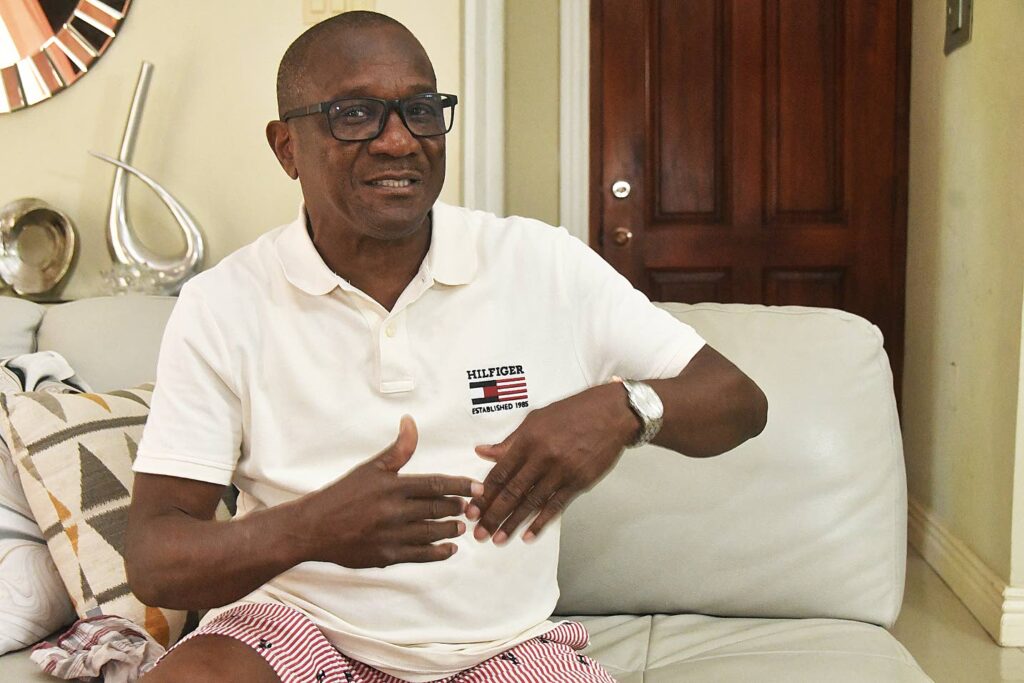
    A soft, knowing laugh, steeped in the quiet triumph of a life built against all odds, escapes 67-year-old former Jamaican national footballer Michael “Zun” Clarke as he looks back on a journey few would have bet on. His path winds from the tough, working-class streets of Waltham Park Road in Kingston, through the high-stakes glory of Jamaica’s Manning Cup schoolboy football at Tivoli Gardens High School, all the way to the lecture halls of American universities, where he would eventually graduate with a bachelor’s degree in counselling and guidance.

    What hides beneath that warm laughter is a story of almost unbelievable grit, rooted in a secret few knew during his childhood: for all of his primary school years, Michael Clarke could not read.

    Speaking with the Jamaica Observer, Clarke explained that poverty, not lack of ability, created that barrier. Raised by a single mother after his father passed away when he was just four years old, the youngest of nine siblings grew up in a household so strapped for cash that his mother Isadora simply could not afford to buy him a basic reading book for his studies at Whitfield Town Primary School.

    Rather than surrender to self-pity or let his circumstance define his future, Clarke made a quiet, deliberate choice to teach himself literacy — and he turned his daily football training into a classroom. While training at the old Cable and Wireless playing field near his Cortina Avenue home, he built his reading skills one word at a time.

    “I started out by pulling a word from the dictionary, writing out each letter, and as I ran around the track in the evenings, I’d spell the word out loud and practice pronouncing it,” Clarke recalled. “Every single day I learned at least two or three new words. Over time, I started putting them together into sentences — I actually taught myself how to read.”

    By the time he enrolled at Tivoli Gardens High School, he still had years of catching up to do to match the literacy level expected for his grade. Even after graduating high school with no O-Level qualifications, Clarke knew he was already far behind his peers — so when a rare football scholarship opened up to Alderson Broaddus University in the United States, he vowed to squeeze every possible opportunity out of the second chance.

    “When I got that scholarship, I thought to myself, ‘What the hell is this? This is your last shot to build something for yourself,’” he told the Sunday Observer. “And trust me, I made it count. I studied almost day and night, made the Dean’s List with a 3.6 GPA first, then a 3.8. I never failed a single class in college.”

    His academic performance was so strong that after completing his undergraduate degree, Clarke earned a full academic scholarship to pursue abnormal psychology at West Virginia University in 1985. That remarkable academic rise came just over a decade after a fateful encounter that changed the course of his life as a teenager.

    At 15, Clarke was attending Tivoli High on the evening shift when he crossed paths with Neville Myton, the school’s football coach and a former Jamaican Olympian who competed at the 1964 Tokyo Games while still a student at Excelsior High. Myton had built a reputation for spotting hidden raw talent, and that evening he spotted Clarke playing in the school auditorium.

    “He asked me my name, then asked if I wanted to switch to the morning shift to join the football program. I said yes immediately. He told me to show up before the school gate opened on Monday, and that’s exactly what I did,” Clarke said, smiling at the decades-old memory.

    Myton placed Clarke on the school’s Colts youth team, and that year, they took home the championship. One victory that still stands out to him is a 1-0 win over powerhouse Kingston College — the first time Tivoli Gardens had ever beaten Kingston College in any sport, by Clarke’s recollection.

    By 1976, Clarke was a starting striker on Tivoli Gardens’ Manning Cup squad, a team stacked with extraordinary young talent that included Dennis “Den Den” Hutchinson, Ken Bailey, Leon Osbourne, and brothers Dave and Delmonte Clarke (no relation to Zun), that claimed the Manning Cup title. For a school that was only five years old at the time, the win felt almost otherworldly.

    “To be honest, it was almost surreal that a young program just five years old could achieve that much in so little time,” Clarke said. “After a while it hit me: ‘Holy crap, we actually did this.’ We nearly repeated the win the next year, too. It taught me that big things are actually possible, even when everyone counts you out.”

    While fans across Jamaica marveled at the underdog win, Clarke said the team simply saw it as the result of playing the game they loved the way they always had. “We didn’t do anything extra. We just played like we normally did,” he said.

    After high school, Clarke played for Jamaican club side Cavalier, worked on the production line at local manufacturer Seprod, and earned a call-up to represent Jamaica at the national level. His final cap for the Reggae Boyz came in 1987, after he had already moved to the U.S. He flew back to Jamaica after picking up his green card, trained with the squad, and came on as a substitute in an exhibition match against a side that included English stars John Barnes and Luther Blissett.

    Clarke soon found that the discipline, quick thinking, and strategy he had honed on the football pitch translated seamlessly to his post-academic career. After graduating university, he took a role with New York City Parks and Recreation, before spending decades as a youth counsellor with the New York State Office of Children and Family Services, working with court-ordered juvenile delinquents.

    “As a youth counsellor, you hear some terrible, dangerous stories — especially from the girls, 12 to 18 years old, talking about ongoing abuse and trauma,” Clarke explained. Early in his tenure, the weight of those stories drained him mentally, especially as a father of two daughters with his wife Sandra. “At one point my wife told me, ‘Don’t bring this work home. If it’s eating at you this much, leave and find something else.’ Over time, I learned how to process it, how to empathize without carrying the pain home with me, but it was always heavy work hearing what those kids had gone through.”

    Clarke retired from his role in December 2000, just a month after celebrating his 67th birthday in January this year, he splits his time between Jamaica and the United States, where he owns property, and spends much of his time traveling between the two countries to visit his three children, all of whom have built successful careers of their own.

    His son Leon, from a previous relationship, is a high school principal in Delaware with a PhD, who earned an American football scholarship to the University of Delaware. His oldest daughter Aneka, 41, is a certified public accountant after graduating Temple University on an academic scholarship, while his youngest daughter Michelle, 31, a Howard Business School graduate, works as a strategy consultant for a digital technology firm in Washington, D.C. Clarke speaks of his children with a father’s quiet, unshakable pride.

    But for all the joy and success Clarke has earned in his later years, he carries a quiet grief: when his mother Isadora passed away in 2020, at the height of the COVID-19 pandemic, he was stuck abroad and could not get home to be with her before she died. Jamaica had closed its borders and locked down to slow the spread of the virus, so Clarke could not return before she died of natural causes, aged 102.

    “COVID didn’t kill her, she died of natural causes, but it hurts to talk about it. The country was shut down, the ports were closed, no one could come in, and I was stuck overseas,” he said, his voice thick with emotion. As soon as lockdown restrictions lifted, Clarke booked the first available flight home to honor the woman who made endless sacrifices to support his education, even when she could not afford a reading book for him. He finds solace in the fact that she lived to 102, a milestone he describes with a typically Jamaican cricketing metaphor: “She was a good batswoman. She batted the whole innings well.”
  • RUNNING RIOT!

    RUNNING RIOT!

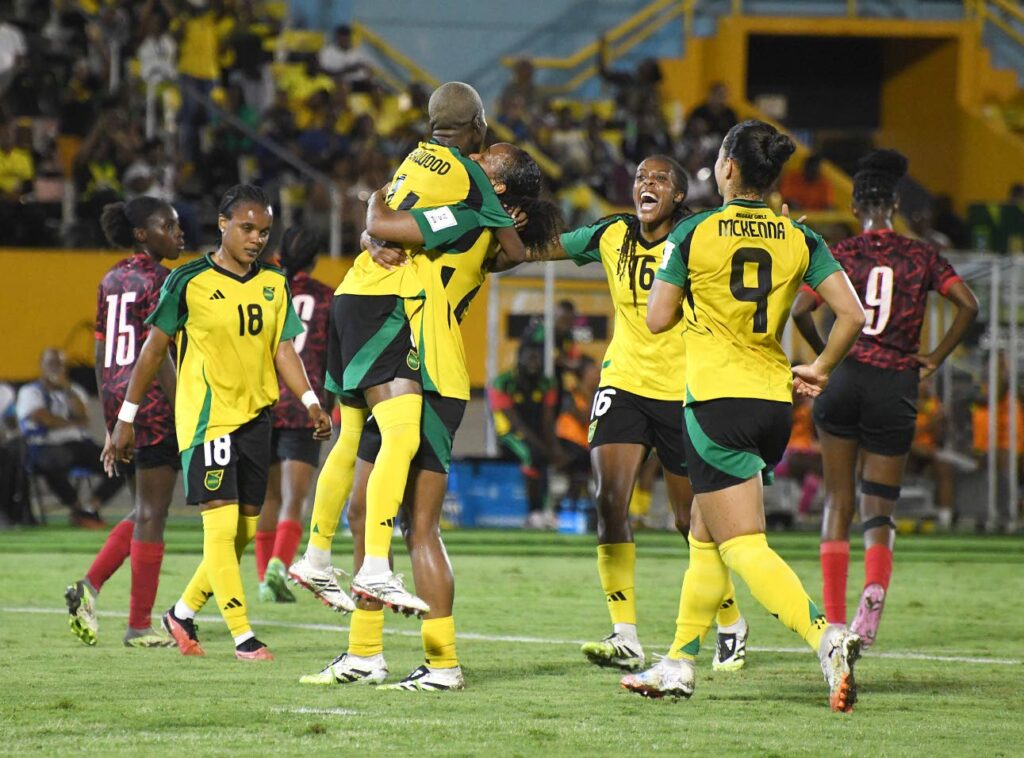
    On Friday night at Kingston’s National Stadium, Jamaica’s senior women’s national football team, the Reggae Girlz, delivered a dominant 4-0 victory over Antigua and Barbuda in their Group B Concacaf W Qualifiers fixture, leaving head coach Hubert Busby pleased but hungry for more from his squad. The win stretched Jamaica’s perfect start to the qualifying campaign to three matches, putting them top of Group B with nine maximum points, as they close in on a spot in the next round of the tournament. The entire performance was anchored by captain Khadija Shaw, who turned in a world-class display to bag a three-goal hat-trick, with a late penalty from Deneisha Blackwood wrapping up the dominant scoreline. From the opening kickoff, Jamaica controlled every phase of the game, firing a staggering 36 shots total, 14 of which landed on target. The hosts came close to breaking the deadlock repeatedly in the first 25 minutes, hitting the opposition crossbar six times – two of those efforts from Kalyssa Van Zanten – and saw a close-range attempt from Shaw turned away by Antigua and Barbuda goalkeeper Anik Jarvis in the 18th minute. The game’s first goal finally arrived in first-half stoppage time, after Atlanta Primus was fouled in the penalty box by Kai Jacobs. Shaw stepped up to calmly convert the spot kick, handing Jamaica a 1-0 lead going into the halftime break. Shaw doubled her side’s advantage just four minutes into the second half, turning her marker before slotting home from close range, then completed her hat-trick six minutes later with a powerful diving header. Both of the second-half strikes were set up by assists from Van Zanten. The treble pushed Shaw’s career international goal tally to an impressive 65 goals in just 47 appearances for Jamaica. Blackwood put the finishing touches on the result in the first minute of second-half stoppage time, converting another late penalty to seal the 4-0 win, bringing her own international goal total to 11 for the Reggae Girlz. Speaking after the final whistle, Busby highlighted the exceptional leadership and quality of his star captain, praising the frontwoman for not just her clinical finishing but her ability to lead the team from the front. “The best striker in the world plays for us, and she was able to take us over the line — not just that, but how she led from the front,” Busby told reporters. He also reserved special praise for the work of Atlanta Primus in the middle of the park, calling her performance “unbelievable.” Busby explained that the team’s game plan was designed to take the game to the opposition on home turf, a strategy that allowed his side to stay on the front foot and create a flood of scoring chances. While he acknowledged that some chances were wasted, he praised the squad for their overall game management and resilience. He highlighted the impact of second-half substitutions, noting that bringing on experienced midfielder Drew Spence to partner Primus added more control and guile to unlock the Antigua and Barbuda defense. He also credited the introduction of Amelia “Mimi” Van Zanten for strengthening the side’s performance. Busby pointed out that the team showed considerable mental and physical grit in the closing stages, when they were forced to play with 10 players for the final 15 minutes. Even with a numerical disadvantage, the Reggae Girlz managed the game well, created further chances and earned the late penalty that Blackwood converted. “I mean, hitting the crossbar six times and of course not hitting the back of the net [was unfortunate] but I keep on saying, that’s football. The last 15 minutes we were playing with 10 men and we managed the game, created opportunities, got a penalty kick, and so again it shows the resiliency of the group,” he said. The head coach added that leadership is spread throughout the entire squad, pointing to experienced players like Primus – a captain at Southampton – Drew Spence, who has hundreds of club appearances to her name, defender Allyson Swaby and goalkeeper Rebecca Spencer as key examples of that depth. He emphasized that Friday’s result was a full collective effort, from the starting XI to the substitute players who impacted the game after coming on. Busby stressed that this kind of full-squad contribution will be critical if Jamaica is to qualify for the upcoming Women’s World Cup and compete successfully at the tournament. “It is a total team performance. We talked about our starters, our finishers, and obviously those who came on obviously impacted the game but also took the game over the line. That’s what it’s going to take, it’s going to take an entire team effort of 23 to 26 players for us to get to this World Cup and be successful,” he said. In the Group B standings, Jamaica sit comfortably on top with nine points from three matches, ahead of Nicaragua and Guyana, who both hold six points. Antigua and Barbuda and Dominica are yet to pick up a single point, with Dominica having played two fewer matches than Jamaica. The Reggae Girlz will return to the National Stadium tomorrow for their next qualifying fixture, where they will face Guyana in a 7:00 pm kickoff. Only the group winner will advance to the next stage of qualifying, the Concacaf W Championship, making the upcoming clash a critical fixture for Jamaica’s World Cup aspirations.

  • Antigua and Barbuda fall 4-0 to Jamaica as Shaw scores hat-trick

    Antigua and Barbuda fall 4-0 to Jamaica as Shaw scores hat-trick

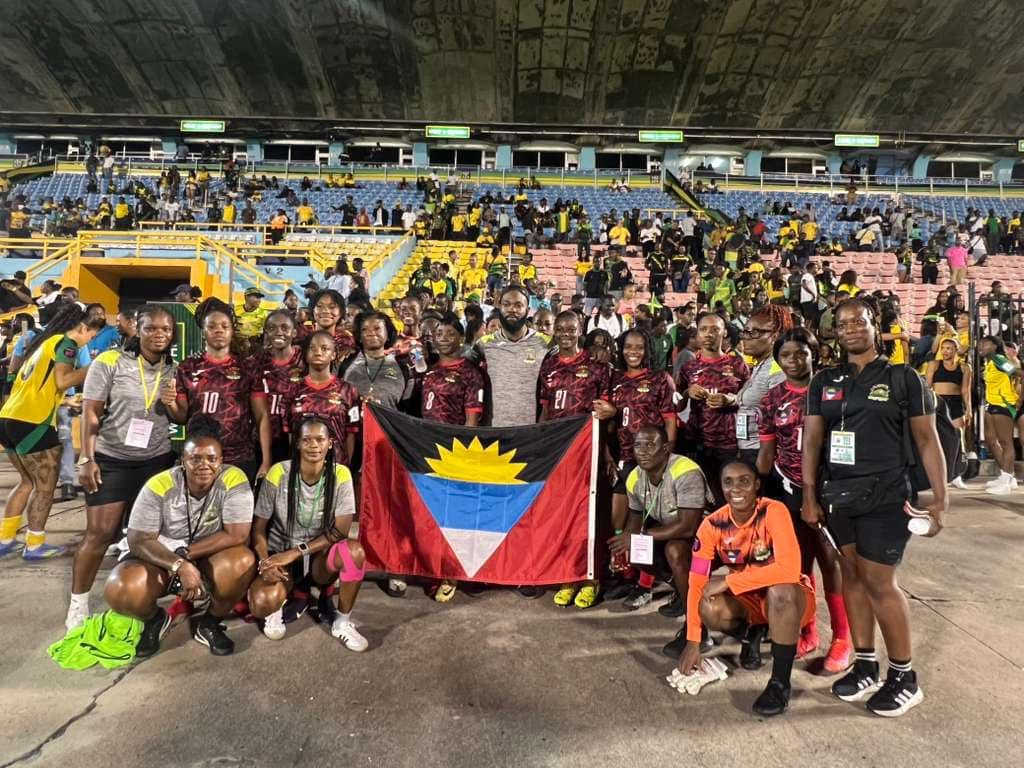
    In a hotly contested Concacaf Women’s Championship qualifying clash held in Kingston on Saturday, Jamaica secured a commanding 4-0 victory over Antigua and Barbuda’s women’s national team, with star captain Khadija “Bunny” Shaw delivering a standout three-goal performance that cemented her side’s position at the top of Group B.

    Though the final scoreline leaned heavily in Jamaica’s favor, Antigua and Barbuda’s squad put on a gritty, determined display from the opening whistle that earned widespread praise even in defeat. The breakthrough for the home side came just moments before the halftime break, when Shaw stepped up to the penalty spot. She sent Antigua and Barbuda goalkeeper Anik Jarvis diving the wrong direction to slot home the opening goal, putting Jamaica up 1-0 going into the interval.

    Shaw’s momentum did not slow after the restart. Just minutes into the second half, she fired a powerful left-footed strike from inside the 18-yard box to double Jamaica’s lead. Before Antigua and Barbuda could regroup, Shaw completed her hat-trick, rising above the defense to nod a floated cross into the back of the net. An additional late goal from Jamaica pushed the final score to 4-0.

    The three points from this win brings Jamaica’s total to nine points from three group stage matches, keeping them firmly at the top of Group B and on track to secure a spot in the Concacaf Championship finals scheduled for later this year. Despite the lopsided score, Antigua and Barbuda’s side emphasized post-match that their squad turned in a “strong and spirited performance,” with observers highlighting the team’s resilience and fight throughout the 90 minutes against the higher-ranked Jamaican side.

  • Antigua Racing Cup: Trade Wind Rhythm, Caribbean Blues

    Antigua Racing Cup: Trade Wind Rhythm, Caribbean Blues

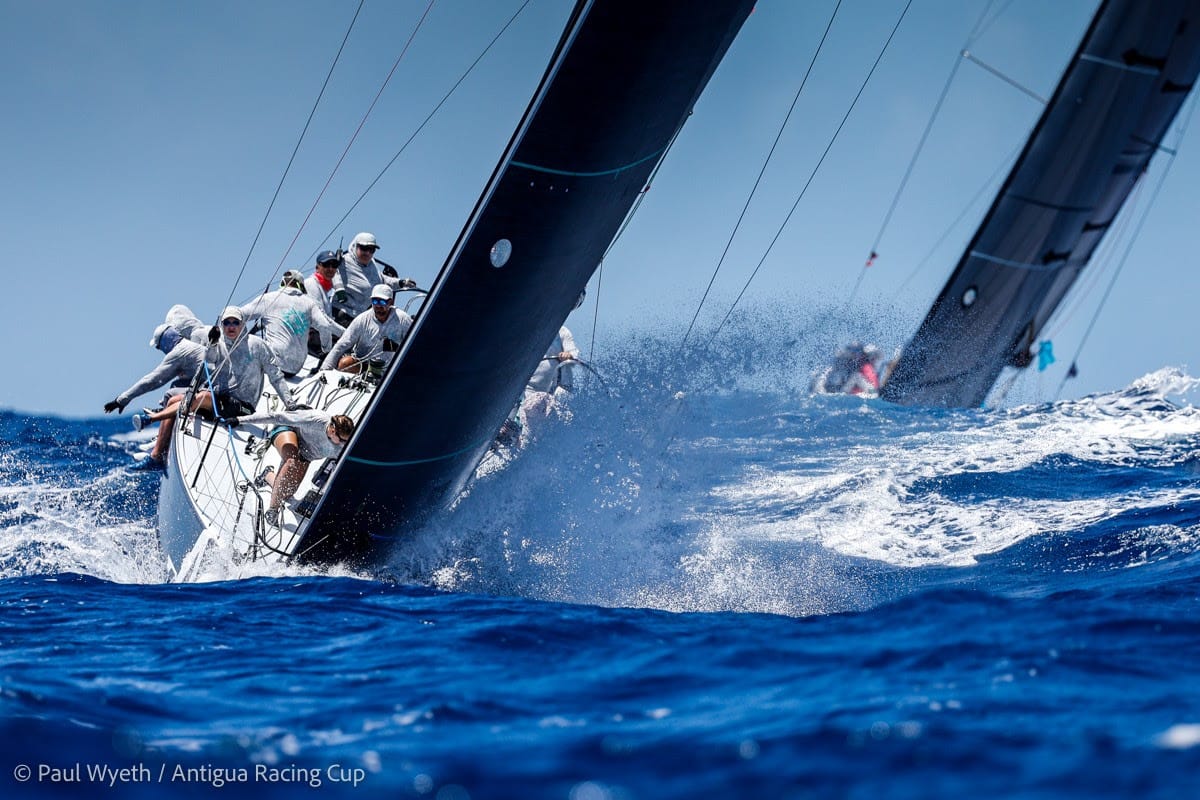
    Every spring, the turquoise waters off the coast of Antigua become the stage for one of Caribbean sailing’s most anticipated annual showdowns: the Antigua Racing Cup. Pulling in top-tier crews from more than 20 countries across the globe, the event has cemented its reputation as a bucket-list stop for competitive sailors who crave a unique mix of world-class racing and the unbeatable vibe of the Caribbean. The 2024 iteration of the race, which wrapped earlier this month, delivered exactly what competitors and spectators have come to expect: blustery trade winds that tested every seam of sails and every decision of skippers, stunning blue backdrops that make even the toughest races feel like a paradise escape, and unexpected on-water drama that kept fans on edge until the final crossing of the finish line.

    What sets the Antigua Racing Cup apart from other elite sailing competitions around the world is its one-of-a-kind relationship with the region’s famous trade winds. Blowing consistently at 15 to 25 knots throughout race week, these steady but dynamic winds create a playing field that rewards both raw speed and tactical precision. Unlike races held in erratic coastal wind patterns, Antigua’s conditions let crews push their yachts to the absolute limit, with many maxi divisions posting average speeds that top 18 knots across the 40-nautical-mile course. This year’s event featured six separate divisions spanning from classic wooden sailing yachts to cutting-edge carbon-fiber maxi racers, ensuring that every style of sailor got a chance to compete for silverware.

    Beyond the competitive racing, the event is as much a celebration of sailing culture as it is a contest. Post-race beach barbecues, live reggae sets, and informal crew gatherings along English Harbour draw thousands of visitors each year, boosting Antigua’s maritime tourism sector and bringing together sailing communities from across the world. Local organizers have worked for decades to balance elite competition with accessible, fan-friendly fun, allowing casual spectators to watch race starts from shore and even join spectator boats to get up close to the action. For many visiting sailors, the race becomes a yearly pilgrimage, combining their love of competitive sailing with a chance to relax in one of the Caribbean’s most beautiful coastal settings.

    This year’s edition saw a surprise victory in the premier maxi division, as the 100-foot sloop *Trade Wind Rhythm* pulled ahead on the final leg of the race to edge out defending champion *Caribbean Blues* by just 47 seconds. The photo finish capped off three days of back-and-forth racing, with the two yachts trading the lead at every mark. After the race, *Trade Wind Rhythm* skipper Sarah Johnson called the win “the result of a year of training and perfect teamwork, and we couldn’t have asked for better wind to pull it off.” Organizers have already opened registration for the 2025 Antigua Racing Cup, which is set to kick off in late April, with early sign-ups already 20 percent higher than last year’s record pace.

  • Over 100 Youths Turn Out for Annual Rose Classic

    Over 100 Youths Turn Out for Annual Rose Classic

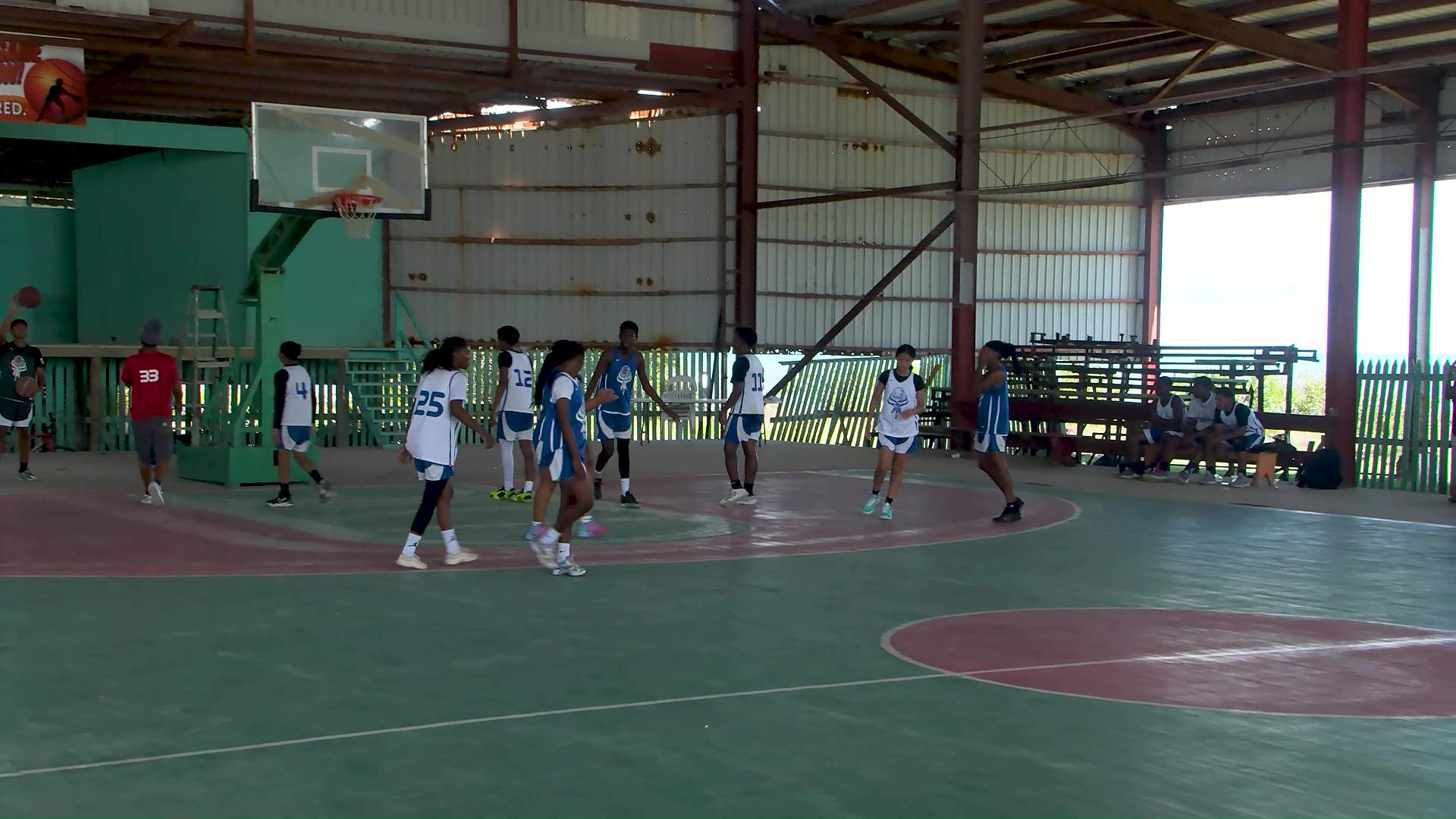
    For young athletes across Belize, the annual Easter break has become synonymous with more than just holiday relaxation—it is an opportunity to chase basketball dreams on the court at the long-running Rose Classic Youth Basketball Camp. Now marking its 18th consecutive year, the program, founded and led by Belizean-American sports organizer Cleon Hyde, has evolved far beyond its humble origins to become a cornerstone of youth athletic development across the country.

    What began as a small community initiative designed to keep local young people engaged in positive activity and away from unsafe street environments has grown into a national development program centered on three core values: discipline, collaborative teamwork, and intentional mentorship for the next generation of Belizean athletes. With generous corporate support from global sportswear brand Nike, every registered participant receives full team gear including matching tops and bottoms, along with access to structured, skill-building training sessions that prioritize both athletic growth and character development. Additional incentives for top performers include custom t-shirts, branded caps, and commemorative medals for members of the winning tournament team.

    In an interview with local outlet News Five, Hyde reflected on the milestone year and the strong turnout for 2026, which saw more than 100 high school-aged boys and girls from across Belize register to take part. “I’m celebrating my eighteenth year in Belize and what we’re doing is a showcase of high school boys and girls,” Hyde explained. “And we had a nice turnout of over a hundred kids. And so far today we’re closing out our session. And so far it’s been going pretty good, I must say. Happy to see the results of what’s going on with so many kids.”

    When asked what drives him to return to Belize year after year to run the program without financial compensation, Hyde pointed to his personal passion for the work and the long-term impact the camp has had on former participants who have gone on to build successful lives. “I started out, like I said, as a test run, and the first one was successful. So it became easy because it’s a passion. It’s not something I’m doing for like money or nothing like that,” he said. “Have a good relationship with all the kids. And I’m talking about from 2007, the likes of Devin Daly, he was one of my main players. Coope Lopez. Sherwin Garcia, all these guys that are now doing great things for themselves, so it gives me that pleasure to know that I made an impact in their life for so many years doing basketball.”

    As one of the longest-running annual youth sports initiatives in Belize, the Rose Classic continues to serve as a critical pipeline for emerging basketball talent while fostering life skills that extend far beyond the court for participating young people.

  • Bajan men struggle at Table Tennis Championships

    Bajan men struggle at Table Tennis Championships

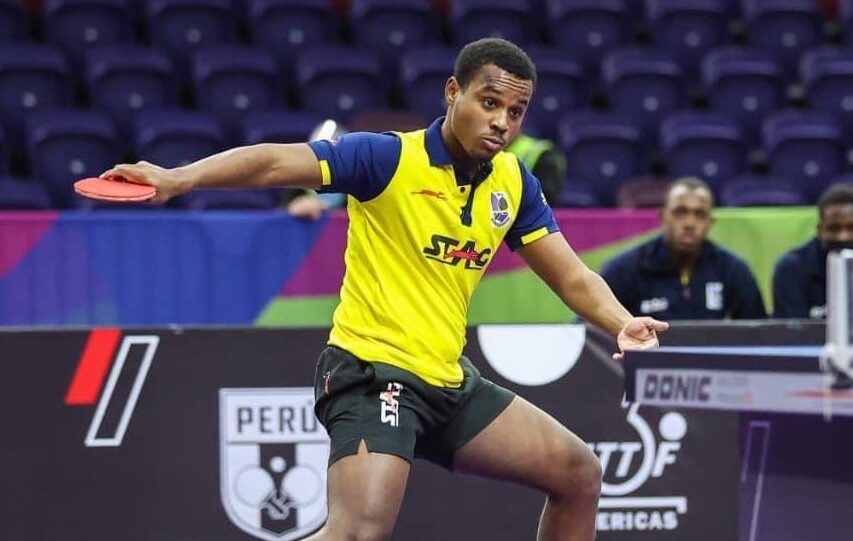
    The 2024 ITTF-Americas Central American & Caribbean Championships kicked off in the Dominican Republic’s capital of Santo Domingo on Thursday, bringing together top table tennis talent from across the region to compete for continental honors. Through the first two days of men’s team play, one team has yet to claim a victory: Barbados.

    In their opening round-robin matchup on tournament day one, the Barbadian side suffered a lopsided 3-0 sweep at the hands of Puerto Rico. The Puerto Rican squad dominated every set across all three singles matches, with Steven Moreno delivering a straight-sets win over Barbados’ Tyrese Knight (11-6, 11-6, 11-6), Angel Naranjo claiming an equally decisive victory against Mark Dowell (11-3, 11-5, 11-3), and Enrique Rios closing out the sweep with a straight-sets win over Tre Riley (11-7, 11-10, 11-5).

    Looking to bounce back in their second group match on Friday, Barbados showed significant improvement on the court, but still fell just short of their first win, dropping another 3-0 decision to Costa Rica. While the final score mirrored their opening day result, the matchups were far more competitive. Costa Rica’s Sebastien Alviles was pushed to a full five-set thriller before he secured a win over Dowell (9-11, 11-6, 7-11, 11-3, 11-6). Jeison Martinez had to come from behind after dropping the opening set to defeat Knight (5-11, 11-9, 11-9, 14-12), and Alejandro Montoya also dropped a set before locking in a four-set win over Riley (13-11, 6-11, 11-9, 11-9) to seal the sweep for Costa Rica.

    Barbados was not the only Caribbean side struggling in the early stages of the tournament, with other English-speaking Caribbean teams also facing tough results against higher-ranked regional competitors. Cuba claimed a narrow 3-2 win over St. Lucia in their first matchup before following that up with a 3-0 sweep of the same side in a second contest. Mexico shut out Guyana 3-0, Guatemala earned a 3-0 win against St. Vincent and the Grenadines, and the host Dominican Republic delivered a 3-0 sweep of Jamaica. Puerto Rico notched another 3-0 victory against Trinidad and Tobago to round out early results.

    Among the struggling Caribbean nations, Jamaica was able to rebound in a later match on Friday, picking up its first win of the tournament with a 3-1 victory over St. Lucia to keep its hopes of advancing out of the group stage alive.

  • Empire eyeing BFA Premier League return this season

    Empire eyeing BFA Premier League return this season

    For Empire Football Club, the 2024 Barbados Football Association Division One campaign is far more than just a series of matches — it is a deliberate push to return to the top flight of Barbadian football. After a blistering opening run of results, the Bank Hall-based side has climbed to the summit of the division’s points table, putting down an early marker as one of the competition’s title favorites. Their most recent outing on Wednesday served as a perfect demonstration of their current form, as Empire delivered a dominant 5-0 thrashing of Barbados Soccer Academy to extend their lead at the top.

    In an interview with local outlet Barbados TODAY following the lopsided win, Empire manager Captain Al Walcott broke down the factors behind the club’s flying start to the season, crediting consistent preparation and intentional off-season recruitment for the team’s early success. “The real secret to our results right now is the consistency our players bring to every training session,” Walcott explained. “We’ve worked hard to build a structured, systematic style of play that we can adapt no matter what conditions or opposition we face on match day.”

    The club’s off-season moves were specifically targeted at fixing a key problem that derailed their promotion push 12 months prior: a lack of cutting edge in front of goal. After finishing the previous campaign with too few goals to challenge for the top two promotion spots, the front office moved aggressively to add attacking talent to the roster, and those changes are already showing results. “We knew our finishing was holding us back last season, so we went out and added new attacking options to fix that gap, and so far that investment has paid off,” Walcott said.

    The new crop of talent brings a diverse range of experience and skill to Empire’s side. Among the standout signings is Saint Vincent native Romario Denny, who has already added a new dimension to the club’s attack. Another notable addition is Arantes Lawrence, who previously featured in the Welsh Premier League and now splits his time between playing for Empire Masters and mentoring the club’s younger rising stars. Completing the new attacking group are Brazil-born Brino da Silva — a left back who regularly pushes forward to join attacks — and attacker Kevron Durrant, both of whom have contributed to the team’s improved goalscoring form.

    The depth of the current roster has created a welcome challenge for the club’s coaching staff: selecting a starting 11 and matchday substitutes for each fixture. Walcott noted that as many as 23 players attend mandatory pre-match training sessions, with multiple players competing for every starting spot. While narrowing down the matchday squad is no easy task, Walcott emphasized that having this abundance of talent is a positive problem for any ambitious club to face.

    Promotion back to the Barbados Premier League remains the team’s non-negotiable ultimate goal, a target that slipped out of reach last season despite a strong defensive performance. Last term, St Andrew Lions and Bagatelle claimed the two promotion spots, while Deacons and Silver Sands were relegated from the top flight. Walcott recalled that last season, Empire conceded far fewer goals than most of their promotion rivals, but too many drawn matches — at least six over the course of the campaign — left them short of the places they needed to move up. This season, the club is determined to correct that mistake and secure their return to the top tier of Barbadian football.

    “Promotion to the Premier League is still our number one goal,” Walcott said. “We missed out last year, but we’ve fixed the gaps in our team, and we’re going to keep working every day to make that goal a reality this time around.”

  • ECAB Donates to the Sir Richie Richardson 3rd Annual Charity Golf Day

    ECAB Donates to the Sir Richie Richardson 3rd Annual Charity Golf Day

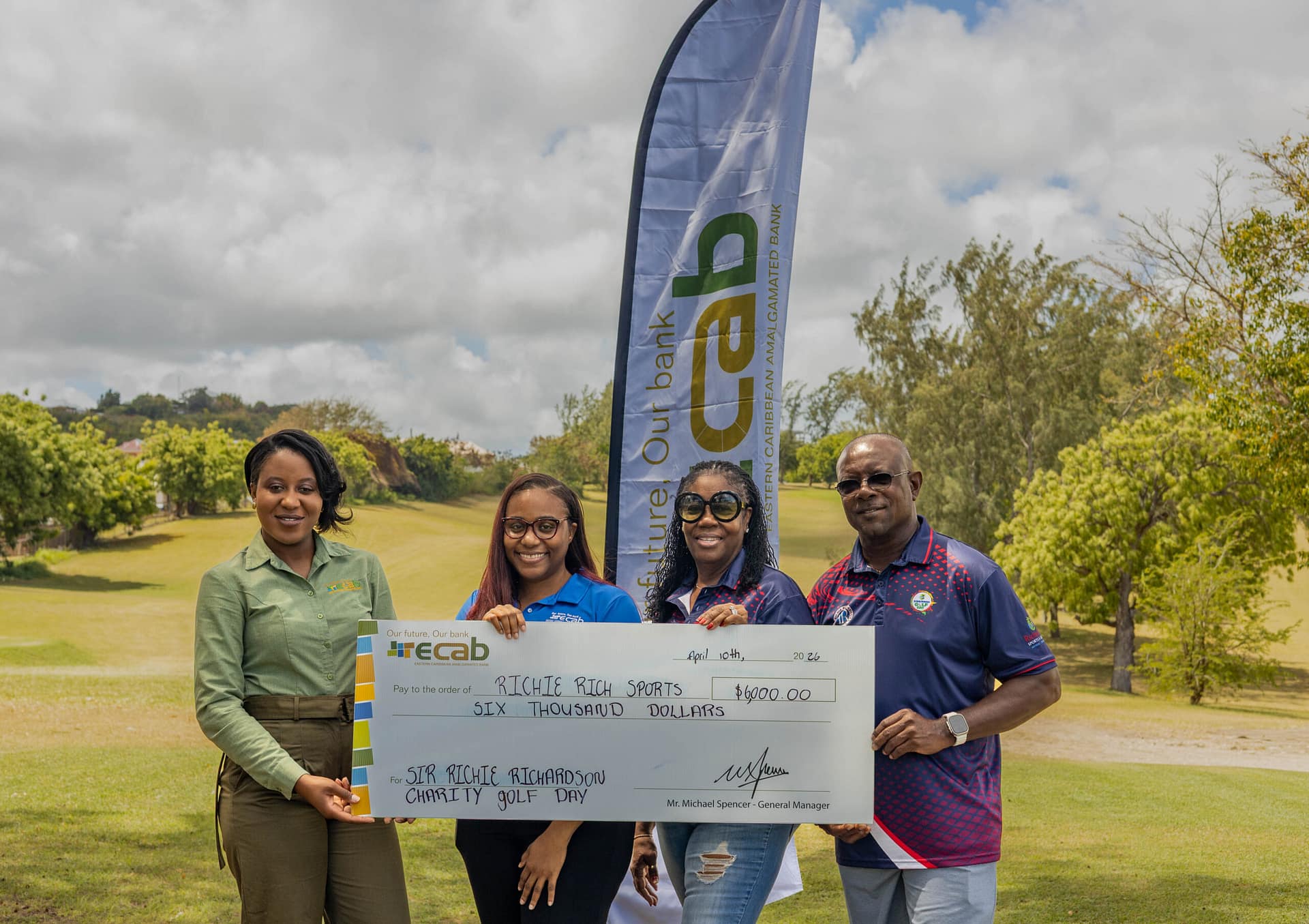
    ST. JOHN’S, Antigua – Ahead of the upcoming 3rd Annual Sir Richie Richardson Charity Golf Day, regional financial institution Eastern Caribbean Amalgamated Bank (ECAB) has pledged a $6,000 contribution to support the event’s community-focused mission. Scheduled to tee off tomorrow, April 11, 2026, at Antigua’s iconic Cedar Valley Golf Club, the annual fundraiser is the brainchild of legendary West Indies cricketer Sir Richie Richardson, and has grown into a cornerstone of local charitable giving since its launch.

    This year, all proceeds from the tournament will be split between two high-impact local organizations: the Bright Minds Project, which delivers targeted support to children living with disabilities and youth from low-income, underprivileged backgrounds across Antigua and Barbuda, and the Striving for Excellence Antigua Golf Academy, a developmental program dedicated to nurturing young local golf talent.

    In a statement announcing the donation, ECAB representatives emphasized that the contribution reflects the bank’s longstanding commitment to advancing local community development. “The Sir Richie Richardson Charity Golf Day is far more than a simple sporting competition—it is a powerful, community-driven platform that creates tangible, life-changing change for people across our islands,” the statement read. “At ECAB, our core mission centers on investing in the future of the communities we serve, and this event aligns perfectly with our goal of expanding opportunities for youth development across Antigua and Barbuda.”

    Sir Richie Richardson expressed his gratitude for ECAB’s continued partnership, thanking the bank for its generous support of the 2026 iteration of the event.

    The 2025 tournament delivered impressive results, raising roughly $70,000 for beneficiary organizations. That success not only expanded the reach of the supported charities’ programming but also reinforced the critical value of cross-sector collaboration between corporate entities and local community groups to address pressing social and developmental needs. Organizers expect this year’s event to draw a large field of participants and spectators, building on past momentum to deliver even greater support for the two 2026 beneficiary groups.

  • Fire Rips Through Olympic Sports Facility in Brazil

    Fire Rips Through Olympic Sports Facility in Brazil

    In the pre-dawn hours of Wednesday, April 10, 2026, a significant fire broke out across the roof of the velodrome located at Rio de Janeiro’s iconic Olympic Park, triggering an urgent large-scale response from local fire authorities. Roughly 80 firefighters backed by 20 fire engines were deployed to the site within minutes of the emergency call, which came in just after 4 a.m. local time.

    Unlike standard competitive venues, this velodrome carries unique historical significance: it currently houses the official Olympic Museum dedicated to the 2016 Rio de Janeiro Summer Olympics, the first modern Olympic Games ever hosted on South American soil. The museum holds a vast collection of one-of-a-kind artefacts, interactive exhibits, and commemorative items from the landmark 2016 sporting event.

    Emergency response teams adopted a dual strategy to tackle the blaze, with crews attacking the fire from both the interior and exterior of the structure. A core priority for first responders was protecting the irreplaceable historical collections stored within the museum as they worked to contain the spread of the fire.

    Thankfully, early official updates confirm no casualties were reported from the incident. It is also not the first time the venue has faced fire risk: the velodrome suffered two separate roof fires back in 2016, both of which were traced to stray, falling sky lanterns that ignited flammable materials on the roof structure. As of the latest update, authorities have not yet released a new preliminary cause for the 2026 blaze.

  • ‘Kishane is ready’

    ‘Kishane is ready’

    Two-sport global champion Donovan Bailey, an Olympic and World 100m gold medalist, has thrown his full weight behind rising Jamaican sprint star Kishane Thompson, declaring the young runner is poised to take over the 100m scene this season following a series of electrifying early-season performances.

    Last Saturday at the Miramar Invitational held in Florida, Thompson, a 24-year-old who already holds an Olympic and World Championship silver medal in the 100m, delivered a performance that made global track headlines: he clocked 14.92 seconds over the 150m distance, breaking a 31-year-old world best mark of 14.97 seconds previously set by Jamaican-born British sprinter Linford Christie back in 1994. Remarkably, this breakthrough run marked the first 150m race of Thompson’s professional career, and his first competition over a distance longer than 100m since he ran the 200m at the 2022 Velocity Fest.

    While Thompson has not yet made his 100m seasonal debut this year, he has already turned heads in the 60m circuit. Last month at the World Indoor Athletics Championships in Poland, he ran a new personal best of 6.45 seconds to claim the silver medal, cementing his status as one of the world’s top emerging sprinters.

    Bailey, a former 100m world record holder who won Olympic 100m gold for Canada at the 1996 Atlanta Games and world title in 1995, shared his glowing assessment of Thompson’s form in a recent episode of his YouTube channel, noting he has been particularly impressed by the young athlete’s performances given his larger physical frame.

    “What stood out most to me about what Kishane has achieved so far is his consistency — consistent relaxation through the race, consistent exit from the drive phase, and consistent control of his body positioning,” Bailey explained. “All of those strengths were on full display in that 150m run.”

    He added: “Kishane is a very big guy. When I was competing at my peak, my racing weight was 209 pounds, and he’s even bigger than I was. That makes it all the more incredible that he can generate such massive power coming off the turn and maintain that momentum all the way through the line.”

    Looking back to 2025, Thompson already established himself as a top contender: he posted the fastest 100m time in the world that year, clocking 9.75 seconds to defend his Jamaican national title, and notched an impressive 10 sub-10 second runs over the course of the season. His only major setback came at the Tokyo World Championships, where he finished second in the final behind compatriot Oblique Seville.

    Though 2026 is not a year for the sport’s traditional top-tier global championships, Thompson has a packed competitive schedule lined up: he is set to compete across the Diamond League circuit, with a potential spot at the July Commonwealth Games, followed by the new World Athletics Ultimate Championships in September.

    Bailey argued that Thompson’s ongoing refinement of his technical skills makes him nearly unbeatable on the track this summer. “I truly believe Kishane is ready right now,” he said. “He’s put in the work on speed endurance training, which lets him stay relaxed through the 75 to 80-meter mark and let the race come to him naturally.

    “Even if you have athletes like Christian Coleman or other shorter, quicker sprinters who can keep pace with him over the first 30 meters, once Kishane finds his rhythm, adjusts his form and settles into his stride, he is unmatched when it comes to top-end speed. He is going to have a fantastic summer. I love what he’s doing right now — he’s fully leaning into his speed and stepping into the role he was meant to fill in sprinting.”

    Thompson’s first major test of the 2026 season will come next month at the Xiamen Diamond League in China, where he is scheduled to go head-to-head with Botswana’s Olympic 100m champion Letsile Tebogo, alongside two of America’s top sprint stars: Christian Coleman and Kenny Bednarek.