分类: sports

  • 2026 World Cup : Ambassador Henry Wooster wishes Haiti the greatest success !

    2026 World Cup : Ambassador Henry Wooster wishes Haiti the greatest success !

    It has been 52 years since Haiti’s men’s national football team last qualified for the FIFA World Cup, and the small Caribbean nation’s long-awaited return to the global tournament has already captured the imagination of millions of Haitian fans at home and across the diaspora. As the team – nicknamed the Grenadiers – prepared to kick off its first group stage match against Scotland on June 13, 2026, followed by upcoming fixtures against global powerhouses Brazil and Morocco, the top American diplomat in Port-au-Prince extended a message of warm congratulations and well wishes.

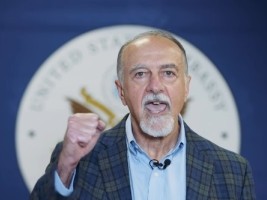
    Ambassador Henry Wooster, the United States Chargé d’Affaires in Haiti, released a public statement honoring the national team’s historic milestone, highlighting the far-reaching significance of the achievement beyond the pitch. “This is a moment of great pride for Haiti. After more than five decades, Haiti is back on one of the biggest stages in world football, inspiring millions of people both at home and abroad,” Wooster said in his address.

    The ambassador emphasized that the current squad, a new generation of Haitian football talent, earned their spot in the 2026 tournament through relentless effort, collective dedication, and unwavering belief in their shared goal. For a nation that has navigated ongoing political instability, economic hardship, and widespread social challenges in recent years, Wooster noted that the team’s success stands as a powerful symbol of Haitian perseverance, resilience, and collective national identity.

    “This achievement goes far beyond football. It represents a celebration of perseverance, resilience, and national pride. This team embodies the aspirations and dreams of an entire nation that continues to move forward with courage, despite the challenges it faces,” he added.

    On behalf of the U.S. Embassy in Port-au-Prince, Wooster extended congratulations to every person who contributed to the team’s historic qualification: the players who trained and competed for years, the coaching staff that built a cohesive and competitive squad, the families that supported the athletes through every setback, and the passionate fans that never lost faith in their national team.

    Addressing the Grenadiers directly, the envoy urged the team to compete with confidence, carry their national flag with pride, and savor every moment of their once-in-a-lifetime World Cup journey. “We wish Haiti the greatest success. May you inspire young people across the country to dream big, work with determination, and never give up,” Wooster closed his statement with the rallying cry “Grenadye alaso!” – Go Grenadiers!

  • Derde helft WK 2026: Amerika walst met 4-1 over Paraguay

    Derde helft WK 2026: Amerika walst met 4-1 over Paraguay

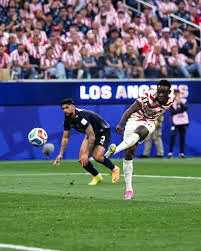
    On June 13, co-hosting nation the United States delivered a commanding 4-1 win over Paraguay in a Copa America group stage fixture held at Los Angeles’ iconic stadium, capping off a one-sided display of attacking dominance from the opening whistle. From the first kick of the match, the US seized total control of possession and territorial advantage, pushing Paraguay’s entire squad deep into their own half of the pitch. A relentless wave of attacking pressure left Paraguay’s backline scrambling to contain wave after wave of American forward runs, and it did not take long for the deadlock to be broken.

    Just eight minutes into the contest, an own goal from Paraguay defender Damián Bobadilla opened the scoring for the hosts. A whipped cross from Weston McKennie bounced off Bobadilla and into the back of the net, putting the US ahead 1-0. The American side never looked back from that early breakthrough, doubling their advantage in the 29th minute. Folarin Balogun, starting as the US’ lead striker, converted a pinpoint cross from captain Christian Pulisic to stretch the lead to 2-0.

    On the stroke of halftime, Balogun struck once more to put the result virtually beyond doubt. A perfectly weighted long through ball from Malik Tillman caught Paraguay’s offside trap flat-footed, allowing Balogun to outpace the retreating defenders and slip a calm finish past Paraguay goalkeeper Orlando Gil, sending the US into the halftime break with a comfortable 3-0 lead.

    After the interval, Paraguay launched a full-scale fightback, throwing numbers forward in search of a way back into the match. Their efforts finally paid off in the 73rd minute, when forward Maurício found the back of the net to pull one goal back for the South American side, making the score 3-1. Just 60 seconds later, Tillman had a golden chance to restore the US’ three-goal advantage but wasted the opportunity with a poor, underpowered effort that failed to test the Paraguay defense.

    Paraguay continued to push forward in the final 15 minutes in search of a second consolation goal, but the US retained calm control of the tempo of the match, creating several more good scoring opportunities of their own. After late substitutions that saw both Tillman and Balogun withdrawn from the action, the US attack was unable to convert further chances until stoppage time. In the final minute of regulation, substitute Giovanni Reyna put the icing on the cake with a well-taken late strike to seal the final 4-1 scoreline, securing a statement opening win for the co-hosts.

  • 2026 World Cup : Haitian Prime Minister visited the Grenadiers the day before their opening match

    2026 World Cup : Haitian Prime Minister visited the Grenadiers the day before their opening match

    On the eve of one of the most defining matches in Haitian sports history, the country’s top political leadership traveled to Massachusetts to rally the national men’s football team, the Grenadiers, ahead of their opening 2026 FIFA World Cup fixture against Scotland’s Tartan Team. Kickoff for the match, held at Gillette Stadium in Foxborough, just outside Boston, is scheduled for 9:00 p.m. local Haiti and U.S. Eastern time on June 13, 2026.

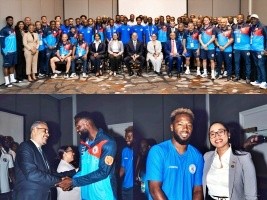
    Haitian Prime Minister Alix Didier Fils-Aimé led the official delegation, which included Foreign Minister Raina Forbin and Minister for Haitians Living Abroad Kathia Verdier, for the morale-building visit with players and technical staff on Friday, June 12. The encounter was steeped in raw emotion and collective national pride, as Fils-Aimé delivered a unifying message of solidarity from both the Haitian government and the entire Haitian community — including millions of citizens and diaspora members around the globe.

    The Prime Minister framed the team’s World Cup qualification as a watershed historic moment for the Caribbean nation, noting that the run to the tournament has already united Haitians across divides behind a shared national goal. He positioned the Grenadiers as far more than just a group of athletes, calling them a powerful symbol of hope, unity, and what the country can achieve against steep odds.

    “You are much more than a football team. You are the face of Haitian youth who refuse to give up, who dare to dream, and who prove that, despite the difficulties, Haiti is capable of rising to the ranks of the world’s best nations,” Fils-Aimé told the squad. “You are hope, you are opportunity. You are an example; we are watching you and counting on you.”

    Speaking after the Prime Minister, Foreign Minister Forbin extended her own congratulations to the team for achieving the unprecedented feat of qualifying for the World Cup. She highlighted the behind-the-scenes diplomatic and consular work that cleared logistical hurdles to enable Haiti’s participation in the global tournament, adding that the squad serves as a powerful showcase of the exceptional talent nurtured among Haitian youth.

    For her part, Minister Verdier praised the team’s achievement as one that transcends the boundaries of sport. She noted that the Grenadiers’ journey has already become a source of inspiration for current and future generations of Haitians both at home and abroad.

    In a gesture of gratitude for the government’s support, the entire squad presented Fils-Aimé with an official team jersey bearing the signatures of every player. The Haitian government used the occasion to reaffirm its full confidence in the national team, and issued a call to all Haitians, regardless of their location, to rally behind the Grenadiers during this historic milestone.

    Closing his remarks, the Prime Minister emphasized the unifying power of the team’s moment on the world stage: “Together, as our Grenadiers are demonstrating today on the world stage, we can accomplish great things when we move forward united.”

  • 2026 World Cup : The Scottish national team, a difficult opponent but…

    2026 World Cup : The Scottish national team, a difficult opponent but…

    On the evening of June 13, 2026, football fans across the Caribbean and the United Kingdom are gearing up for a historic 2026 FIFA World Cup group stage encounter that will make history for both competing nations. Taking place at Gillette Stadium in Foxborough, Massachusetts, just outside Boston, this match will kick off at 9:00 p.m. local Haiti and U.S. time, marking the first-ever meeting between Haiti’s men’s national team, the Grenadiers, and Scotland’s beloved Tartan Army side. It will also be Haiti’s first-ever competitive match against a British Isles national team, adding an extra layer of novelty to the already anticipated fixture. For both sides, the match marks a long-awaited return to the world’s biggest football stage. Haiti, currently ranked 83rd in the global FIFA rankings, is stepping onto a World Cup pitch for the first time in nearly 52 years, while Scotland – sitting 43 places higher at 40th – is ending its own 28-year drought from the tournament, having last competed in 1998 in France. Scotland, led by long-tenured head coach Steve Clarke, enters the contest as the clear favorite on paper. The side has enjoyed a steady upward trajectory in European football in recent years, built around a core of experienced, in-form Premier League talent that drove its successful qualifying campaign. Central to Scotland’s threat is Manchester United midfielder Scott McTominay, who led the team’s attacking stats in qualifying with two goals and one assist – more direct goal involvements than any other player in the squad. McTominay is one of three key players, alongside Aston Villa captain John McGinn and Liverpool left-back Andy Robertson, who started all six of Scotland’s qualifying matches to secure their spot in the 2026 tournament. Despite their consistent qualification for major tournaments over the decades, Scotland’s World Cup history is defined by underperformance and heartbreak. The Tartan side has qualified for the World Cup on eight previous occasions – 1954, 1958, 1974, 1978, 1982, 1986, 1990, and 1998 – but has never managed to progress beyond the group stage in any of their campaigns. Across their 23 total World Cup matches, Scotland holds a record of four wins, seven draws, and twelve losses, having scored 25 goals and conceded 41 overall. This first-round elimination curse extends to all of their appearances at the UEFA European Championship as well: across twelve total appearances in major men’s international tournaments, Scotland has exited at the group stage every single time. For Haiti, the underdog side heading into the contest, supporters are focusing their hopes on two star attacking forwards: Frantzdy Pierrot and Duckens Nazon. The Grenadiers’ modest pre-match aim is to secure at least a draw or get on the scoresheet in their return to the World Cup. Early match prediction models on matchday morning gave Haiti just a 20% chance of a victory, with a 22% probability of a draw and a 67% chance of a Scotland win. Still, Haitian football supporters have remained optimistic, noting that upsets are always possible in the World Cup’s group stage. Nazon in particular comes into the match in red-hot form following CONCACAF qualifying. The Haitian attacker finished the qualifying campaign as joint top scorer across the confederation with six goals, including a memorable second-half hat-trick after coming off the bench against Costa Rica. He also led all CONCACAF qualifying players in total shots (34) and touches in the opposition penalty area (59), marking him as the most dangerous goal threat for the underdog Grenadiers.

  • Defending champs West Terrace Primary advance to quarter finals

    Defending champs West Terrace Primary advance to quarter finals

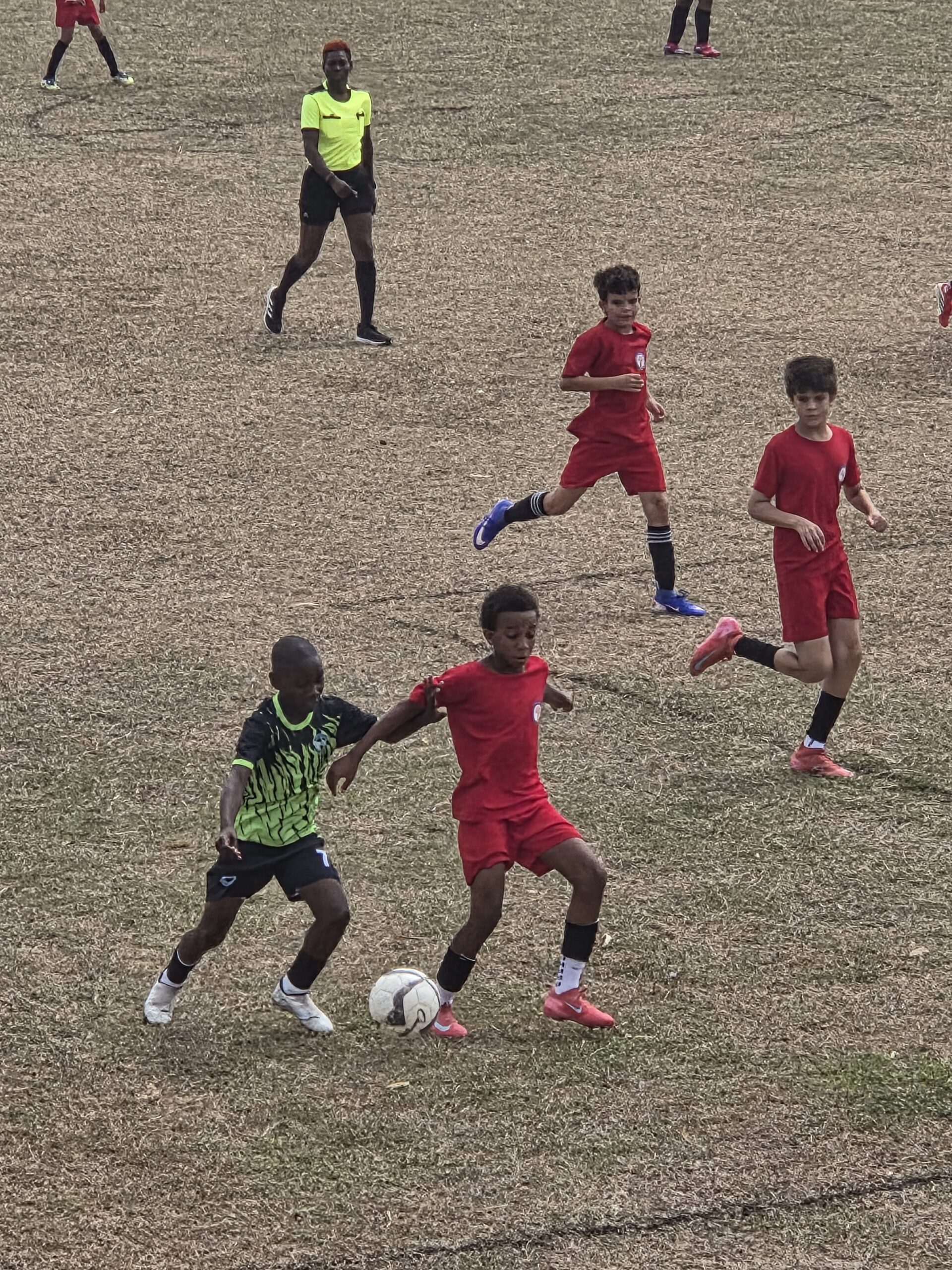
    The knockout round of the National Sports Council/BICO Primary School Football Competition has wrapped up its Round of 16 matches, with eight elite teams punching their tickets to the upcoming quarter-finals, and a highly anticipated rematch of last year’s championship final already building buzz among young football fans across the country.

    Defending tournament title holders West Terrace Primary secured their spot in the final eight with a hard-fought 1-0 shutout victory over Reynold Weekes Primary, with Neymar Forde netting the decisive lone goal of the match to seal the win. Last year’s tournament runners-up Arthur Smith Primary also advanced to the next round, but they were pushed to the limit by a determined St Paul’s Primary side, needing a penalty shootout to secure a 4-3 edge on penalties after a thrilling 3-3 draw in full regulation time. St Paul’s forward Zeshawn Shorey delivered a standout individual performance in regulation, notching a hat-trick to put his side in position to pull off an upset, while Arthur Smith found the back of the net from Jakkori Best and Tristan Carew-Stephens, plus a late own goal that forced the match to penalties.

    Two other Round of 16 matches on Friday at St George’s Greens Playing Field also delivered clear results. Host representative St George Primary dominated Bernard’s Primary 2-0 to advance, with Tyree Cumberbatch and Cameron Hope each finding the score sheet. Deacons Primary also secured a 2-0 victory over Roland Edwards Primary, with Adrian Allen and Jaylen Fenty combining for the winning goals to book Deacons’ quarter-final spot.

    The first four quarter-final berths were claimed a day earlier, on Thursday, in a series of tightly contested matches. Milton Lynch Primary picked up a 3-0 win over All Saints Primary, with Amari Callender, Jovanni Bascombe and Shakir Perch all splitting the goals for the winning side. Wesley Hall Primary advanced with a 2-0 shutout of Hitz 106.7 FM Bay Primary, with Shaquri Burgess and Tazarie Marshall notching one goal apiece. St Stephen’s Primary edged past Blackman and Gollop Primary 1-0 thanks to a single first-half strike from Sirr Dash, while St Cyprians Primary claimed a 1-0 victory over Providence Primary, with Tashim Welch’s second-half goal proving to be the game-winner.

    All quarter-final matches are scheduled to take place on June 15 at the Greens Playing Field, setting up four compelling matchups for football fans to enjoy. St Stephen’s will square off against Milton Lynch, St Cyprians will take on Wesley Hall, and Deacons will go head-to-head against St George. But the undoubted highlight of the quarter-final draw is the marquee matchup between defending champion West Terrace Primary and last year’s runner-up Arthur Smith Primary, a rematch of the 2023 tournament final.

    Both sides have entered the quarter-final round undefeated through the 2024 competition, and both have made clear their goal of reaching the semi-finals, which are scheduled to be held at the Barbados Football Association’s Technical Centre on June 18. The 2024 tournament final will also take place at the Technical Centre, with the championship match set for June 27.

  • Windies Women primed for crucial New Zealand clash

    Windies Women primed for crucial New Zealand clash

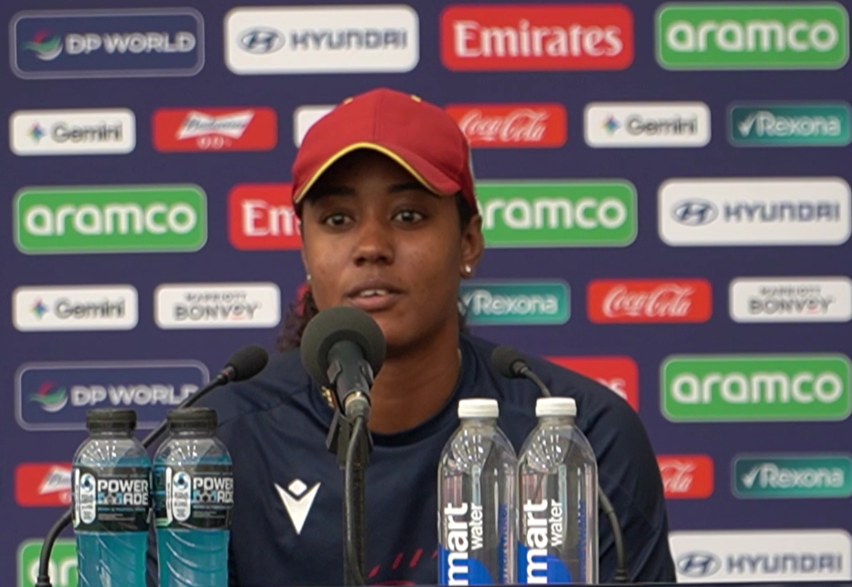
    As the ICC Women’s T20 World Cup gets underway, the West Indies Women’s squad has declared itself ready for its opening clash against defending champions New Zealand on Saturday, with both head coach Shane Deitz and captain Hayley Matthews expressing confidence in their team’s preparations while navigating an uncertain fitness question around a key veteran player.

    The upcoming matchup carries extra history: these two sides met in the 2024 tournament’s semifinal, where New Zealand scraped across the line to claim an eight-run victory in a low-scoring battle that could have swung either way. Deitz says he expects another tightly contested battle this weekend, noting the two squads are far more closely matched than the defending champions’ title status might suggest.

    “It doesn’t matter who is across the pitch from us – New Zealand is clearly a top side, and they showed that by winning the last tournament,” Deitz said. “That semifinal in Dubai two years ago was a close one; if a couple of breaks had gone our way, we could have been the ones moving on. These are two evenly built teams, and getting off to a strong start in this opening game will be critical. We’ve put in the work, the squad has done all the prep we need, and we’re ready to step onto the field.”

    Deitz also shared his expectations for the pitch conditions at the host venue, noting recent cool, wet weather will likely create opportunities for both bowlers and batters. “We’ve had a lot of rain and lower temperatures lately, so the wicket should have something in it for bowlers, especially with the new ball,” he explained. “But these are excellent grounds, so even with that assistance for the bowlers, the ball should come onto the bat well for batters too. If you hit your lines and lengths, you’ll get wickets, but if you settle in and time your innings well, you can put up a big total.”

    One major unanswered question remains, however: the fitness of star veteran all-rounder Chinelle Henry, who was stretchered off the field during a Wednesday warm-up match against Australia with an injury. Deitz declined to give any update on whether Henry would be available for Saturday’s opener, but Matthews acknowledged that missing the key player would be a significant loss for the side.

    “Chinelle is a leader in this dressing room, one of our opening bowlers, and a critical middle-order batter batting at five or six,” Matthews said. “If she can’t go, it’s going to be a massive blow for our whole group. But if that’s the case, we’ll adjust, find a way to move forward, and still fight to get wins.”

    While the 2024 semifinal loss is still fresh for the side, Matthews pushed back on the idea that a win on Saturday would be about revenge for that narrow defeat. “We didn’t play our best cricket that day, and coming up short was unfortunate,” she said. “But what I’m focused on is that getting to play them first in this tournament gives us a chance to set the tone for our whole campaign. This is a World Cup – every single match demands your full attention, but if we can get a result against the defending champions in our first game, it puts us in an incredible position going into the rest of the group stage.”

    Matthews, who was named player of the match when West Indies claimed the 2016 T20 World Cup title, has grown significantly in her role as team captain since that career-defining win. The Barbadian all-rounder said she has learned to balance her own on-field performance with the off-field responsibilities of leading a squad. “I’ve learned so much over the years – I’m a different person and a different player now than when I first took the captaincy,” she explained. “The biggest adjustment has been learning to separate my own batting and bowling performance from managing the whole team. As captain, it’s my job to make sure every player is in the best headspace to perform, and that’s a responsibility I take seriously.”

    In recent years, West Indies Women have struggled with inconsistency across long bilateral series, but the side has a long history of stepping up in major global tournament play – a trend Matthews says holds true for this current squad. “Looking back at the history of both our men’s and women’s programs, we always tend to rise to the big occasion, so I can’t argue with that,” she said. “This year, we’re hoping we can show up again when it matters most and make a deep run in this tournament.”

  • Let’s Bet relaunches for FIFA World Cup

    Let’s Bet relaunches for FIFA World Cup

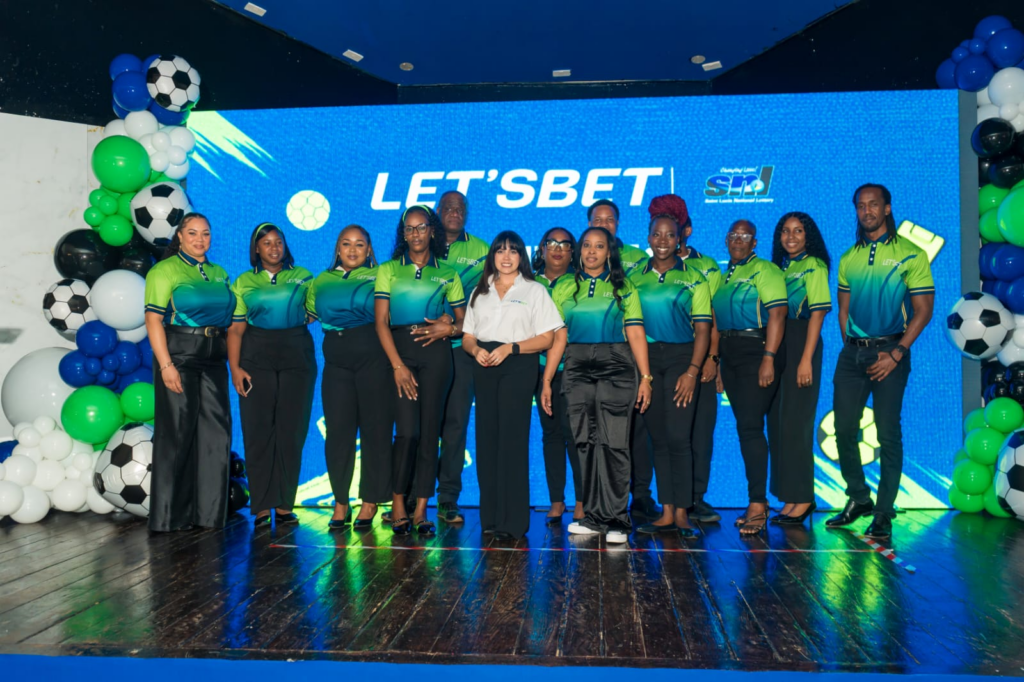
    Ahead of the highly anticipated FIFA World Cup, the Saint Lucia National Lottery (SNL) has launched an upgraded version of its popular Let’s Bet online sports betting platform, giving local football fans and sports enthusiasts a revamped digital experience to engage with the tournament. The redesigned application made its official public debut on June 9 at a launch event hosted at Sandals Grande, Saint Lucia.

    Already a well-established name in international sports betting circles, the updated Let’s Bet platform comes with a suite of user-centric improvements. These include a modern new brand logo, refreshed visual design elements, streamlined navigation for faster access to betting markets, a wider range of wagering options, an intuitive simplified user interface, and enhanced cybersecurity protocols to protect user data and transactions.

    Camisha Richards, regional general manager for the initiative, emphasized that the overhaul represents a new chapter for the Let’s Bet brand. “From our updated logo to our fully reimagined platform, every adjustment has been crafted with the player experience as the top priority,” Richards explained during the launch. “We have now built a far more dynamic, all-inclusive experience that gives every bettor a simpler, more intuitive pathway to place sports wagers or enjoy other online gaming options.”

    Coinciding with the opening match of the FIFA World Cup between Mexico and South Africa, the upgraded platform was ready to accept a diverse range of wagers from day one of the tournament. Bettors can place bets on everything from the final score of a match to the first goal scorer, and even the exact minute a goal will be scored, expanding the ways fans can interact with the tournament.

    Beyond traditional football and sports wagering, the revamped platform has added new content to serve a broader audience. It now includes dedicated markets for eSports, alongside a larger selection of casual and casino-style games. To welcome both new and returning users, SNL has rolled out a variety of exclusive bonuses and promotional offers for sports fans and casino gaming enthusiasts alike.

    The platform’s launch is being supported by a new national marketing campaign titled “This Is The Place”, which promotes the upgraded experience across Saint Lucia. In addition to the digital rollout, SNL has planned a series of in-person interactive events at retail outlets and gaming centers across the island, including a major activation at the popular Blast Gaming Centre in the capital city of Castries. Visitors to these on-location events will have the opportunity to enter a giveaway for a brand-new 55-inch smart television as part of the launch celebrations.

    The updated Let’s Bet platform is currently live and accessible to users at www.letsbetlc.com. Eligible users can create an account immediately and start exploring the new features in time to follow all the action of the FIFA World Cup, adding an extra layer of excitement to the global tournament for Saint Lucian fans.

  • Auguste left out of Windwards tournament trial squad

    Auguste left out of Windwards tournament trial squad

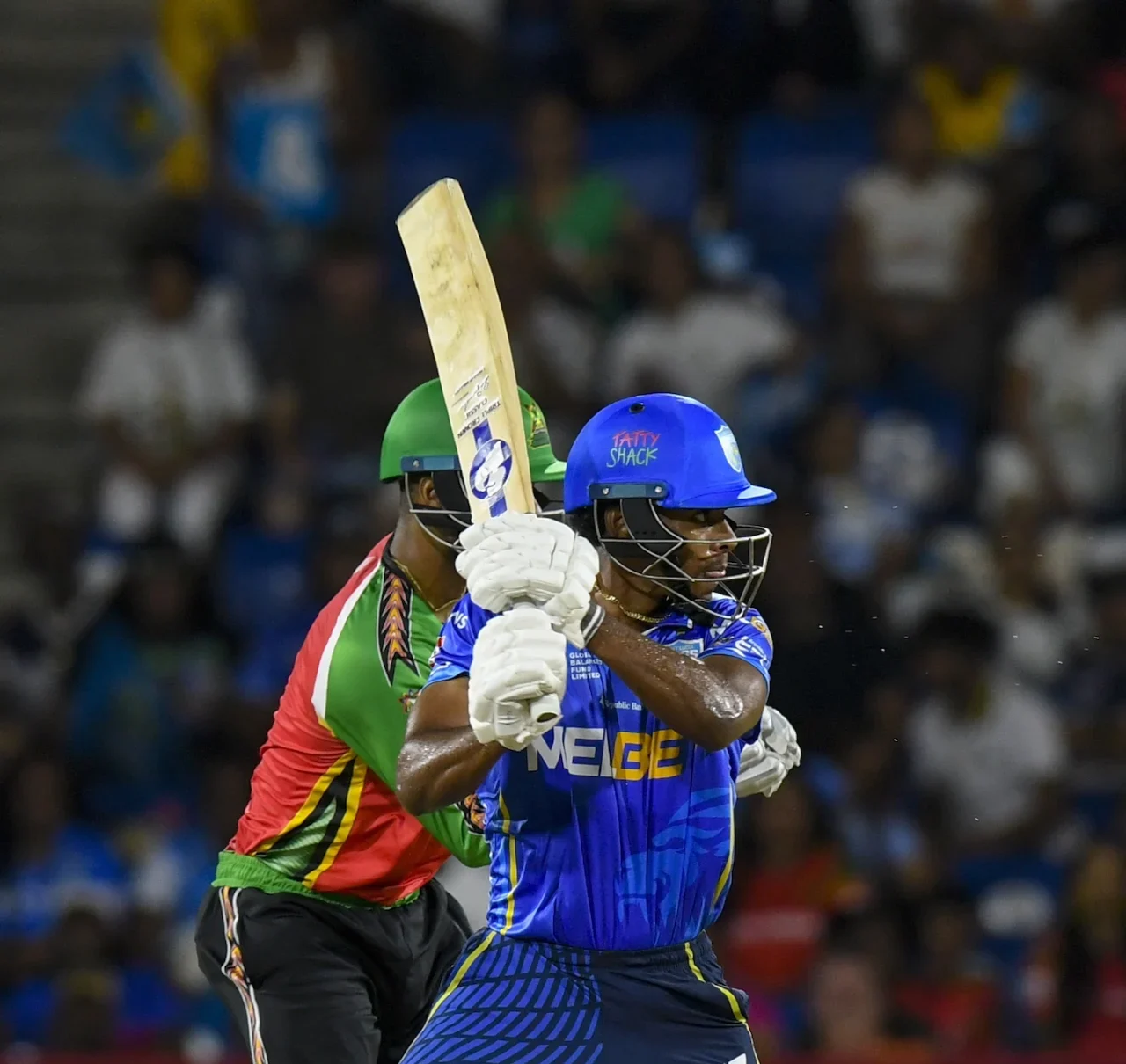
    Cricket fans across the Windward Islands are facing an unexpected storyline ahead of the 2025 Windward Islands Super 50 Men’s Tournament: the reigning Most Valuable Player will not feature in the preliminary training squad for defending champions Saint Lucia, and is set to miss the tournament entirely due to prior regional commitments. The Saint Lucia National Cricket Association (SLNCA) announced its 30-strong trial squad earlier this week, with last year’s standout performer Ackeem Auguste notably absent from the roster.

    Last year’s tournament was a breakout for Auguste, a full West Indies international who dominated the competition on home soil. The star batter compiled 346 runs at an extraordinary average of 115, and also claimed five catches – more than any other fielder in the tournament – to cement his MVP status. While Auguste will sit out this year’s event, two other standout performers from 2024’s title-winning campaign, fast bowler Keon Gaston and wicketkeeper Noelle Leo – both products of the Saint Lucia Cricket High Performance Centre, same as Auguste – have earned spots in this year’s trial squad. Reigning captain Kimani Melius is also set to return to lead the side’s title defense. Top-order batter Johnel Eugene will join Auguste on the sidelines, also sidelined by prior regional commitments.

    The bulk of the 2025 trial squad is made up of returning familiar names, including Dornan Edward, Jayden Elibox, Lee John, Mckenny Clarke, Shadrack Descarte, Shawnil Edward, Tarrique Edward, Theo Edward and Tyrel Chicot. A host of emerging young talents have also received their first call-ups to the senior trial squad, including Bjorn Fanis, Bolton Sayers, Cody Fontenelle, Dane Edward, Isiah Jones, Jard Goodman, Jonathan Daniel, Kensley Paul, Khan Elcock, Liam Joseph, Nathaniel Joseph, Neil Poyotte, Qwaine Henry, Royce Paul, Joshua Cepal and Stephen Naitram.

    SLNCA president Wayne Auguste expressed confidence in the depth of talent assembled for the trial process, outlining the association’s dual priorities for the 2025 tournament. “Our objective is not simply to defend the Windward Islands Super 50 title, but also to continue strengthening the pathway from national cricket to franchise and international cricket,” he explained. He emphasized the urgency of strong performances from Saint Lucian players, noting that the regional Windward Islands Volcanoes side has finished at the bottom of regional rankings over the past two seasons. “It is critical that all our players from the Windward Islands seize the opportunity and demonstrate that they are ready to make the step up to franchise level. Saint Lucia has consistently produced talented cricketers, and we want to see more of our players putting up their hands for higher honours,” he added.

    The current 30-player group will go through a multi-stage selection process to narrow down to the final squad that will represent Saint Lucia at the tournament, which is scheduled to run from July 25 to August 5 in Grenada. Over the coming weeks, selected players will complete a series of structured training sessions, fitness assessments, and trial matches as selectors and coaching staff evaluate candidates for the final roster.

    In an official statement, the SLNCA reaffirmed its confidence in the trial squad’s ability to carry on Saint Lucia’s proud cricketing legacy and mount a competitive title defense: “The SLNCA is confident that the players selected for the trial squad possess the talent, commitment, and determination necessary to uphold the island’s proud cricketing tradition and mount a strong defence of the championship.”

    Selectors built the preliminary squad after reviewing performances across three recent domestic competitions: the Prime Minister’s Independence T20 Tournament, the Saint Lucia Premier League (SPL) T20 Competition, and the Premier League Two-Day tournament. Player fitness, disciplinary record, and long-term developmental potential were also key criteria in the selection process.

    The trial period will officially get underway on June 14 with a mandatory baseline fitness test at the Saint Lucia Sports Academy, which will serve as a key benchmark for selectors moving forward. The first red-ball practice match is scheduled to kick off the following weekend at Saint Lucia’s iconic Mindoo Phillip Park. The final 15-man squad and team management will be announced to the public once the full selection process concludes.

  • Derde helft WK 2026: Canada en Bosnië Herzegovina delen de punten: 1-1

    Derde helft WK 2026: Canada en Bosnië Herzegovina delen de punten: 1-1

    On June 12, Group B international football action unfolded at BMO Field in Toronto, Canada, which was temporarily renamed Toronto Stadium for the match, ending in a 1-1 draw that saw both sides take one point apiece from the tense encounter. Argentine referee Facundo Tello officiated the fixture, which pitted host nation Canada against Bosnia and Herzegovina, with Canada dominating early possession and pressing high from the opening whistle, while the European side held firm to maintain defensive structure through the first half. The match delivered a string of missed chances and dramatic near-misses that kept fans on the edge of their seats throughout the 90 minutes plus stoppage time. In the 17th minute, Canada forward Jonathan David found himself unmarked inside the Bosnia and Herzegovina penalty area with a clear scoring opportunity, but the experienced striker failed to convert the gilt-edged chance, leaving the scoreline deadlocked. Four minutes later, Bosnia and Herzegovina took the lead against the run of play: from a corner kick, Jovo Lukić directed a powerful header past Canadian goalkeeper Maxime Crépeau, putting his side up 1-0. Before halftime, David was handed a second golden chance to draw Canada level, but he could not get control of the ball to convert, leaving the host side trailing 0-1 heading into the break, despite their consistent attacking pressure. Immediately after halftime restart, Canada ramped up their attacking efforts to find an equalizer, but Bosnia and Herzegovina goalkeeper Nikola Vasilj produced a string of key saves to keep his side in front. In the 53rd minute, a slick, coordinated attacking sequence from Canada looked certain to result in a goal, until Sead Kolašinac deflected the goal-bound shot onto the crossbar, fortuitously clearing the danger for his side. Seconds later, it was Bosnia and Herzegovina’s turn to miss a match-changing chance: Ermedin Demirović found himself one-on-one with Crépeau, but he failed to beat the Canadian goalkeeper to double his side’s lead. Canada continued to pour players forward through the second half, and came close to equalizing in the 63rd minute, only for Bosnia and Herzegovina’s backline to clear the danger off the line. The equalizer finally arrived in the 79th minute, when substitute Kyle Larin, with his first touch of the match after coming off the bench, converted a cross from Promise David to level the score at 1-1. In the final moments of stoppage time, Larin nearly netted a dramatic late winner for Canada, but Bosnia and Herzegovina’s defense cleared the effort off the line to preserve the draw. When the final whistle blew, both sides had to settle for one point each in the Group B standings, after a hard-fought contest defined by missed chances and resilient defending.

  • Derde helft WK 2026: Hoe voetbal een mondiale mediabusiness werd

    Derde helft WK 2026: Hoe voetbal een mondiale mediabusiness werd

    As the FIFA World Cup kicks off and captures the attention of billions of football fans across the globe, a far less visible competition is unfolding far from the pitch. This is not a contest for goals or trophy glory, but a high-stakes commercial battle over broadcasting rights, exclusive distribution, advertising revenue, and market control. The small South American nation of Suriname has found itself at the center of this debate after state broadcaster STVS secured exclusive national rights to the tournament via regional media firm IRIS LATAM. What appears on the surface to be a routine sports media deal actually lays bare the profound transformation of men’s top international football into a multi-billion-dollar global industry.

    Gone are the days when individual national television networks negotiated directly with FIFA for World Cup broadcasting rights. Today, the global football governing body sells the bulk of its media rights in large regional blocks to international media conglomerates and specialized regional distributors. These large intermediary firms purchase the rights for entire geographic zones, then resell sub-licenses to individual national broadcasters. This layered distribution model is now the standard structure for every World Cup broadcast around the world.

    Major global media players including Fox Sports, ESPN, and beIN Sports pay hundreds of millions of dollars to lock down exclusive rights for large regional markets. Smaller markets like Suriname are then serviced via regional intermediaries that handle sub-licensing to local domestic broadcasters. For the entire Caribbean region, IRIS LATAM fills this intermediary role. Multiple Surinamese media companies participated in the public tender for national World Cup rights, with STVS ultimately winning the bid to claim exclusive distribution rights for the country.

    But exclusive rights bring far more power and responsibility than just airing match broadcasts. The rights holder sets the terms under which all other local media outlets can use match highlights, short-form digital clips, and match footage for editorial use. Strict FIFA rules also govern branding, sponsorship activation, broadcast technical standards, and anti-piracy enforcement to prevent unauthorized content sharing. This strict regulatory framework confirms what industry analysts have long argued: top-tier international football is no longer just a sporting product, but a tightly controlled, high-value commercial asset.

    This level of strict commercial control directly explains the skyrocketing cost of broadcasting rights. The World Cup draws a cumulative global audience of more than 3 billion people, generates hundreds of millions in targeted advertising revenue, and gives multinational sponsors unprecedented access to a truly global consumer base. For media companies of all sizes, World Cup broadcasting rights represent an extraordinarily valuable commercial investment. Even for small national markets like Suriname, rights fees have reached levels that would have been unthinkable just a decade ago.

    Unconfirmed local reports in Suriname place the value of STVS’ exclusive rights deal at roughly $500,000 USD. While official figures have not been released by either STVS or IRIS LATAM, even the speculation around this six-figure sum has sparked urgent public questions. How can a local national broadcaster recoup such a large investment in a small domestic advertising market with limited consumer spending power? What commercial guarantees are in place to offset potential losses? And how much of the financial risk of the investment ultimately falls to the rights holder, and by extension, the Surinamese public?

    These questions are not unique to Suriname. Across the Caribbean, public and industry debates regularly erupt over exclusive rights, soaring sub-licensing fees, public access to major global tournaments, and the appropriate role of state-funded public broadcasters in securing these rights. For small developing nations, this creates a difficult, unresolved dilemma: the general public widely views the World Cup as a unifying national event that should be freely accessible to all viewers, but the commercial cost of broadcasting rights rises exponentially every four-year tournament cycle.

    This local debate also opens up a much broader conversation about the structure of global sports media. As more and more top sports broadcasting rights become concentrated in the hands of a tiny handful of large international media companies, their influence over domestic national media markets grows exponentially. Local broadcasters, radio stations, and digital platforms increasingly find themselves beholden to pricing and distribution terms set thousands of miles away by corporate executives with no local stake in the market.

    Criticism of this extreme commercialization of global football has been growing steadily around the world in recent years. Tournaments that were once viewed as universal public events for people of all incomes are increasingly surrounded by exclusive commercial contracts, complex layered licensing structures, and prohibitive financial barriers to entry that lock out smaller local media outlets. What this means is that the ongoing debate over World Cup rights in Suriname is about far more than just football. It touches on core questions of media market transparency, fair competition, growing global media concentration, and the appropriate use of public funding to secure access to major global cultural and sporting events.

    On the pitch, the World Cup will be defined by memorable goals, national pride, and breathtaking athletic achievement. But behind the spectacle, the real story of modern football is being written in contracts, exclusivity clauses, and seven-figure rights deals. And it is this off-pitch commercial battle that may reveal more about how modern global football truly operates than any 90 minutes of match play.