分类: sports

  • Knicks beat Spurs to claim first NBA title in 53 years

    Knicks beat Spurs to claim first NBA title in 53 years

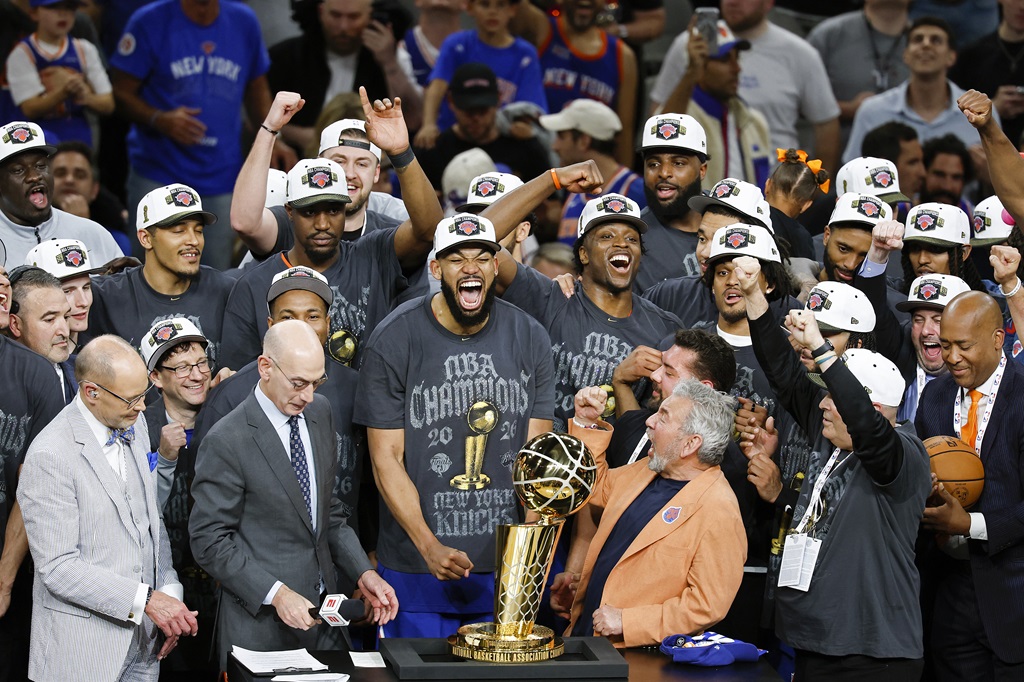
    On a historic Saturday night at San Antonio’s Frost Bank Center, New York Knicks point guard Jalen Brunson delivered a career-defining performance, scoring 45 points to fuel a dramatic come-from-behind 94-90 victory over the host San Antonio Spurs, securing the franchise’s first NBA championship in more than half a century.

    The Knicks closed out the best-of-seven championship series 4-1, denying rising young superstar Victor Wembanyama a fairytale title in his first NBA season, and hoisting the Larry O’Brien Championship Trophy for the first time since their 1973 Finals win. This victory marks the culmination of an unprecedented playoff run defined by resilience—Game 4 of the series already entered the record books as the biggest comeback in NBA Finals history, when New York erased a 29-point deficit to steal a win on the road.

    Saturday’s matchup followed a familiar script for the gritty Knicks. The young Spurs came out locked in on defense from the opening tip, with Wembanyama setting an early tone by blocking three shots in the first quarter to power San Antonio to a 23-13 lead—the lowest first-quarter point total for the Knicks all postseason. By the early second quarter, the 7-foot-4 French phenom stretched the Spurs lead to 16, and finished the first half with five blocks, tying an NBA Finals single-game record. San Antonio carried a 42-37 lead into halftime, and quickly rebuilt a double-digit advantage early in the fourth quarter. But for the fourth time in the series, New York clawed back from a double-digit deficit.

    Brunson’s historic 45-point outing broke a 54-year-old Knicks franchise record for points in a Finals game, previously held by franchise legend Willis Reed, who scored 38 points in Game 3 of the 1970 championship series against the Los Angeles Lakers. For his dominant performance across the series, Brunson was named Finals Most Valuable Player. Following the win, the soft-spoken guard expressed disbelief at the historic achievement.

    “I’ve got no words,” Brunson told reporters postgame. “I don’t know what I’m feeling. I’m in awe. Whenever someone counts us out, we find a way to come back and do something about it.”

    The game’s turning point came with 3 minutes and 40 seconds left to play, when Brunson was fouled while attempting a three-pointer, and sank all three free throws to put the Knicks up 86-85—their first lead since the opening minutes of the game. The Knicks never relinquished the lead after that: Game 4 hero OG Anunoby extended the advantage with a driving dunk to make it 88-85, and after the Spurs tied the game at 88-88, Brunson scored another go-ahead basket to put New York back on top, closing out the win from the free-throw line.

    Aside from Brunson’s historic scoring, Mikal Bridges added 14 points for the Knicks, while Josh Hart notched a double-double of 13 points and 11 rebounds. Starting center Karl-Anthony Towns struggled offensively, scoring just two points before fouling out in the fourth quarter, but contributed 10 rebounds, three steals and a critical late block that helped New York hold on.

    For the Spurs, Wembanyama turned in an impressive all-around performance in his first Finals appearance, finishing with 19 points, 14 rebounds and five blocks, while rookie guard Dylan Harper came off the bench to score 25 points for San Antonio. The young Spurs had already pulled off a massive upset in the Western Conference Finals, defeating the defending champion Oklahoma City Thunder to earn their spot in the title series, but couldn’t hold off the determined Knicks down the stretch. After the game, Spurs head coach Mitch Johnson acknowledged his team’s youth and accepted the result with grace.

    “We weren’t ready to win an NBA championship,” Johnson said. “The better team won. We did a lot of good things, and we didn’t finish the job. That’s what it is.”

    News of the Knicks’ historic win sparked immediate, jubilant celebrations across New York City. For months, the team’s dramatic playoff run had captivated the five boroughs, with tens of thousands of long-suffering Knicks fans gathering at neighborhood watch parties to watch the team inch toward their first title in 53 years. Within minutes of the final buzzer, the Empire State Building was illuminated in the Knicks’ signature orange and blue, and thousands of cheering fans packed the streets outside Madison Square Garden, the team’s Manhattan home. A large contingent of traveling Knicks fans also celebrated at the Frost Bank Center in San Antonio, where celebrity attendees included Britain’s Prince Harry, who sat courtside alongside NBA Commissioner Adam Silver alongside lifelong Knicks supporters.
  • Derde helft WK 2026: Toernooi opent met rode kaarten, VAR-discussies en drinkpauzes

    Derde helft WK 2026: Toernooi opent met rode kaarten, VAR-discussies en drinkpauzes

    The opening matchday of the 2026 FIFA World Cup delivered non-stop drama across two Mexican host cities on Thursday, serving up five goals, three red cards, four scheduled water breaks and all the high-stakes intensity fans expect from football’s biggest global tournament. From an early sending-off to a last-gasp comeback win, the first day of the 48-team, 39-day competition set an early tone for what is shaping up to be a historic edition of the World Cup.

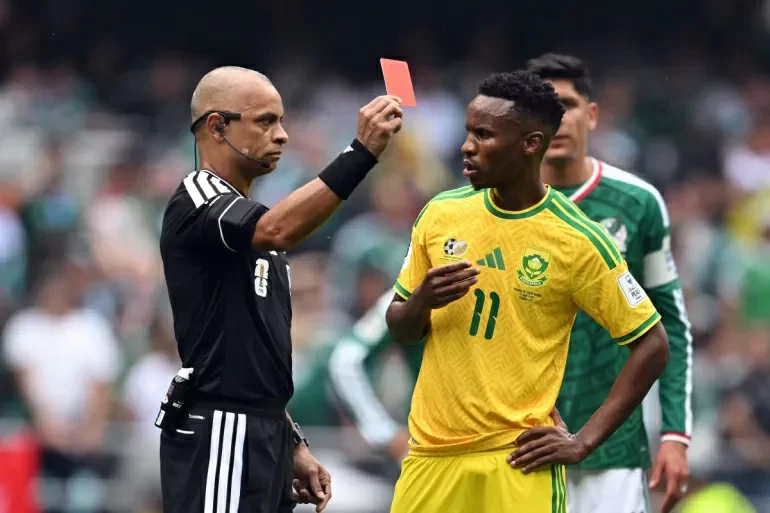
    One of the most talked-about outcomes of the opening day was the historic number of red cards issued during Mexico’s 2-0 victory over South Africa at the iconic Estadio Azteca. Referee Wilton Sampaio sent off three players across the match: South Africa’s Yaya Sithole and Themba Zwane, plus Mexico’s César Montes. To put that number in context, the entire 2018 and 2022 World Cups combined only saw four total red cards across 128 matches – meaning the opening fixture of 2026 nearly matched that full-tournament total in 90 minutes. It also falls just one short of the single-match World Cup record of four dismissals, set during the infamous 2006 “Battle of Nuremberg” between Portugal and the Netherlands. That 2006 tournament also holds the all-time record for most red cards in a single World Cup, with 28, leading observers to wonder if the 2026 edition could break that mark, given the early trend of strict officiating.

    The issuing of Zwane’s red card immediately reignited long-running controversy around the Video Assistant Referee (VAR) system. Sampaio initially opted not to show a red card after Zwane made contact with Mexico winger Roberto Alvarado’s face, but changed his decision after reviewing the pitchside monitor. While slow-motion replays were inconclusive, they suggested Zwane was attempting to navigate past Alvarado and made accidental contact, rather than swinging intentionally. Despite the unclear footage, Sampaio ultimately ruled the contact constituted violent conduct, a decision that drew sharp criticism from the South Africa camp. Head coach Hugo Broos argued the call was excessively harsh, noting Alvarado had blocked Zwane’s path and the contact did not merit a dismissal. “We have to accept the referee’s decision, but I do not think that was a red card,” Broos said after the match. “The contact was too soft to send him off.”

    Another new protocol making its World Cup debut on opening day also drew mixed reactions: mandatory scheduled water breaks, one in each half of play, regardless of matchday weather conditions. Introduced by FIFA to prioritize player welfare, the three-minute breaks immediately disrupted viewing experiences for fans, with multiple broadcasters cutting to full commercial breaks during the pauses. In the United States, Fox Sports drew widespread frustration from viewers when it cut away from live action to run ads during the second half water break of the Mexico-South Africa match, leaving fans unable to watch the end of the first half in real time.

    Coaches were also split on the new rule. United States head coach Mauricio Pochettino noted that while the breaks offer a welcome opportunity for staff to adjust tactics and address player issues, they are unnecessary when weather conditions are not extreme. “I don’t love it. I only think it’s needed when conditions are extreme,” Pochettino said. “For me it’s 50-50. It’s part of the tournament now, we accept it, it’s not a big problem that will change matches a lot.”

    While all the attention focused on the red card drama in the opening match, the second fixture of the day delivered its own memorable narrative, as South Korea pulled off a dramatic late 2-1 comeback win over Czech Republic. Son Heung-min, South Korea’s star talisman and tournament leader, was at the center of most of his side’s attacking chances, combining effectively with Lee Kang-in and Lee Jae-sung to carve out multiple opportunities in the first half. However, Son and his attacking teammates were unable to convert their chances, leaving the match deadlocked for much of the game.

    The two sides featured contrasting tactical approaches despite lining up in identical 3-4-3 formations: South Korea adopted a fluid, possession-focused style built around quick combination play, while Czech Republic relied on physical, direct football and set-piece chances to create danger. Even as Czech Republic applied early physical pressure, South Korea fought back to dominate possession, backed by a pro-South Korean crowd of neutral Mexican fans in Zapopan. Two second-half goals from Oh Hyeon-gyu and Hwang In-beom secured the comeback three points, despite Son’s missed chances.

    On Friday, the World Cup action continues with two more group stage fixtures: Canada faces Bosnia and Herzegovina in Group B at 16:00 local time, before the United States takes on Paraguay in Group D in the day’s late kickoff at 22:00 local time.

  • West Indies beat Sri Lanka in last-over finish in first T20

    West Indies beat Sri Lanka in last-over finish in first T20

    The West Indies have claimed an early advantage in their three-match T20 International series against Sri Lanka, securing a tense seven-wicket win in the opening fixture at Kingston’s Sabina Park on Thursday night. Despite a small turn out, the crowd in attendance created an electric, boisterous atmosphere that lingered through the final dramatic moments of the match for the West Indies, known popularly as the Men in Maroon.

    Sri Lanka got off to a blistering start through their opening batting pair. Pathum Nissanka, who survived a dropped catch when he had only scored seven runs, went on to compile 43 runs, building a solid first-wicket stand with Kusal Mendis before veteran seamer Jason Holder claimed his wicket. That breakthrough triggered a steady collapse of Sri Lanka’s batting line-up, with the West Indies bowling attack tightening control over the run rate for most of the innings. A defiant half-century from Kamindu Mendis, who scored 51, stopped the lower order from folding entirely, but Sri Lanka still could only post a total of 147 runs for the loss of nine wickets from their full 20 overs.

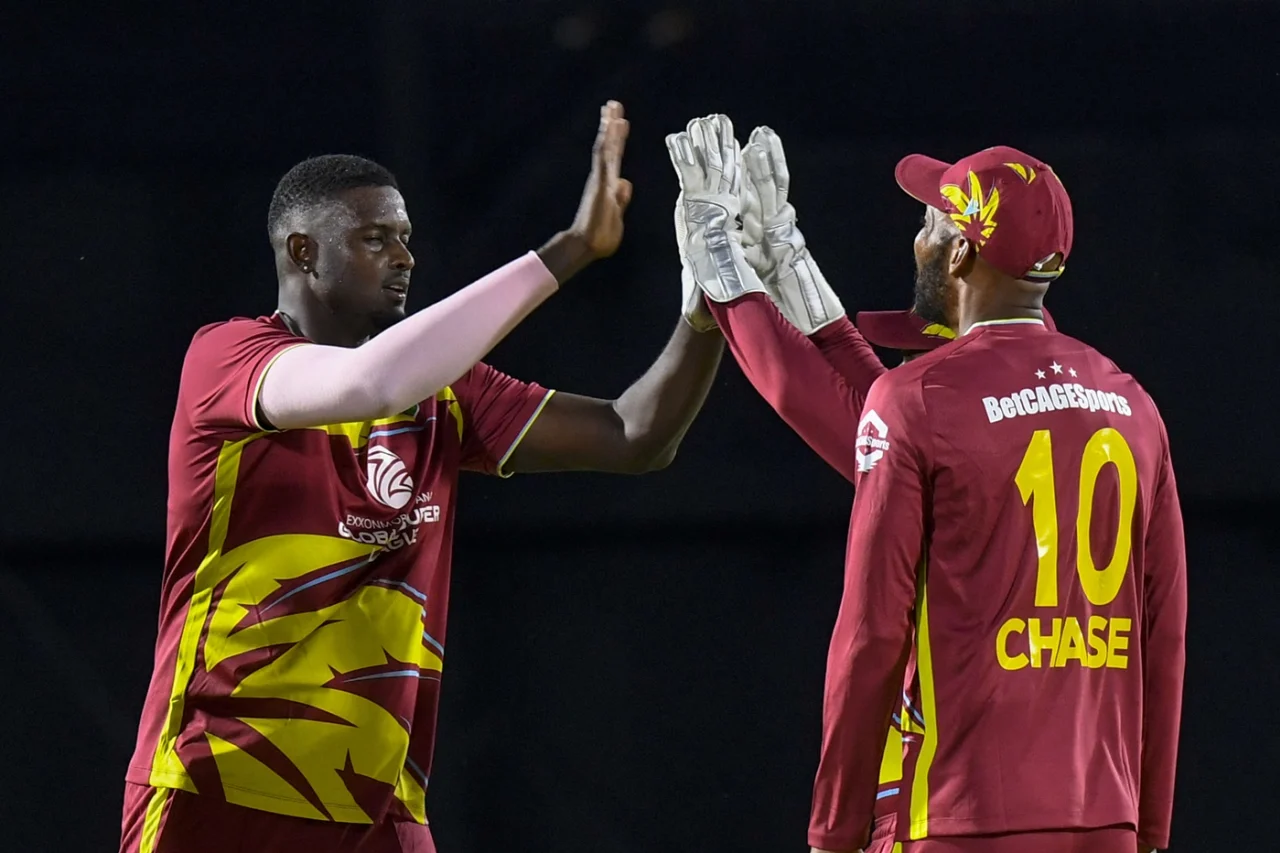
    The West Indies pace attack delivered a standout performance to restrict the visitors. Shamar Joseph and Jason Holder shared six wickets between them, with Holder finishing with economical figures of 3 wickets for 18 runs and Joseph picking up 3 wickets for 29 runs. The fixture also marked a personal milestone for Holder, who brought up his 50th career wicket in T20 International cricket during the match.

    In response, the West Indies openers got their run chase off to a flying start. Captain Shai Hope, who remained unbeaten at the end of the innings, and opening partner Brandon King put on a 63-run opening stand that laid a strong platform for the home side. Shimron Hetmyer chipped in with a quickfire 17 runs from just 9 deliveries to keep the scoreboard ticking, but the run rate stalled in the middle and late overs. Roston Chase’s slow 16 runs from 26 balls epitomized the home side’s ongoing struggles in white-ball cricket: an inability to find consistent boundaries and rotate the strike effectively, an issue head coach Daren Sammy has long worked to fix with the side.

    The match went all the way down to the final over, with the West Indies still requiring six runs to win off the last six deliveries. With Hope holding his ground at the non-striker’s end having carried his bat through the whole innings, Jamaican hometown hero Rovman Powell hit a decisive six when the side still needed five runs, sealing the dramatic victory and putting the West Indies 1-0 up in the series.

    The two sides will return to Sabina Park for the second fixture of the series this Saturday, where the West Indies will have the chance to clinch the series with a win.

  • Broadcaster warns citizens against World Cup piracy

    Broadcaster warns citizens against World Cup piracy

    As the 2026 FIFA World Cup kicks off, stakeholders across Trinidad and Tobago — from football fans to local businesses, event promoters and commercial venues — have received an official reminder that broadcast rights for the tournament are strictly protected under national copyright and intellectual property legislation, and can only be legally accessed through officially authorized platforms.

    In a public statement released yesterday, Caribbean Premier Sports Ltd (CPSL), the parent company of regional sports network RUSH Sports, confirmed it holds exclusive media and broadcast rights to the 2026 World Cup across most of the Caribbean. RUSH Sports will deliver full coverage of the expanded 104-match tournament via a network of licensed distribution partners, making content available across a wide range of formats including traditional cable television, IPTV, over-the-top streaming services, and mobile platforms.

    CPSL emphasized that any commercial activity tied to public screenings of World Cup matches outside of private home settings — including sponsorship deals, advertising, promotional events, hospitality packages, and ticketed viewing events — requires explicit prior written approval from CPSL or RUSH Sports before it can proceed.

    The organization noted that the FIFA World Cup stands as one of the most commercially valuable global sporting events, and significant financial investment was required to secure the rights to bring the tournament to audiences in Trinidad and Tobago and the broader Caribbean. “Broadcast piracy erodes these investments, harms legitimate broadcasters and their commercial partners, and puts the long-term sustainability of regional sports broadcasting at risk,” the statement read.

    CPSL also clarified that accessing match content through unapproved IPTV services, side-loaded apps on Amazon Firesticks, Android TV boxes, and other illicit streaming platforms qualifies as piracy and copyright infringement. “These operations hold no valid broadcast rights, and rely entirely on the illegal retransmission of content protected by intellectual property law,” the statement added. “CPSL urges all fans to enjoy the tournament via authorized platforms, and to stand behind legitimate rights holders and distribution partners.”

    To expand viewing options for fans, CPSL has also partnered with leading regional cinema chains MovieTowne and Caribbean Cinemas, plus select local venues across Trinidad and Tobago, to offer premium large-screen public viewing experiences for supporters. A full, updated directory of authorized viewing platforms and distribution partners is published in the “Where to Watch” section of RUSH Sports’ official promotional website: promo.rushcaribbean.co/fifa.

    While legal preparations were finalized, the opening match of the tournament between Mexico and South Africa drew hundreds of football fans to bars, pubs and restaurants along Trinidad’s Ariapita Avenue and in St James, despite unfavorable wet weather. Fans settled in quickly, enjoying cold drinks and lively debate as they watched the contest unfold, but many attendees shared that the overall atmosphere felt far different from previous World Cup tournaments, describing the mood as subdued compared to the raucous celebrations of years past.

    Multiple fans pointed to ongoing geopolitical tensions as the core reason for the muted vibe, citing strained relations involving the United States and ongoing conflict between Iran and Israel. Some even directly attributed the underwhelming energy to policies of United States President Donald Trump.

    At Jenny’s on The Boulevard, a on-site security guard offered a more measured take, noting that the tournament had launched smoothly and play was proceeding without disruption on location. Just outside St James Bar, four fans gathered over beer and puncheon rum, having arrived after Shakira’s widely anticipated opening ceremony performance. Group spokesperson Gaston Gibbs summed up the collective sentiment of his party: “This World Cup isn’t like the ones before. It’s a completely different vibe. We love football, but we just aren’t feeling it. As Shadow (Winston Bailey) would say, ‘Are you feelin’ the feelin’?’ A Somali referee was turned away from the tournament, so many fans can’t get US visas to attend matches. Politics has no place in sports.” Gibbs’ comrades Lloyd John, Marvin Matthews and Frank Santra all agreed with his assessment.

    Not all fans shared the muted outlook, however. Stephen, a local vendor pushing a trolley stocked with snacks and cigarettes, said he was uninvested in the opening fixture between Mexico and South Africa, as his support is firmly with Germany, his favorite team to win the tournament.

    Down the street, Universal Bar buzzed with activity, decorated with bunting strung with flags from competing nations including France, Germany, Paraguay, Australia and Turkey, with a small Trinidad and Tobago flag holding a place of honor on the bar’s main hutch. A small screen near the entrance streamed live play, while a large branded St Beer cork adorned the venue’s wooden facade. Roughly 30 fans packed the space, nearly all glued to the massive overhead screen showing the match. Three attendees — Michael “Squeaks” Hamel-Smith, Lorraine Salandy and Ron Wild — shared that they were enjoying the experience, with Hamel-Smith noting that the venue had a good ambience and a solid opening to the tournament.

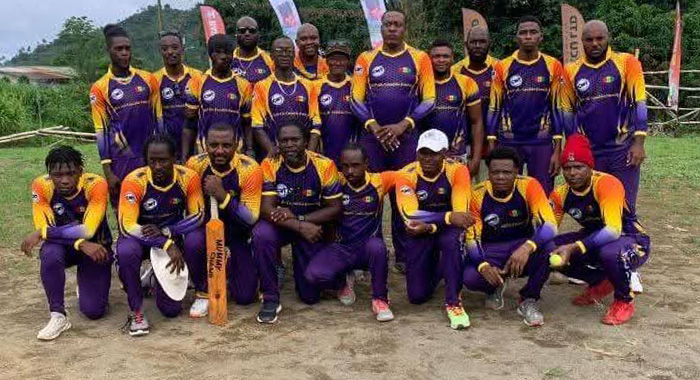
  • South Rivers Methodist retain primary school cricket title

    South Rivers Methodist retain primary school cricket title

    The Saint Vincent and the Grenadines Inter Primary Schools Developmental Cricket Competition wrapped up in dramatic fashion on Thursday at the Park Hill Playing Field, where defending champions South Rivers Methodist held off a fierce late challenge from Owia Government School to retain their coveted first-place title.

    Owia Government won the toss and opted to set a target for the reigning champions, taking to the crease first in the 20-over contest. After a shaky opening to their innings that saw early wickets fall, the side settled into a steady rhythm through the middle overs, closing their allotted 20 overs at 219 runs for the loss of 6 wickets. Sommer Chance contributed 14 runs to Owia Government’s total, while the bowling attack of South Rivers Methodist was led by Allison Dalzell, who delivered a match-winning performance with four wickets for just 31 runs, key to restricting Owia Government’s final score.

    Chasing 220 runs for victory, South Rivers Methodist got off to a similarly slow start, with Owia Government’s bowlers putting early pressure on the top order. Ravion Derrick turned in the standout bowling performance for Owia Government, claiming one wicket for only 16 runs across his full four-over allocation. As the innings progressed, South Rivers Methodist found their momentum, but a tight final overs push from Owia Government kept the result in doubt until the very last ball. When the final over was completed, South Rivers Methodist finished on 210 runs for the loss of 7 wickets, falling just nine runs short of Owia Government’s target to hand the defending champions a narrow but hard-fought win. Amallie Lavia top-scored for South Rivers Methodist with an unbeaten 29 runs, while J’Shawn Henry chipped in with a valuable 19 runs.

    Before the trophy presentation, the third-place playoff took place between Georgetown Government School and Biabou Methodist. Georgetown Government dominated the match from start to finish, securing a convincing 105-run victory. Batting first, Georgetown Government posted an imposing total of 249 runs for 5 wickets from their 20 overs, with Zorano Lewis leading the scoring with 31 runs. In reply, Biabou Methodist was bowled out for just 144 runs inside their full 20 overs, with Jaysean John delivering a devastating bowling spell for Georgetown Government, taking six wickets for only seven runs in three overs.

    Following the conclusion of the finals, tournament organizers presented individual awards to recognize standout performances across the entire competition. Amallie Lavia of Owia Government claimed two individual honors: he finished as the tournament’s top run-scorer with 239 total runs, and was also named Most Valuable Player of the whole tournament. Uzziah Holder of Dorsetshire Hill Government School took home the award for leading wicket-taker, finishing with 19 wickets. Sommer Chance of South Rivers Methodist was named Best Wicket Keeper, while Shania Shallow, also of South Rivers Methodist, took home the honor of Best Female Player. Steven Glasgow of champion side South Rivers Methodist was named Most Valuable Player of the final.

  • F15 Softball Cricket Tournament 4.0 – Week 10 Results

    F15 Softball Cricket Tournament 4.0 – Week 10 Results

    Three short-format cricket matches delivered a mix of blowout wins and a default victory over the weekend, with two teams putting on clinical all-around displays to secure dominant victories in competitive local play.

    In the 12-over-per-side Match 34, BOSVG All Stars extended their strong run of form with a convincing 57-run triumph over Spring Super Sixers. Captaining his side to a solid total after winning the pre-match toss, BOSVG All Stars chose to bat first and compiled a formidable 98 runs for the loss of 4 wickets in their full allotment of overs.

    Veteran batter Asquith Mapp anchored the innings with a controlled, well-paced 31 runs off 32 deliveries, setting the platform for a late surge from Osnet Cato, who blazed 23 runs off only 7 balls to catapult the total to a match-winning score. For Spring Super Sixers, Danroy Currency turned in the most effective bowling performance, claiming 2 wickets for 20 runs across his 3 overs, while Jamal Williams and Bayson each chipped in with one wicket apiece to limit the damage.

    Chasing a revised target of 99 runs to win, Spring Super Sixers never found their rhythm against a tight BOSVG All Stars bowling attack. Struggling to build partnerships or find the boundary consistently, the side finished their 12 overs at just 41 runs for 4 wickets, with their highest individual scorer managing only 12 runs off 29 balls. Rasheed Frederick led the bowling charge for BOSVG All Stars, delivering a clinical spell of 2 wickets for only 9 runs in 3 overs. He received consistent support from Kelly Murray and Newborn Joseph, who each took one wicket for 4 runs across 2 overs apiece. For his match-winning anchor innings, Mapp was named Man of the Match.

    In Match 35, RS Production Kombat Warriors secured a walkover victory after East Kingstown United failed to field a side, winning the fixture by default.

    The most thrilling encounter of the round came in 15-over-per-side Match 36, where Dr. Thomas Injectors faced off against Country Meet Town Outah Trouble, turning in a competitive batting performance that was ultimately no match for a historic run chase. After winning the toss and choosing to bat first, Dr. Thomas Injectors posted a solid 99 runs for 4 wickets, with Kevin Jack leading the scoring with 18 runs off 14 balls and Wendel Corridon adding a quick 17 runs off 13 deliveries. Country Meet Town Outah Trouble’s bowlers kept the innings in check, with Jerando Jardine delivering a standout spell of 2 wickets for 11 runs in 3 overs, and Kenron Williams chipping in with 2 wickets for 27 runs in his 3 overs.

    Chasing 100 runs for victory, Country Meet Town Outah Trouble’s opening batters produced an unbeaten masterclass in aggressive batting. The side reached the target in just 8.1 overs without losing a single wicket, securing a dominant 10-wicket win. Jabari Cunningham led the charge with an explosive unbeaten 46 runs off 27 balls, backed up by Richie Richards, who hit 25 runs off 10 balls before retiring hurt. Imran Samuel kept the momentum going with 17 runs off 10 balls to seal the victory. Cunningham was named Man of the Match for his game-changing knock.

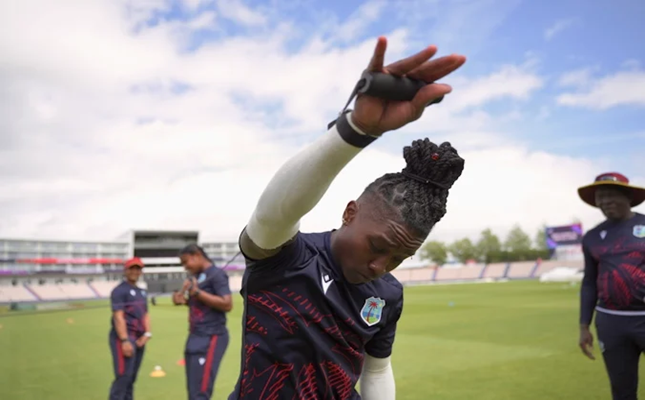
  • West Indies Women Ready for World Cup Challenge ahead of New Zealand Opener

    West Indies Women Ready for World Cup Challenge ahead of New Zealand Opener

    As the countdown to the 2026 ICC Women’s T20 World Cup ticks down to its final day, the West Indies Women’s national cricket team, nicknamed the Maroon Warriors, has finalized all preparations and is set to kick off their title campaign on Saturday with a high-stakes Group 1 clash against defending champions New Zealand at Southampton’s Hampshire Bowl. The first ball is scheduled to get underway at 1:30 PM Atlantic Standard Time.

    This opening fixture marks the start of a challenging group stage journey for West Indies, who will face off against five other sides — tournament hosts England, Sri Lanka, Ireland and Scotland — over the coming two weeks as they battle to secure one of the top spots in Group 1 and advance to the tournament’s knockout rounds.

    The side enters the global competition riding a wave of growing momentum and confidence, built through a months-long, comprehensive preparation plan tailored to English conditions. The program included a specialized conditioning and acclimatization training camp in Wales, two challenging warm-up matches against top-ranked sides India and Australia, and a first-place finish at the Evara Women’s International Tri-Series held in Ireland earlier this month. During the tri-series, West Indies delivered dominant performances against both hosts Ireland and Pakistan, showcasing sharp form across both batting and bowling departments that has reinforced belief within the squad.

    Head Coach Shane Deitz says he is confident the team has done all the work required to compete at the highest level, and the squad is laser-focused on delivering a strong opening statement to set the tone for the rest of the tournament.

    “It doesn’t really matter who we’re playing against. Obviously, New Zealand is a strong side and they’re the defending champions,” Deitz noted in a pre-tournament press briefing. “We played a really close match against them in Dubai two years ago, and if a couple of small breaks had gone our way, we could have come out on top. I think we’re two very evenly matched teams going into this contest. Getting off to a good start is critical in a tournament like this, so this is a really important game for us. The girls have put in all the work, and we’re just ready to get out there and compete.”

    The 2026 West Indies squad was deliberately selected to balance three key strengths: aggressive powerplay batting, deep batting order depth, and adaptability to the cool, seaming conditions common in English cricket during June. The bowling unit was picked for its accuracy, variety of deliveries, and ability to maintain disciplined line and length under pressure.

    Multiple key players enter the tournament in standout form, led by captain Hayley Matthews, who turned in a series of match-winning performances during the tri-series in Ireland. Over the past several months, the side has also worked to significantly strengthen its batting depth and overall versatility across all playing conditions.

    Matthews echoed Deitz’s confidence, saying the entire squad is ready to embrace the challenge of a global tournament and eager to get their campaign off to a winning start.

    “As a team, we’re really well prepared for this tournament. World Cups are usually where West Indian sides bring out our very best cricket, so we’re hoping we can replicate that history this time around,” Matthews said. “The first game against New Zealand is obviously huge — they’re one of the best teams in the world. But at the same time, we know we have to take this tournament one match at a time, and prepare properly for every side we face. Everyone in the squad is really excited to get started, and we’re hoping we can walk off the field on Saturday with a positive result.”

    Recent weather across southern England has brought cooler than average temperatures and intermittent rain, which has impacted pitch conditions at the Hampshire Bowl. Deitz said he expects the surface to offer early assistance to fast bowlers with the new ball, but will still flatten out enough to reward quality batting later in the innings.

    “We’ve had a lot of rain and pretty cold conditions over the past week, so I expect the pitch to have something in it for the bowlers, particularly early on with the new ball,” Deitz explained. “But that’s typical for these top-class English grounds — as the match goes on, the ball comes onto the bat nicely for batters. If you bowl good line and length, you’ll get plenty of help, but if you bat well and put together a good innings, you can still post a big score. I think it’s going to be a great wicket for cricket, which is all you can ask for: a good surface that lets the best team win and lets all the players show off their skills to the world.”

    A opening win against New Zealand would not only give West Indies three crucial early points in the group stage standings, but also build on the confidence the squad has earned from its recent strong results, setting a solid foundation for the rest of their campaign.

    With all preparation completed and anticipation building among players and fans alike, the Maroon Warriors have now shifted their full focus to Saturday’s opener, as they look to make an immediate impact on cricket’s biggest global stage. For fans based in the Caribbean, all matches will be broadcast live on ESPN Caribbean.

    West Indies Women’s full 2026 ICC T20 World Cup Group Stage schedule:
    – June 13: Match 1 vs New Zealand, Hampshire Bowl, Southampton – 1:30 PM AST
    – June 18: Match 2 vs Scotland, Headingley, Leeds – 1:30 PM AST
    – June 21: Match 3 vs Sri Lanka, Bristol County Ground, Bristol – 5:30 AM AST
    – June 24: Match 4 vs England, Lord’s Cricket Ground, London – 1:30 PM AST
    – June 27: Match 5 vs Ireland, Bristol County Ground, Bristol – 9:30 AM AST

  • Derde helft WK 2026: Zuid-Korea knokt zich langs Tsjechië 2 – 1

    Derde helft WK 2026: Zuid-Korea knokt zich langs Tsjechië 2 – 1

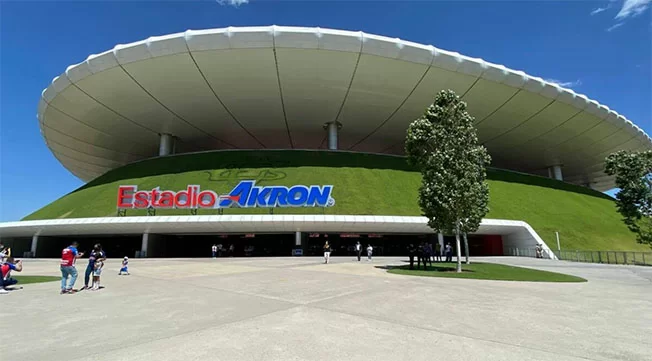
    The 2026 FIFA World Cup delivered its first dramatic comeback story on matchday one of Group A, as South Korea fought back from a second-half deficit to secure a crucial 2-1 victory over Czech Republic at Guadalajara’s Estadio Akron in Zapopan. The thrilling result leaves Group A’s qualification race wide open, with South Korea level on points with tournament hosts Mexico at the top of the standings.

    The opening 58 minutes of the clash was a tightly contested, cagey affair, with both sides prioritizing defensive solidity over reckless attacking risk, resulting in few clear-cut goal-scoring opportunities for either camp. That stalemate was finally broken in the 59th minute, when Czech defender Ladislav Krejčí found the back of the net to put the European side ahead. The goal looked set to give Czech Republic a momentum-shifting opening win, as they held their advantage comfortably for most of the second half.

    But South Korea refused to let the game slip, upping their intensity and pressing high to turn the tide of the match. Just eight minutes after Krejčí’s opener, Hwang In-beom found the equalizer for the Asian side, injecting a massive dose of confidence into his squad that pushed Czech Republic further and further onto the back foot. The full turnaround was completed in the 80th minute, when substitute Oh Hyeon-gyu slotted home the winning goal, capping a dominant second-half performance that saw South Korea seize complete control of the tie.

    While Oh grabbed the decisive goal, all eyes remained on South Korean captain and star forward Son Heung-min, who turned in a match-defining display despite failing to score. Son was constantly available for passes, used his blistering pace and intelligent movement to stretch the Czech defense, and created multiple dangerous chances throughout the 90 minutes. The Tottenham Hotspur attacker had multiple clear opportunities to find the net, but was denied by solid Czech defending and a streak of bad finishing luck. Despite the lack of a goal, Son’s influence on the comeback was undeniable, and he was substituted midway through the second half after putting in a hard-working shift to set up the win.

    Group A also includes hosts Mexico and South Africa, who faced off earlier in the matchday. Mexico kicked off their tournament with a 2-0 win over South Africa, putting them top of the group on goal difference, with South Korea sitting just behind in second place, both holding three points from one match.

    The next round of group stage matches is already set to deliver high-stakes drama. South Korea will face off against hosts Mexico in a clash that could well decide who claims the group’s top spot and advances to the knockout stage. For Czech Republic, their next match against South Africa is a must-win: they need to pick up full points to keep their own hopes of progressing alive.

    For South Korea, this opening comeback victory marks a promising start to their 2026 World Cup campaign. The side proved they have the resilience, tactical quality and attacking firepower to fight back from adverse situations – attributes that could take them far in the tournament as the knockout rounds approach.

  • Column: Van wie is het WK nog?

    Column: Van wie is het WK nog?

    The biggest global sporting spectacle on the planet, the FIFA World Cup, kicked off on Thursday, drawing an audience of billions across every continent. Public squares fill with cheering crowds, bars work around the clock to serve thirsty fans, and for a few weeks, the world feels like it has transformed into one giant, interconnected football family. This unifying power has defined the World Cup for nearly a century: it is one of the rare global events that brings together people from every nationality, language, religion and political background, all bound by a shared love for a single game played with a round ball.

    Yet long before the opening whistle of the first match, an uncomfortable question has once again loomed over this year’s tournament co-hosted by the United States, Canada and Mexico: who does football truly belong to in the modern era?

    The recent controversy surrounding Somali referee Omar Abdulkadir Artan, who faced major barriers entering the United States despite holding an official appointment from FIFA, is far more than an isolated bureaucratic incident. It has become a powerful symbol of a shifting dynamic that has been unfolding for decades. While the World Cup brands itself as a celebration of global equality, behind the scenes, nationality, power, geopolitics and money still dictate access and opportunity.

    This pattern is nothing new. Past tournaments have been marked by persistent tension: debates over exorbitant stadium construction costs in South Africa, mass public protests against billion-dollar infrastructure investments while basic public services were underfunded in Brazil, arguments over geopolitical influence surrounding the Russia World Cup, and widespread scrutiny of migrant working conditions and human rights abuses in Qatar. This year, the core tension centers on immigration policy, border controls, visa restrictions and unequal access for participants and fans alike.

    Time and again, the World Cup proves it cannot exist separate from the problems of the wider world: it is a mirror that reflects global inequality, power imbalances and political divisions. That is why the long-held idea that sport and politics can remain completely separate may be a comforting myth, but it no longer matches reality. Today, the World Cup is a sprawling global enterprise that caters to the competing interests of national governments, international bodies, multinational sponsors, media conglomerates and billion-dollar corporate partners.

    Once, the World Cup was first and foremost a celebration for ordinary fans. Now, it increasingly caters to the needs of sponsors, marketing firms, broadcast rights holders and commercial partners. No one expects a tournament of this scale to run for free; organization and infrastructure require massive investment. But the slow shift has transformed what was once a people’s festival into an exclusive commercial product, priced out of reach for millions.

    For any fan traveling to the United States to cheer on their national team this year, the total cost amounts to a small fortune. Hotel prices have skyrocketed across host cities, domestic airfare has surged to record levels, and match tickets are already among the most expensive in the history of the tournament. On top of that, fans must cover the cost of ground transportation, travel insurance, food and accommodation, pushing the total even higher.

    For millions of supporters across Africa, Asia, Latin America and even low-income regions of Europe, a trip to this World Cup is now financially impossible. The same is true for many fans from the Caribbean and Suriname, communities that have long contributed to the growth of global football. Millions of fans who helped turn the sport into the global phenomenon it is today can only watch from their living rooms on television.

    Even fans watching from home cannot escape the grip of the World Cup’s massive commercial machine. Broadcasters pay billions of dollars to secure exclusive broadcast rights, while sponsors pour hundreds of millions into attaching their brand to the tournament. Every goal, every replay, every press conference is built around a revenue model designed to generate profit for corporate stakeholders.

    For decades, the modern World Cup has not been just about football. This shift is not just disappointing – it carries real risks. Football’s enduring power has always come from its accessibility: you do not need expensive equipment, an exclusive club membership or luxury accommodation to play. All you need is a ball and a patch of open ground. That is what made football the game of workers, students, farmers, children and neighborhood communities across the entire world. Now, the world’s biggest football celebration risks drifting further and further away from the ordinary fan that built the sport.

    Even with all this criticism, billions of people across the world will spend the next four weeks cheering, laughing, groaning and dreaming alongside their favorite teams. An unexpected upset victory by a small underdog nation will still bring an entire country to a standstill in collective euphoria. A last-minute winning goal will still stir raw, genuine emotions that no sponsor can buy and no governing body can manufacture. That unchanging magic of football is still alive.

    But precisely because football holds such enormous, often inspiring power over billions of lives, we cannot shy away from asking these hard questions. Why does access to the tournament remain out of reach for so many? Why do debates over origin, migration and unequal treatment keep resurfacing at every edition? Why do commercial interests grow larger and more central with every World Cup?

    There is no question that the World Cup remains the most beloved sporting event on the planet. But it is long past time for FIFA, host organizers and participating national governments to step back and ask what ordinary fans actually want from the tournament. It is not just bigger stadiums, more expensive hospitality packages and higher revenue streams – it is a tournament that is actually open and accessible to people from every walk of life.

    We can only hope that the inherent beauty of the game will ultimately prove stronger than the politics that surround it and the money that is made from it. Because if the World Cup is supposed to be about anything, it should not be about power or profit – it should be about people.

  • Mexico City dazzles as World Cup 2026 kicks off in style

    Mexico City dazzles as World Cup 2026 kicks off in style

    The 2026 FIFA World Cup has officially kicked off, and Mexico City has emerged as an early showstopper, blending rich cultural heritage with world-class event organization to deliver a breathtaking opening celebration that has captivated soccer fans across the globe.

    As one of the three host nations for this year’s expanded 48-team tournament, alongside the United States and Canada, Mexico welcomed the global soccer community to its iconic capital city with open arms. From the colorful, choreographed parades winding through the historic Centro Histórico district to the dazzling pyrotechnic display that lit up the night sky over the Estadio Azteca—one of the most legendary venues in World Cup history—the opening festivities left attendees and viewers at home in awe.

    Local residents turned out in massive numbers to line city streets, decked out in their signature green, white, and red team colors, chanting traditional soccer anthems and sharing homemade street food with visiting international fans. City officials had spent years upgrading infrastructure, expanding public transit capacity, and enhancing security protocols to accommodate the influx of tens of thousands of travelers, and the smooth execution of the opening weekend has drawn widespread praise from event organizers and attendees alike.

    Estadio Azteca, which has previously hosted two World Cup finals, made history again as part of the 2026 opening, becoming the first stadium ever to host matches in three separate World Cup tournaments. Fans in attendance described the electric atmosphere inside the venue, where the roar of the crowd created a wall of sound that could be heard blocks away from the stadium.

    Beyond the opening celebrations, Mexico City is set to host six group-stage matches and two knockout-round fixtures through the tournament, and early indicators suggest the capital is on track to deliver one of the most memorable World Cup host city experiences in modern history. Soccer analysts and tourism officials both project that the successful launch of the tournament in Mexico City will provide a major boost to the local economy, draw record numbers of future visitors, and reinforce the city’s reputation as one of the most vibrant cultural destinations in the Americas.