分类: sports

  • Thirty-one Jamaicans qualify for individual events as NCAA champs start on Wednesday

    Thirty-one Jamaicans qualify for individual events as NCAA champs start on Wednesday

    As the 2024 NCAA Division 1 Outdoor Track and Field Championships prepare to kick off Wednesday at Eugene Oregon’s iconic Hayward Field, more than 30 Jamaican student-athletes have secured spots in individual event finals, bringing a mix of returning experience and historic firsts to this season-ending marquee collegiate competition.

    A full dozen of this year’s Jamaican finalists already earned final stage berths at the 2023 championships, bringing valuable high-stakes experience to their teams. The group is headlined by two standout returning competitors: University of Oklahoma’s Ralford Mullings, the defending men’s discus champion, and University of Georgia’s Dejanae Oakley, who claimed a silver medal in the 2023 women’s 400-meter. Both athletes are poised to chase new honors for their universities as the U.S. college track season wraps up.

    Two Jamaican athletes have qualified for two individual finals this year. Clemson University’s Shanate Foreman, the top-ranked competitor in women’s triple jump, also earned a spot in the women’s long jump. Meanwhile, University of Florida sprinter Gabrielle Matthews will contend for titles in both the women’s 100-meter and 200-meter events.

    One of the most notable milestones for the Jamaican contingent this year is a historic first: for the first time since the championships’ inception, Jamaican athletes have qualified for the men’s javelin throw final. Additionally, the group fields an unusually strong six athletes in the men’s discus throw, making it the most heavily represented event for Jamaican competitors this year.

    The competition schedule splits men’s and women’s events across the four-day meet: men’s action will take place on Wednesday and Friday, while women’s events are scheduled for Thursday and Saturday. All track events from 100 meters through 1500 meters will feature two rounds of competition, while all field events, 3000-meter steeplechase, and the 5000-meter and 10000-meter distance events will run as direct finals with no preliminary rounds.

    History will be made on opening day itself, when University of Louisiana’s Jermar Ferguson and Mount St. Mary’s University’s Brandon Falconer line up for the men’s javelin throw, marking the first-ever appearance of Jamaican athletes in that discipline at the championships. Also competing on Wednesday will be Louisiana State University’s Jordan Turner, who will contest the men’s long jump.

    Local favorite Kobe Lawrence of the host University of Oregon will aim to improve on his fourth-place finish in last year’s men’s shot put, where he will be joined by first-time national championship qualifier Shaiquan Dunn of the University of Texas.

    The University of Arkansas will send a strong duo to the men’s 800-meter: returning finalists Rivaldo Marshall and Tyrice Taylor, both of whom are considered legitimate contenders for the national title. Marshall, the 2024 NCAA Indoor Nationals champion, took third place in this event last year, while Taylor finished eighth.

    In the men’s 110-meter hurdles, Baylor University’s Demario Prince, who finished fifth in 2023, will aim to climb the podium and secure a spot in this year’s final, alongside fellow Jamaican Jerome Campbell of the University of Arkansas. Rounding out the men’s Jamaican competitors, Kimar Farquharson of Texas A&M University—formerly an 800-meter specialist—is the only Jamaican qualifier in the men’s 400-meter this year.

  • Track and field fraternity mourning death of former sprinter/coach Patricia Elaine Thompson

    Track and field fraternity mourning death of former sprinter/coach Patricia Elaine Thompson

    The Bahamian track and field community is mourning the passing of Patricia Elaine Thompson, a multi-faceted pioneer who shaped the sport across the nation as an athlete, coach, administrator and team official. Thompson, a former elite sprinter, long-time coach and Bahamas Association of Athletic Associations (BAAA) executive, died yesterday, leaving behind a decades-long trailblazing legacy that laid the groundwork for the country’s future international athletic success.

    Thompson first made her mark on the sport as a standout sprinter at Eastern Secondary School, where her explosive starts out of the starting block earned her a reputation as the institution’s fastest female competitor. She went on to join the iconic Pioneers Track Club, where she rose to national prominence alongside teammates Gail North, Christine Jones and Althea Rolle. Together, the four women made history as the first Bahamian female 4x100m relay team to compete at the 1962 Central American and Caribbean (CAC) Games held in Kingston, Jamaica. The quartet finished fifth in the event, but more importantly, blazed a trail that would lead to the historic gold medal-winning success of the Bahamian “Golden Girls” sprint teams between 1999 and 2000.

    After retiring from competitive racing, Thompson seamlessly transitioned into coaching, where she helped elevate programs at two of the country’s top high school programs: AF Adderley Tigers and SC McPherson Sharks. Under her guidance, both programs emerged as dominant forces in Bahamian interscholastic track and field during an era when public and private schools competed in a unified circuit.

    Beyond her work on the high school track, Thompson also dedicated decades of service to the national governing body of the sport, serving more than 20 years as a member of the BAAA council. She also took on key roles with Bahamian national teams at international competitions across the globe, serving as a coach, manager and chaperone at dozens of major events including the CARIFTA Games, the Olympic Games, and the inaugural IAAF World Athletics Championships.

    One of her earliest key international roles came as chaperone for the 1976 Montreal Olympic Team, which marked the country’s participation with just one female competitor, Shonel Ferguson. She would later reprise the chaperone role for the 1984 and 1988 Olympic squads, and served as team manager for the very first World Athletics Championships hosted in Helsinki, Finland. Beyond those top-tier global events, she was a constant presence at regional competitions including CARIFTA, even leading logistics and accommodations when The Bahamas played host to both CARIFTA and the CAC Championships.

    Off the track, Thompson built a 44-year career in education, after earning a Bachelor of Arts degree in mathematics with a minor in physical education from Florida Memorial College and a Diploma in Education from the University of the West Indies. She spent the majority of her teaching career at AF Adderley Senior High School, with her final decade of service spent at SC McPherson.

    As news of her passing spread across the Bahamian athletic community, tributes and condolences poured in from current and former athletes, coaches and administrators who worked alongside Thompson throughout her career. Many highlighted her warm, nurturing personality that made her a beloved mother figure for generations of young Bahamian athletes.

    Rolando “Lonnie” Greene, now the head track and field coach at the University of Kentucky, was coached by Thompson during his time as a sprinter at AF Adderley. “We lost a good one and heaven gained an angel. She will be missed,” Greene said. “It always amazes me how things like this hits us so seriously. But we never stay in touch the way we should. I guess we need to learn from things like these and improve upon our connection with one another. I got to be better.”

    Andrew Tynes, a former elite sprinter who now coaches in The Bahamas, recalled Thompson’s steady, caring presence on a 1990 Junior World Athletics Championship trip that spanned three weeks, including a pre-competition training camp in Florida. “We went on a training camp in Florida and two weeks later flew off to Belgrade where the Junior Worlds was held,” Tynes said. “She was always that mother figure and that nurturing person you could go to. She was a very pleasant person you could go to. May she forever rest in peace.”

    Bernard Newbold, a rising BAAA administrator who worked alongside Thompson during events hosted in The Bahamas, remembered her calm, approachable demeanor. “I also had the pleasure of working with her when she was at SC McPherson during many of the high school championships,” he said. “A very calm and pleasant person.”

    Long jumper Jackie Edwards summed up the widespread sentiment shared across the community, calling Thompson a “wonderful, kind person. She will be missed.” Versatile former athlete Linda Woodside echoed that tribute, noting simply: “Elaine was one of a kind.” In a tribute written ahead of an inaugural BAAA gala awards reception, BAAA official Renee Pargo highlighted Thompson’s place as a foundational trailblazer who opened doors for every female Bahamian track and field athlete that came after her.

  • Somalia backs referee after he is denied entry to US

    Somalia backs referee after he is denied entry to US

    What was set to be a landmark moment for both Somalia and African football has crumbled into disappointment, after top Somali referee Omar Artan was denied entry to the United States and stripped of his spot officiating at the 2026 FIFA World Cup just days before the tournament kicks off. Somalia’s government has publicly stood by Artan, condemning the U.S. decision that cut short what would have been a history-making opportunity for the decorated official.

    Artan, who was named 2025 Men’s Referee of the Year by the Confederation of African Football (CAF), landed at Miami International Airport on Saturday ahead of the quadrennial tournament co-hosted by the U.S., Canada and Mexico. Despite holding all required documentation and a valid visa – a claim confirmed by a Somali government advisor to AFP – U.S. Customs and Border Protection (CBP) officials detained Artan for more than 14 hours, splitting his processing between an 11-hour interview and a multi-hour hold in a separate detention cell, before putting him on a return flight to Istanbul. A CBP spokesperson only described the denial as the outcome of a routine inspection, offering no further explanation.

    Somalia remains on the U.S. travel ban first implemented under former President Donald Trump’s administration as part of a sweeping immigration crackdown, a policy that has restricted entry for citizens of multiple majority-Muslim nations. FIFA later confirmed that Artan would be removed from the 52-person roster of referees selected for the finals, which opens its first matches on Thursday. CAF officials added that the continental governing body had no power to override the U.S. decision, and expressed sympathy for the referee.

    For Somalis, Artan’s selection to the World Cup was far more than a personal achievement: it was a source of national pride, and a beacon of hope for young people across the country. Earlier this year, Somali President Hassan Sheikh Mohamud called Artan “a symbol of inspiration for the new generation of Somalis”, a reputation the country’s Ministry of Sports reaffirmed this week. In an official statement released Tuesday, the ministry expressed deep regret that diplomatic efforts with U.S. authorities and FIFA failed to reverse the entry ban. “Artan represents the very best of Somali talent,” the statement read, adding the country maintains “full confidence in his integrity, professionalism, and continued contribution to the advancement of football both in Somalia and internationally.”

    From Istanbul after his deportation, Artan spoke to the New York Times about the shattering of his life’s biggest goal. “The biggest dream of my life has been ripped away,” he said. “I’m very, very disappointed. I’m just simply a referee who’s trying to live his dream, the biggest dream of my life, to come to the World Cup.”

    News of Artan’s rejection has sparked widespread outrage across Somalia and the wider African football community. Former Somali Prime Minister Hassan Ali Khaire wrote on X that he was “deeply disappointed” and assured Artan that “Africa and the world stand with you.” He added that Artan “represents not only Somalia, but also the aspirations of millions of young Africans who believe excellence should be recognized on the world stage.”

    Former Somali government minister Abdirashid Hashi called the denial a politically motivated decision, and urged FIFA to take action to support Artan. “Football is supposed to unite people, not exclude,” Hashi said. “He should be judged by his merit and professionalism — not by the passport he carries.” Hashi also pointed to the tournament’s three-nation host format, arguing that FIFA could still arrange for Artan to officiate matches held in Canada and Mexico. “I hope Canada and Mexico issue visas to Artan,” he said. “There is no reason a referee denied entry to one host country cannot still contribute to a World Cup being hosted across three countries.”

  • Windies Women fine‑tune ahead of T20 World Cup

    Windies Women fine‑tune ahead of T20 World Cup

    As the countdown to the ICC Women’s T20 Cricket World Cup hosted in England enters its final stretch, the West Indies Women’s national team has intensified their on-ground preparations, kicking off their warm-up schedule with a 26-run defeat against India at Cardiff’s Sophia Gardens on Monday.

    India got off to a electrifying start thanks to captain Smriti Mandhana, who produced a devastating batting display that saw her rack up 39 runs from only 13 deliveries, dotted with eight crisp boundaries. Middle-order batter Bharti Fulmali steered the innings with a steady 56 runs off 40 balls, while wicket-keeper batter Yastika Bhatia chipped in with a valuable 36 runs. The trio combined power the Indian side to a formidable total of 179 for 8 at the end of their 20 overs. For the West Indies, spinner Afy Fletcher turned in an exceptional performance with the ball, claiming four wickets while conceding just 23 runs. All-rounders Aaliyah Alleyne and Deandra Dottin also contributed one wicket each to the bowling effort.

    Chasing a target of 180, the West Indies struggled to build consistent momentum, finishing their allotted overs on 153 all out. Dottin emerged as the hosts’ top run-getter with 49 runs from 44 deliveries, and her opening partner Shemaine Campbelle retired hurt on 25 after a solid start. Beyond the top order, the West Indies batting line-up collapsed against India’s spin attack. Spinners Shreyanka Patil and Radha Yadav dominated the contest, sharing seven wickets between them: Patil finished with 4 wickets for 36 runs, while Yadav took 3 wickets for just 25 runs.

    Despite the opening warm-up loss, the result has done little to dampen the West Indies’ confidence ahead of the main tournament. The side, nicknamed the Maroon Warriors, recently claimed the 2026 Evara International Tri-Series title in Dublin after commanding wins against Ireland and Pakistan, a performance that head coach Shane Deitz says has left the squad well-placed for the World Cup. “We’re in a good place going into the World Cup,” Deitz noted of the team’s preparation following their tri-series triumph.

    The West Indies will look to iron out kinks in their batting line-up and secure a confidence-boosting win when they face Australia in their second and final warm-up fixture at the same Cardiff venue on Wednesday, with the match kicking off at 10 a.m. Eastern Caribbean time. After the warm-up phase, the Maroon Warriors will open their group stage campaign against New Zealand on June 13.

    Going into the tournament, the West Indies will rely on the experience and consistent leadership of star captain Hayley Matthews, former skipper Stafanie Taylor, and powerhouse all-rounder Deandra Dottin to challenge for the title. The side will also be counting on the youthful energy of emerging talents including Zaida James and Qiana Joseph to complement the leadership of their veteran core, as they chase a second ICC Women’s T20 World Cup trophy.

  • Column: Feest van voetbal, schaduw van oorlog

    Column: Feest van voetbal, schaduw van oorlog

    As the global community counts down to the 2026 FIFA World Cup, the world’s most-watched sporting spectacle, a far grimmer, less-reported narrative is unfolding alongside the excitement. The stark divide between the celebratory joy of elite football and the brutal reality of ongoing war, displacement and humanitarian crisis has never been more visible than in the lead-up to this year’s tournament.

    At the center of this tension is Iran’s national team, which has overcome significant barriers to secure its place at the competition. Even amid a bitter geopolitical conflict with the United States – one of the 2026 World Cup’s host nations – and crippling international sanctions that have gutted daily life for ordinary Iranians, the squad has pushed through visa obstacles and political friction to take the field. For the Iranian people, this tournament is far more than a series of football matches: it is a quiet fight to preserve national identity, dignity and collective hope in the face of widespread chaos and instability. Millions of Iranians are pinning their pride and aspirations on their players, who carry the resilience of a nation that has refused to be broken onto the global stage.

    Half a world away, in the South American nation of Suriname, the local football side fell just short of qualifying for the 2026 tournament in the final round of qualifying. While the national campaign ultimately ended in disappointment, it united the Surinamese people in shared pride for their home team. Now, with the tournament just days away, local fans have turned their support to global fan favorites: many back neighboring giants Brazil or Argentina, while others cheer for the Netherlands or Germany. In the coming weeks of the tournament, local employers across Suriname have already signaled they will turn a blind eye to late arrivals after late-night matches, a small reflection of the country’s contagious excitement for the global game.

    But this air of joyful anticipation is not shared across every corner of the globe. While fans in stable, peaceful nations prepare to gather around televisions to cheer on their favorite teams, active conflicts and humanitarian emergencies continue to threaten the lives of millions across the world. Unrest and human suffering across large swathes of Africa, Asia and the Middle East will not pause for the roars of football fans.

    For hungry and vulnerable communities in Sudan and Somalia, nations that have been torn apart by years of persistent violence and grinding poverty, the World Cup will remain a distant, irrelevant event. Their daily fight is not for goals and trophies, but for scarce food supplies and basic survival. In other nations impacted by escalating tensions between the U.S. and Iran, including Afghanistan and Sri Lanka, daily life is defined by fear, food insecurity and an uncertain future that overshadows any dream of sporting celebration.

    This sharp contrast between the world’s biggest football celebration and the overlapping crises unfolding simultaneously on the global stage serves as a sharp reminder of the deep divides that continue to separate our world. While the World Cup is often celebrated as a unifying force that brings people of all nations together, these ongoing crises reveal how far the global community remains from achieving universal peace and justice for all.

    Yet even amid this stark divide, there remains room for hope. It is precisely in this tension that sport’s unique power shines through: its ability to build bridges across conflict lines, and to center human stories that transcend borders and political divides. The 2026 World Cup will no doubt be a celebration of elite athletic talent and global competition, but it also reminds us of our shared humanity, and our collective responsibility to work toward a world where every person can live in safety and freedom.

    As the tournament kicks off this Thursday, the author urges audiences to engage with the event not just as casual spectators, but as global citizens: to enjoy the skill and drama on the pitch, while also acknowledging the lives and struggles unfolding far beyond the stadium walls. Behind every player, every national flag and every goal lies a human story – sometimes one of hope, and often one of quiet, unyielding struggle. It is up to us as global audiences to see the whole picture, as we celebrate the beautiful game.

  • «D-5» 2026 World Cup : The Government calls on all Haitians

    «D-5» 2026 World Cup : The Government calls on all Haitians

    Half a century after Haiti’s last appearance on football’s most prestigious global stage, the Caribbean nation is set to make a historic return to the FIFA World Cup in 2026 — and the Haitian government is calling on every citizen, at home and abroad, to rally behind the national team as the country prepares for this momentous occasion.

    Haiti’s men’s national football team, affectionately known as the Grenadiers, secured their qualification for the 2026 tournament on November 18, 2025 — a date deliberately echoing the 1803 Battle of Vertières, the revolutionary conflict that secured Haiti’s independence and gave the team its iconic name. For the administration of Prime Minister Alix Didier Fils-Aimé, this qualification is far more than a landmark sporting achievement: it is a beacon of hope for a nation that has navigated persistent challenges, and a powerful reminder of what collective perseverance can deliver.

    In an official statement, the government praised the squad for embodying the very values that defined Haiti’s founding revolution. The historic battle cry “Grenadiers to the assault!” has carried through two centuries of Haitian history, and today it echoes in the grit and determination of the players who fought through qualifying to claim their spot at the World Cup. “This qualification represents a powerful symbol of hope, perseverance, and confidence in the future of the Haitian Nation,” the statement reads, noting that the team’s journey mirrors the resilience of Haiti’s revolutionary ancestors, who turned the aspiration for freedom into a historic victory.

    Beyond the pitch, the government frames this World Cup run as a unique opportunity to bridge societal, political and geographic divides, uniting all Haitians under a single national banner. Just as sporting success is built on cohesion, discipline and collective faith, the government argues, national progress depends on these same foundational principles. Football, in this moment, becomes a unifying force that strengthens national pride, boosts Haiti’s international standing, and reaffirms a shared sense of national community.

    The Grenadiers will compete in Group C, with all three of their group-stage matches hosted across the United States. Their campaign kicks off on June 13, 2026 at Boston’s Gillette Stadium, where they will face Scotland at 9:00 p.m. local (USA/Haiti) time. Next, they will take on five-time World Cup champions Brazil at Philadelphia’s Lincoln Financial Field on June 19, also kicking off at 9:00 p.m. Their final group-stage match will be against 2022 World Cup semi-finalists Morocco at Atlanta’s Mercedes-Benz Stadium on June 24, with kickoff scheduled for 6:00 p.m. USA/Haiti time. The group is widely regarded as a challenging draw: Morocco currently ranks as Africa’s top national team, while Scotland is known for its physical, robust style of play, and Brazil remains one of the tournament’s perennial favorites.

    The official roster of players called up to represent Haiti at the 2026 World Cup is available via the HaitiLibre portal, where fans can also access full coverage of the team’s pre-tournament preparation, including a recent 4-0 friendly win over New Zealand, a run-down of qualifying matches, and government-led initiatives to support national viewing events for the public. The government extended its call for unity to the millions of Haitians living in the diaspora as well as citizens across all 10 of Haiti’s domestic departments, urging everyone to stand behind the Grenadiers throughout the competition.

    “This success illustrates the immense potential of our youth and the ability of our people to accomplish great things when they move forward together,” the statement notes. The government’s message is clear: the 2026 World Cup is more than a sporting event — it is a chance to show the world that Haiti stands tall, resilient and unified, capable of turning collective dreams into historic reality.

  • Derde helft WK 2026: Van ‘groep des doods’ tot verrassingen

    Derde helft WK 2026: Van ‘groep des doods’ tot verrassingen

    Since the inaugural men’s FIFA World Cup kicked off in 1930, only eight distinct national sides have lifted the sport’s most coveted global trophy. In just days, the 2026 edition will make history as the first expanded tournament to feature a record-breaking 48 competing nations, bringing a brand-new competition format to the world’s biggest sporting event.

    Under the restructured rules, the group stage will be split into 12 separate groups of four teams apiece. Twelve seeded teams, including three co-host nations and eight top-ranked sides, have already been distributed across the draw. The tournament’s four highest-ranked seeded teams—Spain, Argentina, France, and England—have each been placed in separate quadrants of the new tournament draw structure, a format adapted from professional tennis competition.

    FIFA confirmed that if the top four seeded sides all win their respective groups, they will not face each other until the semi-final stage of the knockout bracket. After the round-robin group play concludes, the top two teams from each group will automatically advance to the expanded 32-team knockout round. They will be joined by the eight highest-ranked third-place finishers from across all groups, creating more pathways for underdog sides to make a deep run than in previous tournaments.

    Ahead of the tournament’s opening kickoff, football analysts have ranked all 12 groups from the toughest to easiest draw, and named two early favorites expected to secure automatic knockout qualification from each pool. While pre-tournament favorites are a longstanding tradition, the unpredictable nature of football always leaves room for stunning upsets.

    ### Group I: France, Senegal, Iraq, Norway
    Widely labeled this tournament’s “Group of Death,” Group I boasts the highest average FIFA ranking across all 12 pools, making it the most competitive opening stage draw. France enters the tournament as one of the overall title favorites, aiming to reach its third consecutive World Cup final after back-to-back final appearances in 2018 and 2022. Senegal remains one of the most formidable sides on the African continent, bringing depth and experience to the group. Erling Haaland’s Norway is widely viewed as a potential dark horse capable of upsetting the top seeds, while Iraq, which navigated a longer qualification path than most sides, will prove no easy out for any opponent in this tough pool. Analysts name France and Senegal as the early favorites to claim automatic knockout spots.

    ### Group F: Netherlands, Japan, Sweden, Tunisia
    With an average global ranking of 26, this group poses a significant challenge for all sides, led by the Netherlands sitting 7th in global rankings. Japan was the first nation to secure qualification for the 2026 tournament, and recently pulled off a major friendly upset over England at Wembley Stadium. Sweden boasts an elite attacking duo of Alexander Isak and Viktor Gyökeres, who will test even the sturdiest defenses. Tunisia qualified for the tournament without conceding a single goal during its qualification campaign, and is aiming to reach the knockout round for the first time in its World Cup history. The Netherlands and Japan are picked as the most likely sides to claim automatic qualification.

    ### Group L: England, Croatia, Ghana, Panama
    Croatia has reached the final and semi-final in its last two World Cup appearances, and is gunning for another deep run in 2026. It will open its tournament with a highly anticipated clash against England, where manager Thomas Tuchel will make his first major tournament debut in charge of the English national side. Veteran manager Carlos Queiroz will lean on his extensive experience to lead Ghana past the group stage, while Panama enters the tournament as the highest-ranked side from Central America. While England and Croatia are the favorites to advance, analysts note that neither side will have an easy path to the knockout round. Analysts pick England and Croatia to take the two automatic spots.

    ### Group C: Brazil, Morocco, Haiti, Scotland
    This pool features two sides ranked in the global top 10, promising a fiercely competitive round-robin. While Brazil is no longer the dominant global force it was for decades, the side led by legendary manager Carlo Ancelotti remains the favorite to top the group. Morocco, the reigning African Cup of Nations champion, is looking to repeat its stunning 2022 World Cup semi-final run, and enters as Brazil’s biggest challenger for the top spot. Scotland and Haiti are widely expected to battle for third place, but both have the talent to pull off unexpected upsets against the higher-ranked sides. Brazil and Morocco are named as the favorites for automatic qualification.

    ### Group K: Portugal, DR Congo, Uzbekistan, Colombia
    Portugal and Colombia enter as the clear top favorites, but analysts warn against underestimating play-off winners DR Congo and first-time World Cup qualifier Uzbekistan. Legendary Italian defender Fabio Cannavaro leads Uzbekistan in its World Cup debut, with a squad that includes Manchester City rising star Abdukodir Khusanov. Colombia reached its first Copa America final in more than 20 years in 2024, and will challenge Cristiano Ronaldo-led Portugal for the group’s top spot. Portugal and Colombia are picked to claim the two automatic knockout spots.

    ### Group H: Spain, Cape Verde, Saudi Arabia, Uruguay
    Spain enters the 2026 World Cup as one of the overall title favorites, fresh off its victory at Euro 2024. The group stage’s marquee matchup will pit Spain against veteran manager Marcelo Bielsa’s Uruguay, with the two sides widely expected to battle for first place in the pool. Saudi Arabia proved its ability to pull off upsets at the 2022 Qatar World Cup, and is expected to fight Cape Verde for the third place spot that could still earn a knockout berth. Analysts name Spain and Uruguay as the favorites for automatic qualification.

    ### Group E: Germany, Curaçao, Ivory Coast, Ecuador
    While this group has the second-lowest average FIFA ranking across the entire tournament, it still promises plenty of competitive drama. Germany enters the tournament in strong form, hungry to advance past the group stage after early exits in its last two World Cup appearances. Ecuador secured second place in South American qualification and boasts Chelsea star Moises Caicedo in its squad, looking to turn heads on the global stage. Ivory Coast comes into the tournament fresh off an African Cup of Nations title and a friendly upset over France, while first-time qualifier Curaçao remains a complete wild card for opposing sides. Germany and Ecuador are named as the most likely to advance automatically.

    ### Group J: Argentina, Algeria, Austria, Jordan
    Reigning 2022 champion Argentina earned a favorable draw and enters as the overwhelming favorite to top the group. Austria and Algeria are closely matched in global FIFA rankings, and their head-to-head matchup will almost certainly decide which side claims the second automatic qualification spot. While Jordan is making its World Cup debut, it is no pushover: the side finished as 2023 Asian Cup runners-up, scored 32 goals during qualification, and finished undefeated in home matches. Argentina and Austria are picked as the favorites to advance.

    ### Group A: Mexico, South Africa, South Korea, Czech Republic
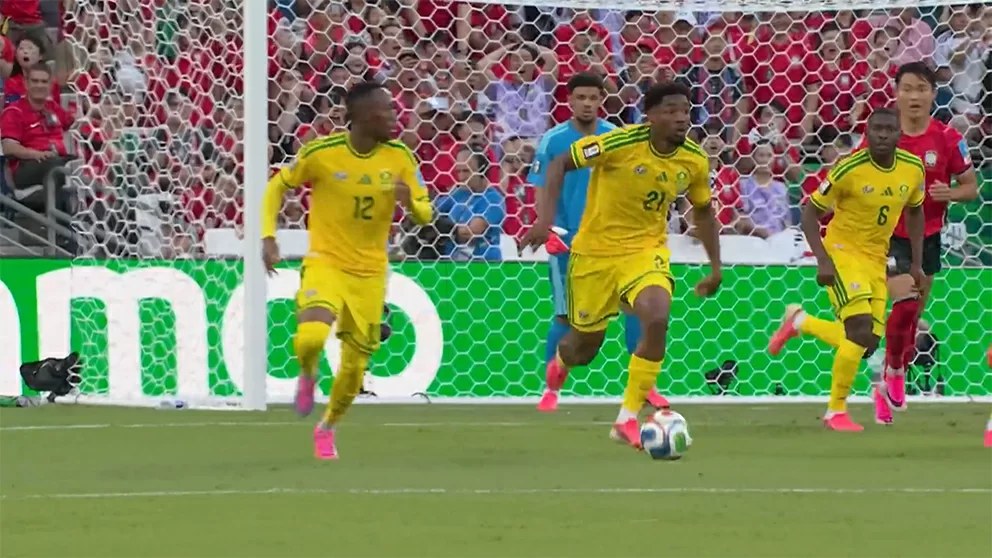
    This group is ranked as one of the easiest of the tournament, with an average FIFA ranking of 35. Co-host Mexico is looking to capitalize on home-field advantage to secure a top-two finish. South Korea finished undefeated during Asian qualification, and will battle 74-year-old manager Miroslav Koubek’s Czech side for the second automatic spot. South Africa has never advanced past the group stage in World Cup history, but can still qualify for the knockout round as one of the top eight third-place finishers. Mexico and South Korea are named as the favorites for automatic qualification.

    ### Group G: Belgium, Egypt, Iran, New Zealand
    This draw looks like a comfortable path to the knockout round for Belgium, even though its iconic “Golden Generation” of talent has passed. None of Belgium’s opponents in this group have ever advanced past the World Cup group stage, leaving manager Rudi Garcia’s side as the clear favorite to top the pool. Egypt, led by Liverpool star Mohamed Salah, has never won a World Cup match, but holds a strong chance to pick up results against Iran and New Zealand to claim second place. Iran’s pre-tournament preparation has been disrupted by geopolitical instability linked to the conflict between Israel and the United States, leaving its form unpredictable. New Zealand enters as the lowest-ranked side in the group, and faces an uphill battle for qualification. Belgium and Egypt are picked to claim the two automatic spots.

    ### Group D: United States, Paraguay, Turkey, Australia
    Despite having the third-highest average FIFA ranking across all groups, this is considered one of the easier draws, particularly for co-host the United States. The US sits 16th in global rankings, and manager Mauricio Pochettino is counting on star attacker Christian Pulisic to lead the side out of the group. There are no true elite powerhouses in this pool, but play-off qualifier Turkey holds the best chance to join the US in the knockout round. Lower-ranked Paraguay and Australia will both be fighting to claim an upset spot in the round of 32. The United States and Turkey are named as the favorites for automatic qualification.

    ### Group B: Canada, Bosnia and Herzegovina, Qatar, Switzerland
    This group has the lowest average FIFA ranking of the entire tournament at 42, but still promises a tightly contested battle for the top two spots. Switzerland is the highest-ranked side in the pool and has a proven track record of advancing to the knockout round in recent World Cups. Co-host Canada has a disappointing historic World Cup record, but is hoping home advantage under manager Jesse Marsch will deliver a first-ever knockout stage appearance. Bosnia and Herzegovina pulled off a massive play-off upset to eliminate four-time champion Italy, and is targeting an automatic qualification spot, while Asian champion Qatar is also hoping to spring an upset. Switzerland and Canada are picked as the favorites to claim the two automatic knockout spots.

  • Iran Arrives in Mexico for World Cup, Key Officials Blocked From the US

    Iran Arrives in Mexico for World Cup, Key Officials Blocked From the US

    As the 2026 FIFA World Cup draws ever closer, Iran’s national men’s football team has landed in the Mexican border city of Tijuana, but a lingering visa dispute with the United States has thrown the team’s tournament preparations into uncertainty just days before their opening match.

    The squad was forced to abandon its pre-tournament training camp in Tucson, Arizona, and relocate across the U.S.-Mexico border over complications tied to long-running geopolitical tensions involving Iran. While all 26 members of the playing squad have received approval for U.S. visas to compete in the World Cup – which co-hosted across the U.S., Mexico and Canada – multiple high-ranking members of the Iranian national delegation remain locked out of the U.S. due to rejected visa applications.

    Among those denied entry are the Iranian Football Federation’s secretary-general and vice-president, as well as several key coaching staff members whose roles are considered integral to the team’s on-pitch performance. Speaking to reporters over the weekend after the team’s arrival in Tijuana, veteran defender Ehsan Hajsafi publicly called out governing body FIFA to intervene and resolve the administrative crisis before Iran kicks off their campaign.

    “First of all, we’re very happy that the team has finally arrived, and we’re delighted about that,” Hajsafi told reporters. “Unfortunately, several key members of our coaching staff, whose roles are very important within the team, were not granted visas.” He added that the whole squad is hoping FIFA can use its authority to push for a solution before their first fixture.

    A senior U.S. official confirmed to ABC News that all first-team players received visa approvals, but stated that some non-playing applicants were rejected after applying under what the U.S. government calls “false pretences.” The controversy comes amid long-standing heightened geopolitical tensions between the U.S. and Iran, and U.S. authorities have raised sharp security concerns around members of the Iranian delegation ahead of the tournament.

    U.S. Secretary of State Marco Rubio made the country’s position clear in comments to reporters on Friday, confirming that U.S. consular officials are vetting all delegation members to screen for any links to the Islamic Revolutionary Guard Corps (IRGC), which is designated as a terrorist organization by the U.S. government.

    “We have no problem with the athletes or their support staff. But what we’re not going to allow is for them to embed in their delegation people that we know have nothing to do with athletics and have ties to the IRGC,” Rubio said.

    Iran is drawn into Group C of the 2026 World Cup, and is scheduled to play their opening match against New Zealand on June 15 in Inglewood, California. They will face Belgium in Los Angeles on June 21, before wrapping up their group stage fixtures against Egypt in Seattle on June 26. All three of the team’s group matches are scheduled to take place on U.S. soil, leaving the visa dispute as a critical unresolved issue that could upend the team’s tournament if not resolved quickly.

  • Five changes to Reggae Girlz team to face Panama in second friendly

    Five changes to Reggae Girlz team to face Panama in second friendly

    KINGSTON, Jamaica — Fresh off a narrow 1-0 opening win over Panama in their two-match international friendly series, the Jamaican senior women’s national soccer team has shaken up its starting eleven for the second fixture, set to kick off Tuesday at Panama City’s Estadio Rommel Fernandez. Coaching staff have announced five new names in the starting lineup, with a mix of fresh faces and experienced core players to balance energy and tactical stability for the rematch.

    Nyema Ingleton, Nikaya Small, Paige Bailey-Gayle, Trudi Carter and Natasha Thomas have all earned starting spots for the upcoming contest, building on the momentum from Jamaica’s opening victory. That opening win on Friday was secured by a first-half free kick goal from Shania Hayles, who retains her place in the starting eleven for the rematch.

    In a move to maintain defensive solidity and on-field leadership, the coaching staff chose to keep several key regulars in the starting rotation. Starting goalkeeper Liya Brooks, as well as veteran defenders and midfielders Konya Plummer, Allyson Swaby, Deneisha Blackwood and Atlanta Primus all retain their positions from the first match.

    The full starting lineup for Tuesday’s friendly is: Liya Brooks, Nyema Ingleton, Konya Plummer, Allyson Swaby, Deneisha Blackwood, Nikaya Small, Atlanta Primus, Paige Bailey-Gayle, Trudi Carter, Shania Hayles, and Natasha Thomas.

    Reporting by Paul A Reid

  • Right Move

    Right Move

    Even as the early favorite to land the permanent head coaching role for Jamaica’s senior men’s national football team, the Reggae Boyz, interim boss Rudolph Speid has openly thrown his support behind the Jamaica Football Federation’s (JFF) decision to open a broad, extended search for the full-time position. Speaking after Jamaica’s 1-1 draw with South Africa in a recent international friendly held in Pachuca, Mexico, Speid emphasized that casting a wide net for candidates is the correct approach to finding the best fit for the program.

    The top job has sat vacant for seven months, ever since former England manager Steve McClaren stepped down last November. McClaren’s departure came after a 0-0 draw against Curacao left Jamaica unable to secure automatic qualification for the 2025 FIFA World Cup, co-hosted by the United States, Canada, and Mexico. Speid, who also serves as head coach of domestic side Cavalier, stepped into the interim role immediately after McClaren’s exit. He led the Reggae Boyz through the final interconfederation playoff round last March, but a defeat to DR Congo in the playoff final extended Jamaica’s 28-year drought without a World Cup appearance.

    JFF officially opened applications for the permanent position last Thursday, laying out clear criteria for candidates: applicants must hold a Concacaf A coaching license or its global equivalent, have elite-level coaching experience at either the club or international level, and demonstrate a proven ability to perform in high-pressure competitive environments. The JFF aims to appoint a new permanent head coach before August, giving the successful candidate ample time to build tactics and squad cohesion ahead of the Concacaf Nations League A campaign, which kicks off on September 21.

    Speid was widely regarded as the front-runner for the role after turning in solid interim performances, even earning a public endorsement from JFF President Michael Ricketts, who named Speid and assistant coach Miguel Coley as ideal candidates to lead the program moving forward. A final decision on the appointment was originally scheduled for the end of April, but the process stalled when the JFF board failed to reach a unanimous agreement on hiring Speid permanently. The federation’s technical committee subsequently recommended extending the search through the summer, asking Speid to remain in the interim post for the recently concluded Unity Cup in London and last Saturday’s friendly against South Africa.

    To date, early applicants include former Reggae Boyz players Darren Moore and Michael Johnson, both born in England, alongside Speid and Coley. In recent weeks, the applicant pool has grown to include multiple international coaches from Europe and North America, expanding the range of options for the JFF selection body.

    Despite being the presumed leading candidate, Speid says he holds no resentment over the extended search process. “I don’t know if I’ll be the person — if I’m selected I’ll continue. But it’s the right way to go about it, get other people to apply and see if they can get the person that fits what they’re trying to do,” he said.

    In the friendly against South Africa, a warm-up match for the World Cup-bound South Africans ahead of their opening clash with tournament hosts Mexico, Speid’s young Jamaican side earned a credible 1-1 draw. Winger Dwayne Atkinson scored a stoppage-time equalizer in the second half to cancel out a first-half goal from South Africa’s Oswin Appolis.

    With Jamaica entering a new rebuilding phase following their March World Cup qualification failure, Speid noted that the recent friendly and Unity Cup fixtures have served as critical development time for a young, emerging squad. Both rosters for the recent matches carried an average age of under 22, with a large contingent of homegrown Jamaican-based players getting valuable senior international minutes. “We have the Nations League coming up in September, so this was a good way for us to get some games,” Speid explained. “Clearly we have to rebuild the team after failing to go to the World Cup last March. We have carried a lot of young players, this is probably the youngest national team ever, and we are trying to see what these players are made of.”