分类: society

  • Ankle-monitored accused gunned down near home

    Ankle-monitored accused gunned down near home

    In a brazen morning attack that raises serious questions about judicial monitoring systems, 38-year-old Isiah Garcia—a man under court-ordered electronic surveillance—was ambushed and executed near his D’Abadie residence on Thursday. The shooting occurred just hours before Garcia was scheduled to reappear in court for serious charges dating back to 2021.

    According to Trinidad Police reports, residents of First Street West off Recreation Road were startled by multiple gunshots around 7:15 a.m. Upon investigation, they discovered Garcia’s lifeless body bearing multiple gunshot wounds. Crucially, the deceased still wore the ankle monitoring device mandated as a condition of his bail in a pending attempted murder case.

    Garcia’s legal troubles stemmed from a violent August 2021 incident in Carapo, where he allegedly attacked a man and woman with lethal intent. Following his arrest days after the shooting by Region Two Homicide Bureau detectives, he faced an extensive list of charges including attempted murder, common assault, firearm possession, and ammunition-related offenses.

    Despite the severity of these charges, judicial authorities had granted Garcia bail with the specific condition of continuous electronic monitoring. This monitoring system, implemented in April 2021 through the National Security Ministry’s Electronic Monitoring Unit, represented the judiciary’s attempt to balance bail rights with public safety concerns.

    The assassination occurs against a troubling backdrop of violent crime in Trinidad. Official statistics indicate the nation’s murder toll had reached 66 by Thursday night, showing a modest decrease from the 75 recorded during the same period last year.

    Law enforcement authorities have launched a comprehensive investigation into both the execution-style killing and the apparent failure of the monitoring system to prevent this tragedy. The case has ignited urgent discussions about the effectiveness of electronic surveillance measures for defendants facing serious violent charges.


  • ‘Tide Turners – Stewards of the Sea’ initiative launched in SVG

    ‘Tide Turners – Stewards of the Sea’ initiative launched in SVG

    The SVG Sailing Association has inaugurated a groundbreaking environmental program titled ‘Tide Turners – Young Stewards of the Sea,’ mobilizing young sailors to protect the South Coast Marine Managed Area through comprehensive monitoring and conservation efforts.

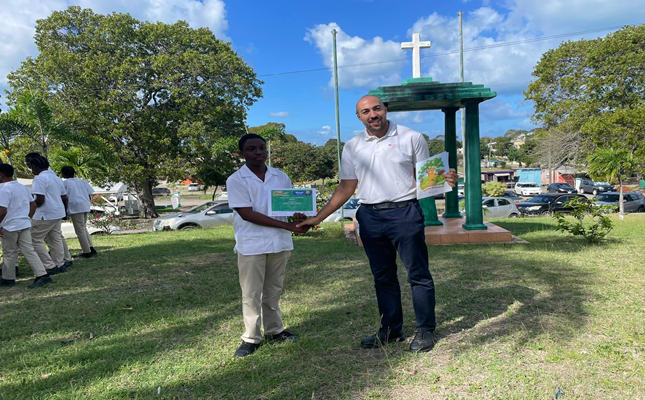
    The official launch ceremony occurred Friday at Vincy Sail Club in Coconut Grove, uniting youth sailors, community representatives, and environmental partners dedicated to preserving St. Vincent and the Grenadines’ marine ecosystems. Five young sailors delivered compelling testimonies about their personal connections to the ocean and concerning environmental transformations they’ve witnessed during coastal voyages.

    Educational specialist Joshua Gooding and project director Anne Weinhardt outlined the initiative’s ambitious objectives while acknowledging Louise Mitchell’s inspirational role in conceptualizing the project. The program receives financial backing from the SVG Conservation Fund, enabling meaningful youth engagement and school participation.

    Tide Turners equips young sailors with practical conservation tools through environmental education, biodiversity assessment, shoreline purification drives, and community outreach. Participants will systematically document marine wildlife sightings, coastal modifications, and pollution indicators, generating crucial localized environmental data.

    Launch attendees participated in a symbolic pledge-writing ceremony, committing to specific actions supporting marine protection. The initiative immediately transitioned to operational activities, conducting its first educational workshop Saturday for 18 participants covering marine biodiversity, environmental surveillance, and responsible stewardship principles.

    Throughout the coming year, the program will expand to include coordinated monitoring sessions, sailing-based observation missions, and organized beach cleanups. Collected environmental data will be synthesized into a comprehensive community report for distribution to government bodies and conservation organizations.

    The SVG Sailing Association anticipates Tide Turners will cultivate a new generation of environmentally conscious Vincentians committed to safeguarding their island nation’s surrounding waters. This twelve-month youth-led endeavor represents a significant advancement in community-driven marine conservation through education, engagement, and practical environmental stewardship.

  • Sponsor to donate windows, doors for 200 houses rebuilt after Beryl

    Sponsor to donate windows, doors for 200 houses rebuilt after Beryl

    Significant progress is underway in St. Vincent and the Grenadines’ post-hurricane housing recovery efforts, with multiple initiatives converging to address displacement caused by Hurricane Beryl’s devastation in July 2024. Housing Minister Andrew John has revealed that an anonymous organization, collaborating with the Red Cross, will donate windows and doors for 200 homes, substantially aiding reconstruction in the hardest-hit Southern Grenadine islands where over 90% of structures suffered damage or destruction.

    The government is simultaneously advancing a strategic housing program featuring prefabricated homes that can be erected within four weeks once foundations are prepared. Minister John confirmed the administration is proceeding with a previously arranged agreement with a Trinidad and Tobago company for prefab housing, noting that while initially skeptical, the time and cost efficiency of prefab construction proved compelling for rapid rehousing.

    Financial mechanisms are being activated to support these efforts, including the fine-tuning of an existing loan arrangement with the Saudi Fund that could provide funding for up to 200 new homes. This external financing would alleviate pressure on the national budget, allowing greater focus on material procurement and logistics.

    The government has already made substantial progress in reducing displacement numbers, cutting the original 700 displaced families by more than half to approximately 300 households through careful assessment and elimination of duplicate or unnecessary placements. Minister John acknowledged that political considerations had previously influenced displacement lists, but the current administration has implemented more rigorous verification processes.

    Logistical improvements include relocating assembly operations to covered facilities at Campden Park to accelerate construction and identifying land parcels in Chester for clustered housing development. The Housing and Land Development Corporation continues to accept registrations for the prefab housing program, which has generated considerable public interest beyond those affected by Hurricane Beryl.

  • Report examines social impact of plastic pollution in Dominican Republic

    Report examines social impact of plastic pollution in Dominican Republic

    Santo Domingo has become the epicenter of a critical environmental justice conversation as the Dominican Republic Plastics Action Platform (NPAP-RD) convened a multidisciplinary workshop to address the social dimensions of plastic pollution. The gathering brought together an unprecedented coalition of government officials, industry representatives, civil society advocates, and international organizations to examine how waste management practices disproportionately affect vulnerable populations.

    The workshop featured preliminary findings from the groundbreaking Gender Equity and Social Inclusion (GESI) Report, which reveals stark disparities in how plastic pollution impacts women and marginalized communities. Unique perspectives emerged from grassroots recyclers, coastal community leaders, and representatives from informal settlements who highlighted systemic inequalities throughout the recycling value chain. These firsthand accounts provided crucial context for developing nationally appropriate solutions to environmental challenges.

    Research indicates that informality remains pervasive across the recycling sector, creating significant barriers to social services, economic opportunities, and protection mechanisms for women and vulnerable workers. In response, authorities from the Ministry of Industry, Commerce and MSMEs joined industry leaders from the Association of Industries of the Dominican Republic in advocating for gender-responsive policy integration. The collaborative insights will directly inform the country’s Plastics Action Roadmap—a comprehensive 2025 initiative designed to advance circular economy principles and sustainable development goals through inclusive waste management strategies.

  • Young Women Debate Cannabis Policy in Mock Parliamentary Sitting

    Young Women Debate Cannabis Policy in Mock Parliamentary Sitting

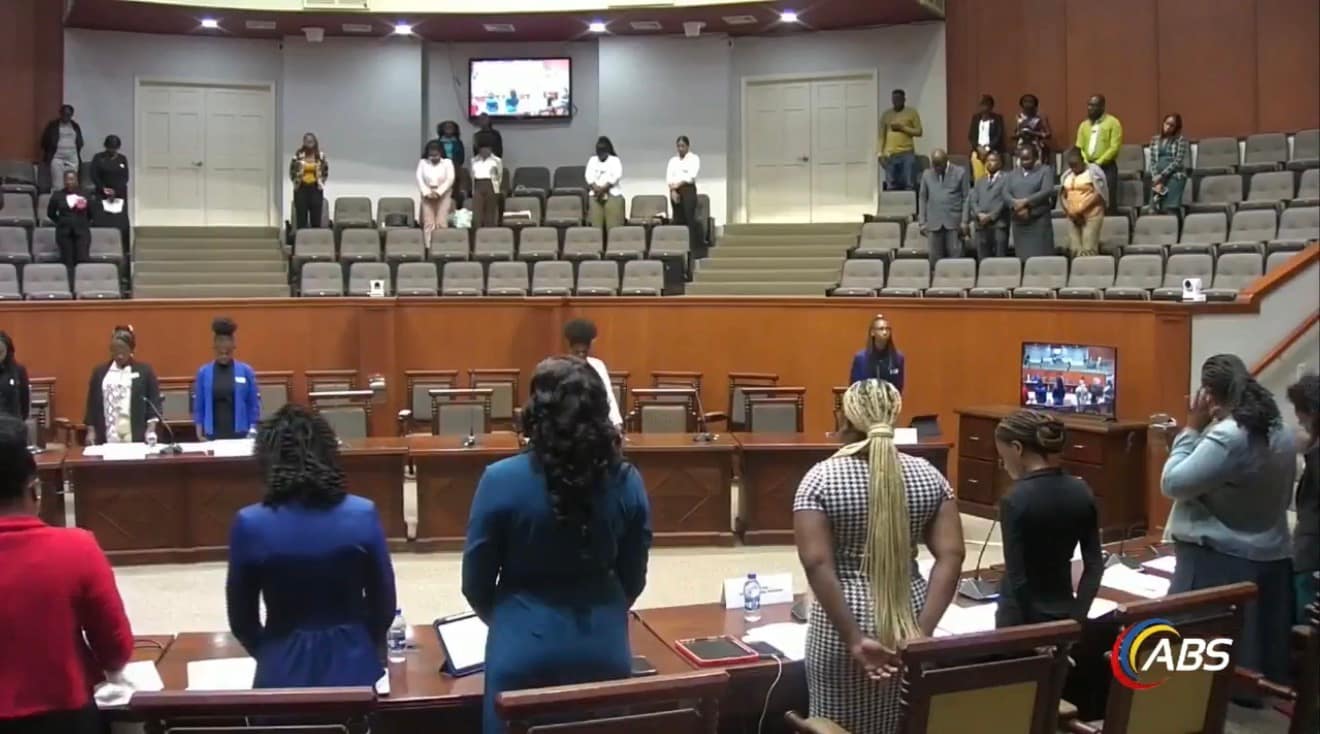
    In a dynamic demonstration of civic engagement, participants of Antigua and Barbuda’s Young Women in Leadership programme convened a mock parliamentary session to debate cannabis legislation reform during International Women’s Day observances. The special sitting featured a comprehensive examination of a proposed motion to establish a Joint Select Committee tasked with reviewing existing cannabis laws through both human rights and gender-responsive perspectives.

    The parliamentary simulation focused on the Cannabis Act 2022 and related drug amendments, with proponents arguing that periodic legislative reviews are essential for maintaining relevance in an evolving society. One delegate emphasized that “a responsible government does not just pass reforms, it safeguards and ensures that its citizens are taken care of,” advocating for integrated educational campaigns within any revised cannabis policy framework.

    Advocates maintained that a specialized committee would enable thorough consultation with experts and community stakeholders while assessing the socioeconomic and public health implications of recent cannabis reforms. Supporters further contended that structured evaluation could identify deficiencies in public education, law enforcement protocols, and regulatory mechanisms while simultaneously fostering youth protection and economic inclusion within the emerging cannabis sector.

    The opposition voiced skepticism regarding the necessity of establishing new parliamentary structures, noting that significant legislative reforms had already been implemented in recent years. One participant cautioned that premature revisiting of the legal framework could generate policy uncertainty, suggesting that society required additional time to adapt to existing changes.

    Alternative proposals emerged suggesting that current government institutions already possess sufficient expertise to conduct legislative analysis without creating additional bureaucratic layers. Health concerns featured prominently in the discourse, with references to regional data indicating substantial marijuana usage among student populations and calls for science-based decision-making in future policy considerations.

    Despite divergent perspectives, the deliberation underscored the multifaceted nature of cannabis policy, intersecting with criminal justice, economic development, public health, and human rights considerations. Program organizers designed the exercise to provide practical experience in parliamentary procedures while stimulating informed dialogue on national policy matters. The leadership initiative aims to cultivate future female leaders by enhancing capabilities in public address, legislative debate, and governance principles.

  • Macmillan Education Caribbean Announces Winners of Regional Poetry Competition

    Macmillan Education Caribbean Announces Winners of Regional Poetry Competition

    Macmillan Education Caribbean has unveiled the distinguished winners of its Language Tree New Branches: Poetry Competition, recognizing exceptional literary talent across the Caribbean region. The 2026 contest attracted substantial participation with 99 original submissions from 13 countries, demonstrating vibrant poetic expression throughout the educational community.

    Participants competed across three distinct categories: Primary School Students, Lower Secondary School Students, and Teachers. The competition received 30 entries from primary students, 21 from lower secondary students, and an impressive 48 submissions from educators. Poetic works explored diverse themes including natural environments, culinary traditions, cultural festivals, marine life, and meteorological phenomena.

    Julia Sander, the presiding competition judge, reported exceptionally high standards across all categories. The judging panel noted particular admiration for the creative imagination and linguistic artistry displayed throughout the submissions, which significantly complicated the final selection process.

    In the Primary School division, Celine Rolle from St. Andrews Anglican School in Exuma, The Bahamas, claimed first honors with her composition ‘Let’s Make Tropical Conch Salad,’ a culinary-themed poem celebrated for its vibrant sensory language and rhythmic excellence. Bahamian student Bethany Barr secured second position, while third place recognition was jointly awarded to Antoinette Kissoon of Trinidad and Tobago and K’Ronjae Liburd from Nevis.

    The Lower Secondary category crowned Shakeir Tafarie Thomas of Antigua Grammar School as champion for his emotionally resonant poem ‘Nature,’ which artfully contrasted natural beauty with environmental concerns while maintaining hopeful undertones. Second place was awarded to Denae Tehya Laelle Bontiff (Antigua and Barbuda), with third position going to Jamaica’s Adryanna Fowler.

    Educator Sasha Maynard of Charles E. Mills Secondary School in St. Kitts and Nevis triumphed in the Teachers category with ‘Christmas in Saint Kitts,’ a festival-themed work acclaimed for its harmonious balance of religious significance and cultural celebration. Jamaican teacher Ambrosia Oladele earned second place, while Cheyenne K. V. Maynard from St. Kitts and Nevis received third place recognition.

    All winning compositions have been memorialized in a special edition poetry publication produced by Macmillan Education, serving as an anthology of Caribbean creative writing excellence. The organization extended congratulations to all participants, emphasizing the competition’s primary objective of fostering literacy development, creative expression, and enduring appreciation for poetic arts throughout the Caribbean region.

  • Dominican Port Authority inaugurates new fishing dock in Haina to support fishermen

    Dominican Port Authority inaugurates new fishing dock in Haina to support fishermen

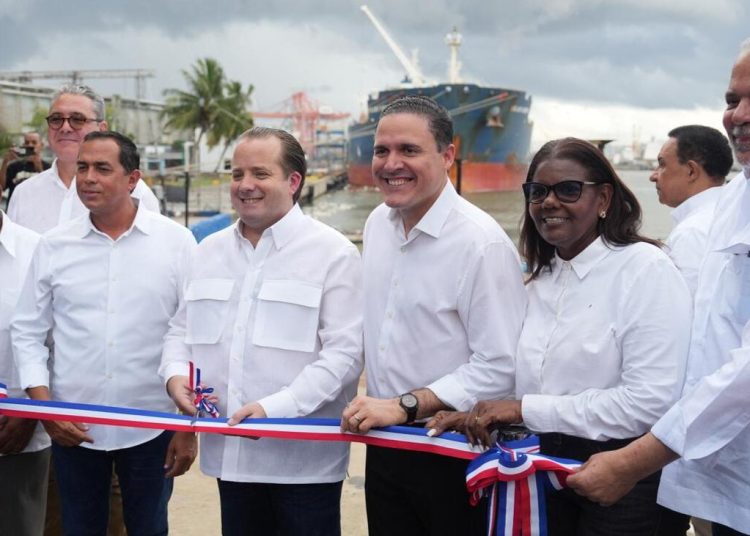
    SANTO DOMINGO – The Dominican Port Authority (Apordom) has officially unveiled a state-of-the-art fishing pier in Haina Occidental, marking a significant infrastructure development designed to enhance operational conditions for local fishermen and stimulate economic activity in coastal communities.

    The inauguration ceremony was presided over by key government officials including José Ignacio Paliza, Minister of the Presidency, and Jean Luis Rodríguez, Executive Director of Apordom. During the event, officials emphasized that this project represents a crucial component of the national strategy to construct and modernize fishing facilities throughout the country. The initiative specifically aims to empower coastal populations and elevate the professional standards of fishing occupations.

    Constructed with an investment exceeding RD$18 million, the new maritime infrastructure spans approximately 170 square meters and features capacity for simultaneous docking of up to 20 small fishing vessels. The modern pier incorporates advanced amenities including energy-efficient LED lighting systems, durable metal cleats for secure mooring, specialized vessel access ramps, and a dedicated service gazebo for fisherfolk.

    This development in Haina Occidental constitutes the nineteenth fishing dock delivered by Apordom under the national infrastructure program. Previous beneficiaries include coastal communities across Sabana Grande de Palenque, Boca Chica, Puerto Plata, Boca de Yuma, Cabo Rojo in Pedernales, Miches, Sánchez in Samaná, and Las Cañitas in Sabana de la Mar. The strategic distribution of these facilities demonstrates the government’s commitment to regional development and sustainable fishing practices along the Dominican coastline.

  • Jordan: Remaining Solidarity Allowance payments due by end of April

    Jordan: Remaining Solidarity Allowance payments due by end of April

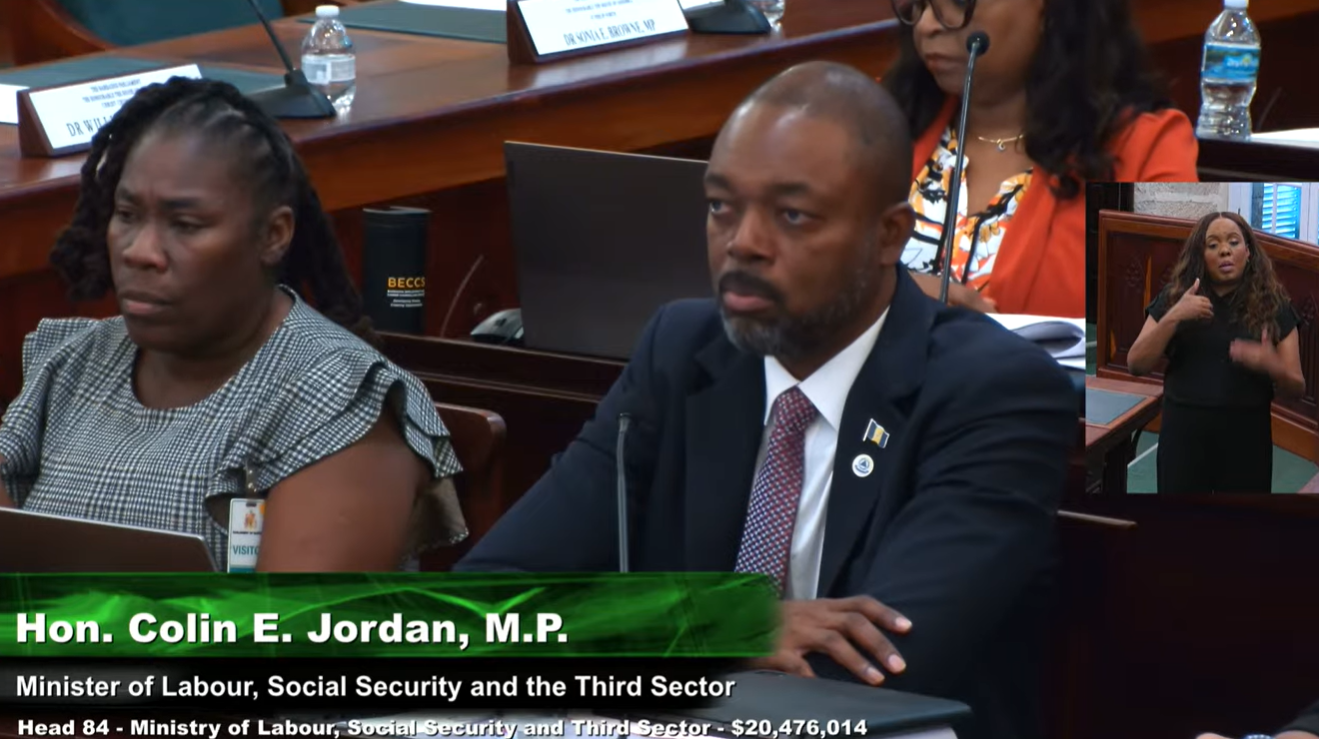
    The Barbadian government has committed to resolving all pending $300 Solidarity Allowance payments by the conclusion of April, according to Minister of Labour Colin Jordan. During Monday’s House of Assembly deliberations on ministry appropriations, Jordan acknowledged that while the overwhelming majority of eligible citizens have received their one-time payment, a small segment continues to await resolution.

    Minister Jordan provided this assurance in response to inquiries from St Michael South MP Kirk Humphrey, who highlighted ongoing concerns among constituents despite multiple visits to the National Insurance and Social Security Service (NISSS). Humphrey recounted encountering a young man making his third attempt to claim the allowance, reflecting broader administrative challenges in the payment distribution system.

    The Labour Minister clarified the operational framework, explaining that his ministry administers payments through NISSS once funds are transferred from central government resources. Jordan emphasized the strict separation maintained between worker-contributed National Insurance Funds and government allocations used for the solidarity initiative.

    “We maintain rigorous safeguards to ensure absolute separation between central government funds and the National Insurance Fund,” Jordan stated. “Any delays typically originate from the timing of inter-governmental transfers rather than distribution mechanisms.”

    Despite the small number of outstanding cases, Jordan affirmed that each eligible individual remains entitled to payment. “Even if there were one or two people outstanding, those individuals are entitled to their funds,” he asserted, confirming that authorities have identified remaining recipients and possess necessary funds for completion.

    Initiated in 2025 following unexpectedly robust corporate tax revenues, the tax-free Solidarity Allowance program represents a government effort to redistribute fiscal gains to citizens. Eligibility extended to all adults over 18 who contributed to NISSS during the previous year, alongside pensioners, special needs grant recipients, and welfare clients.

    Finance Ministry data reveals that by May 2025, approximately $44.6 million had been distributed to over 149,000 beneficiaries, with systems established to process remaining payments once recipients updated their banking information with NISSS.

  • As four in ten adults ‘lack certification’, ministries to join literacy strategy

    As four in ten adults ‘lack certification’, ministries to join literacy strategy

    Barbados is confronting a significant educational challenge as recent data reveals over 40% of the adult population lacks formal certification, prompting a coordinated government response. This literacy deficit is increasingly viewed as a critical barrier to workforce development and economic participation, compelling the Ministries of Labour and Education to formulate a comprehensive national strategy.

    The issue gained prominence during House Estimates discussions for the Ministry of Labour’s appropriations, where Education Transformation Minister Chad Blackman emphasized the severe limitations poor literacy skills impose on adult citizens. Labour Minister Colin Jordan acknowledged the sensitive nature of adult education, revealing that his ministry has strengthened collaboration with the Ministry of Technological and Vocational Training over the past six months, particularly through apprenticeship initiatives.

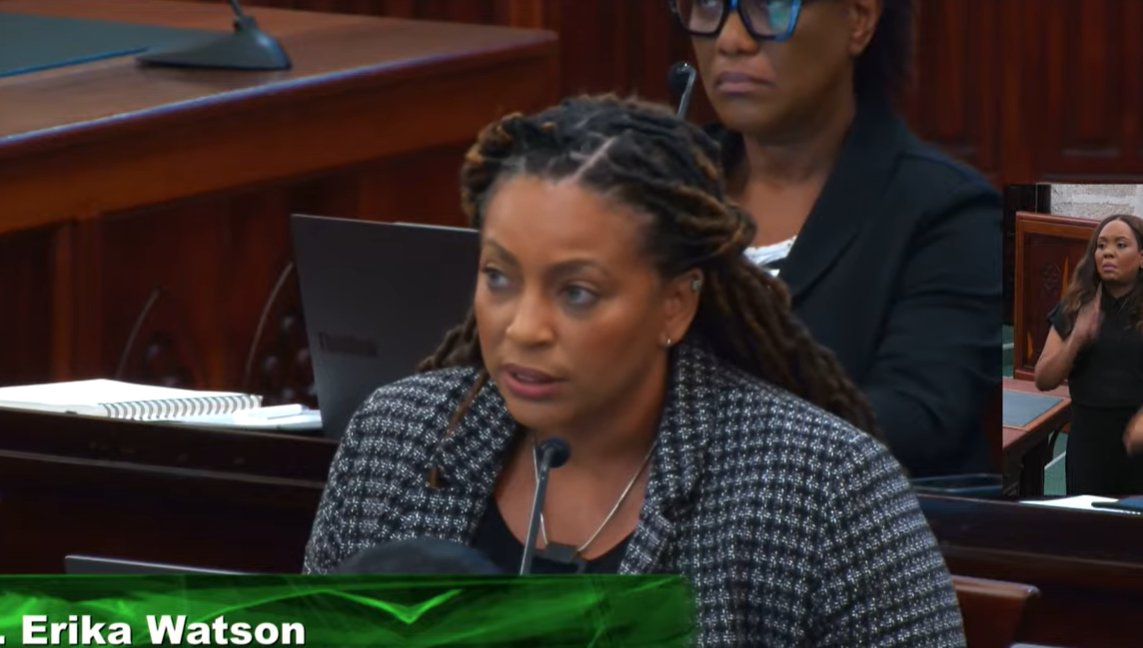
    Erika Watson, Programme Manager at the Ministry of Labour, provided lawmakers with details of the emerging national strategic plan. “Our focus has been on developing a national strategy that recognizes the multitude of stakeholders involved in addressing adult literacy,” Watson explained. “We need a framework that facilitates coordination and pulls all efforts together.”

    The strategy will prioritize functional literacy—equipping adults with practical skills necessary to capitalize on labor market opportunities, enhance workplace effectiveness, and realize their full potential. Minister Jordan further proposed establishing skills sector councils to guide workforce development in priority industries, with the first council focusing on renewable energy already in development.

    These industry-led councils will identify emerging trends, skill gaps, and future development needs across key sectors. Watson elaborated that the councils will “inform education and training, career guidance work, and employment promotion strategies.” The government plans to establish at least four such councils this year covering renewable energy, construction, tourism, and information technology services.

    Concurrently, Minister Jordan acknowledged underutilization of International Labour Organization (ILO) resources and committed to leveraging these international resources more effectively to support Barbados’ literacy and workforce development objectives.

  • Two missing after molasses barge sinks off East Coast Demerara

    Two missing after molasses barge sinks off East Coast Demerara

    A significant maritime emergency response has been activated following the sinking of a molasses-laden barge off the coast of Guyana, leaving two crew members unaccounted for. The incident involving the vessel TRADER III occurred in the early hours of Monday morning approximately 9.5 nautical miles from Buxton on the East Coast Demerara.

    The Maritime Administration Department (MARAD) confirmed it received a distress signal at approximately 1:00 AM local time, indicating the specialized cargo vessel was experiencing catastrophic failure while transporting molasses from Berbice to Georgetown. The barge was fully loaded with the viscous industrial commodity at the time of the sinking.

    Emergency protocols were immediately initiated following the distress call, mobilizing a multi-agency search and rescue operation. Captain John Flores, MARAD’s Emergency Operations Coordinator, is leading the coordinated effort with substantial support from the Guyana Defence Force Coast Guard. The vessel’s owning company is also providing assistance to authorities in the ongoing operation.

    The search mission continues across the affected maritime zone as authorities work to locate the two missing crew members. The circumstances surrounding the sudden sinking of the specialized transport barge remain under investigation by maritime safety officials. Further updates are expected as the search operation develops and more information becomes available about this industrial maritime incident.