分类: society

  • Unions split Labour Day parades amid political row

    Unions split Labour Day parades amid political row

    Labour Day in the Bahamas brought deep divisions among organized labour on Friday, as two competing marches were held across New Providence. The split stems from ongoing friction over whether the annual workers’ celebration has been co-opted by partisan political interests, with conflicting visions for the holiday’s original purpose at the center of the disagreement.

    The long-standing traditional parade gathered participants at Windsor Park before proceeding along East Street into downtown Nassau. Thousands of union members, community supporters, and live musical acts joined the procession, alongside clear, large contingents of supporters from the nation’s two major political parties: the ruling Progressive Liberal Party (PLP), wearing their signature yellow, and the opposition Free National Movement (FNM) in their identifying red.

    Parallel to this main event, the Bahamas Trades Union Congress (TUC) and a coalition of its affiliated unions hosted a separate demonstration. Starting from the House of Labour on Wulff Road, the alternative march traveled west before turning north along Baillou Hill Road, concluding at the Southern Recreation Grounds. This marked the second consecutive year the TUC has opted out of the traditional parade route, a decision organizers framed as a deliberate act to preserve the legacy of labour pioneer Sir Randol Fawkes and protect Labour Day’s core historical meaning.

    TUC president Obie Ferguson, KC, has long argued that the growing visibility of political party presence has pulled focus away from the holiday’s original mission of honoring workers. Ahead of this year’s event, he instructed all TUC march participants to wear plain black trousers and official white Labour Day shirts, rather than any identifying partisan apparel.

    Criticism of partisan displays was echoed by outgoing Bahamas Public Services Union (BPSU) president Kimsley Ferguson, who noted this year’s event marked his final Labour Day parade as union leader before stepping down. “Labour Day is supposed to be for the workers of the country and not a show of political might or strength,” he said. “There’s no problem with political parties coming on to the parade, but come and support the workers, wear neutral colors, don’t bring party colors to a parade that’s supposed to be celebrating the workers of the country.”

    After nine years leading the BPSU, Ferguson will step down from his post when the union holds leadership elections in September. He announced he is leaving union leadership to pursue full-time Christian ministry, a calling he said he has already begun to answer part-time. “It’s a new chapter that I’m going to embrace, because God has now called me to go into ministry full time,” he explained. “I’m currently a pastor at a church, and so this is my last and final Labour Day parade as the President of Bahamas Public Service Union.”

    Speaking to the broader split within the national labour movement, Ferguson added: “I would say that the word union suggests one. If there’s a day and a time that we ought to unite, it would be today.”

    Not all stakeholders agree that the event has become overly politicized, however. Bahamas Labour Minister Pia Glover-Rolle pushed back against claims of partisan takeover, noting that intentional parade organizing keeps trade unions at the front of the procession while political parties are held to the rear. “The parade, in my opinion, has not been politicised, because if you look at the way the route is composed, you’ll see the unions out front, and then I see the political parties in the rear, they’re not mixing in, they’re only at the back supporting, and that’s what it’s about,” she said. “Political parties are supporting the workers, and the supporters of political parties are workers themselves, so I don’t think it’s politicised in any way.”

    Glover-Rolle added that the separation of unions and political groups in the parade order is intentional every year, and there is nothing inappropriate about partisan organizations showing public support for the nation’s workforce. “There’s a clear separation of the political parties and the trade unions. Every year it’s intentional that the political bodies stay closer to the rear and unions make their way through the parade, but it is a show of support. I don’t see anything wrong with political parties supporting the workers of our country.”

    Darron Woods, president of the Bahamas Hotel Catering and Allied Workers Union, echoed this more relaxed stance, saying his organization was not thrown off by the surrounding political debate. “That has become a tradition now, so it really doesn’t faze us anymore,” he noted.

    Opposition Leader Michael Pintard defended the FNM’s decision to wear official party colours this year, explaining that the party had previously complied with requests from the Fawkes family to avoid partisan apparel. He argued the ruling PLP broke a long-standing agreement to stay away from partisan displays, leaving the FNM with little choice but to assert their presence. “On multiple Labour Days, we have not worn party colors. We again complied with what was requested by Randol Fawkes family. This year, it’s clear to us that the PLP has violated that agreement,” he said Friday. “It has been of no effect, and so we want to stand to let the public know we are still here. We didn’t want to just melt in the crowd to let them know we’re still here and still standing.”

    Before the traditional parade continued into downtown, participants paused for a solemn memorial at Zion Baptist Church, located near the site of a 2018 Labour Day tragedy that claimed the lives of four women: Dianne Gray-Ferguson, Tami Williams-Gibson, Kathleen Rodgers-Fernander and Tabitha Bethel-Haye, who were killed when a parade truck struck the group. Wreaths were laid and prayers were offered before the procession resumed.

    Speaking at the memorial service, Prime Minister Philip “Brave” Davis reflected on the meaning of Labour Day, framing it as a permanent recognition of workers’ dignity, collective sacrifice, and shared solidarity. “We must remember that they were participating in what I call a seminal event, where workers come together to mark their solidarity for the dignity of work and to ensure that the rights of workers are continually upheld,” he said.

    Davis also recounted the long history of labour struggle that led to the creation of the national holiday, noting that Bahamian workers fought for decades for formal recognition, from the 1948 labour riots to the 1956 national strike that ultimately led to the establishment of the annual Labour Day celebration. “Without workers, you have no economy,” he emphasized. “And let’s continue to respect them, uphold their dignity, and ensure their rights are always protected.”

  • Kiwanians join K-Kids to plant fruit trees

    Kiwanians join K-Kids to plant fruit trees

    On Jamaica’s annual Labour Day, a cross-group community initiative has transformed the outdoor grounds of Tarrant Primary School in St Andrew, delivering a long-lasting environmental and educational gift to students and staff. The project, a joint effort between the school’s K-Kids program, the Kiwanis Club of West St Andrew, and the Kiwanis Club of Constant Spring, was carried out in partnership with Jamaica’s national Forestry Department.

    Volunteers spent the day working side-by-side to plant a variety of native fruit trees across the school campus and install a fully connected irrigation system linked to an on-site water storage tank. The new system will ensure the young saplings receive consistent moisture as they grow, increasing their chances of maturing into productive trees that can provide fruit for the school community for years to come.

    Dozens of volunteers from multiple youth and adult organizations turned out to contribute manual labor to the project. Key participants included Michael Powell, Lieutenant Governor for Kiwanis Division 23, which covers Eastern Canada and the Caribbean; Hadajah Freebourne-Raffington, Principal of Tarrant Primary School; Maurice Livingston, President of the Kiwanis Club of West St Andrew; and Demar Lyle, President of the Kiwanis Club of Constant Spring. They were joined by other adult Kiwanis members, student volunteers from the St Andrew High School Key Club, and the young participants of Tarrant Primary’s own K-Kids program, who took an active role in the planting work.

    Labour Day in Jamaica has long been marked by national community service projects, with groups across the country coming together to improve public spaces, schools, and local neighborhoods. This initiative aligns perfectly with that tradition, combining environmental action, youth engagement, and community investment to benefit a local public school. For students, the new orchard will also serve as an outdoor classroom, offering opportunities to learn about plant growth, sustainable food production, and environmental stewardship long after the planting day ends.

  • Suspect in custody in Trinidad after body of missing 12-year-old found

    Suspect in custody in Trinidad after body of missing 12-year-old found

    PORT OF SPAIN, Trinidad – A tragic incident has sent shockwaves through a small coastal Trinidadian community after the body of a missing 12-year-old girl was recovered on a remote oil well access road, with a local man now in custody aiding law enforcement’s ongoing probe.

    The victim, identified as Mercedez Layne, was first reported missing to authorities on Saturday. According to official police statements, the preteen had stayed overnight at her grandfather’s home before he placed her into a private vehicle arranged to take her back to her own residence. What was supposed to be a routine short trip quickly turned into a nightmare, when the child never arrived at her destination.

    Alarmed by Mercedez’s disappearance, the girl’s mother and her grandfather traveled together to the Erin Police Station to file an official missing person report. Law enforcement immediately launched a coordinated search and investigation into the case. Following leads pulled from witness tips and a review of closed-circuit security camera footage, investigators were able to pinpoint the vehicle Mercedez was last seen riding in. The vehicle was later found abandoned; investigators processed the scene, documented the car with photographic evidence, and transported it to the Erin Police Station to be retained as evidence for the continuing inquiry.

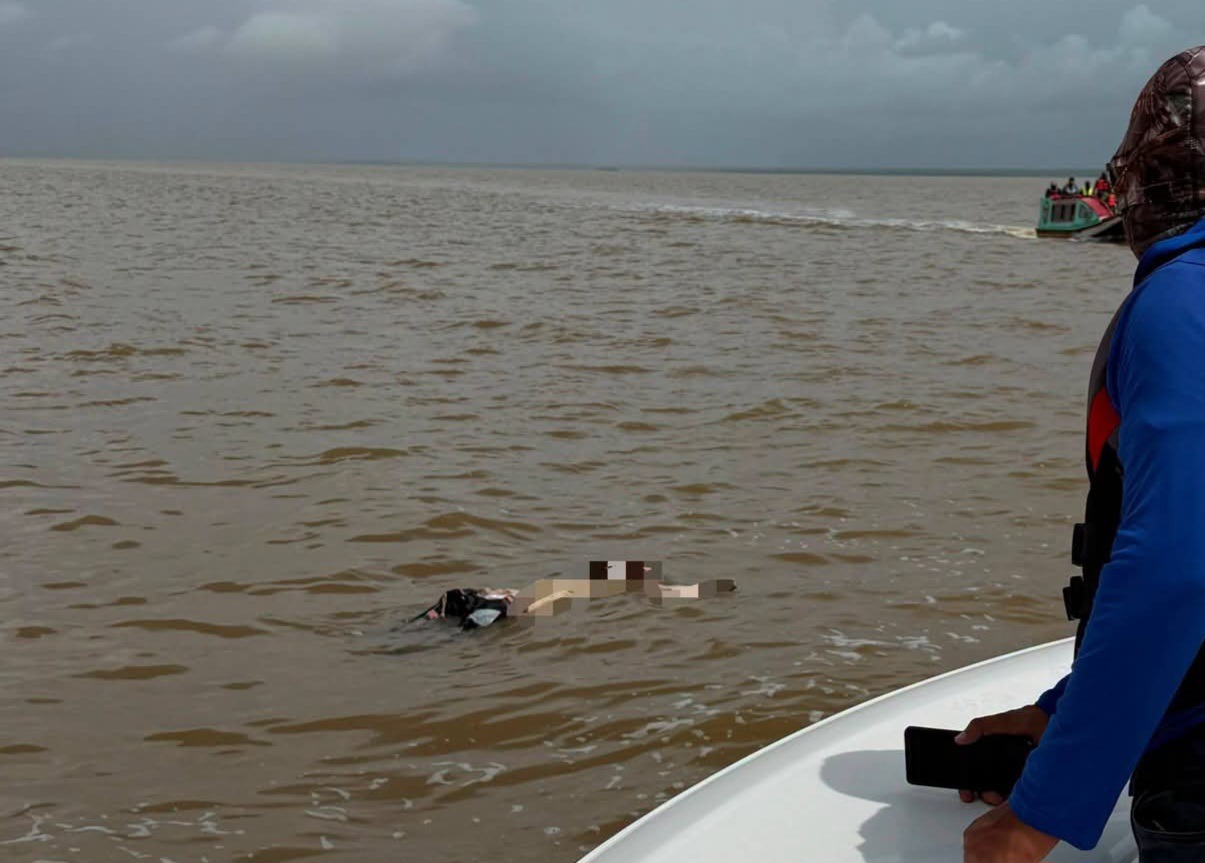
    On Sunday, a routine work check led to the grim discovery of the young girl’s body. An employee of a local oil company was heading out to inspect an oil well when he came across the body of a young female, lying face down along the unpaved access road leading to the well site. The worker contacted the Erin Police Station immediately, and first responders rushed to the remote location. After processing the crime scene, the body was formally confirmed to be that of the missing 12-year-old.

    Local law enforcement confirmed to Caribbean Media Corporation that a 26-year-old man has been taken into custody in connection with Mercedez’s death, and remains in police custody as investigators continue to piece together the full circumstances of the case.

  • Woning Robijnstraat in vlammen opgegaan: bedlegerige man naar SEH afgevoerd

    Woning Robijnstraat in vlammen opgegaan: bedlegerige man naar SEH afgevoerd

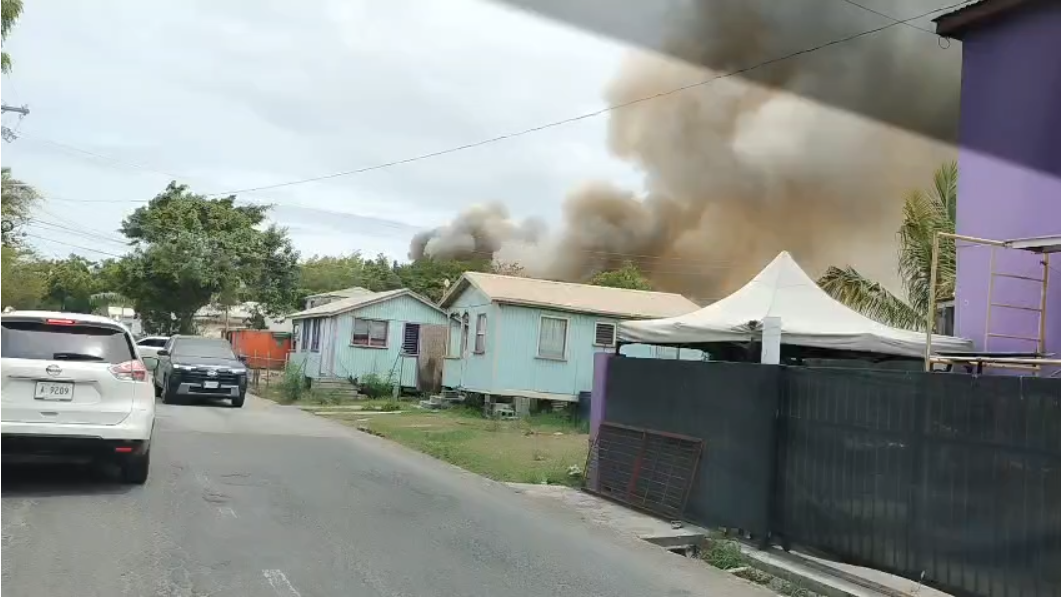
    A residential property located on Robijnstraat was completely engulfed in flames in the early hours of this morning, leaving the entire structure reduced to ruin after the intense blaze caused catastrophic damage to the building.

    Thankfully, emergency responders managed to safely evacuate a bedridden resident from the burning property before the fire spread further, according to initial information obtained from local authorities.

    The evacuated resident suffered breathing complications after inhaling thick toxic smoke produced during the fire. After receiving on-site first aid from emergency medical teams, the individual was transported via ambulance to the local emergency department for urgent and ongoing medical assessment and treatment.

    Local fire crews arrived at the scene within minutes of the emergency call being placed. Their rapid, coordinated response successfully contained the blaze, stopping it from jumping to adjacent nearby homes and preventing a far larger disaster that would have impacted more local residents. Despite the swift and determined efforts of emergency services, the original residential property was too severely damaged to be saved.

    As of the latest update, investigators have not yet confirmed the exact cause of the fire. Local police have launched a formal investigation to map out the sequence of events that led to the incident and determine what sparked the blaze.

  • OPINION: The rights of a displaced worker

    OPINION: The rights of a displaced worker

    Across the globe, a sweeping pattern of workforce reduction has emerged in recent years, as both public sector agencies and private companies restructure their operations under the banner of boosting operational efficiency, cutting overhead costs, and preserving long-term business viability and productivity. For countless workers, this trend has meant sudden unemployment through layoffs, retrenchment, or redundancy — leaving them out of work and struggling to make ends meet, even as companies frame these cuts as legitimate business decisions.

    While mass layoffs have become commonplace, terminated workers hold clear legal protections when employers fail to follow established fair procedures before cutting staff. Industry best practices and legal frameworks universally require that employees facing job loss are entitled to a transparent, fair review process, adequate advance notification of termination, and eligible severance compensation where the terms of employment or local regulation mandate it.

    If an employer skips required procedural steps or fails to provide the mandated notice period, workers retain the right to file a wrongful dismissal claim in civil court for breach of employment contract. Under labor and contract law, any termination without required advance notice is formally classified as a breach of contract, and the standard legal remedy for this violation is pay in lieu of notice — compensation equal to the wages an employee would have earned during the required notice period.

    There are, however, limited exceptions to this rule. Employees terminated for gross misconduct, such as theft, workplace violence, or other serious violations of company policy, are not eligible for pay in lieu of notice, and immediate termination is legally justified in these cases. Similarly, workers who resign without providing the required notice, or employees still in a probationary period, forfeit their right to this compensation. Eligibility for all forms of termination pay is also bound by the specific terms outlined in an individual’s employment contract, so workers are advised to review their agreements closely after receiving termination notice.

    For workers facing layoff or redundancy, additional benefits may be available depending on local labor regulations. Many jurisdictions require employers to provide severance pay for large-scale redundancies, and displaced workers are typically eligible for state unemployment benefits to bridge the gap between jobs. In cases of planned workforce reductions, some regional rules also mandate that employers offer retraining programs to help displaced workers build new skills for future roles. A small number of employers also extend existing health insurance coverage for a limited period after termination, a significant benefit for laid-off workers navigating the job market.

    Above all, displaced workers are reminded to verify that all outstanding financial obligations are settled before their employment ends. This includes any unpaid accrued wages, compensation for earned but unused vacation time, and all other contractual monetary benefits tied to the role. This guidance comes from Dennis DePeiza, a Labour Relations & Employment Relations Consultant with Regional Management Services Inc.

  • Kinderen leren over de gevolgen van illegale visserij

    Kinderen leren over de gevolgen van illegale visserij

    On the occasion of the International Day Against Illegal Fishing, Suriname’s fisheries authorities have launched a unique outreach initiative that targets young learners, aiming to build early awareness of the threats of unregulated fishing and the critical need for sustainable practices to protect local marine resources. The core message of the activity is that introducing children to the harms of illegal fishing from an early age creates a foundation for long-term stewardship of Suriname’s aquatic ecosystems and the future of the national fishing sector.

    Illegal fishing, which includes fishing without valid permits, operating in restricted protected waters, and using banned gear that damages marine habitats, is a leading driver of overfishing and severe declines in wild fish populations. To keep fish stocks viable for decades to come, sustainable, rule-compliant fishing is non-negotiable. When fishermen adhere to established regulations and permit requirements, fish populations have adequate time and space to reproduce and replenish, ensuring that future generations can continue to benefit from the rich marine resources found in Suriname’s waters.

    This public education message was delivered to students from Sharroyschool by Ranjit Soekhradj, a representative from the Fisheries Directorate of Suriname’s Ministry of Agriculture, Livestock and Fisheries (LVV). On Friday, the group of schoolchildren visited the Central Fishermen’s Harbors of Suriname (Cevihas) as part of the International Day commemoration. Staff from both LVV and Cevihas collaborated closely to host the students, leading guided tours of the facility and walking young attendees through the far-reaching consequences of unregulated fishing.

    During the educational excursion, students gained hands-on insight into multiple facets of Suriname’s fishing industry. They received detailed explanations of daily operations at the fishing harbor, vessel maintenance protocols, post-catch fish processing procedures, and the significant role the sector plays in driving Suriname’s national economy. Beyond classroom-style explanations, the students got an up-close look at large commercial fishing vessels, learned how fresh catches are unloaded and stored, had the opportunity to ask industry experts pressing questions about fisheries management, and toured the local Small Scale Fisheries Center to learn about small-scale artisanal fishing operations.

    For Larissa Kodjama, a teacher at Sharroyschool, the off-site excursion was an invaluable complement to standard geography lessons taught in the classroom. After the tour, students were assigned to compile their observations and takeaways into formal written reports and class presentations. Kodjama emphasized that hands-on, practical learning helps students absorb and retain information far more effectively than learning exclusively from textbooks.

    Through this youth-focused activity, LVV and Cevihas have marked the International Day Against Illegal Fishing in a meaningful, long-term oriented way. By investing in youth awareness and education, the organizations have drawn national attention to the urgency of sustainable fishing practices and the ongoing work needed to protect and preserve Suriname’s valuable wild fish stocks for current and future communities.

  • Area folk rejoice over heritage sites for cricket legends Sobers, Worrell homes

    Area folk rejoice over heritage sites for cricket legends Sobers, Worrell homes

    For decades, the quiet residential neighborhoods of Bay Land and Bank Hall in St Michael, Barbados, have held a special place in the island nation’s sporting and cultural history: they are the childhood stomping grounds of two of cricket’s most iconic figures, national heroes Sir Garfield “Gary” Sobers and Sir Frank Worrell. On Friday, longtime local residents reacted with overwhelming joy and pride to a formal government announcement that will turn these unassuming historic properties into permanent, state-protected heritage landmarks, honoring two men who put Barbadian cricket on the global map.

    The groundbreaking initiative was first unveiled last Saturday by Minister of Pan-African Affairs and Heritage Trevor Prescod, during the official launch of Heritage Month at the Cricket Legends Museum. Prescod used the occasion to outline the government’s new approach to preserving national history, emphasizing that this project moves far beyond fleeting, temporary tributes to safeguard irreplaceable pieces of Barbadian cultural identity. The state-led preservation effort will kick off first in Bay Land, centered on the childhood home of Sobers – a living national hero universally hailed as the greatest all-rounder in the history of international cricket.

    In his remarks, Prescod stressed that the state has a responsibility to act proactively to honor national heroes while they are still alive to experience the nation’s gratitude. “We can’t have a national hero like Gary Sobers still very much alive… and the state not contributing to having that home that he grew up in symbolically as a representation of his greatness,” Prescod told attendees. “We want to change that… trust me, we’re gonna make sure we do that.”

    From Bay Land, the project will expand to the eastern edge of the Empire Cricket Club ground, where the former family home of Sir Frank Worrell stands. Worrell made history as the first Black man to serve as full-time captain of the West Indies cricket team, cementing his legacy as a trailblazer both in sport and in breaking racial barriers in international athletics. To deliver a restoration that honors both properties’ history and structural integrity, the Ministry will partner closely with the Barbados National Trust, ensuring the landmarks are protected for future generations of Barbadians and cricket fans worldwide.

    For locals who have grown up alongside these historic sites and shared neighborhoods with the legends before they rose to global fame, the government’s plan is a long-overdue recognition of the community’s deep connection to Sobers and Worrell. Eudine Miller, who lived next door to Sobers as a child, said she could not be happier with the designation, arguing the honor should have been granted decades ago. “They should have done this ever since,” Miller said, reflecting on her childhood memories of the young cricket prodigy. “Fun, loving, loving family, yeah, kind. That’s how I remember him: playing cricket, a lot of cricket. He was a friendly guy.” Miller added that she hopes the heritage designation will pave the way for local authorities to rename the street where Sobers grew up in his honor, a change many local residents have long supported.

    Michael Welch, a lifelong resident of Walcott Avenue, framed the initiative as more than just a preservation project – he called it a critical investment in inspiring Barbados’ next generation. By making Sobers’ childhood home a public landmark, Welch argued, young people will have a tangible, accessible example of how talent and hard work from a small Barbadian neighborhood can change global sport. “I feel that’s a good movement, that’s a good movement because he is a big builder for a lot of people to follow him in cricket and stuff,” Welch explained. “Not only cricket, but sports. It gives the youngsters something to do instead of just being on the block and stuff like that. It was using him with encouragement. A lot of people love him; he was a well-loved person.”

    The plan to preserve Worrell’s former home has also earned strong support from the property’s current caretaker, even as formal planning details remain in early stages. For years, the home – which once had an official commemorative plaque that has since fallen off – has been an unassuming draw for cricket tourism from across the globe. Even locals who do not follow cricket closely acknowledge the undeniable impact of Worrell’s legacy. “I ain’t really a cricket fan, but the contribution—he deserves it. So that’s as far as I could go with that,” local resident Gregory said of the late legend.

    Rodney Bushell, a member of the Belle family who currently maintains the property and has historical ties to the Worrell estate, moved into the home after it sat vacant for years following renovations ahead of the 2007 Cricket World Cup. Bushell noted that formal discussions with the Barbados Cricket Association and housing authorities have moved slowly, but he welcomes the prospect of protecting the site for future generations. While he clarified that all formal decisions about the property’s future must be approved by his cousin, who manages the Worrell estate, Bushell said he is fully open to opening the home to cricket fans to experience its unique history.

  • No Parking Ordered on Section of High Street as Performing Arts Centre Construction Continues

    No Parking Ordered on Section of High Street as Performing Arts Centre Construction Continues

    As the development of the long-awaited new Performing Arts Centre enters a critical, more labor-intensive construction phase, local authorities have rolled out an immediate permanent parking ban along a designated stretch of High Street. The regulation, which took effect as soon as it was announced, covers the portion of High Street stretching between Cross Street and Temple Street, according to Maurice Merchant, Director General of Communications.

    Merchant made the announcement public during the post-Cabinet media briefing held this past Friday, outlining the core rationale behind the new restriction. The primary goal of the parking prohibition is to streamline access for heavy construction vehicles deployed for the project and cut down on chronic traffic bottlenecks that have slowed work progress in the recent weeks. He explained that construction teams have repeatedly faced logistical challenges when navigating large trucks and oversized equipment through the corridor, as parked passenger vehicles have often narrowed the usable roadway to an unsafe, impractical width.

    The zone affected by the ban encompasses the entire perimeter of the Performing Arts Centre construction site and extends close to a cluster of local retail and service businesses. Merchant noted that cement mixers, heavy haulers and other large work trucks enter and exit the site on an almost constant basis to keep the build on schedule. This high volume of heavy traffic creates an urgent need to keep the entire stretch of roadway clear of parked vehicles at all times.

    The new parking rule was finalized after coordinated discussions between project leaders and the local Traffic Department, timed to align with the ramping up of construction activity on the facility. Government officials have issued a public advisory urging all motorists who plan to visit the area for work, shopping or personal business to plan ahead and secure alternative parking arrangements off the affected stretch of High Street.

    Currently, the Performing Arts Centre stands as one of the government’s highest-profile major infrastructure projects underway in St. John’s, expected to deliver a new state-of-the-art venue for cultural and artistic events once completed.

  • Antigua and Barbuda to Expand Preschool Access With Two New Centres

    Antigua and Barbuda to Expand Preschool Access With Two New Centres

    The government of Antigua and Barbuda is moving forward with a broad push to expand accessible preschool services across the twin-island nation, with a plan to develop two brand-new early childhood education centres at key locations. Details of the initiative were shared publicly following Friday’s weekly post-Cabinet media briefing, where officials outlined that Education Minister Daryll Matthew had presented the proposal to the Cabinet prior to its approval. The two new facilities are earmarked for the Judges Hill/New Winthorpes region and the Jennings community, respectively, filling gaps in local access to early learning opportunities. Alongside greenlighting the new construction projects, Cabinet also approved a move to bring the Sir Luther Winter Preschool under full government operation. Established more than five decades ago by the late Dame Idris Bird, the institution has been a cornerstone of local early childhood education for generations, and the transition is expected to secure its long-term stability and service to the community. Government spokespeople emphasized that the addition of the two new centres will reinforce the nation’s existing early childhood education network, creating more supportive, safe learning spaces for children during their critical developmental years. Collectively, these initiatives are framed as a reflection of the current administration’s sustained commitment to investing in education at all levels, with a particular focus on expanding equitable access to high-quality preschool services for families across every part of Antigua and Barbuda. At the time of the briefing, officials did not release a concrete timeline for the construction of the new centres or their expected opening dates, leaving communities to await further updates on the rollout of the expansion plan.

  • LETTER: Where is the Antigua Girls’ High School Graduation Money Going?

    LETTER: Where is the Antigua Girls’ High School Graduation Money Going?

    In a public letter that has sparked community discussion, an concerned stakeholder has put forward pressing questions about the fate of allocated graduation funds earmarked for Antigua Girls’ High School’s upcoming commencement ceremony.

    The correspondence, which began circulating among parents, alumni, and local education circles in recent days, highlights a lack of public transparency around how the money collected and budgeted for this annual milestone event is being managed. No official breakdown of expenses — from venue rental and ceremonial materials to student refreshments and commemorative items — has been released to the school community ahead of this year’s graduation, prompting growing uncertainty and calls for accountability.

    Graduation ceremonies hold deep cultural and personal significance for the students of Antigua Girls’ High School, marking the culmination of years of hard work for graduating cohorts and their families. Many community members note that the funds in question are often raised through a combination of student contributions, school budget allocations, and small community donations, meaning the money is ultimately intended to serve the graduating class directly.

    As of the publication of this letter, school administrators have not yet issued an official response addressing the questions raised about the fund tracking, expenditure reporting, or current status of the graduation budget. The letter’s sender has reiterated that their goal is not to cast blame, but to push for clearer financial oversight that aligns with public expectations for educational institutions that manage community and student funds. Local parents and alumni organizations are now awaiting a formal statement from the school’s leadership to clarify the situation.