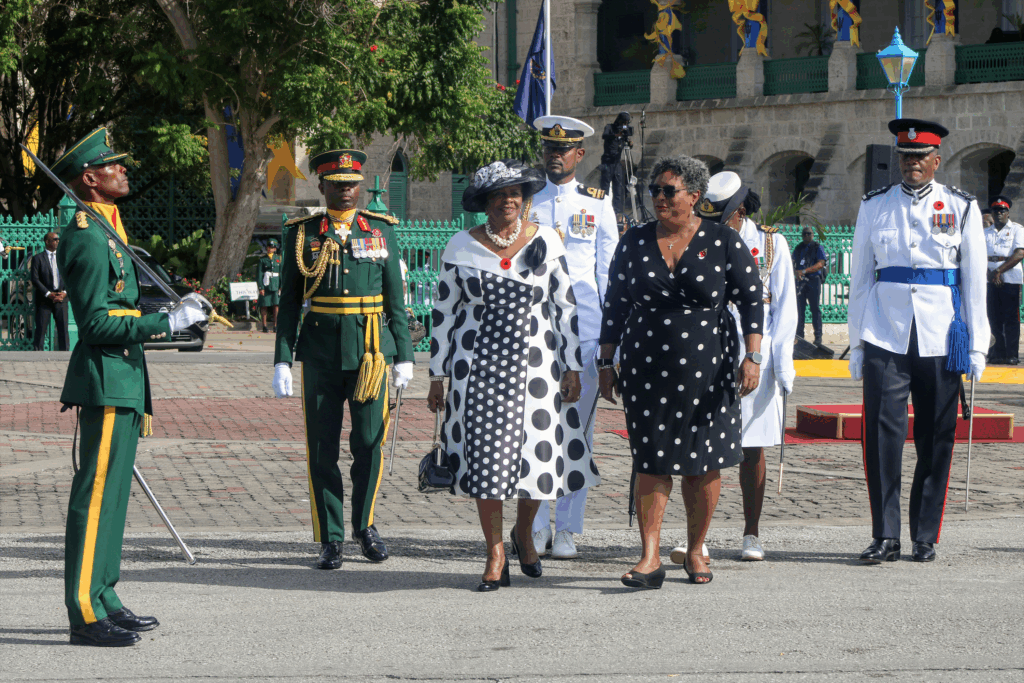
Under the radiant morning sun, hundreds assembled at National Heroes Square in Barbados on Sunday for the annual Remembrance Day service. This year’s event commemorated the 107th anniversary of the end of the First World War and the 80th anniversary of the conclusion of the Second World War. The ceremony honored not only those who served in these global conflicts but also Barbadians who have contributed to peacekeeping missions worldwide. The event was marked by a solemn procession featuring both armed and unarmed units, including the Barbados Prison Service, Barbados Fire Service, and various youth organizations. The parade, led by Captain Samuel Boyce, showcased the precision and discipline of the Barbados Regiment, Coast Guard, Police Service, and Cadet Corps. The service was enriched by the choir of St Michael’s Cathedral, creating a poignant atmosphere. Key dignitaries, including Chief Justice Leslie Haynes, Prime Minister Mia Mottley, and President Dame Sandra Mason, paid their respects. A two-minute silence was observed to reflect on the sacrifices of those memorialized on the cenotaph, including 39 Barbadians who lost their lives in the Second World War. The ceremony concluded with the laying of wreaths and the stirring strains of ‘Beautiful Barbados,’ as the President and Prime Minister inspected veterans before the units executed a precise march-past.
分类: society
-

Rotary District Governor Visits Antigua Ahead of Youth Leadership Conference
District Governor Soraya Warner-Gustave has commenced her official visit to Antigua, where she will engage with local Rotary Clubs and participate in the Rotary Youth Leadership Awards (RYLA) 2025. The event, themed ‘Youth in Leadership: Embracing Challenges and Empowering Change,’ is scheduled to take place from November 14 to 16. Warner-Gustave was warmly received at V.C. Bird International Airport by prominent Rotary figures, including Assistant Governor Jonah Ormond, Rotary Club of Antigua President Elisa Graham, and Rotary Club of Antigua Sundown President Nicole Stevens. Other notable attendees included District RYLA Chair Evangeline Allen, Past President Dr. Vanetta Rodgers, Youth Services Director Rozanne Emmanuel, Public Image Chair Sherwyn Greenidge, Rotarian Jo-Anne Scotland Gilkes, and Rotaractor Yhan Robert. This visit is part of the District Governor’s annual tour to foster collaboration and advance service initiatives across the region. The Rotary Club of Antigua expressed enthusiasm for a weekend filled with leadership development, educational workshops, and team-building activities, as youth from the district gather to enhance their skills and contribute to meaningful change.
-

Ex-Boyfriend Accused of Stealing $800 Wig and Cash in St. John’s Incident
Authorities are currently investigating a reported theft involving a woman’s former boyfriend, who allegedly broke into her St. John’s Street apartment early Sunday morning. The suspect is accused of stealing an $800 wig and $2,000 in cash during the incident, which occurred around 5 a.m. The man, who is reportedly known to the victim, entered the residence, took the items, and fled the scene. Officers from the Criminal Investigations Department have interviewed the complainant and initiated searches for both the suspect and the missing property. Despite their efforts, neither the individual nor the stolen items have been located. The investigation remains ongoing as law enforcement continues to pursue leads.
-

APUA Announces Ongoing Pipeline Works Ahead of New Reverse Osmosis Plant Commissioning
The Antigua Public Utilities Authority (APUA) has announced ongoing mainline installation works along Barnacle Main Road, Cedar Valley Main Road, and Conference Drive, leading into the New Winthorpes area. These efforts are part of the final preparations for the upcoming commissioning of a state-of-the-art 2-million-imperial-gallon Reverse Osmosis Plant, designed to enhance the island’s water supply system. As the project progresses, residents and motorists can expect intermittent road closures and traffic disruptions. APUA emphasized the importance of these upgrades, which aim to significantly improve Antigua’s water infrastructure. The Authority extended its gratitude to the public for their patience and cooperation during this critical phase of development.
-
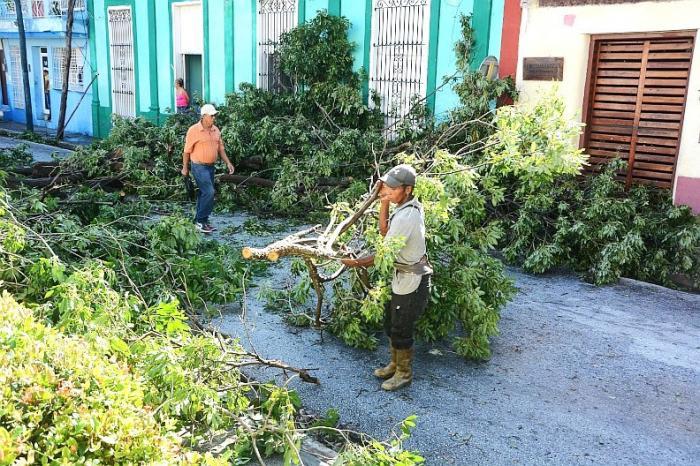
Recovery is growing, but much remains to be done for easterners to return to their daily lives
Under the leadership of First Secretary of the Party Central Committee and President Miguel Díaz-Canel Bermúdez, alongside Prime Minister Manuel Marrero Cruz, the National Defense Council has been rigorously overseeing recovery operations in regions devastated by Hurricane Melissa. The storm inflicted severe damage on Guantánamo, Santiago de Cuba, Granma, and Holguín, disrupting essential services such as electricity, water supply, and telecommunications.
The restoration of electricity has been a focal point, with significant progress reported in various provinces. In Las Tunas, 99.95% of customers have regained power, while Guantánamo and Holguín have achieved 96.45% and 79.76% restoration, respectively. However, Santiago de Cuba remains a critical area, with only 29.23% of electricity services restored due to extensive damage to distribution lines. Efforts are concentrated here, with additional brigades being deployed to expedite repairs.
Water supply restoration is also underway, with varying levels of success across provinces. Holguín has restored service to 83% of its population, while Guantánamo and Granma have achieved 96% and 55%, respectively. Santiago de Cuba, however, lags with 57% restoration, partly reliant on water trucks.
The Economic and Social Body subgroups reported on agricultural recovery, with 13,000 hectares of crops like plantains, cassava, and coffee already rehabilitated. Additionally, construction materials and equipment have been dispatched to aid in rebuilding efforts.
The National Civil Defense General Staff has transitioned several municipalities into the Recovery Phase, acknowledging the disciplined and cooperative response from the population and media during this crisis.
-

GARD Center Launches Soap Crafting Program for prisoners
The Gilbert Agricultural and Rural Development (GARD) Center has unveiled a groundbreaking initiative in collaboration with His Majesty’s Prisons: a Soap Crafting Training Program designed to foster rehabilitation and societal reintegration for inmates. This innovative program integrates practical skill-building with essential life skills, including communication, financial literacy, and entrepreneurial thinking, equipping participants with the tools necessary for sustainable livelihoods post-release. The GARD Center emphasizes that the program’s core mission is to empower individuals to transition seamlessly back into society through entrepreneurship and self-sufficiency. By blending hands-on training with personal development, the initiative underscores the Center’s commitment to empowerment, rehabilitation, and offering second chances to those in need. This expansion of their partnership with the prison system highlights a progressive approach to addressing the challenges of reintegration and reducing recidivism.
-

Parent Alleges Sexual Misconduct by Primary School Principal
A parent has raised alarming accusations against a primary school principal, alleging that he attempted to sexually assault her child and other students. The anonymous parent disclosed that the incidents reportedly occurred between 2023 and 2024, when her daughter was merely 10 years old. She expressed outrage, stating, ‘He is supposed to guide them and fulfill his appointed role. Instead, he has shown no remorse and continues to move around the school, even after being instructed to stay away.’ The parent further asserted that the principal has a history of inappropriate conduct toward young girls, urging him to ‘seek someone your own size and leave people’s children alone.’ As of now, education authorities have not confirmed whether an investigation into these serious allegations has been initiated.
-
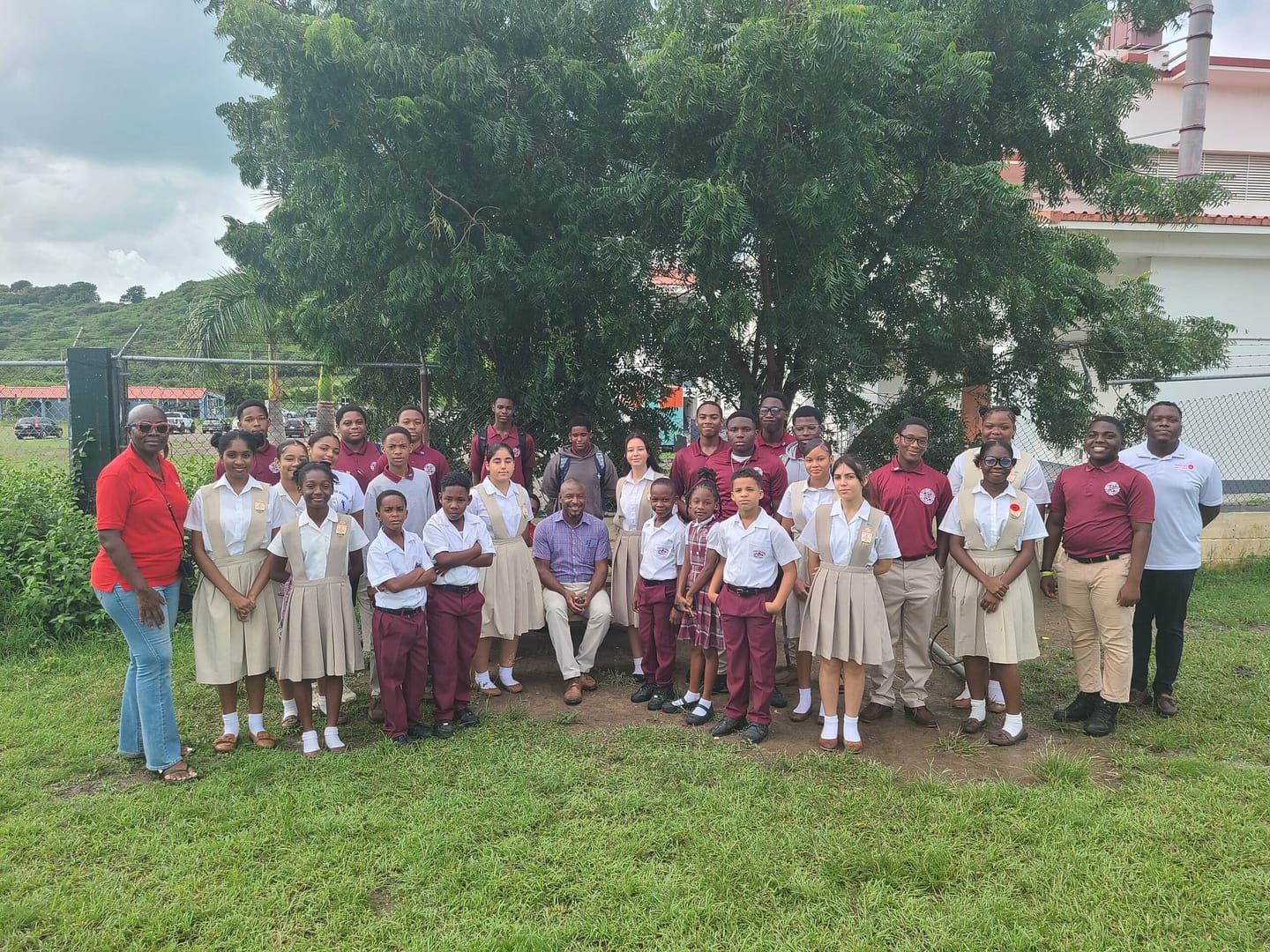
Interactors Spread Service and Smiles Across Antigua for World Interact Week
In celebration of World Interact Week, Interactors across Antigua have been actively engaging in community service projects, spreading both smiles and meaningful assistance. This global initiative, organized by Rotary International, empowers young people to make a positive impact in their communities through volunteerism and leadership. In Antigua, Interactors focused on a variety of activities, including environmental clean-ups, educational workshops, and support for vulnerable populations. Their efforts not only addressed local needs but also fostered a sense of unity and purpose among participants. The week-long event highlighted the power of youth-driven initiatives in creating lasting change. By combining service with compassion, these young leaders demonstrated the importance of giving back and inspiring others to do the same. World Interact Week serves as a reminder of the potential within the next generation to tackle global challenges with creativity and dedication.
-

Santo Domingo faces transportation chaos amid nationwide blackout
A massive nationwide blackout struck the Dominican Republic on Monday, causing severe disruptions to transportation and traffic systems, particularly in the capital city of Santo Domingo. The failure of the National Interconnected Electrical System (SENI) triggered the shutdown of the Paraíso and Isabela substations, which in turn cut power to Lines 1 and 2 of the Santo Domingo Metro and Line 1 of the Cable Car. The Office for the Reorganization of Transportation (OPRET) swiftly suspended services on both systems, ensuring the safe evacuation of passengers from trains and cabins. Authorities confirmed that no individuals were trapped in elevators or stations during the incident.
The blackout also disabled traffic lights at critical intersections in the National District, including Abraham Lincoln, Winston Churchill, and Rafael Augusto Sánchez avenues. This led to severe gridlock during rush hour, exacerbating the chaos. While some intersections remained operational thanks to private backup systems, the majority were left without functioning signals. In response, agents from the General Directorate of Traffic Safety and Land Transportation (Digesett) were deployed to manually direct traffic and mitigate the risk of accidents.
As authorities work tirelessly to restore electricity and stabilize transportation operations, residents of Greater Santo Domingo continue to face prolonged delays and widespread traffic disruptions. The incident underscores the vulnerability of the nation’s infrastructure and the urgent need for robust contingency plans to address such emergencies in the future.
-
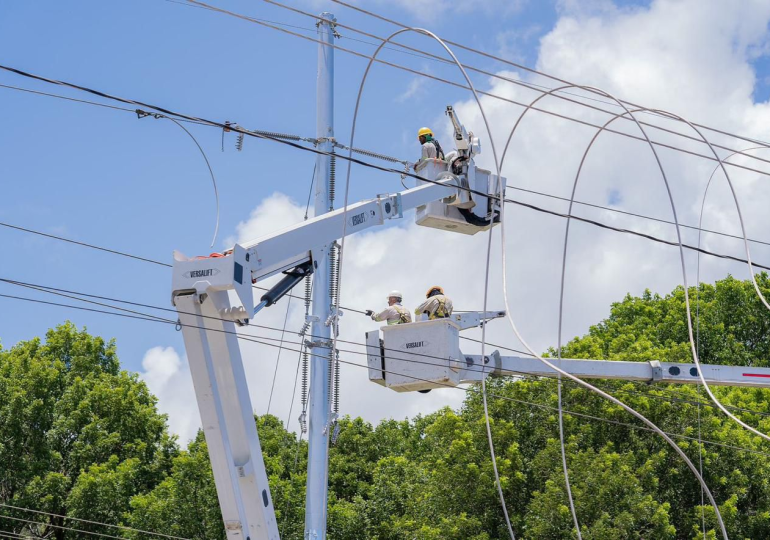
Nationwide blackout affects Dominican Republic
The Dominican Republic is grappling with a nationwide blackout following a significant failure in its electricity transmission system, as confirmed by the Dominican Electricity Transmission Company (ETED) and the Unified Council of Electricity Distribution Companies (CUED). Celso Marranzini, president of CUED, acknowledged the extensive outage and reassured the public that technical teams are mobilizing to restore power promptly. The disruption stemmed from a breakdown in the transmission network, triggered by the simultaneous shutdown of generating units at the San Pedro de Macorís Electricity Company (CESPM). This incident also impacted the Quisqueya Power Plant, causing a domino effect that disrupted other key facilities, including EDAC and AES Andrés. ETED has initiated comprehensive technical efforts across multiple regions to reinstate electricity while ensuring the stability of the national grid. The company issued an apology for the inconvenience and expressed gratitude for the public’s patience, highlighting the unprecedented nature of this event.