分类: society

  • Youth Ambassador Launches Agriculture Initiative with Girl Guides

    Youth Ambassador Launches Agriculture Initiative with Girl Guides

    ST. JOHN’S, Antigua – A groundbreaking agricultural initiative targeting youth engagement has been inaugurated by National Youth Ambassador Shacia A. in collaboration with the 10th Antigua Girl Guides. The program, titled ‘Plant the Seed, Grow the Future,’ employs mentorship and experiential learning methodologies to reconnect young generations with agricultural practices.

    The innovative scheme positions agriculture as a dynamic field intersecting with science, technology, and innovation sectors. Beyond basic food production, the curriculum emphasizes agriculture’s critical role in sustainable development frameworks. Participants recently engaged in hands-on activities including succulent planting ceremonies, symbolizing youth’s capacity to cultivate sustainable community futures.

    Program architects have strategically designed the initiative to bridge traditional farming techniques with contemporary technological approaches. Core values being instilled include environmental stewardship, patience cultivation, and disciplined leadership development.

    The Ambassador confirmed the program’s alignment with Antigua and Barbuda’s National Youth Policy priorities on environmental sustainability. Additionally, it directly supports multiple United Nations Sustainable Development Goals, particularly Zero Hunger (SDG 2), Life Below Water (SDG 14), and Life on Land (SDG 15).

    Organizers characterize ‘Plant the Seed, Grow the Future’ as a longitudinal commitment to youth empowerment through agricultural channels, anticipating measurable impacts on both personal development and national sustainability indices.

  • HAPI Expands to Working on Multiple Homes at Once

    HAPI Expands to Working on Multiple Homes at Once

    The Government of Antigua and Barbuda has significantly scaled up its Home Assistance Program for the Indigent (HAPI) with a strategic expansion into Briggs Village, transitioning from individual home repairs to multi-household projects. This operational shift aims to dramatically accelerate the pace of home restoration and repairs for vulnerable communities, enabling simultaneous assistance to numerous families rather than proceeding through a sequential, single-home approach.

    This scaled initiative has been made possible through an unprecedented inter-agency collaboration. Key government figures including Prime Minister Gaston Browne, Housing Minister Rawdon Turner, Cabinet Senator Michael N. Freeland, and officials from the Social Protection Board have provided foundational support. Notably, the program has also incorporated contributions from the Antigua and Barbuda Defence Force, coordinated by Chief of Defence Staff Telbert Benjamin, and Her Majesty’s Prison, where participating inmates are involved in rehabilitation-focused community service.

    HAPI’s core mission focuses on critical repairs and improvements to residences of indigent and at-risk citizens, transforming living conditions while serving as a national model for efficient social assistance. Government authorities emphasize that this coordinated partnership framework demonstrates how multi-sector cooperation can rapidly amplify the impact of welfare programs. With the successful Briggs Village rollout serving as a blueprint, officials confirm that similar multi-home projects are being planned for additional communities as HAPI continues its nationwide implementation across Antigua and Barbuda.

  • Guyanese activist and co-founder of leading Black publishing houses in Britain dies

    Guyanese activist and co-founder of leading Black publishing houses in Britain dies

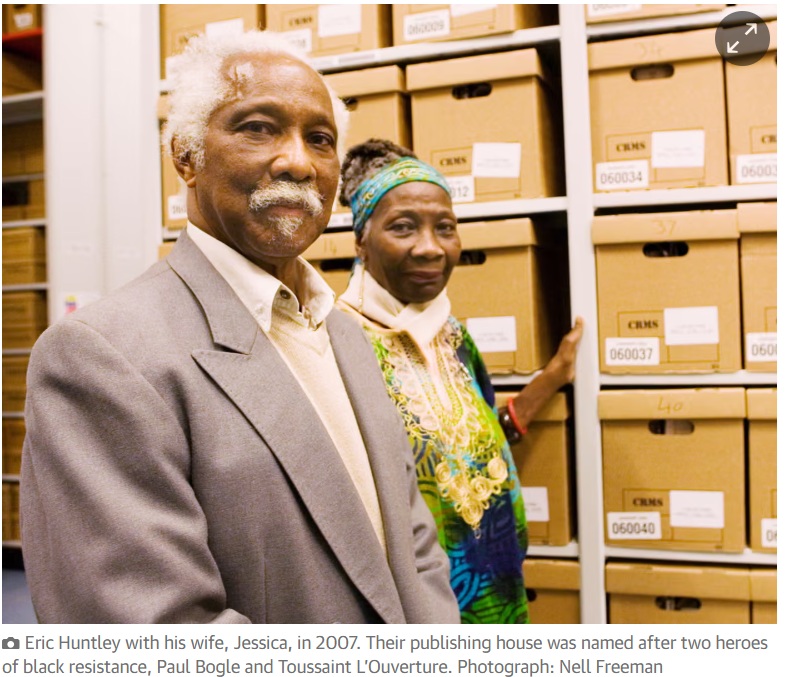
    Eric Huntley, the Guyanese-born co-founder of Britain’s seminal black publishing house Bogle L’Ouverture and a lifelong campaigner for racial equality, has passed away at age 96. Alongside his wife Jessica, Huntley established the radical publishing venture in 1968 from their West London living room, creating a crucial platform for underrepresented black authors and intellectuals.

    The publishing house, named after Jamaican national hero Paul Bogle and Haitian revolutionary Toussaint L’Ouverture, rapidly evolved from a makeshift printing operation into both a respected publishing imprint and community hub. The Huntleys’ Ealing-based bookshop became an informal advice center and gathering place for London’s black community, championing writers including Linton Kwesi Johnson, Valerie Bloom, and Beryl Gilroy.

    Beyond publishing, Huntley dedicated decades to racial justice activism. He played instrumental roles in the Caribbean Education and Community Workers Association and the Black Parents Movement, organizations formed to combat systemic racism in education and policing. His activism extended to organizing the 1981 Black People’s Day of Action following the New Cross fire tragedy that claimed 14 young black lives.

    Born in 1929 Georgetown, British Guiana, Huntley’s political consciousness developed early through his involvement with the People’s Progressive Party and Marxist leaders Cheddi and Janet Jagan. His activism led to imprisonment in 1954 for curfew violation during British colonial rule’s state of emergency.

    Seeking stability, Huntley migrated to Britain in 1957, working as a postal sorter while saving to bring his family from Guyana. The couple’s publishing venture began distributing speeches by influential Guyanese scholar Walter Rodney, growing into a respected imprint that published groundbreaking works despite repeated racist attacks during the National Front’s peak influence.

    The Huntleys’ archives now reside at London Metropolitan Archives, preserving their legacy of cultural activism. Eric Huntley continued community advocacy into his tenth decade, maintaining that ‘the struggle never ends.’ He is survived by two children, nine grandchildren, and numerous great-grandchildren.

  • Vincy history book strengthens case for reparation — UWI professors

    Vincy history book strengthens case for reparation — UWI professors

    A groundbreaking historical publication examining St. Vincent and the Grenadines has emerged as a pivotal academic contribution to the Caribbean reparations movement. The comprehensive volume, titled “St. Vincent and the Grenadines – A General History to the Year 2025, Volume One,” presents meticulously researched evidence of African enslavement and indigenous genocide during European colonization.

    Authored by distinguished Vincentian scholars Dr. Adrian Fraser, Dr. Cleve Scott, and Dr. Garrey Dennie, the work adopts an indigenous perspective that challenges traditional colonial narratives. The publication meticulously documents the systematic displacement and suffering of the Kalinago and Garifuna peoples, whose resistance against European land appropriation forms a central theme throughout the historical account.

    During the official launch at the University of the West Indies Cave Hill Campus in Barbados, academic leaders emphasized the work’s significance. Dr. Rodney Worrell, Head of the Department of History, Philosophy and Psychology, highlighted the publication’s timely contribution to reparations advocacy, noting that it provides crucial evidence precisely when global attention focuses on historical justice.

    Dr. Henderson Carter, Senior History Lecturer, detailed the work’s compelling findings, including the forced relocation of approximately 5,000 indigenous people to the barren island of Balliceaux in the 1790s—an act described as deliberate genocide due to the lethal conditions imposed. The publication further reveals how sugar production expansion directly correlated with the importation of approximately 16,000 enslaved Africans between 1791-1795.

    The historical text incorporates primary source accounts, including testimony from enslaved individuals like Ashton Warner, who documented the brutal working conditions that caused numerous deaths during crop seasons. These firsthand narratives provide unprecedented insight into plantation operations from the perspective of the enslaved.

    Academic authorities assert that this research strengthens the reparatory justice framework advanced by both the African Union, which has declared 2026-2036 as the Decade of Reparations, and the CARICOM Reparations Commission’s 10-point action plan. The work represents a significant advancement in historical scholarship that supports legal and moral claims for reparations through documented evidence of historical atrocities.

  • Authorities increase security operations in Sosúa, focusing on Pedro Clisante Street

    Authorities increase security operations in Sosúa, focusing on Pedro Clisante Street

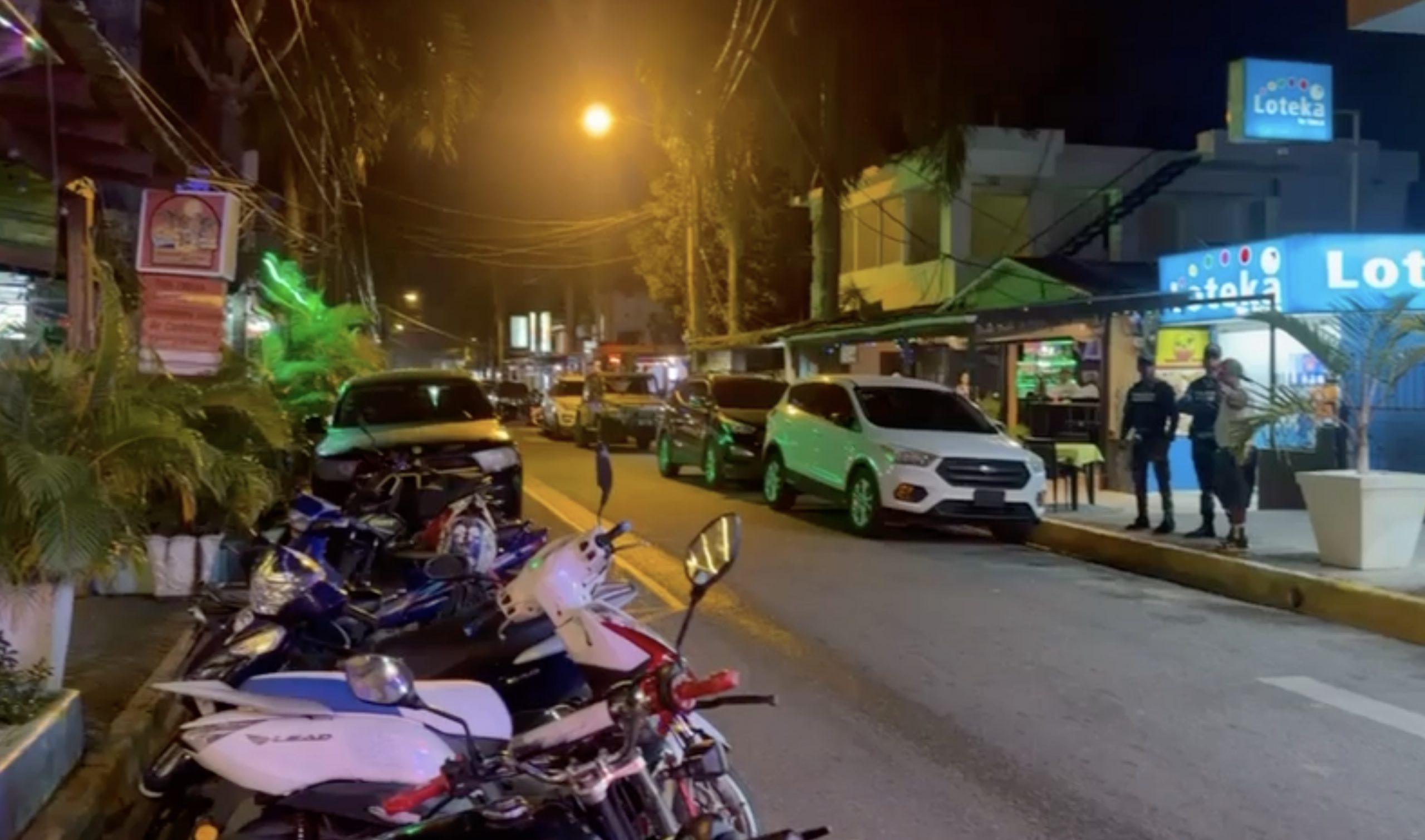
    Authorities in the northern Dominican Republic have launched a coordinated security surge in the popular tourist destination of Sosúa, Puerto Plata. The multi-agency operation involves the Sosúa Special Community Prosecutor’s Office, the Puerto Plata Prosecutor’s Office, the National Police, and the Tourist Police (Politur) working in concert to enhance public safety.

    The security initiative focuses particularly on Pedro Clisante Street, the municipality’s bustling commercial and nightlife corridor. Under the command of Colonel Alcántara, law enforcement agencies have implemented structured daily deployments of preventive personnel to maintain public order and prevent criminal incidents through visible policing.

    A significant operational escalation is scheduled for the weekend of February 6-8, with authorities planning increased patrols and reinforced security presence. This targeted reinforcement strategy addresses periods of peak tourism and social activity when the population typically swells with visitors.

    Official statements emphasize that the inter-institutional coordination represents a sustained security strategy rather than a temporary measure. The primary objective remains preserving peace, order, and security for both residents and international visitors to this economically vital tourist region. The comprehensive approach demonstrates the Dominican government’s commitment to maintaining its reputation as a safe destination for tourism and commerce.

  • Cold front and trough bring downpours; Greater Santo Domingo and six other provinces on green alert

    Cold front and trough bring downpours; Greater Santo Domingo and six other provinces on green alert

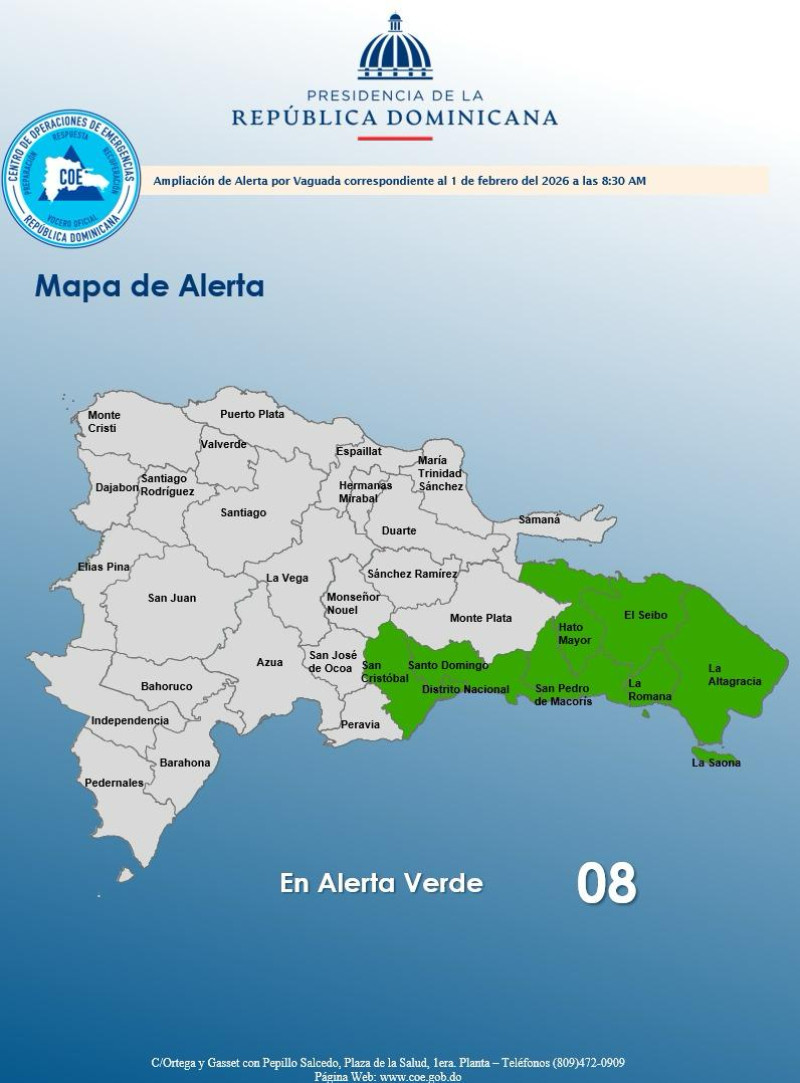
    Meteorological authorities in the Dominican Republic have escalated emergency preparedness measures as a significant weather system approaches the Caribbean nation. The Emergency Operations Center (COE) has activated green alert status across eight provinces in response to a trough linked to an advancing cold front expected to generate sustained moderate-to-heavy rainfall throughout Sunday.

    The alert encompasses La Altagracia, San Pedro de Macorís, La Romana, Hato Mayor, El Seibo, the National District, Santo Domingo, and San Cristóbal. This precautionary measure indicates meteorological conditions capable of producing hazardous events affecting population centers either partially or entirely.

    Maritime authorities have issued specific warnings for vessel operators along the Atlantic coastline. Operators of fragile, small, and medium-sized crafts between Manzanillo Bay and Cabo Francés Viejo have been instructed to remain in port, while those operating along other coastal areas must navigate with extreme caution within proximity to shorelines due to anticipated abnormal swell conditions.

    The Dominican Institute of Meteorology (Indomet) forecasts precipitation commencing in early morning hours across eastern, southeastern, and northeastern regions. Meteorological modeling predicts subsequent expansion of storm activity to Sánchez Ramírez, Duarte, María Trinidad Sánchez, Hermanas Mirabal, La Vega, Monseñor Nouel, San José de Ocoa, Santiago, Puerto Plata, Espaillat, San Juan, Elías Pina, Dajabón, Valverde, Santiago Rodríguez, and Monte Cristi throughout the daylight hours. These precipitation events may feature accompanying wind gusts.

    Emergency management officials strongly recommend that residents maintain communication with defense and relief organizations including Civil Defense, Armed Forces, Red Cross, National Police, Fire Departments, and the COE itself. Citizens residing in flood-prone areas are advised to implement protective measures against potential flash flooding and surge events. Authorities specifically warn against crossing rivers, streams, and ravines with elevated water levels and prohibit recreational swimming in all alert-designated provinces.

    Indomet anticipates persistent meteorological activity extending into nighttime hours with particularly concentrated rainfall expected across eastern and northern provincial territories as the cold front system continues influencing regional weather patterns.

  • Government delivers 200 new apartments in Santo Domingo Oeste (West)

    Government delivers 200 new apartments in Santo Domingo Oeste (West)

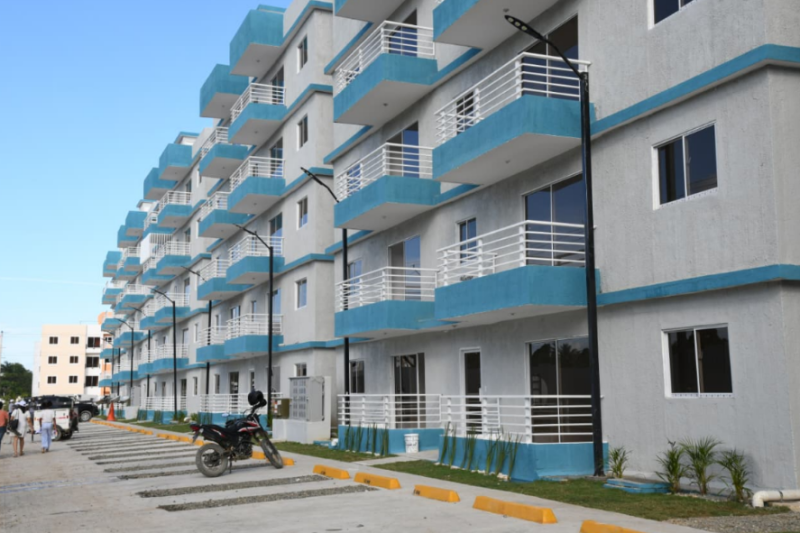
    SANTO DOMINGO OESTE – In a significant move to address housing needs, President Luis Abinader has officially handed over 200 new residential units to families in the Lolita II Residential Project located in Hato Nuevo. This latest delivery brings the total number of completed homes in the development to 340, following the earlier inauguration of 140 units. The project represents a substantial commitment to improving living conditions for Dominican families, with these 200 apartments specifically designed to benefit approximately 670 residents.

    Constructed on a 12,567-square-meter property, each apartment spans 58 square meters and features comprehensive living amenities including three bedrooms, two bathrooms, combined living and dining areas, a functional kitchen, private balcony, and dedicated laundry space. The development extends beyond the residential units with planned parking facilities, visitor parking areas, landscaped green spaces with seating arrangements, and children’s playground facilities.

    The residential complex enjoys strategic positioning near essential services and infrastructure, including public transportation routes, educational institutions, retail markets, fuel stations, medical facilities, and recreational areas such as Francisco Peña Park and the Hato Nuevo playground.

    Vice Minister of the Ministry of Housing and Buildings Claudio Espinal emphasized the transformative impact of the initiative during the ceremony: ‘Today we are not merely distributing keys; we are providing peace of mind, stability, and future security. Decent housing constitutes a fundamental right rather than a privilege—it is the foundation where family values develop and dreams take shape through enhanced security measures. This exemplifies the state’s role in supporting citizens during crucial life moments.’

    The project represents a total investment of RD$529,848,000, funded through a public-private partnership model with approximately RD$356,383,200 contributed by private sector entities and RD$173,464,800 provided as government subsidy.

  • Onderwijsbonden slaan alarm: leerkrachten kunnen niet langer rondkomen

    Onderwijsbonden slaan alarm: leerkrachten kunnen niet langer rondkomen

    Suriname’s education sector has reached a critical breaking point as teacher unions issue urgent warnings about unsustainable working conditions and severe compensation challenges. Three major educational organizations—the Federation of Organizations of Teachers in Suriname (FOLS), the Teachers’ Union (BvL), and the Alliance for Teachers in Suriname (ALS)—have collectively declared that educators can no longer sustain themselves on their current wages amid the country’s deteriorating economic climate.

    The alarming situation has resulted in widespread demotivation among teaching professionals, triggering a significant brain drain that has created critical shortages of qualified instructors across all educational levels. Basic, secondary, and vocational schools throughout the nation are experiencing severe staffing deficits that threaten the quality of education delivery.

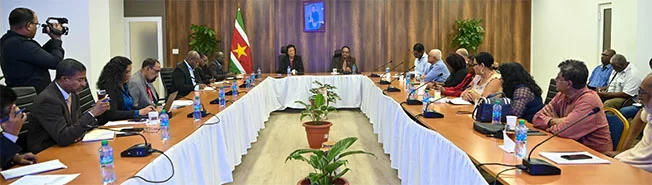
    In response to this escalating crisis, union representatives convened emergency talks on Friday with President Jennifer Simons at Ravaksur Plus. The high-level dialogue included the Ministers of Interior Affairs and Finance, along with a specially appointed committee of experts tasked with addressing the emergency.

    Following proposals from the Interior Minister, Ravaksur Plus will establish a dedicated working group incorporating representatives from FOLS, BvL, and ALS. This collaborative body will work alongside the presidential committee to comprehensively address all education-related challenges, including compensation structures and working conditions.

    The working group’s primary objective is to implement immediate relief measures to improve educators’ living and working circumstances while simultaneously restoring the teaching profession’s attractiveness. Several concrete agreements emerged from the urgent discussions:

    • All overtime payments for vocational teachers must be processed by Wednesday, February 4, 2026
    • Retired educators reactivated to address staffing shortages will receive outstanding payments by end-February 2026
    • All pending salary arrears for teaching staff will be settled promptly
    • Teacher unions must submit their complete package of demands by February 4, 2026

    Recognizing education’s fundamental role in developing critically-minded citizens, the unions expect the government to demonstrate urgent commitment to implementing comprehensive solutions that will restore stability to the education sector.

    The joint declaration received official endorsement from FOLS and its member organizations (SOB, KOB, COB, BLTO, IOB), alongside the Teachers’ Union (BvL) and the Alliance for Teachers in Suriname (ALS).

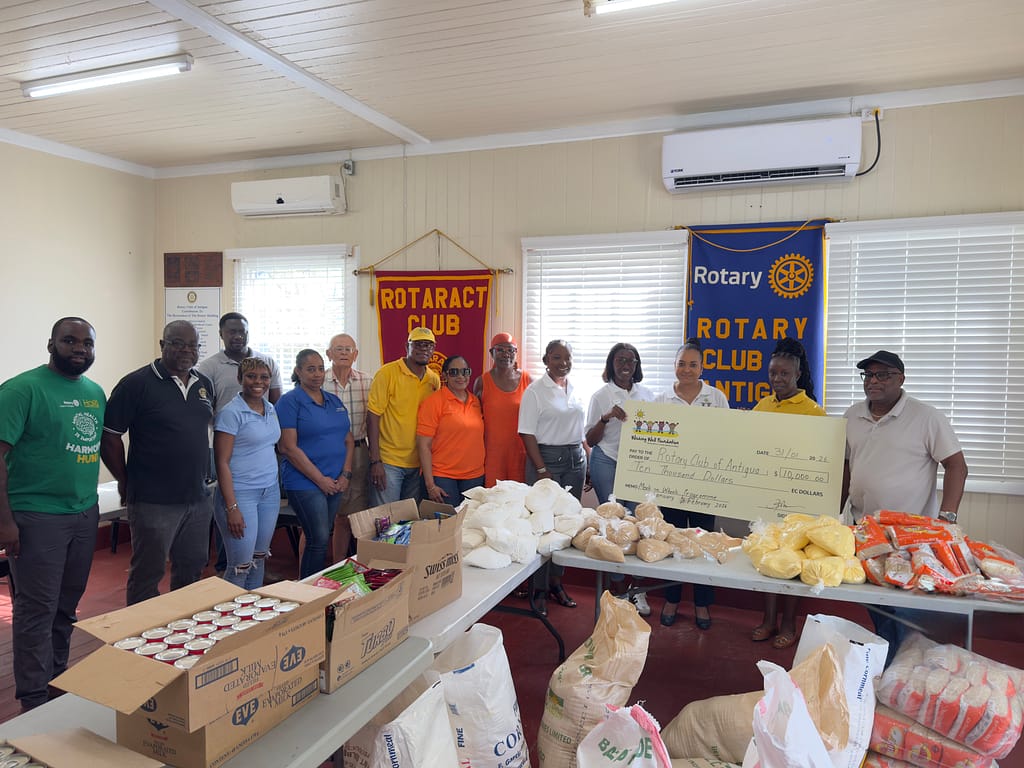
  • Elite Island Resorts, Through its Wishing Well Foundation, Donates EC$10,000 to Meals on Wheels Programme

    Elite Island Resorts, Through its Wishing Well Foundation, Donates EC$10,000 to Meals on Wheels Programme

    In a significant boost to community welfare efforts, Elite Island Resorts’ philanthropic division, the Wishing Well Foundation, has contributed EC$10,000 to sustain the Rotary Club of Antigua’s Meals on Wheels Programme. This substantial donation will fund food assistance operations for January and February, ensuring continued support for approximately 100 vulnerable community members monthly.

    The contribution was formally presented by Managing Director Sanjay Ambrose, who emphasized the Foundation’s commitment to honoring the legacy of its late founder, Sir Robert Barrett. Established under Barrett’s vision, the Foundation maintains its dedication to education, community development, and medical support initiatives across the region.

    ‘Our actions are driven by potential impact rather than public recognition,’ Ambrose stated during the presentation ceremony. ‘We prioritize tangible differences in people’s lives and were delighted to support this meaningful cause while anticipating future collaborative opportunities.’

    Rotary Club of Antigua President Elisa Graham accepted the donation with profound gratitude, acknowledging the critical timing of the support. Paul Ryan, Director of Service Projects and Past President, revealed the program requires approximately EC$5,000 monthly to maintain food provision services. ‘This generous contribution arrives at a crucial moment and will significantly enhance our capacity to assist those experiencing food insecurity,’ Ryan confirmed.

    The injection of funds will primarily offset operational expenses, guaranteeing uninterrupted delivery of essential nutritional support to community members in need, demonstrating effective corporate-community partnership in addressing social welfare challenges.

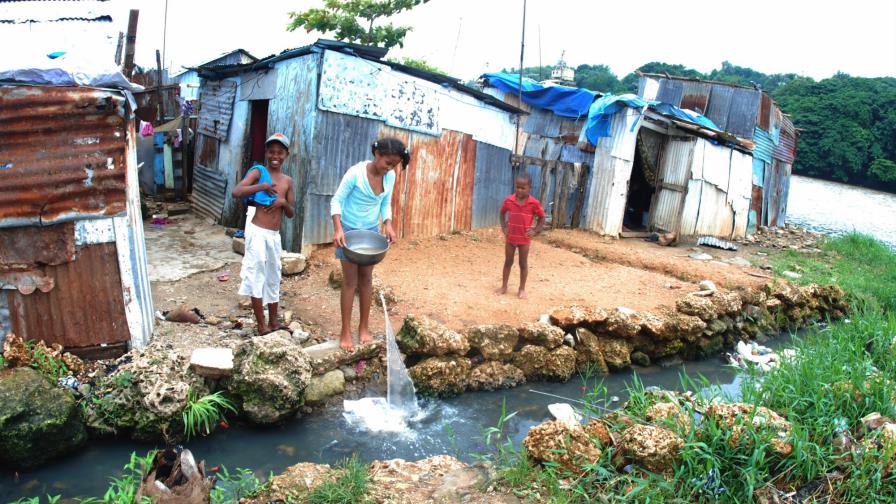
  • Dirt floors, the reality that the Dominican Republic wants to leave in the past

    Dirt floors, the reality that the Dominican Republic wants to leave in the past

    The persistence of dirt-floor dwellings continues to symbolize the profound vulnerability confronting families entrenched in extreme poverty across the Dominican Republic. These substandard living conditions, characterized by pervasive dust and unhygienic environments, pose significant health risks to inhabitants. Compounding these dangers, the frequently inadequate construction materials offer minimal protection against severe weather events and natural disasters.

    In a landmark policy decision, the Dominican Government identified the elimination of dirt floors among fifty critical initiatives during its inaugural Council of Ministers session on January 11. This comprehensive poverty alleviation strategy simultaneously targets the phase-out of traditional wood and charcoal stoves, addressing multiple dimensions of housing insecurity.

    According to the most recent 2022 National Population and Housing Census, the scale of this challenge has been precisely quantified. Among the nation’s 3,694,060 occupied dwellings, 69,620 residences (1.9%) still maintain dirt floors—with 25,366 located in urban zones and 44,254 in rural communities.

    Geographic distribution reveals surprising patterns: despite rapid urbanization, Santo Domingo Province records the highest concentration with 11,409 dirt-floor homes. This exceeds the figures for San Juan (6,010) and Azua (4,277). Conversely, Hermanas Mirabal (304), Santiago Rodríguez (402), and Samaná (649) demonstrate the most significant progress in eliminating these substandard conditions.

    Historical comparison with the 2002 census data reveals substantial progress, with nationwide dirt-floor residences declining from 150,123 to current levels—representing a reduction of more than half over two decades.

    A multi-sector approach has emerged to accelerate this transformation. Since 2020, the Ministry of Housing and Buildings has implemented the “Change of Dirt Floor for Cement Floor” program, successfully converting 13,905 homes between 2021 and 2024. Simultaneously, humanitarian organization Habitat for Humanity contributed to replacing 530 dirt floors with polished cement surfaces in the latter half of 2023, with ambitious plans to address 1,888 additional households throughout 2024.