分类: society

  • St Mary police probing death of former teacher of Clonmel Primary

    St Mary police probing death of former teacher of Clonmel Primary

    In the quiet community of Highgate, St Mary, local law enforcement has launched an investigation into the sudden death of 51-year-old Bevin Hamilton, a retired educator formerly attached to Clonmel Primary School. Hamilton, who was widely known by his nickname “Googie”, was found unresponsive inside his private residence on Thursday afternoon.

    According to official reports, Hamilton resided at the property with his elderly mother, and it was a family relative who made the tragic discovery at approximately 5:00 pm. Investigators from the Highgate division of the Jamaica Constabulary Force (JCF) have classified the case as a suspected suicide, pending further forensic examination to confirm the cause and circumstances of death.

    Longtime local residents who knew Hamilton for years have shared details about his long-running struggle with mental health instability. One resident, who spoke to local media outlet Observer Online on condition of anonymity, recalled a noticeable shift in Hamilton’s behavior during his time working at the primary school. The resident explained that Hamilton experienced a severe mental health episode that altered his demeanor, leading to frequent verbal outbursts directed at people around him. The situation escalated to the point that school staff were forced to contact police to de-escalate the incident, and school administrators subsequently connected Hamilton with support services to address his condition.

    More recently, sources confirm that Hamilton’s marital relationship broke down over his behavioral changes, with his wife moving out of the shared family home just a short time before his death.

    In the wake of this tragic incident, the Jamaica Constabulary Force has issued a public statement reaffirming the critical importance of proactive help-seeking for people living with mental health challenges. The JCF is urging any member of the public currently experiencing persistent emotional distress or suicidal thoughts to reach out to trusted loved ones or licensed mental health professionals to access the support they need before a crisis occurs.

  • Blind with a vision: Sasha Thorpe defies odds to become teacher

    Blind with a vision: Sasha Thorpe defies odds to become teacher

    For most people, losing full sight at the peak of their academic journey would feel like an insurmountable barrier to chasing a lifelong dream. But for 39-year-old Jamaican educator Sasha Thorpe, complete vision loss only strengthened her resolve to turn her childhood goal of teaching into a reality, defying low expectations and building a rewarding, impactful career that continues to lift up students across the island.

    Thorpe’s journey to the classroom began with a congenital eye condition that would gradually rob her of her sight. By the time she was 22, a second-year student pursuing her teaching diploma at St Joseph’s Teachers’ College, glaucoma — a degenerative condition that damages the optic nerve and causes permanent blindness if left unaddressed — took her vision completely, leaving her fully blind in both eyes. Instead of surrendering to despair, Thorpe made a deliberate choice to double down on her efforts, adjusting to her new reality with remarkable speed and resilience.

    “I never really felt stressed or depressed; I just adjusted very quickly,” Thorpe told Jamaica’s Observer Online in a recent interview. “I knew that I would lose my vision eventually over a period of time, but when it happened, I told myself that I have to work harder to accomplish my goal. I’m not giving up, I can’t give up.”

    That unshakable determination carried Thorpe across multiple academic milestones. After completing her teaching diploma at St Joseph’s Teachers’ College, she pushed forward to earn a bachelor’s degree in primary education from Mico University College, before stepping into her first professional role in education. Her first posting was a two-and-a-half-year stint at Jamaica’s School for the Blind, after which she transitioned to the country’s mainstream primary education system, where she now works as a civics teacher at a Corporate Area primary school.

    Thorpe’s calling to education grew from a seed planted decades earlier, when a kind primary school teacher showed her the compassion and support she needed as a young student living with progressive vision loss. That early act of kindness inspired Thorpe to pay that generosity forward, creating warm, supportive learning environments for students who need extra encouragement.

    “You have students who need a little love, somebody to be there for them, somebody to motivate them. What I received, I now give back to them,” Thorpe explained. Her own experience as a visually impaired learner has shaped her approach to teaching: while she relies heavily on heightened listening skills and environmental awareness to lead her classes, she has built a reputation for dynamic, engaging civics lessons that keep students excited to learn. The subject, which explores Jamaican culture, local politics, and global issues, comes alive through interactive activities and games that make every class feel like an adventure.

    “Civics is a very interesting subject. It is fun, my lessons are fun. We play a lot of games, so the students always look forward to coming to class. It’s very interactive,” she said.

    Now with more than 15 years of experience in Jamaica’s education system, Thorpe says her students are the source of her daily inspiration, just as a former teacher’s belief in her changed the course of her life. “As teachers, we can speak life into children. When I was at the School for the Blind, I had a teacher named Mrs Christian that woman spoke life into me. That’s why I am here today,” she shared. “Sometimes you are having a bad day, and they will say something small that makes you smile and feel special. I really love my students.”

    Beyond the classroom, Thorpe is preparing to share her story of resilience with a wider audience. She is currently putting the finishing touches on her first book, which she hopes to launch this June. The book, which centers on her experience building a full, purpose-driven life after losing her sight, carries a message that aligns perfectly with Thorpe’s life’s work: it is possible to live without sight, and still have a clear, powerful vision for the future.

  • NRCA approves restricted bird shooting season for 2026

    NRCA approves restricted bird shooting season for 2026

    KINGSTON, Jamaica — Nearly eight months after Hurricane Melissa swept across Jamaica causing widespread ecological damage, the island’s top natural resources oversight body has given preliminary approval to a tightly limited 2026 bird shooting season, balancing the needs of local shooting industry stakeholders against post-storm environmental recovery. The National Environment and Planning Agency (NEPA), which serves as the administrative body for the Natural Resources Conservation Authority (NRCA), announced the preliminary decision reached during the NRCA’s April 21, 2026 governing meeting. According to NEPA, the in-principle approval was crafted to address two competing priorities: enabling businesses in the bird shooting sector to complete critical early preparation work, while accounting for the lasting ecological disruption left by Hurricane Melissa, which made landfall on the island in October 2025. To align with ongoing ecosystem recovery efforts, the 2026 season will come with significant new constraints, including geographically restricted hunting zones and a lowered overall cap on permitted shooting activities, NEPA confirmed. The current advisory, agency officials emphasized, is intended exclusively to support forward planning for sector operators, such as securing necessary supplies and adjusting operational logistics well in advance of the planned opening. Final, formal details of the season’s structure, rules, and boundaries will be published at a later date once all regulatory and environmental assessments are completed. Per current projections, the 2026 bird shooting season is scheduled to launch between mid- and late-August 2026, and conclude by the end of September 2026.

  • NBA rookie helps fund vital special needs testing in Bimini

    NBA rookie helps fund vital special needs testing in Bimini

    For families raising children with developmental disabilities and special needs across Bimini, access to critical professional diagnostic testing has long been an unmet need, blocked by cost barriers, geographic isolation and limited public resources. This week, however, a collaborative community initiative broke down those barriers, bringing a team of nine specialists to the island to assess more than 40 children in need of formal care.

    The project, a partnership between the local James Pinder Bimini Special Needs Art Projects and the VJ Foundation founded by Bimini-born NBA rookie VJ Edgecombe, filled a gap left by strained government budgets. After the Bahamas Ministry of Education confirmed it lacked the immediate funding to cover travel and operational costs for specialist visits to the remote island, community organizers stepped forward to raise the necessary capital, with additional backing from Edgecombe’s family through his foundation.

    Ursula Roker, president and co-founder of the James Pinder Bimini Special Needs Art Projects, explained that the effort grew out of grassroots community work launched four years ago. What began as an informal art programme for children with disabilities who were excluded from local schooling eventually evolved into a push for formal diagnostic care, after parents raised repeated concerns about undiagnosed conditions ranging from autism spectrum disorder to other developmental delays.

    Organizers initially scheduled assessments for 44 children enrolled in local primary and secondary schools, plus seven out-of-school children with suspected special needs. By the time the team wrapped up testing this week ahead of their return to New Providence, five additional families had requested evaluations after seeing the programme bring much-needed resources to the island. Roker emphasized that diagnostic testing is only the first step of the work, with organizers now shifting to building structured, long-term support systems for participating children.

    Systemic barriers have long left Family Island residents without reliable access to specialized care. Private diagnostic testing alone can start at $1,500, before adding the steep costs of round-trip airfare, accommodation and ground transportation for families forced to travel to Nassau to access care. Even when the Ministry of Education provides free assessments, families still face insurmountable travel-related costs that put testing out of reach. The initiative also exposed deep accessibility gaps in Bimini’s education system, where dozens of children cannot attend school at all because facilities lack accommodations for disabilities. Roker highlighted the case of one bright young student with cerebral palsy who uses a wheelchair, and has been locked out of schooling entirely because the island’s schools are not wheelchair-accessible.

    Many parents initially held hesitation about pursuing formal assessments, concerned that a diagnosis would not lead to any tangible change or support for their children. That hesitation shifted quickly after the large team of specialists arrived, signaling a real commitment to long-term support. For families like that of Ellsworth Robins Jr, the initiative has already delivered life-changing access to care that has never been available locally. Robins’ 11-year-old son, who experiences seizures but is able to communicate, has been unable to attend school due to the lack of appropriate accommodations on the island. While Robins has worked to provide at-home educational activities, he said his son has already reacted with excitement to the programme, repeatedly asking when he can return to work with the specialists.

    “Kids like them, they need love and support. That is one of the biggest things you could ever put into a special needs child,” Robins said, adding that on-island testing has eliminated the overwhelming burden of traveling off-island for every appointment. “You do not really have those things here. You have to take a child away or move to where you can be closer to a doctor or school.”

    Moving forward, programme officials plan to maintain ongoing connections with local teachers and families, and are exploring telehealth and remote intervention options to deliver sustained support after the on-island assessment phase. Roker noted that the high turnout for testing underscores the urgent need for consistent, long-term investment in special needs services across Bimini and other remote Family Islands, adding that parents play a critical role in supporting their children’s progress outside of formal programming.

    “It is hard, but you just got to keep at it,” Robins said, echoing the community’s hope that this initial assessment initiative will pave the way for expanded, permanent access to specialized care on the island.

  • Antiguan consumer finds strange substance in their juice container

    Antiguan consumer finds strange substance in their juice container

    A consumer in Antigua has sparked widespread public discussion about food safety standards after discovering an unknown, mold-like growth inside a sealed packaged Pinehill apple juice product, casting new scrutiny on the brand’s quality control and supply chain distribution processes.

    The consumer first shared their discovery on a local customer service discussion forum, detailing that the strange substance was found settled at the bottom of a 1-litre juice carton. The product, which had not been opened prior to the discovery, carries a printed expiration date of August 1, 2026, meaning it is still well within the manufacturer’s designated safe consumption window. It also bears the batch code EY 22:41:21, which would allow the producer to trace the specific production run if an investigation is launched. A photo accompanying the forum post, linked for public viewing by the original news outlet, confirms the presence of the dark fuzzy material inside the sealed container.

    As of the latest update, no linked cases of illness or adverse health reactions have been connected to this specific batch of Pinehill apple juice, easing immediate public health fears but leaving broader safety concerns unaddressed. Critically, the consumer has made multiple attempts to contact Pinehill’s manufacturer to report the issue and request an explanation, but the company has not issued any formal statement or official response to the complaint to date. The incident has prompted local consumers to question how food manufacturers operating in Antigua monitor product safety during production, packaging, and distribution, with many calling for greater transparency and faster response times to consumer safety complaints.

  • Matthew Expands Transport Support for Patients Amid Clinic Disruptions

    Matthew Expands Transport Support for Patients Amid Clinic Disruptions

    Residents of St John’s Rural South in Antigua are now receiving complimentary temporary transportation to reach their relocated medical appointments, after major renovation work at a key local clinic upended routine access to care. Antigua and Barbuda Labour Party (ABLP) candidate and sitting Education Minister Daryll Matthew made the announcement during a recent interview on ABS Television’s popular public affairs segment “Know Your Candidates”.

    The disruption stems from ongoing structural repairs to the Browns Avenue Clinic, the primary primary care provider for most residents of the constituency, Matthew explained. All clinical services previously offered at the Browns Avenue location have been temporarily moved to the Harberton Hospital campus, creating unanticipated logistical hurdles for local patients who face added travel burdens to reach their care.

    “For the majority of St John’s Rural South residents, Browns Avenue Clinic is their go-to for routine care,” Matthew noted in the interview. “Now that services have shifted to Harberton Hospital, the new travel requirement has proven to be a notable inconvenience for many community members.”

    To mitigate this disruption, local representatives rolled out an ad-hoc transportation program that connects eligible patients with rides to and from their medical appointments at the new temporary location. “We have moved quickly to set up this transportation support for any resident that needs help getting to and from their clinical services while repairs are ongoing,” Matthew said.

    As of the interview, Matthew did not share specific details on the program’s operating frequency, formal fixed schedule, or eligibility enrollment process, but confirmed the initiative is targeted exclusively at St John’s Rural South residents impacted by the clinic’s service relocation.

    The transportation announcement came during a wider conversation about long-term improvements to healthcare access across the constituency, where Matthew also shared details of early-stage planning for a major expanded healthcare facility. He confirmed that government stakeholders have held preliminary discussions to retrofit an existing, underutilized community building into a fully modern, expanded polyclinic that would serve multiple surrounding communities.

    If completed, the new facility would cover residents across Ottos, the Browns Avenue district, and all nearby neighboring neighborhoods, filling a longstanding gap in local primary care access. However, Matthew was quick to emphasize that the project remains in early planning stages, with no formal construction timeline set to date.

    Two key factors are delaying progress on the polyclinic upgrade: the government’s ongoing commitment to completing renovation projects at other clinics across the country, and persistent systemic staffing shortages that limit how many new facilities can be operationalized.

    “Every new clinic or expanded facility that we open requires additional clinical staff: more nurses, more doctors, and more support personnel to keep it running,” Matthew explained. “Right now, we are facing a national shortage of nurses, so we have to balance our expansion goals against the human resources we actually have available.”

    For the foreseeable future, Matthew confirmed that the government’s top priority remains ensuring uninterrupted access to essential care for St John’s Rural South residents while the Browns Avenue Clinic repairs are completed. The temporary transportation program will remain in place as a stopgap measure to reduce patient burden through the duration of the renovation work.

  • Matthew to Open Radio Range Playground This Week After Community Upgrade

    Matthew to Open Radio Range Playground This Week After Community Upgrade

    A long-awaited upgrade to public recreational space in Antigua’s Radio Range neighborhood is finally complete, with the renovated community playground and park scheduled to open to residents within days, senior government official Daryl Matthew has announced. Matthew, who serves as the country’s Education Minister and is a candidate for the Antigua Barbuda Labour Party (ABLP), shared the update during a recent appearance on ABS Television’s public affairs segment “Know Your Candidates”.

    According to Matthew, an official opening ceremony for the revamped facility will be held as early as the same day or the following day of the interview, marking the end of years of disrepair that left the space unusable for local residents. “This park had fallen into a really bad state over the past five to six years,” Matthew explained in the interview, confirming that the site now boasts entirely new infrastructure to serve the community.

    The renovation project has introduced a range of new amenities tailored to users of all ages, including purpose-built outdoor fitness equipment alongside classic playground staples like new swings and seesaws. Matthew noted that installation of the final pieces of playground hardware was completed on the day of his announcement, clearing the way for the site’s official opening.

    Local families, young people and broader community groups are set to be the primary beneficiaries of the upgraded space, which will now provide a safe, accessible area for outdoor recreation and community gatherings. For Matthew, the Radio Range project is far more than a single playground upgrade—it is a reflection of a broader commitment to lifting quality of life across the entire St John’s Rural South constituency. He confirmed that parallel recreational and infrastructure upgrade projects are already underway in other neighborhoods throughout the constituency, as part of ongoing government-led community development initiatives focused on improving living conditions for all local residents.

  • PHOTOS: Dwayne George highlights Bolans road works as upgrades continue in housing project

    PHOTOS: Dwayne George highlights Bolans road works as upgrades continue in housing project

    In the community of Bolans, long-overdue infrastructure improvements have gotten underway for the residential neighborhood located behind the local Radio Lighthouse facility, local political representative Dwayne George has confirmed.

    As the project enters its active construction phase, initial site work has already been completed: the entire network of roads across the housing development has been graded, laying a foundational base for the more comprehensive upgrades that are currently in progress. George emphasized that the full scope of the work is designed to bring local roadways up to a much higher safety and quality standard, aligning with the long-term needs of the people who call this neighborhood home.

    This infrastructure investment is not an isolated project, George explained, but rather a tangible component of a broader public promise to raise quality of life and address unmet needs across all communities in the region. For George, the ongoing upgrades serve as a clear example of what effective political representation actually delivers: concrete improvements to daily life, rather than empty political talk. “This is what representation looks like,” he stated, framing the work as proof of progress for his constituents.

    For years, poor road conditions in the housing scheme have been a top complaint among local residents, creating persistent barriers to safe travel and consistent access to the neighborhood. Once completed, the upgrades are expected to significantly improve both overall access and mobility for all residents, eliminating the unsafe, uneven road surfaces that have created inconvenience and risk for so long.

    At this stage, project officials have not released a formal timeline for when the upgrades will be finished, but construction activity is continuing steadily across the site.

  • Grotto set for major overhaul

    Grotto set for major overhaul

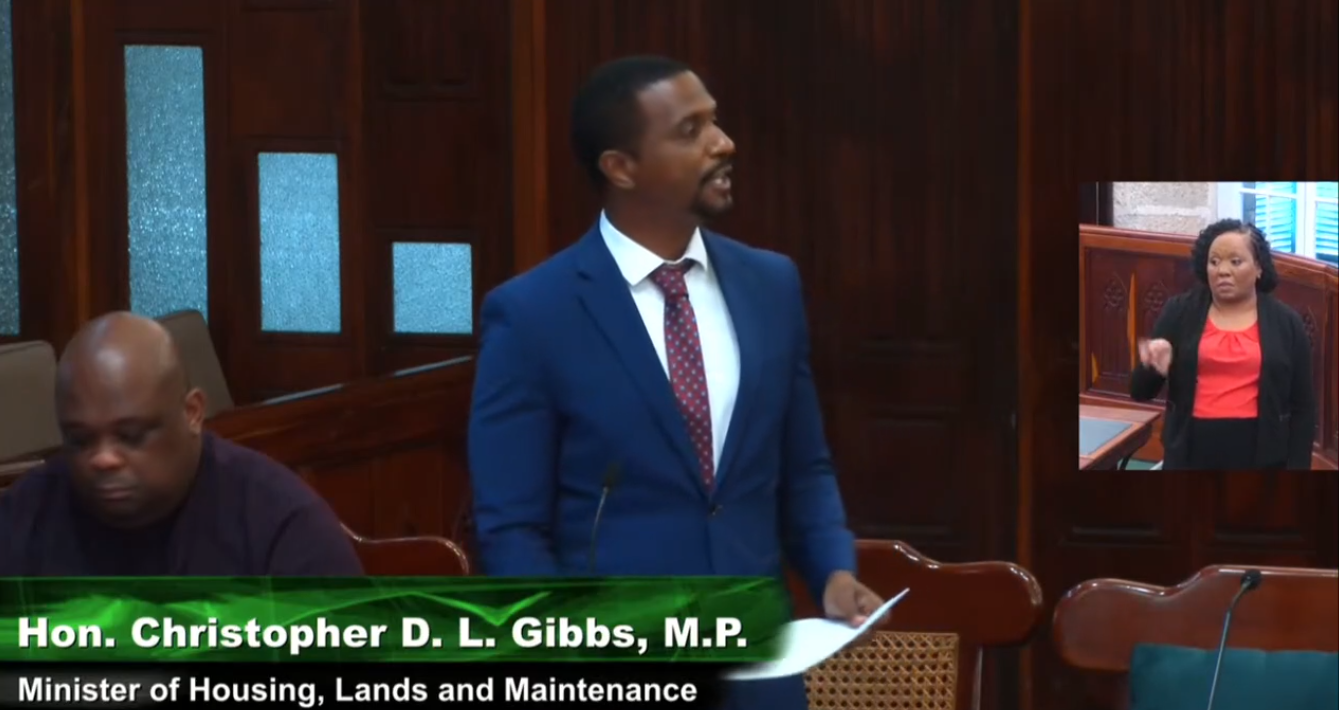
    After years of unaddressed safety complaints from residents of the decade-old Grotto housing complex in Beckles Road, Barbados, the national government has greenlit urgent intervention, with repair work set to kick off almost immediately. The announcement from Housing, Lands and Maintenance Minister Chris Gibbs comes in direct response to mounting resident pressure, who have long labeled the 76-unit high-rise a public safety hazard. Speaking exclusively to Barbados TODAY on the sidelines of Wednesday’s Pendry Hotel topping-off ceremony, Gibbs confirmed that the National Housing Corporation (NHC) has received full funding to resolve the structural and infrastructure failures that have upended daily life for the complex’s tenants.

    While the minister declined to share the exact dollar amount allocated for the Grotto upgrades, he outlined the core problems the funding will resolve: long-running severe water leaks that have penetrated living spaces and compromised electrical systems, and widespread gaps in basic security that have left residents feeling vulnerable. Gibbs confirmed that project planning is already complete, including selection of the specialized sealant needed for the leaking roof that has been the complex’s most persistent complaint. “The money has been allocated, so we’ll be starting that project almost immediately,” the minister stated.

    The commitment arrives at a breaking point for Grotto residents, who recently detailed their years-long struggle with unsafe living conditions to Barbados TODAY. Tenants Uwine and Charmaine Dominique explained that during rainstorms, they are forced to line floors with towels and catch water that drips directly onto electrical panels – a serious electrocution risk that has gone unaddressed for years. Beyond water damage, many residents, particularly women living alone, have reported traumatic experiences navigating the complex after dark. Outdated site design leaves few parking spots close to building entrances, forcing residents to walk long distances through poorly lit areas that attract vagrants and would-be intruders.

    Gibbs openly acknowledged that the original development design failed to account for the modern needs of the people who call the complex home. “The parking was not optimised to the amount of residents there. We are looking at solutions there, because when you come home and there is no parking for you, you might have to park a ways off and then people have some concerns based on security. You can understand it,” he admitted. In addition to critical roof repairs, the government will also upgrade the complex’s failed lighting system, a gap that has allowed unwanted trespassers to operate with impunity according to residents.

    The minister also used the announcement to signal a broader policy shift within the Ministry of Housing, moving toward a more proactive, professional model of public property management that frames tenants as key stakeholders rather than just occupants. “I look at our residents as our clients. We definitely have to make sure that not only are their units safe and secure, but that we have audits periodically so that we can get ahead of issues before they present themselves,” Gibbs explained.

    The Grotto upgrades are drawn from the $13.3 million earmarked for the NHC in the upcoming fiscal year’s total $137.5 million national housing budget. This funding is part of a wider national infrastructure modernization push, which also includes a $56 million Resilience and Regeneration Fund focused on climate-proofing publicly owned properties across the country.

    While the repairs will deliver immediate relief to Grotto tenants, longer-term, transformative change is also on the horizon for the St. Michael development. Under the recently passed State Acquisition and Vesting of Property Bill, eligible Grotto residents may eventually transition from being public housing tenants to full homeowners. The landmark legislation is designed to cut through decades of bureaucratic gridlock, and will ultimately grant full property ownership to close to 3,900 qualifying tenants across 27 public housing estates nationwide.

    For the immediate future, however, the government’s focus remains on resolving urgent safety issues and carrying out preliminary beautification work that will start in the coming weeks. “We will also be doing beautification across the estates as well, and The Grotto is included in that too,” Gibbs confirmed.

  • BARP: Fines alone not enough

    BARP: Fines alone not enough

    As Barbados moves forward with landmark legislation to protect the rights and well-being of its aging population, the island nation’s leading advocacy group for retired people has offered a measured welcome: praising the bill as a long-overdue milestone while cautioning that robust implementation and enforcement will determine its real-world impact. \n\nThe Older Persons (Care and Protection) Bill, which was tabled before Barbados’ lawmakers this week, marks a historic shift in how the country frames the value of its senior citizens, according to Marilyn Rice-Bowen, president of the Barbados Association of Retired Persons (BARP). In comments on the proposed legislation, Rice-Bowen emphasized that the bill fills a critical gap in national policy, finally enshrining in law the principle that older Barbadians deserve full state protection as they enter their later years. \n\n“This bill challenges the harmful, outdated narrative that seniors are a societal burden or an economic liability,” Rice-Bowen explained. “Ageing is a natural stage of life that we can only hope to reach, and it comes with a lifetime of contribution to our nation. The legislation recognizes that reality. It moves us past the dehumanizing idea that older people are a drain on resources, and instead affirms their role as living reservoirs of intergenerational knowledge and cultural experience.”\n\nAt its core, Rice-Bowen said, the bill is about honoring the decades of work and sacrifice that current seniors gave to build modern Barbados. “Every older person in this country gave their time, their labor, and their love to our communities and our families over a full lifetime. This legislation isn’t just a set of rules—it’s a promise that they can age with dignity, financial security, and a sense of purpose, knowing the state has their back.”\n\nBut while BARP has welcomed the framework laid out in the proposed law, the organization’s leader stressed that good legislation is only as useful as its enforcement. The bill includes financial penalties for elder mistreatment, which Rice-Bowen said serve an important deterrent purpose—but penalties without follow-through and resourcing will not deliver meaningful change. \n\n“Penalties send a clear signal that elder abuse is unacceptable, but laws on paper don’t protect anyone if they aren’t enforced,” she noted. “Effective implementation depends on so much more than just passing legislation: it requires consistent, long-term funding for the social agencies that will support vulnerable seniors, it requires hiring and training a dedicated workforce to respond to reports of abuse, and it demands sustained public education to shift cultural attitudes. Without those investments, even the most carefully written bill will achieve very little.”\n\nRice-Bowen also reflected that the need for punitive measures in elder protection is a disappointing sign of shifting social norms in Barbados. “It’s a poor reflection on where we are as a society that we have to put stiff fines in law just to make sure people treat their elders with basic respect,” she said. “Our ultimate goal should be a return to the cultural values that once defined our communities: a Barbados where elders are revered, cared for, and loved within extended families, where abuse never happens at all, so we never need to punish anyone for it.”\n\nTo get to that point, Rice-Bowen argued, the country must first be open and honest about the problem of elder mistreatment, rejecting vague language and euphemisms that hide abuse and protect perpetrators. She called for clear, explicit definitions of all forms of elder abuse, saying direct language is the foundation of public awareness and accountability. \n\n“We can’t afford to cloak abuse in soft, fancy terms,” she contended. “When someone talks about ‘unfairing’ a senior, we need to call that what it is: abuse. Naming it correctly is the first step to making sure everyone recognizes it, and it sends an unambiguous message that this behaviour will not be tolerated. Euphemisms don’t help victims—they only help the people who are harming seniors get away with it. Plain language is what protects vulnerable older people.”\n\nOutlining the key pillars that will make the bill effective once enacted, Rice-Bowen reiterated that implementation requires intentional planning and resourcing. She said the law must include clear, accessible reporting mechanisms for people to report suspected abuse, adequate sustained funding for frontline social services, specialized training for personnel who work with older populations, and widespread public outreach to educate both seniors and caregivers about their respective rights and responsibilities under the new framework.\n\nsummary: “This news covers the reaction of the Barbados Association of Retired Persons (BARP) to the newly tabled Older Persons (Care and Protection) Bill. BARP President Marilyn Rice-Bowen praises the bill as a long-overdue step that affirms the dignity of older Barbadians and rejects harmful narratives that frame seniors as societal burdens. However, BARP stresses that the legislation’s success depends entirely on robust enforcement, adequate funding for social services, trained personnel, public awareness, and clear, direct definitions of elder abuse, noting that unimplemented laws will deliver little meaningful protection for vulnerable seniors.