分类: society

  • Shock and Fear After Massive Drug Bust Hits Lord’s Bank

    Shock and Fear After Massive Drug Bust Hits Lord’s Bank

    On a Wednesday in early April 2026, law enforcement’s discovery of more than 1,100 pounds of marijuana stashed inside a residential property in Belize’s Lord’s Bank Village has left local residents reeling from shock and growing fear over potential violence. The seized cannabis carries an estimated street value of over $1.6 million, a scale of illicit drug operation that no one in the quiet community anticipated operating right in their neighborhood.

    Lord’s Bank Village Chairman Daniel Salinas told reporters he shared the widespread shock over the seizure. While local residents had long been aware of casual marijuana use among some young people in the area, he noted, none imagined a large-scale storage operation could go undetected for so long. “I was quite surprised with the amount of drugs that was found in the village. I didn’t expect that quantity of marijuana to be here,” Salinas said in a phone interview. “I know there are a lot of young guys that use the drug, but not to the quantity that was found yesterday. A lot of villagers were just as surprised as me; it was all anyone was talking about when I visited the local shop, and multiple people brought it up to me. I’m just as shocked as they are.”

    What makes the find even more unnerving for residents is the location of the stash house: the property sits directly behind the local Belize Water Services compound, the same site where security guard Darwin Valerio was found murdered earlier in 2026. This close proximity has fueled urgent speculation that Valerio’s killing may be directly tied to the large drug operation uncovered this week.

    The murder of Valerio is not an isolated incident in the region. Police are already investigating a connected string of three recent killings in the Ladyville and Lord’s Bank areas, including the deaths of Mr. Bainton and Mr. Ferguson. Back in February 2026, Assistant Superintendent Stacy Smith confirmed that law enforcement was already probing potential links between all three violent deaths as part of a broader pattern of drug-connected crime in the region. “There is a suggestion that this is an area that is being explored, and certainly as I’ve stated, these incidents, all three, including that of Mr. Valerio and that of Mr. Bainton and Ferguson, are being investigated to ascertain whether there is a nexus between these incidents,” Smith said at the time.

    For local residents, the discovery of the massive drug cache has amplified already simmering anxieties sparked by the recent murder spree. Many now fear the drug bust could trigger retaliation from trafficking networks or spark spillover violence into the quiet residential community. What was initially shock among locals has quickly shifted to widespread unease about what dangers may still remain hidden in the village, and what will come next as the investigation unfolds.

    Despite these valid concerns, Salinas emphasized that the community is not helpless. Law enforcement has already ramped up regular foot patrols across the village, boosting visible police presence to deter potential violence. The regional Ville Precinct, which patrols a large stretch of territory from Lord’s Bank all the way to Boom Junction and Moscot, has stepped up its protection efforts for local residents. In addition to increased police presence, Lord’s Bank already has an active network of neighborhood watch groups, which Salinas says will only become more vigilant in the wake of the bust. “The concern is always there, but the police has ramped up their patrols. We always have a lot of police presence in the village,” Salinas said. “We also have a lot of neighborhood watch groups in the area. I do think that villagers will be more cautious, and the watch groups will be more active moving forward.”

    As of Thursday, the investigation remains active. Law enforcement continues to pursue leads on the suspects connected to the drug stash, as well as work to uncover any definitive links between the large drug operation and the string of unsolved murders that have shaken the region in recent months. Reporting from Lord’s Bank, Shane Williams, News Five, April 9, 2026.

  • Inside the Final Hours of Inmate Phillip Bowen

    Inside the Final Hours of Inmate Phillip Bowen

    In the wake of growing public outcry over the death of a pretrial detainee at Belize Central Prison, new details have emerged about the final hours of Phillip Bowen, a 50-something asthma patient who suffered a fatal attack in custody in early April 2026.

    Bowen, who was being held awaiting trial in connection with a high-profile 2020 double homicide in Hopkins Village, suffered a sudden, severe asthma exacerbation in the early morning of April 7, 2026, and died while being transported to the country’s main tertiary hospital, the Karl Heusner Memorial Hospital (KHMH). His passing has prompted widespread public concern, with community leaders and activists demanding a full independent investigation into whether gaps in prison medical care contributed to his death.

    Local outlet 7 News Belize first broke the story of Bowen’s death on April 8, and has since followed up with an on-the-record account from the top official of the Kolbe Foundation, the non-governmental organization that manages Belize’s only maximum-security prison. In an exclusive interview, Kolbe Foundation CEO Virgilio Murillo defended the institution’s response, outlining a step-by-step timeline of the emergency care Bowen received in his final minutes.

    According to Murillo’s account, at approximately 7:20 a.m. on the day of his death, Bowen reported feeling unwell to fellow inmates and immediately requested formal medical assistance. As a known chronic asthma patient, correctional and medical staff moved quickly to redirect him to the on-site prison medical center, and Bowen was able to access his personal inhaler shortly after symptoms began. Even with emergency bronchodilator treatment, however, the attack progressed far too rapidly for on-site interventions to reverse it. Murillo confirmed that Bowen collapsed just before reaching the prison medical facility, prompting emergency response teams to activate the prison’s standby ambulance for immediate transport to KHMH.

    Murillo emphasized that the entire activation process from collapse to ambulance departure took just seven minutes, a timeline he says meets all national correctional emergency response standards. “It was very timely and there was no delay,” Murillo told reporters, noting that Bowen was able to walk independently from his housing unit, the RRC building, nearly all the way to the medical center before his condition deteriorated suddenly. Despite the rapid response, Bowen was pronounced dead by medical personnel en route to the downtown Belize City hospital.

    As of press time, official investigative reports into Bowen’s death are still being compiled by Belizean law enforcement and correctional oversight agencies. Bowen’s death comes amid longstanding international criticism of conditions at Belize Central Prison, particularly around access to chronic disease care for pretrial detainees, a population that makes up more than 60% of the institution’s inmate population. Local activists have reiterated calls for a full public release of the autopsy report and emergency response logs to confirm whether any procedural failures contributed to the death. This report is a transcribed excerpt from 7 News Belize’s evening television broadcast, with all non-standard Kriol language adapted to a consistent standardized spelling system for digital publication.

  • Hattieville Woman Loses Everything to Fire: Suspects Arson

    Hattieville Woman Loses Everything to Fire: Suspects Arson

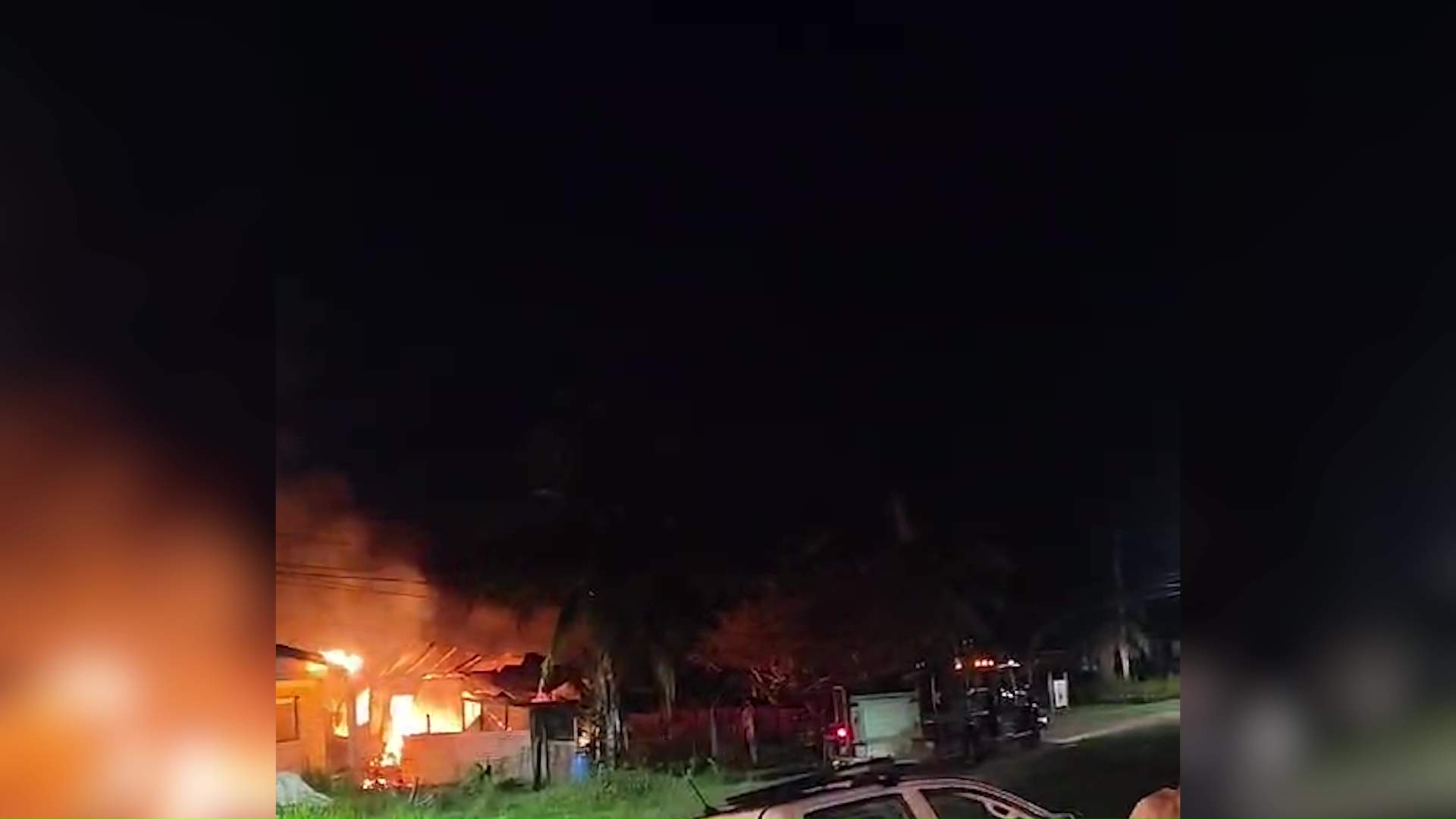
    On the evening of April 9, 2026, a 39-year-old Hattieville resident and mother, Therese Jacobs, is left homeless and heartbroken after an out-of-control blaze destroyed her property, reducing a lifetime of hard work and treasured personal memories to ash and charred debris. What makes the devastating loss even more wrenching for Jacobs is her growing conviction that the fire was no accident – but instead the result of deliberate foul play tied to a long-running family conflict over her land and home.

    When the fire broke out, Jacobs was hundreds of miles away working a shift in Punta Negra, far from the property she spent decades building. She received a frantic phone call from a neighbor alerting her that her home was fully engulfed in flames. By the time first responders could reach the scene and bring the blaze under control, nothing was salvageable. Among the losses are not just personal belongings and family keepsakes, but also inventory Jacobs had spent months collecting to open a small community store serving her village – a dream that has gone up in smoke along with her home.

    In an emotional interview with local outlet News Five, Jacobs described the gut-wrenching impact of the loss. “I work hard for my home, laboring for years to build a place of my own. I had everything I needed, and more, because I’ve spent years helping other people in this community,” she shared. “I had whole barrels of merchandise ready to open a small store for the village, and all of it is gone. When I got the call that my house was burning to the ground, I couldn’t even process it. Now I can’t stop crying, because there’s nothing I can do to fix this. It feels like someone reached right into my chest and ripped my heart out.”

    Jacobs told investigators that she rules out accidental causes for the fire, pointing to checks she had already completed on her home’s electrical system. The young certified technician she had allowed to stay at the property in her absence reported receiving threats shortly before the fire, she says. The threats, tied to an ongoing dispute over ownership of the land her home sits on, included warnings that he needed to leave the property because it belonged to another family member.

    Long before the fire, Jacobs added, she had noticed suspicious activity around her home that she now believes was connected to the dispute. “Before I left, I kept hearing odd noises near my electric meter, and I could tell someone had been tampering with it for weeks,” she explained. “That same person that’s been claiming the land is the one I suspect was behind it.”

    Now, with only a small handful of the clothes she was wearing when she got the call, Jacobs is struggling to process her grief and begin the process of rebuilding. She told reporters that the stress of the loss has already begun to impact her physical health, but she is holding out hope that she can rebuild with community support – and that police will uncover the truth about what caused the fire.

    “I’m tired, I’m really tired, and I can feel this stress making me sick,” Jacobs said. “But I’m trying to stay calm, because I know God is in control. Still, losing everything you’ve worked for your whole life? It hurts more than I can put into words.”

    Jacobs is now publicly appealing to members of the public and local community for any support they can offer as she starts over from nothing. So far, only a small number of local residents have stepped forward to donate clothing, and she still lacks housing, furniture, basic household supplies, and funds to restart her life. “I need help, that’s all I’m asking for,” she said. “I only have about 10 pieces of clothing with me right now, that’s all I have left. I just need any help the community can give.”

    As of Tuesday evening, Belizean police have not officially confirmed the cause of the fire, and a full arson investigation remains ongoing. Law enforcement officials have not named any suspects in connection with the blaze. Community organizations have encouraged any individuals or groups willing to donate goods, funds, or support to Jacobs to reach out to local News Five studios for contact information, as she begins what will be a long road to recovery.

  • Months of Silence: Family Desperate for Any Sign of Reyna Santos

    Months of Silence: Family Desperate for Any Sign of Reyna Santos

    For a family in Stann Creek District, Belize, what every parent fears most has become their devastating reality: nearly 10 months have passed since 39-year-old Reyna Santos vanished without a trace, and they still have no answers about her fate.

    Santos was last seen at her residence in San Juan Village on June 30, 2025. While unconfirmed reports emerged of a potential sighting in the capital city of Belmopan just days after her disappearance, there has been no confirmed contact with Santos from that day to the present. To her loved ones, this prolonged silence is completely uncharacteristic, leaving them growing more desperate with each passing week as hope slowly dwindles.

    In an emotional appeal for information, Reyna’s niece Maryeni Gomez shared the details of the day her aunt went missing. “Her children saw her for the last time on the morning of June 30, then she was gone,” Gomez explained. “At first, they thought she might have gone to stay with another family member, so they didn’t immediately raise alarm. But by 8 o’clock that night, when she still hadn’t turned up, they launched a search. She never answered any calls or texts, and the last WhatsApp activity recorded on her account was around 8:30 that same morning.”

    Gomez emphasized that this unexplained vanishing is completely out of step with Santos’ normal behavior. “Reyna has never cut off contact like this before. She wouldn’t just leave her parents, her siblings, or her children without reaching out to say she’s okay,” Gomez said. “That’s why we’re all so worried that something terrible has happened to her. All we want right now is any sign of life, even just a quick message that she’s safe. That’s all that matters to our family.”

    Though months of silence have stretched on with no new leads, the family says they are still clinging to fragile hope. They are issuing a direct public appeal, to both members of the community who may have any information related to Santos’ disappearance, and to Reyna herself, to step forward and bring an end to the painful uncertainty that has defined their lives for nearly a year.

  • Digital traffic offender registry to speed up driver licence revocation

    Digital traffic offender registry to speed up driver licence revocation

    On Thursday, April 9, 2026, Guyana’s Attorney General and Minister of Legal Affairs Anil Nandlall announced a sweeping set of government-led reforms aimed at boosting public safety, improving road traffic regulation, and addressing widespread quality-of-life complaints across the South American nation. The centerpiece of the initiative is the creation of a first-of-its-kind digital national registry that will log data on both accused and convicted road traffic offenders, a tool designed to streamline the process of suspending or revoking dangerous drivers’ licenses.

    Nandlall explained in an official statement that the centralized digital database will remove long-standing barriers to enforcing existing road safety legislation, particularly the country’s Demerit Point System. That system currently allows authorities to suspend or revoke driving privileges for repeat or severe offenses, including drunk driving and motor vehicle manslaughter, but a lack of accessible, centralized criminal traffic records has hampered consistent enforcement. Currently, magistrate courts often lack immediate access to a defendant’s prior traffic charges or convictions, a gap that Nandlall says has undermined the effectiveness of existing penalties. “That stultifies the enforcement of these important measures,” he noted.

    Per a directive from President Irfaan Ali, Nandlall will lead the cross-agency project to develop and populate the new registry. Partner stakeholders include the Ministries of Home Affairs, Public Service and Government Efficiency, the Guyana Police Force, the National Data Management Authority, and other relevant government bodies. The database will store critical information on road users, including full licensing details, records of past charges, and any convictions for traffic-related offenses. Multiple state institutions will be granted secure digital access to the registry, including the courts and judiciary, the Office of the Director of Public Prosecutions, the Guyana Prison Service, the Probation Department, and the Guyana Revenue Authority, enabling cross-agency coordination on enforcement.

    Beyond the digital registry, the government is also moving forward with a package of amendments to Guyana’s Motor Vehicle and Road Traffic Act and connected legislation to address persistent public nuisances that have disrupted communities nationwide. Top among these concerns is excessive noise pollution from motor vehicles, particularly the widespread practice of operating motorcycles without properly functioning mufflers. “Guyanese are bombarded with obnoxious emissions of noises at unbearable decibels, emanating, in particular, from motor vehicles,” Nandlall said, adding “We can’t continue with this system of uncivilised behaviour.”

    The legislative updates will also introduce new legal frameworks to crack down on unauthorized littering and illegal dumping of waste, a practice that has clogged critical main drainage canals across Guyana, increasing flood risk in vulnerable communities. While existing provisions targeting both noise pollution and littering are already on the books under the Environmental Protection Act, Nandlall indicated that updating the Motor Vehicle and Road Traffic Act will give law enforcement more targeted tools to address these vehicle-related and public space violations.

    Nandlall emphasized that both the digital registry and the legislative amendments are part of the administration’s ongoing commitment to upgrading public safety across Guyana’s roadways and shared public spaces, delivering tangible improvements to daily life for all citizens.

  • New National Plan Aims to Level the Learning Field

    New National Plan Aims to Level the Learning Field

    Set to roll out over the next five years from 2026 to 2030, a landmark $300 million education transformation initiative is putting Belize’s future generations front and center, aimed at dismantling long-standing systemic barriers that have held back thousands of the country’s students from achieving their full potential. Titled the Belize Education Sector Plan 2.0, the ambitious strategy prioritizes three core pillars: greater institutional accountability, expanded cross-sector partnerships, and accelerated integration of digital learning tools and competency-based curricula that align student outcomes with the demands of an increasingly fast-changing global economy.

    At the official launch of the plan, Francis Fonseca, Belize’s Minister of Education, emphasized that the initiative marks far more than just the release of a new policy framework. For the Ministry of Education, he explained, the plan represents a foundational commitment to embedding accountability, transparency, and collaborative partnership across every level of the country’s education system to deliver tangible, sustainable improvements for learners.

    Ricardo Gideon, Director of Policy at the Ministry of Education, Culture, Science and Technology (MOECST), outlined the persistent challenges the plan seeks to address. For many Belizean households, whether in remote rural regions or underserved urban neighborhoods, accessing quality education extends far beyond the initial step of enrolling a child in school. Too many students face unaddressed barriers that prevent them from staying enrolled, receiving the targeted support they need, and progressing to successful outcomes after graduation. This plan, Gideon noted, was built specifically to remove these hurdles and unlock equitable opportunity for every Belizean student and their family, regardless of background.

    A central pillar of the new strategy is expanding digital connectivity through the ministry’s Connect Ed initiative, which has already connected 70% of Belize’s primary and secondary schools to reliable internet access, bringing digital learning resources directly into classrooms across the country. Complementing this infrastructure investment is the 501 Academy program, which centers competency-based learning that prioritizes skill mastery and curiosity-driven exploration over traditional rote memorization. Namrita Balani, Director of Science and Technology at MOECST, explained that this approach gives students the freedom to explore their interests, nurture innovation, and build practical skills that grow with them long after they leave the classroom.

    Education leaders stress that the plan’s ultimate mission goes beyond bureaucratic policy change: it is designed to keep Belizean children enrolled in school, connected to critical learning resources, and equipped with the tools they need to turn their personal and professional dreams into tangible, life-changing opportunity.

  • Caye Caulker Awaits Answers on Stalled Police Project

    Caye Caulker Awaits Answers on Stalled Police Project

    On the popular island community of Caye Caulker, growing optimism for boosted public safety has shifted to widespread frustration after construction of a much-needed new police substation came to an unexpected halt. The project, launched earlier in 2026 as a core component of a national initiative to update and improve law enforcement infrastructure across the country, has ground to a standstill over unresolved questions regarding the land allocated for the facility.

    Unconfirmed reports circulating across the island this evening point to a looming ownership dispute over the property, with some locals claiming the parcel has already been sold to a private buyer. For an island experiencing rapid population and tourism growth, the sudden pause in development is deeply alarming. Local leaders and residents have spent months calling for an expanded police presence to match the community’s expanding needs, both for permanent residents and the thousands of tourists that visit the island each year.

    Prior to the halt, Minister of Home Affairs Oscar Mira emphasized the transformative impact the new substation would deliver, noting in an earlier statement that the upgraded facility would dramatically improve both operational capabilities and working conditions for officers assigned to the island. The current police outpost is widely recognized as inadequate to meet the community’s demands, and the new construction was meant to fix that gap, ensuring officers could deliver consistent, reliable security to all who live and travel to Caye Caulker.

    Clarity on the future of the project is expected as soon as tomorrow, when the Caye Caulker Village Council has scheduled the issue for discussion at its next public meeting. This report is a transcript of an evening television newscast, with any Kriol-language commentary transcribed using an official standardized spelling system.

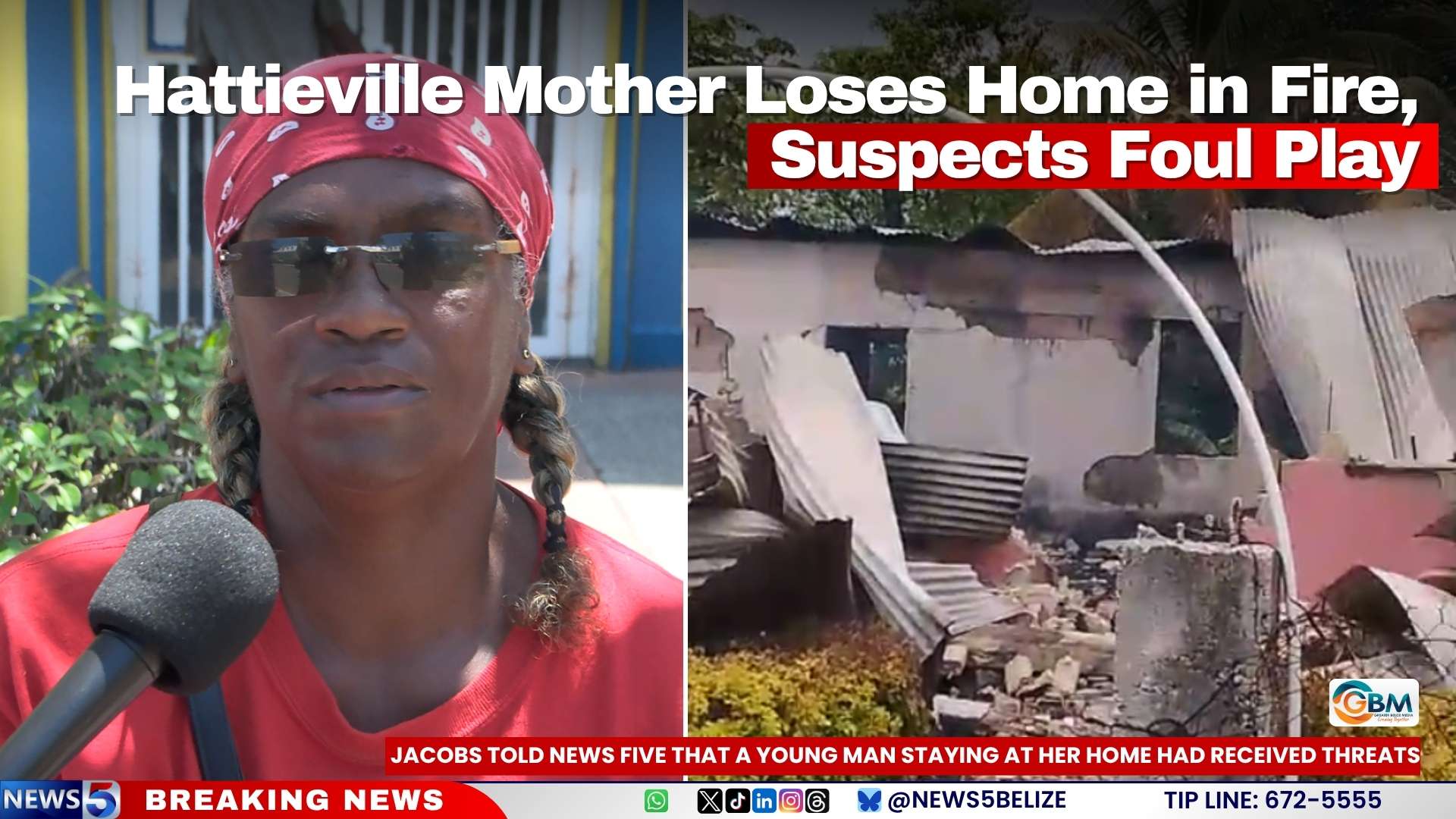
  • Hattieville Mother Loses Home in Fire, Suspects Foul Play

    Hattieville Mother Loses Home in Fire, Suspects Foul Play

    On April 9, 2026, a devastating fire ripped through the residential home of Therese Jacobs, a mother living in Hattieville, leaving her with nothing but a handful of personal possessions and no place to call home. Now, local law enforcement has launched a full investigation into the blaze, as Jacobs herself is convinced the fire was no accident – she believes it was intentionally set amid long-simmering conflict within her family.

    Jacobs was hundreds of miles away, working a shift in Punta Negra, when she got the frantic phone call that would upend her life. By the time she could return to Hattieville, her home had already been reduced to ash and charred debris. In an interview with local outlet News Five, the devastated mother described the overwhelming pain of losing everything she had built. “I’m crying because I cannot do nothing… It’s like someone push their hands in my chest and open it,” she shared, her grief raw for the public to see.

    Jacobs has pointed to multiple red flags that lead her to suspect foul play. Long-running family tensions have plagued her household for months, and she says there has been repeated suspicious activity near her property in the weeks leading up to the fire. Most notably, a young man who had been staying at her home had been targeted with threats from unknown parties. Jacobs also added that she had noticed suspicious tampering with her home’s electrical meter long before the fire broke out. “He was doing it for a long time because I used to hear the noise and I’m always wondering, what is that noise?” she explained.

    With almost all of her belongings, including her entire wardrobe, destroyed in the blaze, Jacobs has nothing left to help her get back on her feet. She has issued a public plea for any support community members can offer, from clothing to basic household goods as she works to rebuild her life from scratch. The process of starting over has already taken a heavy toll, Jacobs says, with both her emotional and physical health strained by the sudden loss. Local police have not yet released any updates on potential persons of interest or new developments in the investigation as of Wednesday.

  • $1.6M Drug Bust Raises Bigger Questions in Lord’s Bank

    $1.6M Drug Bust Raises Bigger Questions in Lord’s Bank

    On April 9, 2026, one of the largest drug seizures in Belize’s history has thrown the small community of Lord’s Bank into the spotlight, as law enforcement investigates potential connections between the $1.6 million cannabis bust and a string of recent unsolved murders in the surrounding area.

    Acting on intelligence, police executed a search warrant at a local residential property, where they uncovered over 1,100 pounds of marijuana stashed on site. The staggering scale of the seizure has sent shockwaves through the close-knit village, leaving community leaders and legal advocates raising critical questions about both local crime trends and the execution of the police operation itself.

    Prominent local attorney Audrey Matura has been one of the most vocal critics of how the raid was carried out. In a public statement released online, Matura questioned the timing of the police intervention, arguing that law enforcement moved in prematurely before building a full picture of the smuggling network tied to the stash. She argued that a more deliberate approach, including extended surveillance to capture the individuals actually connected to the drug cache when they arrived at the property, would have yielded far more valuable intelligence for long-term crime fighting. Matura’s criticism has opened a broader conversation about police procedure in large-scale drug investigations in Belize’s rural and suburban communities.

    For village chairman Daniel Salinas, the discovery was completely unexpected. In an interview ahead of a full primetime news interview, Salinas shared that residents were blindsided by the sheer volume of drugs found within their community boundaries. “I was quite surprised with the amount of drugs that was found in the village,” he said. “I didn’t expect that quantity of marijuana to be in the village.”

    What has deepened local unease is the location of the seizure itself. Law enforcement officials have already confirmed they are actively exploring potential ties between the drug stash and multiple recent killings in the broader Ladyville and Lord’s Bank region, a connection that has left many residents on edge. Even as concerns grow over potential cross-links between drug trafficking and violent crime in the area, Salinas sought to ease some community anxiety, noting that heightened regular police patrols and ongoing collaborative community safety efforts are already in place to address emerging threats.

    Full comments from Chairman Salinas on the bust and its impact on the Lord’s Bank community will air during the 6 o’clock evening newscast later today.

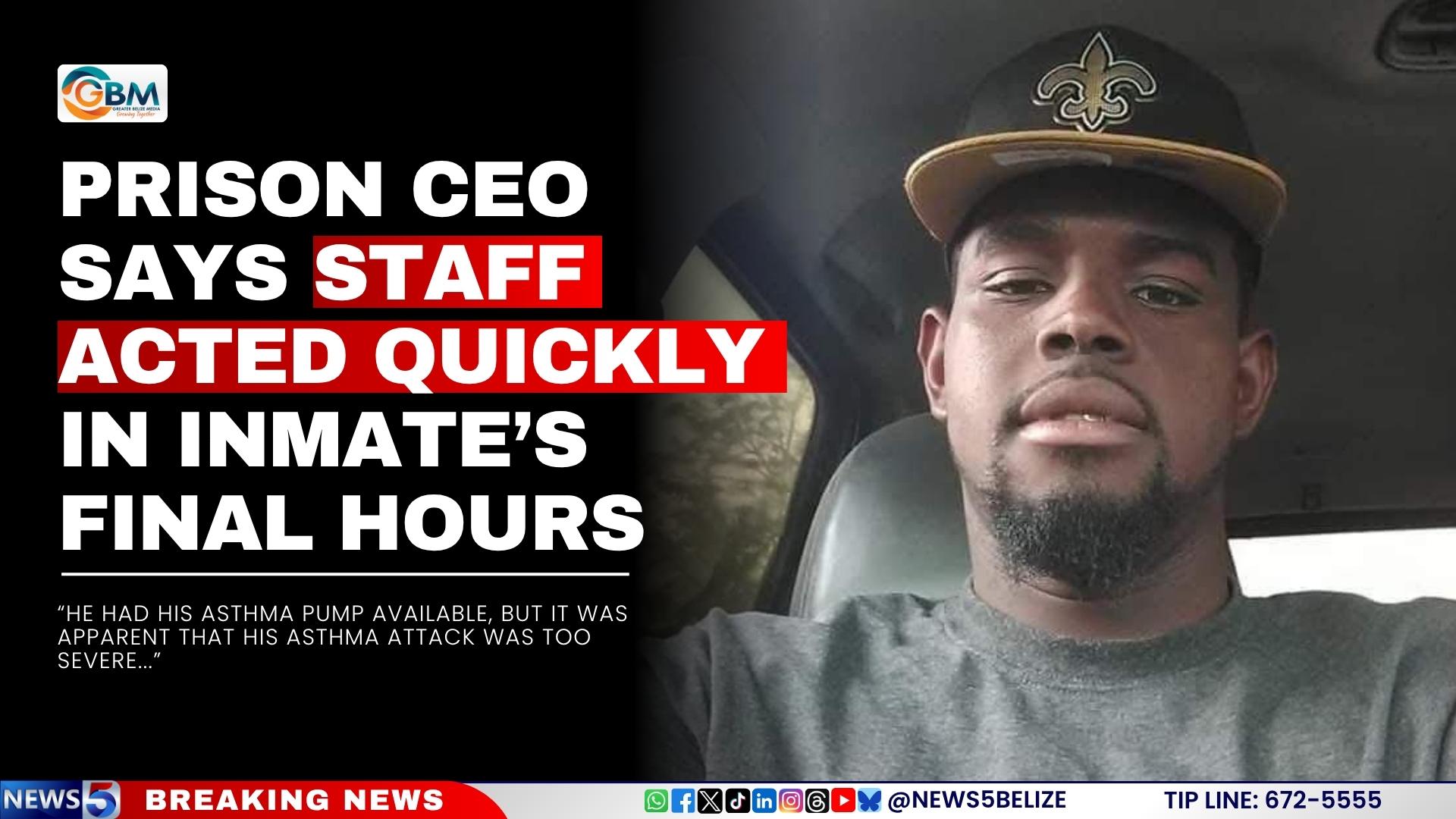
  • Prison CEO Says Staff Acted Quickly in Inmate’s Final Hours

    Prison CEO Says Staff Acted Quickly in Inmate’s Final Hours

    Public debate over the standard of medical care provided to incarcerated people in Belize has been reignited following the recent death of an awaiting-trial inmate at Belize Central Prison.

    Phillip Bowen, a 40-something man with a chronic asthma diagnosis who was awaiting trial on 2020 double murder charges linked to an incident in Hopkins Village, suffered a life-threatening asthma attack in the prison early on the morning of April 8, 2026, and died before he could reach a public hospital for emergency care.

    Belize Central Prison is operated under contract by the Kolbe Foundation, whose chief executive officer Virgilio Murillo has publicly pushed back against growing concerns from Bowen’s family and the general public, defending the speed and competency of on-site prison staff’s response to the incident.

    According to Murillo’s official account of the event, staff first received word that Bowen was experiencing respiratory distress at approximately 7:20 a.m. immediately after Bowen himself requested medical assistance. He was quickly escorted to the prison’s on-site medical center, where he accessed his own asthma inhaler — but the attack proved far more severe than the device could manage. “His asthma attack was too severe that even with the pump it was not adequate to help him,” Murillo explained in a press briefing.

    Following the failure of on-site intervention, prison staff moved immediately to transfer Bowen to the Karl Heusner Memorial Hospital (KHMH), Belize’s main public tertiary care facility. Murillo emphasized that the entire transfer process proceeded without any avoidable holdup: the prison maintains a dedicated standby ambulance for emergencies, and Bowen was loaded into the vehicle for transport just seven minutes after staff first became aware of his condition. Unfortunately, he died while the ambulance was still en route to the hospital, just moments from the facility’s entrance, Murillo confirmed.
    “Based on what I have been told so far, it was very timely and there was no delay,” Murillo told reporters, reaffirming that every correctional and medical staff member on site followed emergency protocol to the letter.

    Bowen’s death has not only left his family grieving but also brought long-simmering questions about correctional health care back to the forefront of public discourse in Belize. Critics and loved ones of incarcerated people with pre-existing chronic conditions have repeatedly called for more rigorous inspections, expanded on-site care resources, and clearer accountability frameworks to prevent preventable deaths behind bars. For now, Murillo’s statements confirm that an internal review of the incident is ongoing, but the prison leadership stands by the actions of its staff in Bowen’s final hours.