分类: society

  • Mom, hotel head call for jet ski ban

    Mom, hotel head call for jet ski ban

    A devastating fatal accident at one of Tobago’s most popular coastal destinations has reignited long-simmering calls for a total ban on personal watercraft across the island, after a seven-year-old vacationing girl was struck and killed by a jet ski while playing in shallow water.

    The tragedy unfolded on Wednesday at Pigeon Point Heritage Park, where Angelica Saydee Jogie, a primary school student from Barrackpore who was visiting Tobago for the Easter holiday with her family, was hit by the watercraft while swimming. The young victim was just two weeks away from her eighth birthday.

    By Thursday morning, law enforcement officers from the Tobago Divisional Task Force had taken a man from Canaan Feeder Road, Tobago, into custody in connection with the incident. Investigations into the girl’s death remain ongoing, and the jet ski involved in the crash was seized by police on Wednesday night and is currently held as evidence at the Crown Point Police Station.

    In an emotional interview with local outlet *Express* on Thursday, Salisha Jogie, the victim’s heartbroken mother, made an urgent public plea for sweeping policy change to prevent other families from suffering the same devastating loss. Alongside demanding full accountability for the incident and public disclosure of the detained man’s identity, Jogie called for a permanent ban on all jet ski operations across Tobago’s coastal waters.

    “I don’t want anyone else to have to feel the pain I am carrying right now,” Jogie said. “This tragedy must be a wake-up call. It is not just about holding the person responsible for what happened to my daughter accountable. It is about protecting every child that comes to these waters after her. We cannot let this happen to another family.”

    Jogie emphasized that the incident has exposed unaddressed risks of unregulated jet ski use in high-traffic public swimming areas, stressing that policy action is long overdue. “My request is that these jet skis be removed from Tobago’s popular recreational areas,” she said. “This death must leave a legacy that saves other children’s lives.”

    Reginald Mac Lean, head of the Tobago Hotel and Tourism Association, joined the call for an all-out ban on Wednesday, framing unregulated jet skis as a persistent public safety threat that has already caused too much harm. “Jet skis are ticking time bombs along our coasts,” Mac Lean said. “Too many people have already been seriously injured, and too many lives have been lost. If operators cannot abide by existing rules that keep them out of designated swimming areas crowded with beachgoers, they should be banned completely across Trinidad and Tobago.”

    Mac Lean added that there is no shortage of safer alternative water activities for tourists to enjoy, making a total ban a reasonable and necessary step to protect both visitors and local communities.

  • Insurance regulator urges Dominicans to review coverage ahead of heavy rains

    Insurance regulator urges Dominicans to review coverage ahead of heavy rains

    Residents of the Dominican Republic are being urged by the country’s Superintendency of Insurance to take proactive steps to review their existing insurance coverage ahead of an approaching weather system forecast to bring intense rainfall across multiple provinces. The alert, issued amid active weather warnings for the low-pressure trough, comes as the regulator works to help homeowners and business owners avoid costly surprises if disaster strikes.

    A common misconception held by many policyholders is that flood and storm-related damage is automatically included in standard insurance contracts, the agency highlighted. In reality, coverage for these hazards depends entirely on the specific terms, add-ons and conditions that were agreed to when the policy was purchased. The regulator is advising all consumers to reach out directly to their insurance providers to confirm what protections are in place, asking that they double-check coverage for flood damage, water-related property destruction, loss of personal belongings and unexpected business interruption stemming from storm events.

    Many standard home and commercial insurance policies explicitly exclude flood and storm water damage, or impose strict limitations and high deductibles that can leave policyholders responsible for significant out-of-pocket costs, the agency explained. This gap in coverage also applies to vehicle insurance: even drivers who carry what is marketed as “full coverage” auto policies often do not have protection for flood damage unless they have added a separate endorsement to their plan. For properties located in high flood-risk zones across the country, additional separate coverage is almost always required to get full protection, the regulator noted.

    Along with calling for pre-storm policy reviews, Superintendency of Insurance officials shared guidance for anyone who does experience damage. They strongly encouraged residents to create comprehensive documentation of all destruction, including timestamped photos, videos and written inventories of damaged property, to speed up the claims process. Most importantly, officials emphasized that understanding what is not covered by a policy is just as critical as knowing what is included. In the event of a dispute between a consumer and their insurance provider over a covered claim, the agency reminded the public that it offers formal mediation services to help resolve conflicts fairly.

  • WATCH: Cultural Ambassador Masicka Says Love for His Mother and Education Helped Lift Him from the Ghetto

    WATCH: Cultural Ambassador Masicka Says Love for His Mother and Education Helped Lift Him from the Ghetto

    Jamaican dancehall icon Masicka, recently appointed as the island’s cultural ambassador, has opened up about the pivotal forces that drove him out of a challenging ghetto upbringing and onto the global stage: his unwavering love for his mother and his commitment to formal education.

    In a newly released public interview, the artist shared intimate details of his early years growing up in a marginalized Jamaican community, where limited economic opportunity and systemic barriers often trap residents in cycles of intergenerational poverty. Unlike many peers who faced limited pathways to success, Masicka said his mother prioritized his education from childhood, instilling in him the belief that learning could open doors that his neighborhood circumstances could not close.

    “My mother never let me think that where I was born was where I had to stay,” Masicka reflected in the conversation. “She pushed me to stay in school even when the streets were calling, even when it felt like the only way forward was to give up on books. That commitment to education gave me the foundation to build my career on my own terms.”

    Since his appointment as cultural ambassador, Masicka has taken on the mission of amplifying Jamaican art and culture to global audiences, while also advocating for improved educational access and youth opportunity in marginalized communities across the country. He says his own journey is proof that investing in young people and supporting family-centered values can create life-changing outcomes, even for those born into the most challenging circumstances.

    The video of his conversation has already gone viral on social media, with thousands of young Jamaicans sharing the clip and commenting that his story has inspired them to continue pursuing their own education and career goals despite systemic barriers.

  • Authorities issue flood alert as heavy rains threaten Dominican Republic this weekend

    Authorities issue flood alert as heavy rains threaten Dominican Republic this weekend

    In the Dominican capital of Santo Domingo, national emergency officials have issued an urgent call for residents to maintain the highest level of alert this weekend, as two converging weather systems are set to bring heavy downpours that raise major risks of urban flooding, overflowing rivers and ravines, and destructive landslides across the country.

    This threat is amplified by pre-existing dangerous conditions: nearly two straight weeks of consistent rainfall have left the nation’s soil completely saturated, leaving no additional capacity to absorb new precipitation. That means even moderate rainfall could trigger the disasters warned about by officials.

    Juan Manuel Méndez, director of the Dominican Republic’s Emergency Operations Center (known locally by its Spanish acronym COE), confirmed that the agency has convened a permanent round-the-clock session to coordinate response efforts. To prepare for the anticipated extreme weather, COE has already activated its full contingency response plan at the highest preparedness level, putting all emergency response teams and resources on standby ahead of the storm.

    Official meteorological projections indicate total rainfall accumulations will range between 50 and 100 millimeters across most affected areas through the duration of the event. Weather systems are expected to bring scattered showers that alternate between light periods and intense torrential downpours starting this weekend, with unstable conditions forecast to linger into the early part of next week. Emergency officials have urged residents in low-lying and landslide-prone areas to stay updated on official alerts and follow evacuation instructions if issued.

  • PHOTO: Antigua Lions Club Donates $1,500 to Dyslexia Association During Ingrid Daniel Presentation

    PHOTO: Antigua Lions Club Donates $1,500 to Dyslexia Association During Ingrid Daniel Presentation

    The Antigua Lions Club, a longstanding community service organization focused on supporting local public welfare initiatives, has contributed $1,500 to the Dyslexia Association, following an insightful educational presentation delivered by advocate Ingrid Daniel. Daniel’s presentation, which covered the daily challenges faced by people living with dyslexia, the latest support resources available, and the critical need for sustained community funding to expand outreach and programming, resonated deeply with Lions Club members. This monetary contribution will be allocated to the association’s core operations, including expanding accessibility to screening services, developing educational materials for affected individuals and their families, and running public awareness campaigns to reduce stigma around dyslexia. Representatives from both organizations highlighted the importance of cross-community collaboration to address often-overlooked learning differences, noting that this donation marks a meaningful step toward expanding the Dyslexia Association’s reach across Antigua. The Lions Club has a long history of investing in local health and education causes, and this gift aligns with its ongoing mission to lift up vulnerable community members through targeted, practical support.

  • Foundation warns over 70% of Dominican workers face inadequate pensions

    Foundation warns over 70% of Dominican workers face inadequate pensions

    A leading Dominican social security advocacy organization is sounding the alarm over an impending retirement crisis that threatens the livelihood of the vast majority of the country’s working population. The Social Security for All Foundation warns that without immediate structural overhauls to the nation’s current pension framework, more than seven out of every 10 Dominican workers will enter retirement with benefits too low to sustain their pre-retirement quality of life.

    In its latest data-driven analysis of the Dominican pension system, the foundation outlines the scope of the coming demographic shift. Between 2031 and 2033 alone, roughly 1.6 million currently active pension affiliates will reach the official retirement age. Yet systemic weaknesses have left the system deeply underfunded: only 30.3% of these affiliates currently make regular required contributions to their pension accounts. This ongoing irregular contribution pattern, the group emphasizes, will almost inevitably translate to meager retirement payouts for the majority of workers when they exit the workforce.

    The potential ramifications of unaddressed pension shortfalls extend far beyond individual financial hardship, the organization cautions. Widespread inadequate retirement benefits could create widespread economic insecurity among senior citizens, which in turn may fuel social unrest and place unprecedented pressure on public institutions that are already tasked with supporting vulnerable populations. Left unaddressed, the issue could escalate into a full-scale social crisis within the next decade.

    The foundation has pinpointed four core structural drivers behind the growing pension gap: chronically low individual and employer contribution rates, excessive commissions charged by Administradoras de Fondos de Pensiones (AFPs, the private pension fund administrators), the large share of workers engaged in informal labor that does not require pension contributions, and the lack of a contributory-subsidized regime designed specifically to accommodate self-employed workers, who make up a significant segment of the Dominican workforce.

    To reverse this alarming trend, the organization has put forward a pair of targeted policy reforms that it says would meaningfully strengthen the system. The proposals include a gradual phase-in of increased pension contributions, ultimately raising the total contribution rate to 16.2%, alongside a cap on AFP commissions that would reduce the current fee levels to 0.50%. According to the foundation’s modeling, these two adjustments would significantly boost future pension payouts for workers and strengthen critical financial protections for low-income retirees, who are the most vulnerable to inadequate benefits.

  • Life deserves to be celebrated

    Life deserves to be celebrated

    On a windy Thursday in April 2026, 19 young people gathered at Havana’s Solidaridad con Panamá School to mark a universal coming-of-age milestone: their 15th birthdays. For decades, this school has upheld a beloved tradition of celebrating quinceañeras for disabled students, a ritual that has endured through the decades of economic blockade that have shaped daily life in Cuba.

    As preparations wrapped up, the first chords of the traditional quinceañera waltz rang out across the school grounds. Not every dancer moved in perfect step: some relied on canes for support, others maneuvered custom wheelchairs across the esplanade, and many leaned gently on their partners to steady their balance. But to observers in attendance, there was no mistaking the perfection of the moment—raw, genuine, and alive with the joy of the young people at the center of the celebration. Bright yellow balloons dotted the open space, holding their ground against strong gusts of wind, a quiet metaphor for the resilience of the students gathering to mark their big day. Nineteen wide smiles shone across the esplanade, none dimmed by the adversity that has tested Cuban communities for decades, each one a candle of hope that no hardship can blow out.

    Cuba’s highest-ranking leaders joined the celebration: Miguel Díaz-Canel Bermúdez, First Secretary of the Central Committee of the Communist Party of Cuba and President of the Republic, and Manuel Marrero Cruz, member of the Political Bureau and Prime Minister of Cuba, were among the guests, moved by the students’ determination and joy. From the school’s esplanade, the gathered students and faculty sent warm birthday greetings to retired Cuban revolutionary leader Army General Raúl Castro Ruz, a long-time supporter of the institution’s work.

    Esther María La O Ochoa, known affectionately as Teté, who served as the school’s director for many years, reflected on the legacy of the annual celebration. She credits Fidel Castro Ruz, the school’s founder and former Commander-in-Chief, and Raúl Castro Ruz, for ensuring this tradition was never interrupted, even in the hardest of times. “We live in a Cuba under blockade, but never one that refuses to give love,” she told the assembled crowd.

    As the event unfolded, the colors of students’ outfits mingled across the open esplanade, with wheelchair users gathering front and center to lead the celebration. “No one could stop this celebration,” one student said—a sentiment echoed by everyone in attendance. These young people, each with their own unique body shapes and personal stories of overcoming struggle, reminded all present that every life is worthy of celebration, no matter the circumstances.

    For 20 full minutes, tenderness and hope walked hand in hand across the school grounds. Glasses were raised in a toast to happiness, and shared embraces erased all lines of status, distance, and prejudice, holding space only for quiet joy. Many parents openly wept as they watched their children dance, and teachers—who have long stepped into caregiving roles for their students—shared in the profound, soft joy of the moment. At the center of it all, the 15-year-olds beamed, their smiles unclouded by hardship.

    For these students, the bouquets they held were far more than decorative flowers: they were a living promise of what is still to come, a testament to the core belief that has guided the school and this tradition for more than 25 years: even amid difficulty, in Cuba, every person matters, and every life will persist in blossoming.

  • Live a clean life, advises Ena Jones, 100

    Live a clean life, advises Ena Jones, 100

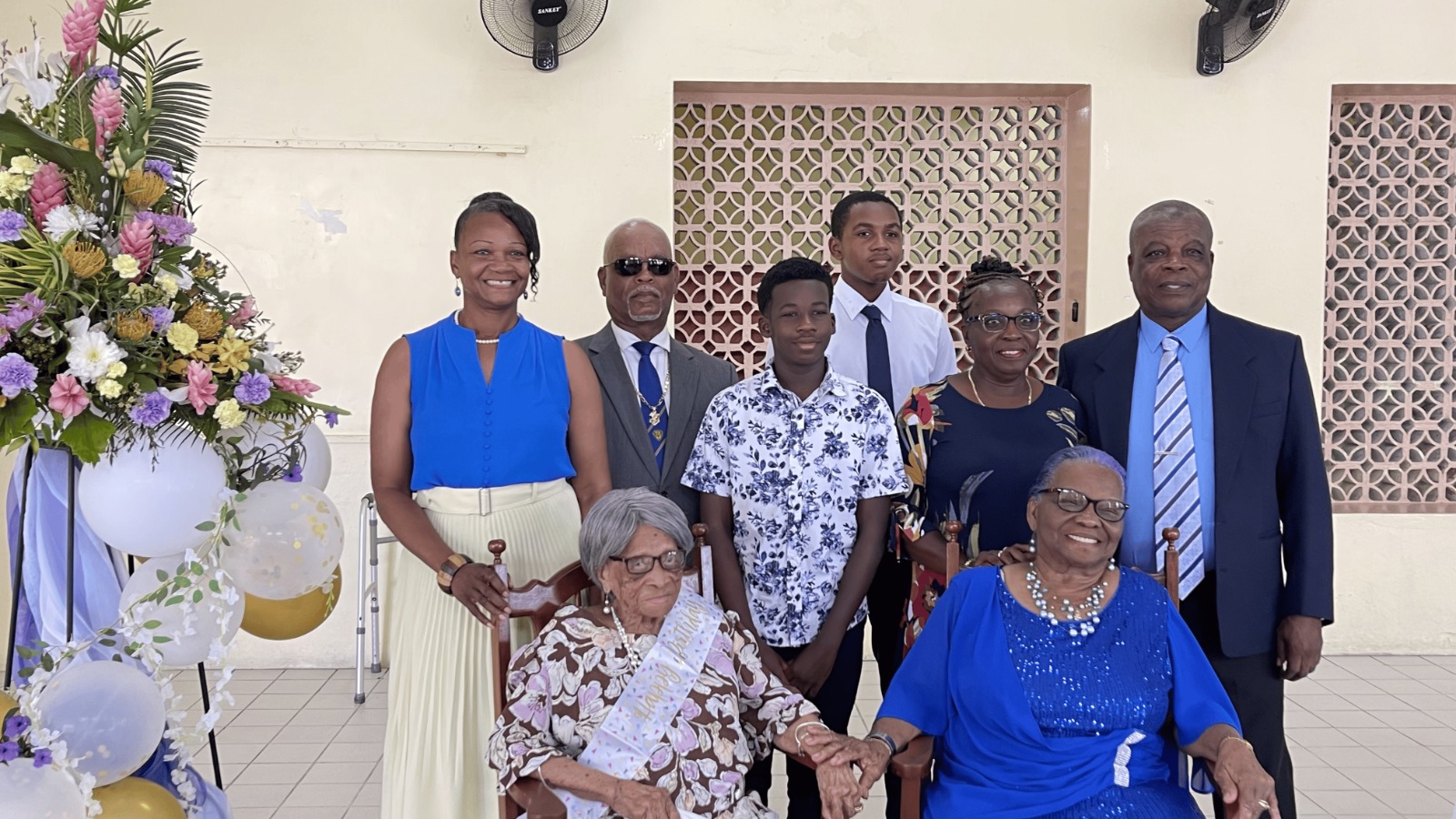
    A beloved pillar of Barbados’ religious and local community marked a historic life milestone this week, as Ena Jones celebrated her 100th birthday surrounded by loved ones and national leadership, and opened up about the core values that have shaped her extraordinary century of life.

    The birthday celebration, held at Bethel Methodist Church where Jones has been a dedicated, long-time member, drew a crowd of family, close friends, and Barbadian President Jeffrey Bostic, who joined the occasion to honor the island’s newest centenarian. Even at 100, Jones impressed every attendee with her quick wit, sharp recall of life events, and gentle, steady composure. Looking back on decades of change and challenge, she shared vivid anecdotes from her youth, from carefree days attending community dances to the quiet hardships and resilience of life during World War II.

    When President Bostic asked Jones what wisdom she would pass on to younger generations during a warm, lighthearted conversation, her response was brief but deeply resonant: *“Try to be the best you can. Do not follow bad company…. If you see a person going the wrong way, don’t follow.”*

    As a formal tribute to Jones’ remarkable milestone, President Bostic presented the centenarian with a celebratory gift basket holding fresh flowers, a bottle of non-alcoholic wine, and a personal birthday card on behalf of all Barbadians. The card read: *“Reaching the remarkable age of 100 years makes you a national treasure. This calls for celebration, and so I salute you. Accept my heartfelt congratulations and those of the people of Barbados on this most significant day in your life. Happy birthday, and may God continue to shower His blessings on you.”* Bostic went on to hail Jones as the event’s “Birthday Queen” and lead a toast to her long and meaningful life.

    For those who have known Jones for years, her warmth and love of life have long made her a central part of the church community. Wendy Darlington, a fellow member of Bethel Methodist Church and long-time friend, recalled how the pair first connected: they bonded after sitting next to each other in the same pew one Sunday, and eventually formed a close bond that has lasted for years. Jones’ cousin, Stevenson Tull, shared that even after he and his family moved to the United States, stopping by Jones’ home during return visits to Barbados became a beloved family tradition. Confident in Jones’ continued vitality, Tull said, *“She loves life, she takes care of herself, she made it to a hundred and I know that we are going to celebrate another birthday… for her.”*

    In a post-celebration interview, Jones reflected that reaching 100 was a milestone she never imagined possible. Neither of her biological parents lived to see their 100th birthday, and Jones lost her mother at a young age, growing up raised by her adoptive mother, Ms. Trotman. When asked what she credits for her long and healthy life, she pointed to three core principles: intentional discipline, unwavering faith, and the intentional choice to step away from negative influences.

    Expanding on her guidance for young people, Jones emphasized the value of steady, purpose-driven living: *“Live a clean life. Work… don’t worry about other people and what they do… and that’s how you get through life.”* She noted that she enjoyed the pleasures of youth in her earlier years, but always prioritized making intentional choices to build a stable, fulfilling long-term life.

    Faith, Jones added, has been a foundational guiding force throughout every stage of her journey. Her biological mother first introduced her to church as a small child, and Jones has maintained a deep, consistent spiritual practice that she says saw her through every hardship and joy across 100 years. Jones described her 100th birthday as “very cool and quiet”, saying she approaches the milestone with deep gratitude for every year she has been given. Far from slowing down, the centenarian continues to bring joy and wisdom to everyone around her in her community.

  • Rural folk fed-up with ‘ridiculous cycle’ of brush fire, smoke

    Rural folk fed-up with ‘ridiculous cycle’ of brush fire, smoke

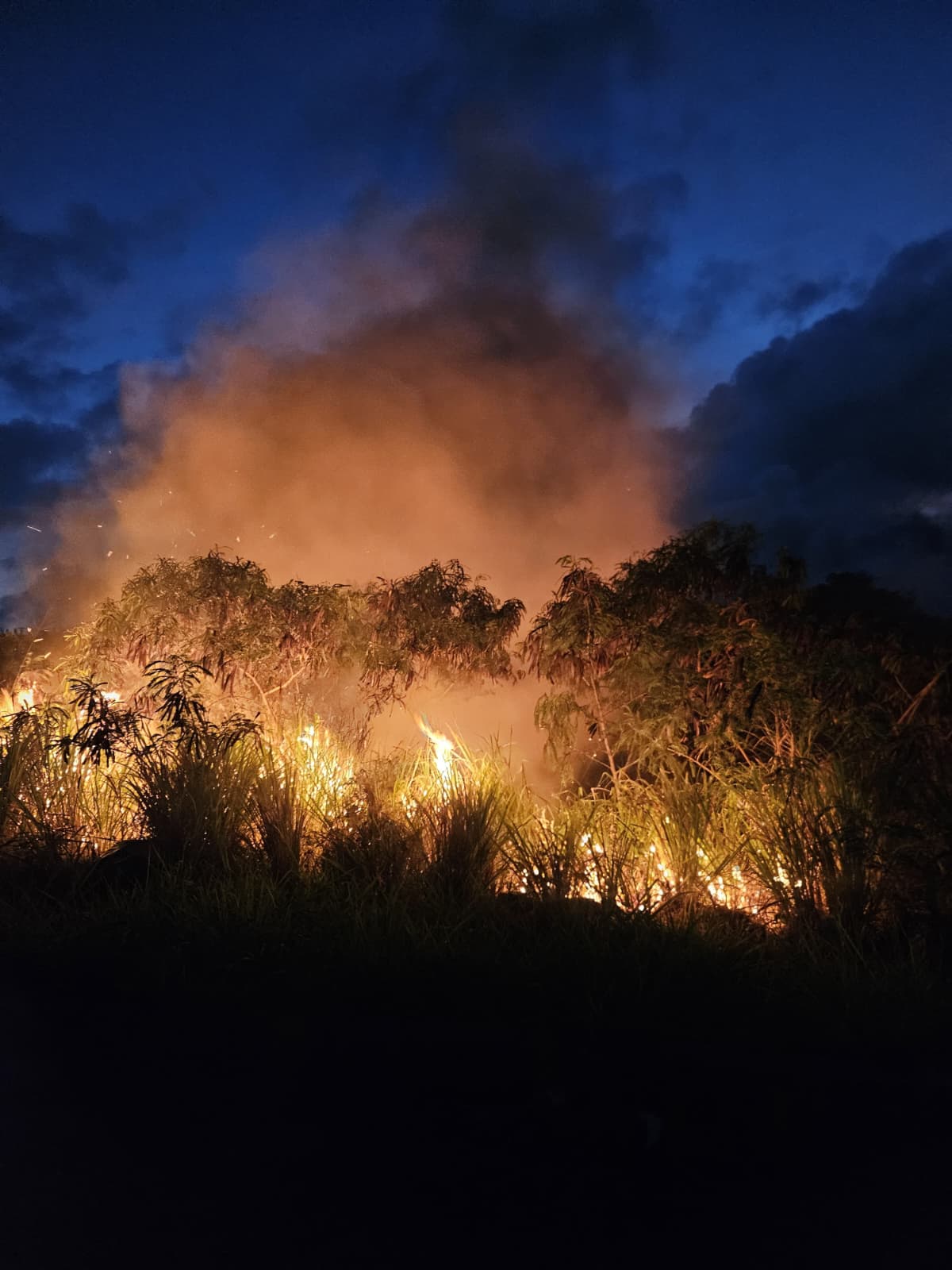
    Each dry season, residents of St George and St John parishes brace for smoke, ash, and disruption. This year, however, a relentless wave of blazes that blanketed both communities in toxic haze this week has pushed frustrated locals to speak out, demanding officials finally address the root causes of the annual crisis instead of only responding to emergencies after they break out.

    At the center of the problem lies vast stretches of abandoned and under-managed agricultural land across the island’s rural agricultural heartland. For decades, dozens of fallow plantations once used for sugar cane and vegetable cultivation – including the Pool, Henley, Wakefield and Todds properties, formerly owned by the defunct insurance conglomerate CLICO – have been overrun by invasive, fast-growing species: cow itch vine and river tamarind. These dense, dry plants act as perfect fuel for seasonal brush fires, creating massive blaze zones that spread quickly and generate thick, acrid smoke that drifts into residential and commercial areas.

    For long-time St George resident Brad Harper, the severity of this year’s fires hit him unexpectedly while driving through Middleton. What he first assumed was a mechanical fault in his car’s air conditioning system quickly revealed itself to be dangerous air pollution. “The smoke was very irritating to the sinus,” he recalled. “I was driving with the AC on, and at first I thought something was wrong with the vehicle, so I checked all the instruments and everything looked fine. It wasn’t until I rolled down the window that I realized just how hazy the outside air had become.” That evening, a return trip to the area with a friend confirmed his worst fears: conditions had grown even worse, with smoke thick enough to cause persistent respiratory irritation. Having lived in the region for most of his life, Harper said he has never seen smoke levels this high, even as local fire chiefs have already acknowledged a steady increase in the frequency and scale of these fires in recent years.

    The blazes are far more than a minor inconvenience: they pose a direct, daily threat to vulnerable community members. Susan, an asthmatic woman in St George, described this week’s smoke as suffocating, with a strange oily quality that triggered persistent coughing fits. “It wasn’t pleasant because the ashes and the smoke from the ashes had me coughing a lot, and I’m asthmatic too,” she explained. “It feels like burning tires, that thick black smoke. Then after it fades, everything gets covered in a white coating of ash. It’s not good at all.”

    Local small businesses have also suffered direct financial losses. Taylor, who owns a mini-mart in St Judes, St George, was forced to close her shop early and throw away contaminated stock after soot and ash blew into her store, covering fresh produce and other goods. “It was really bad,” she said. “It even got on the vegetables. We had to pack up early because the ashes and dust were blowing right past the place. It’s terrible for people with sinus issues. They’ve got to get rid of the cow itch – it’s affecting all of us, even small children. I just hope they find a way to stop these huge smoke plumes from impacting our daily lives.”

    In St John, local farmers have a front-row seat to the growing crisis. Maria Simpson, who farms land in Wakefield, says the constant cycle of fires means emergency fire crews are spread thin across the parish, with new blazes breaking out almost daily. “This is ridiculous,” she said, gesturing to the charred, blackened horizon stretching across the former plantation. “Every single day there’s at least one fire truck out from the station. If you have one fire here, another breaks out behind it, and you hear sirens nonstop. This is a real public health crisis. It’s unbelievably hard.”

    Simpson points out that the common practice of controlled burning to clear cow itch only makes the problem worse during the dry season. When the invasive plants are burned, dry particles of cow itch blow across the region, worsening respiratory irritation, and the infestation has already grown out of control, alongside unmanaged brush and even wild monkey populations on the abandoned land. Instead of reactive burning, she says officials should focus on early intervention: “Deal with them from early. If they could remove the plants before they start to flower and spread, that’d be real good.”

    For long-time St John resident Mavel Knight, the fires came right to her doorstep this week, forcing her to lock herself inside her Massiah Street home from mid-afternoon through the entire night as a blaze on Donkey Hill poured smoke into her neighborhood. “Last night there was so much smoke because there’s just so much unmanaged bush, that’s what creates all that smoke,” she said. “I had all the windows closed. To be truthful, I didn’t open the house at all. I told my daughter I was buckling down, I wasn’t moving, I kept the door locked.”

    The frustration with years of inaction is most palpable in Cherry Grove, where resident Marcia Clarke says the community has been stuck in a repeating cycle of cleaning ash and dealing with coughing fits for decades. She traces the problem directly to failed land management: what were once productive sugar cane fields are now neglected tinderboxes waiting to ignite. “Yesterday, I had to wash my clothes three times,” she lamented. “And then you have to close all the windows in the house. Years ago, when this area out front was sugar cane, we didn’t have this problem. But from the time the grounds got out of hand, this is what we get. We’ve told our member of parliament, but nothing ever happened. It’s terrible up here in St John.”

    As this week’s smoke begins to clear, residents of both parishes are left with the same unresolved problem, and their call for action has never been louder. With local fire services pushed to their breaking point and community public health at severe risk, locals are demanding a comprehensive, long-term plan to manage overgrown abandoned farmland and break the annual cycle of devastating seasonal bush fires. Until that plan arrives, as Simpson puts it, residents remain trapped in a “ridiculous” cycle of fire, smoke, and disruption.


  • Fear, security costs rise as murder numbers increase

    Fear, security costs rise as murder numbers increase

    As rising violent crime in Barbados sparks growing alarm over its cascading harm to national livelihoods and community stability, a leading Caribbean academic and behavioral specialist has issued a urgent call for enhanced, focused law enforcement intervention in high-crime hotspot areas. Professor Dwayne Devonish, a management and behavioral science lecturer at the University of the West Indies Cave Hill Campus, put forward his policy recommendations in the wake of two back-to-back fatal shootings that claimed the lives of a 22-year-old father of two from Gall Hill, Christ Church, and a 50-year-old resident of St John. These two killings have pushed the island nation’s total murder count for the current year to 18, amplifying long-simmering public anxiety over violent crime.

    Professor Devonish emphasized that the steady rise in violent offenses is placing unanticipated and severe economic strain on Barbados, a country still recovering from recent economic shocks and relying heavily on tourism and small business activity. He explained that the human cost of these killings translates directly to widespread financial hardship for impacted families, many of whom have lost their primary breadwinners to violence. “When a person is killed or seriously injured in a criminal attack, the entire family is left to absorb the long-term financial and economic consequences of that loss,” he noted. “For households where the victim was the main source of income, that burden can be crippling.”

    Beyond household-level economic harm, the academic warned that rising violent crime in public spaces is already inflicting measurable damage on Barbados’ commercial sector, particularly local businesses that rely on social and leisure activity. The most recent shootings all took place in widely accessible public areas: one in a residential neighborhood on St Stephen’s Hill, St Michael, one in the aftermath of the popular annual Oistins Fish Festival in Christ Church, and a third near the well-known Brownes Beach bar and restaurant Lazy Lizard. Because of these brazen, open attacks, Professor Devonish said growing public fear is keeping many Barbadians inside their homes rather than patronizing local businesses, social venues, and tourist hubs.

    “This pervasive societal fear that stems from public attacks is hitting local commerce directly,” he explained. “If people are scared that they could be caught in the wrong place at the wrong time just by going out to meet a friend or grab a meal, they will choose to stay home. That means less foot traffic for shops, restaurants, entertainment venues and other businesses that depend on public gatherings to survive.” He projected that commercial areas that normally see high levels of public foot traffic will see a sharp drop in patronage in the coming months, if the current trend of violent crime in public spaces continues.

    The specialist also pointed to a secondary economic cost: a sharp uptick in private security spending across both residential and commercial properties. As residents and business owners lose confidence in public safety, they are diverting limited income and revenue toward private protective measures including surveillance cameras, alarm systems, reinforced gates and security fencing, and private guard services. This reallocation of capital takes away money that could otherwise be spent on local consumer goods, business expansion, or household essentials, further dragging on broader economic growth.

    Beyond economic impacts, Professor Devonish highlighted a deep, ongoing breakdown in trust between the Barbados Police Service and local communities, a barrier that he says prevents effective crime prevention and solving. He noted that widespread public distrust keeps many people from reporting crimes or sharing information with law enforcement, allowing violent actors to operate with impunity in hotspot areas.

    To address these interconnected challenges, the professor outlined a multi-pronged strategy centered on more aggressive, targeted policing in high-crime zones. “Law enforcement agencies need to be far more proactive in the areas that have been hit hardest by violent crime, the persistent hotspots where violence has become a regular occurrence,” he said. “We need to double down on community protection to make residents feel safe again.” In addition to increased visible patrols, he stressed that police must prioritize repairing fractured relationships with local communities, to encourage greater cooperation.

    A key part of this effort, he argued, is strengthening the country’s anonymous crime reporting systems, to eliminate the fear of retaliation that keeps many witnesses from coming forward. He also called on local media outlets to take responsibility for rebuilding public trust by improving their protocols for protecting the identities of crime witnesses and victims, noting that past failures to protect vulnerable sources have eroded public confidence in the safety of reporting.

    “Media outlets have a critical role to play here,” Professor Devonish said. “Some organizations have failed in the past to properly protect people’s identities, even when those people are children. It is essential that media put the right protocols in place to support the anonymous reporting systems that are critical to solving and preventing crime.”