
A Trinidadian citizen has been placed in pre-trial detention at Belize Central Prison after being intercepted while attempting to leave Belize without paying an almost $11,000 hotel bill accumulated during a 30-day stay, Belizean law enforcement officials have confirmed.
分类: society
-
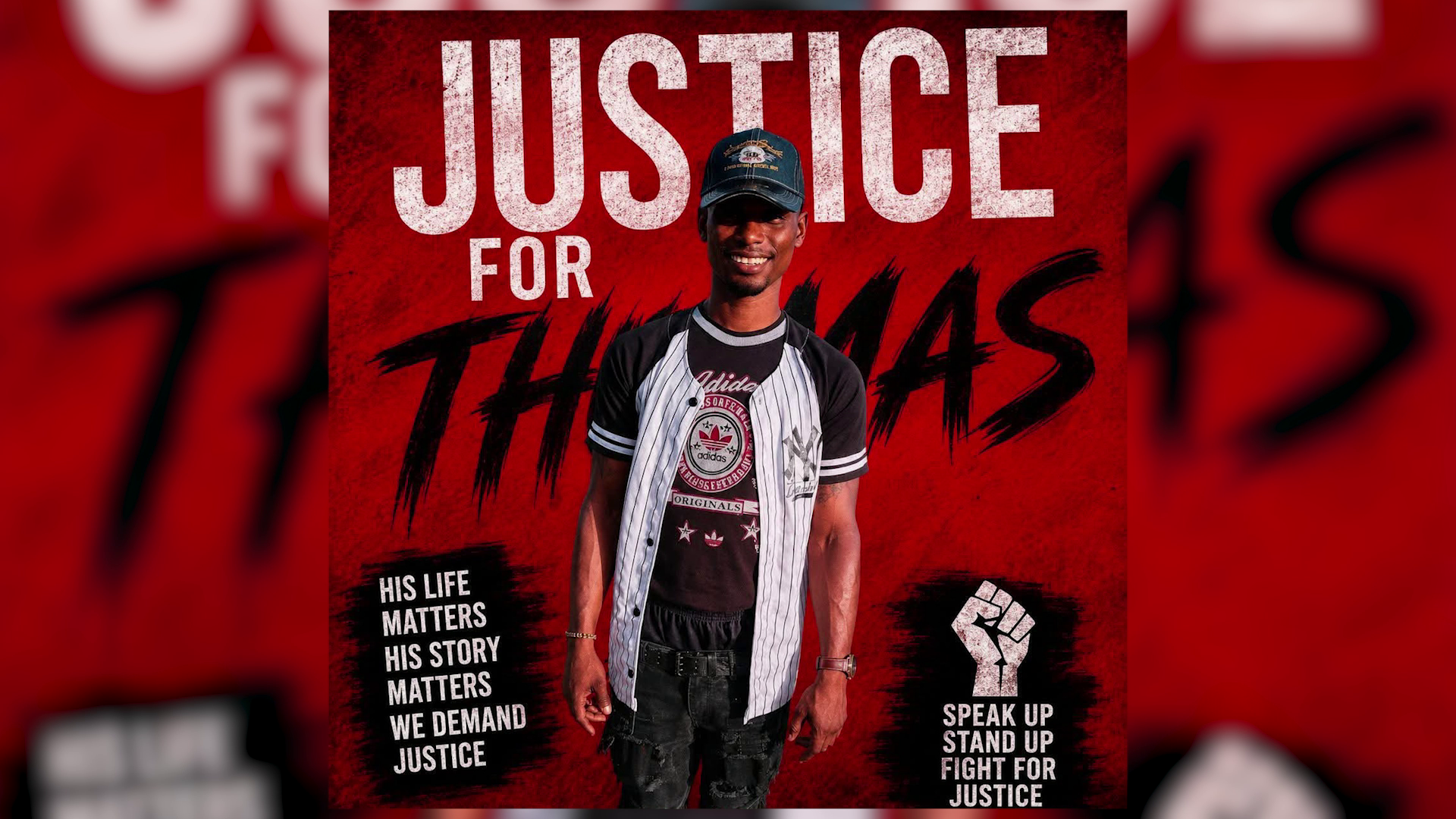
20-Year-Old Hai Ming Chen Arrested for Fatally Hitting ATV Driver
A fatal road traffic collision in Georgeville has left one local man dead and a 20-year-old facing serious criminal charges, as authorities move forward with an investigation into the deadly incident that has shaken the small community.
The victim, 27-year-old Georgeville resident Thomas Martinez, was riding an all-terrain vehicle (ATV) when he was struck from behind by a Dodge Charger driven by Hai Ming Chen, according to official police statements. The force of the impact threw Martinez from his vehicle into a roadside drainage ditch, and the crash proved fatal for the 27-year-old.
Following the completion of initial investigation work, police have formally taken Chen into custody and lodged three criminal charges against him: manslaughter by negligence, causing death by careless conduct, and driving a motor vehicle without due care and attention. Assistant Superintendent Stacy Smith, a staff officer with the police force, confirmed the charges in an official statement on the ongoing case.
“As a consequence of the ongoing investigation into the road traffic accident which claimed the life of Thomas Lester Martinez, police have formally arrested and charged Hai Min Chen for the crimes of manslaughter by negligence and causing death by careless conduct and the offense of drove motor vehicle without due care and attention,” Smith said.
In the wake of Martinez’s death, his grieving family has publicly called for fast and transparent accountability, pushing authorities to ensure justice is served for their loved one without unnecessary delays. The case remains active as the legal process moves forward, and investigators have not yet released additional details surrounding potential contributing factors to the collision, such as speed, alcohol or drug use, or road conditions at the time of the crash.
This report is adapted from a transcript of an evening television newscast originally published online.
-
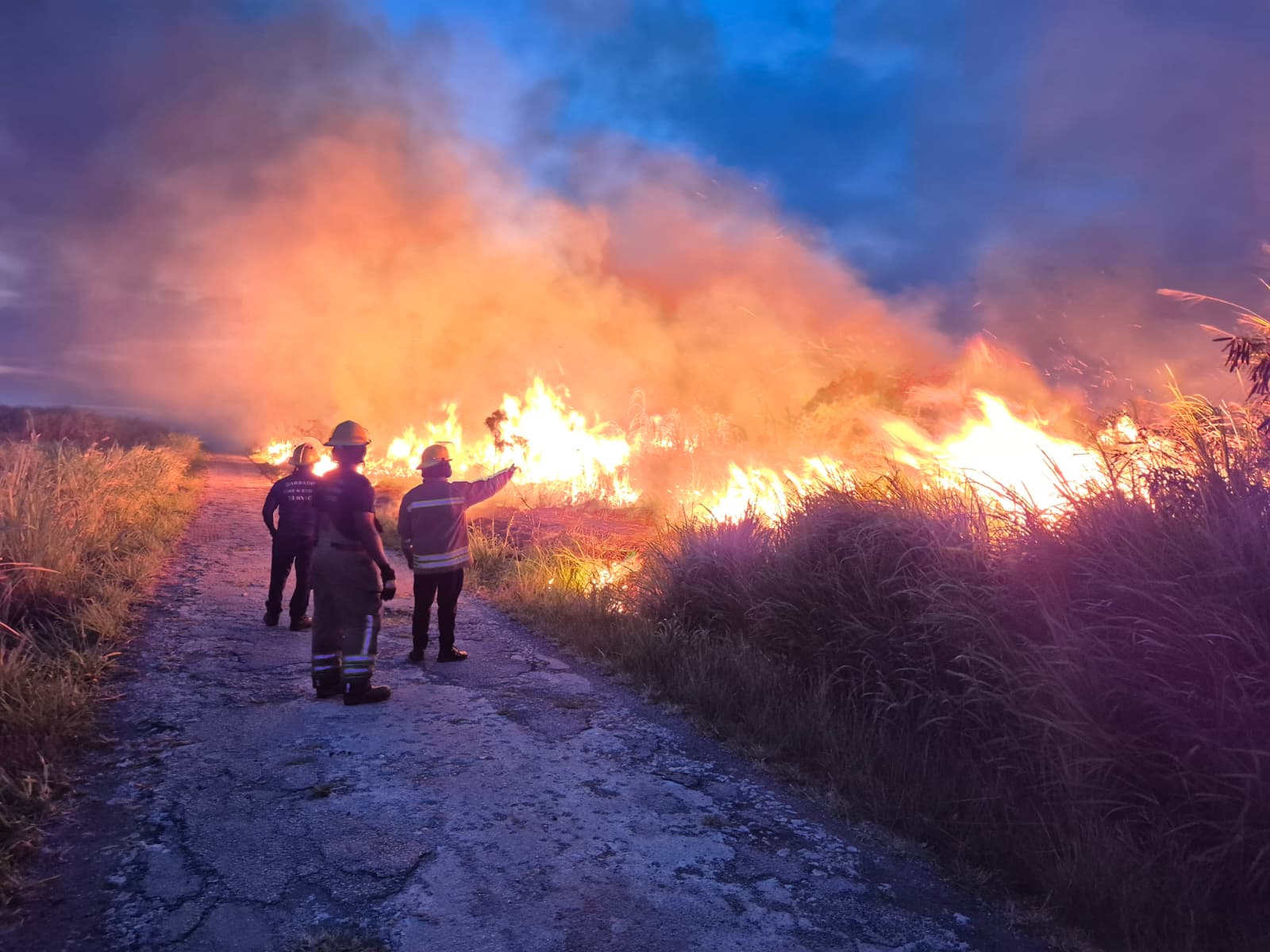
Grass fires to spread faster as heat, winds intensify, fire chief warns
Barbados’ top fire official has issued an urgent public warning, as a combination of soaring temperatures and sustained strong winds is projected to supercharge the spread and intensity of grass fires across the island, stretching emergency resources to their limit and putting residential property, livestock and community public health at severe risk.
Chief Fire Officer Errol Maynard delivered the caution on Monday, explaining that rising seasonal heat has already dried out vegetation across the country, creating tinder-like conditions that will make any accidental or intentional blaze far more destructive than normal. He emphasized that most of these fires are not sparked by the heat itself, but by human activity — and the current climate conditions simply turn small, controlled burns into unmanageable disasters in minutes.
“I am not convinced that the fires are starting because the place is hot. The fires are starting because people light these fires,” Maynard told local outlet Barbados TODAY. “What will happen is that the intensity of the fire, because the place is hotter, it is dry, so you will get a lot more grass fires during this period. It is hot and brown, so the intensity of the fire will increase, and the high winds that you are getting in recent times, the rate of the spread of the fire will also increase.”
The growing number of wildfires does not just threaten communities — it places extraordinary strain on the fire service’s personnel and equipment, Maynard explained. Even with robust training and specialized gear, firefighters are still vulnerable to heat exhaustion and fatigue when responding to multiple blazes in extreme high temperatures, stretching their ability to recover between calls. The department has already recorded multiple cases of private property being damaged when wind-carried burning embers sparked secondary fires on residential land.
Maynard highlighted far-reaching consequences for daily community life, with smoke from large blazes creating public health hazards for residents who are forced to inhale toxic fumes. Multiple schools across northern and eastern parishes of Barbados, including in St. Philip, have already been forced to close for multiple days, disrupting students’ learning and causing extended missed instruction. Just recently, a blaze in St. Lucy killed several grazing sheep and destroyed large patches of grass that local farmers relied on as feed for their livestock, threatening small-scale agricultural livelihoods.
In a stern appeal to local residents, Maynard stressed that ordinary people hold the key to reducing the risk of a catastrophic fire season. Even small open burns intended to clear land for gardening or kill rodents can quickly spiral out of control under current conditions. “When you light fires…because the place is really dry, the embers may blow far away, go into a dry field, burn it, and you might not even know that you spread the fire, or you caused a fire,” he said. “The other thing is, because the wind is high, and you are not skilled to do it, when you light a fire, it can easily get out of control, and that can cause significant problems for other people.”
Against this growing risk, Maynard confirmed that the Barbados Fire Service has had heat mitigation strategies in place for decades, as officials have observed rising average temperatures year over year dating back to the early 2000s. The department has already adjusted its operations to reduce unnecessary heat exposure for personnel: traditional daytime training activities have been shifted to cooler early morning or evening hours, and recruitment practical assessments now take place when temperatures are lower, with lectures scheduled for the hottest parts of the day.
All fire stations across the island have been outfitted with ice machines to provide constant access to cool drinking water, and fire trucks now carry ice-cold beverages for crews responding to extended calls. When firefighters work on a blaze for a prolonged period, the department has formal rehabilitation protocols to bring them in for cooling and refreshment before rotating them back to duty. Maynard added that while the service works to minimize heat stress, all crews still follow strict personal protective equipment protocols. When not working in the hottest active fire zones, firefighters are permitted to remove layers of gear to cool down, balancing safety with heat management.
“We generally look to the best practices in the industry,” Maynard said. “In all that doing, we still have to make sure they are safe. Fire officers understand, based on their training, that they are in the heat.”
-

Police Seize Gun and Drugs in Multiple Operations, Four Charged
Law enforcement agencies have wrapped up a series of coordinated anti-crime operations across the nation, culminating in the seizure of an unlicensed 9mm firearm and more than 61 grams of suspected crack cocaine, with four people facing criminal charges in connection with the busts. The multi-location operation, carried out by specialist intelligence and operations units of the national police force, unfolded across three different communities in mid-June 2026.
The first of the three separate incidents took place on an unspecified Wednesday, when officers executed a search warrant at a residential property in San Pedro Town. Inside the home, law enforcement personnel located a Ruger 9mm pistol loaded with six live rounds of ammunition. Two residents of the home, Balbina Camara and Melissa Mendez, were taken into custody immediately following the search. Both women have been formally charged with two criminal offenses: possession of an unlicensed firearm and possession of unlicensed ammunition.
In a second, unrelated operation conducted in Bella Vista Village as part of the national GH3 anti-drug initiative, officers stopped and searched Nelson Carl, a local resident. During the search, investigators discovered 3.4 grams of suspected crack cocaine, split into 34 individual small foil packets, hidden in Carl’s pants pocket. The packaging of the drug, divided into small individual portions, is consistent with street-level distribution of controlled substances. Carl was arrested and charged with possession of a controlled drug with intent to supply, a charge that carries significantly harsher penalties than simple personal possession.
The third bust unfolded on Friday, June 12, in Punta Gorda, where police stopped John Gabourel as he exited a local transportation terminal. Gabourel was carrying a manila envelope, and a consented search of the package revealed two large plastic bags holding 57.79 grams of suspected crack cocaine. The 35-year-old resident of Jose Maria Nunez Street was taken into custody on site, and he has also been charged with possession of a controlled drug with intent to supply.
All four accused are scheduled to appear in local magistrates’ courts in the coming weeks to answer to the charges against them. Police have not released additional details about bail arrangements or any possible links between the three separate cases at this time. The coordinated operations are part of an ongoing national push by law enforcement to crack down on illegal possession of firearms and the street-level distribution of illicit drugs, which officials have identified as key drivers of violent crime in communities across the country.
-

Rider safety warning over unlicensed ‘pirate’ transport
On Monday, senior insurance and public transport industry officials issued a critical public warning to commuters across Barbados: any passenger paying for travel in an unlicensed “pirate” private vehicle will have no financial protection if a crash occurs, and they are urging both riders and unregulated operators to bring their operations into full compliance with national licensing and insurance rules.
Randy Graham, Chief Executive Officer of CG United Insurance and a former president of the General Insurance Association of Barbados, explained that the persistent practice of private vehicle owners operating as informal, fare-charging public transport remains a major red flag for the country’s insurance sector. Speaking exclusively to Barbados TODAY, Graham emphasized that private vehicle registration under the island’s Road Traffic Act explicitly prohibits operators from collecting fares from passengers.
Any driver who wants to carry paying passengers must first secure a formal commercial operating license from the national Licensing Authority, and purchase a specialized commercial insurance policy that matches the higher risk of public transit operation, Graham outlined. “A standard private vehicle insurance policy does not extend coverage to fare-paying passengers,” he stressed. “If you are operating illegally and are involved in an accident, there is no guarantee that either the vehicle or the injured passengers will receive compensation from the existing insurance plan.”
Graham went on to explain the core difference between private and commercial coverage: commercial vehicles like taxis and minibuses spend far more time on the road transporting groups of passengers, so their licensing and insurance frameworks are designed to account for this elevated risk. Private policies are priced and structured for personal use, not regular commercial passenger transport, and do not offer the same level of protection for injured passengers that regulated commercial policies provide.
To address this ongoing risk, Graham called on unlicensed operators to update their paperwork and secure proper coverage immediately, while urging riders to proactively choose only fully registered and licensed transit options when paying for travel. “We are asking passengers to only use properly registered and licensed vehicles when they pay for a ride, because if they don’t, there is a very high chance that any injury costs from an accident will not be covered by insurance,” he said.
Roy Raphael, Chairman of the Alliance Owners of Public Transport (AOPT), echoed Graham’s warning, and noted that the Barbados government has put new accessible pathways in place to help informal operators transition to legal operation. Raphael pointed to the recent approval of 150 new permits under the government’s Transport Augmentation Programme (TAP), administered by the national Transport Authority, as a clear opportunity for unlicensed operators to regularize their work.
“If you want to transport passengers and offer a legitimate service, go to the Transport Authority and apply for a legal permit to operate,” Raphael said. “That way, if an incident does occur, you and your passengers are fully covered.” He also warned commuters against turning to unlicensed pirate operators even when regular public transit services are delayed on under-served routes, noting that riders are knowingly putting their own safety and financial security at risk. “People don’t expect accidents to happen, but when they do, there is no safety net left,” he added.
Raphael highlighted that the TAP program includes flexible payment plans for permit fees, making it far easier for small operators to bring their services into compliance with national rules. “Get yourself legalized. Stop putting children, elderly people and other commuters in unnecessary danger,” he urged. He also added a urgent note tied to rising road safety concerns across the island: the country has seen a growing number of severe road crashes involving passenger vehicles, including multiple incidents of vehicle overturns and mass casualties. Unlicensed operators often flee the scene of crashes because they know they have violated the law, leaving injured passengers with no one to turn to for compensation. “Don’t put yourself in that position,” Raphael warned.
-

LIU Director Says ‘We Never Paid People to Hold It Down’
A sudden suspension of a community-focused work programme run by Belize’s Leadership Intervention Unit (LIU) has pushed more than 500 participants into immediate financial uncertainty, with many facing severe daily hardship, acting LIU director Andrew Dawson has confirmed.
In an interview with local outlet News 5, Dawson acknowledged the acute stress the pause has inflicted on the programme’s enrollees, noting that widespread uncertainty over access to basic needs has created palpable tension among affected groups. “It does create some tension as it relates to these individuals, not knowing where the other meal comes from,” he told reporters.
The suspension has reignited long-running public debate over the LIU programme’s purpose and implementation, prompting Dawson to push back against two pervasive criticisms of the initiative. First, he rejected the widespread claim that the programme exclusively serves people affiliated with gangs, emphasizing that it was designed to support a broad cross-section of vulnerable Belizean residents. This population, he clarified, includes low-income university students and unpaid office interns seeking stable work experience alongside at-risk community members.
Dawson also addressed a decades-long critique that frames the programme as a scheme that simply pays participants to avoid criminal activity, a characterization he called categorically inaccurate. “Let me put that on record. Since I’ve been at LIU and even with the previous director, we have never had an intention to say that we’re paying people to hold it down. It was a social protection programme,” he stated.
While Dawson openly admitted that the programme has fallen short in key areas, including accountability protocols and consistent work output from some participants, he emphasized that the initiative has delivered meaningful, life-changing positive results for a large share of enrollees. He argued that discarding the entire programme over the actions of a small uncooperative minority would be unfair to the many participants who have made significant progress toward reintegrating into mainstream society.
“What do you do? You dash away everyone. How about those who have made changes or those who have made strides to becoming better persons within their society? We can’t just get rid of those persons because of a handful who do not want to cooperate,” he argued.
Looking ahead, Dawson confirmed that LIU leadership is currently exploring alternative income-generating models for the programme, moving beyond its existing focus on community beautification projects. However, he stressed that a final decision on whether to restart the programme rests with higher-level government authorities, not LIU management.
-

COMMENTARY: Elderly Abuse Awareness Day
Elder abuse remains one of the world’s most underrecognized human rights violations, flying under the radar in communities across every continent with far too few systemic responses to address its widespread harm. New data from the World Health Organization (WHO) underscores the staggering scale of this crisis: one in every six people aged 60 and older experiences some form of abuse, translating to nearly 141 million older adults impacted globally. Public health and human rights experts warn the true number is almost certainly far higher, as most cases of abuse, neglect and violence against older people go unreported, making this one of the most underdocumented violations of fundamental rights today.
-
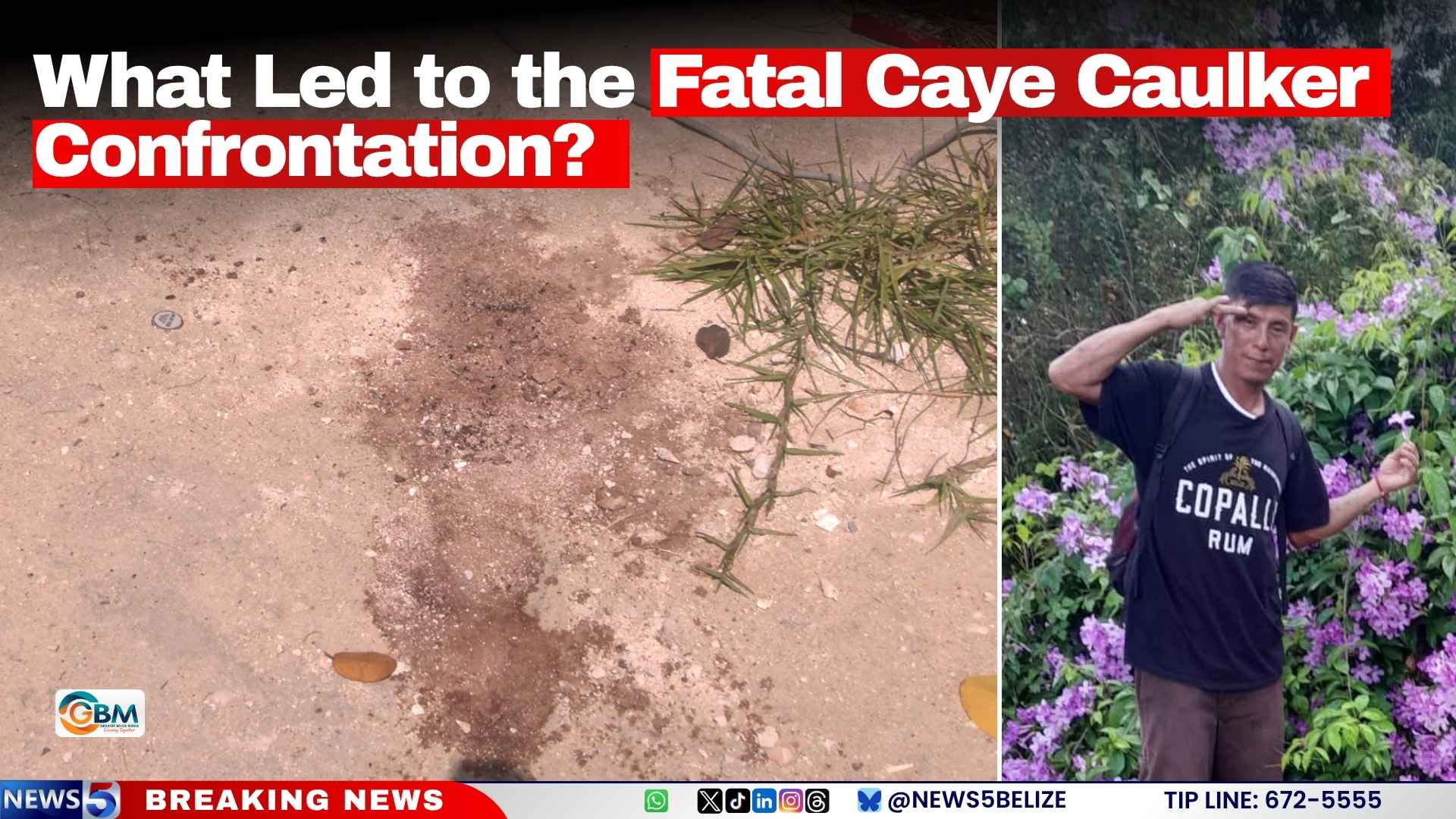
What Led to the Fatal Caye Caulker Confrontation?
On a quiet Saturday night on the popular island of Caye Caulker, a brutal and senseless killing has thrown a local family into grief and sparked calls for full transparency and justice. The victim, identified as 58-year-old Oscar Flota, a construction worker originally from Orange Walk, died after being assaulted multiple times with a shovel in what eyewitnesses have described as a violent public confrontation.
Flota’s family is still reeling from the sudden, devastating loss, with his niece Mariel Moh telling local reporters that the tragedy came completely out of the blue. “None of us ever imagined something this horrific could happen to him,” Moh said in an interview. “The brutal nature of his death has left our entire family in shock. We are still struggling to process what happened.”
Early statements from law enforcement to the family suggest the fatal attack grew out of a verbal dispute or misunderstanding between Flota and the attacker or attackers. But as of this report, the family says they have yet to receive a clear, official explanation of the incident, leaving them with more questions than answers. Unconfirmed reports circulating among relatives also indicate the confrontation may have involved people Flota knew personally, but those details have not been verified by police.
Flota had been living on Caye Caulker for an extended period alongside one of his three sons, working in local construction to support his family. Relatives remember him as a loving, dedicated provider who prioritized his family above all else. “He never turned away from any of us when we needed him,” Moh recalled. “He was always happy, always smiling, and he could make anyone laugh. He was such a fun, good person.”
Moh also pushed back against early unsubstantiated rumors that alcohol consumption contributed to the confrontation. “Even when he had been drinking, he was never an aggressive or confrontational person,” she said. “That’s just not who Oscar was.”
As investigators continue to piece together the events leading up to Flota’s death, his family remains firm in their demand for a full, thorough investigation and justice for their loved one.
-
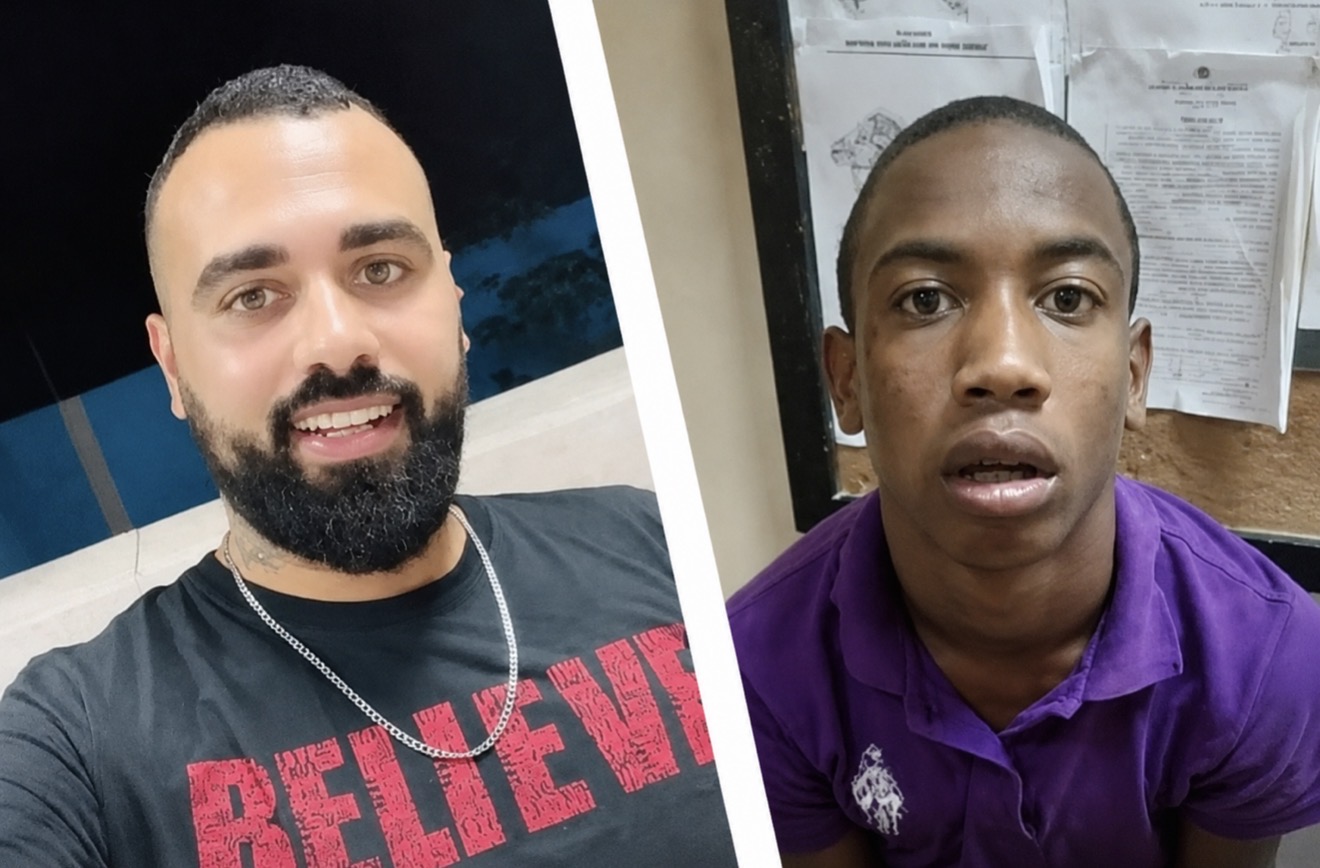
Jahciba Shoy Goes on Trial for Murder of Syrian Businessman Roudi Shmaly
The High Court has officially opened proceedings this week in the high-profile murder case of Jahciba Shoy, who stands accused in the May 2023 fatal shooting of Syrian businessman Roudi Shmaly. The case traces back to a violent incident that unfolded at the Pick ’n Mix Mart located on Desouza Road, where Shmaly was killed in a shooting that prosecutors say was tied to a simultaneous robbery. Shoy faces two serious charges: one count of murder and a second count of aggravated robbery, both originating from the same May 2023 event. Since he was taken into police custody immediately after the shooting, the defendant has been held without bail in correctional custody, a status that has remained unchanged throughout the pre-trial process. To mount his defense, Shoy has been appointed legal representation by experienced criminal defense attorney Wendel Alexander, who has begun presenting the defense’s position in the opening days of the trial. Over the course of the coming week, the court is scheduled to hear testimony from witnesses, receive physical evidence from both the prosecution and the defense teams, and move through the core stages of the trial process as the justice system works to reach a verdict in the killing. Legal observers note that the trial will proceed according to standard criminal procedure, with both sides given full opportunity to make their cases before the judge and jury.
-

CRFM pays tribute to Dr Shelly-Ann Cox
The Caribbean’s regional fisheries sector is in mourning this week following the unexpected death of Dr Shelly-Ann Cox, Barbados’ long-serving Chief Fisheries Officer, who leaves behind a decades-long legacy of advancing sustainable marine management and supporting fishing communities across the region.
In an official statement released after the news of her passing, the Secretariat of the Caribbean Regional Fisheries Mechanism (CRFM) expressed deep sorrow at the sudden loss of one of the sector’s most respected voices. The organization highlighted that Dr Cox earned widespread admiration across the Caribbean and beyond for her exceptional expertise, steadfast leadership, and unwavering commitment to the sustainable growth of fisheries and aquaculture.
Throughout her distinguished career, Dr Cox dedicated her professional life to serving not only her home nation of Barbados but the entire Caribbean region. As Chief Fisheries Officer, she played an instrumental role in advancing three core pillars of responsible marine stewardship: rolling out evidence-based sustainable fisheries management frameworks, building greater economic and social resilience among vulnerable fishing communities, and pushing for collaborative, long-term protection of the region’s shared marine resources. She was also a key driving force behind deeper regional cooperation on priority issues affecting both wild capture fisheries and the fast-growing aquaculture sector.
Dr Cox’s impact extended far beyond Barbados’ territorial waters. Through her consistent active participation in regional initiatives and close collaborative work with the CRFM and other regional partner organizations, she helped shape transformative policies and programs that have strengthened regional fisheries governance, improved regional food and nutrition security, and lifted the livelihoods of thousands of small-scale fisherfolk and fish processing workers across the Caribbean. Her insights and perspective were consistently sought out in high-level regional policy discussions, and her relentless advocacy for sustainable sector development has created a lasting legacy that will continue to benefit Caribbean communities for generations to come.
The CRFM closed its statement by extending heartfelt condolences to Dr Cox’s family, her colleagues at Barbados’ Fisheries Division, and all fisherfolk and fishing communities across Barbados. “During this time of profound loss, our thoughts and prayers remain with her loved ones, her team at the Fisheries Division, and the people of Barbados’ fishing communities, who have lost a dedicated advocate and unwavering champion,” the statement read. “We hope they find comfort in the extraordinary impact Dr Cox achieved during her lifetime, and in the countless lives she touched through her public service. We stand with the people of Barbados in mourning her passing, and in celebrating a life entirely devoted to advancing the Caribbean fisheries sector and the wellbeing of all Caribbean people.”