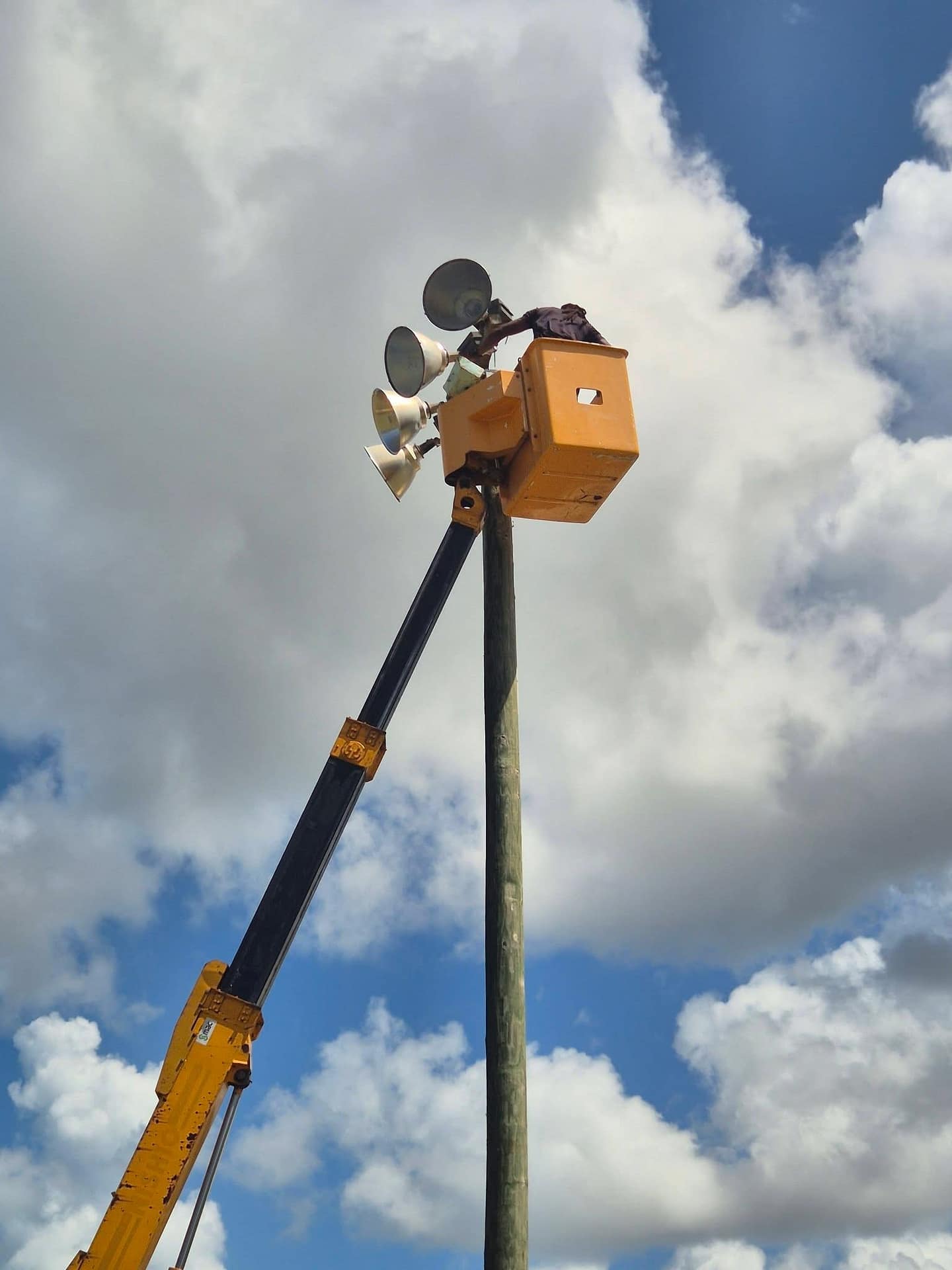
Residents of the constituency are witnessing tangible progress in local infrastructure as construction teams actively execute road improvement operations along Westerly Street. This project represents a critical phase within a broader, coordinated initiative aimed at modernizing the area’s transportation network. The ongoing upgrades focus on enhancing road durability, improving traffic flow efficiency, and elevating overall safety standards for both motorists and pedestrians. Local authorities have coordinated the construction schedule to minimize disruption while ensuring timely completion. The Westerly Street improvements specifically address long-standing maintenance requirements that have accumulated over previous years. These infrastructure investments form part of the constituency’s comprehensive strategy to bolster public works systems and stimulate community development through enhanced urban facilities. Construction managers report that the project remains on schedule despite weather-related challenges encountered during early implementation phases. The initiative has generated positive feedback from community members who have long advocated for infrastructure attention in this corridor.
分类: society
-

‘That hurts my heart’
Jamaica Public Service Company (JPS) CEO Hugh Grant has confirmed to parliamentary officials that an arrest has been made in connection with extortion attempts targeting customers awaiting power restoration after Hurricane Melissa. The disclosure came during Tuesday’s session of the Public Administration and Appropriations Committee (PAAC) where legislators grilled utility executives about allegations that residents were being solicited for illegal payments to expedite electricity reconnection.
Grant expressed profound disappointment regarding these exploitative practices, stating: ‘When you say that workmen request to be paid, that hurts my heart during this unprecedented time of hardship.’ He emphasized the company’s zero-tolerance stance toward such activities and revealed that swift action had been taken upon discovering the scheme.
The JPS president outlined comprehensive countermeasures implemented since the hurricane devastated Jamaica’s power infrastructure last October. These include enhanced monitoring systems, public awareness campaigns through town criers and text messages, and deployment of security personnel to affected areas. ‘We have done town criers, we have done texts, we have also sent out our security forces in many operations,’ Grant detailed during the committee hearing.
Importantly, Grant clarified that the apprehended individual was not employed by JPS, though the company continues to collaborate closely with law enforcement agencies to identify and prosecute additional offenders. The arrest comes amid widespread public frustration over prolonged outages that left tens of thousands of customers without electricity for extended periods across multiple parishes following Hurricane Melissa’s destructive path.
The utility executive urged affected communities to report any solicitation attempts immediately, promising robust response measures: ‘Give me a lead and I guarantee you we will have our security forces out there and we will ensure that we do right by the law.’
-

DCS upgrading key institutional spaces to raise standard of care and rehabilitation
KINGSTON, Jamaica — Jamaica’s Department of Correctional Services (DCS) is executing a comprehensive modernization strategy focused on transforming institutional infrastructure and security protocols to elevate rehabilitation standards for incarcerated individuals. Commissioner noted this initiative during his address at the Planning Institute of Jamaica (PIOJ) 10th Best Practice Symposium for Social and Community Renewal on January 28.
The commissioner emphasized that rehabilitation begins immediately upon intake, with enhanced physical environments serving as foundational to educational advancement, skills acquisition, and personal development. “Our commitment to humane treatment extends to improving the physical environment where rehabilitation occurs,” he stated, announcing an upcoming media tour to showcase these transformations publicly.
Substantial upgrades have been applied to critical facilities including classrooms, vocational workshops for tailoring and welding, computer laboratories, and inmate radio stations. These improvements are designed to meet professional benchmarks equivalent to national training institutions and HEART/NSTA Trust standards. “These are deliberate enhancements creating dignified, structured spaces for meaningful rehabilitation,” Commissioner Mason affirmed.
A significant outcome of this initiative will be the launch of an online store featuring products crafted by offenders, advancing institutional self-sufficiency and inmate earning potential. Concurrently, the DCS is reinforcing security through state-of-the-art full-body and bag scanners at all facilities, plus a specialized gate management team to standardize procedures and enhance vigilance during critical hours.
The department is also implementing dynamic inmate reclassification processes that support appropriate work placements and enable qualified individuals to transfer to lower-security institutions. This evidence-based approach tailors interventions to individual risk levels, accounting for literacy, mental health needs, and learning styles to maximize rehabilitation efficacy.
-

New Bill seeks to tighten rules on gated communities
Jamaica’s Parliament has ushered in a new regulatory era for gated communities with the introduction of the transformative Shared Communities Act 2026. Tabled in the House of Representatives, this comprehensive legislation establishes a rigorous legal framework to govern the nation’s rapidly expanding private residential developments.
The Act mandates the creation of legally recognized Community Corporations for all registered shared communities. These corporations, governed by elected executive committees of property owners, will bear significant responsibilities. Their duties encompass maintaining detailed proprietor registries, ensuring common property upkeep, implementing long-term maintenance strategies, and managing community funds for administrative and insurance purposes.
A pivotal aspect of the legislation empowers the Real Estate Board as the primary regulatory authority. The Board will process community registrations, issue operational certificates, maintain official records, and facilitate dispute resolution between proprietors and community corporations. Its extensive powers include ordering the removal of non-compliant animals from properties and invalidating improperly passed corporation resolutions.
To address chronic issues of fee delinquency, the law establishes formidable enforcement mechanisms. Community corporations can now pursue property seizure and sale against owners with outstanding maintenance fees, following strict notification procedures supervised by the Real Estate Board. Prior to sale, corporations may obtain court orders for property possession, enabling them to rent out delinquent units and apply rental income toward owed contributions.
Financial penalties reach unprecedented levels, with courts authorized to impose fines up to $1 million Jamaican dollars for by-law violations. The legislation additionally allows for interest accrual on unpaid contributions and enables parish courts to adjudicate collection cases without monetary limits.
Recognizing that many proprietors reside abroad, the law requires non-resident owners to appoint local agents to fulfill their obligations. Although introduced by Prime Minister Andrew Holness’s administration, the bill was presented by Minister Robert Montague. Opposition Parliamentarian Julian Robinson has called for further legislative scrutiny through a joint select committee, highlighting the bill’s profound implications for property rights and community governance.
-

$30 million worth of cocaine seized at Sangster airport, St Elizabeth farmer being sought
Jamaican authorities have launched an intensive search for a St. Elizabeth farmer following the interception of a substantial cocaine shipment weighing approximately 50.2 kilograms at Sangster International Airport. The significant narcotics seizure occurred on Monday evening during routine security operations.
Law enforcement officials from the Firearms and Narcotics Investigation Division (FNID) have identified the wanted individual as Renaldo Brooks, who is now considered a person of interest in the ongoing investigation. The discovery was made around 7:00 pm when advanced scanning equipment detected irregularities within a suitcase scheduled for transit to Canada.
Upon thorough inspection, narcotics officers uncovered multiple sealed packages containing what was later confirmed to be high-purity cocaine. The confiscated drugs, totaling over 100 pounds, carry an estimated street value of J$30 million (approximately US$192,000), representing one of the major drug interdictions at Jamaican ports this year.
Superintendent Patrae Rowe, Director of FNID, emphasized the critical importance of enhanced security measures at Jamaica’s entry points. “Our intensified vigilance at port facilities continues to yield significant results in combating narcotics trafficking,” Rowe stated. “This successful operation demonstrates our unwavering dedication to dismantling drug networks and prosecuting individuals who attempt to exploit our aviation infrastructure for illegal purposes.”
The recent seizure follows a similar incident earlier this month that resulted in the arrest and charging of two senior municipal corporation employees. Those arrests were connected to another cocaine interception at the same airport valued at over J$5 million, indicating persistent challenges with drug smuggling operations through Jamaican transportation hubs.
-

Murders plummet 31% as major crime hits record lows
The Bahamas has witnessed a dramatic downturn in criminal activity during 2025, marking one of the most significant nationwide crime reductions in decades. Police Commissioner Shanta Knowles unveiled these transformative results during the Royal Bahamas Police Force’s annual crime briefing, revealing substantial declines across multiple major offense categories.
Preliminary statistical analysis indicates an overall 15 percent reduction in major crimes, decreasing from 2,825 incidents in 2024 to 2,409 cases in 2025. This positive trend manifested across all regions, with New Providence leading at 16 percent reduction, followed by the Family Islands at 13 percent, and Grand Bahama with the Northern Bahamas region at 8 percent.
Violent crimes against persons demonstrated particularly impressive improvement, plunging by 27 percent from 696 to 509 reported cases. The most striking development emerged in homicide statistics, which recorded an unprecedented 31 percent decline—from 120 murders in 2024 to 83 in 2025. Commissioner Knowles emphasized this represents both the largest percentage decrease since national crime tracking began in 1963 and the lowest homicide count in a comparable policing environment since 2008.
Geographic distribution of homicides showed New Providence accounting for 76 killings, while the Family Islands and Grand Bahama recorded 4 and 3 respectively. Demographic analysis revealed 83 percent of victims were aged 18-45, with males comprising 93 percent of homicide casualties. Retaliation, gang activity, and personal conflicts motivated 43 percent of these incidents, with firearms used in 64 cases.
Property crimes similarly exhibited substantial improvement. Armed robberies plummeted by 39 percent (265 to 162 cases), while non-armed robberies decreased by 22 percent (59 to 46 cases). Residential break-ins nearly halved, dropping from 331 to 170 incidents, and commercial burglaries declined by 13 percent to 273 cases. Although vehicle thefts saw a slight 2 percent increase to 398 cases, law enforcement recovered 59 percent of stolen vehicles.
Law enforcement achievements included the seizure of 366 illegal firearms and over 11,200 rounds of ammunition, resulting in 828 arrests and 292 criminal charges. Advanced ShotSpotter technology documented 970 gunshot incidents throughout the year. Collaborative operations with Customs and Immigration authorities yielded an additional 37 firearms and more than 5,400 ammunition rounds.
Commissioner Knowles attributed these remarkable improvements to strategic initiatives including intelligence-led policing methodologies, enhanced officer visibility, targeted operational deployments, and strengthened community partnerships. The 2026 Policing Plan will build upon these successes with continued focus on disrupting firearms and drug trafficking networks, further reducing property crimes, and intensifying youth and community engagement programs.
“The progress achieved in 2025 conclusively demonstrates that strategic, intelligence-led policing produces measurable results,” Commissioner Knowles stated. “Through unified effort and continued collaboration, we will further advance toward a safer and more secure Bahamas.”
-

$1.7b programme to rehabilitate 200 roads by March
KINGSTON, Jamaica — The Jamaican government has initiated an ambitious $1.7 billion Graded Overlay Emergency Road Rehabilitation (GO) Programme to address widespread infrastructure damage caused by Hurricane Melissa. With a target completion date set for the end of March, the comprehensive initiative aims to restore approximately 200 roadways across multiple parishes.
Minister Robert Morgan, who holds portfolio responsibility for Works within the Ministry of Economic Growth and Infrastructure Development, provided detailed allocations during a recent post-Cabinet press briefing at Jamaica House. The program, which commenced in December, represents one of the most significant infrastructure rehabilitation efforts in recent years.
Clarendon Parish will receive $206 million for critical repairs along major transportation corridors including Four Paths to Guinep Tree, Hazard Drive, Bustamante Highway, and routes connecting Whitney Turn, Four Paths to Freetown, and the road to Porus. Additional funding will address infrastructure in Salt River Road, Rastaman Corner, Portland Cottage, May Pen to Chapelton, Colonel’s Ridge to Kellits, Spalding, Cave Valley, Pennants, Frankfield, Summerfield and Trout Hall.
The capital region of Kingston and St. Andrew has been allocated $500 million for extensive roadway improvements. This funding will rehabilitate essential corridors including Mannings Hill Road, Washington Boulevard, Duhaney Drive, Perkins Boulevard, Red Hills Road, Slipe Road, and the connecting route from Golden Spring to Stony Hill. Additional repairs will focus on Stony Hill to Manor Park, Weymouth Drive, Arcadia, Shortwood Road, Papine Square to Gordon Town, and John Golding Road.
Western parishes will also see substantial investment, with St. James receiving $130 million for main corridor repairs and an additional $100 million designated for Montpelier works. The Montego Bay township will undergo comprehensive rehabilitation including Barnett Street, St. James Street, and Howard Cooke Boulevard, alongside the critical connecting routes from Anchovy to Shettlewood and Reading to Anchovy.
Trelawny Parish has been allocated $107 million for roadway repairs in Salt Marsh, Bengal, Falmouth, Duncans, Long Pond, Wire Fence, Warsop, and Jackson Town. Meanwhile, Westmoreland will benefit from approximately $100 million in funding for infrastructure rehabilitation in Goodens, Glasgow, Bartlett’s River, Negril, Ferris Cross, Torrington, and Scott’s Cove.
Minister Morgan emphasized that these allocations are separate from ongoing repairs addressing roads washed out by Hurricane Melissa. Despite implementation challenges including heavy rainfall and temporary asphalt plant closures, the Minister confirmed the program is progressing earnestly. Most contractors have either submitted required insurance documentation to the National Works Agency or are in the final stages of compliance, with physical work expected to commence before month’s end.
-

TotalEnergies Jamaica donates 1,884 solar lamps to aid hurricane recovery
KINGSTON, Jamaica — In a significant boost to post-hurricane recovery efforts, TotalEnergies Jamaica has delivered 1,884 solar-powered lamps to humanitarian organizations across the island. The substantial donation, distributed between Food For The Poor (FFTP) and the Salvation Army, was formally presented during a ceremony at the energy company’s corporate headquarters last Friday.
This initiative addresses a critical infrastructure gap persisting after Hurricane Melissa’s devastating passage. While Jamaica Public Service has worked to restore main power grids, Marsha Burrell-Rose, Marketing and Public Relations Manager at FFTP, highlighted that numerous remote mountainous communities remain without electricity and telecommunications. “These solar lamps will definitely help us because, if they don’t have anything, they do have sunlight in abundance,” she stated, expressing gratitude for the 1,164 lamps allocated to her organization.
The Salvation Army received 720 units, which Colonel Edward Lyons, Chief Secretary for Caribbean Territorial Emergency Disaster Services, described as meeting an urgent need. “People have been calling for these same lamps for a long time,” Lyons revealed. “They are very scarce. It’s the first time this amount has ever been made available locally.” He emphasized that the lamps provide a vital alternative for residents who cannot afford generators, though distribution would require careful planning to maximize impact.
TotalEnergies executives Howard Henry (Retail, Shops, Foods and Services Manager) and Ulanda Graham (Human Resources Director) emphasized their deliberate selection of partner organizations based on rigorous due diligence. Burrell-Rose affirmed FFTP’s operational transparency, noting their 43-year track record: “We don’t just give away items. We capture data, monitor and evaluate. We believe in showing people how we are spending their money.”
The solar lamps represent the latest phase in TotalEnergies’ comprehensive hurricane response, which began November 13 with 700 care packages delivered to St. Elizabeth and included subsequent monetary donations of $10,000 to Jamaica Red Cross and $20,000 to FFTP in December.
Managing Director Vincent Daniault, who witnessed the hurricane’s unprecedented destruction firsthand, expressed his personal commitment to the relief efforts. Having toured affected areas from Montego Bay to Black River, he recounted: “The buildings were destroyed and trees stripped bare. It was difficult not to act seeing the kids and people. I have never seen anything like this.”
The distributed Sunshine 150 Solar Lamps represent advanced appropriate technology, featuring detachable solar panels, USB ports for mobile phone charging, and capability to provide up to 100 hours of illumination across four lighting modes. Valued at approximately $60 per unit internationally, these lamps have previously been deployed by TotalEnergies in energy-deprived regions of Africa, reflecting the company’s broader commitment to energy access in vulnerable communities.
-

WATCH: NSWMA workers protest after colleague dies of electrocution
KINGSTON, Jamaica — Grief and frustration erupted at the National Solid Waste Management Authority (NSWMA) headquarters as sanitation workers staged an emotional protest following the tragic death of their colleague Garfield Johnson. The sanitation worker succumbed to severe burn injuries on Tuesday, January 27, after being electrocuted during operations in the Greenwich Farm community of St Andrew eleven days prior.
According to official reports, the fatal incident occurred on January 16 when Johnson was performing his duties on a garbage truck that became entangled with live electrical wiring. Despite being rushed to medical facilities and considered for transfer to a specialized burn unit, Johnson could not overcome his critical injuries.
The protest revealed significant tension between frontline workers and management, with attendees expressing anger over perceived communication failures following the tragedy. Mourners gathered outside NSWMA offices weeping openly while displaying placards bearing messages including ‘RIP’ and ‘No justice.’
Audley Gordon, Executive Director of NSWMA, countered claims of inadequate response, stating that authority officials had maintained consistent contact with Johnson’s family since the incident and had visited him in hospital. Gordon emphasized the organization’s commitment to allowing space for collective grieving, describing Johnson as ‘a dedicated sanitation officer’ who ‘served up to the point of his demise.’
In an official statement, the NSWMA acknowledged the inherent dangers faced by sanitation workers across Jamaica and extended condolences to Johnson’s family and colleagues. The Jamaica Public Service Company has launched its own investigation into the electrocution incident, while police authorities continue their separate inquiry into the circumstances surrounding the operational tragedy.
-

Rise & Thrive initiative strengthens community leadership in Kingston ZOSO
KINGSTON, Jamaica — A transformative initiative is delivering crucial support to community organizations operating within Kingston and St Andrew’s most vulnerable neighborhoods. The six-month Rise & Thrive project, funded by the UK’s Foreign, Commonwealth and Development Office (FCDO) and implemented by the Council of Voluntary Social Services (CVSS), represents a strategic intervention in four Zones of Special Operations (ZOSOs) communities: Parade Gardens, Greenwich Town, Denham Town and August Town.
The program specifically addresses governance gaps that have emerged following the initial security-focused phases of Jamaica’s ZOSO framework. According to Project Manager Damion Hylton, while earlier ZOSO phases concentrated on ‘clearing and holding’ operations, the crucial ‘build phase’ requires strengthened community governance to ensure sustainable social and infrastructure development.
Rather than introducing new programs, the initiative focuses on enhancing existing community-led efforts through institutional capacity building. In close collaboration with the Social Development Commission (SDC), the project provides targeted training in governance structures, project planning, financial management, and monitoring systems. This approach enables Community Development Committees (CDCs) and other grassroots organizations to transition into formal civil society entities capable of independently accessing funding and implementing programs.
A distinctive feature of the initiative is its emphasis on youth leadership development. Recognizing that young people are both disproportionately affected by violence and statistically overrepresented in crime statistics, the program actively cultivates their participation in community decision-making processes.
The personal impact is already evident among participants. Jada Brown, a 20-year-old university student from August Town, reports that the leadership training has transformed her self-perception: ‘Being selected as a leader for change has made me feel empowered. I believe I can use what I’ve learnt to inspire other young people.’
Similarly, Hopeton Robinson of Parade Gardens has leveraged the initiative to advance youth development through a football program that successfully unites youths from previously conflicting communities.
The project incorporates peacebuilding, restorative justice, and violence interruption approaches to address various community conflicts beyond crime reduction. By the conclusion of the six-month period, communities are expected to demonstrate more active CDCs, enhanced collaboration among civil society groups, and stronger partnerships with government agencies through coordinated ‘community conversations’ that assess needs and reduce effort duplication.