分类: society

  • Dainisha Eusebe secures sponsorship from Kingdom Bank Corporation for Miss Dominica bid

    Dainisha Eusebe secures sponsorship from Kingdom Bank Corporation for Miss Dominica bid

    In a significant corporate-cultural partnership, Kingdom Bank Corporation has announced its inaugural sponsorship of contestant Dainisha Eusebe for Dominica’s 2026 Carnival Queen Pageant. The formal sashing ceremony occurred during this week’s carnival press conference, marking the international banking institution’s first venture into supporting national cultural events.

    Aurelle Joseph, Compliance Executive of Kingdom Bank Corporation, presented the sponsorship while emphasizing the institution’s commitment to Dominica’s development. “While our clients are primarily international, our presence and purpose here always remain connected to the Commonwealth of Dominica,” Joseph stated. “Over the past five years, we have consistently maintained economic investment, professional engagement, and regulatory partnership right here at home.”

    The banking executive utilized the platform to clarify Kingdom Bank Corporation’s operational model as an internationally registered online bank providing private and corporate banking services within Dominica. Joseph characterized the institution as embodying “a forward-looking approach to global banking, while playing a meaningful role in the growth and development of Dominica.”

    Miss Eusebe, representing the Grandbay community, expressed profound gratitude for the corporate endorsement. “To be a contestant in the 2026 National Queen Pageant is already a dream,” she acknowledged, “but to have that dream supported by a corporate partner like the Kingdom Bank Corporation makes this moment even more meaningful.”

    The contestant pledged to represent her sponsor “with excellence, grace, and purpose,” while noting the historical significance of being the first pageant candidate ever sponsored by the financial institution. This partnership signals growing corporate recognition of cultural events as platforms for community engagement and national development.


  • Chef Eric Vasson shares skills with aspiring Saint Lucians

    Chef Eric Vasson shares skills with aspiring Saint Lucians

    Thirteen culinary students at the TVET Institute School of Sustainable Agriculture and Culinary Arts experienced an extraordinary masterclass on January 7th, guided by internationally renowned Chef Eric Vasson. The seasoned professional, whose career includes prestigious positions at five-star establishments and MetLife Stadium where he catered for NFL teams including the New York Giants and Jets, shared his extensive expertise with aspiring chefs.

    The immersive session provided a vital bridge between academic learning and practical application in the culinary arts. Chef Vasson emphasized three fundamental pillars for success in the industry: rigorous discipline, creative innovation, and adaptive flexibility. Through comprehensive demonstrations spanning advanced boning techniques to inventive dessert preparation, he established a foundation for students to apply these principles.

    The curriculum culminated in an unexpected basket challenge, allowing participants to demonstrate their newly acquired skills under pressure. This practical test mirrored real-world kitchen scenarios that professionals encounter regularly.

    A native of La Pointe, Mon Repos, Chef Vasson pursued advanced culinary studies in Spain before building an impressive international career. His professional journey eventually led him to establish Island Wheels, a thriving culinary enterprise in Virginia.

    In an exclusive interview with St. Lucia Times, Vasson expressed his enthusiasm for returning to his homeland: “Having traveled extensively and achieved international experience, I’m passionate about contributing to the next generation of culinary professionals. My goal is to inspire them to surpass even my own accomplishments.”

    Student Leon Malcolm reflected on the practical knowledge gained: “Mastering whole chicken breakdown techniques represented a significant skill development I hadn’t previously acquired.”

    Fellow participant Vernick Fulgence emphasized the mindset required: “Culinary excellence demands open-minded exploration. For adventurous and inquisitive individuals like myself, this training provides exceptional value.”

    Sonia Bispack, the institute’s culinary arts instructor, clarified the program’s advanced nature: “Our curriculum operates at an elevated standard compared to conventional food and nutrition programs. Students achieve mastery through extended developmental periods across diverse culinary disciplines.”

    Program facilitators anticipate that this caliber of industry exposure will significantly advantage students as they progress in their professional culinary journeys.

  • Psychologist: Society can benefit from sustained, equitable law enforcement

    Psychologist: Society can benefit from sustained, equitable law enforcement

    Recent substantial increases in traffic penalties and government service fees have sparked widespread public discontent across Trinidad and Tobago. While authorities justify these measures as necessary to address pervasive road lawlessness, citizens counter that the hikes impose additional burdens on a population already struggling with unemployment, soaring living costs, and economic despair.

    A behavioral psychologist, speaking anonymously, criticized the government’s historical laissez-faire approach to regulation enforcement. “We must recognize that law is law and rules are rules,” the expert stated. “Enforcement doesn’t require harshness but rather firm, consistent application. Our pattern has been enthusiastic crackdowns that gradually fade into neglect—recall the initial enthusiasm with speed guns that ultimately vanished from roads.”

    The psychologist noted that societal behavior often involves risk-taking tendencies, citing last-minute Christmas shopping and event ticket purchases as examples of cultural patterns that influence policy decisions. The specialist predicted citizens would scrutinize whether enforcement would be applied equitably across geographic regions, particularly between areas with different political affiliations.

    University of the West Indies sociologist Dr. Shelene Gomes emphasized that effective societal functioning requires consensus-based rules serving majority interests. “The core issue emerges when legislation and institutions fail most citizens,” Gomes explained. “Simultaneously reducing social protections while increasing fines creates a combustible situation. The working class faces extreme difficulty, and even the middle class has diminished financial cushioning.”

    Dr. Gomes referenced historical parallels from decades past when oil revenue declines and structural adjustments similarly strained citizens, urging authorities to learn from previous experiences.

    Public testimony reveals deep frustration. Tobago taxi driver Sean Guerra acknowledged the need for penalties but condemned the 100% increases: “This will cause societal chaos. People can barely afford groceries—the majority are suffering.” Guerra reported cases where minor vehicle imperfections, including torn seats, were being penalized, questioning their relevance to road safety.

    An anonymous school teacher and single mother of three described the fines as “ridiculous,” noting that even gainfully employed individuals would struggle to pay penalties for minor infractions like windshield chips. She anticipated having to reduce grocery and bill payments if fined.

    The government has proposed amendments allowing motorists 3-7 days to rectify vehicle defects before facing penalties, with legislation expected for parliamentary debate late January. However, the fundamental tension remains between public safety objectives and their economic impact on an already strained population.

  • Media bodies warn of democratic and industry fallout as Newsday winds up operations

    Media bodies warn of democratic and industry fallout as Newsday winds up operations

    The Caribbean media landscape faces a severe crisis as Newsday, Trinidad and Tobago’s prominent daily newspaper, initiates winding-up procedures after 32 years of operation. This development has triggered widespread alarm among media organizations and professionals who warn of significant implications for democratic discourse and media pluralism throughout the region.

    The Trinidad and Tobago Publishers and Broadcasters Association (TTPBA) expressed profound concern over the closure, attributing it to a convergence of economic challenges, technological disruption, and structural pressures reshaping the media industry. The association highlighted how evolving consumption patterns and rapid digital transformation have fundamentally impacted print media worldwide, creating increasingly difficult operating environments for traditional news organizations.

    Regional media watchdog Media Institute of the Caribbean (MIC) characterized the closure as symptomatic of a deeper structural crisis affecting traditional media across the Caribbean. MIC president Kiran Maharaj emphasized that Newsday’s shutdown represents more than an isolated corporate decision—it reflects a regional pattern marked by declining advertising revenue, escalating production costs, and shifting audience behaviors.

    The institute’s research applying UNESCO’s Media Viability Indicators has repeatedly demonstrated the fragility of media ecosystems in small island developing states. Studies conducted across the region reveal that dependence on limited advertising bases, underdeveloped digital revenue strategies, and insufficient policy support have created intense pressure on traditional news organizations.

    MIC vice president Wesley Gibbings described Newsday as “a bastion of quality journalism” established by working journalists over three decades ago. He called for enhanced regional collaboration among media stakeholders to address shared challenges and develop sustainable solutions.

    Former Media Association of Trinidad and Tobago president Ira Mathur characterized the situation as a “perfect storm” threatening journalism’s survival, citing shrinking advertising revenue, overreliance on government spending, social media competition, and chronic underpayment of journalists. Mathur warned these conditions are fostering self-censorship and undermining journalism’s crucial role as the fourth estate in democratic societies.

    Media leaders agree that Newsday’s potential closure represents not merely the end of a newspaper but a critical test for journalism’s resilience throughout the Caribbean region, with profound implications for democratic governance and citizen access to verified information.

  • Ministry: Launch of Carnival village a success

    Ministry: Launch of Carnival village a success

    Trinidad and Tobago’s Carnival 2026 celebrations commenced officially with the inauguration of two dedicated village spaces at Queen’s Park Savannah in Port of Spain, though the launch was met with contrasting public reactions to organizational changes.

    The Ministry of Culture and Community Development, in partnership with the National Carnival Commission (NCC), formally opened the John Cupid Carnival Village on January 9, following the successful debut of the culinary-focused Flava Village the previous day. The dual launch marks the official beginning of the nation’s premier cultural festival.

    High-ranking officials including Minister of Culture and Community Development Michelle Benjamin, Parliamentary Secretary Dr. Narindra Roopnarine, and NCC chairman Peter Kanhai presided over the ceremonies alongside several government ministers and stakeholders. Notably, Minister Benjamin did not deliver a public address during the events.

    The unveiling of the John Cupid Carnival Village proved contentious as NCC chairman Kanhai faced audible public disapproval when explaining the venue’s relocation from the east to the west side of the grandstand. Despite Kanhai’s assurances that the new layout offered improved convenience, accessibility, and spaciousness, attendees responded with loud boos and shouts of disagreement.

    “You will notice right off the bat that we are doing things differently this year,” Kanhai stated during his address, which was immediately met with crowd disapproval. He maintained that both new and returning visitors would recognize the dramatically enhanced quality of the village experience despite the vocal opposition.

    In contrast to the mixed reception of the Carnival Village, the Flava Village culinary component reported exceptional success. The ministry revealed that numerous food vendors completely sold out their inventory before closing time on the inaugural night, with one entrepreneur reporting by 8 PM and subsequently doubling his stock for the second night to meet unprecedented demand.

    Minister Benjamin extended gratitude to the NCC Board of Commissioners and all involved parties for their dedication toward ensuring Carnival 2026’s success. The ministry confirmed that festival events are now fully underway, including the heating Panorama 2026 competitions, the launched Chutney Soca Monarch 2026, and final costume preparations ahead of the main celebrations.

  • Rollout of COMS-PAN Programme

    Rollout of COMS-PAN Programme

    The Ministry of Tourism, Creative Economy and Culture is preparing to launch its innovative Community Steelpan Programme (COMS-PAN) across Grenada’s tri-island territory, bringing the distinctive sounds of steelpan music to local communities starting next week. This groundbreaking cultural initiative, formally inaugurated on November 7, 2025, will provide comprehensive training in steelpan fundamentals to at least twenty participants from each parish in its inaugural cohort.

    The program commences with orientation sessions scheduled for St. David on January 12, 2026, at the Corinth Community Centre (5:00 PM), followed by Carriacou on January 16 at the La Resource Community Centre in Mt. Royal (2:00 PM). Regular training sessions will follow, with St. David hosting instruction every Monday and Thursday from 5:00 PM to 7:00 PM at the community center’s pan house, while Carriacou sessions will occur Tuesdays and Thursdays during the same hours at the La Resource facility.

    According to Program Manager Cordel Byam, COMS-PAN specifically targets youth and community members not currently affiliated with established steel bands. The structured curriculum aims to enhance musical literacy, develop performance skills, and build confidence for both solo and ensemble presentations. “Our objective encompasses teaching steelpan fundamentals, introducing basic music theory, and cultivating performance confidence across individual and group settings,” Byam elaborated.

    Successful participants who complete both theoretical and practical components will receive certification and may be selected for community band placements. Chief Cultural Officer Kelvin Jacob emphasized the program’s historical significance, noting it represents Grenada’s first initiative of its kind. Jacob credited Minister for Tourism, Creative Economy and Culture Senator Adrian Thomas with conceptualizing the program, which reflects the ministry’s dedication to innovation, cultural development, and national pride.

    Prospective participants can obtain additional information by contacting the Ministry at 440-0366 or visiting the Division of Culture at Unit 12, Steele’s Commercial Complex in Grand Anse, St. George.

  • Dominica to host Eastern Caribbean Supreme Court launch of new judicial year

    Dominica to host Eastern Caribbean Supreme Court launch of new judicial year

    The Eastern Caribbean Supreme Court (ECSC) will inaugurate its 2026 judicial year with ceremonial proceedings in Dominica on January 12, marking a significant return to full regional participation after a four-year hiatus. Under the theme “The ECSC: Justice that Endures – Anchored in Independence, Strengthened through Trust,” the event signals a revitalized commitment to judicial excellence across the Caribbean region.

    The opening festivities commence on January 11, 2026, with an ecumenical service at Fatima Catholic Church at 9:00 AM, following tradition observed across most member states. The following day, a formal procession will advance to the State House Conference Room—temporarily designated as a courtroom for the occasion—where official ceremonies begin at 9:00 AM. The program features a Guard of Honour inspection followed by a Special Sitting at 10:00 AM.

    This year’s opening achieves historical significance as the ECSC reinstates simultaneous court sessions across all nine Member States and Territories for the first time since 2022. Her Ladyship the Hon. Mde. Margaret Price Findlay, Acting Chief Justice, will deliver the keynote address from Dominica, with her speech broadcast live throughout the region via multiple platforms including the Commonwealth of Dominica Information Services, ECSC social media channels, official court websites, and UWITV.

    Established in 1967 through West Indies Associated States Supreme Court Order No. 223, the ECSC serves as a superior court of record for the Organisation of Eastern Caribbean States (OECS). Its jurisdiction extends across six sovereign nations—Antigua and Barbuda, Dominica, Grenada, Saint Kitts and Nevis, Saint Lucia, and Saint Vincent and the Grenadines—plus three British Overseas Territories: Anguilla, the British Virgin Islands, and Montserrat. The court maintains unlimited jurisdiction within each member territory.

    The ECSC encourages public engagement through physical attendance at events or remote participation via available broadcast options, emphasizing the importance of civic connection to judicial processes.

  • Opening of the New Law Year 2026

    Opening of the New Law Year 2026

    The Eastern Caribbean Supreme Court (ECSC) will inaugurate its 2026 legal calendar on January 12th through traditional ceremonial proceedings, adopting the thematic banner “Justice that Endures — Anchored in Independence, Strengthened through Trust.” This year’s host nation, the Commonwealth of Dominica, will stage the inaugural sitting of the Court of Appeal while simultaneous observances occur across eight additional Member States and Territories—a significant departure from the past four years’ format.

    In Grenada, festivities will commence with an 8:15 am service at St George’s Anglican Church, succeeded by the Inspection of the Guard of Honour. A formal procession will then advance to the High Court for a Special Sitting scheduled at 10 am.

    Presiding over the ceremonies, Acting Chief Justice Her Ladyship the Hon. Mde. Margaret Price Findlay will deliver the keynote address live from Dominica. Her address will be broadcast in real-time to all Organization of Eastern Caribbean States (OECS) jurisdictions through multiple digital platforms, including the Commonwealth of Dominica Information Services media channels, the ECSC’s official website and Facebook page, and UWITV.

    The ECSC, established in 1967 as a superior court of record, exercises unlimited jurisdiction across nine OECS territories. These include six sovereign nations—Antigua and Barbuda, Dominica, Grenada, St Kitts and Nevis, St Lucia, and St Vincent and the Grenadines—alongside three British Overseas Territories: Anguilla, British Virgin Islands, and Montserrat.

    The public is invited to participate either in person at church services or court sittings, or virtually through the various streaming options provided.

  • LETTER TO THE EDITOR: Urgent action needed against street lamp theft in Dominica

    LETTER TO THE EDITOR: Urgent action needed against street lamp theft in Dominica

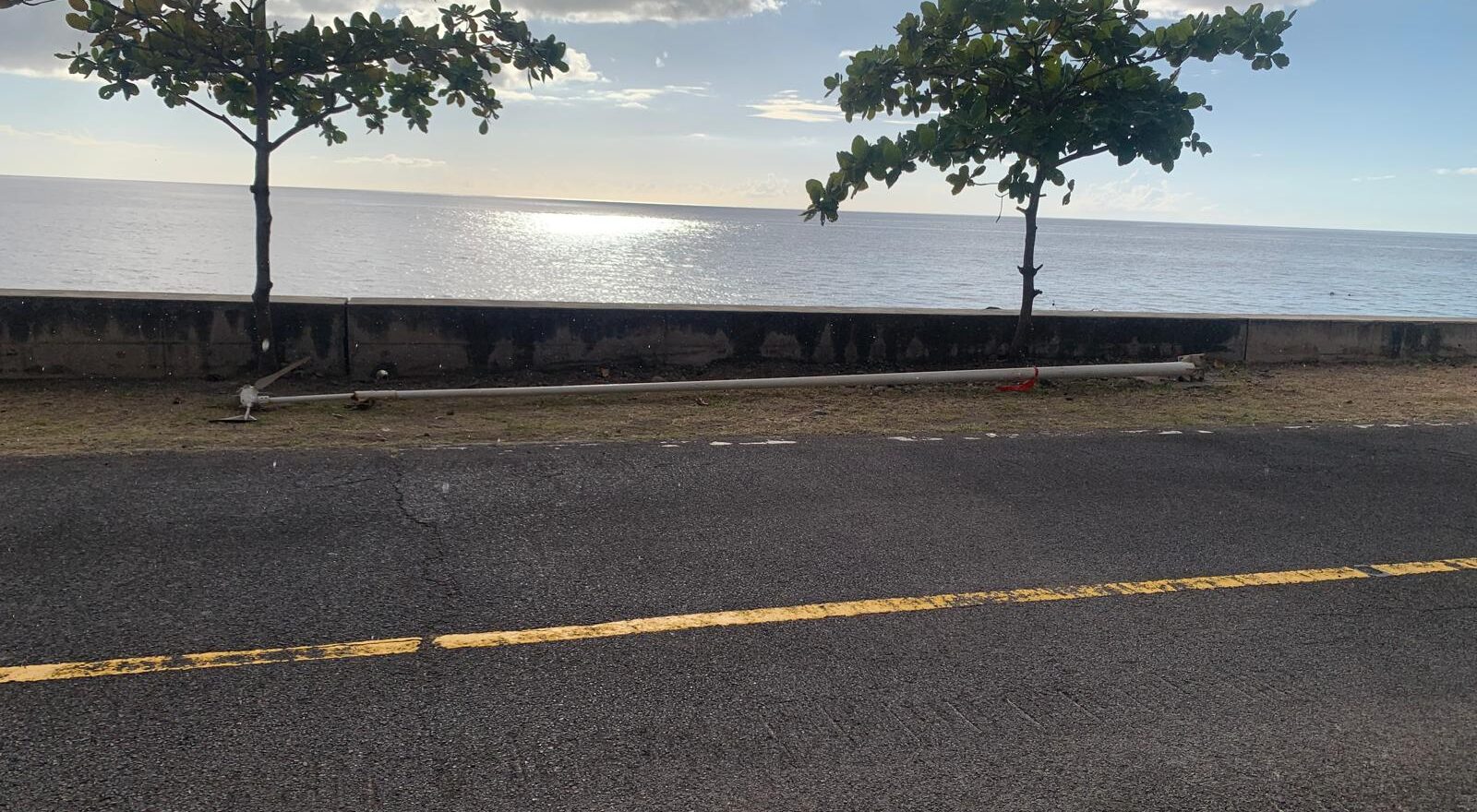
    Dominica confronts a severe public infrastructure crisis as organized theft of solar-powered street lighting components escalates across the nation. Criminal elements are systematically dismantling lamp posts to harvest solar panels and lighting attachments, creating hazardous dark zones that compromise community safety and mobility.

    The deliberate dismantling of illumination infrastructure represents both an economic and public security emergency. These installations, critical for nighttime visibility and pedestrian protection, require substantial public investment. Their destruction not only creates immediate physical dangers but also drains municipal resources through repeated replacement costs.

    Law enforcement agencies face mounting pressure to implement countermeasures against this targeted infrastructure looting. Security experts recommend deploying advanced surveillance technologies including motion-activated trail cameras and remote monitoring systems at vulnerable locations. These technical solutions could provide evidentiary support for prosecutions while acting as deterrents.

    The judicial system is being urged to impose stringent penalties for convicted offenders, with proposals including mandatory minimum five-year prison sentences followed by financial restitution requirements. Such measures aim to establish consequential accountability for crimes that endanger public welfare.

    This phenomenon reflects broader challenges in protecting sustainable infrastructure investments in developing nations. As Dominica transitions toward renewable energy solutions, safeguarding these assets becomes paramount for both environmental progress and community security. The situation demands coordinated response from governmental authorities, law enforcement, and community watch organizations to prevent further degradation of essential public lighting systems.

  • Officials say plans for Carnival Road Parade 2026 are going better than previous years

    Officials say plans for Carnival Road Parade 2026 are going better than previous years

    Roseau, Dominica – The Mas Domnik 2026 Carnival celebrations are poised for an extraordinary commencement as Road Parade Committee Coordinator Charlene White-Christian confirms unprecedented early registration numbers. With over sixty groups already enlisted for the National Parade, this year’s opening event signals robust community engagement and heightened anticipation.

    The opening festivities, scheduled for February, will commence at 2:30 PM in Pottersville’s parking lot adjacent to St. Alphonsus Catholic Church. Participants including costumed bands, float designers, DJs, and contestants are required to assemble by 1:00 PM for logistical coordination, with committee members available from 11:00 AM to facilitate parking arrangements and prevent congestion.

    A ceremonial highlight will feature the symbolic handover of the city keys during the brief opening proceedings, followed immediately by the parade launch at 3:00 PM. This year’s celebrations carry special significance with the honoring of veteran costume builder Darnley Guye as Mas Domnik 2026 Personality of the Year. Guye receives recognition for his five decades of contributions spanning costume design, parade coordination, artistic craftsmanship, and community leadership.

    White-Christian expressed enthusiasm about registration numbers, noting: ‘This year’s response is exceptional. Historically, we struggle to reach half this participation level by press conference time. The voluntary engagement reflects tremendous excitement for our Bouyon-themed celebration.’

    The parade route will traverse major thoroughfares including E.O. LeBlanc Highway, Goodwill Road, EC Loblack Bridge, Independence Street, King George V Street, and Dame Eugenia Charles Boulevard before concluding along Kennedy Avenue. From 6:00 PM, electronic bands and calypso performances will transition the festivities into evening celebrations, offering a preview of Carnival Monday and Tuesday’s energy.

    Authorities have issued advisories for motorists and residents along the route to remove vehicles beforehand, ensuring participant safety and uninterrupted procession flow. The public is urged to comply with traffic directives from law enforcement and event officials to maintain orderly operations throughout the celebration.