分类: society

  • Compol Says Four Murders Solved During SOE

    Compol Says Four Murders Solved During SOE

    Nearly three weeks after the expiration of a controversial state of emergency (SOE) in Belize District, the nation’s top law enforcement official is pushing back against widespread criticism of the security measure, highlighting key progress that the extra powers brought to long-stalled homicide investigations. The SOE, which concluded its run on June 8, 2026, has faced sharp public pushback after multiple fatal shootings, including a high-profile murder in a busy central location, occurred within the designated security zones the measure was supposed to protect.

    Commissioner of Police Dr. Richard Rosado defended the policy in a press briefing this week, pushing back on narratives that the SOE represented a failure of Belize’s policing strategy. He emphasized that public safety observers and critics have misunderstood the core mandate of the recently implemented emergency order.

    “One of the primary goals of this state of emergency was to give our investigative teams space to advance their work without obstruction from criminal networks or outside interference,” Rosado told reporters. “On that front, we delivered: we were able to close out at least four murder cases that would likely have remained open without the expanded authorities we received during this period.”

    The extra law enforcement powers granted under the SOE gave detectives critical leeway to pursue leads, interview persons of interest, and break through barriers that had frozen progress on cold and active homicide investigations for months, Rosado explained. Without these special provisions, many of these breakthroughs would not have been possible, he added.

    Dr. Rosado also addressed one of the most high-profile questions raised by critics: how a murder could take place on Albert Street, a heavily policed central commercial corridor, during peak Saturday afternoon traffic, when pedestrian and vehicle activity is at its highest. The incident has fueled speculation that criminal groups have grown emboldened and no longer fear intervention from Belizean law enforcement.

    In response, Rosado acknowledged that criminals will always exploit gaps in security when they believe an opportunity exists to act. He reaffirmed the police service’s core commitment to holding violent offenders accountable: “Regardless of when or where criminals choose to strike, our mandate remains unchanged: we will identify every perpetrator, address every act of violence, and bring those responsible to justice.”

    The debate over the effectiveness of emergency policing measures in Belize District continues, with residents and public safety advocates split on whether the temporary expansion of police powers delivers enough public good to justify the potential restrictions on civil liberties that come with SOE declarations.

  • Three Injured in Lords Bank Shooting; Police Investigate Attempted Murder

    Three Injured in Lords Bank Shooting; Police Investigate Attempted Murder

    A violent shooting incident in rural Belize has left three local men wounded, sparking an active attempted murder investigation by law enforcement authorities, according to official reports. The attack unfolded on Thursday evening in the quiet community of Lords Bank Village, located within the Ladyville area of Belize District.

    First responders received the emergency call shortly before 8 p.m. local time, directing officers to the Karl Heusner Memorial Hospital (KHMH) in Belize City. Upon arrival at the main public medical facility, investigators encountered two of the wounded victims – 24-year-old Alfredo Flores and 19-year-old Giovanni Gillette – already undergoing emergency care for multiple gunshot wounds.

    Preliminary investigative details outline that the three targets had been gathered with a small group of other people socializing in an outdoor yard when the gunman approached the property from outside. Without warning, the attacker opened fire on the assembled crowd, striking all three men before fleeing the scene. As of the latest update, no suspects have been taken into custody, and police have not released a confirmed motive for the attack.

    Among the three victims, 42-year-old Edgar Flores – Alfredo Flores’ relative, per local naming conventions – also suffered non-life-threatening gunshot injuries in the attack. Unlike the other two wounded men, Edgar Flores declined formal medical treatment at the hospital and has not yet provided a formal statement to investigating officers. Police have appealed to any members of the public who were in the Lords Bank area the evening of June 25 with information about the shooting or the attacker’s identity to come forward anonymously to assist with the probe.

  • St Lucian student earns medical degree in Morocco, highlighting success of OECS-Morocco scholarship partnership

    St Lucian student earns medical degree in Morocco, highlighting success of OECS-Morocco scholarship partnership

    A young medical scholar from the small Caribbean island of St. Lucia has reached a remarkable academic pinnacle, becoming the latest success story of the decades-long educational collaboration between the Organisation of Eastern Caribbean States (OECS) and the Kingdom of Morocco.

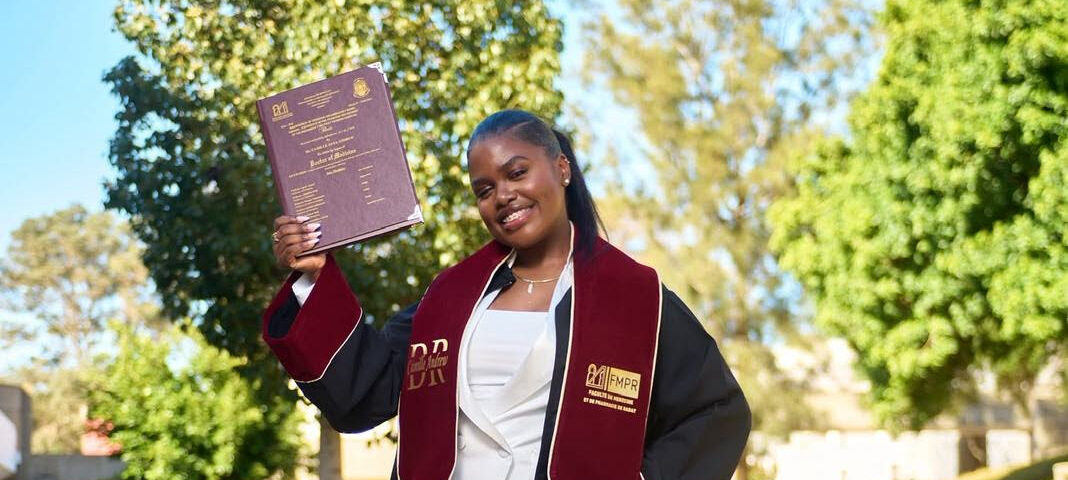
    Camille Andrew successfully passed her rigorous doctoral thesis defense on May 12, 2026, capping off seven years of intensive academic coursework and hands-on clinical training. In a testament to the exceptional quality of her work, the examining jury awarded her an MD degree with the highest possible honors, according to an official press release from the OECS.

    Andrew’s groundbreaking research, centered on a pressing pediatric health challenge, focused on the management of pediatric inflammatory bowel disease (IBD)—a chronic group of conditions that includes Crohn’s disease and ulcerative colitis. Titled *Management of Pediatric Inflammatory Bowel Disease: Experience of the Pediatric Department of Mohammed V Military Training Hospital*, her thesis analyzed real-world diagnostic protocols, evidence-based treatment approaches, and long-term patient outcomes at the leading Moroccan medical facility. A key focus of her work was exploring the expanding role of biotherapies, an innovative class of treatments that have transformed care outcomes and quality of life for children living with these lifelong conditions.

    The path to this milestone began decades earlier, when a childhood experience with healthcare in her home country first ignited Andrew’s passion for medicine. During a visit to Castries’ Victoria Hospital as a young patient, the compassionate, skilled care she received left a lasting impression that shaped her entire career trajectory. “My first experience as a patient was at Victoria Hospital in Saint Lucia. That moment stayed with me and sparked a deep fascination with the care I received, inspiring in me a desire to offer others the same level of compassion and skill that I experienced,” Andrew shared in comments included in the OECS release.

    Moving thousands of miles from her small island home to pursue training in Morocco came with unique, daunting challenges. Andrew had to acclimate to an entirely new cultural context, master coursework in a second language, and navigate the emotional weight of building a life far from her core support network of family and friends. She admitted there were low points marked by self-doubt and homesickness, but those struggles were far outweighed by the transformative gains of the experience. “Coming from a small island, nothing fully prepares you for the reality of starting over in a new country, adjusting to a different culture, studying in a second language, and being so far from home. There were moments of doubt and homesickness, but they were matched by immense personal growth, resilience, and lifelong friendships. It is an experience that has shaped me deeply, both as a person and as a doctor,” Andrew explained.

    Andrew was quick to credit the supporters who helped her cross the finish line, extending gratitude first to her family and friends for their unwavering encouragement through every challenging year of training. She also specifically acknowledged the Government of St. Lucia and the Moroccan Agency for International Cooperation (AMCI) for their financial and logistical support that made her seven-year journey possible.

    Now, as Andrew prepares to launch the next phase of her professional career, her top priority is bringing her specialized skills back to her home community. She says she is eager to contribute to advancing local healthcare outcomes for the people of St. Lucia. “I now look forward to bringing everything I have learned back home to contribute to improving patient care, advancing medical knowledge, and playing my part in strengthening the healthcare system in Saint Lucia,” Andrew said.

    For the OECS, Andrew’s achievement is more than a personal win—it is a powerful example of what regional students can achieve through international educational partnerships, and an inspiration for the next generation of Caribbean scholars pursuing higher learning abroad.

    Morocco has long held to a commitment to expanding educational access for OECS member states, opening new scholarship opportunities each year for students from Antigua and Barbuda, Dominica, Grenada, St. Kitts and Nevis, St. Lucia, and St. Vincent and the Grenadines. These scholarships cover a wide range of academic and professional fields, creating pathways for young people to gain advanced skills and fill critical talent gaps across the Eastern Caribbean region.

    The OECS emphasized that the consistent success of graduates like Andrew proves the enduring value of the bilateral educational partnership, and its key role in driving human capital development across the Caribbean. As more regional students take advantage of these opportunities, the collaboration continues to deliver tangible benefits for both communities and build lasting ties between the OECS and Morocco.

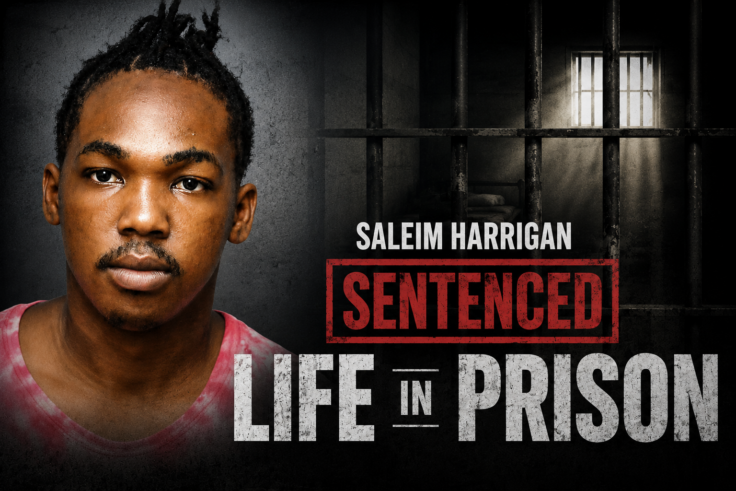
  • Saleim Harrigan Sentenced to Life in Prison for Nigel Christian Murder

    Saleim Harrigan Sentenced to Life in Prison for Nigel Christian Murder

    One of the highest-profile criminal cases in Antigua and Barbuda’s recent judicial history has reached its conclusion, with Saleim Harrigan handed a mandatory life sentence for the 2020 kidnapping and fatal shooting of senior customs official Nigel Christian. Handing down the ruling at the High Court on Thursday, Justice determined Harrigan will not be eligible to apply for parole until he has completed a minimum 40-year term behind bars. The court confirmed that the time Harrigan has already spent in remand custody will be credited toward his sentence. Harrigan was formally found guilty of Christian’s murder earlier in 2024, more than three years after the crime shook the small Caribbean nation. Prosecutors successfully convinced the jury of the details of the killing: Christian was forcibly taken from his private residence in the McKinnons neighborhood, and his body, bearing multiple gunshot wounds, was subsequently recovered in the Thibou’s area. Two other men, Wayne Thomas and Lasean Bully, who stood trial alongside Harrigan as co-accused in the case, were cleared of all charges earlier in the court proceedings. The brazen killing of a sitting public official sparked intense public outcry across Antigua and Barbuda, turning the trial into one of the most widely followed and debated criminal cases in the country’s recent history. Legal observers note that the final sentence closes a chapter on one of the most significant homicide prosecutions Antigua and Barbuda has conducted in over a decade.

  • Cabinet Approves EC$5 Million Academic Block for Sir Novelle Richards Academy

    Cabinet Approves EC$5 Million Academic Block for Sir Novelle Richards Academy

    In a move aimed at addressing rising student enrollment and advancing long-term educational development goals, the Cabinet of Antigua and Barbuda has given formal approval for a EC$5 million investment to build a brand-new academic wing at Sir Novelle Richards Academy. Construction is scheduled to wrap up in time for the first day of the 2024 September school year, enabling students and educators to access the improved facilities immediately after the summer break.

    Director General of Communications Maurice Merchant shared details of the approved project during a post-Cabinet press briefing held this Thursday, outlining that the investment forms a core part of the national government’s ongoing commitment to expanding and upgrading public education infrastructure across the country.

    The new purpose-built academic block will add much-needed general classrooms alongside purpose-built specialized learning spaces, designed to accommodate the school’s steadily growing student body. Beyond simply adding capacity, the facility is engineered to raise the overall standard of teaching and learning by giving educators more flexible, functional space to deliver modern curricula.

    This education-focused investment is not an isolated project: it runs in tandem with the ongoing redevelopment of the nearby Potter’s Sports Field, which is currently being converted into a full-service multi-sport complex. The upgraded recreational facility will feature an Olympic-size swimming pool and dedicated venues for a wide range of athletic disciplines, and will serve multiple nearby educational institutions beyond Sir Novelle Richards Academy, including Potter’s Primary School and the Harrison Centre for Continuing Education.

    Merchant emphasized that the government frames the new academic block as a critical component of a larger, strategic push to align educational infrastructure with the rapid pace of local community growth and ongoing investments in youth development programming. “Ensuring our young people have access to safe, functional, modern learning spaces is a top priority,” Merchant noted, adding that the timeline for construction remains on track to welcome students when the new academic term gets underway in September.

  • Monchy Courtyard transformed into hub for youth, art, community pride

    Monchy Courtyard transformed into hub for youth, art, community pride

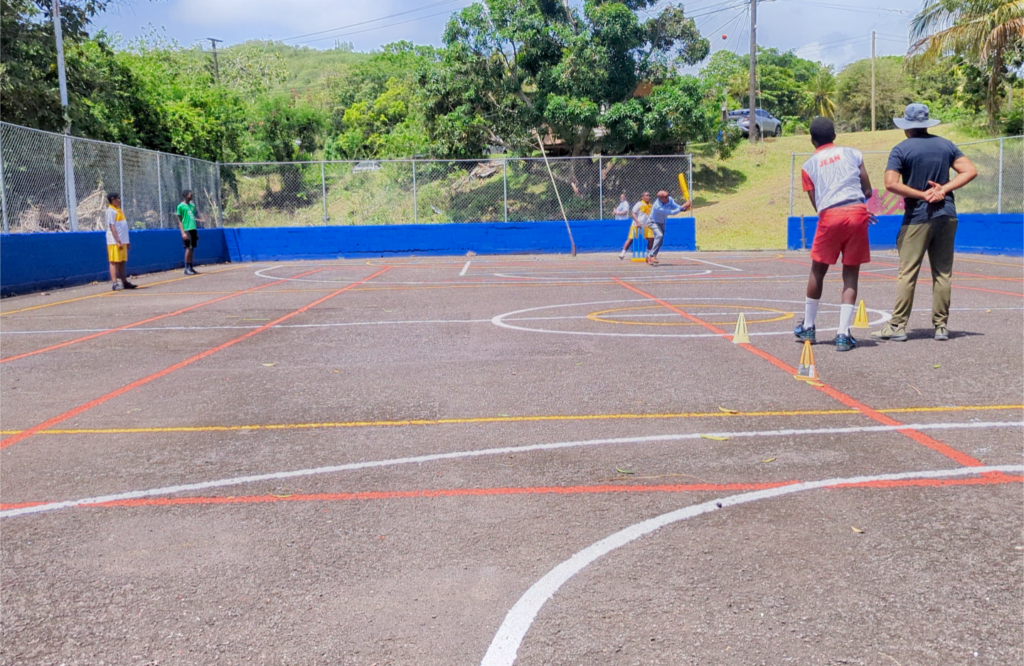
    A once-ordinary public gathering space in Monchy, Saint Lucia, has been reborn as a dynamic, youth-centered community hub, brought to life through a collaborative effort between the Sandals Foundation and the Gros Islet North Youth and Sports Council. The $27,000 Monchy Courtyard Beautification Project has delivered far more than cosmetic upgrades: it has reshaped the space into a welcoming area for athletic activities, social connection, and constructive youth engagement, with a striking new community mural and fully renovated interior and exterior walls.

    Heidi Clarke, Executive Director of the Sandals Foundation, emphasized that the project extends far beyond basic beautification. What began as a simple upgrade to a shared public area has been turned into a lively gathering spot where young people can spend time recreationally, and local residents can build a stronger shared sense of community pride, she explained.

    Funding for the initiative was sourced entirely from proceeds generated by weekly Friday night street party tours operated by three Sandals resorts in Saint Lucia: Sandals Grande St Lucian, Sandals Halcyon Beach, and Sandals Regency La Toc. Local execution of the renovation work was led fully by the Gros Islet North Youth and Sports Council, putting community leadership at the center of the transformation.

    Sanjay Mitchell, president of the council, framed the renovated courtyard as a tangible example of what can be achieved when cross-sector community partnerships and intentional youth leadership align around a common goal. “This is not just a physical upgrade to a public space,” Mitchell noted. “It is a direct investment in our young people and the long-term future of this community. What was once just a functional meeting spot is now a vibrant space for recreation, creative expression, social connection, and collective pride. The refreshed courtyard and its central mural send a clear, powerful message: our youth matter, and our communities deserve intentional investment.”

    One of the project’s most celebrated features is a vivid, large-scale mural designed and created by local Saint Lucian artist Naja Simeon, founder of Sakey Productions. The artwork weaves together core themes of community unity, local cultural identity, and positive youth growth, anchoring the space’s mission to reflect the community it serves.

    At the official handover ceremony for the completed project, Filius Laurent, General Manager of Sandals Regency La Toc, highlighted that the initiative is part of a long-standing, broader commitment from Sandals Resorts, delivered through the Sandals Foundation, to strengthen communities across the Caribbean, uplift youth development, and support local creative talent.

    Theona Edan-Clifford, the Sandals Foundation’s Project Coordinator for the Eastern Caribbean, expanded on the purpose of the redesigned space. “Shared spaces shape how community members feel, connect, and grow,” Edan-Clifford explained. “Through this project, Monchy now has a courtyard that reflects the community’s inherent pride, local creative talent, and untapped potential. It is a space where young people can play, residents can build connections, and local art tells a story of unity and hope.”

    Looking ahead, long-term stewardship of the space will remain rooted in the local community. The Gros Islet North Youth and Sports Council will continue to involve local young people in ongoing maintenance and upkeep work, an approach designed to ensure the space stays active, well-cared for, and owned fully by the community it serves.

  • Onesvie urges stronger seismic preparedness after Venezuela earthquakes

    Onesvie urges stronger seismic preparedness after Venezuela earthquakes

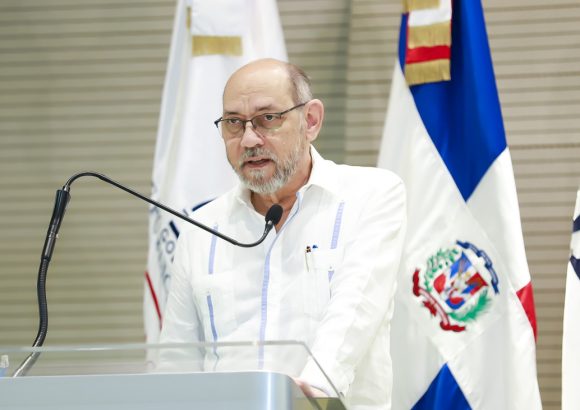
    In the wake of deadly seismic activity in neighboring Venezuela, the Dominican Republic’s National Office for Seismic Evaluation and Vulnerability of Infrastructure and Buildings (Onesvie) has issued a renewed urgent call for sustained investment and action around earthquake preparedness across the country. The recent tremors that rocked Venezuela, which left multiple fatalities and widespread destruction of public and private infrastructure, have served as a stark reminder of the persistent seismic risk faced by the Caribbean region, and highlighted critical gaps the Dominican Republic must address to protect its population.

    Onesvie officials emphasized that ongoing, systematic assessment of the nation’s critical infrastructure — including healthcare facilities, educational institutions, and all public government buildings — remains one of the country’s top public safety priorities. The agency has reaffirmed its ongoing commitment to rolling out a multi-pronged strategy to boost national resilience, including mandatory structural safety inspections for at-risk buildings, hands-on training programs for emergency response teams and community leaders, and large-scale public awareness campaigns designed to educate Dominican residents on how to prepare for, respond to, and recover from major seismic events.

    Alongside its domestic call to action, Onesvie also issued a formal statement of solidarity with the Venezuelan people, who have borne the brunt of the recent quakes’ destructive impact. The agency expressed its deepest condolences for the lives lost to the disaster, and extended full support to Venezuelan public authorities and local emergency response teams as they work to clear rubble, provide aid to displaced communities, and advance long-term recovery and reconstruction efforts across affected regions.

  • Rotary and Coakley donate new EKG machine to Rand hospital

    Rotary and Coakley donate new EKG machine to Rand hospital

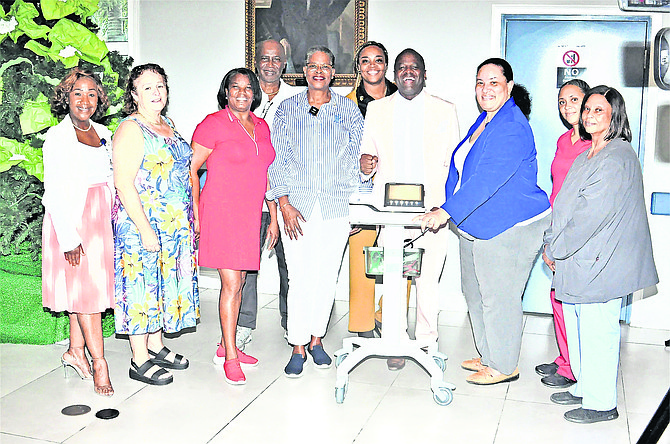
    On the island of Grand Bahama, a critical gap in cardiac care at Rand Memorial Hospital has been closed, thanks to a joint community donation from the Rotary Club of Grand Bahama and local enterprise Coakley International. The two organizations formally presented a brand-new $7,000 electrocardiogram (EKG) machine to the public hospital during a ceremony on Thursday, ending a weeks-long disruption to one of the facility’s most essential diagnostic services.

    The gap in service opened weeks earlier, when the hospital’s aging existing EKG machine suffered an irreversible breakdown. Without functioning equipment to detect cardiac irregularities, clinical teams were left without a core tool to evaluate patients presenting with chest pain and other heart-related symptoms. Adelecia Campbell, senior assistant administrator at Rand Memorial Hospital, reached out directly to the Rotary Club for support, drawing on the organization’s long history of standing with the hospital through crises and community needs.

    Campbell emphasized in remarks at the presentation that the new machine is far more than an incremental upgrade for the facility. “Our old equipment was worn down after years of constant use, just like any medical device that sees daily use,” she explained. “This new model is far more advanced, and it restores a service that is absolutely central to our daily operations. When a patient arrives with chest discomfort, our physicians depend on EKG results to map out next steps—whether that means immediate treatment or a referral to a cardiac specialist. This machine directly shapes the care we can deliver to our community.”

    Campbell also highlighted the Rotary Club of Grand Bahama’s unwavering commitment to the hospital in the years following Hurricane Dorian, which devastated the island in 2019. “They have stood with us every step of the way through every crisis, and we could not be more grateful for their partnership,” she added.

    Shane Coakley, chief executive officer of Coakley International—a Bahamian private real estate investment firm currently working to acquire the historic Ginn properties in West End—said his company jumped at the chance to step in when the Rotary Club reached out. After an initial approach to another potential donor fell through, Rotarians turned to their long-time community partner, and Coakley International immediately agreed to split the cost of the equipment.

    “As a Bahamian company rooted in this community, we see giving back as a core part of our mission, not an afterthought,” Coakley said. “Every year, we set aside dedicated funding to support local nonprofits, children’s programs, healthcare providers, and community initiatives. This donation is just the first of many investments we plan to make in Grand Bahama as we grow our presence here.”

    Rotary founding member and past president Christine Van der Linde noted that two additional local businesses stepped up to make the donation possible: Bahamas Medical and Surgical Supplies secured a discounted rate for the machine, and the Mail Boat Company covered the cost of transporting the equipment to the island. The partnership reflects a broader pattern of local collaboration to address gaps in public healthcare on the island, turning a critical service disruption into an opportunity to improve care for generations of patients.

    The donation was celebrated by hospital staff and community leaders gathered in the hospital’s main foyer, marking the end of weeks of uncertainty and the start of enhanced cardiac care for Grand Bahama residents.

  • Charles Mackey receives US leadership award

    Charles Mackey receives US leadership award

    Decades of dedicated volunteer work across Bahamian sports, cultural development, and youth empowerment have earned veteran talk show host and community organizer Charles Carlos Mackey the prestigious Outstanding Servant Leadership Award from White House Prayer for Our Nations, a private non-governmental organization. The recognition was presented earlier this month during the group’s 28th anniversary celebration held in Arlington, Virginia.

    For Mackey, the host of the long-running radio program *The Best of Sports World* on ZNS, the honor is far more than a personal accolade—it is a validation of a life guided by unwavering faith, a value that has shaped every major choice from his childhood growing up in segregated Daytona Beach, Florida, to his decision to relocate permanently to The Bahamas in 1984.

    “I said to myself ‘GOD, this is a grand slam. All the things I’ve done, I know that this is the work you chose for me. I’m walking this path with you all the way,’” Mackey shared in an interview with The Tribune. “I’m just following in your footsteps, because I know you will always stand with me.”

    Born to a Bahamian father and a mother from Georgia, Mackey’s early life in the American South was marked by direct encounters with systemic racism that forged his commitment to service. He vividly recalled an incident from childhood when a group of white men surrounded members of his local Black church, hurled vile racial slurs, and blocked the congregation’s exit until a police lieutenant who knew his father intervened to escort the group to safety. “The same kind of hatred you see on television with Dr. King? I lived that when I was just six years old,” Mackey said.

    Mackey went on to attend Florida Agricultural and Mechanical University (FAMU), where he played collegiate baseball and graduated with a bachelor’s degree in Physical Education and Health. He later pursued professional baseball stints across the Dominican Republic, Puerto Rico, and Caracas, Venezuela, before completing a master’s degree in guidance counselling and education from Bowie State College. Following years of work in rehabilitation and counselling services in the United States, Mackey felt a calling to serve young people in The Bahamas, and made his permanent move to New Providence in 1984.

    Within months of arriving, Mackey drew on his U.S. rehabilitation experience to help launch the Dean Granger Centre, a halfway house for men transitioning out of addiction during The Bahamas’ severe national drug crisis of the 1980s. In 1990, he organized a landmark visit of FAMU’s world-famous Marching 100 marching band to New Providence, an outreach effort that ultimately secured full athletic and academic scholarships for three Bahamian students to attend the university. He went on to support youth football clinics hosted by leading historically Black colleges and universities, expand grassroots track and field development programs, and launch a series of cross-cultural exchange initiatives between The Bahamas and U.S. institutions.

    In 2010, Mackey led a coalition of local arts leaders to pitch a proposal for a unified national performance band to then Minister of Youth, Sports and Culture Charles Maynard. That collaborative effort eventually grew into the Bahamas All Star Band, which has helped dozens of emerging Bahamian musicians secure competitive music scholarships at U.S. colleges and universities.

    Throughout his decades of service, Mackey emphasized that public recognition has never been the driving force behind his work. His core mission, he says, has always been rooted in connecting The Bahamas to the broader global community. “If I cannot take The Bahamas to the world,” he said, “I’m gonna bring the world to The Bahamas.”

  • Authorities intervene 488 motorcycle taxi stands in nationwide regulation

    Authorities intervene 488 motorcycle taxi stands in nationwide regulation

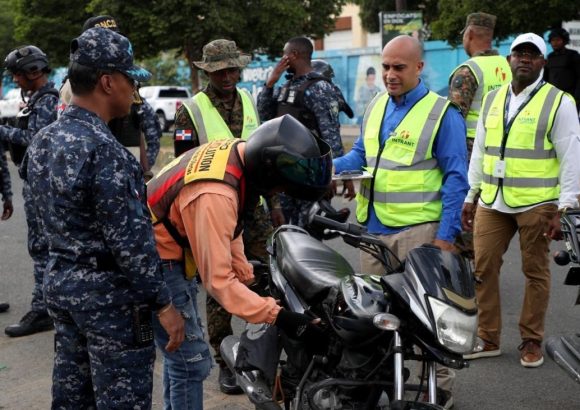
    Between June 3 and June 24, Dominican Republic’s transportation and law enforcement agencies carried out a sweeping nationwide operation to bring order to the country’s informal motorcycle taxi (locally known as motoconcho) sector, marking one of the largest coordinated regulatory actions targeting the industry in recent years.

    The multi-agency initiative was led by the National Institute of Transit and Land Transportation (INTRANT), with support from a coalition of security bodies including the National Police, the Dominican Drug Control Directorate (DNCD), the Specialized Directorate for Land Transit Safety (DIGESETT), the Criminal Investigation Directorate (Dicrim), the General Directorate of Migration, and municipal police forces across the country. The operation centered on three core priorities: physical inspections of informal pickup stands, document verification for drivers and vehicles, and background checks to screen for outstanding violations or irregularities, all as part of a long-term government push to formalize the unregulated motoconcho industry that serves millions of commuters across the country.

    INTRANT Executive Director Milton Morrison outlined that the ultimate goal of the operation is to bring thousands of currently informal motorcycle taxi drivers into the country’s formal transportation system, while cutting down on rampant road safety violations that have made motoconchos a major contributor to traffic fatalities in the Dominican Republic. By the end of the three-week enforcement period, authorities released a detailed breakdown of results: teams inspected 488 separate motorcycle taxi stands across 11 major regions of the country, including Greater Santo Domingo, Santiago, La Vega, and Barahona. Officials processed 2,808 new driver registrations, completed 1,570 full vehicle and driver inspections, impounded 599 unregistered or non-compliant motorcycles, and took 63 individuals into custody on outstanding charges or regulatory violations. Additionally, 414 drivers were administered breathalyzer tests to check for drunk driving, six unlicensed informal stands were permanently closed, two more were relocated to compliant designated zones, four public spaces previously appropriated by illegal stands were reclaimed for community use, and 42 drivers found to hold irregular immigration status were turned over to migration authorities for processing.

    Alongside enforcement actions, government officials also highlighted encouraging progress in voluntary compliance, noting a dramatic surge in motorcycle license applications over the past quarter. Between March and June 2026, INTRANT processed a total of 14,888 motorcycle license applications, 12,331 of which were from first-time applicants seeking new licenses. Data shows that applications for the new Category 1 motorcycle license, the required credential for operating commercial motorcycle taxis, jumped by 107.5% over the three-month period, rising from just 1,843 applications in March to 3,824 in June. This sharp increase officials say, signals growing recognition among motoconcho drivers of the benefits of formalizing their status and complying with national transit regulations.

    Moving forward, INTRANT confirmed that joint multi-agency operations will continue across all regions of the country, with the agency reiterating its commitment to strengthening national road safety, fully formalizing the commercial motorcycle transportation sector, and ensuring full compliance with Law 63-17, the country’s overarching legislation governing transit and land transportation.