分类: society

  • Love chose her: Karen Brown’s journey through motherhood, loss and strength

    Love chose her: Karen Brown’s journey through motherhood, loss and strength

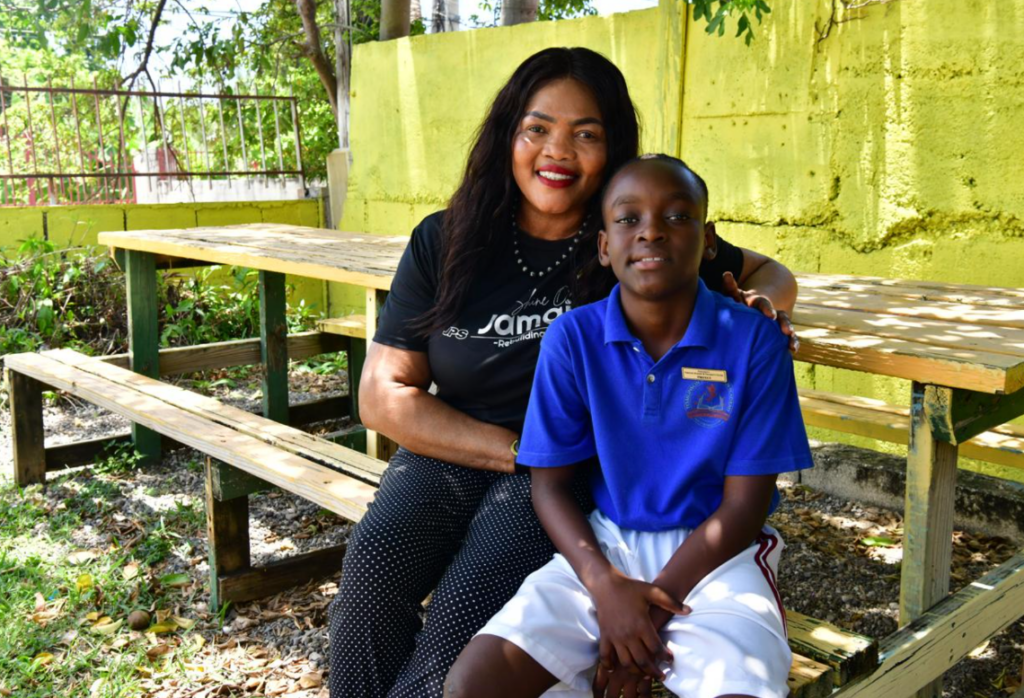
    KINGSTON, Jamaica — Popular culture has long tied the identity of motherhood to biological connection, but for countless women across the globe, this fundamental role is ultimately shaped by radical love, intentional sacrifice and unshakable commitment. For Karen Brown, a customer service manager at Jamaica Public Service Company Limited (JPS), stepping into motherhood was never a pre-planned life goal. Instead, she embraced the role amid one of the most devastating chapters of her life, stepping up with a courage that has inspired everyone around her.

    It was in 2020, just after Brown lost her brother unexpectedly, that she became the primary caregiver for his three children: two young boys and a girl. Overnight, her own overwhelming grief merged with the urgent responsibility of rebuilding a sense of safety for the children who had just lost their father. While navigating her own quiet pain, she worked tirelessly to help the children feel secure again, a balancing act that would have broken many.

    “It demanded a level of strength I never knew I possessed,” Brown shared in an interview. “But even in the middle of all the hardship, this journey filled my life with incredible purpose and love I never expected.”

    The transition to sudden parenthood was immediate, layered with complex emotional challenges. Beyond putting a roof over their heads and providing financial stability, Brown understood that healing required intentional emotional work: a safe, supportive space for each child to process their grief at their own pace. Brown’s own path to building a family had already been marked by unexpected health struggles and unforeseen turns, but her dedication to showing up for people in need never faltered.

    “Being a mother is not only about giving birth,” she explained. “It is about showing up every single day, making hard sacrifices, offering steady guidance, and choosing again and again to love and protect the people who depend on you.”

    For Brown, these are not just abstract beliefs—they are the foundation of every choice she makes. In the years since she took on caregiving, she has watched the three children grow into thriving young people, excelling both in their academics and in sports. One of her most cherished memories came when her niece, Jamelia Thomas, scored the game-winning goal for Camperdown High School at the 2026 ISSA Schoolgirl Football Championship. For Brown, this win and other milestones mean far more than trophies or public recognition.

    “The greatest reward of this journey has been watching them heal, grow, and grow into confident, capable young people,” she said.

    Yet motherhood’s true test rarely comes in moments of celebration; it emerges when hardship strikes. Brown faced just such a test when Hurricane Melissa swept across Jamaica, bringing devastating damage to her community and her home. As the storm raged, powerful winds ripped off large sections of her roof, shattered glass windows, and allowed floodwaters to pour into her home. Amid the chaos, one of the children in her care—who lives with both asthma and a chronic heart condition—became severely frightened and physically distressed.

    Through the entire night and into the early dawn, Brown worked nonstop to contain the damage, bail floodwater out of her home, and comfort all three children through the storm. “It took every single ounce of resilience I had,” she recalled.

    When the sun finally rose, the full scope of the destruction was overwhelming. Even so, just days after the storm passed, with her home still heavily damaged, Brown returned to her post at JPS to support customers across four hard-hit Jamaican parishes: Trelawny, St Ann, St Mary and Portland.

    “Going back to work was one of the hardest things I’ve ever done, but it gave me a sense of purpose and normalcy when everything felt upside down,” she said.

    The resilience Brown demonstrated in the wake of the hurricane grew directly from the strength she built while raising her niece and nephews. Caring for the three grieving children had already taught her endurance, patience, and how to stay steady when everything around her feels unstable. These unexpected life lessons also transformed her approach to her professional leadership role. Brown says that becoming a mother to her niece and nephews made her a more compassionate leader and a more empathetic listener, a skill that is especially critical in customer service.

    “You never really know what battle another person is fighting behind closed doors,” she reflected. “Everyone carries struggles that aren’t visible to the people around them.”

    In the aftermath of Hurricane Melissa, Brown also got to experience the power of community support firsthand. Her colleagues at JPS rallied around her: a senior leader organized emergency tarpaulins to be delivered to her damaged home, and team members later used a company bucket truck to secure the covering and provide temporary shelter for her family.

    “The kindness of my team overwhelmed me,” Brown said. “It truly touched my heart in a way I’ll never forget.”

    Today, when Brown looks back on her entire journey, she is clear about just how much she has overcome. “There came a moment when I realized I had survived circumstances that once felt completely impossible to get through,” she shared.

    Her story stands as a powerful reminder that motherhood does not always follow the traditional, expected path. Sometimes it is born out of tragedy, sudden responsibility, or unplanned life change. But no matter how it begins, its impact on the people who embrace it and the lives they touch is just as profound.

    Above all else, Brown hopes the children she has raised will always carry one truth with them: that they have been loved wholeheartedly, unconditionally, and completely. Through both her personal life as a caregiver and her professional role serving JPS customers, she continues to prove that motherhood is not defined by biology. It is defined by the courage to nurture, guide, and stand unwaveringly beside the people who need you most.


  • BUT raises no objection to ministry’s school closure plan

    BUT raises no objection to ministry’s school closure plan

    The Barbados Union of Teachers (BUT) has publicly signaled that it holds no core opposition to a recent policy move from the Ministry of Education, which has approved early summer closure for a targeted group of primary schools across the island. The early shutdown is designed to create a clear window to carry out much-needed infrastructural improvement projects before the new academic term begins.

    In an official public statement, the teachers’ union emphasized that upgrading outdated learning environments has been a longstanding priority on its advocacy agenda. For years, the organization has pushed for government investment to modernize school facilities that directly impact the daily experiences of both learners and education workers. As such, the union says it fully endorses the comprehensive upgrade initiative, which aims to deliver safer, more functional spaces that support high-quality teaching and better learning outcomes for all stakeholders.

    Despite this broad backing, the BUT has not shied away from flagging a key potential risk that could trigger its opposition. The union’s core concern centers on project timelines: if contractors fail to complete all scheduled renovation and upgrade work by the end of the scheduled summer vacation period, the knock-on effect would disrupt the planned reopening of schools and throw off the delivery of planned instruction when the new academic year gets underway. The implicit message from the union is that it will hold both the Ministry of Education and contracted work teams accountable for meeting the established timeline to avoid negative impacts on students and staff.

  • Police find gun, ammo, suspected cocaine at murder victim’s home

    Police find gun, ammo, suspected cocaine at murder victim’s home

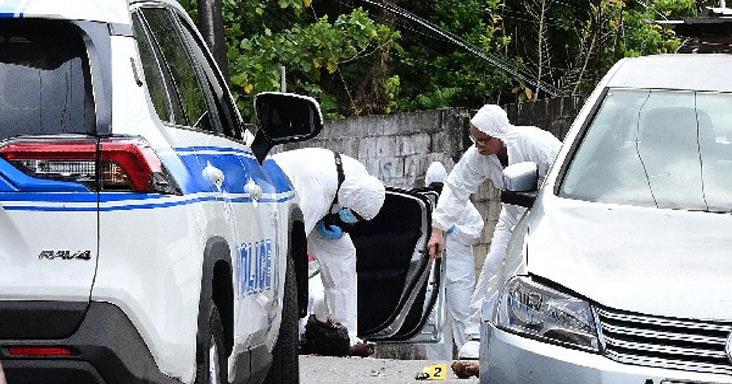
    A shocking fatal shooting has rocked the Caribbean nation of St. Vincent and the Grenadines, where a 37-year-old former national football player was gunned down in a public street Friday night. Now, law enforcement officials have launched a wide-ranging investigation into the killing, which has pushed the country’s 2025 homicide total to 15, marking a disturbing surge in violent crime in recent weeks.

    According to official police statements released Saturday, emergency dispatchers received the first report of the shooting at approximately 8:06 p.m. local time. First responding officers rushed to the incident site, located just steps from the local Anglican Church in the Calliaqua district, where they found Keith “Devon” James, a long-time resident of Golden Vale, Calliaqua, lying unresponsive on the left side of the roadway.

    Witness accounts collected by investigators suggest James had just returned to his neighborhood and was exiting his vehicle when the gunman opened fire. Local residents have told investigators they spotted an unregistered dark-colored vehicle speeding away from the area immediately after the shots rang out, leading to widespread speculation that the killing was a premeditated attack, with the suspect lying in wait for James before striking.

    A medical examiner who arrived at the scene shortly after the shooting pronounced James dead at the location. Forensic investigators working the case recovered five spent 9mm shell casings from the road and surrounding area, evidence that will be used to match against weapons recovered as part of the investigation. In a subsequent search of James’s private residence, law enforcement seized a Glock pistol, 10 live 9mm rounds of ammunition, an extra pistol magazine, a large cache of cash that included both local and foreign currency, and an undetermined amount of a controlled substance that field testing suggests is cocaine.

    In their official statement, police noted that all seized items are currently undergoing forensic examination as part of the active investigation, and investigators have not yet confirmed what connection, if any, the recovered materials have to the fatal shooting. “Investigators are pursuing several lines of inquiry and are examining all relevant circumstances that may assist in determining the motive and identifying the person or persons responsible,” the statement read.

    A post-mortem examination is scheduled to take place in the coming days to formally confirm the cause and manner of James’s death. The Royal St. Vincent and the Grenadines Police Force has extended formal condolences to James’s family and loved ones as they navigate this tragedy, while also urging the general public to avoid spreading unconfirmed speculation about the case. Officials asked that community members allow the investigative process to proceed unimpeded.

    Police are calling on any member of the public with information related to the shooting, no matter how small it may seem, to come forward to assist with the investigation. Tips can be submitted to the Criminal Investigations Department/Major Crimes Unit at 456-1810, Police Control at 457-1211, the emergency police line at 911 or 999, or any local police precinct. All submitted information will be kept completely confidential, per police policy.

    James’s killing marks a grim milestone for the small island nation: it pushes the total number of homicides recorded in St. Vincent and the Grenadines so far this year to 15, and James is already the fourth person to be killed by gunfire in the country in less than a month.

  • Short-term shipments, long-term systems to tackle Grenadines water woes

    Short-term shipments, long-term systems to tackle Grenadines water woes

    A crippling dry season has pushed St. Vincent and the Grenadines into a widespread water crisis, with the island chain of the Grenadines facing particularly acute shortages that have sparked public scrutiny of the current administration’s response. In a series of public communications released in early May 2026, senior government officials have pushed back against criticism, defended their ongoing emergency interventions, and laid out a timeline for permanent infrastructure upgrades while blaming past leadership for long-unresolved structural gaps in the region’s water systems.

    The current drought has impacted every part of the nation, forcing the Central Water and Sewerage Authority (CWSA) to implement sweeping water rationing measures on the main island of St. Vincent, which operates a municipal water network. Conditions are far more dire across the Grenadines, a collection of smaller southern islands that lack natural rivers, streams, and any established municipal water distribution system. Most residents rely on private household cisterns to store rainwater, and current supplies have dropped to critically low levels or run completely dry in many communities. The severity of the situation was first brought to wider public attention through independent commentaries submitted to local media outlets, prompting the government to issue its formal response.

    Addressing the public in an official video published by the state-run Agency for Public Information on May 8, Terrance Ollivierre — Member of Parliament for Southern Grenadines and Minister of Grenadines Affairs — confirmed that emergency water shipments from St. Vincent to the Grenadines have been ongoing, with scheduled weekly voyages planned through the dry season. “A boat will be going down to the Grenadines on Saturdays and stopping in Mayreau and Union Island,” Ollivierre stated. After arriving on each island, water is loaded onto CWSA trucks and other civilian vehicles for final distribution to community drop-off points, an arrangement that will continue as long as dry conditions persist. Ollivierre noted that he has maintained regular coordination with CWSA leadership and Water Minister Daniel Cummings to prioritize the Grenadines’ needs, acknowledging that the crisis has reached emergency proportions in the island chain while stressing that the main island also faces its own water shortages. “We would do our best to make sure that both mainland and in the Grenadines… we get the water to the people that they need,” he said.

    Daniel Cummings, Minister of Health with formal oversight of the CWSA and a former CWSA manager himself, echoed Ollivierre’s comments, confirming that emergency sea shipments have been active for an extended period. He added that the core long-standing challenge in the Grenadines is not just water production, but the complete absence of a modern, piped distribution network to deliver water to households. The government’s planned infrastructure projects will address this gap by constructing elevated storage facilities and a full network of gravity-fed transmission mains that will bring running water directly to residences across the Grenadines. “There will be transmission and distribution mains on the islands of a comprehensive water distribution system, as you expect in a normal society,” Cummings said, expressing regret that previous administrations failed to move forward with these critical projects decades ago. He also urged all residents across the country, particularly on the mainland, to actively reduce water waste by fixing personal leaks and reporting broken infrastructure to the CWSA to stretch limited supplies through the dry spell.

    In a separate interview with local radio station Hot 97 FM, Senator Lavern King, a native of the southern Grenadine island of Canouan, outlined the government’s full policy roadmap, pushing back against claims that long-term improvements are moving too slowly. King explained that the current NDP administration, which took office in November 2025, has already allocated significant funding for Grenadines water infrastructure in its first national budget — so much so that opponents labeled it a “Grenadines-only budget” — moving beyond stopgap measures to plan for a permanent, island-wide water solution.

    In the short term, King confirmed weekly water shipments from St. Vincent will continue, and left open the possibility of increasing delivery volumes if needed. She also cited declining overall rainfall across the archipelago as a key driver of the current crisis, urging residents to practice conscientious water conservation. For the long term, the government is actively pursuing external financing to build multiple desalination plants across the Grenadines, which will create a locally sustainable source of fresh water independent of rainfall.

    King pushed back against critics demanding immediate completion of these multi-year projects, noting that large-scale, permanent infrastructure requires rigorous environmental studies, detailed design work, and professional project management to avoid costly mistakes. “Can you have a long-term plan implemented in five months? You cannot… because it’s impossible,” she said. She contrasted the current administration’s methodical approach with what she described as haphazard, vote-focused planning by the previous government, which she claimed rolled out rushed projects right before elections that ultimately failed and required costly repairs later, resulting in widespread public funds waste. King emphasized that water access has been a persistent challenge in the Grenadines for generations, and that the current government is committed to delivering a lasting solution rather than short-term political gains.

    Cummings added that the government remains committed to moving the full infrastructure package forward as quickly as possible, bringing reliable running water to every community across the Grenadines for the first time in the nation’s history.

  • GHS and the creation of ‘high-maintenance women’

    GHS and the creation of ‘high-maintenance women’

    A recent controversial comment from St. Vincent and the Grenadines’ former prime minister and current opposition leader, who blamed rising national crime rates on so-called “high maintenance women”, has drawn widespread and well-deserved condemnation across the country. This misleading, dismissive statement does nothing to address the root of the nation’s most pressing social challenges – many of which trace directly back to deep, long-standing flaws in the country’s public education system, a crisis that has already been formally flagged by global development experts.

    A 202? World Bank assessment has repeatedly warned that the Caribbean region faces a systemic education crisis, with entrenched structural issues that carry devastating long-term consequences for social stability and economic growth. In St. Vincent and the Grenadines, these gaps are visible even at the nation’s most prestigious educational institutions, underscoring the scale of the problem. This year marks the 115th anniversary of Girls’ High School, the country’s long-revered premier all-girls secondary school. But behind its decades-long reputation for excellence lies a troubling pattern of missing oversight from the national Ministry of Education that has gone unaddressed for years.

    Parents of enrolled students have repeatedly raised alarms about unregulated autonomy at the school, claiming school leadership operates outside formal accountability frameworks. While educational leaders are rightfully granted a degree of institutional autonomy to manage campus operations, this authority must always be bounded by clear national regulations, consistent monitoring, and public transparency. The same standards that govern small rural schools across the nation must apply equally to so-called “elite” institutions – from the curriculum offered to student access to learning equipment, and even to the fees charged for graduation and school events.

    It is true that some schools enjoy advantages from more connected, wealthy alumni networks and parent communities, but public education in St. Vincent and the Grenadines is supposed to be founded on the core principle of equal opportunity for all students, regardless of background. Today, however, relentless fundraising demands have shifted priorities dramatically: many students report that revenue generation has overtaken actual learning as the school’s top focus. Frequent allegations of financial impropriety surrounding combined government funding and independent school fundraising efforts have yet to be addressed by a formal public audit from the Ministry of Education, leaving concerns uninvestigated.

    One alumna of Girls’ High School commented that the school “exposes us to the finer things in life so that we know what we should want later”. But this framing exposes a dangerous double standard: does this mean that young Vincentian women who could not attend the elite school are inherently less capable of aspiring to a high quality of life? For low-income students like Mary Jones, who struggles to cover daily transportation costs for school, let alone the endless fees for mandatory school events, the pressure of keeping up appearances and covering unplanned costs completely overshadows the goal of learning.

    This system risks institutionalizing systemic classism across generations, teaching students that social status and image matter more than knowledge, and that fundraising events matter more than student wellbeing. Instead of scapegoating women for national crime, as the opposition leader did, the country must turn its attention to fixing these deep structural flaws in education – the foundation of any strong, equitable nation.

    If St. Vincent and the Grenadines is serious about building a prosperous, united future, leaders must commit to meaningful reform across the entire education sector. Administrative appointments must be made based on merit and public accountability, not patronage, and consistent oversight must be enforced for every school, regardless of its reputation or student demographic. The education system must be restructured to prepare young people to navigate 21st-century challenges, staffed by well-supported educators focused on the core mission of nation-building, one student at a time.

    Instead of perpetuating learned helplessness, class division, and harmful hierarchies under the guise of education – the very dynamics that produce the inequity the opposition leader wrongly blames on women – the nation must build a new system rooted in equal access, consistent accountability, and opportunity for every young Vincentian, regardless of gender, class, or which school they attend.

  • Mom still critical after deadly ambush on family

    Mom still critical after deadly ambush on family

    A quiet morning commute to a toddler’s daycare turned into a deadly ambush this week in Belmont, leaving a 2-year-old boy and two adult men dead, and the child’s mother fighting for her life in a Port of Spain hospital. As of Wednesday evening, Antonia Cain-Kafi, 39-year-old Aquil Kafi’s wife and the mother of slain toddler Akini Kafi, remained in critical but stable condition after being hit four times during the sudden attack. The third victim was Aquil Kafi’s close friend, Anthony “Monster” Wilson.

    What makes the tragedy even more devastating to family members is the long, difficult journey the couple went through to welcome their only child. A close family friend shared with local outlet *Trinidad Express* that Cain-Kafi spent years trying to conceive, and when Akini arrived 2 years and 11 months ago, the couple celebrated him as nothing less than a “miracle baby.”

    On Thursday morning around 8:30 a.m., the group was traveling in a Toyota Aqua, with Kafi and Wilson in the front seats and Cain-Kafi and her young son in the back. They were en route to Akini’s regular daycare drop-off when another vehicle cut them off and blocked their path in the Holder Steps/Rifle Hill area, just off Serraneau Road and St Francois Valley Road. A gunman exited the blocking vehicle and immediately opened fire on the car carrying the family. By the time the shooting stopped, both Kafi and Wilson had been killed instantly, while both Cain-Kafi and Akini suffered life-threatening gunshot wounds.

    According to police accounts, bystanders in a private vehicle rushed the wounded survivors to Port of Spain General Hospital. Witnesses say Cain-Kafi, despite her own multiple gunshot wounds, managed to hand her injured son over to hospital staff for treatment. Medics were unable to save the toddler, who was pronounced dead shortly after arrival.

    On Wednesday, *Express* reporters met grieving relatives at the Forensic Science Centre in Federation Park, where family members had traveled to formally identify the bodies of the three victims. One relative who spoke to reporters shared warm, tender memories of the young boy who was taken too soon. Akini, she recalled, had an all-consuming obsession with cars. “He loved cars. He was fascinated by it and, well, he destroyed a lot of toy cars and he would then try to fix it,” she said. “He was a really loving baby boy and, oh my gosh, he had a smile that would melt any lady’s heart.”

    Local law enforcement has not yet released updates on potential suspects or motives for the targeted attack, leaving the community in mourning and waiting for answers as the surviving mother recovers from her devastating injuries.

  • Stuart: 3 new nurses walk off the job

    Stuart: 3 new nurses walk off the job

    A small group of newly qualified nursing professionals have abandoned their posts at a major public medical facility in Trinidad and Tobago, stepping down over what they describe as unsafe, unregulated working conditions that put their professional licenses and patient safety at severe risk. The Trinidad and Tobago National Nursing Association (TTNNA) president Idi Stuart confirmed the departure of the three nurses in an interview with the Saturday Express, shedding light on the systemic staffing gaps that led to the early exit of three of the 61 newly hired registered nurses at the North Central Regional Health Authority.

    Stuart explained that all newly hired nurses were assigned to the Eric Williams Medical Sciences Complex in Mt Hope, where they were immediately subjected to working conditions that violated both international nursing standards and onboarding promises made during orientation in April. During their hiring process, the new nurses were guaranteed a structured transition: they would only work weekday morning shifts, gradually acclimate to their roles, always work under the supervision of experienced senior staff, and share shifts with at least two to three other colleagues. None of these commitments were honored once the nurses began their roles.

    Instead of the ideal 1:4 nurse-to-patient ratio outlined in global nursing best practices, the facility requires all nursing staff to operate under a 1:6 ratio, a burden the TTNNA has already asked members to tolerate temporarily while the health authority addresses chronic staffing shortages. For the newly licensed nurses, however, the strain extended far beyond an elevated patient load: the three professionals were left to manage their assigned wards entirely alone, with zero ongoing supervision from senior or head nurses – a violation of standard onboarding protocols.

    Industry best practice mandates that new graduate nurses remain under close, structured supervision for a minimum of three to six months after starting their first role. Most other regional health authorities across the country maintain formal monitoring departments to support new hires during this transition period, recognizing that it takes an average of two years for new nurses to develop the confidence and clinical competence to practice independently. Leaving a newly licensed nurse unsupervised creates avoidable risks: if a medication error occurs or a critical patient emergency unfolds, the nurse faces professional disciplinary action that can result in the loss of their hard-earned license, all for failures rooted in systemic understaffing, not individual error.

    Stuart emphasized that the unmet onboarding commitments and unsupervised working conditions left the three new nurses with no other choice. They were forced to bear full responsibility for critical events like patient cardiac arrests, seizures, and end-of-life care – situations that even experienced nurses struggle to manage alone, and that should never fall to an unsupervised new graduate. With errors all but guaranteed under this structure, the nurses chose to step down rather than risk their professional futures. They now plan to pursue employment opportunities at other regional health authorities that can provide the structured support and safe working conditions necessary to deliver quality patient care.

  • ‘SCARY’ PRISON DATA

    ‘SCARY’ PRISON DATA

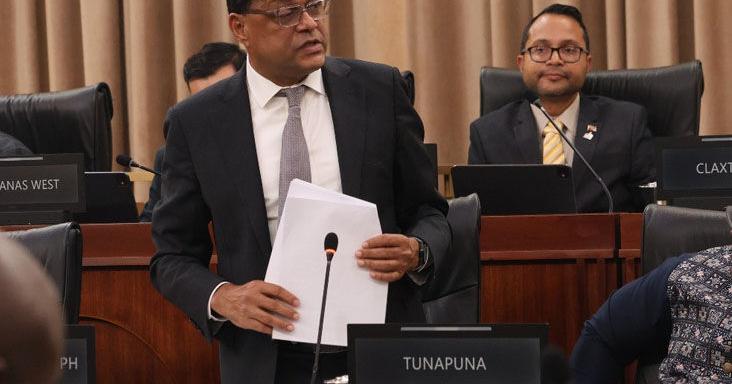
    During a parliamentary debate on the 2026 Parole Bill last sitting day, Trinidad and Tobago’s Justice Minister Devesh Maharaj dropped a bombshell, releasing grim recidivism data from national law enforcement and correctional agencies that lays bare a deepening national crime and rehabilitation crisis.

    Maharaj opened his address by warning lawmakers to brace for the troubling statistics, pulling data from two decades of arrest records to frame the scope of the problem. Between 2015 and 2025, a total of 53,183 people were arrested and charged with criminal offenses across the twin-island nation, with roughly 22% of those offenders going on to reoffend after facing legal consequences. Far more alarming, he said, are the figures from the Trinidad and Tobago Prison Service, which track repeat offending among convicted inmates who have been released back into society. Data collected between 2022 and 2026 shows that the annual recidivism rate for released prisoners has consistently hovered above 50%: hitting 58% in 2022-2023, 56% in 2023-2024, 53% in 2024-2025, and 57% in 2025-2026. Averaged across the five-year period, that means more than one out of every two released prisoners returns to criminal activity after serving their sentence. Calling the trend “scary” and “alarming”, Maharaj questioned the systemic failures driving the cycle of repeat crime, asking, “What is going on in our country? Why are so many of our young people returning to crime?”

    Digging into the root of the crisis, Maharaj revealed that prison officials have been sounding the alarm about the lack of resources for years, with no meaningful response from previous leadership. When asked what barriers were driving the high recidivism rate, prison administration confirmed that core rehabilitation programming has never received dedicated government funding. Currently, the prison service uses a standardized risk assessment tool called the LSCMI to evaluate each new inmate’s risk level, individual needs, and accountability on intake. After a six-month orientation period that reviews each offender’s criminal history and risk factors, inmates are placed in programming tailored to their sentence length, needs, and background. The slate of available programming includes evidence-based cognitive behavioral therapy, adult literacy and general education courses, vocational and technical skills training, and recreational, spiritual, and cultural activities designed to support pro-social behavior change.

    But Maharaj explained that none of these critical programs are supported by public funding. Instead, almost all rehabilitation initiatives rely entirely on external support from faith-based groups, community organizations, non-governmental organizations (NGOs), and volunteer private citizens who donate their time, professional expertise, and personal money to run the programs. To date, there is no dedicated budget line allocated to offender rehabilitation within the national correctional system. “Imagine the prison service having to depend on non-governmental organisations to change prisoners’ attitudes and rehabilitate them,” Maharaj said, noting that the entire system is one crisis away from collapse if these external groups pull their support.

    Compounding the funding gap are crippling staffing shortages. The nation’s total prison population stands at roughly 3,500 inmates, but only 57 correctional officers are assigned full-time to facilitate and coordinate rehabilitation programming. These officers are tasked not only with coordinating daily activities but also with directly teaching and training inmates, drawing on their own individual skills to lead courses. Without dedicated funding, there is no budget to develop new evidence-based programming, adapt curricula to the changing needs of the inmate population, or expand access to programs across all correctional facilities. Widespread staff attrition has further stretched the system’s capacity, leaving the department responsible for rehabilitation chronically understaffed. Maharaj also highlighted that there is an urgent unmet need for specialized professional training for correctional staff to develop and deliver high-quality rehabilitation programming.

    The Justice Minister argued that this systemic neglect is a core contributor to the nation’s ongoing crime crisis, pointing out that while the public and policymakers frequently complain about rising crime and repeat offending, successive governments have failed to address the root gap in rehabilitation resourcing. “The point I am making is, we have been complaining vigorously about crime, we have been complaining about repeat offending, but yet when it comes to addressing the root causes within the prison service, we have not taken the necessary steps,” he said.

    Looking forward, Maharaj stated that the current Kamla Persad-Bissessar administration has committed to overhauling the broken correctional system, starting with a full top-to-bottom review of current policies and resourcing. He emphasized that the proposed 2026 Parole Bill is a critical first step to address the crisis: the legislation is designed to expand structured rehabilitation opportunities, give qualifying offenders a meaningful second chance to re-enter society, and support successful long-term reintegration to break the cycle of repeat crime.

  • Teen Detained After Fatal Bar Shooting That Rocked Belize City

    Teen Detained After Fatal Bar Shooting That Rocked Belize City

    A quiet opening shift at a popular Belize City entertainment venue ended in devastating tragedy on Thursday, leaving a 34-year-old woman dead, two other people injured, and a community reeling from senseless violence. Salma Funez, a working mother of three and an employee at Da Buzz Lounge on the Phillip Goldson Highway, was killed in a targeted shooting just minutes after the establishment opened its doors to the evening crowd.

    Witnesses recalled that the night had just begun: Funez was seated near the bar, the bartender was prepping for incoming patrons, and other staff were settling into their shifts. One anonymous employee recalled that shortly after opening, a colleague noted an unfamiliar person enter the venue and immediately head to the restroom, a detail that struck them as odd but did not immediately raise alarm. That person, police confirmed, was a 16-year-old male who wore a face covering to hide his identity.

    Surveillance cameras captured the suspect leaving the restroom and approaching Funez directly, with any exchange between the pair so quiet that nearby staff did not notice any argument. According to Funez’s brother-in-law Joshua Trapp, eyewitnesses told the family the suspect demanded Funez’s phone immediately before opening fire. The spray of bullets grazed two other employees: one was hit in the head, and another suffered a gunshot wound to the hand. One injured employee described the chaotic aftermath to reporters, recalling seeing blood run down her own head, spotting Funez lying motionless on the floor, and fleeing to safety while thinking only of her own children.

    Trapp told reporters that Funez was a dedicated, loving woman whose life revolved entirely around her three children. For the 10 years he has known her, he said, she led a quiet routine of going to work and returning home to her kids, with no known involvement in any activity that would put her at risk of violence.

    Authorities launched an immediate manhunt after the shooting, pulling surveillance footage to map the suspect’s movements and setting up vehicular checkpoints across the area. By 11:30 p.m. Thursday, law enforcement had taken the 16-year-old suspect into custody. In a recent update, ASP Stacy Smith, a staff officer with the department, confirmed that investigators have also recovered the firearm suspected to be used in the killing.

    Preliminary investigation has revealed that Funez and the detained suspect already knew each other, and police believe the suspect targeted Funez’s phone to destroy prior threatening messages he had sent her. “There was some indication that he may have threatened her before, and those messages would have been on the phone. So, it is suspected that taking away the phone would have allowed him to cover the evidence,” Smith explained. When asked whether the pair had previously lived together, Smith declined to comment further, noting that additional details would be released at a scheduled press briefing on Monday.

    For Funez’s grieving family, the shooting has left an irreparable hole, but they hold out hope that a full investigation will deliver the justice they are seeking. “My sister-in-law was a very loving person, hard working and she used to live for her kids. That I can tell anyone,” Trapp said. As the community processes the shock of the killing, investigators continue to piece together the full sequence of events that led to the fatal attack.

  • Police Slam ‘Reckless’ AI Suspect Post Amid Funez Murder Investigation

    Police Slam ‘Reckless’ AI Suspect Post Amid Funez Murder Investigation

    As the investigation into the high-profile Funez murder case progresses in Belize, law enforcement officials have issued a sharp public rebuke of unethical online misinformation that is endangering innocent civilians and derailing official investigative work. At the center of the controversy is an AI-altered image of a purported murder suspect, published and spread by an unaffiliated social media news blog.

    Assistant Superintendent Stacy Smith, a staff officer with the Belize Police Department, went public on May 8, 2026 to call out the blog’s irresponsible action, labeling the post as fundamentally reckless. Smith emphasized that the digitally generated image bears no resemblance to the actual suspect currently in police custody, with significant discrepancies in both facial features and the suspect’s age.

    Beyond undermining the official investigation, Smith warned that the fake depiction creates a serious public safety threat. The doctored image could lead to wrongful identification and vigilante targeting of an unrelated civilian living in Belize City who happens to match the AI-generated description. Given the severity of the murder charge, any misidentification could put that innocent person in grave danger, Smith explained.

    In a public address, Smith appealed to all individuals and groups involved in sharing public information—whether formally regulated media outlets or unvetted online self-described informants—to prioritize ethical standards in their work. “You certainly put lives at risk and detract from the process of investigation,” she stated, highlighting the real-world harm that unregulated AI-generated misinformation can cause during active criminal probes.

    To keep the public updated on the progress of the murder investigation, law enforcement has scheduled a follow-up press conference for Monday, where investigators will share official updates on their latest findings. This incident has emerged as a high-profile example of the growing risks posed by unregulated use of artificial intelligence to generate content related to active criminal cases, prompting renewed calls for online accountability among unofficial news sources.