
A routine social gathering turned into a devastating early-morning tragedy on the Uriah Butler Highway in Caroni, after a speeding vehicle carrying four people crashed headlong into a concrete lamppost. The force of the collision was so severe that the sedan split cleanly in half, leaving one passenger dead at the scene. Local law enforcement confirmed that emergency dispatch received the distress call shortly before 6 a.m., reporting the catastrophic collision on the highway’s northbound stretch, close to the Caroni Flyover. When first responders arrived to secure the area, they discovered the wreckage of a black Hyundai Elantra, bearing registration number PCZ 4157, resting on the road’s shoulder, its two severed halves scattered across the pavement. Investigators located the deceased passenger’s body a short distance from the destroyed vehicle. As of midday yesterday, the victim had not been officially identified by authorities. Police described the victim as a man of African descent, wearing a plain white T-shirt and three-quarter length pants, with no form of personal identification found on his person at the time of recovery. Two additional passengers pulled from the wreckage sustained life-threatening critical injuries in the crash. They have been positively identified as Renesha Joseph, a resident of Malick, Barataria, and Ronnie Rodriguez. Both injured survivors were rapidly transported by emergency ambulance to the Eric Williams Medical Sciences Complex in Mt Hope, where they remain hospitalized in stable condition under ongoing care as of the latest update. Police have not yet released additional details on the events leading up to the crash, including whether speed or impaired driving were contributing factors, and the investigation remains ongoing.
分类: society
-
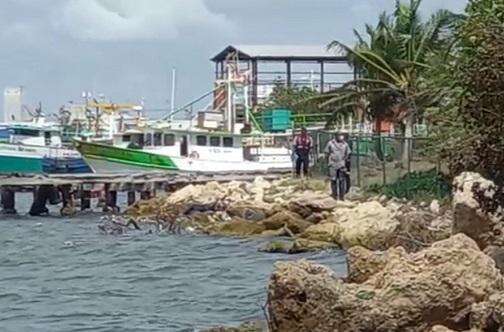
Police seek public’s help in identifying woman found dead in Kingston Harbour
On Tuesday, May 5, an unsettling discovery was made in waters off central Kingston, Jamaica, prompting local law enforcement to issue a public call for assistance to uncover the identity of a deceased woman found near the Bank of Jamaica. The incident unfolded shortly before 9 a.m. that morning, when a boater passing through Kingston Harbour spotted the woman’s body and immediately notified police officials of the find.
Responding officers from the Kingston Central Division moved quickly to retrieve the remains from the water, transporting the body to a local hospital for an initial assessment, where medical providers officially pronounced the woman dead. Her remains have since been moved to a public morgue, where an official post-mortem examination is scheduled to determine the exact cause of her death. Investigators have not yet released any details suggesting foul play, as the case remains in its early stages, pending autopsy results and identification.
Investigators have released a detailed physical description of the deceased to help members of the public match potential missing person reports. Based on preliminary assessments, the woman is estimated to be in her late 30s, stands approximately 5 feet 4 inches tall, has a medium build, dark skin, and short black hair. A distinct identifying marking has also been shared: she has a tattoo of a heart with wings inked on her back.
Law enforcement is urging anyone with information that could help identify the woman or contribute to the ongoing investigation to reach out immediately. Tips can be submitted to the Kingston Central Police tip line at (876) 922-5076, the anonymous Crime Stop hotline at 311, the national police emergency line at 119, or by visiting any local police station to speak with an officer in person.
-

Police identify men fatally shot in Manchester
MANCHESTER, Jamaica — Law enforcement authorities have released the identities of two teenage males killed in a reported shootout with police last Friday in the Mandeville area of Jamaica’s Manchester parish. The deceased have been named as 18-year-old Dantae Edward Carter, who maintained residency in both Manchester’s Hanbury district and Brighton district in neighboring St Elizabeth, and 19-year-old Dave Raymond, a longtime resident of Manchester’s Manningfield district. The encounter that unfolded across busy streets of the town unfolded with chaotic, high-stakes drama that disrupted daily life for local residents and bystanders. Following the confrontation, investigators confirmed they had recovered two illegal firearms at the scene of the incident. The violence unfolded as a police pursuit of a Toyota Axio vehicle that began on Newleigh Road, with the chase stretching several blocks through the town’s commercial and residential corridors before ending near the Willowgate plaza on Manchester Road. As officers engaged with the vehicle’s occupants, nearby civilians scattered frantically to find safe shelter from the crossfire. Amid the exchange of gunfire, one bystander suffered a minor grazing wound from a stray bullet, according to initial reports from the scene. The incident remains under ongoing investigation by Jamaican law enforcement as they work to piece together the full sequence of events that led to the fatal confrontation.
-
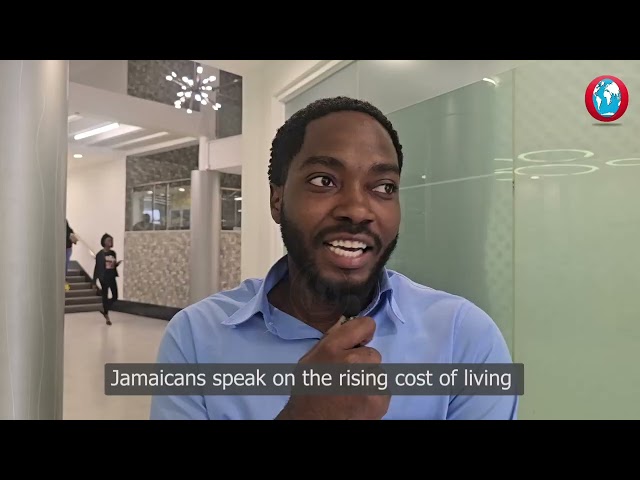
WATCH: Rising costs deepen frustration among Jamaicans
KINGSTON, Jamaica — As global geopolitical conflicts, lingering supply chain snarls, and widespread economic volatility send consumer prices soaring across the globe, public frustration over Jamaica’s worsening cost-of-living crisis has reached a fever pitch among ordinary citizens. In an on-the-ground interview series with Observer Online conducted in the commercial district of New Kingston, Jamaicans from all walks of life opened up about how relentless price hikes have strained household budgets and upended daily financial stability, pushing many to the breaking point.
The crisis unfolding in Jamaica is not an isolated event: it is a direct downstream effect of global shocks that have disrupted international trade networks, driven fossil fuel and commodity prices to multi-year highs, and inflated the cost of nearly every essential consumer good. For Jamaican households, these global pressures translate directly to higher bus fares and gas bills at the pump, and steeper price tags on staple goods at local supermarkets. The burden falls disproportionately on the most vulnerable segments of the population, particularly low-wage earners who already dedicate nearly all of their income to basic needs.
For many, the constant financial pressure has taken a significant mental and emotional toll, as unforeseen global shifts derail personal goals and long-term planning. A young local resident described the constant anxiety of trying to keep up with rising costs that are out of her control. “I feel stressed out… every time you set certain goals, things happen in the world and it kind of deters you from really accomplishing these things you set in your mind,” she explained. Even routine, necessary expenses have become overwhelming: she called the process of filling up her vehicle’s gas tank a “truly traumatic” experience, adding that she remains deeply uncertain about how households will afford to keep up moving forward.
Another resident shared that she has been left “very distraught” by the rapid increase in prices for basic groceries, noting that her monthly food bill has jumped dramatically in just a matter of months. She pointed out that for workers earning the minimum wage, goods that once were easily accessible have moved out of reach entirely. “I hope things change soon, but for persons who are minimum wage earners they won’t be able to afford most of what would have been simple to afford now,” she said.
The crisis is not just a personal hardship for many Jamaicans — it has grown into a pressing national concern that demands urgent government intervention. One local man emphasized that the ripple effects of the global economic crunch will be felt across every sector of Jamaican society, and that policymakers must act to prevent widespread food insecurity. “We have to rely on the government to implement some kind of strategic ways to say, ‘alright this is what we are going to do to help the citizens of Jamaica’ to keep us in a sense where we are able to maintain because some people won’t be able to afford to eat,” he argued.
Young people are emerging as one of the groups hardest hit by the crisis, says 20-something resident Giovanni Edwards, who explained that his peers are squeezed between stagnant entry-level wages and accelerating prices. “We have to think about what we spend our money on…. It’s just really a challenging time,” Edwards said. To offset the soaring cost of fuel, he and his friends have adopted new cost-cutting habits: they now carpool to work and social events, and have cut back entirely on discretionary spending like attending parties and other recreational outings.
Even local business owners are feeling the strain, as wages fail to keep pace with sky-high inflation, creating financial uncertainty for both employers and their workforces. One local entrepreneur, who runs a small coconut water bottling business, noted that inflation has pushed the national economy into an unsustainable position. “The government needs to come to a solution in order to keep inflation at a stable place where people can at least break even with it. It’s too high,” he said.
To ease the burden on struggling consumers, the entrepreneur proposed a policy shift focused on boosting domestic production, which he argues would cut Jamaica’s reliance on costly imported goods. His suggestion: policymakers should redirect investment to local small and medium-sized businesses, and expand access to low-interest business loans to help local producers scale their operations. In line with this vision, the businessman already prioritizes sourcing all of his raw materials from local Jamaican producers to keep his own costs down and support the domestic economy.
-
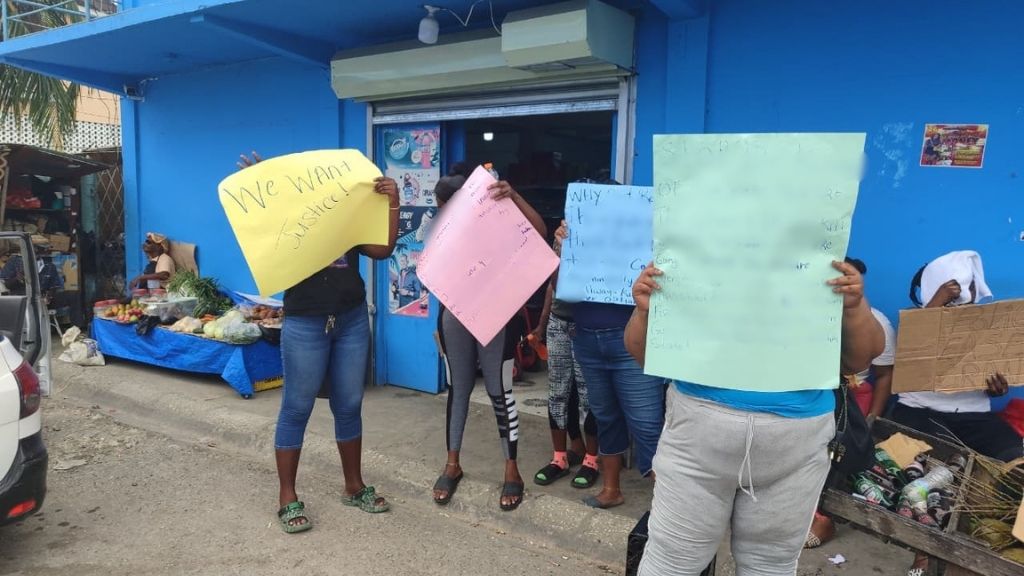
Granville residents protest alleged police killing of teenager
In the tight-knit community of Granville, St James, Jamaica, public anger boiled over this week after local residents took to the streets to demonstrate against the fatal shooting of a teenage boy, an incident locals claim was carried out by state security forces. The young victim, publicly identified only by the nickname ‘Teejay’, was killed in broad daylight Sunday morning, amid reports of an alleged confrontation between the teen and security personnel operating in the area. According to initial accounts of the encounter, the shooting took place as police officers were exiting the community following the conclusion of a pre-planned security operation. Outraged by the death of the young resident, community members have branded the killing the ‘Mother’s Day Massacre’, and universally reject official claims that the shooting was a lawful use of force. Chants of “We want justice, the police killed our youth” echoed through the neighborhood as demonstrators made their demands for a full, transparent accounting of the incident public. This latest fatal encounter is not an isolated event in Granville: it comes just months after three local people – including four-year-old child Romaine Bowman – were killed during another large-scale security operation in the same area. In line with standard protocols for incidents involving security force use of lethal force, Jamaica’s Independent Commission of Investigations has launched a formal probe into the circumstances of Sunday’s shooting to determine whether any unlawful conduct occurred.
-
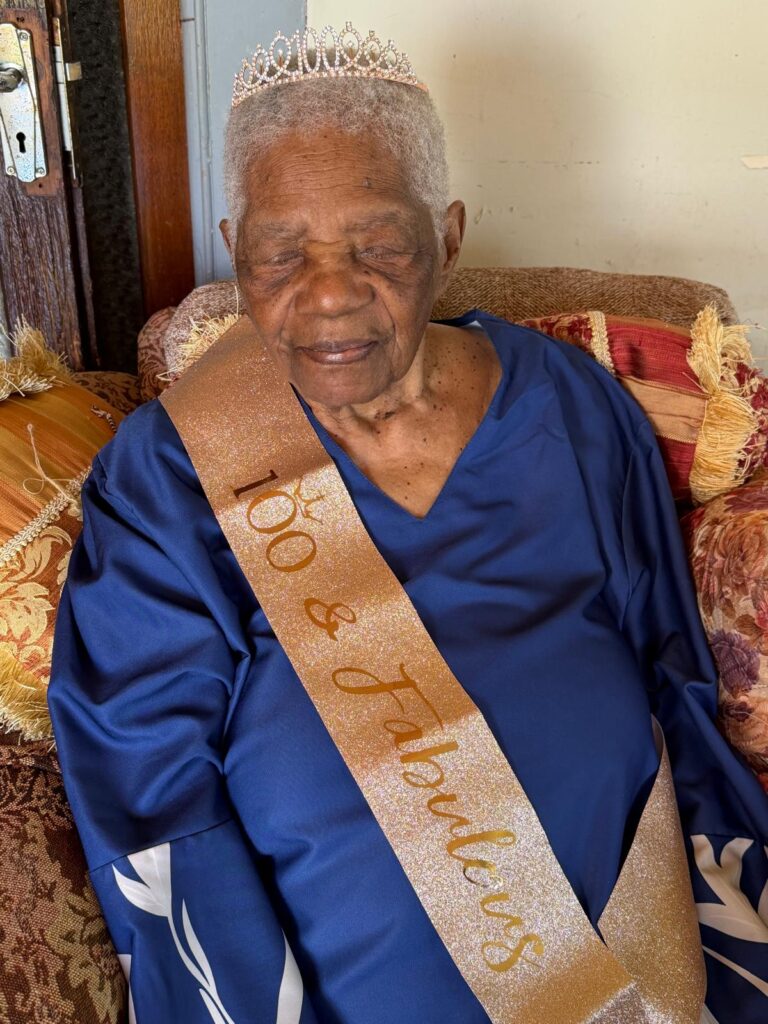
St Ann healthcare trailblazer Dorrett Wood Brown celebrates 100th birthday
On a warm April day in St Ann, Jamaica, a trailblazing figure in local maternal and prenatal care gathered with loved ones to mark a rare and remarkable milestone: Dorrett Wood Brown’s 100th birthday. Born in Bethany in 1926 as the second of eight children, Brown now stands as the last surviving member of her childhood generation, a centenarian whose life has been defined by service, faith, and entrepreneurial courage at a time when few Black women owned independent businesses.
Brown’s path to transforming local maternity care began in the early 1950s, when a doctor and pastor offered her the opportunity to pursue nursing training in England. For nine years, she honed her clinical skills abroad, preparing to return home and contribute to her community. When she came back to Jamaica in 1960 to care for her ailing mother, unforeseen administrative missteps led her to surrender her British passport and withdraw her accumulated pension savings. Rather than letting this setback derail her plans, Brown repurposed those funds to launch the Resthaven maternity home in Brown’s Town in 1961, cementing her status as the parish’s first pioneer of dedicated private maternal and prenatal care. After her marriage in 1967, the facility was renamed Woodhaven in honor of her new family.
Unlike many women of her era who worked under established institutions, Brown built and ran her business entirely on her own. Her adopted daughter Ruth Heron, one of four children Brown welcomed into her home, recalled that the midwife did not only deliver babies: she hosted new mothers for weeks of postnatal care, teaching them essential skills for infant nursing, bathing, and long-term childcare. Heron emphasized that for a Black woman to own and operate an independent business in 1960s Jamaica was a revolutionary achievement. “She never worked for anybody. She always worked full-time… She was a proper entrepreneur,” Heron explained.
Beyond her professional work, Brown’s life has been shaped by a deep Christian faith that drove her to care for marginalized and isolated community members. Even when her own family was small, Heron remembered, Christmas dinner regularly hosted 15 to 16 guests – people who had no other family to celebrate with. If anyone in need knocked on her door asking for help, Brown would give them what she could, even if it stretched her own resources thin. Her commitment to service extended to her work with the Baptist Women’s Federation, where she served as president in the 1970s; representatives from the organization joined her for the centennial celebration.
Though Brown has faced declining health in her final years, losing her sight and living with dementia for the past six months, her family says her faith remains unshaken. She still recites long-memorized Bible verses from memory, and her core values of service and care have been passed down to the next generation. One of her adopted twin daughters, Karen Weir, followed directly in Brown’s footsteps, opening the Happy Smile Care Home for elderly residents in St Ann, inspired by the example of care she grew up with.
Weir, an educator, recalled Brown’s strict but loving approach to raising her children: she required regular Sunday school attendance, enforced strict table manners, and prioritized teaching independence – skills Weir says have served her well in adulthood. Even with her dementia, Weir noted, Brown’s long-term memory remains intact, and she does not look her 100 years. Joining family, friends, and federation members at the celebration was Monique Richards from Jamaica’s National Council for Senior Citizens, who came to honor the centenarian’s decades of contributions to the community.
Speaking to Observer Online at the celebration, Brown expressed gratitude for the life she has lived. “I feel happy. I just thank God. I find it very difficult to find the words to describe the feeling,” she said, acknowledging her parents’ role in her upbringing and adding, “The Lord’s blessing is on me.” For her family and the thousands of families she cared for through her maternity home, that blessing has extended far beyond Brown herself, leaving a lasting legacy of care, entrepreneurship, and compassion in St Ann.
-

Mother’s Day celebration
On a warm Sunday gathering centered on celebrating maternal bonds, the Jamaica Pegasus Hotel played host to the annual Shades of Her Mother’s Day Brunch, an event that brought multiple generations of local families together to honor the women who shape their lives. Among the dozens of intimate moments captured across the venue, one particularly tender scene stood out, preserved in a photograph by photographer Garfield Robinson. In the frame, 7-year-old Aden Parchment wraps his arms tightly around both his grandmother, Ruby Smith, and his mother, Yvonne Thomas, pressing a gentle kiss to Thomas’ cheek as the three hold one another close. The brunch, designed to create space for families to connect and express gratitude, drew hundreds of attendees this year, with many participants noting that multi-generational celebrations like this have grown increasingly meaningful post-pandemic, as communities prioritize in-person time with loved ones. Organizers of the event shared that they launched the Shades of Her brunch five years ago to center Black maternal joy and create an accessible, welcoming space for families across Jamaica to mark the holiday together, a mission that has resonated deeply with local communities year after year.
-
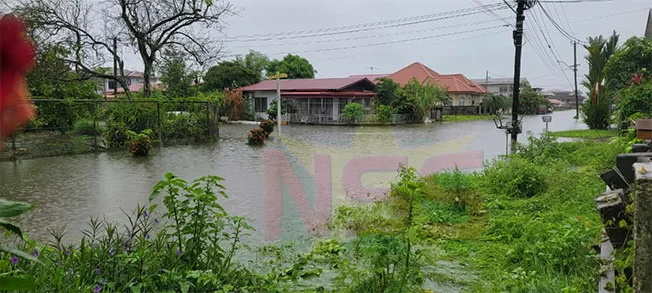
Moederdag in het water: De prijs van jarenlang verval en politieke laksheid
On May 10, widespread flooding paralyzed large swathes of Suriname, as weeks of continuous monsoon rainfall turned urban streets into rushing rivers, submerged residential yards, and destroyed entire agricultural harvests. What makes this disaster particularly devastating for local communities is that it was entirely avoidable: the annual rainy season arrives on schedule every year, yet systemic neglect of critical water management infrastructure has turned a routine seasonal event into a humanitarian and economic crisis.
Residential neighborhoods across the country are grappling with waist-deep floodwaters that have seeped into homes, trapping many residents indoors and forcing them to salvage belongings amid rising tides. In the northern district of Suriname, resident Esselien described the crisis as the worst she has ever experienced, as floodwaters poured through the doors of her property. Another local, Kiran, had prepared special Mother’s Day treats to deliver to her mother, but was forced to abandon the plan after her street became a stagnant, lake-like floodplain.
The damage extends far beyond residential disruption, hitting small business owners and agricultural producers the hardest. Farmers across rural Suriname have watched months of cultivation work disappear underwater, with entire vegetable crops rotting in the fields before they could be harvested. Many farmers point to longstanding failures in regional water management: one grower lamented that sluice gates are often not opened during low tide to allow floodwater to drain out to sea. Others note that regional drainage ditches have been left unmaintained for decades, becoming choked with overgrown weeds, illegal waste dumping, and debris that blocks water flow entirely. Even as floodwaters rise, these long-unaddressed infrastructure gaps prevent any effective drainage of inundated land.
Small businesses that rely on the annual Mother’s Day shopping rush have also been ruined by the disaster. Vendors across the country had already set up temporary street stalls to sell flowers, baked goods, holiday treats, and gifts for the occasion, investing thousands of dollars in inventory ahead of the busy sales weekend. But with streets submerged and residents focused on protecting their homes from flooding, no customers have arrived. Perishable goods including fresh flowers and baked goods are already spoiling, leaving vendors facing crippling losses with no path to compensation.
Local residents and analysts alike blame the crisis on decades of administrative indifference and broken political promises. Every election cycle, candidates vow to renovate outdated drainage infrastructure and clear clogged waterways, but once votes are counted, the sense of urgency evaporates. This year, the disaster comes just days after Suriname marked 160 years of representative democracy, a bitter irony for flood victims who note that parliamentarians, most of whom live on high, flood-free ground, have shown little empathy for their struggle.
Beyond government inaction, the crisis is also exacerbated by growing public carelessness toward the living environment: illegal dumping of plastic, household waste, and large debris across the country has slowly turned drainage ditches into informal landfills, leaving nowhere for excess rainwater to go. Suriname has fallen into a dangerous pattern of only responding to flooding after neighborhoods are already submerged, relying on last-minute emergency fixes instead of proactive, long-term infrastructure maintenance.
But floodwaters do not wait for committee meetings, official memos, or public tender processes. When critical maintenance is delayed for decades, the public always ends up paying the price. Today, that cost is being borne by farmers who have lost their livelihoods, small business owners who have lost their holiday income, and working families who have lost their homes and belongings to floodwaters. As rain continues to fall, a shared anger has grown across affected communities: this is not a natural disaster. It is the entirely predictable result of years of institutional neglect, and no one has stepped forward to compensate victims for their losses.
-

COMMENTARY: Hearing her voice every day
Even on ordinary days, there are few sounds as grounding as the familiar lilt of my mother’s voice. Today, that voice rarely stretches into long conversations; most often, it ends with her soft, familiar refrain: “God bless you, Amen.” That quiet line is enough, though, to pull me straight into reflection as Mother’s Day approaches, calling my mother’s life, her quiet strength, and the subtle shifts time and geographic distance have carved into my family into sharp focus.
For as long as I can remember, the simple knowledge that she existed, just a call away, was a quiet comfort. She never claimed to fully understand every part of my life, but that was never the point—her steady presence was enough. As I grew into adulthood, I learned to give that same presence back to her: joining her on the trips she loved, and savoring the good meals that have always brought her joy.
My mother’s later years have been marked by unthinkable hardship. Five years ago, we lost my brother at just 50 years old, and a deep, enduring grief has settled around her ever since. Still, she refused to stop moving forward. Grief, however, does not stay confined to the heart—it seeps into the body, slow and unrelenting, changing her in ways I could not see from afar.
It had been years before I could travel home to see her, and when I finally did, two years ago, the visit overlapped with both Mother’s Day and her 80th birthday. Standing across from her, I saw the weight of years in the lines on her face, the slower cadence of her steps, and the quiet, unshakable resilience that has always defined her.
In the years since that visit, her declining health has demanded more and more daily care. Like thousands of other families separated by international borders, distance complicates every part of our journey—it strains us emotionally, and creates practical barriers that feel impossible to overcome. The hardest part of this separation is not the miles between us. It is the constant, heavy knowledge that I cannot always give her the level of gentle, consistent care she deserves in her final chapter.
This struggle is not unique to our family. It is a shared reality for millions of cross-border households: when formal care support is limited, and access to reliable care depends on proximity and local networks, the weight of responsibility falls disproportionately on families already stretched thin across continents.
Over time, I have also had to accept that our daily routine of calls at the same time each day is gone. Our conversations are fewer and further between now, but they have also grown deeper, more intentional. Every exchange carries more weight, more gratitude, more focused presence than the casual check-ins we shared for decades.
Even with all the ache of distance and grief, gratitude is what I feel most. I am grateful she has a dedicated caregiver to stand by her each day. I am grateful I can still pick up the phone and hear her voice. I am grateful that even when connection changes, it never fully breaks.
My sister and I both built our lives outside our home country. We did not leave for political asylum or economic opportunity—we left to build our own families, to follow love. My brother stayed behind to be close to our mother until his passing, and our father died years before he did.
When I look at my mother, I see a woman who lived every bit of her life fully. She was always active, endlessly social, engaged with her community, and brimming with energy for even the smallest daily moments. Now, like so many other elderly people, her world has grown quieter. The phone rings far less often than it once did.
But this is not just my mother’s story. It is the story of millions of aging parents, millions of scattered families, millions of adult children building lives thousands of miles from the home they grew up in. And if we are honest, it will likely be our story one day, too, when our own children grow and build their lives across borders.
That is what makes Mother’s Day so much more than a commercial celebration of mothers. It is a reminder: to show up for the people we love, to cherish the connections we still have, to appreciate the simple gift of hearing a loved one’s voice on the other end of a line.
It is a reminder to live fully, to feel deeply. To value the people who are still with us, today. To extend forgiveness, and to accept it when we need it. To give love without keeping score of what we get in return. Because at the end of the day, that is all love ever really is.
-
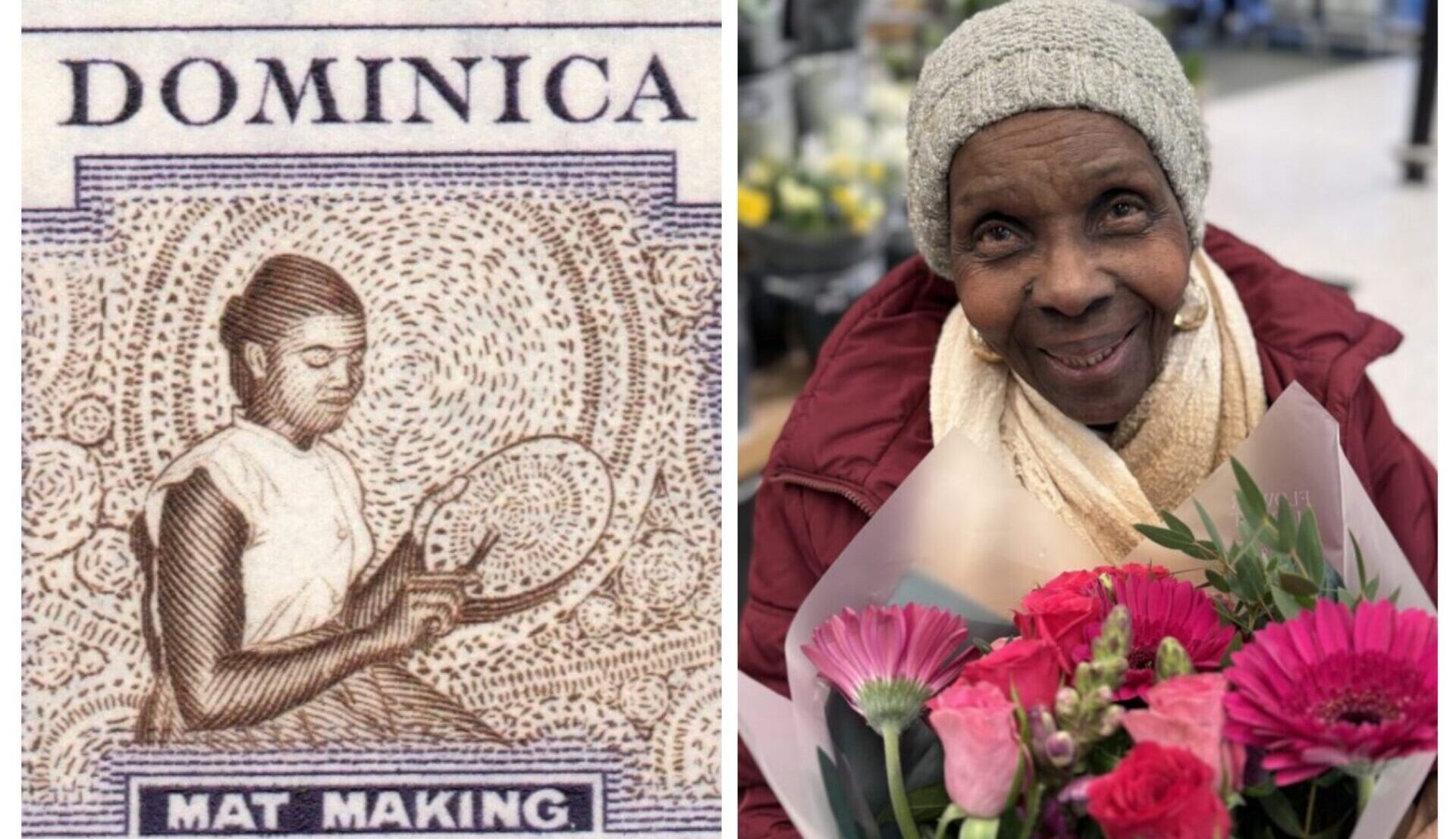
Cynthia Thomas: Historic ‘Stampgirl’ from Dominica and beloved matriarch in her 90th year
Nearly seven decades after an unplanned childhood moment secured her a permanent place in Dominica’s national identity, Cynthia Thomas, the face of one of the Caribbean nation’s most iconic postage stamps, has celebrated her 90th birthday, surrounded by loved ones and decades of warm memories.
Born in Dominica on March 7, 1936, Thomas spent her formative years at the Nuns’ Industrial School on the island, a setting that would unexpectedly shape her lasting legacy. It was the 1950s, when the Dominican government was developing a new series of postage stamps intended to showcase everyday island life to the world. Officials commissioned a professional photographer to capture authentic scenes of local daily activity, and during a school visit, the photographer snapped a series of shots that included a young Thomas weaving traditional mats.
Of all the frames captured that day, the image of teenage Thomas at work stood out. It was selected for the final stamp issue, appearing on both the 3-cent and 48-cent denominations released in 1957. That small print turned a local schoolgirl into a globally recognized symbol of Dominican culture, seen by letter senders and collectors across every continent.
After completing her schooling, Thomas left Dominica to live and work first in St Kitts and Antigua, before relocating to London, United Kingdom, in 1961. In London, she built a decades-long professional life, holding roles at a Harrods bank and later at car manufacturer Vauxhall Motors, while raising her only son, Stephen. She would go on to become a proud grandmother to two grandchildren, Damani and Jamilah.
Out of respect for Thomas’ age and limited mobility, her 90th birthday celebration earlier this year was kept small and intimate, held at her London home. Close family members traveled to gather with her, bringing fresh flowers, her favorite Caribbean takeaway meal, a custom birthday cake, and a playlist of the classic music she loves to sing along to.
Music has remained one of Thomas’ core lifelong passions, and in a testament to her enduring creativity, she even released a full album of her work just a few years ago. For Thomas, the stamp that made her a part of Dominican history remains a source of constant joy and pride. Relatives say she still reflects fondly on the 1950s photo shoot, often describing the experience as unexpected and deeply meaningful. She also regularly shares warm reflections of her time at the Nuns’ Industrial School with younger family members, advising them that school days are among life’s most precious gifts, even when they are not fully appreciated in the moment.
Decades after that photo was taken, and thousands of miles from the island where she was born, mention of the iconic stamp still lights Thomas up. The small, accidental moment of her teenage years has grown into an enduring piece of Dominica’s cultural heritage, bridging geographic distance and multiple generations to remain a beloved part of the nation’s visual identity.