分类: society

  • Faith and heartbreak on Mother’s Day

    Faith and heartbreak on Mother’s Day

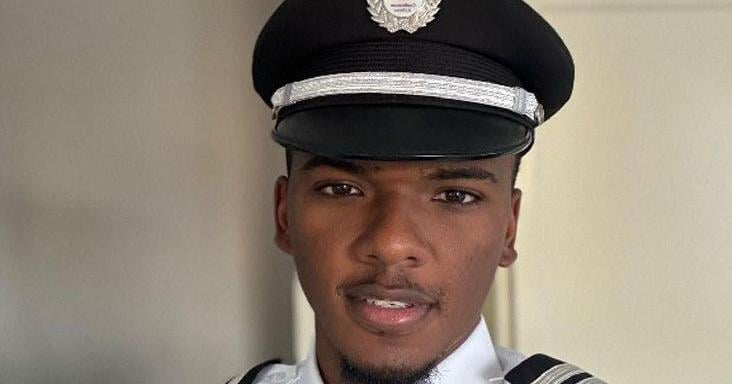
    For Sharon Vasquez-Rochard, this Mother’s Day brings no quiet celebration—only a heavy heart, as she waits by the hospital bed of her 28-year-old son Christon Battersby, a Caribbean Airlines first officer who has remained on life support for nearly 14 months after a catastrophic diving accident. What began as a casual day out with friends in March 2025 turned into an ongoing battle for survival that has tested her family’s resilience, faith, and financial stability, prompting an urgent public appeal for support to access life-changing specialized care abroad.

    The fateful accident unfolded on March 15, 2025, at Tobago’s popular Pigeon Point Heritage Park. Battersby, a resident of Maracas Valley, St. Joseph, was socializing with friends near the jetty when he dove into shallow water and struck his head against an unseen submerged object. He was pulled unconscious from the water immediately by on-duty lifeguards, who began cardiopulmonary resuscitation (CPR) right away. Two visiting tourists—Sarah Persson from Sweden and Anna Hospedales from Canada—stepped in to assist with ongoing resuscitation efforts, a moment captured in a widely circulated video that spread across local social media. By the time emergency responders arrived, Battersby had already suffered a broken neck, cardiac arrest, and near-drowning; his heart had stopped beating, he had no pulse, and he was not breathing. Yet the quick action of bystanders saved him long enough to reach care, and he was first transported to Scarborough General Hospital before being transferred to the Intensive Care Unit (ICU) at Port of Spain General Hospital, where he has remained ever since, dependent on a mechanical ventilator to breathe.

    In the 14 months that have followed the accident, Vasquez-Rochard says the entire experience has been an unrelenting ordeal that has strained her family in every possible way. “Watching my son fight for his life after such a devastating diving accident in Tobago has been the most painful experience we have ever faced,” she shared in an interview with the *Sunday Express* ahead of this year’s Mother’s Day. Despite the overwhelming severity of his injuries and the emotional drain of more than a year in the ICU, Battersby has never stopped fighting. Vasquez-Rochard says he has already shown small but meaningful signs of progress that keep the family’s hope alive. He can eat normally, shrug his shoulders, and make small voluntary movements of his neck. He remains fully mentally alert, with unimpaired brain function, and is deeply engaged in his own recovery process. “He is fully mentally alert and aware, and very knowledgeable about what is happening to him. He is like a doctor right now,” his mother said.

    Still, his condition remains extremely complex. Prolonged immobility has led to persistent nerve pain, frequent muscle spasms, and progressive muscle atrophy. The advanced, integrated neurological and physical rehabilitation he needs to make meaningful recovery is not available in any single local medical facility. Two specialized international centers—one in Panama and one in Colombia—have evaluated Battersby’s case and confirmed they can provide the comprehensive care he requires, including intensive physical therapy, respiratory rehabilitation, neurological therapy, and mobility training tailored specifically for high cervical spinal cord injuries. When factoring in treatment costs, travel, accommodation, medical equipment, and ongoing rehabilitation, the total price tag comes to more than US$400,000 (equivalent to roughly TT $2.72 million), a sum far beyond what Battersby’s family can cover on their own. Insurance coverage has not materialized as the family expected, forcing them to turn to public fundraising. Vasquez-Rochard launched a GoFundMe campaign, alongside a dedicated bank account for direct donations, to raise the required funds in time to begin treatment as soon as possible. “I believe timely, specialised care at an international institution can maximise his chances of recovery, independence and quality of life,” she said.

    For the family, every small improvement is a milestone worth celebrating. Battersby has already been able to speak briefly through a tracheostomy valve, shown improvements in sensory function, and demonstrated consistent small neurological responses to stimulation. “These are small steps, but they give us hope,” Vasquez-Rochard said. “Every small improvement is a victory for us and a reminder that progress is still possible. With God’s grace and mercy, anything is possible through faith.”

    This Mother’s Day marks 14 months since the accident, and Vasquez-Rochard acknowledged the emotional weight of the moment, noting that the crisis has impacted her family emotionally, physically, spiritually, and financially. Still, she says faith has been the family’s anchor through the most uncertain moments. “There were many moments of fear and uncertainty, especially in the early months. But we have had to remain strong for Christon and continue encouraging him every single day,” she said. “We say to each other daily, ‘I love you,’ and we trust God completely.”

    The family has extended heartfelt gratitude to the many groups and individuals who have supported them since the accident. They thanked the medical staff at Port of Spain General Hospital for their consistent care, Christon’s colleagues at Caribbean Airlines, the Trinidad and Tobago Airline Pilots Association (TTALPA), their local church community, and prayer groups across Trinidad and Tobago. They also reaffirmed their thanks to the tourists and bystanders who saved Battersby’s life on the day of the accident, whom Vasquez-Rochard has long called “angels.” “Angel Sarah, angel Anna, and the other angels who came and rescued, revived, and gave back life to my son—I want to say thank you from the bottom of my heart,” she said.

    Just before the accident, Battersby had gained social media attention for sharing a video documenting his journey to become a commercial pilot at a young age, a dream he still holds onto today. Now, his family is asking the public to stand with them to give him a second chance to achieve that dream. Members of the public can contribute to Battersby’s recovery fund via the family’s GoFundMe campaign or through direct deposits to Republic Bank savings account 3500 2188 9031.

  • ‘Crime is bigger  than race and colour’

    ‘Crime is bigger than race and colour’

    A public debate over race, crime and systemic inequality has erupted in Trinidad and Tobago after Homeland Security Minister Roger Alexander made targeted comments calling on young Black men to reject a life of criminality. The remarks came in the immediate aftermath of a fatal police shooting of four Black men suspected of carrying out a string of home invasions, putting the long-simmering conversation over how to address crime and racial stereotyping back into the national spotlight.

    In his public address, Alexander urged young Black men to abandon criminal activity, framing collective action within the community as a path to national and familial pride. “To the young black men, life does not revolve around crime and criminality. We must not be seen as a threat to humanity. We can do better than that,” Alexander said, adding that young people should choose to build stable foundations rather than become part of troubling crime statistics.

    But community and academic leaders across the country have pushed back on the minister’s framing, arguing that the conversation about crime must extend far beyond racial targeting to address the underlying systemic and social conditions that drive violent offending.

    Reverend Kwame Clarke was among the first to respond, acknowledging that Alexander had every right to speak publicly on rising crime but emphasizing that the problem is far more complex than surface-level discussions about race allow. “I think that as a minister, it is within his purview to comment on the impact of crime on both the community and in the lives of those involved in criminal activity,” Clarke noted. However, he argued that concentrated economic disadvantage and failing social systems are the true catalysts for criminal behavior, noting that “the issue is more tied to economics and socialisation. It is a fact that communities which are considered oppressed by dysfunctional family structures, little to no income in the home, or insufficient social support infrastructure are the farm houses for gang culture and criminalisation.”

    Clarke added that solving the national crime crisis requires a collective “whole village approach” that brings together all segments of society to contribute resources and solutions to the multifaceted problem, rather than focusing on a single demographic.

    David Muhammed, founder and director of the Black Agenda Project, shared that while he understands the minister’s concern over rising violent crime, he worries that narrowly targeting Black youth reinforces harmful, unfounded stereotypes that paint an entire community as inherently dangerous. He compared the framing to unfair generalizations made against other ethnic groups, such as stereotypical assumptions linking Syrians to drug trafficking or Indo-Trinidadian men to domestic abuse.

    Muhammed also pointed out that the outsized focus on street crime committed by poor Black people often overshadows the far greater economic damage caused by white-collar crime, which is predominantly committed by non-Black Trinidadian citizens. “The impact of white-collar crime by non-Africans still has much more of a consequential effect on our economy than all the crimes committed by poor black people all put together,” he said. He further criticized the repeated politicization of Black youth, noting that politicians from all parties regularly deploy these comments to score cheap political points, with little sincerity behind the calls for change.

    Criminologist Kerron King added his expertise to the debate, arguing that crime statistics should be used to investigate root causes, not to stigmatize an entire group of people. He noted that while Black men are overrepresented as both perpetrators and victims of violent crime in national statistics, the vast majority of young Black men in Trinidad and Tobago never engage in criminal activity. “The vast majority of young black men in our nation are not involved in crime, and whilst it’s true that they are over-represented in violent crime statistics as both perpetrators and victims of violent crime, we must use this statistic to ask why,” King said.

    King outlined multiple well-documented social risk factors that push youth toward crime: poor academic performance, low civic engagement, association with criminally involved peers or family members, and a lack of consistent adult supervision during adolescence. To address these gaps, he called for a sweeping overhaul of the national education system, from primary to secondary school, with a core policy goal of ensuring every child completes secondary education. “We must adopt a policy that no child, boy or girl, must be left behind. Every child will graduate, every child will cross the stage. This should be our mantra. It’s such a low-hanging fruit with such great returns. We’re not too far gone—we just need to be smart on crime and not tough on crime,” King said.

    Rhondall Feeles, president of the Single Fathers Association of Trinidad and Tobago, echoed the critique of the minister’s broad comments, noting that the speech overgeneralized a problem that is specific to gang-related crime, not all Black communities. Feeles pointed out that every ethnic group in Trinidad and Tobago is stereotypically linked to specific types of crime: gang-related murder is most often associated with Afro-Trinidadian communities, while domestic murder is more prevalent in Indo-Trinidadian communities, and drug and arms trafficking stereotypes are frequently attached to Syrian and Hispanic communities.

    Crucially, Feeles emphasized that no ethnicity is inherently predisposed to crime, arguing that environmental factors are the primary shaper of criminal behavior. “Someone is not born criminal. If you are in a location where gang affiliation is prominent and strong, and you don’t have the right mentorship and the right person to harness that young mind in a positive way, then you will end up with someone with gang affiliation,” Feeles said. He extended this logic to all types of crime, noting that exposure to domestic abuse cultivates domestic abusers, and growing up around corrupt unethical parents often produces people who engage in white-collar crime.

    Feeles also raised a critical underdiscussed point: the street-level gang members that are the focus of public attention are rarely the ones behind the large-scale importation of illegal weapons and narcotics that fuel gang violence. He argued that focusing solely on Black street gang members ignores the larger transnational criminal networks that supply the weapons driving the violence, many of which are led by people of other ethnicities.

    To truly eradicate crime, Feeles said, the country must focus on preventing the development of criminal minds by transforming vulnerable communities through a collaborative two-pronged approach that pairs state institutions with local non-governmental organizations. This strategy would center on empowering marginalized communities with critical skills: financial literacy, small business development, digital literacy, emotional and psychosocial support, and trade training, giving residents viable alternatives to criminal activity and reducing the systemic conditions that drive offending.

  • Matter involving Neilon Franklyn to proceed to Coroner’s Inquest

    Matter involving Neilon Franklyn to proceed to Coroner’s Inquest

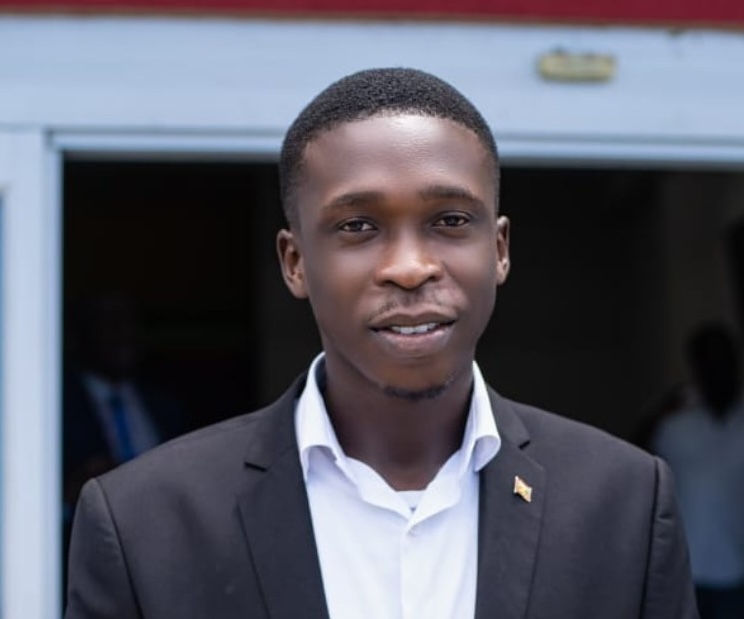
    The Royal Grenada Police Force (RGPF) has officially announced the completion of its investigation into the passing of former Grenadian Senator Neilon Franklyn, updating the public on the next steps in the legal process.

    After holding comprehensive consultations with the Office of the Director of Public Prosecutions, law enforcement officials confirmed that the case will move forward to a formal Coroner’s Inquest to further examine the circumstances surrounding Franklyn’s death. This procedural step follows standard legal protocol in Grenada for suspicious or unattended deaths, allowing for a public, thorough review of evidence collected during the police investigation.

    In a public statement released from the Office of the Commissioner of Police, the RGPF extended its gratitude to members of the Grenadian public for their patience, tips, and ongoing cooperation throughout the duration of the investigative work. Law enforcement noted that public support was instrumental in moving the case through its initial stages.

    This announcement marks a key transition in the handling of the high-profile case, which has drawn public attention since Franklyn’s death. The upcoming inquest will give the coroner and any participating jury the opportunity to review all gathered evidence and make a formal determination regarding the cause and circumstances of the former senator’s death.

  • Eerste officieel erkende verpleegassistenten stromen door naar zorgsector

    Eerste officieel erkende verpleegassistenten stromen door naar zorgsector

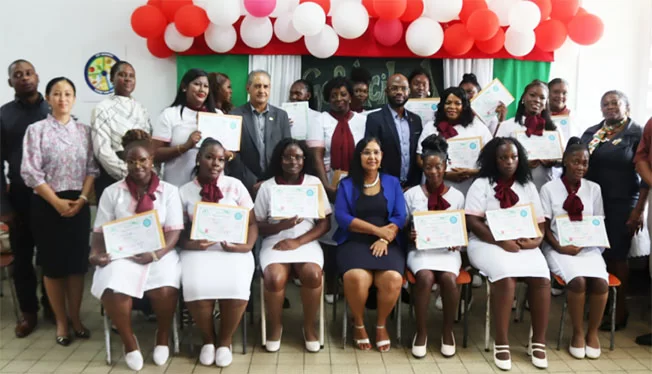
    Suriname’s labor development foundation Stichting Arbeidsmobilisatie en Ontwikkeling (SAO) marked a historic milestone for the country’s healthcare sector on Friday, when it graduated the first officially state-recognized cohort of nursing assistants, opening up new career advancement pathways for entry-level care workers that were previously out of reach.

    The achievement comes after the Surinamese Ministry of Public Health, Welfare and Labor granted formal accreditation to SAO’s nursing assistant training program. In addition to 14 nursing assistants, 16 graduates in household management received their official diplomas and certificates during the graduation ceremony. SAO’s full nursing assistant curriculum integrates modules in both household management and core clinical nursing assistance skills.

    For years before the accreditation, SAO issued only internal institutional certificates to program completers, even though many graduates had already secured roles in hospitals and other care facilities across the country. The lack of formal government recognition created a major barrier to professional growth: these workers were ineligible to apply for advanced healthcare training programs, including courses offered at the respected Elsje Finck Sanichar College COVAB. That barrier is now eliminated with the new accredited status, granting graduates nationally recognized credentials that strengthen their position in the labor market and clear the way for specialized further training in the healthcare field.

    Speaking at the ceremony, Minister of Public Health André Misiekaba and Deputy Minister Raj Jadnanansing emphasized that the accreditation is a transformative moment for both graduates and Suriname’s entire healthcare system. Officials noted that this development is a key step to reverse the persistent “brain drain” of healthcare workers from Suriname, by giving locally trained nursing assistants viable, rewarding career paths to build their careers at home instead of seeking opportunities abroad.

    Graduates will also receive dedicated support to secure placements in healthcare facilities across the country. The push to expand the pool of trained nursing assistants comes as Suriname continues to grapple with severe, ongoing healthcare staffing shortages. To maintain consistent care delivery, the ministry has already begun rolling out plans to bring in more nursing assistants and retired nursing professionals to fill gaps in care teams.

    The milestone aligns with the ministry’s 2025–2030 strategic framework, which includes wide-ranging plans to improve working conditions and roll out a revised pay scale for all healthcare workers. Moving forward, the ministry, COVAB and SAO will hold ongoing collaborative talks to further streamline the transfer process for nursing assistants pursuing advanced training.

    SAO leadership, including director Joyce Lapar, board chair Naomi Esajas-Friperson and Jolanda Verwey, reflected on the years of advocacy and program development that led to this formal recognition. They noted that accreditation does more than just guarantee consistent training quality: it delivers a much-needed boost to Suriname’s healthcare system at a time when the sector continues to face widespread staffing shortages and the ongoing outflow of skilled professionals to foreign markets.

  • Juvenile charged with Non-Capital Murder

    Juvenile charged with Non-Capital Murder

    Authorities in Grenada have formally charged a 16-year-old male resident of Sabb, St Andrew with non-capital murder in connection with the violent death of 66-year-old Melvar Wharwood. Prosecutors confirm the charge stems from evidence that the teen caused Wharwood’s death through unlawful harm, according to official statements released by the Office of the Commissioner of Police of the Royal Grenada Police Force. The criminal proceeding was launched after police launched a full investigation into the grim discovery: Wharwood’s unresponsive body was found in the Mirabeau area of St Andrew on Sunday, May 3, 2026. As a juvenile accused of the serious offense, the teen is scheduled to make his first initial court appearance at the Grenville Magistrate’s Court on Monday, May 11, 2026, where the first procedural steps of the legal process will get underway. No further details about the motive or circumstances surrounding the incident have been released to the public as the investigation remains ongoing. This report is based on official police documentation, and NOW Grenada disclaims responsibility for any third-party contributor content hosted on its platform.

  • Award‑winning author delights young readers at library event

    Award‑winning author delights young readers at library event

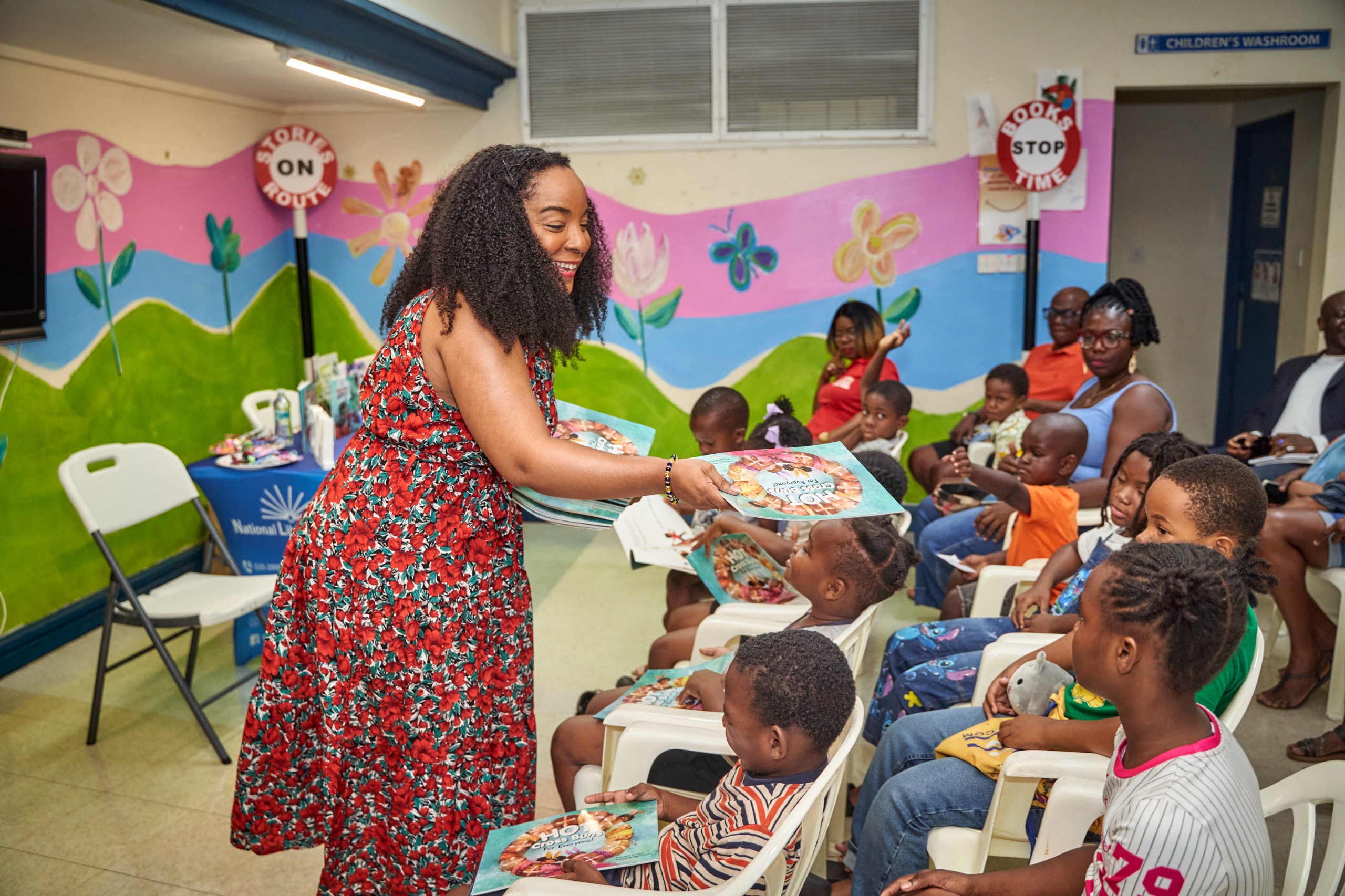
    On a vibrant Saturday morning in Bridgetown, more than 30 young children converged on the Barbados National Library Service located on Fairchild Street for an interactive Caribbean Storytime session led by acclaimed author Yolanda T. Marshall.

    Marshall, a Canadian writer with mixed Barbadian and Guyanese heritage, brought a curated selection of her most beloved children’s works to the event. The lineup included fan favorites *Sweet Sorrel Stand*, *What’s in the Cookie Tin?*, and *A Piece of Black Cake for Santa*, alongside her latest release, *Marching North*—a picture book centered on Bajan cultural identity.

    Though crafted for a young audience, each of Marshall’s stories weaves in nuanced themes tied to the lived experience of the Caribbean diaspora. Food traditions, musical heritage, cultural belonging, and the sacrifices that shape migrant journeys all emerge as core threads running through her work, creating stories that resonate with both children and adult attendees.

    In an interview with Barbados TODAY conducted on the sidelines of the reading, Marshall opened up about the deep personal meaning this event held for her. Long before her in-person visit, she had discovered through online research that her titles were part of the Barbados National Library’s permanent collection, and she had made a promise to herself that she would visit the institution to host a reading on her next trip to the island.

    “I’m so happy to be in the national library. For many years, I’ve looked online and seen that my books are housed here, and I promised myself that when I visited Barbados, I had to come here and do a reading,” Marshall shared.

    A seasoned literary event host who leads hundreds of reading sessions each year across Canada, the United States, and multiple Caribbean nations, Marshall emphasized that this Bridgetown gathering stood out among her hundreds of annual engagements.

    “Today was extra special to be present in Barbados, where my books have a home in the National Library. It was wonderful to interact with the kids who, like myself, are Caribbean-born children, and it was a wonderful day to celebrate literacy,” she added.

  • Man injured in Brittons Hill shooting

    Man injured in Brittons Hill shooting

    A violent shooting incident in the Brittons New Road neighborhood of Brittons Hill, St. Michael, has left one man wounded and in ongoing medical care, as law enforcement in Barbados launches a full investigation and calls on the public for critical tips to catch the attackers.

    The attack unfolded shortly after 9:10 p.m. local time on Friday, when the unidentified male victim was approached by a group of suspects near a local commercial business, according to official statements from the Barbados Police Service. After being confronted, the victim attempted to escape the encounter, but the group of armed assailants chased him down and opened fire, striking him with at least one bullet.

    Rather than waiting for emergency medical transport, the injured man was rushed to the Queen Elizabeth Hospital in a private vehicle by associates. As of the latest police update, he remains admitted at the facility, where clinical teams continue to treat him for his gunshot injuries.

    The investigation into the shooting is currently being led by detectives assigned to the Hastings/Worthing Police District. To advance the case and identify and apprehend the attackers, law enforcement officials are urgently asking any member of the public who may have been in the area Friday night, witnessed the confrontation or shooting, or has any other information related to the incident to come forward.

    Tipsters can share information anonymously through the Crime Stoppers hotline at 1-800-8477, contact the 24/7 police emergency line at 211, or reach investigators directly at the Hastings/Worthing Police Station through the dedicated contact numbers 430-7612 and 430-7608. Police have not yet released additional details about possible motives for the attack or descriptions of the suspects as the inquiry remains ongoing.

  • State of Emergency Across Belize City

    State of Emergency Across Belize City

    In response to an unprecedented wave of deadly violent crime that has swept across the nation, Belize’s Governor-General Dame Froyla Tzalam has signed an official proclamation enacting a State of Public Emergency across large swathes of Belize City and multiple communities in the broader Belize District. The measure went into effect on May 8, 2026, following a sharp uptick in gang-related and public shootings that have left multiple people dead in just one week.

    Formally published as Statutory Instrument No. 49 of 2026 in the government gazette on Thursday, the emergency order is authorized under Section 18 of Belize’s Constitution. It divides the affected regions into two distinct schedules. The first schedule covers 11 separate zones spanning both the Northside and Southside of Belize City, including key corridors bounded by Freetown Road, Princess Margaret Drive, Barrack Road, Cemetery Road, the Philip Goldson Highway, and stretches of land along Haulover Creek and the Caribbean Sea. The second schedule expands the emergency designation to 10 outlying communities: Ladyville Village, Burrell Boom Village, Fresh Pond Community, Buttercup Estates, Bermudian Landing Village, Lemonal Village, Isabella Bank, Rancho Dolores Village, and Double Head Cabbage Village.

    Per the constitutional language that underpins the declaration, the state of emergency is justified by actions “taken or being immediately threatened by any person or body of persons of such a nature and on so extensive a scale as to be likely to endanger the public safety.” The order takes immediate effect upon proclamation and will remain active for a maximum of one month unless government officials choose to revoke it earlier. Belize’s National Assembly holds the authority to extend the emergency measure for additional periods, with each extension allowed to last up to 12 months.

    The emergency declaration comes in the immediate aftermath of a staggering spike in fatal violence that has jolted the nation. On Thursday evening, what should have been a routine night of business at a popular local venue turned into a bloody crime scene when gunshots rang out inside Da Buzz Lounge along the Philip Goldson Highway, shortly after the establishment opened for the night. The attack killed 34-year-old Salma Funez, a mother of three. Law enforcement has already arrested and charged a 16-year-old male in connection with the shooting.

    Less than two hours after the lounge attack, a second fatal shooting unfolded in Belize City’s Cet Site neighborhood. 29-year-old construction worker Jamal Samuels was gunned down when armed suspects exited an unmarked dark vehicle and opened fire on a group of men gathered outside.

    This back-to-back violence followed a brazen midday shooting just days earlier on the Philip Goldson Highway near Haulover Bridge at Mile 4. Victims Hubert Baptist and Eric Fraser were targeted by a gunman driving a midsize SUV, who chased the victims’ vehicle before pulling alongside and opening fire. Witnesses reported more than a dozen shots were fired, causing the victims’ vehicle to lose control and roll over.

    These recent attacks are the culmination of weeks of steadily escalating violence across the district. Earlier victims of the unrest include 19-year-old Jamir “Jam” Cambranes of Euphrates Avenue, 17-year-old Alwin Marin Jr., 19-year-old Jaheil Westby—all residents of Belize City—and 24-year-old Steve Lewis, a delivery worker from Dangriga.

  • Shelter moms

    Shelter moms

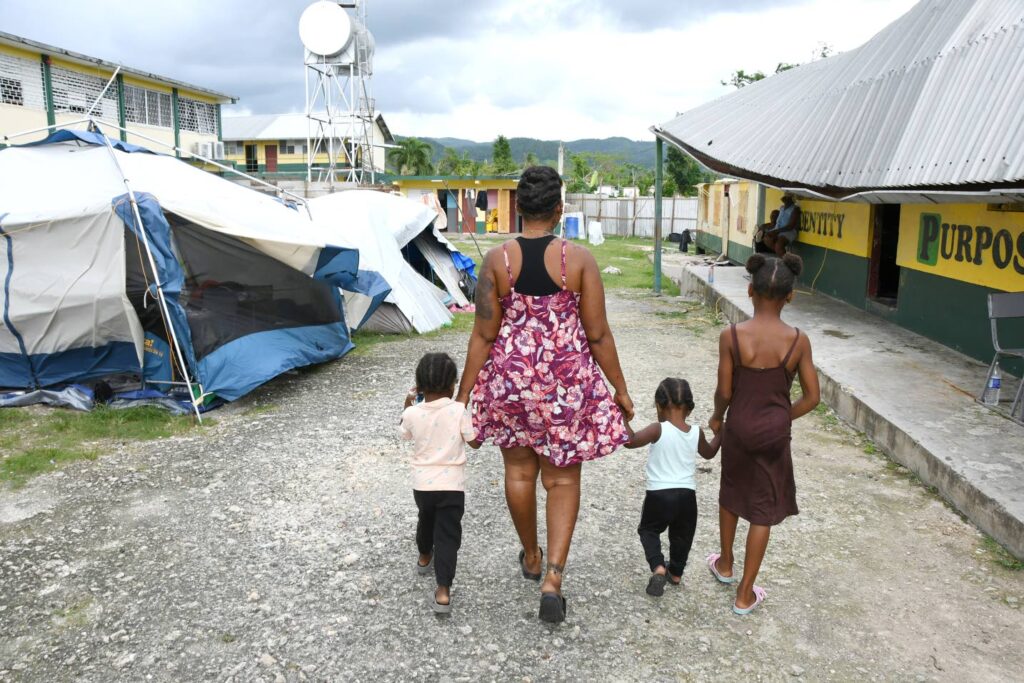
    As Jamaica prepares to mark Mother’s Day, most mothers across the island will wake to bouquets of flowers, warm hugs and intimate family celebrations honoring their role. But for a small group of women displaced six months ago by the devastating Category 5 Hurricane Melissa, this holiday will unfold far from the comfort of their own homes, each day a quiet test of endurance after months of living in temporary emergency accommodation.

    After spending half a year sheltering in converted classrooms at Petersfield High School in Westmoreland, these 16 families — totaling 41 people including dozens of children — were only recently relocated to a repurposed teachers’ cottage in Shrewsbury. Yet even amid the uncertainty of their displacement, the exhaustion of making do with too little, and the heartache of watching their children grow up in cramped, shared temporary spaces, these mothers have refused to break. Bound by shared faith, mutual support and an unshakable commitment to their children, they cling to the stubborn hope that next Mother’s Day will find them back in permanent homes, living with the dignity they once took for granted.

    A visit from the Jamaica Observer on April 24 captured the quiet ingenuity with which these women transformed a space meant for learning into a makeshift home for their families. Desks built for student learning were repurposed as bed frames, tarpaulin cut to size served as privacy curtains, and mats were laid neatly at the foot of made-up beds, with every article of clothing folded and stacked in its own designated spot. One woman even playfully chided the reporter to avoid stepping on a decorative mat, a small, familiar touch of Jamaican matriarchal order that persisted even in chaos. Classroom corridors became open-air laundry lines, propped up with bamboo sticks to let the tropical sun dry hanging clothes. It was far from the ideal home, but the women carved out what normalcy they could, drawing on the resourcefulness that has long defined Jamaican community life.

    For Tishane Haywood, a 30-something mother of six, three of whom — all under 10 — have lived with her in the shelter since the storm, the past six months have stripped her of nearly everything she built: her home, her livelihood, and the privacy of family life. But she says her children are the anchor that keeps her pushing forward, helping her set aside the trauma that Melissa unleashed on the island.

    Even with barely any extra income, Haywood makes small, quiet sacrifices to bring her children moments of joy, setting aside what little she can spare to buy small toys to keep them occupied. “The strength that I get is just looking at my kids and knowing that they’re at peace and they’re happy, because if something do me right now, I know that no one’s going to love them the way that I love them, and no one’s going to take care of them the way that I take care of them,” Haywood told the Sunday Observer.

    “It doesn’t matter how little they may be, just to see them have a smile on their face, even when I don’t have it, to say, ‘Here’s a juice,’ or something. When they get excited and happy, I feel good. They’re the reason I’m still here, they’re the reason that I’m pushing — just to see them happy. Even though they irritate me, and I tell you they do irritate me, but they’re mine, and they give me hope,” she added.

    “Every time I wake up and hear my son say, ‘I love you, Mommy,’ it feels good. My daughter and I are the same person; we can’t agree because she’s my identical person when it comes to personality, but I tell her I love her, and she loves me, too. It’s good to know that somebody out there loves me. I went through trauma as a child growing up, and to have so many little people running around that love you, I feel like I’m a superwoman, because when it comes to them, nothing is impossible for me to do,” she shared, smiling as she spoke.

    Haywood says she also draws enormous strength from the network of other mothers and grandmothers in the shelter, turning to their decades of experience for advice and encouragement when her own resolve wavers. “As a young mother, they teach me a lot. They teach me that I don’t have to abuse my kids verbally, because when I’m upset I’ll use my words. They teach me that I can talk to my kids, put them one side, and talk to them… It’s nice to know that you have other people who love your kids and care about your kids as much as you do,” she said.

    For Haywood, Petersfield High School was never just a shelter — it was where she found the extended family she never had growing up. “Being around them makes me take comfort that I have a family that I never really had, because my people don’t get along, and we don’t agree, so to be around people that make me feel like I’m their own, I feel loved, and my kids feel loved,” she said.

    Sixty-two-year-old Jennifer Anderson, a mother of eight with three of her adult daughters living with her in the shelter, is no stranger to hurricane displacement: she first sought emergency shelter with a 12-day-old daughter when Hurricane Gilbert tore through Jamaica in 1988. Now, 38 years later, that same daughter is once again living with her in temporary shelter after Melissa’s destruction.

    Anderson recalls that in 1988, disaster aid reached affected communities far slower than it did after Melissa, noting that both government agencies and private donors moved far more quickly this time to deliver meals, clothing and basic supplies to displaced families. Though her three daughters in the shelter are adults capable of caring for themselves, Anderson has not stepped back from her role as matriarch: she still keeps their spirits up, prays with them, and carries the weight of their uncertainty even when she does not have answers.

    “I have to be talking with them because sometimes they will ask, ‘Mommy, when?’ And sometimes I get irritated because I don’t know, but I have to just stay calm for them and say, ‘We are waiting on the Lord for the day to come,’ ” she said.

    Anderson has been out of work since before the storm, having lost her job as a caregiver when the elderly woman she tended passed away. Two of her daughters have found part-time work, and the family is slowly working to rebuild their stability, but they have yet to find affordable permanent alternative housing. Night after night in the shelter, she lies on her makeshift bed beside her daughters, praying with them and talking through their plans for the future to keep hope alive.

    “We have plans about how we are going to build our lives and what we are going to do after we leave here, so those things keep motivating us. We talk a lot about things and ask God to keep motivating us and helping us to do the things that we want to do for when we leave out here,” Anderson said. “Sometimes with my big daughter, I will kiss her, and I will tap her on the bed and say, ‘Don’t worry, man, everything will soon be okay,’ ” she shared.

    Even as she prioritizes her children’s emotional and physical needs, Anderson carries her own quiet grief: she mourns the loss of her home, her privacy, and the small daily comforts that once made life feel stable. “I used to be at home, living comfortably. I would sit down at night, watch my TV, get my glass, and I drink my red wine and go to sleep, but I can’t do that anymore. Mother’s Day, I would cook and enjoy myself, and if I plan to go out, then I would go out, but now it’s nothing, I am just stuck here,” she admitted, a moment of defeat crossing her face before she regained her composure. She says she trusts God will see her family through this hardship.

    “I can’t afford to sit here and be sad, because if I am sad then they are going to be sad. As a mother, you have to always show up for your kids, so I keep showing up for mine,” she said.

    Like Haywood, Anderson draws immense comfort from the tight-knit community of displaced mothers in the shelter, proving the old adage that it takes a village to raise a child — even when the village itself has been destroyed by a storm. “We are good to each other. We share thoughts with one another and we cook with one another, and we share everything that we have. We chip in where we can to help out. We are a community in here,” she said.

    In a message to all mothers facing hardship this Mother’s Day, Anderson encouraged other women to hold fast to their faith and avoid taking their frustration out on their children. “Don’t be angry and don’t take your anger out on the kids. You have to just pretend like everything is okay, even when you know it’s not okay, and ask God to protect and guide your kids so that they may live to have a better life,” she said.

  • The balance of ambition, motherhood

    The balance of ambition, motherhood

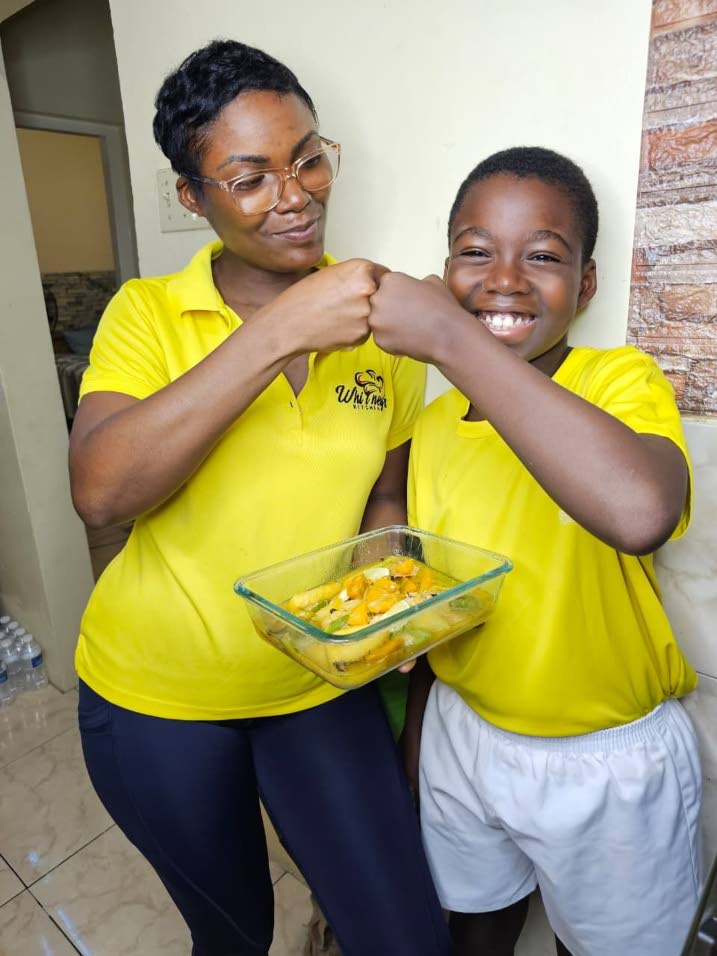
    For most working mothers, daily life is a constant navigation between two demanding, equally vital worlds, and Jamaican chef and entrepreneur Whitney Walcott knows this reality better than most. One world hums with the high energy of the culinary industry: searing hot pans, carefully layered flavor profiles, and the non-stop pace of building a growing business from the ground up. The other unfolds in quiet, intimate moments: late-night bedtime chats, gentle care for her son, and the endless, quiet drive to create a more stable, joyful future for her child.

    As Mother’s Day approaches, this delicate, hard-won balance is the core of Whitney’s powerful story. From the moment she welcomed her son, her professional ambition gained a new, sharper focus: every late night at the kitchen, every personal sacrifice, every small business milestone carries more meaning than it ever could before. When asked what keeps her pushing forward through challenges, she answers simply: “My purpose and my son. Everything I do is bigger than me. I’m not living just for me.”

    Motherhood has a unique way of awakening a quiet, uncelebrated resilience in women — a strength that often hides in the monotony of daily routines, that shows up even when exhaustion hits, that persists through uncertainty, and that finds a shifting middle ground between being a caregiver and a breadwinner. Whitney is no stranger to this unglamorous truth. “It’s not always balanced,” she admits, reflecting on the constant juggle of running a business and raising a child. “Some days lean more towards work, some towards being a mom. I just try to do my best to show up.”

    This radical honesty is what makes her journey stand out. While social media often highlights polished, perfect success stories, Whitney’s path has been paved with discipline, quiet exhaustion, and consistent persistence behind closed doors. “It hasn’t been easy at all. It’s been a lot of long days defined by trial and error, figuring things out on my own, and pushing through even when I was tired or unsure,” she says.

    Her love of cooking took root long before she built her public culinary brand, growing out of childhood moments spent at home, watching how shared meals brought family and community together. “Seeing how food brought everyone together made me fall in love with it early,” she recalls. “I was always paying attention; how things were seasoned, how they were cooked — the little details.”

    These early formative experiences shaped not just her approach to cooking, but her whole understanding of care. For Whitney, food, much like motherhood, is ultimately an expression of love, intentionality, and comfort. Today, her signature dishes carry the bold, vibrant flavors of her Jamaican upbringing, while also reflecting the growth of a woman who has turned a personal passion into a purpose-driven career.

    Building a reputation in the male-dominated culinary industry has not come without extra barriers for Whitney as a woman entrepreneur. “Being a woman in this space, you sometimes have to prove yourself more,” she says. “But I stayed consistent, let my work speak for me, and focused on improving instead of proving.”

    That consistent dedication has proven to be the key ingredient to her success. What started as a small side hustle selling homemade food has grown into a full-fledged culinary brand, expanding into packaged products, digital content creation, and multiple diversified income streams. Yet, motherhood has completely reshaped how Whitney defines success, shifting her priorities from pure growth to flexibility and family time. “Before, success was just selling food,” she explains. “Now, it’s having a business that runs smoothly, creating multiple income streams, and having more freedom with my time — time I spend with my son.”

    At the heart of every goal and every sacrifice Whitney makes is her son, she told the Jamaica Observer. His well-being is the steady motivation that keeps her chasing new milestones even on the hardest days. “I remind myself why I started and how far I have come,” she says. “Even on hard days, stopping isn’t an option. I remind myself that everything I’m building is also for my child.”

    When she steps away from the demands of the kitchen and business ownership, Whitney describes herself as a laid-back, shy person who finds true joy in slow moments, rest, and uninterrupted family time. That’s why the gift she wants most this Mother’s Day is something countless mothers crave but rarely get the chance to take: “Honestly, rest and peace. Just time to recharge without worrying about work.”

    Whitney’s story stretches far beyond a tale of culinary success or small business growth. It is a portrait of modern womanhood in all its layered complexity: nurturing big dreams while nurturing a child, holding tight to ambition without losing the gentle softness that makes care work meaningful, learning to give of yourself to others while still holding space for your own needs. This Mother’s Day, Whitney’s journey mirrors the quiet reality of millions of women around the world who build, create, and sacrifice out of the public eye every day. Their strength does not often shout from headlines or social media feeds — but it reveals itself steadily, in every act of love, every moment of resilience, and every life they shape along the way.