分类: society

  • ‘We will feed Jamaica’

    ‘We will feed Jamaica’

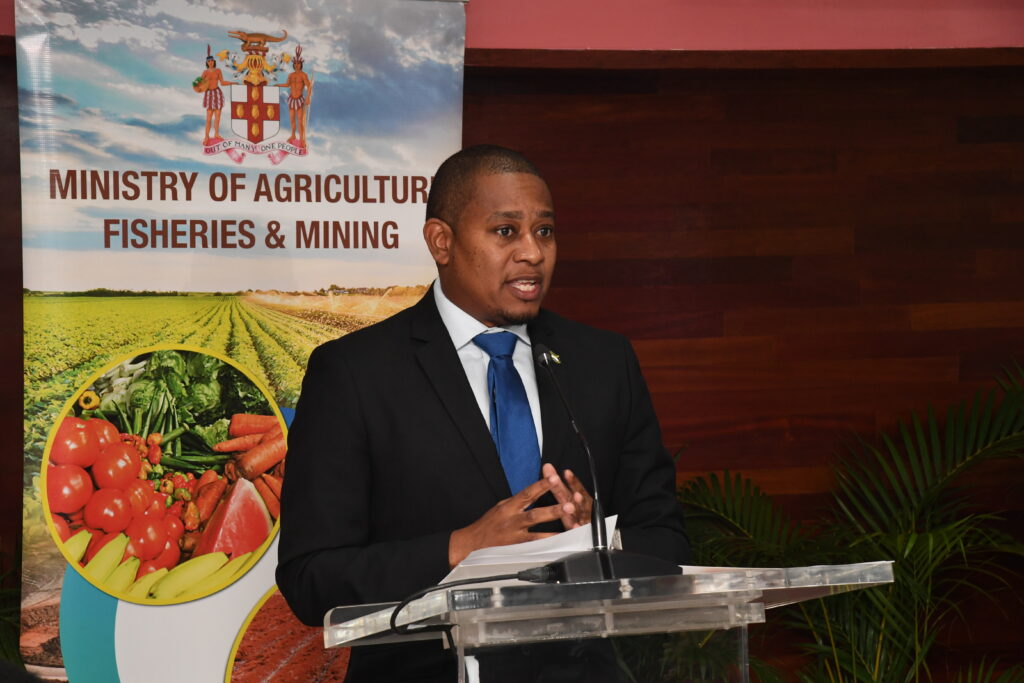
    In an extraordinary display of agricultural resilience, Jamaica’s farming sector has achieved a substantial crop surplus less than three months after the devastating impact of Hurricane Melissa. Agriculture Minister Floyd Green announced this rapid recovery during a press briefing, highlighting significant overproduction of key vegetables including cucumbers, lettuce, pak choi, and string beans across multiple parishes.

    The Category 5 hurricane, which struck on October 28, 2025, initially caused catastrophic damage estimated between $30-60 billion, affecting over 70,000 farmers and devastating crops, livestock, and irrigation infrastructure. Despite this destruction, strategic government interventions totaling approximately $70 million in direct support have catalyzed an impressive rebound.

    Minister Green credited this recovery to multiple factors: the indomitable spirit of Jamaican farmers, comprehensive post-hurricane assistance programs, and significant policy adaptations. Support measures included a $40 million lease moratorium benefiting 440 investors across 2,750 hectares, distribution of seeds and fertilizers, extensive land preparation covering hundreds of acres, and critical infrastructure repairs including 10 kilometers of drainage systems.

    Parish-specific production data reveals substantial surpluses: Clarendon leads with excess sweet potatoes and peppers, St. Elizabeth dominates squash and cauliflower production, while Manchester, Westmoreland, St. Anne, and St. Thomas all report significant vegetable gluts. This agricultural abundance has already translated into consumer benefits, with market prices plummeting between 14-77% across various produce items.

    However, the recovery presents new challenges. Diminished demand from the hurricane-affected hospitality sector, operating at 30-80% capacity depending on the crop, has created market imbalances. Supply chain constraints, particularly limited cold storage capacity exacerbated by power disruptions, have further complicated surplus management.

    To address these issues, the ministry is implementing a multi-faceted response: organizing island-wide farmers’ markets through RADA and JAS, developing agri-processing initiatives for value-added products, and finalizing a COVID-style buyback program for direct produce redistribution. Infrastructure enhancements include new renewable-powered storage containers in Flagaman and the upcoming Essex Valley Storage Facility with capacity for 22 container loads of fresh produce.

    Minister Green emphasized the government’s commitment to building long-term resilience: ‘The lessons of Hurricane Melissa are being applied deliberately—from catastrophe funds and insurance to diversified markets and stronger infrastructure. We remain engaged, present and accountable to our farming communities as we drive this recovery together.’


  • Old Boy partners with Rotary Club to assist Munro College

    Old Boy partners with Rotary Club to assist Munro College

    KINGSTON, Jamaica — Historic Munro College, an all-boys institution nestled in the Santa Cruz Mountains of St Elizabeth, has demonstrated remarkable resilience throughout its 170-year history. However, the consecutive devastation wrought by two catastrophic hurricanes within two years presented unprecedented challenges to the educational institution.

    Following substantial damage from Hurricane Beryl in July 2024, the school faced further destruction when Category 5 Hurricane Melissa struck on October 28, 2025. The compound suffered extensive structural damage, with twisted roofing, shattered windows, and compromised buildings standing as stark reminders of nature’s destructive power.

    Amid the devastation, a beacon of hope emerged through a collaborative effort between the Rotary Club of St Andrew North and KR Method, a U.S.-based health and fitness company. The partnership resulted in a substantial $1-million donation aimed at supporting the school’s recovery efforts.

    The contribution holds particular significance as KR Method was founded by Korey Rowe, a Munro College alumnus now residing in New York. The formal presentation ceremony in December 2025 occurred against the sobering backdrop of the damaged campus, symbolizing both destruction and hope.

    Principal Dr. Mark Smith described the situation as ‘hauntingly familiar,’ noting the psychological impact of facing consecutive rebuilding phases. ‘Closing off the year, we did not anticipate that we would be in a rebuilding mode. It really feels like déjà vu,’ he stated, recalling that Hurricane Beryl had significantly damaged 33 of the school’s 35 buildings.

    Despite the overwhelming scale of destruction, Dr. Smith reported notable progress in resilience building. ‘When Melissa hit, only nine of the 35 buildings were significantly damaged,’ he noted, attributing this improvement to strategic investments by the National Education Trust, the Ministry of Education, and the Munro College Old Boys Association.

    The donated funds will be directed primarily toward restoring the school library, which requires comprehensive repairs including roofing, book replacements, computer systems, furniture, and windows. The total rehabilitation project is estimated at approximately $8 million.

    Pierpont Wilson, President of the Rotary Club of St Andrew North, emphasized the critical importance of educational continuity. ‘When an educational institution is significantly affected, it creates a learning deficit. Rotary wants to help Jamaica build back stronger,’ he stated, highlighting the organization’s commitment to partnership and collaboration.

    For alumnus Korey Rowe, the initiative represented a deeply personal commitment. ‘I’m from St Elizabeth, and I’m also a Munro old boy. My heart was moved by the tragedy… Helping was the perfect intersection of cause and place and wanting to give back,’ he expressed.

    The donation symbolizes both immediate relief and long-term commitment to educational resilience in Jamaica’s hurricane-vulnerable regions.

  • Bauxite blow

    Bauxite blow

    A contentious debate has erupted in Jamaica’s Parliament regarding the adequacy of compensation for communities affected by bauxite mining operations. The controversy emerged after Mining Minister Floyd Green disclosed that approximately $350 million had been distributed to residents over a six-year period (2020-2025) for nuisances including dust pollution, noise disturbance, and other mining-related disruptions.

    Opposition MP Peter Bunting of Manchester Southern launched a vigorous challenge against the compensation framework, characterizing the payments as fundamentally inadequate. His analysis revealed that the annual allocation translates to merely $60 per household daily—an amount he noted cannot even purchase two Panadol tablets at local shops. Bunting emphasized that thousands of households endure constant heavy equipment movement, pervasive dust coating their properties, and children suffering from sinus problems due to mining activities.

    The parliamentary exchange uncovered significant systemic gaps in compensation management. Minister Green acknowledged the absence of centralized records documenting crop damage assessments or standardized valuation methodologies. Compensation currently operates on a case-by-case basis through community councils or direct company negotiations, with assessments informed by the Rural Agricultural Development Authority (RADA) considering crop type, maturity, and market prices.

    Bunting condemned this ad-hoc approach, highlighting the ‘information asymmetry’ that leaves farmers vulnerable and undermines transparency. He called for establishing objective compensation standards based on crop types and land area to ensure fairness.

    Beyond compensation disputes, the debate expanded to include land rehabilitation failures. Bunting described portions of South Manchester as appearing ‘post-apocalyptic’ with unreclaimed mining pits remaining derelict for over a decade despite mining completion. He questioned whether companies face enforcement of stipulated $25,000-per-hectare penalties for delayed certification.

    In response, Green outlined corrective measures including a comprehensive audit of all bauxite lands, a ‘zero-tolerance approach’ to certification delays, and written notices to non-compliant companies. The minister acknowledged complicating factors including land ownership disputes and technical challenges related to ore blending across sites.

  • Transit permit needed for importation of bodies and ashes, says health authorities

    Transit permit needed for importation of bodies and ashes, says health authorities

    Jamaican authorities have announced enhanced procedural requirements for the cross-border transportation of human remains, implementing a standardized transit permit system for both bodies and cremated ashes. The Kingston and St Andrew Public Health Department issued formal guidance outlining that all human remains entering Jamaica must now be accompanied by an official transit permit obtainable through local health departments at a cost of J$10,000.

    The regulatory framework designates specific jurisdictional oversight based on port of entry. The St James Public Health Department will process permits for remains arriving through Donald Sangster International Airport in Montego Bay, while the Kingston and St Andrew Public Health Department handles permits for entries via Norman Manley International Airport, Central Sorting Office, and Kingston Sea Port.

    Documentation requirements vary depending on the nature of the remains. For complete bodies, officials mandate presentation of a death certificate, embalming certificate, overseas transit permit, non-communicable disease documentation, copy of the deceased’s identification, and flight itinerary confirming entry port. Cremains require a death certificate, cremation certificate, and flight itinerary.

    The regulations similarly govern export procedures, requiring a death certificate, embalmer’s affidavit for bodies, cremation certificate for ashes, and flight itinerary specifying exit port. Authorities encourage individuals with additional inquiries to contact their respective local public health departments for clarification on these updated protocols.

  • Praedial larceny convictions skyrocket

    Praedial larceny convictions skyrocket

    Jamaica’s innovative approach to combating agricultural crime has yielded unprecedented judicial results, with convictions for praedial larceny skyrocketing by over 2,000% in 2025. The establishment of the Agricultural Protection Branch within the Jamaica Constabulary Force has fundamentally transformed the nation’s response to farm theft, creating a specialized law enforcement unit dedicated exclusively to protecting the agricultural sector.

    Official statistics released by Agriculture Minister Floyd Green reveal a dramatic escalation in enforcement effectiveness. Convictions jumped from a mere nine cases in 2024 to 209 in 2025, while arrests nearly tripled from 139 in 2024 to 381 in 2025. The judicial system has responded with increased activity, with cases before the courts surging by 68% from 201 to 337 annually.

    Minister Green characterized these developments as a “breakthrough in judicial success and offender accountability,” stating that the nation is “on the road to break the back of praedial larceny.” The 75-officer specialized branch represents the first comprehensive police unit focused entirely on agricultural crime, operating with island-wide coverage.

    Complementing these enforcement measures, legislative reforms enacted in July 2025 significantly strengthened the legal framework. Amendments to the Praedial Larceny Prevention Act introduced heightened penalties and implemented victim impact statements, empowering farmers with formal representation during court proceedings. These changes built upon earlier enhancements to the Agricultural Produce Act in 2023, which increased fines to $3 million, broadened the definition of agricultural produce, and established mandatory registration and licensing protocols.

    The government is now advancing traceability initiatives as the next phase in its anti-theft strategy. Minister Green emphasized the critical importance of animal tagging services and movement controls, noting expanded efforts to strengthen Jamaica’s central livestock database through the Rural Agricultural Development Authority. This integrated approach combining specialized policing, legislative strengthening, and technological solutions represents a comprehensive model for addressing agricultural crime in developing economies.

  • World Cup winner Hernandez faces human trafficking probe

    World Cup winner Hernandez faces human trafficking probe

    French judicial authorities have launched a formal investigation into World Cup-winning footballer Lucas Hernandez following serious allegations of human trafficking and illegal employment practices involving domestic staff from Colombia. The Paris Saint-Germain defender and his wife are at the center of a case that alleges exploitation of workers within their household.

    According to Versailles prosecutors, the investigation stems from claims made by members of a Colombian family employed by the Hernandez household. The employees assert they were subjected to excessively long working hours without proper rest periods or vacation time, all while lacking the legally required documentation for their employment in France.

    Legal representative Lola Dubois, representing the Colombian family, characterized the situation as a case of “modern slavery,” emphasizing the economic vulnerability of her clients. Dubois revealed that formal work contracts were only established approximately one year after the family commenced their employment, raising significant legal concerns regarding backdated documentation.

    The 29-year-old athlete and his spouse, Victoria Triay, have responded to the allegations with claims of being manipulated and betrayed by the very family they employed. In an official statement, the couple expressed shock and disappointment, stating: “These people shared our life with us with respect and dignity. We feel our trust has been profoundly violated in this matter, which is now being handled through the appropriate legal channels.”

    Hernandez, who played a crucial role in France’s 2018 World Cup victory, now faces potential legal consequences as the investigation progresses. The case highlights ongoing concerns about the treatment of domestic workers in high-profile households and the responsibilities of employers regarding legal employment practices.

  • Women farmers get help

    Women farmers get help

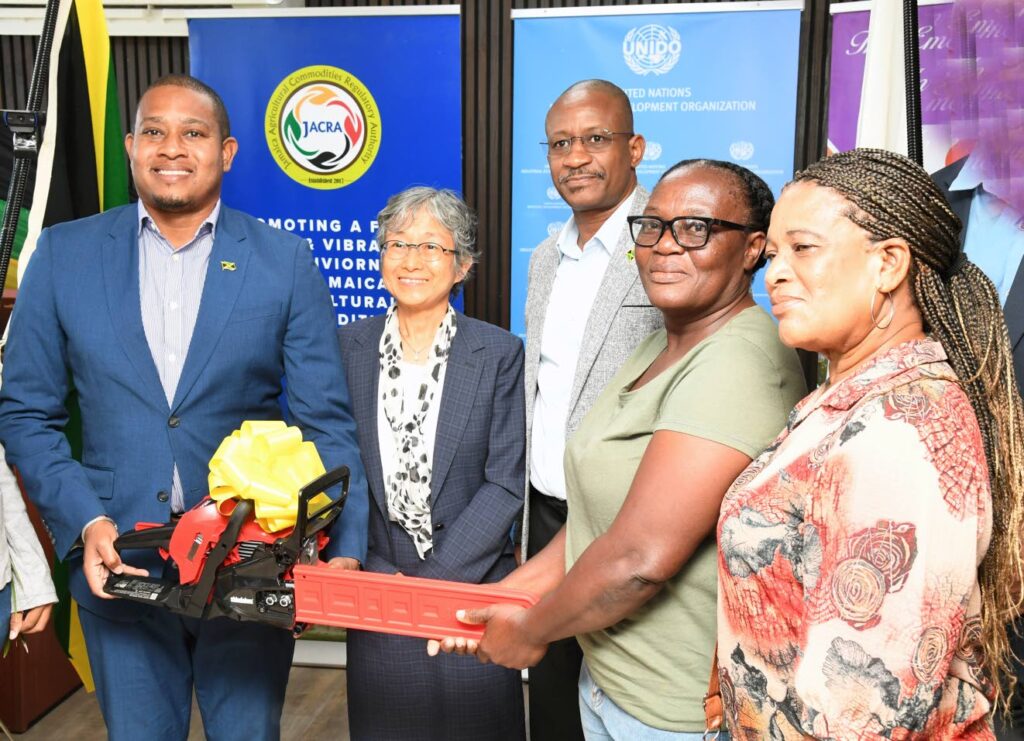
    A significant empowerment initiative for Jamaica’s female coffee cultivators was unveiled Wednesday through a collaborative $15-million recovery program. The Jamaica Agricultural Commodities Regulatory Authority (JACRA) hosted the ceremonial announcement where Agriculture Minister Floyd Green detailed comprehensive support packages for women farmers devastated by Hurricane Melissa’s catastrophic impact.

    The Category 5 hurricane, which struck Jamaica on October 28, 2025, decimated agricultural communities across the island. In response, the United Nations Industrial Development Organisation (UNIDO) and the Embassy of Japan in Jamaica have partnered to provide critical resources including advanced agricultural training, essential farm inputs, and modern equipment. The initiative commenced with the distribution of twelve high-capacity chainsaws to affected farmers during Wednesday’s ceremony.

    Female farmers from storm-ravaged regions expressed profound gratitude for the gender-focused support. Claudine Walker from Flamstead, St. Andrew, recounted her two-year battle against extreme weather events: ‘After Hurricane Beryl in 2024, I nearly abandoned farming. Now Melissa has devastated one of my two farms. This assistance renews my hope and capacity to continue.’

    Bernice Barrett from Irish Town highlighted the economic constraints facing women farmers: ‘Financial limitations often prevent us from hiring laborers. With proper tools, we can achieve self-sufficiency and maintain our operations independently.’

    The program specifically addresses unique challenges identified by female agricultural producers. Minister Green emphasized the government’s commitment: ‘Our female farmers consistently demonstrate remarkable resilience. When provided with appropriate equipment, they overcome tremendous obstacles and maintain vital roles in our agricultural value chain.’

    While expressing appreciation for the initiative, some farmers advocated for prompt implementation. Meriam McDonald stated, ‘The promised resources, particularly the chainsaws, will significantly benefit my recovery efforts. I urge authorities to prioritize timely delivery of these supports.’

    Ferreta Aymore from Portland adopted a cautiously optimistic stance, noting the complete destruction of her coffee and banana plantations while emphasizing the importance of tangible results: ‘I maintain high expectations but will reserve celebration until witnessing practical implementation of these commitments.’

  • REGGAE JAMMIN’ One-Pot Wonder

    REGGAE JAMMIN’ One-Pot Wonder

    Amid the demanding academic environment at The University of the West Indies, accounting student Danae Jones has developed an innovative approach to nutrition that challenges the stereotype of unhealthy student eating habits. The Best Dressed Chicken scholar has transformed her culinary routine using premium chicken products to create quick, nutritious meals without sacrificing flavor or cultural authenticity.

    Jones has specifically perfected the use of Best Dressed Chicken Premium Franks and Reggae Jammin’ Chicken Franks as foundational ingredients for multiple meals throughout her week. ‘I maintain a firm stance against relying on instant noodles as a dietary staple,’ Jones remarked while demonstrating her well-stocked mini-refrigerator. ‘Nutritious eating can coexist with convenience when utilizing properly selected ingredients.’

    Her culinary system centers around strategic meal preparation. Each Sunday evening, Jones prepares batches of her signature Reggae Jammin’ Chicken Franks Egg Bites by combining whisked eggs with diced franks, cheese, and bell peppers baked in muffin tins for fifteen minutes. This preparation method provides grab-and-go protein options that sustain her through Wednesday while offering superior taste and economic value compared to campus café alternatives.

    For moments of cultural nostalgia, Jones creates a traditional Jamaican-inspired dish using sautéed callaloo, sliced franks, and scrambled eggs prepared in a single pot within ten minutes. ‘This preparation evokes the comfort of Saturday morning family meals back home,’ she explained. ‘While different from my mother’s ackee and saltfish, it provides similar emotional satisfaction within my constrained schedule.’

    The student’s approach demonstrates how strategic ingredient selection and minimal preparation time can yield substantial nutritional and cultural benefits for time-constrained individuals. Jones maintains that her method proves particularly valuable for students managing intense academic schedules while preserving culinary traditions and dietary quality.

  • Son Remembers Sir Gerald Watt as Passionate Father, Relentless Worker in Funeral Eulogy

    Son Remembers Sir Gerald Watt as Passionate Father, Relentless Worker in Funeral Eulogy

    In a heartfelt tribute during the official funeral service on Tuesday, Gavin Watt memorialized his father, the late Sir Gerald Watt KC, painting a multifaceted portrait that extended far beyond his esteemed legal career. The eulogy transformed the ceremony into a celebration of a life defined by deep passion, unwavering dedication to family, and a formidable work ethic that shaped both his home and his nation.

    Gavin Watt guided mourners through the journey of ‘Gerald Anderson Watt,’ who evolved into one of Antigua and Barbuda’s most revered legal authorities. He emphasized that passion was the central theme of his father’s existence, a driving force evident in every aspect of his life. ‘You have to have passion,’ Watt stated, ‘and I think that’s one of the things about my father that everyone here sees.’

    The personal recollections offered a rare glimpse into the private world of the public figure. Gavin recounted cherished childhood memories of early Saturday mornings spent watching western films and cricket with his father before Sir Gerald departed for work. These moments, he revealed, were sacred windows into his father’s personal joys—lifelong passions that persisted regardless of cricket match outcomes.

    Beyond the gentle moments, the eulogy also illuminated Sir Gerald’s strong character and sharp wit. Gavin shared anecdotes of family disagreements where his father would deftly defuse tension with his trademark humor, quipping, ‘I don’t need to argue with you — I get paid to argue.’ This blend of outspokenness and deep affection defined their relationship; a man who would quickly express displeasure but always follow with embrace and love.

    A powerful story emerged of a boating trip where Sir Gerald’s physical strength and determination were displayed when he single-handedly freed a grounded vessel. This act, Gavin explained, became a profound metaphor for his father’s approach to life’s obstacles: ‘It showed me his determination — that if needed, he would move mountains to get things done.’

    Concluding his remarks, Gavin Watt expressed profound gratitude for his father’s enduring influence on family, friends, and Antigua and Barbuda’s society. His final words resonated through the ceremony: ‘I love you. I miss you. And I will carry you in my heart the rest of my days,’ cementing Sir Gerald Watt’s legacy as both a national icon and a beloved patriarch.

  • Bar president sounds alarm on lack of criminal lawyers in Antigua (VIDEO)

    Bar president sounds alarm on lack of criminal lawyers in Antigua (VIDEO)

    The Antigua and Barbuda Bar Association has sounded alarm bells over a critical shortage of criminal lawyers, with its president Dr. Lenworth Johnson warning that the nation’s criminal bar is diminishing at an alarming rate. During the official funeral proceedings for the late Sir Gerald Watt KC, the esteemed former Speaker, Johnson revealed that fewer than a handful of legal practitioners in Antigua maintain substantial criminal practices—a situation posing severe implications for the judicial system’s functionality.

    Johnson characterized criminal law as an emotionally demanding field that requires specific psychological resilience, noting that most emerging attorneys demonstrate minimal interest in this practice area. Those who initially venture into criminal law frequently withdraw after brief exposure, creating a sustainability crisis within the legal profession.

    The Bar Association president proposed collaborative engagement with Attorney General Stedroy Benjamin, himself a distinguished former criminal attorney, to develop strategic solutions. Johnson emphasized that honoring Sir Gerald Watt’s legacy would be best achieved through concrete actions to revitalize criminal law practice.

    Sir Gerald Watt’s extraordinary six-decade career served as a benchmark for professional dedication, during which he filed over 180 High Court cases and made more than 500 criminal applications—many establishing landmark legal precedents. Johnson recalled Watt’s fearless advocacy, including a notable case where he successfully sued a fellow attorney for professional negligence after a client’s claim failed due to unpleaded legal doctrines.

    The Bar Association now aims to transform this concerning trend into an opportunity for generational inspiration, seeking to channel Watt’s exemplary legacy into motivating young lawyers to embrace criminal practice.