
More than a year after law enforcement seized nearly a quarter-million dollars worth of cannabis at a major Caribbean port, a Jamaican national has formally admitted guilt to drug trafficking offenses. Damar Sappleton, who has resided in the Bendals area of Antigua, entered his guilty plea on Wednesday before High Court Judge John Spencer, wrapping up the initial phase of a high-profile narcotics case stretching back to early 2024. The legal proceedings originated from a coordinated joint enforcement operation conducted by local police and customs officials on 8 March 2024 at Deep Water Harbour. During a routine inspection of cargo at the busy port, officers uncovered 41 pounds of concealed cannabis stashed inside two unmarked shipping boxes. Investigators later assessed that the seized narcotics would have carried an estimated street value of approximately $246,000 if sold on the local market. Following his plea, Sappleton was immediately remanded into official custody, with his sentencing hearing scheduled to take place at the High Court on 5 June. Legal observers note that the conviction closes a key chapter in a major anti-narcotics enforcement effort at the island’s primary commercial port, which remains a common transit point for drug trafficking operations targeting the Caribbean region.
分类: society
-

Driver’s Family Expresses Condolences After Fatal All Saints Road Accident, Cooperating With Investigation
A devastating fatal accident on All Saints Road on May 12, 2026 has left two families and an entire local community reeling from grief, as the family of the driver involved has broken their silence to share their profound sorrow over the loss of Okeen Lightfoot, the victim who died in the incident.
In an open statement addressed to the victim’s family, loved ones, and the broader community, the driver’s relatives said their entire household has been left heartbroken and deeply shaken by the tragic chain of events that unfolded that Tuesday. They emphasized that no language can adequately capture the depth of their regret for the loss of life and the overwhelming suffering this tragedy has inflicted on all those touched by it.
The family extended their unreserved, deepest condolences, spiritual prayers, and heartfelt sympathy to Lightfoot’s family and loved ones, acknowledging that countless people are navigating crippling pain, complicated grief, and a desperate search for clarity in the wake of the sudden, violent incident. “Our son and our entire family are deeply shaken and devastated by what has happened,” the statement read.
Citing respect for the ongoing official investigation into the crash, the driver’s family noted that they are constrained in what details they can share publicly at this stage of the process. Even so, they stressed to local residents that they are fully cooperating with law enforcement and other authorities as investigators work to unpack every circumstance and factor that led to the accident.
The statement closed with a note of solidarity for all those impacted by the crash. “Our thoughts and prayers remain with everyone affected by this tragedy — for the family who lost their loved one, for all first responders involved, and for all those carrying emotional pain in the aftermath of this incident,” the statement concluded, signed sincerely by the entire family of the driver.
-

‘Something not adding up’
A cloud of uncertainty has settled over the small, sleepy coastal community of Goodwood, Tobago, as rescue teams and local residents press on with a frantic search for 2-year-old Angelo Tobias Plaza, who vanished from his family home three days ago. The toddler’s unexplained disappearance has left locals unsettled, with many growing increasingly suspicious that the details surrounding the case do not align.
According to official police accounts, Angelo’s mother, 22-year-old Kalifah Tobias, and her common-law husband Shannon Miller first realized the boy was missing at approximately 7:30 p.m. Monday. The pair immediately combed the surrounding neighborhood and questioned nearby residents, but their initial efforts to locate the child turned up empty. The toddler, who is described as mixed-race with a light brown complexion and round face, was only wearing a diaper at the time he disappeared.
The Tobago Divisional Task Force was officially alerted to the missing toddler case early Wednesday morning. During preliminary ground searches, responding officers spotted what they believed to be the young child’s body floating in the waters of Goodwood Bay, but the corpse slipped back beneath the rough ocean surface before it could be recovered. Divers were called to the scene shortly before midday to begin recovery operations, but hazardous sea conditions on the exposed Atlantic coast of Tobago have repeatedly derailed all attempts to retrieve the remains.
Angelo’s grandmother Neisha Tobias spoke publicly from the search area Wednesday, visibly overcome with grief. “I am heartbroken. He is a loving child; he would not go into the water just like that. I don’t know what happened, I am still trying to figure that out. Till they find him I don’t know what to say. The police said they hold up the search because the water really bad,” she told reporters.
Alvin Douglas, a marine safety and security expert who led a team of three volunteer divers through the bay Wednesday morning, confirmed that severe sea conditions made the search extremely dangerous. “I got a call from the Police Service asking for assistance on a search and recovery. At that time I did not get the details, so we mobilised a team of rescue divers. We are surrounded by water and most of the villages are along the coastline, so it is inevitable that these things will happen. On the Atlantic side of the island is where the island is exposed, so it is very difficult,” Douglas explained in an interview with the *Express*.
Local doubts about the official account of the disappearance have been growing among Goodwood residents, who say key details provided by Angelo’s caregivers do not add up. Neighbor Wendy des Vignes, who spoke directly with Miller about the case, told reporters that Miller admitted both he and Tobias left Angelo alone at home on Monday while the pair traveled up the road to collect money from a relative. He told des Vignes the child went missing from the unoccupied house some time after the couple left. Multiple local residents gathered near the search site Wednesday, with several engaging in heated arguments over conflicting accounts of the day Angelo disappeared.
Local authorities have already mobilized support services for the family: the Victim and Witness Support Unit has been assigned to assist Angelo’s relatives, while the island’s Child Protection Unit has been formally notified of the incident.
Ackel Franklyn, Assistant Secretary for Community Development and Social Protection, joined local leaders at the search site Wednesday to express solidarity with the family and community. “Being a father of young children it is really a state of unrest for me as well, so I just came to stand in solidarity with the villagers and members of the family in such a time as this. I have spoken to a few members of the family, and they are all at this time quite emotional. I just offered my support more or less, allowing them to know that the Executive Council stands with them even through this time,” Franklyn said.
David Thomas, Member of Parliament for Tobago East, also spoke publicly Wednesday, saying he was deeply distressed by the incident and echoed growing concerns that the toddler may have been left unsupervised for an extended period. “I want to sympathise with the persons who would have lost the child. I still find that in our society today we are paying little attention to children, and almost every day we are hearing about incidents where children are compromised, and it hurts me deeply and I hope that it’s not because of an act of carelessness…I just want to encourage the wider society of T&T to let’s take care of our children. They represent our future, they represent our development and they represent our prosperity,” Thomas said.
Thomas added that he opted to send his field staff to gather updates on the search rather than attend the site in person, as he feared he would be too overcome with emotion to function, noting the case reminded him of his own children and grandchildren. “I think that we need to increase our value system in terms of preservation of lives and the protection of our children,” he emphasized.
-
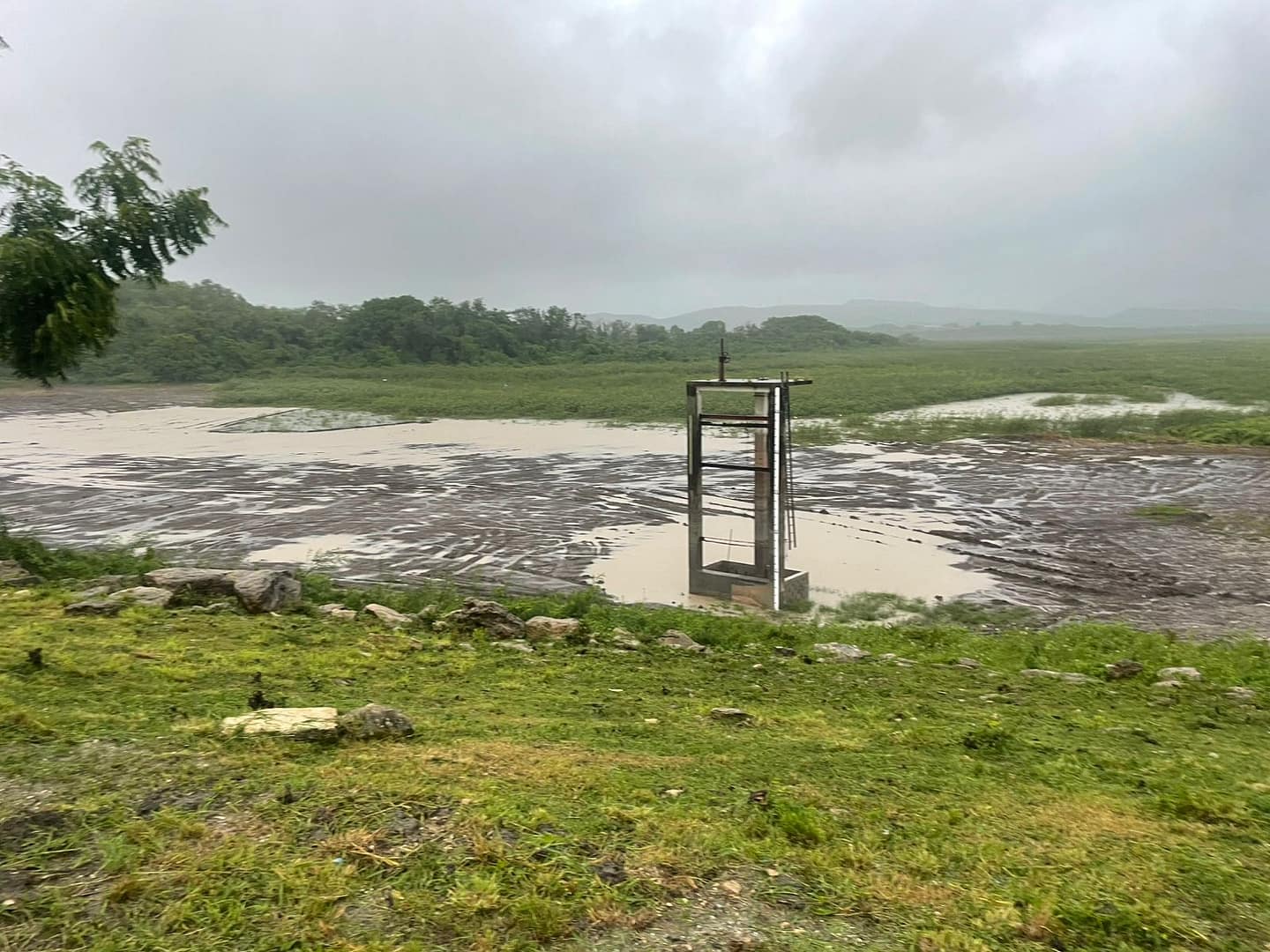
APUA Stops Taking Water From Potworks Reservoir Due to Drought
A worsening drought across the island nation has forced the Antigua Public Utilities Authority (APUA) Water Business Unit to suspend all water pumping operations from Potworks Reservoir, the country’s largest surface water catchment, after water levels dropped to critically low thresholds that make continued extraction unsafe and unsustainable.
For months prior to the shutdown, Potworks Reservoir fed the adjacent Delaps Water Treatment Facility, which supplied treated water to dozens of residential communities across the island’s southeastern region. The facility contributed an average of 1.2 million imperial gallons of potable water to the national distribution network daily, making it a key component of the country’s water supply infrastructure. However, months of persistent below-average rainfall and prolonged drought have pushed reservoir levels far below the minimum required for continued extraction.
Southeastern communities that previously relied on the Potworks-Delaps system will now receive water from two existing reverse osmosis facilities: the Crabbs Reverse Osmosis Plant and the Barnacle Point Reverse Osmosis Facility. APUA officials noted that investments in desalination infrastructure over the past 12 months have already bolstered the national water grid’s resilience, allowing the utility to offset the full loss of Potworks’ output without a drastic reduction in overall daily production.
Across all active supply systems — which include reverse osmosis desalination and groundwater extraction — the Water Business Unit still maintains a total daily output of roughly 8.5 million imperial gallons of potable water. Even with this consistent production, the utility warns that rising demand, driven by steady population growth, expanding tourism development, new housing projects, and overall economic expansion, puts continued pressure on the supply network.
During the transition to the new supply routing, some customers may experience temporary disruptions to service, reduced water pressure, or longer gaps between scheduled water deliveries. These issues are most likely to impact customers living in elevated areas of the southeastern region. The full list of affected communities includes American Road, All Saints Road, Belmont, Bethesda, Biggins, Buckleys, Folly Hill, Horsford Hill, John Hughes, Liberta, Ottos New Town, Patterson, Radio Range, St. Clair Heights, Swetes, Wallings, and portions of Falmouth.
To address the long-term gap left by the Potworks shutdown and improve regional transmission capacity, APUA is in the final stages of constructing new transmission lines in the Herbert’s area, which will carry additional water from the Crabbs and Barnacle Point facilities to affected communities. The utility is also on track to commission a brand-new 3.2 million imperial gallon per day reverse osmosis facility before the end of the year, while the organization’s hydrology team continues exploratory work to identify and develop new groundwater reserves through new well drilling initiatives.
APUA emphasized that reliable access to potable water is a foundational requirement for the island’s daily life and economic activity, and has moved to reassure residents that multiple long-term projects to strengthen and expand the national water system remain actively in progress. The organization is encouraging all customers across the island to continue practicing voluntary water conservation and maintain emergency water storage where possible, to help mitigate the ongoing impacts of the drought.
In closing, APUA expressed sincere gratitude to the public for their patience and understanding as utility teams work to adapt to drought conditions and preserve reliable water service for all communities across the island.
-

Tribute in Haiti to nurses
On May 12, 2026, Haiti’s Ministry of Public Health and Population (MSPP) joined national health institutions, international organizations, and government bodies to celebrate International Nurses Day, centering the 2026 observance on the theme “Our nurses. Our future. The power of nurses to act saves lives.” The official commemorative ceremony was held at the MSPP’s nursing directorate, drawing a high-profile guest list that included Public Health Minister Dr. Bertrand Sinal, Minister for the Status of Women Pedrica Saint Jean, top executives from the MSPP and the National Ambulance Center (CAN), and delegated representatives from the Pan American Health Organization/World Health Organization (PAHO/WHO), UNICEF, and the Panos Institute.
In her opening address to attendees, Carine Reveil Jean Baptiste, Director of the MSPP Nursing Directorate, extended formal congratulations to every nurse practicing across Haiti’s public and private health systems. She highlighted the consistent, often underrecognized work of nursing staff to elevate care standards and advance population well-being, even amid systemic and national challenges.
Gabriel Timothée, Director General of the MSPP, followed with remarks emphasizing the irreplaceable role nurses hold in keeping the national health system functional. He reminded the audience that nurses remain on call day and night at patient bedsides, delivering consistent care with unwavering professionalism and commitment to their mission.
Minister Dr. Sinal used the occasion to reaffirm that nursing workforce issues have been a top policy priority since he assumed his role at the head of the public health ministry. He shared tangible progress on this commitment, noting that nearly half of all recent senior and frontline staffing appointments published by the ministry have been for nursing positions, signaling the government’s investment in strengthening the nursing workforce.
As a key component of the national celebrations, the General Directorate of the Office of Workplace Accident, Sickness and Maternity Insurance (OFATMA) issued a formal statement paying tribute to Haiti’s nurses. The statement acknowledged that nurses carry out their daily work with remarkable professionalism, courage, and humanity while serving OFATMA beneficiaries and the broader Haitian population. It noted that despite severe socioeconomic and security challenges that define Haiti’s current national context, nursing staff continue to fulfill their duties with extraordinary dedication, compassion, and a relentless sense of duty, framing their work not merely as an occupation, but as a life-giving vocation. OFATMA closed its statement by expressing profound gratitude for nurses’ exemplary commitment and their irreplaceable contribution to the country’s social and health protection systems.
Minister Pedrica Saint Jean, who leads the Ministry for the Status of Women and Women’s Rights, also delivered a formal address honoring Haiti’s nursing workforce, the majority of whom are women. She paid respect to the courage, dedication, and professionalism that nurses demonstrate daily while caring for populations across the country, often working in underresourced, challenging conditions. Saint Jean described nurses as the foundational force holding Haiti’s healthcare system together, noting that they carry out a fundamental human and social mission: to treat, comfort, listen to, and save the lives of Haitian citizens. From major urban hospitals and local clinics to rural maternity wards and isolated remote communities, and in the midst of ongoing public health emergencies, their unwavering commitment stands as a powerful symbol of national solidarity and resilience. Saint Jean closed by reaffirming her solidarity with all Haitian nurses, thanking them for their invaluable contribution to the health, dignity, and well-being of the Haitian people, ending with the tribute: “Honor and Merit to Haitian nurses, guardians of life and human dignity.”
-

Presentation of 308 internship letters to graduating students of the École Normale Supérieure of Haiti
In a formal ceremony held earlier this week, Haiti’s Minister of National Education Vijonet Déméro formally delivered 308 internship placement letters to the leadership board of the École Normale Supérieure (ENS), marking a key step in strengthening the country’s public secondary education workforce. The internship placements are reserved for ENS graduating students who are preparing to complete their final requirements for official teacher certification.
Addressing attendees at the event, Minister Déméro opened by praising the participating students for their long-standing dedication to Haiti’s education sector and their willingness to pass on their expertise, technical skills, and professional standards to the next generation of learners. He emphasized the critical role the new interns will play in supporting secondary education across the country, urging them to approach their assignments with rigor and serve as thoughtful, effective mentors for high school and secondary students.
The minister also outlined the clear framework governing the three-month posting, including defining the legal rights and core responsibilities of the interns, as well as the specific oversight roles of three key participating bodies: ENS’s board of directors, local school administrations, and Haiti’s 10 regional Departmental Directorates of Education (DDE). At the conclusion of the 12-week placement, each intern is required to submit a comprehensive final report, which will serve as a mandatory component of their evaluation for earning a fully accredited teacher training diploma.
Beyond the internship initiative, Déméro used the ceremony as a platform to announce progress on a broader push to formalize Haiti’s public education workforce. To date, he confirmed, he has signed more than 600 official appointment letters for newly hired teachers and school principals across all 10 DDE regions, filling long-vacant roles at national primary and secondary schools. Moving forward, the ministry plans to regularize the employment status of an additional 1,200 under-contract teachers in the coming months, with the pace of the process tied to available government funding for education.
Dieuseul Prédélus, rector of the State University of Haiti (UEH), which oversees the École Normale Supérieure, praised the Ministry of National Education’s sustained commitment to integrating more qualified, formally certified personnel into Haiti’s public education system, noting that the move will help address long-standing staffing gaps and improve learning outcomes for students across the country.
-

Religieuze organisaties krijgen grondpapieren voor sociale projecten
After nearly two years of waiting for official approval, Suriname’s Sanatan Dharm religious organization has become the first recipient of land allocation documents from the national government, unlocking the green light for a slate of impact-focused community development projects. The formal handover ceremony took place Tuesday at the Cabinet of the President, where Suriname President Jennifer Simons presented the official land papers to representatives from the organization.
Sanatan Dharm board chair Sherwankoemar Ramsoedit described the long-awaited approval as a transformative breakthrough for the group, which had seen all planned development work stalled for months without the official land disposition. “In one word: wonderful. It could not have gone any better,” Ramsoedit shared in a statement via Suriname’s Communication Service (CDS).
The organization has outlined a multi-faceted community service plan for the newly allocated land, including a full vocational training institute, a senior citizen care shelter, and an outpatient polyclinic that will provide routine health screenings and blood testing services for local residents. These facilities are designed to form the core of a broader public welfare initiative that will serve vulnerable communities across the region.
Ramsoedit emphasized that the approval process had stretched on for between 18 and 24 months, and the absence of official land documentation left the organization unable to move forward with any concrete construction or planning work. On behalf of the Sanatan Dharm board, he extended his gratitude to President Simons and Hanisha Jairam, whom he credited with playing a critical role in facilitating negotiations and moving the application process forward.
Moving forward, the organization’s leadership will turn its full attention to detailed project planning and the next stages of development. Per Ramsoedit, President Simons has committed that the national government will continue coordinating with relevant ministries and regulatory bodies to support the organization in completing the remaining procedural steps for the project, ensuring the community services can open their doors to residents as soon as possible. This land allocation launch marks the start of a national government program to distribute land disposition approvals to religious groups across the country for public projects including shelters, orphanages, and cemeteries.
-

Teachers, Students and Parents Fight Back Against Scorching Temperatures
As a punishing heat wave continues to grip Belize in May 2026, K-12 campuses across the country have been pushed to their limits, with educators, families and school leaders banding together to implement urgent heat mitigation strategies to protect student health. At Burrell Boom Methodist School, one of the institutions on the front lines of this climate-driven challenge, sweltering classroom conditions have forced quick, creative adjustments to daily operations, even as the school community refuses to pause learning amid the crisis.
Lincoln Jones, a teacher at Burrell Boom Methodist School, outlined the extreme conditions students and staff face on a daily basis. “We see that our students are sweating profusely. Even sweat drips off their faces onto their chins and their textbooks and assignment papers,” Jones explained. Despite opening all windows to draw in cross ventilation and being located on the upper floor of the school building, Jones noted that stagnant, hot air circulating through the classrooms leaves temperatures unbearably high, even with basic ventilation measures in place.
To address the crisis, the school launched an informal “Beat the Heat” initiative centered on accessible, low-cost adjustments. All students are required to carry personal water bottles, and every classroom is equipped with a hot/cold water dispenser, which is now exclusively used to supply cold drinking water throughout the school day. The school has also repurposed its air-conditioned computer lab as a temporary cooling space, with teachers rotating their classes into the lab for scheduled cool-down breaks throughout the week. To reduce the risk of heat exhaustion and heat stroke, the administration has also banned strenuous running and outdoor physical activity on school grounds during peak heat hours.
Parents have stepped up to support the school’s efforts, making their own adjustments to help children cope with the extreme conditions. Sherie Westby, a parent of a student at the school, shared that she prioritizes constant hydration to keep her child healthy. “A lot of showers before school and lots of water. I add ice to his insulated thermos to keep the water cold for longer, and he drinks continuously throughout the day,” Westby said. When she notices her child’s classroom is running low on supplies, she donates extra money to the school to purchase additional water for students. “It’s unbearably hot out there right now, but we don’t have a choice – they can’t miss out on school, so we do what we have to do,” she added.
Belize’s Ministry of Education has acknowledged the growing crisis and responded with policy flexibility to support affected schools. The Ministry confirmed that campus administrators have submitted formal requests to adjust uniform policies (to allow looser, cooler clothing) and modify daily class schedules to avoid peak afternoon heat, and officials are encouraging school leadership to implement adaptive changes as needed to protect student well-being.
This report is a transcribed excerpt from an evening television news broadcast, with Kriol-language dialogue rendered in standardized spelling for the online publication.
-

Vendors Forced Out Before Sunrise as Market Tensions Boil Over
On the morning of May 12, 2026, tensions boiled over before sunrise at Belize’s iconic Michael Finnegan Market, when city council enforcement teams removed four unregistered retail vendors from the premises as part of a long-delayed crackdown on long-standing market day zoning rules. The enforcement action has ignited anger among small-scale vendor and farmer groups, who warn the abrupt policy shift threatens their already fragile livelihoods.
Placido Cunil, a retail vegetable vendor who has operated at the market without incident for six years, was one of the vendors forced to pack up his stall ahead of the market’s opening rush. Speaking to on-site reporter Zenida Lanza, Cunil expressed his desperation over the new enforcement measures, saying, “What do you want to make me do? Go kill people for money and not make me sell my veggies too? Is that what they want? I worked hard to make my money. I don’t want to go and rob people.”
Cunil and other affected retail vendors say the city’s new enforcement is riddled with inconsistency and unfairness. Under current market rules, wholesale trade is designated for specific days, while retail sales are restricted to Tuesdays and Fridays — the only days Cunil says his specialty Chinese vegetables can attract his regular, niche customer base. He also noted that many registered wholesalers openly sell retail quantities on wholesale-designated days, making the targeting of small vendors particularly unjust. “They say that only wholesale is supposed to be today, but they are doing retail, people are doing retail. So this is not fair for us,” Cunil added.
His frustration was echoed by multiple other local vendor-farmers, many of whom have operated at the Michael Finnegan Market for decades with no prior pushback on their sales practices. One long-time vendor with 25 years of tenure at the site called for collective action to protect vendors’ rights, while another farmer who arrived with a full truckload of produce said he was turned away entirely, calling the situation harassment of small producers. Multiple vendors called on national and local government to secure a permanent, dedicated sales space for small local farmers to avoid future disruptions.
Delroy Herrera, market manager for the Belize City Council, pushed back on claims of aggressive enforcement, framing the action as a long-overdue implementation of rules that have been ignored for years. “We have stepped up slightly the enforcement aspect of the market day. Again, like I said to you yesterday, we are not ruling or doing enforcement with an iron fist. But we have stepped it up where we have brought out the listing for the wholesalers,” Herrera explained. He noted that only four retail vendors refused to comply with existing rules after outreach and education, adding that the separation of wholesale and retail days is designed to create clear market structure: wholesalers move large volumes of product at lower bulk rates, and retailers then resell smaller quantities to end consumers.
Herrera pointed to early success of the policy for vendors who have made the transition to registered wholesale status. Abner Cienfuegos, a former retail seller who completed his wholesale registration just days before the crackdown, said the separated structure has already boosted his sales. “In all honesty, as a wholesale farmer, today has been actually one of the best days I’ve had in a long time. Without the competition of retailing, and prices going up and down, fluctuating, we can come in and sell our stuff at the price that we can see best for ourselves, and we get it out there,” Cienfuegos said. He also addressed retailers’ claims that wholesalers are violating rules by selling smaller quantities, clarifying that wholesale status is based on pricing rather than volume: vendors selling at bulk rates even for small quantities are still operating within the rules.
Another vendor, Herman Freisen, said he agreed to comply with the rules once they were clearly explained to him, and plans to adjust his sales schedule to fit the designated retail days moving forward.
For Cunil, the situation was resolved before midday, after a quick meeting with city council officials. Following the meeting, he submitted required identification documents, completed his wholesale registration, and was allowed to return to his stall before 9 a.m. Even so, the incident has highlighted ongoing tensions between small local vendors and city regulators over market access and livelihood protections at the popular Belize City trading hub.
This report was compiled from on-the-ground reporting by Zenida Lanza for New Five.
-

Corozal Vendor Calls in to Voice Frustration Over Market Enforcement
In a candid interview with local outlet News Five on May 12, 2026, long-time Michael Finnegan Market vendor Hilda Mena has raised public alarm over newly implemented market restrictions that are threatening the livelihood of small, local traveling producers. Mena and her husband have built their small retail operation at the Corozal-based market for more than four years, but this week marked the first time the pair was barred from setting up their stall – a change that has upended the delicate financial balance they rely on to cover monthly costs.
Mena explains that for small local producers like herself, the market’s new rules banning retail sales on Tuesdays and Fridays could not come at a worse time. Unlike large-scale Mennonite suppliers who make daily trips to the market with bulk inventory, Mena and her fellow local vendors only travel from outlying areas three times a week, bringing small batches of produce to sell just to cover basic living expenses. She points out a critical structural imbalance that makes shifting to wholesale sales unfeasible for most local vendors: the vast majority of wholesale buyers at the market prioritize purchasing from Mennonite producers, leaving local smallholders with almost no wholesale demand for their goods.
When asked if she would consider registering for the market’s designated wholesale section to get around the new retail restrictions, Mena rejected the idea as unworkable for small operations. “I wouldn’t have a problem switching if it worked, but I only have one consistent wholesale buyer, because everyone else goes to the Mennonites,” she explained. “If I move to wholesale, I’ll be stuck with all my unsold product. What am I supposed to do with the rest? Decision-makers need to consider that we don’t travel here every day like the Mennonites do – we only bring what we can carry to get by, we’re not shipping hundreds of pounds of produce at a time.”
Mena’s frustration is not an isolated concern: she emphasized that dozens of other local traveling vendors share the same fear that new restrictions will push them into financial hardship. To make the new retail-only Saturday policy fairer for traveling vendors, Mena proposed a simple adjustment: permanent stallholders who already sell retail throughout the rest of the week should be barred from selling on Saturdays, eliminating unfair competition for traveling vendors who only have limited days to reach direct retail customers.
For Mena and her community, the new enforcement is not a matter of refusing to follow rules – she says she is fully willing to comply with reasonable regulations. Instead, it is a matter of survival: small local producers are already struggling to compete with larger, more frequent suppliers, and overly rigid new policies are pushing vulnerable working families to the brink.