分类: society

  • MTEST welcomes tuition fee freeze

    MTEST welcomes tuition fee freeze

    In a major win for students and families across Trinidad and Tobago, the University of the West Indies (The UWI) has voted against implementing a planned tuition hike at its St Augustine campus, a decision that has been publicly praised by the country’s Ministry of Tertiary Education and Skills Training (MTEST).

    The final ruling to maintain current tuition rates was formalized during a University Council sitting held on May 8, according to an official statement released by MTEST this week. The outcome came after months of sustained, targeted negotiation and direct lobbying led by the Trinidad and Tobago government through the ministry, which had openly opposed the proposed fee adjustment from the start.
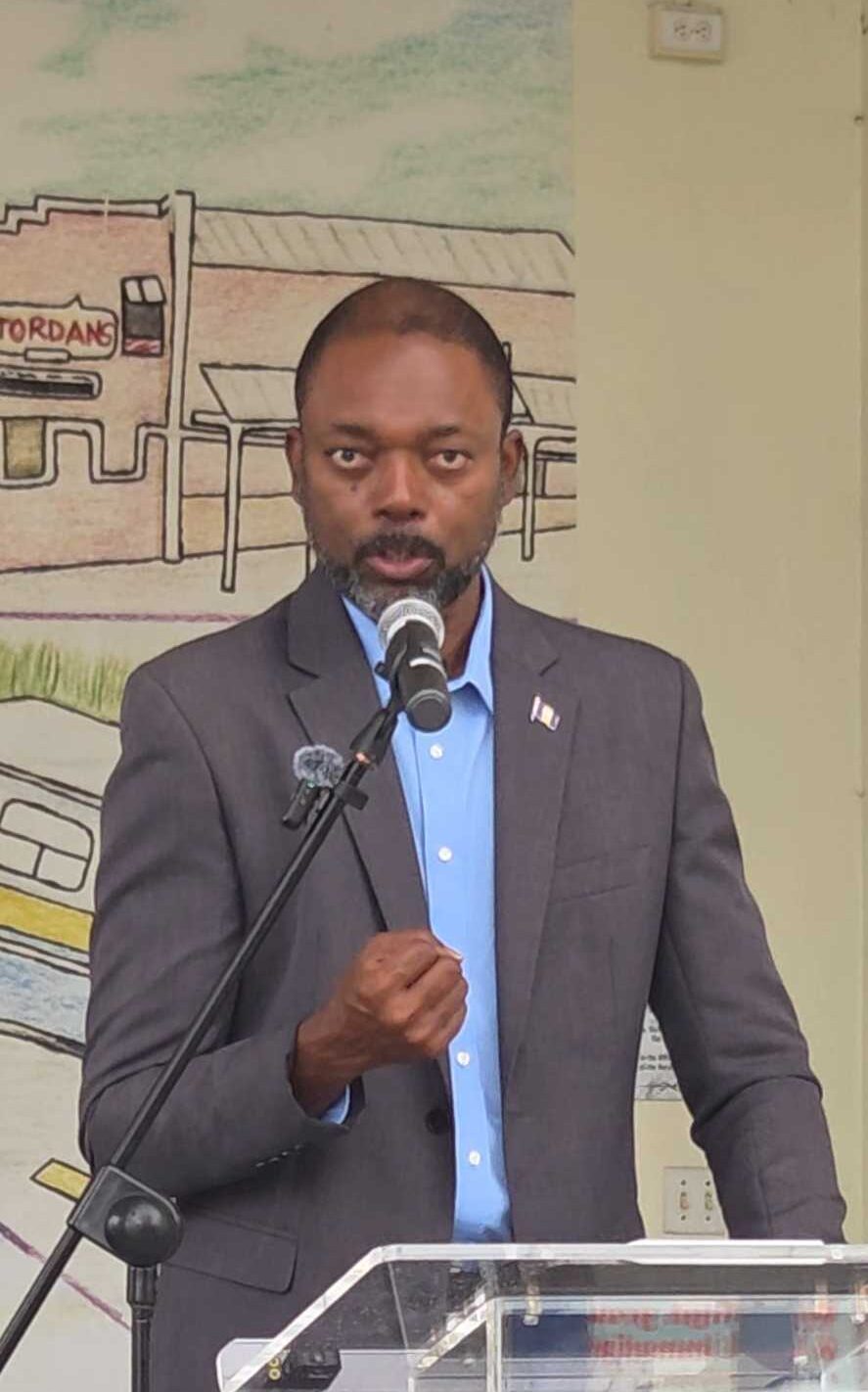
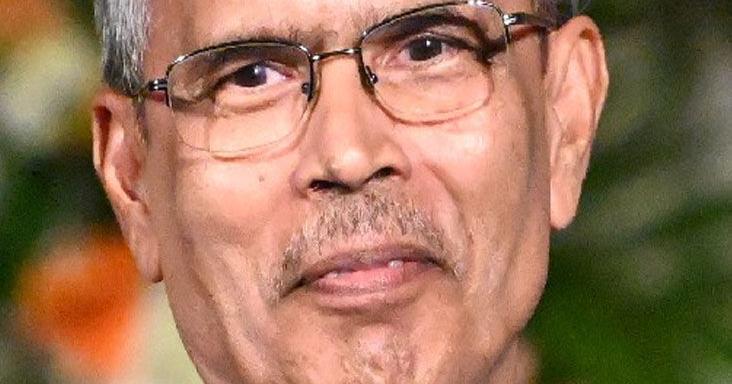
    Dr. Prakash Persad, Minister of Tertiary Education and Skills Training, formally communicated to the St Augustine campus leadership that the government would not back any tuition increase, advising that no changes to fee structures should go forward without explicit government approval. Persad, who also holds the title of Senator Professor Emeritus, emphasized that the government’s core priority is protecting access to post-secondary education for all residents.
    In welcoming the council’s decision, Persad reaffirmed the administration’s long-standing commitment to keeping tertiary education accessible and economically viable for both students and their households. The ministry noted that the government remains acutely conscious of the widespread financial strain that many working and middle-class citizens currently face, and it will continue rolling out targeted measures to safeguard access to both higher education and vocational skills training opportunities.
    “Students, parents and stakeholders are therefore advised that tuition fees at the St Augustine campus will remain unchanged at this time,” the release clarified. Looking ahead, MTEST says it will maintain open, ongoing dialogue with The UWI administration and other key industry and community stakeholders to ensure all policy decisions related to tertiary education stay aligned with the country’s national development goals and the broader public interest.
    “MTEST remains committed to continued engagement with The UWI and all relevant stakeholders to ensure that decisions concerning tertiary education remain aligned with national development priorities and the best interest of the people of Trinidad and Tobago,” the ministry added.

  • Psychiatrist: Don’t  shame porn lovers

    Psychiatrist: Don’t shame porn lovers

    New global spending data has sparked intense public debate across Trinidad and Tobago after revealing that domestic users spent a total of US$1.57 million on subscription-based adult content platform OnlyFans in 2025. This figure marks a 15.9% increase from 2024’s total of US$1.35 million, placing the twin-island nation in a notable position in regional and global rankings.

    Across the 188 countries included in the global revenue dataset, Trinidad and Tobago ranks 67th when adjusted for spending per 10,000 users, with an average per-capita-aligned spend of US$11,884.46. Within the Americas, covering both North and South America, the country places 14th among the highest-spending nations on a per-capita basis, signaling that consumption of adult digital content is far more prevalent in the local market than many public narratives have previously acknowledged.

    Leading psychiatrist Dr Varma Deyalsingh was among the first experts to respond to the newly released data, pushing back against widespread social stigma attached to adult content consumption. He emphasized that consenting adult citizens hold the right to manage their personal spending according to their own preferences, arguing that consumption of pornography has evolved from a fringe activity to a widely accepted mainstream practice in modern digital society.

    Contrary to common popular myths, Deyalsingh noted that existing research does not support the claim that all people who watch adult content develop violent tendencies, become dysfunctional in daily life, or develop problematic addictions. “Many adults consume pornography occasionally without major disruption to their lives or relationships,” he explained in a statement to local media outlet Trinidad Express.

    Addressing concerns about the economic impact of the spending, which draws heavily on foreign exchange reserves, Deyalsingh pointed out that outflow of US currency to foreign digital platforms is not a new phenomenon unique to OnlyFans. Trinidad and Tobago consumers already spend billions annually on other global digital services, including Netflix subscriptions, Amazon retail purchases, Spotify streaming, and online gaming, framing the OnlyFans spending as part of a broader shift to digital global consumption.

    Deyalsingh stressed that the growing popularity of adult content reflects broader shifts in modern culture, where sexuality has become increasingly commercialized and digitized. Easy accessibility of online content and the normalization of sexual content through mainstream social media have helped erase the stigma once attached to porn consumption, he said, adding that “no one should be shamed for their sexual behaviours once they are not harming themselves or others.”

    Outlining the spectrum of adult content use, Deyalsingh cited global statistics showing that approximately 70% of men and 30% of women consume porn regularly. He also noted that consumption rose by 11% globally during the Covid-19 pandemic, a surge driven by factors including widespread boredom, a need to release accumulated emotional stress, natural curiosity, interest in sexual education, and basic sexual release needs.

    Dr Victoria Siewnarine-Geelalsingh, president of the Trinidad and Tobago Association of Psychologists, offered a complementary perspective that avoids moral judgment while highlighting the underlying emotional roots of consistent adult content consumption. “Through a clinical lens, it is a sign of an emotional need,” she explained. “Many are navigating feelings of isolation. Feeling overwhelmed. Feeling unseen. What may look like a simple pastime can sometimes be a way of coping with untreated anxiety. Depression. Profound loneliness.”

    Siewnarine-Geelalsingh added that the human brain is inherently wired to seek connection, and when in-person nurturing bonds become difficult to form or maintain, digital sexual experiences often fill that gap temporarily. These experiences offer quick relief and a moment of escape from daily stress, but that comfort is almost always short-lived. Over time, reliance on digital content can form a repeating cycle that eases distress in the moment without addressing the underlying emotional loneliness or unmet needs driving the behavior.

    “This is not a personal failing. It is a very human response to pain. And it quietly places strain on the foundations of our society,” she noted, adding that while the impact of increased adult content consumption is often framed as a purely personal issue, it also carries broader ripple effects across public systems including education, family structure, and community well-being, and can even be linked to increased rates of harmful criminal behavior in some contexts.

    Not all community leaders have taken a neutral or non-judgmental stance, however. Dr Burris Ellis, president of the Inter-Religious Organisation (IRO) of Trinidad and Tobago, made clear in a phone interview that his organization does not support the growing normalization of pornography consumption. “IRO is not supporting pornography because it affects the mind of children and adults. Anything that will bring immorality in the society will not be supported. I’m not a fan. It encourages lewd behaviour,” Ellis said.

  • OWRO waarschuwt voor wateroverlast door springtij en aanhoudende regenval

    OWRO waarschuwt voor wateroverlast door springtij en aanhoudende regenval

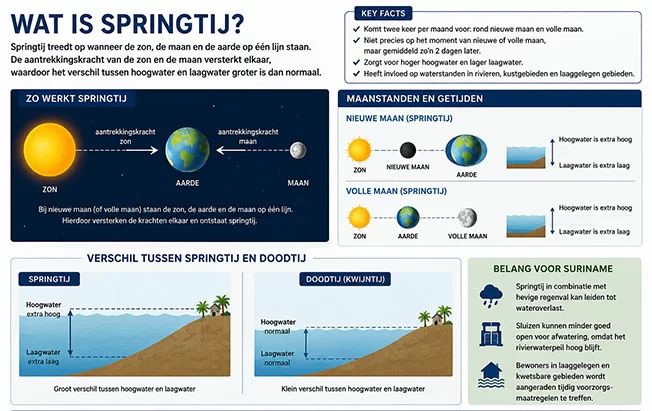
    Residents across multiple regions of Suriname are on high alert for severe flooding after the nation’s Ministry of Public Works and Spatial Planning (OWRO) issued an urgent warning, pointing to a dangerous combination of spring tides and sustained rainfall that is expected to push water levels well above normal thresholds. The alert was issued May 16, which coincides with a new moon — the astronomical event that triggers the formation of spring tides, a natural tidal phenomenon characterized by far stronger gravitational pull on ocean waters.

    During a spring tide event, the sun, moon, and Earth align almost perfectly along a single axis. This alignment combines the gravitational forces of the sun and moon, creating a much stronger pull on the world’s oceans than during non-spring tide periods. In Suriname, this amplified gravitational effect is driving higher than average high tide levels, and drastically slowing the rate at which inland water can drain out to the ocean.

    OWRO officials project that peak water levels could reach roughly 2.60 meters above standard benchmarks. Even at low tide, water levels will remain unusually high, leaving only very narrow windows when drainage sluices can be safely opened. If operators open the sluices when ocean levels remain elevated, there is a major risk that seawater will flow backward into inland low-lying areas rather than letting inland water drain out to sea.

    The outlook has grown even more concerning, as forecasters project substantial rainfall across Suriname this coming weekend, on Saturday and Sunday. With only extremely limited windows for safe sluice operation, the incoming rainwater will struggle to drain away from affected areas, raising the likelihood of prolonged, widespread inland flooding.

    Spring tides occur roughly twice every month, aligned with the new moon and full moon phases. During these events, the difference between high tide and low tide levels is far larger than during other parts of the tidal cycle. Coastal experts note that the most severe impacts of spring tides typically become most noticeable one to two days after the actual new moon, due to the modifying effects of ocean currents and wave patterns across the Atlantic basin.

    In line with the alert, the ministry has issued an urgent call to residents of low-lying and flood-prone regions across the country to put precautionary measures in place as soon as possible to protect their homes, vehicles, and other personal property from potential flood damage.

  • Late, Crowded, Unreliable; Can Belize Finally Fix Its Bus Crisis?

    Late, Crowded, Unreliable; Can Belize Finally Fix Its Bus Crisis?

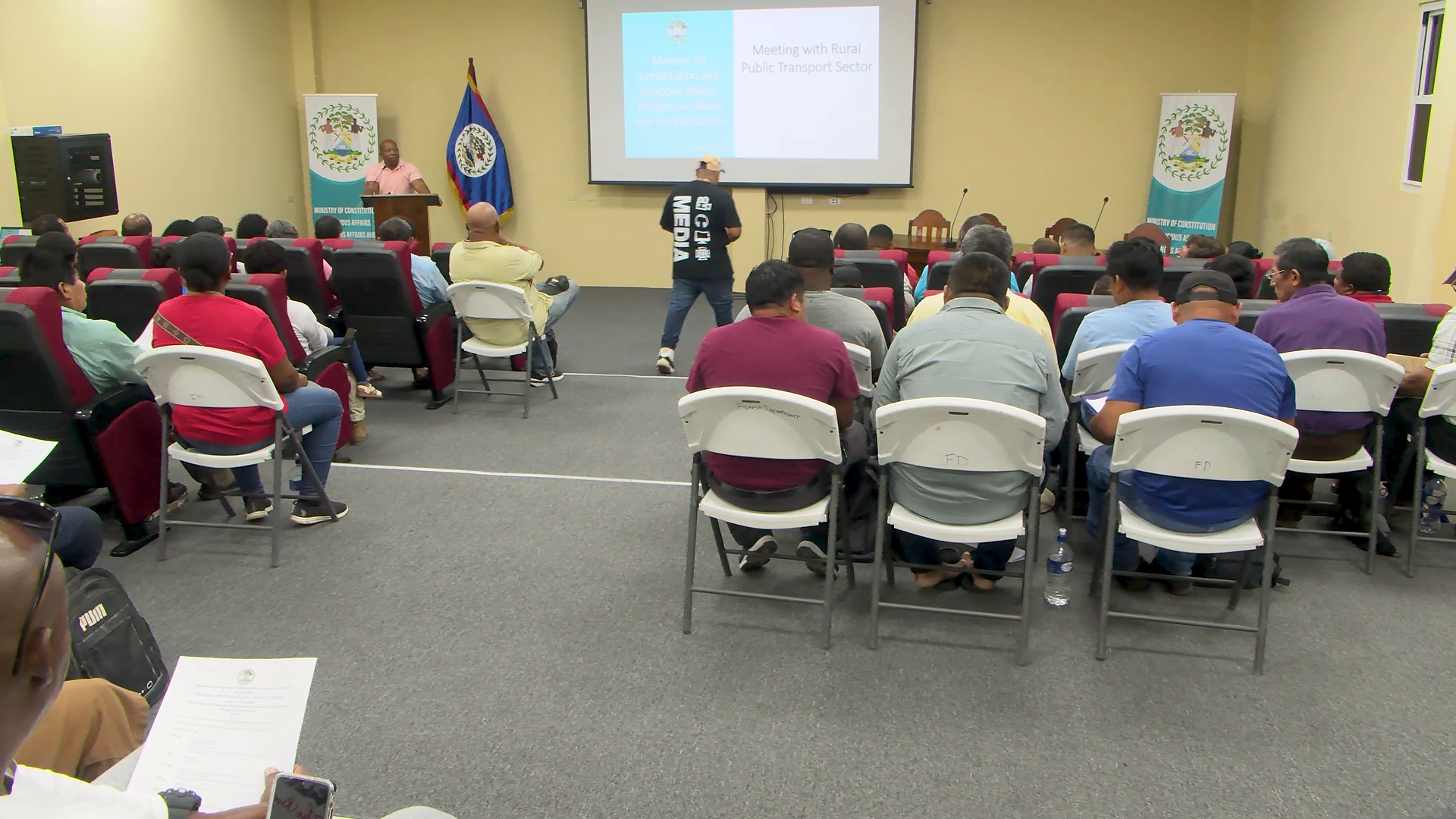
    For years, commuters across Belize have endured persistent frustrations with the nation’s public bus system: chronic delays, aging, poorly maintained vehicle fleets, dangerously overcrowded cabins, and inconsistent schedules that upend daily travel plans. On May 15, 2026, more than 60 rural bus operators converged on the capital city of Belmopan for a landmark meeting with national transport officials, amplifying pressure to deliver tangible reforms to a system that has failed users for decades.

    This gathering comes after two critical preliminary steps: the government’s approval of new fuel subsidies for operators and a recent round of regulated fare adjustments meant to balance operator revenue needs with commuter affordability. With those structural changes in place, both the Ministry of Transport and the Belize Bus Association (BBA) now say the sector is ready to shift its focus to full-scale modernization and tangible service improvements for daily riders.

    Transport Minister Dr. Louis Zabaneh framed the cross-country meeting as a critical breakthrough in addressing long-unresolved grievances held by bus operators. “It’s been a year since we first began engaging with highway bus operators, and we asked for their patience as we worked through preliminary policy adjustments,” Zabaneh explained to reporters after the closed-door talks. “This is the first time we’ve brought together operators from every region of the country to discuss the full scope of challenges facing the sector, and most importantly, to collect their input on how best to modernize public bus transportation.”

    Zabaneh highlighted two of the most pressing issues operators shared during the discussions: cutthroat excessive competition that leaves many routes unprofitable, and poor road conditions across large swathes of rural Belize that increase vehicle wear and tear and delay routes. Following this initial national gathering, the ministry plans to host a series of regional district-level meetings to gather more granular feedback, before reconvening national stakeholders to finalize a coordinated reform plan.

    BBA President Philip Jones echoed the collaborative tone of the talks, noting that both government and operator leaders share the core goal of improving service for riders without shifting unsustainable cost burdens to commuters. “We can clearly see the shared commitment from both sides to upgrade public transit service for the people of Belize,” Jones said. “This is a joint effort between government and operators to keep commuters from being overburdened by fare increases, which is exactly why the fuel subsidy was put in place to offset operators’ rising fuel costs. We have a consistently open, cordial working relationship with the ministry, and we communicate daily — that’s a foundation we’re grateful to build on.”

    The meeting also provided an update on the rollout of the new fuel subsidy program, which was finalized after tense negotiations and a nationwide bus blockade that brought the country to a standstill and forced both sides back to negotiations. Just days after fares were adjusted, the government is currently finalizing a digital reimbursement portal that will deliver direct pump relief to eligible operators.

    Ministry of Transport CEO Chester Williams told reporters that operators have been understanding as the government fine-tunes the verification system to prevent fraud and ensure fair distribution of funds. “We’ve finalized the submission framework in discussions with BBA leadership, and we’ve already received the first round of claims from operators,” Williams explained. “Our dedicated ministry team is now working through the verification process, and once that wraps up, we’ll disburse payments to operators. We appreciate operators’ patience — the first payment, originally scheduled for this week, has been pushed to next week to finalize our processes, but everything is moving forward smoothly.”

    To address concerns about over-reporting fuel consumption to access excess subsidies, Williams outlined a multi-layered verification system. “Operators are required to submit weekly claims by 4 p.m. every Monday, which gives our team until Wednesday or Thursday of the same week to investigate and confirm the accuracy of every submission,” he said. “On top of that, each operator has already submitted an estimated monthly fuel consumption figure based on their historical operating data. If a claim comes in significantly above that baseline, it will trigger an immediate review. If they come in under that estimate, there’s no issue, but excess usage will be flagged.”

    This first cross-sector meeting marks a new chapter in Belize’s efforts to resolve a public transit crisis that has impacted commuters and operators alike for years, with both sides signaling a shared willingness to work toward actionable, people-centered reform.

  • State Of Emergency Fails To Stop Another Killing in Belize City

    State Of Emergency Fails To Stop Another Killing in Belize City

    On a Thursday evening that began like any other in Belize City’s Jane Usher neighborhood, sudden, violent gunfire tore through the calm, marking the latest fatal shooting in a community already reeling from persistent gang-related instability. Nineteen-year-old Lamar Garnett was shot and killed just after 8 p.m. steps from the entrance of his own home, according to initial accounts from local residents.

    Witnesses on the scene report that approximately 10 rapid gunshots echoed across the residential area, prompting nearby neighbors to immediately take cover and flee indoors to avoid stray gunfire. When the shooting stopped, Garnett was found unresponsive on the ground, adding his name to a growing list of young male victims in a region that has faced an unrelenting wave of violent crime over the last several months.

    In response to the surging violence tied to local gang activity, Belizean authorities had already declared a formal state of emergency for the Jane Usher area, implementing expanded security measures designed to de-escalate conflict and return a sense of safety to residents. However, Thursday’s fatal incident confirms that these emergency interventions have not yet curbed the cycle of deadly violence, leaving local communities trapped in ongoing anxiety and fear.

    Local law enforcement has officially opened an investigation into Garnett’s murder, with authorities yet to release details on potential suspects or motives linked to the shooting. For residents of the neighborhood, the killing reinforces what many have already experienced: even with extraordinary security measures in place, the threat of violence remains an everyday reality.

  • Cyberbullying Case Reopens; Chester Denies Any Behind-the-Scenes Push

    Cyberbullying Case Reopens; Chester Denies Any Behind-the-Scenes Push

    On May 15, 2026, a cyberbullying case that had previously been thrown out of court has been reinstated, sparking fresh public controversy and speculation over potential behind-the-scenes political influence. The case centers on defendant Nichole McDonald, whose charges were dismissed unexpectedly months ago — a ruling that left the aggrieved party, prominent C.E.O. Chester Williams, frustrated and unaware of the court’s decision at the time. When prosecutors announced the revival of the case this week, questions immediately turned to Williams, with some accusing the high-profile figure of pulling strings to get the case back on the court docket. In a direct response to these allegations, Williams has flatly denied any involvement in the sudden procedural turnaround.

    In an on-camera interview with local reporters, Williams pushed back against claims that he pressured prosecutors to reinstate the cyberbullying charges against McDonald. “Couple months ago, I noted that the matter against her was withdrawn in the courts. Of course, yes, as an aggrieved person I was concerned that it was withdrawn without me being notified. I was not summoned to appear in court. But despite that I kept that to myself. I did not go to anybody or ask why. I just left it as that. And I had basically forgotten about that case and so when I saw that she was rearrested the other day I was a bit surprised,” Williams explained, adding that McDonald has publicly blamed him for the reopening, claims he calls unfounded.

    Williams stressed that he never communicated with any prosecutorial officials to push for the case’s revival, saying, “But I must say that I had no discussion with anybody. The prosecution saw it fit in their wisdom to reinstate the charges. That is within their purview, and so I just wait and see how it goes from there. If I were to be summoned to go to court, I would have gone to court, but I was not summoned to go to court.”

    When asked whether he personally sought a conviction and punishment for McDonald, Williams pushed back on framing the issue as a personal vendetta, emphasizing his commitment to the integrity of the national justice system. “It’s not about being, seeing her punished or convicted. Justice simply means that the person who is accused of committing a crime goes through the system, the court system. And whatever the court decides, at the end of the day, I’m okay with it. I do trust the justice system,” he said.

    Williams also defended his decision to report the alleged cyberbullying to authorities in the first place, noting that anti-harassment laws exist to protect all people from damaging false content shared online. “The law is there and while I know that some had criticized me for using it, the law is there for all to use. And the truth is if a person were to post something about you on social media that is false or is posted with intent to ridicule you or to cause you embarrassment, that fall within the limits of the law. And you can go to the police and report to police and that person can be arrested.”

    To date, prosecutors have not issued any public comment explaining their decision to reopen the case, leaving the procedural reversal open to ongoing public speculation. The case has reemerged as a major talking point in local public discourse, with many watching closely to see how the court proceedings will unfold this time around, and whether any evidence of improper influence will come to light.

    This report is adapted from a transcribed evening television news broadcast, with Creole-language remarks retained in their standard orthographic form per original reporting protocols.

  • Bar condemns attorney’s theft of client funds

    Bar condemns attorney’s theft of client funds

    A shocking admission of financial misconduct has sent shockwaves through Barbados’ legal community, after local attorney Hilary Nelson confessed to stealing nearly $900,000 from one of his clients. The high-profile case has triggered a sharp public rebuke from the Barbados Bar Association (BBA) and reignited long-running discussions about the need for more robust regulatory oversight of the island’s legal sector.

    Nelson entered his guilty plea during ongoing proceedings at the Supreme Court last week, and has since been remanded into custody ahead of his sentencing hearing. In an official press briefing held Friday at the BBA’s headquarters on Perry Gap, Roebuck Street, association president Larry Smith KC issued a blistering condemnation of Nelson’s actions, emphasizing that the organization’s governing council rejects any deviation from the strict ethical and professional standards that all practicing attorneys are required to uphold.

    “Any conduct by members of the profession that falls short of these expectations is condemned in the strongest possible terms by this council,” Smith stated. He went on to clarify that all allegations of professional misconduct are processed through pre-established legal and disciplinary channels, and that the BBA has long backed the full operation of these systems — including the ultimate penalty of permanent disbarment for attorneys found guilty of severe violations.

    Smith acknowledged that the high-profile nature of this case will inevitably erode some public trust in the local legal profession, but urged community members to have confidence in the court system’s ability to deliver fair accountability. “At the appropriate time, when the Bar is called upon to act, we will fulfill our responsibilities,” he added.

    The senior counsel also took the opportunity to clarify the independent structure of the BBA’s disciplinary committee, a key point of public confusion around regulatory processes. “I want the public to understand that the Bar council has no oversight over the disciplinary committee,” Smith explained. “When an attorney violates the profession’s code of ethics, it falls to the independent disciplinary committee to take action, not the Bar association leadership.”

    Beyond addressing the immediate case, the BBA used the briefing to outline its ongoing push to strengthen the regulatory framework that governs Barbados’ legal sector. The association is currently collaborating with the national government to draft targeted amendments to the island’s Legal Profession Act. These proposed changes are centered on three core goals: boosting professional accountability, streamlining and improving the effectiveness of existing disciplinary processes, and updating requirements for continuing legal education — with a particular focus on ethics training and competent modern professional practice.

    “These reforms are intended to ensure that the profession continues to meet the highest possible standards, and that public confidence in the administration of justice is maintained and strengthened over time,” Smith said of the proposed changes, reaffirming the BBA’s commitment to upholding the integrity of Barbados’ legal system.

  • Use real lawyers, Bar cautions public

    Use real lawyers, Bar cautions public

    A growing wave of complaints against unlicensed people offering legal services has prompted the Barbados Bar Association (BBA) to sound an urgent alarm to local residents, outlining the substantial risks consumers face when turning to unqualified providers for legal support. The industry body has moved to publicly clarify its position after questions were raised about its motivation for the notice, stressing that consumer protection, not private professional interests, drives the campaign.

    Speaking at the BBA’s headquarters on Roebuck Street, association president Larry Smith KC confirmed that the governing council has received multiple reports of people falsely presenting themselves as certified attorneys and offering legal services without holding active, valid practicing certificates. In response, the BBA published a formal public notice urging residents to avoid working with any individuals not officially enrolled as licensed legal practitioners.

    Smith pushed back against early speculation that the warning was a deliberate move to protect the financial positions and existing market share of registered BBA members. He emphasized that the public notice was not issued casually, but as a core responsibility of the association to safeguard the public and preserve the integrity of the island’s justice system.

    “Let me be clear: this initiative has nothing to do with protecting our members’ livelihoods or locking in market share,” Smith stated. “The BBA’s core mandates include upholding fair administration of justice, cracking down on unauthorized legal practice, and protecting residents who engage with people claiming to offer legal representation.”

    The BBA president went on to outline the key difference between working with a licensed attorney and an unqualified provider. All formally admitted attorneys in Barbados operate within a strict, comprehensive regulatory framework that binds them to formal ethical codes, mandatory professional competence standards, and ongoing disciplinary oversight. If a licensed attorney acts incompetently, mismanages client funds, or breaches client trust, clients have clear formal avenues for recourse: they can file an official complaint with the BBA’s disciplinary committee, and pursue civil remedies in appropriate cases where a professional duty of care has been broken.

    Unqualified, unregulated providers operate entirely outside this system, Smith warned. They are not bound by enforceable professional standards, face no disciplinary consequences for misconduct, and leave consumers with almost no options to seek redress if services go wrong. “This is not a hypothetical risk,” Smith noted. “These are tangible, damaging consequences that actual local residents have already experienced.”

    When asked whether the BBA supports increasing penalties for unauthorized legal practice, which currently carries a maximum $5,000 fine per year, Smith confirmed that harsher penalties could be included in a forthcoming full review of the island’s Legal Profession Act. The association has also formally pushed for an expansion of the national Legal Aid Scheme to improve access to licensed legal services for low-income residents.

    Smith added that while the BBA is prepared to offer its expertise and input to parliamentary lawmakers on legislative changes, all final decisions on regulatory reform rest with Barbados’ elected Parliament. “All matters of public importance will be considered as part of the overhaul, and increased penalties may well be one of those. But the BBA cannot dictate legislative outcomes — lawmaking is the responsibility of Parliament, and we will contribute our perspective if invited to do so,” he said.

  • Education officials probe alleged assault of student at school

    Education officials probe alleged assault of student at school

    A controversial incident of alleged corporal violence against a young primary school student has triggered an official probe by Saint Lucia’s Department of Education and Digital Transformation, and sparked growing community tensions that forced a school shutdown this week.

    According to an official statement released by the department Friday, the alleged assault took place on May 8 at a local urban primary school, where a second-grade student is reported to have been struck by a classroom teacher, resulting in a nasal injury. Three days after the incident, on May 11, the student’s mother lodged a formal complaint first with school leadership, then directly with the Department of Education. Sources close to the situation confirm the mother has expressed open dissatisfaction with the early responses she received from school authorities, amplifying public attention to the case.

    As community frustration over the incident has mounted, St Lucia Times has verified that escalating tensions in the student’s local neighborhood have resulted in unconfirmed reports of threats directed at the accused teacher and senior school administrators. In response to these security concerns, the school chose to remain fully closed to all students and staff this Friday.

    In its official public address, the Department of Education confirmed it had opened a full investigation into the allegation, noting that it takes the welfare of all enrolled students as its non-negotiable top priority. Department officials reaffirmed their ongoing commitment to upholding public trust in the national education system, adding that school administration activated standard response protocols immediately after being notified of the incident, including arranging a full medical evaluation for the injured child. Early official assessments confirm the student did not sustain life-altering or permanent serious injury, the department stated.

    A full, transparent investigation is currently underway, with the department already holding preliminary consultation sessions with all involved parties to ensure the matter is resolved with the gravity and care it requires. The department also explicitly reiterated its long-standing opposition to any form of corporal punishment in Saint Lucian schools, a practice that has been legally banned across all educational institutions in the country since May 1, 2020. The department stressed that protecting both the physical and mental well-being of every student remains a core institutional mandate.

    While acknowledging the legitimacy of parental and community concerns over the incident, department officials issued a clear appeal for the public to avoid spreading unsubstantiated claims or issuing threats against school principals, teachers, and other personnel. The statement, signed by Chief Education Officer Beverly Dieudionne, warns that harassment and extrajudicial threats risk undermining the impartiality of the ongoing investigation and violating the legal privacy rights of all individuals connected to the case.

    The department also reminded parents and guardians of the formal, structured grievance process for addressing school-related concerns: issues should first be raised with the school’s principal, before being escalated to the District Education Officer and ultimately the Chief Education Officer if satisfactory resolution is not achieved. “Our schools must remain safe, secure spaces for principals, teachers, students, and ancillary staff alike. We appeal to all stakeholders to allow the investigation process to conclude without outside interference,” the statement read.

    In closing, the department reaffirmed its commitment to upholding the values of transparency, accountability, and professionalism throughout the probe, and pledged to protect the rights and dignity of every person involved in the case.

  • NISSS expands EZPay+, SurePay access for self-employed

    NISSS expands EZPay+, SurePay access for self-employed

    Barbados has taken a landmark step to close a long-standing gap in its national social safety net, launching round-the-clock digital payment options for National Insurance contributions that remove major barriers to social security coverage for the country’s large self-employed workforce. Labour, Social Security and Third Sector Minister Colin Jordan made the announcement at the official launch of the “Self-Employed and Secure” community engagement initiative in Speightstown, St Peter, framing the reform as the start of a new era of equitable financial protection for independent workers across the island.

    Effective immediately, self-employed contributors can make National Insurance payments through two integrated platforms: the government’s native EZPay+ portal and commercial bill payment service SurePay. Both platforms operate 24 hours a day, seven days a week, eliminating the logistical hurdles that have kept thousands of independent workers outside the social security system for decades.

    Jordan emphasized that flexible, anytime-anywhere payments are not just a matter of added convenience for self-employed workers—they are a practical necessity. Unlike traditional formal employment tied to a 9-to-5 office schedule, independent work spans irregular hours across sectors from taxi driving and fishing to artisanal craft and creative industries. “No more disrupting your schedule or your earning of money. You can now, in the middle of the night, sit on your bed or at your dining room table and make your payments,” Jordan said, adding that the reform ensures every working Barbadian, regardless of their work model, can access the protection they deserve.

    The policy change comes as the National Insurance Scheme faces urgent long-term sustainability challenges. A recent 17th Actuarial Review delivered a sobering projection: if the contributor base does not expand significantly, the National Insurance Fund could be fully depleted by 2034. When Jordan took office, official data showed only 12 percent of Barbados’s self-employed population actively contributed to the fund—a gap the current administration has refused to delay addressing.

    “As a government, we decided we would not do the politically expedient thing and kick the can down the road. Once we recognised we had a challenge, we did what former Prime Minister Owen Arthur would say: you face it and you fix it,” Jordan noted. “We are addressing the sustainability of the fund because our self-employed are too valuable to be left to ad hoc relief.”

    In additional support for self-employed workers who have fallen behind on past contributions, the new digital system also allows payments for prior coverage years. Workers can now make up missed contributions for 2024 and 2025, alongside current 2026 payments, allowing them to build up their eligibility for future benefits without losing credit for past work. “Every year counts, and this facility allows you to add those missing weeks to your foundation,” the minister explained.

    Jordan praised the courage and creativity of Barbadian self-employed workers, who “bet on themselves” every day to grow the island’s economy. But he stressed that hard work alone cannot serve as a retirement plan, and ad hoc emergency assistance is not a substitute for comprehensive social security. Lessons from past crises, including the COVID-19 pandemic and Hurricane Beryl, have made clear the devastating human cost of leaving independent workers without a financial safety net, he added.

    “The National Insurance Scheme exists precisely so no self-employed person has to face a crisis without a firm foundation,” Jordan said. “I encourage all of you: do not wait until something happens. Join up, sign up, and participate.”