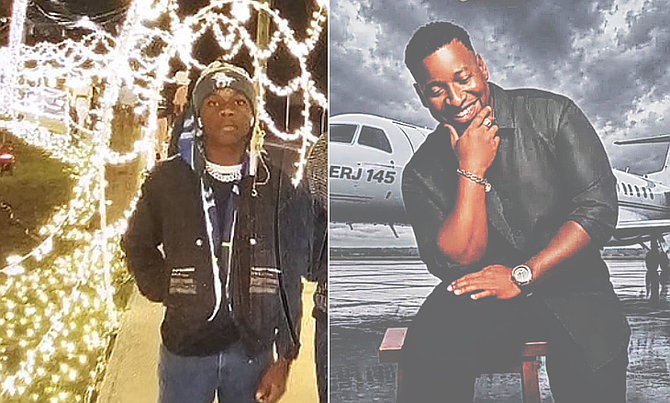
Ten lives were cut short in a devastating plane crash near San Andros Airport on July 10, Bahamas’ Independence Day, leaving behind shattered families now facing a new, agonizing hurdle: weeks of waiting for DNA identification of their loved ones’ remains, a delay that has reignited longstanding demands for a domestic national forensic laboratory. Many of the victims’ bodies were severely burned in the crash, making visual identification impossible, so surviving relatives were required to submit DNA samples for matching just last week. Instead of processing these samples locally, Bahamian authorities are forced to send the genetic material to a testing facility in the United States, leaving grieving families stuck in a painful limbo they say repeatedly reopens their raw emotional wounds.
Lavonia Burrows, whose 35-year-old brother Rashad Storr was one of the crash victims, says her family was informed the DNA testing results could take as long as six to eight weeks to return. Storr, a mechanic for Western Air and a guitarist for the popular local group Da Pond Band, was traveling with four bandmates to North Andros for a regatta performance when the 20-minute planned flight ended in tragedy. For 16-year-old Nicholas Oliver Jr.’s family, the projected wait is still four to six weeks, after they spent hours at the morgue providing their reference DNA sample. As of this week, Bahamian police have not released an updated count of how many victims remain formally unidentified.
Burrows explained that until Storr’s remains are officially identified and released, her family cannot move forward with burial arrangements or begin the slow process of healing. The ongoing uncertainty, she says, keeps the family trapped in a cycle of grief, with every update or lack thereof tearing open fresh emotional scars. “After a while, you start to level off, and then here comes a call… that wound opens up again, and it’s almost like you’re going through the same process over again, it hurts,” Burrows shared. The family already planned a memorial service to welcome relatives traveling in from abroad, but the burial can’t take place until Storr’s remains are confirmed.
This tragedy, Burrows argues, lays bare the urgent unmet need for The Bahamas to build its own national forensic laboratory. Currently, the country relies on overseas facilities for all specialized forensic testing including DNA analysis, a gap that forces grieving families into unnecessary extended waits when an incident like this crash occurs. Advocates have pushed for such a facility for years, noting it would provide a full suite of critical domestic services beyond DNA testing, including pathology, drug analysis, and firearms examination. Bahamian government officials have previously acknowledged the need, but have cited high establishment costs and complex technical requirements as barriers to moving the project forward.
“In the times that we are living in, it is so important that we have these things in place,” Burrows said. “It will definitely help the nation, because we all are gonna go through this someday… so having a lab here is so important, and so I am praying for the day that we will get our priorities together so that we can make sure that we help families.”
Beyond his career and musical contributions, Burrows remembers her brother as a devoted, loving family man who treated his nieces and nephews like his own children. Just one day before the crash, Storr spent the entire day teaching Burrows’ son Ledre practical skills, from changing a tire and car brakes to playing the drums. “I shouted out and I said, ‘Boy, you is the uncle of the year,’” Burrows recalled.
All 10 people on board the Flamingo Air flight died in the crash. Alongside Storr, the victims include Storr’s Da Pond Band bandmates Giovanni McKenzie, Mateo Winder, Toniquea Gilot and Tra’vis Johnson; DJ Melvin Henfield (known professionally as DJ Fresh International); Andros residents Quintin Myers and Macaro Rolle; pilot Franklyn Cambridge; and 16-year-old Nicholas Oliver Jr. For the families still waiting for confirmation of their loved ones’ remains, the lack of identified bodies has blocked the traditional mourning and burial rituals that help many start processing loss, leaving them stuck between memorial planning and final goodbyes. “There is still no closure until we make sure that we have his remains,” Burrows said. “Once we get his remains, we will come together as a family, pray and bless the body and do what needs to be done at the end.”