分类: society

  • WATCH: Residents block roads in Granville as situation escalates

    WATCH: Residents block roads in Granville as situation escalates

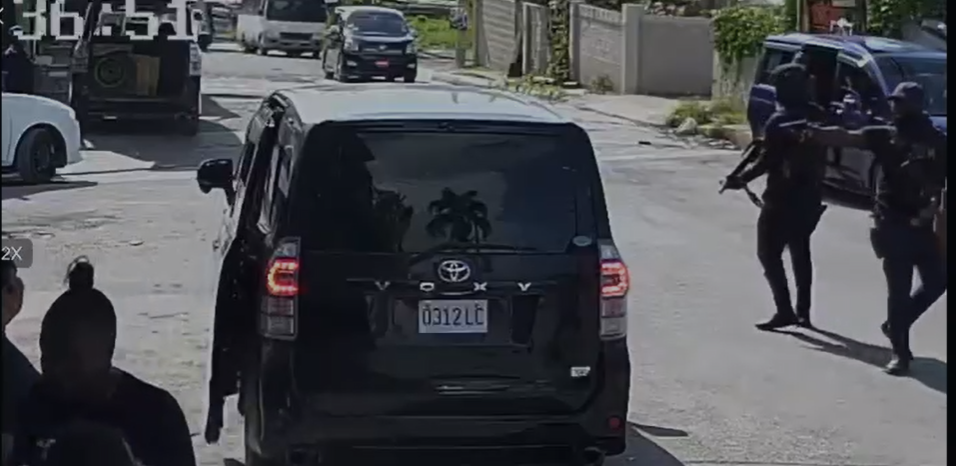
    In the tight-knit community of Granville, St James, Jamaica, simmering public anger boiled over into civil unrest on Sunday, after 43-year-old community resident Latoya Bulgin was fatally shot by an on-duty officer from the Jamaica Constabulary Force (JCF) during an alleged confrontation. According to official accounts and verified surveillance footage, Bulgin was behind the wheel of a Toyota Voxy, transporting a group of fellow residents to a planned community protest, when the encounter unfolded in the town’s central square. She was rushed to a local hospital for emergency care after the shooting, but medical staff were unable to save her, and she was pronounced dead shortly after arrival.

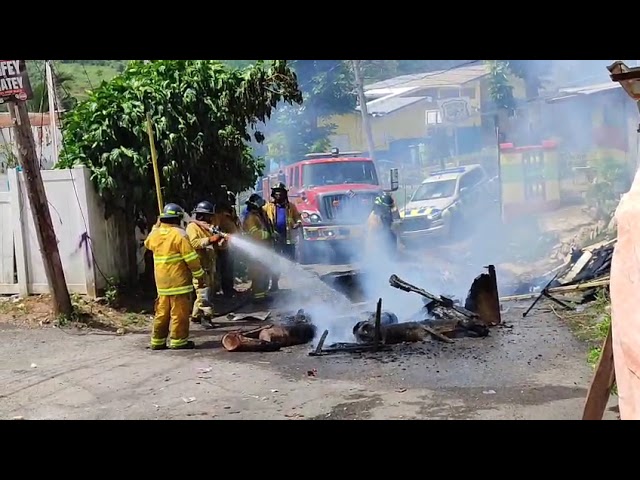
    Within hours of the news of her death spreading, furious residents took to the streets to block key intersections across Granville. Protesters repurposed discarded household appliances, fallen tree trunks, and other debris to build solid barricades across major throughfares, and set large open fires at several blockage sites to signal their outrage over the killing. The unrest has disrupted normal daily life across the community, cutting off access to local businesses, schools, and emergency services for many residents.

    In response to the blockade, a joint team of JCF officers and Jamaica Fire Brigade personnel has been deployed to the area to clear the blocked roadways and restore traffic flow. A heavy, visible police presence remains in Granville as authorities work to de-escalate tensions. In an immediate administrative move, the Police High Command has placed the officer involved in the shooting on interim interdiction, pending the outcome of official investigations. Two independent oversight bodies—the Independent Commission of Investigations (Indecom), and the Inspectorate and Professional Standards Oversight Bureau (IPROB)—have launched parallel probes into the incident to determine whether the use of lethal force was justified, and whether any misconduct occurred.

  • Taxi association boss calls strike notice ‘premature’

    Taxi association boss calls strike notice ‘premature’

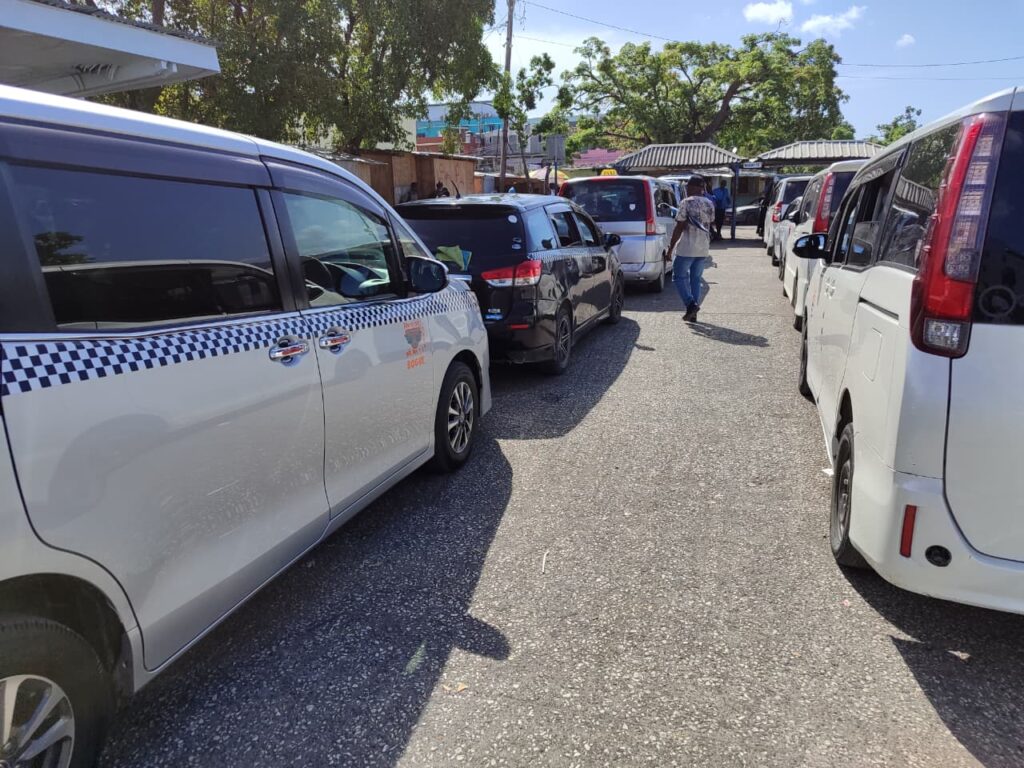
    Amid circulating social media speculation of an imminent taxi fare protest set to launch Monday morning, the top leader of Jamaica’s St James Taxi Association has pushed back against the claims, labeling the viral announcement as premature and uncoordinated.

    Dion Chance, president of the local association, told local media outlet Observer Online that the unapproved strike notice originated from an individual based in the southern parish of St Elizabeth, not from authorized industry leadership in St James. As of Sunday, the Jamaica Constabulary Force had issued an internal advisory to its personnel alerting them to potential disruptions tied to the rumored strike, which was framed as a push for increased taxi fares.

    Contrary to the viral warning, public transit operations across St James continued to run normally on Monday with no work stoppages reported. Chance emphasized that organized industry action does not happen spontaneously. Any official strike would require advance notification to all association members, exhaustive exploration of all negotiation channels with relevant stakeholders, and deliberate planning to ensure any protest is effective. “Our members know full well that they would receive formal, advance communication before any industrial action. We do not just call a strike overnight,” he explained.

    Chance confirmed that industry leaders are already in the process of addressing fare increase demands, with a scheduled meeting of all taxi association presidents from across Jamaica set for Thursday this week. This gathering follows an initial meeting held last week to discuss the issue. Following Thursday’s discussions, leadership will finalize a formal plan of action based on the meeting’s outcomes, Chance added.

  • JFJ expresses ‘grave concern’ over Granville fatal shooting; raises questions about handling of crime scene

    JFJ expresses ‘grave concern’ over Granville fatal shooting; raises questions about handling of crime scene

    KINGSTON, Jamaica — A fatal police shooting in western Jamaica has ignited fresh scrutiny of the Jamaica Constabulary Force’s (JCF) adherence to use-of-force rules and longstanding transparency failures, after a local human rights organization documented deeply troubling inconsistencies between emerging video evidence and standard policy requirements.

    On Sunday, a JCF officer shot and killed Latoya Bulgin, widely known by the nickname “Buju”, during a community protest in Granville, St. James. The protest was organized in response to the fatal police shooting of 17-year-old Tjey Edwards one week earlier.

    On Monday, Jamaicans for Justice (JFJ), one of the nation’s leading human rights advocacy groups, released a formal public statement following its review of widely circulating citizen footage and local closed-circuit camera recordings of the incident. While the organization emphasized that a full, independent investigation must be allowed to uncover all definitive facts, it confirmed that preliminary details captured on video have shocked public conscience and raised urgent, unresolved questions about whether the lethal force used was proportional to the threat officers faced.

    JFJ reiterated that both the JCF’s own internal Use of Force Policy and binding international human rights standards mandate that force can only be deployed as a last resort, aligned with the core “PLAN” principles: every use of force must be proportional to the threat at hand, legal under governing law, accountable (meaning officers must be able to clearly explain and justify their actions), and necessary for the specific circumstances. In plain terms, the group explained, a person involved in a confrontation with police should only lose their life if they pose an immediate, deadly threat to officers or bystanders. Critically, JCF policy explicitly bars officers from firing on a moving vehicle solely because it is in motion — a rule that the Granville incident appears to contradict, the group said, adding that the case opens the door to widespread public perceptions of extrajudicial killing that erode trust in law enforcement.

    Beyond the shooting itself, JFJ flagged a second deeply disturbing violation of policy in how officers handled Bulgin’s remains after the shooting. Video footage appears to show officers dragging Bulgin’s body out of her vehicle and throwing it roughly into the back of a police transport van. Under JCF policy, officers are required to secure and preserve the crime scene immediately after a shooting, to avoid compromising the chain of evidence for independent investigators. The Independent Commission of Investigations (INDECOM), Jamaica’s independent oversight body for police conduct, has a legal right to assess the scene in its original condition. JFJ stressed that the handling of Bulgin’s body fell far short of these mandatory obligations, damaging the integrity of the upcoming investigation and failing to uphold the basic human dignity that every person, even in death, is owed.

    The incident is not an isolated outlier, JFJ emphasized, but rather the latest example of a recurring pattern the group has documented for years: when independent visual evidence emerges, it often contradicts initial official accounts of fatal police encounters. Data from INDECOM underscores the growing scale of the crisis: as of 2026, 130 civilians have been shot and killed by Jamaican security forces, including 15 fatal shootings in May alone. That number follows 129 fatal shootings in the same period in 2025, a year that ended with 311 total fatal police shootings — the highest annual recorded in more than 15 years. The vast majority of these fatal encounters have no independent visual documentation to hold officers accountable, JFJ added.

    In recent years, the JCF acquired 1,000 body-worn cameras, a step JFJ previously welcomed as a positive move toward greater police transparency, even as it raised ongoing concerns about inconsistent deployment criteria. The Granville incident, JFJ noted, was exactly the high-risk, high-interaction scenario where body-worn cameras are most needed: officers were assigned to patrol a community protest, a context where confrontations are predictable. Despite that, INDECOM has confirmed that none of the three officers assigned to crowd control duties the day of the shooting were equipped with a body-worn camera.

    JFJ did acknowledge one positive step: the JCF High Command acted swiftly to place the officer involved in the shooting on administrative interdiction pending investigation. But that action must be matched by systemic change, the group said, including a firm commitment to mandatory, consistent deployment of body-worn cameras across all high-interaction assignments, amid a sustained elevated rate of fatal police shootings across Jamaica. “Accountability cannot depend on the random chance that a bystander captures footage of an incident,” JFJ argued, noting that consistent body-worn camera use protects both civilians and officers by creating an accurate, unalterable record of interactions, and is critical to rebuilding public trust in law enforcement.

    INDECOM has already launched a formal investigation into the shooting, and JFJ is calling for the process to be completed quickly, thoroughly, and with full public transparency, examining not just the shooting itself but also the post-shooting scene management and handling of Bulgin’s body to deliver full justice for the deceased and her family. JFJ extended its formal condolences to Bulgin’s family and loved ones following her death.

  • He’ll kill again

    He’ll kill again

    PORT MARIA, ST MARY — It was a moment of raw, unfiltered grief for Phillipa Walker last Friday, as the man who murdered her three-year-old son and left her and multiple others injured in a brutal May 2024 attack was sentenced to 15 years behind bars. Even as the court handed down the punishment, the heartbroken mother could not find closure – telling reporters the sentence was far too lenient to protect the public.

    Walker told the Jamaica Observer she fears that when the 33-year-old attacker, Devon Williams, is released, his age and strength will leave him capable of killing again. “When he is out — you see how big and strong he is? — I can feel it when he gets out, he is going to come back and kill again,” she lamented through tears.

    Williams, who had recently relocated to Jamaica from the United States where he resided with his mother, was originally handed a 20-year prison term by the St Ann Circuit Court. The sentence was reduced by five years to account for his guilty plea and a psychiatric evaluation that confirmed he suffers from severe mental instability.

    The attack unfolded on the afternoon of May 29, 2024, as Walker walked home from school with her three children – three-year-old Asher Campbell, 9-year-old sister, and an older sibling – in the Pagee community of Port Maria, St Mary. Armed with an iron pipe and a knife, Williams launched an unprovoked assault on the group that left toddler Asher dead. Walker, her 9-year-old daughter, and five other bystanders were also wounded in the attack.

    Court documents reveal that Williams’ mental health struggles date back to 2016, when he first began requiring psychiatric medication. In statements given to the St Mary Parish Court, Williams’ father told authorities that after his son returned to Jamaica, he left his prescription medication behind in the U.S. While Williams’ mother shipped the medication to Jamaica, it never arrived before the deadly attack took place.

    Initially, Williams told the court he intended to represent himself during trial proceedings. However, presiding judge Nicole Kellier ordered that a court-appointed attorney be assigned to him due to his documented mental health condition, and he was represented throughout the trial by defense attorney Dane Marsh.

    In her post-sentencing interview, Walker said the tragedy could have been entirely avoided if the community had been notified of Williams’ unmanaged mental illness before the attack. “Had the community been warned about Williams’ ill health people would have been wary of him. Maybe my baby would be alive,” she said, her anger and grief plain on her face.

    Asher was Walker’s youngest child, the last of her six children, and the pain of his loss remains raw six months after his death. She recalled that Asher dreamed of becoming a soldier, and would have dressed up for his school’s recent Career Day in a military outfit – a future that will now never come to pass. “When I see the other babies going to school, especially on Career Day, in their cute outfits, my Asher would have dressed up as a soldier, as that was what he wanted,” she repeated through sobs.

    The murder has destroyed the entire family, Walker explained. Asher’s father has been so consumed by grief that he has refused to cut his hair since the attack – a small, telling sign of his pain. “When Asher was around and his father wanted a trim, no matter how I told him, [he would ignore me]. It would be the baby that would say, ‘Daddy, come let’s go to the barber.’ He’s hurting badly,” Walker said.

    Walker, who still bears the physical scar from the attack on her own body, says her mental and emotional health has been shattered. She has developed severe sleep disturbances and relies on medication to cope, but says the drugs do nothing to ease her constant pain. “My nerves are shattered. I have to tell myself I get old before I become young,” she shared. “My baby was innocent, he deserved to grow up.”

    Walker recalled that Williams showed no emotion during the attack, and argued that he should have received a life sentence long enough that he would be old and too weak to harm anyone if he is ever released. “He should have gotten a time [in prison] when him ready to come out he is old and feeble and he can’t hurt anyone else,” she said.
  • Parents, drug pushers blamed for student violence

    Parents, drug pushers blamed for student violence

    At a public education forum focused on curbing rising violence in Jamaican schools, a prominent St Andrew high school principal has sounded the alarm over the role of unaccountable adults – from careless parents to illicit street vendors – in fueling substance abuse among students and the aggressive behavior that follows.

    Reverend Claude Ellis, head of Pembroke Hall High School in the Corporate Area, laid out his case during last Thursday’s Kiwanis Club of North St Andrew meeting, themed ‘Safer Schools Now: Strategies to Combat Violence in Schools’. He argued that systemic change to protect students cannot stop at holding minors responsible for bad choices; adults who enable harmful behavior must face consequences too.

    Ellis pointed first to shifting parental responsibilities that leave digital devices to raise children from a young age. ‘We need to get back to holding parents accountable,’ he said. ‘Many of us hand toddlers a phone or tablet to keep them quiet early on, and we fail to anticipate how this lack of guided upbringing plays out in adolescence.’ Beyond lax parenting, he called out unregulated vendors who operate near school campuses, peddling alcohol, vapes, cigarettes and other controlled substances to underage students with little to no repercussions.

    To illustrate the urgency of the crisis, Ellis shared a first-hand incident from his own school campus just days before the meeting. While walking toward the main gate, he spotted a cold beer bottle near a student seating area. Assuming it had been left by an adult football team that practiced on the campus the night before, he bent to pick it up – only for a 12-year-old seventh-grade girl sitting nearby to admit the bottle was hers. She told Ellis that drinking before school was a regular habit, and she had brought the beer from her own home, with an adult’s knowledge. ‘When an adult gives a child alcohol at 8 o’clock in the morning, that child grows up thinking this behavior is acceptable,’ Ellis explained. ‘We can’t keep placing all the blame on children while ignoring the adults who normalize harm, all while claiming to uphold children’s rights.’

    Ellis also pushed back against the narrative that widespread school indiscipline is simply a product of better media coverage today. While acknowledging that schools have always dealt with low-level misbehavior, he argued that a gradual abandonment of basic moral standards and expectations of good conduct has created a pathway to more severe violence. He criticized the popular viewpoint that personal expression around appearance and behavior has no impact on learning, saying this hands-off approach has backfired spectacularly. ‘There is a clear link between small deportment violations and more serious violent and maladaptive behavior down the line,’ he noted. ‘When we let every student set their own unregulated rules, those competing individual interests end up clashing in harmful ways.’ The principal also added that many incidents of violence and substance abuse go unreported, masking the true scale of the problem across Jamaican schools.

    Ellis’ call to action aligns with longstanding concerns from law enforcement and public health officials across the country. Back in 2022, the St Catherine South Police division launched a sustained crackdown on drug and contraband trafficking in local schools, but officers reported facing a persistent ‘cat and mouse’ game with vendors, many of whom are parents themselves. These vendors sell drug-infused treats to students, justifying their actions by claiming they rely on the income for survival. Sergeant Princess Bayliss Ranger of the St Catherine South Community Safety and Security Branch told reporters at the time that even after multiple arrests, vendors almost always return to selling ganja-infused cookies and alcohol-soaked gummies to minors shortly after being released. A 2022 rapid assessment by Jamaica’s National Council on Drug Abuse, which surveyed 160 students and 20 guidance counsellors across 13 parishes, confirmed that the most common substances accessed by students today are Molly, vaping products, and cannabis-infused edibles.

    With clusters of school violence rising across the island, Ellis is urging policymakers and community leaders to prioritize sweeping accountability measures to put a ‘dent’ in the growing crisis, starting with holding the adults who enable student substance abuse legally and socially responsible.

  • JTA workers take industrial action in protest of pay issues — BITU

    JTA workers take industrial action in protest of pay issues — BITU

    KINGSTON, Jamaica — A brewing labor dispute at one of Jamaica’s most influential education sector organizations has boiled over into industrial action, as non-teaching staff employed by the Jamaica Teachers’ Association (JTA) have walked off the job to demand resolution to years of unpaid and improperly calculated wages. The workers, who include security guards, administrative support staff, accounting personnel, and clerical officers, are all represented by the Bustamante Industrial Trade Union (BITU), one of the country’s oldest and most prominent labor organizations.

    Rudolph Thomas, BITU’s vice president, outlined the origins of the conflict that led to the work stoppage: since 2017, JTA management has failed to provide transparent breakdowns of how incremental and seniority-based salary increases are calculated for the represented staff. Union representatives have repeatedly flagged clear discrepancies in the amounts paid to workers over the seven-year period, but formal requests for clarification have gone unanswered.

    The situation escalated beyond the long-running calculation dispute in recent months, Thomas explained. In a public statement released Monday, BITU detailed three additional core grievances that pushed workers to take industrial action. First, JTA management has failed to conclude new collective bargaining negotiations for wage and fringe benefits covering the 2024–2026 period, despite the previous agreement having already expired. Second, a long-planned market wage realignment initiative scheduled to take effect this year has been stalled by repeated management delays in engaging with union negotiators. Third, multiple written commitments to resolve the dispute made by JTA leadership during mediated talks at the Jamaican Ministry of Labour have been broken with no forward movement.

    For the affected workers, these repeated failures by JTA management have created widespread financial uncertainty and deep frustration. The union emphasizes that management’s inaction not only violates existing collective agreements between the two parties, but also amounts to a deliberate refusal to pay the fair wages that JTA staff have rightfully earned through their work.

    Thomas issued a clear warning to JTA leadership on Monday: if management does not immediately agree to a formal meeting with union representatives and establish binding, firm timelines to address every outstanding issue, the current industrial action will be scaled up to intensify pressure on the organization. With multiple previous commitments already broken, the union has signaled it will not accept further delays in resolving the nearly decade-long dispute.

  • Move beyond the pews

    Move beyond the pews

    On May 16, 2026, at the Seventh-day Adventist Church in Falmouth, Trelawny, a new chapter began for the North Jamaica Conference of Seventh-day Adventists (NJC). During the inauguration ceremony for the organization’s newly elected officers, directors, and executive committee members, newly sworn-in president Pastor Jermaine Johnson delivered a bold, mission-driven address challenging the conference’s congregations to step beyond traditional religious boundaries and pursue widespread transformational change across Jamaican society.

    Known affectionately to his peers and followers as Pastor JJ, Johnson brings a wealth of cross-sector leadership and public service experience to his new role. A native of Port Antonio, Johnson is an established motivational speaker, personal and professional development strategist, and justice of the peace for St Ann parish. He built his early foundation as a student at Titchfield High School, before going on to earn his degree from Northern Caribbean University. His long record of public engagement includes leading the National Youth Council of Jamaica, serving as an ambassador for the National Youth Service, and representing Jamaica at the Commonwealth Youth Parliament in Australia. A nationally celebrated communicator, Johnson is an award-winning toastmaster, recognized across the Caribbean for his dynamic oratory and leadership. He also composed the theme song for the Governor General’s I Believe initiative, and in 2023, he received the prestigious Governor General’s Gold Medal of Honour for his decades of work advancing social progress across the country. Johnson has also shared his leadership and faith frameworks through two published works: *The Seven Ps to Effective Church* and *Don’t Chicken Out*.

    In his inauguration address, Johnson emphasized that the event marked more than just a change in organizational leadership: it was a collective recommitment to the conference’s core mission. “If we are to achieve maximum impact for the Kingdom of God we must become intentional about engaging people everywhere they are — not for prestige, not for political advantage, but for transformational influence,” Johnson told attendees.

    He pushed back against the idea that the church’s role is only to maintain long-held traditions, arguing instead that the NJC has a duty to shape broader community life. “The NJC has not been called merely to preserve tradition, we have been called to transform communities, disciple nations, uplift families, engage institutions, and proclaim the everlasting gospel with urgency, fervency, and emergency,” Johnson said.

    Johnson outlined a radical expansion of what counts as the church’s mission field, rejecting the idea that faith work is confined to church buildings. “The time has come for us to think bigger, pray deeper, work smarter, and move boldly. The mission field before us is no longer confined to the four walls of the church. Our mission field is Parliament, the hospital, boardrooms, police stations, universities, the media landscape, the digital space, and every sphere where people seek hope, integrity, purpose, and truth,” he explained.

    Drawing inspiration from a quote by Seventh-day Adventist World Church President Pastor Erton Kohler, which states “A hopeless world is in desperate need of a hopeful church,” Johnson rooted his call for engagement in the example of Jesus Christ. “The church must not isolate itself from society while expecting to influence society, for we cannot impact that with which we are out of touch,” Johnson said. “Jesus did not merely preach in synagogues; He walked among the people; He entered cities; He engaged leaders; He transformed culture through compassion, truth, and service. We must let the world know that except God is placed in His rightful place, which is first place, things will always be displaced in this place.”

    Johnson was first elected to the NJC presidency during the conference’s Fourth Quadrennial Session, held April 20–21, 2026. He will lead the 85-congregation conference alongside Executive Secretary Pastor Carlington Hylton and Treasurer Pastor Onyeka Nevins. Covering the parishes of St Ann and Trelawny, the NJC currently counts more than 22,936 registered members across its faith communities.

  • WATCH: KSAMC continues removal of illegal signs across Corporate Area

    WATCH: KSAMC continues removal of illegal signs across Corporate Area

    On a recent Sunday, the Kingston and St Andrew Municipal Corporation (KSAMC) pressed forward with its sustained enforcement campaign targeting unauthorised signage and billboards, focusing its latest efforts on commercial plazas situated in the busy Half-Way-Tree district of Kingston, Jamaica.

    Robert Hill, chief executive officer of the KSAMC, reported that compliance with local signage regulations has climbed in recent months, reflecting growing awareness among business owners and signage operators across the parish. Between January and March, and through the subsequent enforcement phase, municipal officials observed a clear uptick in voluntary removal of unapproved structures, as stakeholders developed a clearer understanding of the regulatory requirements. Even with this progress, Hill noted that enforcement operations remain necessary, and the corporation will send formal notices to non-compliant business operators to urge resolution of outstanding regulatory violations. He expects compliance rates to climb further as ongoing enforcement reinforces public understanding of the initiative’s purpose.

    Hill emphasized that the campaign is a required statutory duty under Jamaica’s Town and Country Planning Act, meaning the KSAMC cannot pause its work despite disappointment that full voluntary compliance has not yet been achieved. “We are a little bit disappointed that we still have to be doing this, but we have our duties to do. The law requires us to carry out these duties, and we have to do it. Yes, we’d want a greater level of compliance and a greater level of recognition of why we’re doing this, but it is necessary,” Hill stated, reaffirming the corporation’s commitment to upholding its legal mandates moving forward.

    Beyond regulatory enforcement, the KSAMC has announced a major accessibility investment to improve public spaces for disabled residents across Kingston and St Andrew. The corporation has earmarked $10 million in earned revenue to upgrade ramps, sidewalks and driveway access points, making public and commercial spaces easier for disabled people to navigate. To ensure the upgrades align with best practices for disability inclusion, the KSAMC is partnering with the University of the West Indies Centre for Disability Studies on the project. Hill framed the investment as a core public safety and equity initiative, designed to prioritise the safety and access needs of vulnerable disabled community members.

    The dual announcements mark the KSAMC’s ongoing work to both enforce local planning rules and advance equitable infrastructure development across the capital parish, addressing two key public priorities simultaneously.

  • What causes victims to drop domestic violence complaints in the Dominican Republic?

    What causes victims to drop domestic violence complaints in the Dominican Republic?

    In the Dominican Republic, a groundbreaking new analysis from the Judiciary’s Gender Equality Commission has pulled back the curtain on the systemic and personal barriers that lead hundreds of thousands of gender-based violence survivors to abandon legal proceedings against their abusers each year. Led by Supreme Court Justice Nancy I. Salcedo Fernández, the research reviewed thousands of court rulings issued across a four-year window from 2020 to 2024, covering a wide spectrum of gender-based harm: domestic abuse, physical torture, brutal assault, and modern cyber-enabled violence, among other offenses.

    The study’s most striking finding centers on the deep structural and psychological challenges that force victims to step back from active participation in their own cases. Researchers identified five core drivers that push survivors to withdraw from legal processes: crippling fear of retaliation from abusers, persistent emotional dependence on perpetrators, overwhelming pressure from family members to drop charges, clinical depression stemming from prolonged abuse, and long-term trauma that leaves survivors unable to navigate the complexities of the legal system. When victims withdraw or limit their involvement, courts lose access to critical direct testimony, significantly weakening the state’s ability to prosecute and hold abusers accountable.

    To quantify this gap, the research team analyzed a sample of 20 recent domestic violence rulings, finding that only four victims chose to formally join proceedings as active plaintiffs. The vast majority of survivors participated only as witnesses, or opted out of any active role in the case entirely. The report also confirmed patterns long observed by anti-violence advocates: over 75% of all gender-based violence attacks are carried out by current or former romantic partners, most attacks take place inside the victim’s own home, and abuse is rarely an isolated incident, with most cases involving a repeated pattern of harm over months or years.

    Broader national data included in the report underscores the scale of the gender-based violence crisis in the Dominican Republic. Between 2020 and 2024, national authorities received more than 341,000 formal violence complaints across the country, and 77.5% of those complaints were tied to either gender-based violence or domestic abuse. The study did not limit its scope to physical violence alone; researchers also examined extreme, life-altering attacks involving corrosive substances that leave survivors permanently disfigured, as well as the growing threat of cyber violence, which includes digital harassment, stalking, and the non-consensual distribution of intimate images – a tactic increasingly used by abusers to control and humiliate their victims.

    The findings of the study fill a critical gap in local research on gender-based violence in the Dominican Republic, providing lawmakers and judicial leaders with actionable data to reform legal processes and better support survivors seeking justice.

  • Firefighters host charity car wash for community safety

    Firefighters host charity car wash for community safety

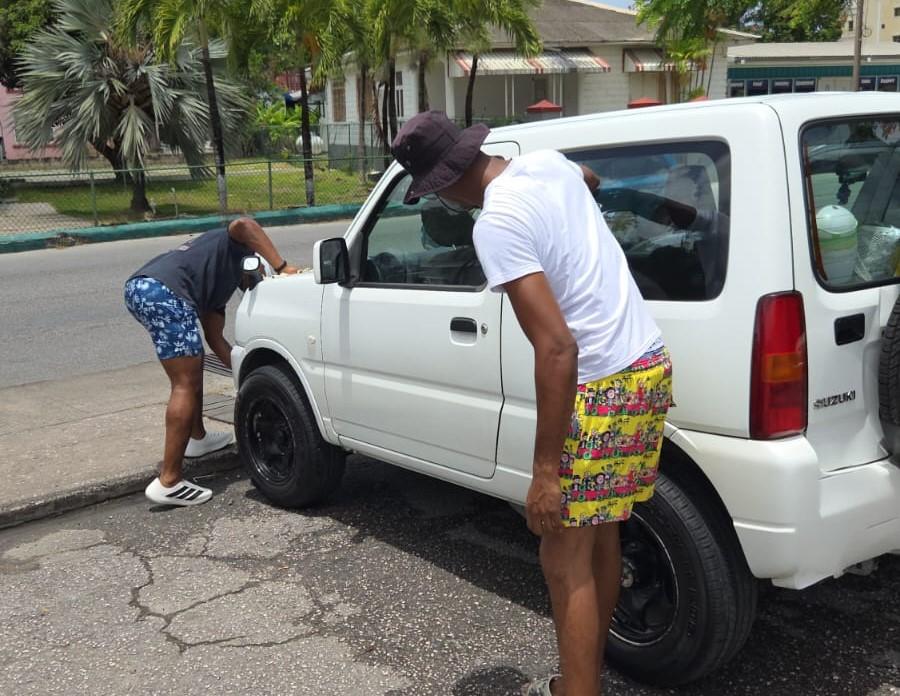
    On a lively Saturday in the coastal community of Worthing, Barbados, the Bajan Firefighters Network rolled out a creative new charity fundraiser that blended fun, practical service, and public good: a ‘sexy car wash’ designed to refill the organization’s coffers for its ongoing community-focused safety initiatives.

    Local firefighters and volunteer supporters set up their operation steps from the area’s post office, greeting motorists looking for a car deep clean while raising the critical donations the grassroots non-profit depends on to keep its programs running. Beyond washing vehicles, the event also doubled as a recruitment drive for the Barbados Builder Identifier, a new digital tool developed by the network to help first responders quickly and accurately locate homes calling for emergency assistance, cutting down response times in life-threatening situations.

    Krystal Penny Bowen, the network’s public relations officer and a long-time volunteer, explained that the lighthearted, accessible event grew out of a goal to rebuild in-person connections with local residents after the organization paused in-person fundraising events for a period. “Our charity has been serving Barbadian communities for several years, but we hadn’t hosted an in-person fundraising gathering in quite some time,” Bowen shared in an interview at the event. “We wanted something straightforward and useful that the public would actually engage with. People always need their cars washed, so it made perfect sense to bring together firefighters and volunteers to pull this off.”

    While the playful theme created a high-energy, upbeat atmosphere that drew crowds of locals to the site, the work behind the fundraiser is rooted in serious, life-saving public safety work. The Bajan Firefighters Network is entirely dependent on public donations to support its free community outreach programs, the most prominent of which is a free smoke alarm installation service for vulnerable residents. The group prioritizes installing and maintaining life-saving smoke alarms for low-income, elderly, and disabled Barbadians who often cannot afford the equipment or do not have anyone to help them install it properly. In addition to this core program, the network regularly delivers free fire safety educational workshops to schools, neighborhood groups, and community centers across the island, helping reduce the risk of preventable fire-related injuries and deaths.

    Bowen emphasized that all funds raised from the car wash event will go directly to program costs: the money will be used to purchase new smoke alarms for upcoming installation drives, fund future community outreach and education activities, and recognize the hard work of the organization’s volunteer members who give their time to keep communities safe.