分类: society

  • Royal Caribbean backs new farm to boost food security

    Royal Caribbean backs new farm to boost food security

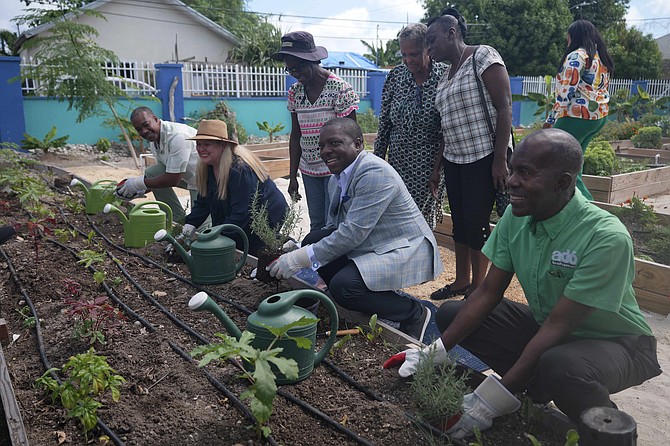
    A landmark community farming initiative, backed by major cruise line Royal Caribbean and the Bahamas Ministry of Agriculture, opened its doors to the public in Centreville on Wednesday, marking a key milestone in the country’s push to address local food insecurity and cut reliance on imported food products.

    The official launch was marked by a ceremonial ribbon-cutting, drawing a cross-section of attendees including senior government figures, local community organizers, and top executives from Royal Caribbean. The Royal Caribbean Group Foundation has anchored the project with a $75,000 total contribution, allocating $50,000 to cover initial site development and infrastructure costs, and an additional $25,000 earmarked for ongoing operational maintenance. Complementing this private sector support, Jomo Campbell, Minister of Agriculture and Marine Resources, announced the ministry would add a $10,000 cash grant alongside $5,000 in agricultural equipment vouchers redeemable through the ministry’s fish and farm store.

    Philip Smith, president of the Bahamas Agricultural Development Organization (ADO), explained that the Centreville site is the fifth community farm completed under a national strategic scheme that aims to roll out similar projects across all 41 of the country’s parliamentary constituencies. Under the initiative’s operational model, 70 percent of all fresh produce harvested from the farm will be distributed free of charge to low-income and food-insecure residents within the Centreville community. The remaining 30 percent will be sold to local restaurants, generating recurring revenue to cover long-term operating costs and keep the project self-sustaining.

    Smith’s vision for the project grew out of 15 years of experience leading the Bahamas Feeding Network, a regional hunger relief organization that distributes more than 5,000 prepared meals to vulnerable communities each week. Through that work, Smith has repeatedly witnessed the deep systemic gaps in local food access that leave thousands of Bahamians struggling to put nutritious food on the table. The community farm model, he says, is designed to transform the existing feeding network into a more self-sustaining system, while also shifting national consumption patterns toward locally grown agricultural products.

    Smith also highlighted Royal Caribbean’s long-standing commitment to hunger relief across the Bahamas, recalling past large-scale donations to the Bahamas Feeding Network, including a previous gift of two 40-foot shipping containers full of frozen meat that allowed the network to expand services to thousands of additional families. “It’s just been amazing,” Smith said of the company’s consistent support.

    Philip Simon, president of Royal Caribbean Bahamas, framed the farm project as a strategic investment in both community well-being and long-term national resilience. As global supply chain disruptions and climate change have pushed food security to the forefront of policy concerns for small island nations like the Bahamas, agricultural and sustainability projects have taken on new urgency, Simon explained. Beyond addressing immediate food access gaps, he noted the project also aims to reconnect young Bahamians to the country’s agricultural heritage and encourage the next generation to pursue careers in farming and community development.

    “At one point in our national story, farming and fishing were simply a way of life,” Simon said. “Families understood the value of working the land, growing food, and being able to provide not only for themselves but for others as well. So today we hope that we are planting seeds not only in the soil but in the minds of young people who may one day become farmers, entrepreneurs and leaders in our communities.”

    Minister Campbell echoed that sentiment, emphasizing that the new farm represents far more than a local food project—it is a critical step forward for national self-sufficiency, agricultural education, and inclusive economic development. “We are planting hope, self-sufficiency, education and sustainability for generations to come,” Campbell said. He added that the farm will serve as a hands-on educational space for local families and young people to learn core agricultural skills, while simultaneously expanding access to affordable fresh produce for all Centreville residents.
  • Dominican activists urge government action on femicides in Dominican Republic

    Dominican activists urge government action on femicides in Dominican Republic

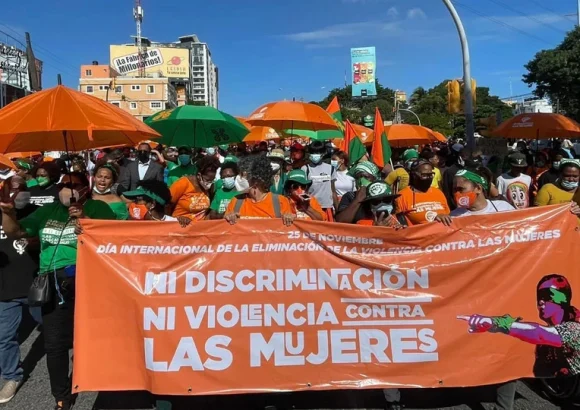
    In Santo Domingo, a broad coalition of civil society groups has launched a high-profile campaign pushing Dominican Republic authorities to label the ongoing crisis of femicide and gender-based violence as a formal national emergency. Spearheaded by the Coalition for Women’s Rights and Life, the movement has already garnered signatures from more than 80 organizations, alongside leading academics, grassroots activists, and ordinary concerned citizens. The push comes in response to alarming new data showing that at least 32 women have lost their lives to gender-motivated killings in just the first five months of 2026, a trend that has sparked widespread public outcry over systemic failures to protect women across the country.

    The official open letter at the heart of the campaign, titled “Not One Less! Women’s Lives Demand State, Justice and Education for Equality,” lays out the urgent need for coordinated, cross-government action to tackle what organizers frame as a deep-rooted systemic crisis, rather than a string of isolated events. To expand public participation and amplify pressure on decision-makers, the Coalition has launched a dedicated public portal at feminicidios.do, where any Dominican citizen can add their name in support of the demands.

    The document outlines a clear, multi-pronged policy agenda that goes far beyond a simple emergency declaration. Signatories are calling for the passage of a sweeping national law dedicated to preventing and penalizing all forms of violence against women, as well as independent, third-party audits of current response systems operated by the National Police and the Attorney General’s Office. Additional demands include harsher and more consistent prosecution of perpetrators, the immediate removal of any police or military personnel facing accusations of gender-based violence, a major expansion of accessible emergency shelters and long-term support programs for survivors, and the mandatory integration of gender equality education into national school curricula.

    In a statement accompanying the letter, Coalition leaders stressed that repeated femicides across the country cannot be dismissed as random, individual acts of violence. Instead, they argue, these deaths are the direct outcome of long-standing institutional failures to proactively prevent harm and provide effective protection for at-risk women. The campaign also addresses overlooked secondary harms of the crisis, calling for targeted, comprehensive support for children left orphaned by femicide killings, as well as a substantial increase in public funding for both the Ministry of Women and community-based violence prevention initiatives operating across all regions of the country.

    Organizers are continuing to ramp up outreach to recruit additional signatories, including more national organizations, professional associations, local community leaders, and everyday citizens. They emphasize that ending violence against women cannot be achieved through piecemeal actions; it requires a unified, nationwide response and sustained, long-term public policies centered on three core pillars: prevention, accessible justice, and consistent protection for all women.

  • Heavy rainfall causing havoc in sections of western Jamaica

    Heavy rainfall causing havoc in sections of western Jamaica

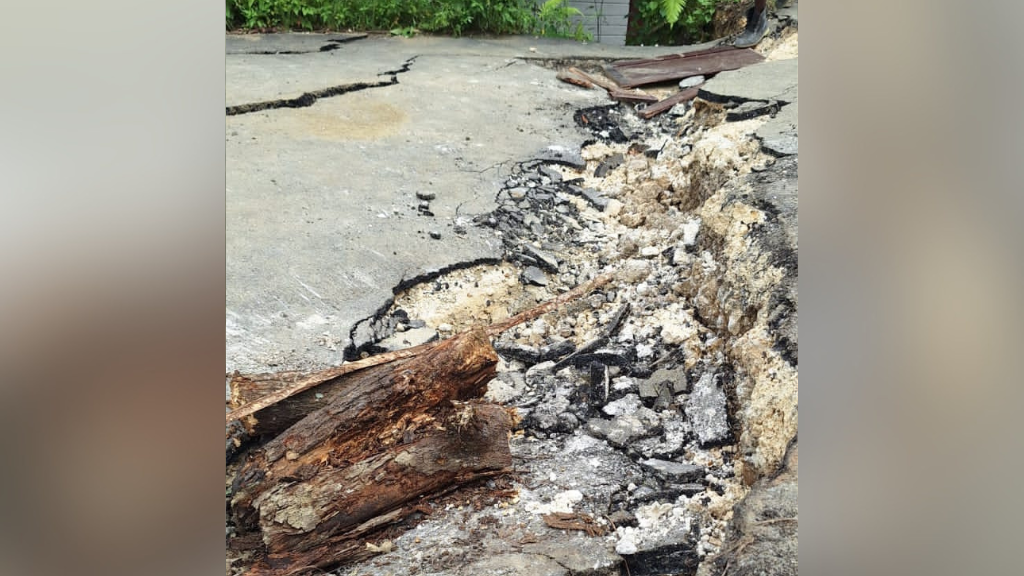
    Five consecutive days of intense downpours across large swathes of western Jamaica have left critical infrastructure damaged and communities grappling with widespread flooding, with a key inter-parish road now split completely in half by severe erosion. The collapsed stretch connects the Hanover communities of Kendall and Glasgow, prompting the National Works Agency (NWA) to launch an urgent damage assessment to determine the scope of repairs needed to restore the vital thoroughfare.

    Footage capturing the fractured roadway in Kendall, as well as submerged streets and properties across flood-hit Westmoreland, has spread rapidly across social media platforms, bringing the scale of the weather disruption into public view. While the road damage is extensive, NWA Western Region Community Relations Officer Janel Ricketts confirmed to local outlet Observer Online that the collapse does not present an immediate hazard to people traveling the area on foot.

    “Pedestrians are not in any danger here right now,” Ricketts explained. “But motorists who attempt to drive through the damaged stretch face a high risk of severe damage to their vehicles.” For drivers needing to travel between the two communities, officials have mapped a formal alternate route that runs through Caudwell, connecting Kingsvale to Prospect.

    The current wave of extreme rainfall is the second major disruption to hit western Jamaica’s transport network in less than a week. On Tuesday, overflow from the Riley River—also referred to as the Lucea West River— inundated the center of Lucea, leaving motorists traveling between the popular tourist hubs of Negril and Montego Bay stuck for hours before waters receded. By Wednesday and Thursday, flood warnings were issued across multiple communities in Westmoreland, including the parish capital Savanna-la-Mar.

    One Harmony Town, Savanna-la-Mar resident documented her flooded home in a viral social media video, blaming two days of repeated inundation by muddy floodwater on clogged, unmaintained local drains that could not channel excess rainwater away from residential areas. Ricketts noted that standing water remains on many secondary roads across western Jamaica as scattered rainfall continues, but added that no other major infrastructure failures have been reported as of Friday morning’s update. “At this time, there are no other major issues to report,” she assured the public.

  • Clampdown on roadside garages in Trelawny

    Clampdown on roadside garages in Trelawny

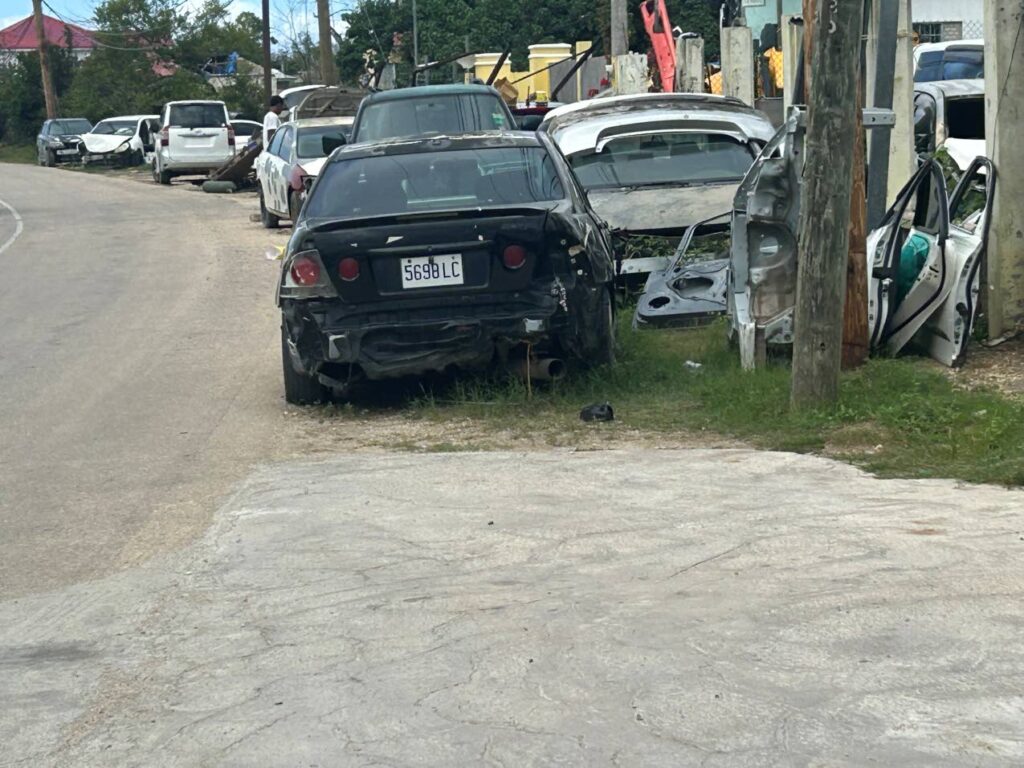
    FALMOUTH, Trelawny — Local municipal authorities in Jamaica’s Trelawny parish have stepped up enforcement against unregulated roadside garage operators that encroach on public roadways with vehicles under repair, with Falmouth’s mayor issuing a stark warning that non-compliant operators could have their abandoned or improperly parked vehicles hauled away by the National Solid Waste Management Authority (NSWMA).

    C Junior Gager, mayor of Falmouth, singled out a high-profile problematic operator based along Foreshore Road, a key entry corridor to the historic port town that has drawn consistent complaints from residents, business owners and visitors alike. Gager confirmed that the operator has already received two formal official notices to clear the road of parked service vehicles.

    The good news, Gager noted, is that the operator has begun to take steps toward compliance, with one side of the two-lane roadway now fully cleared of the parked vehicles that previously blocked through traffic and public parking spaces. Municipal works staff have been assigned to conduct constant monitoring of the site to prevent the encroachment from reoccurring, the mayor added, with regular on-site checks already underway to ensure full compliance is maintained.

    “We have tasked the superintendent of works with ongoing oversight of this area. As of this morning, he was on location confirming progress, because if full compliance is not achieved, we will be forced to implement direct enforcement action,” Gager explained in an interview.

    For local officials, the pileup of service vehicles along Foreshore Road is more than just an inconvenience: it is a public safety hazard and a major blight on the image of one of Jamaica’s most important historic tourist towns. Right after visitors pass the large “Welcome to Falmouth” sign marking the entrance to the town, they are immediately confronted by the line of partially disassembled vehicles lining both sides of the road, Gager said.

    Beyond the aesthetic damage to the town’s image, the encroachment has created a critical parking shortage for local residents and nearby business operators, who have flooded the municipal corporation with repeated complaints about the issue. The corporation’s current enforcement push will see officials continue issuing formal notices to all roadside operators that are illegally occupying public roadways, Gager confirmed.

    “To any operator that is storing vehicles on public roads: be on notice. The Trelawny Municipal Corporation is cracking down. We will be issuing formal notices, this illegal activity will not be tolerated. If you fail to comply with our requests, we will bring NSWMA trucks to remove your vehicles and take them directly to the municipal dump,” Gager warned.

    The mayor emphasized that the municipal government holds a core responsibility to keep public roadways safe for all users, including motorists and pedestrians. When vehicles are parked along the side of travel lanes, he explained, drivers are forced to swerve into oncoming traffic to pass, creating a high risk of head-on collisions and other serious accidents.

    Gager’s latest warning comes on the heels of a broader enforcement sweep recently carried out by the TMC in the upscale gated community of Florence Hall. During that operation, officials served notices to multiple property owners for violating local building codes, including one property owner who was storing several old, derelict vehicles on their residential land.

    In that Florence Hall case, Gager said officials are preparing to issue a second formal notice, and have ordered the property owner to clear the land and bring the site into compliance with local property maintenance regulations.

    The current crackdown is part of a broader municipal push to clean up Falmouth, improve public safety, and preserve the town’s historic character as it attracts increasing numbers of tourists and new business investment.

  • ‘Mad Rapper’ wanted for questioning

    ‘Mad Rapper’ wanted for questioning

    Law enforcement authorities in Oistins are appealing for help from the general public to track down a wanted man who is currently a person of interest in multiple serious criminal investigations. The suspect, Terry Corie Alexandra Waldron, who is also widely known by his alias ‘Mad Rapper’, is being sought for official questioning related to ongoing serious criminal matters.

    Unlike most residents, Waldron does not maintain a fixed permanent address, meaning he moves regularly between temporary locations, making it harder for investigators to pin down his current location. Police have released a detailed physical description to help members of the public identify him correctly: he stands approximately 5 feet 9 inches tall, has a slim build, and a dark complexion. His most notable features include his signature dreadlocks hairstyle and a series of one-of-a-kind tattoos that mark his body. These distinctive markings include a puzzle-piece tattoo inked directly above his left eye, the name ‘ERICA’ tattooed on his left wrist, and the word ‘OUTLAW’ etched onto his right forearm.

    Official police guidance says that Waldron should voluntarily surrender himself to the Criminal Investigations Department (South), which is based at the Oistins Police Station. Authorities have also stated that he is permitted to bring a legal representative of his own choosing when he turns himself in, in line with standard legal procedure.

    Investigators are urging anyone who has spotted Waldron recently, or has any information that could lead to his arrest, to come forward immediately with details. There are multiple contact channels available for tip-offs: members of the public can reach the CID South team directly on two dedicated phone lines, 418-2608 and 418-2612, call the 24/7 police emergency line at 211 for urgent matters, contact the anonymous Crime Stoppers hotline at 1-800-8477, or visit any local police station in person to share information.

  • What Saint Lucia’s new youth policy promises young people

    What Saint Lucia’s new youth policy promises young people

    After nearly four decades of incremental development, Saint Lucia’s long-awaited 2025–2030 National Youth Policy has officially come into effect, with government officials and cross-sector partners now moving forward to turn the framework’s goals into tangible improvements for young people across the island. This new policy marks the culmination of efforts that first began in 1987, when the government first explored a dedicated national strategy for youth development, and advanced with an initial draft completed in 2000. The current administration has made youth empowerment a core policy priority, formally approving and launching the full policy framework in 2025.

    Speaking to local outlet St Lucia Times at the official launch held at Derek Walcott Square, Youth Development Officer Jonathan Chalon emphasized that the policy is far more than a static policy document—it is a call for collective, cross-agency action to transform young lives for the better. “We’re meeting with all the agencies, both government bodies and non-governmental organizations, so we can map out clear roles to ensure this policy is brought to action,” Chalon explained. “It’s not just a document, but collective action to really change the lives of young people for the better.”

    The National Youth Policy is structured around eight core pillars that address the full scope of young people’s lives in Saint Lucia: education and lifelong learning, economic participation, health and well-being, peace and security, democracy and citizenship, information and communication technologies (ICT) and mass media, climate change and disaster risk reduction, and the cross-sector mainstreaming of youth priorities across all levels of government.

    Each pillar includes concrete strategies to meet its goals: for education, the policy expands access to both formal schooling and non-formal learning opportunities like mentorship and workshops, with a specific focus on growing technical and vocational education and training (TVET) programs, increasing scholarship access, and strengthening digital literacy. For economic participation, the framework prioritizes youth employment and entrepreneurship through startup grants, job placement support, and targeted entrepreneurial training. It also expands access to mental health and reproductive health services, promotes safe, inclusive communities through violence prevention programming, creates formal pathways for youth participation in governance, builds digital skills for the modern economy, supports youth-led climate action, and ensures marginalized youth groups are centered in all development planning.

    TVET has emerged as a key pillar for delivering on the policy’s promises, addressing a longstanding gap in the island’s education system that left many school leavers unprepared for the workforce. Shanez Narcisse-Clipa, TVET Officer within the Ministry of Education, explained that for years, students completing secondary education with Caribbean Examinations Council (CXC) qualifications often lacked the hands-on skills needed to enter the workforce immediately. TVET programs solve this gap by offering industry-recognized Caribbean Vocational Qualifications (CVQs) alongside real-world work experience in high-demand fields ranging from graphic design and traditional folk dance to carpentry, construction, crop production, and furniture manufacturing.

    While some critics have questioned whether introducing vocational training at the secondary level is too early, Narcisse-Clipa noted that the new policy will expand TVET options dramatically, building on the foundation of new TVET institutions launched across the island in 2023. These programs are designed to equip young people with skills that address critical labor gaps both across the Caribbean region and in international markets, creating meaningful economic opportunities for youth who may not pursue traditional university pathways.

    At the launch, young educator Kimdell Eugene highlighted one emerging priority that he hopes the policy will address more explicitly in the implementation phase: public awareness of the opportunities and risks posed by artificial intelligence for young Saint Lucians. Eugene noted that while he had not yet fully reviewed the full policy text, he sees widespread AI literacy as an urgent unmet need. “I think it’s important that more people are sensitised on the challenges that artificial intelligence might pose for students and for young people in general,” he said. “What are the disadvantages, the advantages, the bigger picture, because I can see how it could lead young people down a rabbit hole.”

    To ensure the policy stays aligned with its core goals and adapts to evolving youth needs, Chalon confirmed that a formal monitoring and evaluation framework is already in place, with regional support from the Caribbean Community (CARICOM), which has deployed a technical team to assist with implementation tracking. Cross-sector collaboration is central to this monitoring strategy, with officials working to coordinate youth services across every government department to avoid duplication and ensure all youth can access the support they need. The ultimate goal, Chalon said, is simple: to guarantee every young person in Saint Lucia has equal access to the opportunities and resources they need to grow, learn, achieve their goals, and transition into healthy, fulfilled adulthood.

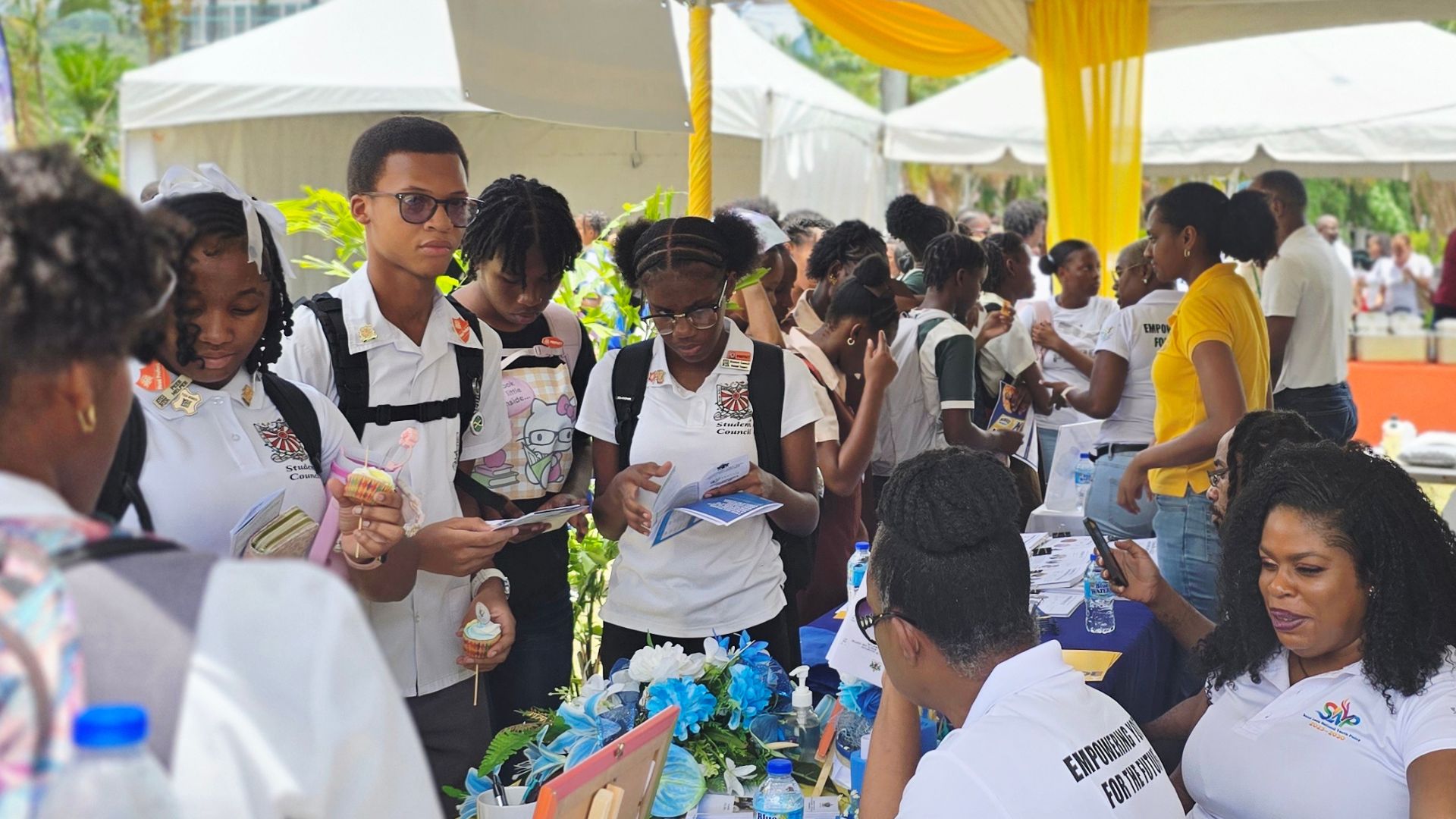
    The official launch event drew participation from government officials, students from local institutions including St. Mary’s College, and civil society stakeholders, with Ministry of Education Minister Danny Butcher joining students for the official kickoff. Department of Sustainable Development staff also briefed attending students on the policy’s climate and environmental components during the event.

  • Police obtain video of suspect vehicle in Angelo probe

    Police obtain video of suspect vehicle in Angelo probe

    The 11-day search for a missing two-year-old boy from Tobago has entered a critical phase, with investigators securing new video evidence and a shocking confession that has left a small coastal community reeling in grief.

    Angelo Tobias-Plaza, who was last seen from his home in the village of Goodwood on the night of May 11, remains unfound as law enforcement and volunteer search teams comb the island’s coastline and surrounding areas for answers. In the latest development in the high-profile case, investigators have obtained closed-circuit television footage collected from a private Goodwood residence, which they believe could shed new light on the movements of a suspect tied to the toddler’s disappearance. The footage captures a vehicle that authorities suspect was used by the person of interest in the hours immediately surrounding Angelo’s vanishing, and forensic teams are now meticulously reviewing the recording to map out movement patterns in and around the village on that fateful night.

    As the investigation advances, a key person connected to the case has returned to the island to cooperate with authorities. Angelo’s landlady, who was traveling abroad in Canada when the child went missing, flew back to Tobago overnight following updates on the probe. She is scheduled to sit down with investigators this week to share details about the property and any connections to persons of interest that may assist the inquiry.

    The case took a dramatic, chilling turn over the weekend, when one of seven detainees held in connection with the disappearance allegedly confessed to killing the toddler and disposing of his body in the Caribbean Sea off Goodwood Bay. According to official police sources, the suspect told interrogators that he strangled Angelo before dumping the small child’s remains in the nearby coastal waters.

    Following the alleged confession, search teams immediately redeployed to Goodwood Bay, and investigators returned to the rented Goodwood home shared by Angelo’s mother Kalifa Tobias and stepfather at Cambridge Trace. Authorities had planned to bring the self-confessed suspect out to map out key locations tied to the crime, but the plan was derailed after the suspect reported feeling unwell. He was quickly transported to the Accident and Emergency Department of Scarborough General Hospital for medical evaluation and treatment, halting the on-site location identification process.

    To date, seven people—three women and four men—remain in police custody as investigators piece together what happened to the toddler. Over the weekend, Tobias was also brought back to the family’s rented property by investigators; dressed in a standard crime scene protective suit, she walked officers through key areas of the home and surrounding land before being escorted from the premises.

    Since Angelo was reported missing 11 days ago, large-scale search operations have been carried out across multiple sites in Tobago, including Goodwood Bay, the Studley Park Landfill, and Pig Farm Road in nearby Goldsborough. Teams have also followed up on every tip from the public: just days ago, a local resident reported spotting a suspicious black bag wedged in a cliff face off Pig Farm Road. Members of the Hunters Search and Rescue Team, a volunteer group that has supported the probe from the start, abseiled down the precipice to retrieve the bag, only to find its contents had no connection to the missing toddler case.

    The Trinidad and Tobago Police Service (TTPS) has confirmed that the investigation has reached a “critical turn”, with multiple specialized units working around the clock to secure a conclusive outcome. Assistant Commissioner of Police Rishi Singh said in a recent statement that the entire investigative team remains committed to reaching “a clear and definitive outcome” for the family and the community. The sprawling probe draws resources from across the TTPS, including the Special Victims Department, Tobago Division Gang Unit, Homicide Bureau of Investigations, Tobago Divisional Task Force, Canine Unit, and Criminal Records Office, with additional logistical and operational support from the Tobago Emergency Management Agency and the Hunters Search and Rescue Team. Officials have noted that the investigation remains sensitive and ongoing, declining to share further details that could compromise the process.

    As the search drags on without finding the toddler, the tight-knit community of Goodwood and surrounding areas is being consumed by anxiety and collective grief. Local residents have continued to hold public prayer vigils this week, coming together to pray for answers and comfort for Angelo’s family.

    Chandra Jerry, a resident of nearby Pembroke, broke down in tears while speaking to reporters at Goodwood Bay this week. “I want to see the baby come out so that I could feel good in my spirit,” she said. “We really want answers to this, and the only answer is to see the baby alive or dead to give us comfort.”

    Eighty-seven-year-old Agnes Alleyne, a lifelong Goodwood resident, said the community would take years to recover from the shocking tragedy. “It’s a very sad situation right now because I have never seen such a thing in my life,” Alleyne said. “When I heard that this boy confess, it hurt me very much.” As of last night, Angelo Tobias-Plaza has still not been located, and search operations are set to resume at first light this week.

  • Govt urges deeper embrace of African heritage to strengthen national identity

    Govt urges deeper embrace of African heritage to strengthen national identity

    At the opening of a vibrant Africa Day cultural celebration hosted at Solidarity House, headquarters of the Barbados Workers Union, a top Barbadian culture leader has issued a renewed call for intensified efforts to help the country’s population — especially younger generations — build a more profound connection to their African ancestral roots. Michelle Maynard, Deputy Permanent Secretary in the Ministry of Culture, delivered the address on Wednesday on behalf of Trevor Prescod, Minister in the Prime Minister’s Office with oversight of Pan-African Affairs and Heritage.

    During her remarks, Maynard emphasized that the Barbadian government has long centered culture and heritage as foundational pillars for advancing public education, strengthening national cohesion, and driving inclusive national development, rather than framing these areas as mere nostalgic reflections on the past. “As a government, we recognize that culture and heritage are not simply about the past, they are powerful tools for education, national development, unity, and transformation,” she stated in her opening address.

    To advance this goal, Maynard outlined that the government is rolling out a range of targeted initiatives to expand access to ancestral education for young Barbadians. These include annual Africa Day commemorations, the ongoing Season of Emancipation programming, academic education partnerships, and cross-cultural exchange programs, all designed to create accessible opportunities for youth to explore their ancestry and clarify their personal and national identity.

    “Our overarching goal is to build a country that stands confident in its heritage and is unapologetically proud of its people,” Maynard told attendees of the cultural extravaganza. She went on to reframe Africa Day as far more than a one-off cultural festival, positioning the annual observance as a critical collective reminder of the origins of the Barbadian people, the centuries of struggle endured by their African ancestors, the extraordinary resilience those ancestors demonstrated, and the enduring cultural legacy they passed down to modern generations.

    “Every core part of our national life bears the unique, indelible imprint of Africa,” Maynard explained. “The rhythms of our native music, the distinct flavor of our traditional cuisine, the extraordinary resilience that defines our people, our shared spirituality, our colloquial language, our vibrant artwork, and our most cherished community traditions all trace back directly to African roots.”

    She stressed that this deep ancestral connection makes intentional heritage education an urgent priority for Barbados, particularly for young people who have grown up exposed to harmful narratives that misrepresent African cultural practices. “Too often, unfair negative stereotypes are attached to core parts of our culture, whether it be our traditional hairstyles, our music, our food, our language, or our art,” she noted. “Africa Day gives us an important annual opportunity to present a true, powerful portrait of African culture — one that is rich, creative, vibrant, and full of life.”

    Maynard added that accurate, accessible education about African history and heritage is a transformative force that can reshape how Barbadians view themselves and one another. “I believe strongly that our young people must not only know the full history of their roots, but also feel deep pride in that history,” she said. “Understanding where we come from gives us collective confidence, clear direction, and a deeper appreciation for who we are as a people.”

    “When we learn the unfiltered truth about Africa and its countless invaluable contributions to global civilization, we begin to step away from harmful stereotypes and outdated misconceptions, and move toward a greater sense of national pride, mutual respect, and cross-cultural understanding,” she concluded.

  • OPINION: Selective Outrage

    OPINION: Selective Outrage

    Selective outrage is one of the most telling cultural markers a society can display. Unlike unfiltered anger, which reveals what issues genuinely harm communities, targeted, selective outrage exposes which groups people consider acceptable to suffer in silence. This stark double standard was laid bare during a casual conversation at an Antiguan supermarket recently, sparking a broader, long-uncomfortable conversation about accountability, gender equality, and the need for mandatory DNA paternity testing at birth.

    Two women waiting near a supermarket security guard were caught up in a furious discussion of a recent horrific allegation: a local man accused of raping a 13-year-old girl. Their anger was unbridled, visceral, and deeply personal, and on this point, widespread public agreement aligns with their fury. Any person who abuses a child deserves the full weight of legal punishment and unreserved societal condemnation; no civilized community can tolerate child predators.

    But when a simple question cut into the conversation — what consequences should women who commit paternity fraud face? — the fiery moral outrage evaporated instantly. Instead of firm calls for accountability, there was only awkward silence, shifting feet, and uncomfortable muttering. After a long pause, one woman finally conceded: “Yeah… them women wicked too.” That one small word “too” exposes the entire fractured moral framework modern society has built around gender and responsibility.

    When a man commits an act of sexual violence that destroys a child’s life, the public rightly demands harsh justice. But when a woman knowingly misrepresents paternity, cons an innocent man into years of emotional and financial investment, robs a child of their right to know their biological identity, and even weaponizes the court system against the misled man? Suddenly, society pivots to vague, gentle equivocation. The righteous fury vanishes.

    This double standard exists because modern culture has been structured around one unspoken rule: men are held to total accountability, while women are granted broad exemption from consequences for gendered deception. An innocent man can lose 18 years of income, ruin his mental health, damage his prospects for future relationships with his own biological children, and see his reputation destroyed all because of a deliberate lie — and still, most people will dismiss the harm as a “mistake,” a “misunderstanding,” or a private “woman’s issue” no one else should meddle in. Imagine saying the same casual dismissal to a rape victim: “Well, these things happen.” No one would dare utter that. Yet that is exactly the line misled paternity fraud victims hear every single time they speak up about their harm.

    After the supermarket conversation, an elderly local woman who sensed the author’s distress stopped to talk. When asked directly what she thought of mandatory DNA testing for all newborns in Antigua, she answered without a single moment of hesitation: yes. She did not rely on viral internet slogans, ideological talking points, or partisan gender rhetoric — she spoke from decades of lived observation, and from personal experience.

    She contrasted the stable traditional values she grew up with against modern relationship norms, describing a shifting culture where loyalty is no longer expected, accountability is up for negotiation, and transactional relationships are normalized. She painted a picture of women treating men as rotating emotional and financial ATMs, one for paying bills, one for fun, one for security, one for companionship. But her commentary quickly turned personal: her own son, separated from his wife after years of marriage, has paid thousands in child support for years, while the whole family quietly questions whether the child is biologically his. He wants a paternity test, but the child’s mother has refused to allow one.

    That one story encapsulates the entire crisis. If paternity is already certain, what is there to fear from verification? It is a question society has danced around for decades, and it reaches far beyond the online gender wars that dominate social media. Increasingly, older, traditional women — who are not part of online manosphere or feminist movements — are seeing this harm firsthand. They watch their sons, brothers, nephews, and friends trapped in emotional limbo, where even asking for proof of paternity is labeled an untrustworthy betrayal. And many of these women are arriving at the same quiet conclusion: the truth should not require anyone’s permission to come out.

    The most striking line from the conversation was the elderly woman’s quiet admission: “I feel sorry for the men in Antigua.” That line carries extra weight because it did not come from an angry online pundit or a bitter ex-partner. It came from a lifelong Antiguan woman who has watched the country’s social fabric fray from stability into uncertainty.

    This is where the conversation becomes urgent: mandatory DNA testing at birth is not an anti-woman policy. It is a pro-truth policy. Hospitals already verify every newborn’s blood type, screen for congenital health conditions, confirm identity, and log vaccinations because certainty matters for public order and individual well-being. Yet the single most life-altering legal and emotional commitment a man can make — fatherhood — is still almost entirely built on nothing but trust. That is a systemic failure.

    If paternity DNA testing were automatic for every birth, the benefits are clear: honest women lose absolutely nothing, children gain the permanent security of knowing their biological identity, innocent men are protected from lifelong deception, biological fathers are held to the accountability they deserve, family courts get clear accurate evidence to work from, and emotional manipulation drops dramatically overnight. The only thing that disappears is deception. That is precisely why the idea makes so many people uncomfortable: it would expose how many modern relationships are held together not by truth, but by convenient, socially protected silence.

    None of this diminishes the unspeakable harm of child abuse. The rape of a minor is an unforgivable evil, and it must always be treated as such. But society can no longer pretend that justice only matters when men are the perpetrators. Real equality cannot mean equal rights for women but unequal accountability between genders. You cannot scream “believe all women” while simultaneously refusing any verification of paternity claims. You cannot demand that men step up and accept full responsibility for fatherhood, while treating female paternity deception as a socially acceptable, protected secret. And you absolutely cannot build a healthy, just society on a foundation of selective morality.

    The truth should never be labeled offensive. DNA does not hate women. A test kit is not misogyny. Factual certainty is not sexism. If Antigua is truly committed to protecting families, protecting children, and upholding equal justice for all, mandatory newborn paternity DNA testing should not be a controversial proposal. It should already be the law.

    To that honest elderly woman outside the supermarket: thank you for speaking unvarnished truth. That kind of candor is vanishingly rare today, when so many people prefer to stay safely inside ideological echo chambers where truth is filtered through social approval. She spoke plainly, without fear of backlash, and regardless of whether people agree with her conclusion, modern society desperately needs more of that kind of honesty.

  • Florida Man Seeks Help Finding Former Antigua Classmate From NYC Technical College

    Florida Man Seeks Help Finding Former Antigua Classmate From NYC Technical College

    Decades after walking across the graduation stage together, a former New York City Technical College student is turning to the public for urgent help reconnecting with a long-lost classmate. Gosnel Waugh, who goes by the nickname Gus, is searching for Winston, a friend from his college days who hails from the Caribbean nation of Antigua.

    The pair attended the same Brooklyn-based technical institution and graduated together in the 1990s, but over the years, contact between the two former classmates faded. Now, Waugh is reaching out to community members, fellow alumni, and anyone with information to help him get back in touch with Winston urgently, though he has not shared the specific reason for his request.

    Waugh has extended his gratitude in advance for any leads or assistance the public can provide in his search. Alumni networks from the 1990s cohort at the college and community groups connected to Antiguan communities in New York are being urged to check their records and connections to help facilitate this reunion.