分类: society

  • 7 cops held over  missing guns, ammo

    7 cops held over missing guns, ammo

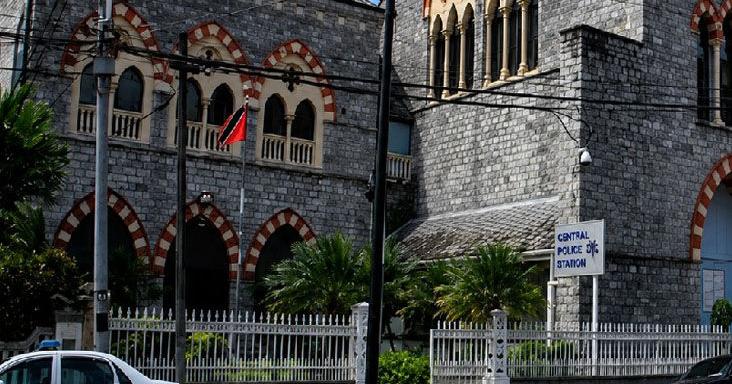
    A major internal law enforcement investigation unfolding in Trinidad and Tobago’s capital has resulted in the detention of seven police officers, all linked to the mysterious disappearance of three Glock pistols, three firearm magazines and 45 rounds of 9mm ammunition from Port of Spain’s Central Police Station. Senior law enforcement officials confirmed Wednesday that two officers were taken into custody late Wednesday as the probe into the missing weapons intensified, with the remaining five arrested between Wednesday evening and Thursday afternoon.

    Authorities have planned to search the residential properties of all seven detained officers, though as of late Thursday, senior leaders had not confirmed whether those searches had been completed. Police spokespersons have also declined to release any details on the ranks or ages of the seven officers in custody, noting only that all suspects are currently undergoing questioning as a standard part of the investigative process.

    The missing firearms and ammunition were originally deposited at the Central Police Station for secure storage by Port of Spain Municipal Police officers at 2:47 p.m. on August 10. Just under 13 hours later, at 3:40 a.m. on August 11, a routine inventory check revealed the cache of weapons was gone, and an official investigation was launched immediately.

    Beyond the ongoing criminal probe, the incident has sparked growing friction between Port of Spain Municipal Police and Central Police Station personnel over the current protocols for storing deposited firearms. Municipal police sources told local media outlet the Express that officers attempting to retrieve weapons from the Central Police Station on Thursday faced delays of up to two hours, even for routine processes such as getting pocket diaries signed to confirm weapon collection. These delays are cutting into active patrol time, sources said, leaving municipal officers spending more time navigating administrative holdups than serving communities on city streets, and turning the storage arrangement into a persistent source of frustration for frontline personnel.

    This latest weapons disappearance comes less than four months after a far deadlier incident at another Trinidad and Tobago police station: the murder of acting corporal Anuska Eversley and the theft of a large cache of firearms from the San Fernando Municipal Police Station. Eversley, a 42-year-old mother of three, was found dead at the King’s Wharf station on Lady Hailes Avenue. A post-mortem examination confirmed she died after being beaten and strangled.

    Three people – municipal police officer Jivan “Bigs” Cooper, construction worker Kwame Arnold, and scrap iron dealer Nicholas “Nico” Ramdass – have been charged with Eversley’s murder, as well as firearms trafficking connected to the weapons and ammunition stolen from the station’s armoury. Four municipal officers who were suspended during the early phase of that investigation have since returned to active duty, though one superintendent remains suspended pending the outcome of ongoing probe work.

    Back in May, Police Commissioner Allister Guevarro announced that an Interpol Red Notice had been issued for a fourth suspect in Eversley’s murder, who investigators believe fled the country as the case unfolded. At that time, Guevarro also noted that a full firearms audit of the weapons stolen from the San Fernando station was still ongoing, describing the effort as a massive, large-scale project carried out by a dedicated team of officers. He confirmed that the audit was roughly 50 to 55% complete as of mid-May, after earlier police reports suggested approximately 123 firearms had been taken from the station armoury. As of May 21, Guevarro added, Trinidad and Tobago Police Service (TTPS) personnel had recovered 38 pistols, four shotguns, one MPX sub-machine gun, one revolver and more than 900 rounds of ammunition, most found in and around the Claxton Bay area. Many stolen weapons remain unaccounted for, however, leaving the investigation open.


  • ‘Grande’ mother ambushed, shot dead

    ‘Grande’ mother ambushed, shot dead

    A senseless act of violence has cut short the life of a young mother in northeast Trinidad, leaving her community reeling and law enforcement searching for answers. On a routine weekday morning yesterday, 30-year-old Shennel Lewis left her Sangre Grande residence, intending to catch a ride to her workplace – what unfolded minutes later was a targeted attack that left her dead at the scene.

    According to local police reports, the tragedy unfolded shortly before 10 a.m. Lewis, a lifelong resident of the Brooklyn Settlement’s Bridge Road neighborhood, was walking toward McGillvary Road to access public transit. Her own sport utility vehicle was in the shop for repairs that morning, forcing her to make the trip on foot instead of driving herself.

    As she reached the street corner, a white Nissan Tiida pulled up alongside her. A male suspect stepped out of the car, drew a hidden firearm, and fired two shots at Lewis at close range before quickly getting back into the vehicle and fleeing the area. Lewis collapsed to the pavement immediately after the shooting and was pronounced dead at the scene.

    Neighbors and family members who heard the gunfire rushed to the site within seconds and contacted police emergency services. Officers from the Sangre Grande Police Department and a medical ambulance arrived minutes later, but there was nothing medical personnel could do to revive her.

    Soon after the shooting, investigators from the Region Two Homicide Bureau and the Crime Scene Unit were dispatched to process the scene and collect forensic evidence. As of yesterday evening, law enforcement officials confirmed they have not yet identified a clear motive for the killing, nor have they announced any suspects in the case.

    When local media outlet Trinidad Express visited Lewis’ family home yesterday afternoon, grieving relatives had already gathered to mourn the loss. The family initially declined to comment on the shooting, but roughly 15 minutes later, a man identifying himself as Lewis’ uncle spoke on behalf of the family to share details about her life.

    Lewis was a devoted mother to one child, and held a college degree in fitness education, her uncle shared. “She was a very nice, educated woman who had her whole life ahead of her. A very good person,” he said, adding that she was born and raised in the Sangre Grande area and had never given his family any reason to expect violence would find her. He also confirmed he did not have details on her specific employer at the time of her death.

    This latest homicide pushes the total murder toll across Trinidad and Tobago for the current year to 229 as of last night. By comparison, the murder count at the same point last year stood at 234, marking a small year-over-year decrease in total homicides despite the high number of deadly violence incidents recorded this year.

  • PSA tells WASA workers: No work ‘as usual’ over stalled wage talks

    PSA tells WASA workers: No work ‘as usual’ over stalled wage talks

    A long-running labor dispute at Trinidad and Tobago’s Water and Sewerage Authority (WASA) has escalated this week, with the Public Services Association (PSA) mandating that utility workers halt business-as-usual operations until management progresses the union’s counter-proposals through the approval pipeline. The union blames WASA’s human resources director for a seven-month deadlock that has put overdue salary settlements at risk of further delay.

    PSA President Felisha Thomas told reporters on Tuesday that union representatives and WASA workers gathered at the authority’s St Joseph Sports Club to await action from WASA’s board of directors, which must sign off on the counter-proposals before they can be forwarded to the Ministry of Finance for final review.

    The current standoff is rooted in years of back-and-forth negotiations over unpaid salary arrears for public servants covering two periods: 2014–2016 and 2017–2019. Under the established negotiation process, WASA’s HR director is tasked with drafting a formal submission for the WASA board, which then sends the approved counter-proposals to the Human Resources Advisory Committee before transmission to the Finance Ministry. Thomas confirmed that no progress has been made on this internal step since January.

    “From January to the present, they have not made any submissions in that phase,” Thomas said in an interview with TV6 News. “In particular, the director of HR, who’s charged with the responsibility to move the negotiations from around the table to the board so that it can be transmitted to the ministry, she has not so much as prepared a note to the Human Resources Advisory Committee to advance the counter-proposals on behalf of WASA.”

    In response to the prolonged inaction, the union issued a formal mandate that workers will not continue operating under normal work conditions until the full internal and external approval process for the counter-proposals is complete. Thomas called on WASA board members to attend the St Joseph Sports Club in person to approve the required documentation and get the process moving again.

    Thomas also issued a stark warning that additional delays could push the final salary settlement back by another full year, citing comments from Finance Minister Davendranath Tancoo regarding negotiation timelines tied to the upcoming mid-year budget review. Seven months of inaction since the initial counter-proposals were tabled, she said, is an unacceptable outcome for workers who have waited years for their owed arrears.

    “These negotiations, these submissions were made since January. We are in August, and it is unacceptable for the director of HR to say that she has not done this,” Thomas added, stressing that urgent management action is required to prevent further hold-ups to a final settlement.

    When pressed by reporters on the perceived conflict of serving as a labor representative while also holding positions on government-appointed state boards, Thomas pushed back on the framing of the question. “I am glad you asked that question. I sit on a State board as labour, and every single situation, I represent,” she said.

    The current escalation comes three months after Public Utilities Minister Barry Padarath told Parliament he had ordered WASA management to resume wage negotiations with the PSA, at which time he described the union as a valued partner of the current government.

    In the wake of the union’s announcement, social media circulated claims that WASA workers had staged a lunchtime protest outside the authority’s St Joseph Public Education Centre after negotiations broke down, with a video posted to CNC3’s social platforms amplifying the narrative. But WASA’s Corporate Communications Manager Kristy Ramnarine refuted the protest claims in a telephone interview with the *Express*, clarifying the sequence of events that unfolded on Tuesday.

    Ramnarine explained that PSA members were invited to gather at the Public Education Centre to receive an update on the status of negotiations. Following that briefing, the union and management teams walked together to the nearby St Joseph Sports Club to continue ongoing discussions, contradicting claims that an organized protest had taken place.

  • TOYP 2026 Competition : Registrations covered, the Ten Outstanding Young Persons

    TOYP 2026 Competition : Registrations covered, the Ten Outstanding Young Persons

    Junior Chamber International Haiti (JCI Haiti) has launched the 2026 edition of its Ten Outstanding Young Persons (TOYP) competition, a flagship initiative designed to celebrate and elevate young Haitians between the ages of 18 and 40 who have distinguished themselves through extraordinary accomplishments, bold leadership, and meaningful, community-focused contributions to national progress.

  • Trio arrested in Issano for alleged armed robbery; gun, ammo seized

    Trio arrested in Issano for alleged armed robbery; gun, ammo seized

    On Thursday, August 13, 2026, Guyanese law enforcement announced the arrest of three gold miners linked to an alleged armed robbery and brutal assault on a fellow miner in the remote Middle Mazaruni River area. The incident unfolded in the early hours of Thursday at an establishment near 14 Miles, Issano Landing, where the 30-year-old victim, a resident of St. Ignatius village in central Rupununi, was attacked just after 3 a.m.

    According to official statements from the Guyana Police Force, the attackers robbed the victim of more than 130,000 Guyanese dollars before assaulting him and fleeing the scene on a motorcycle. Investigators quickly launched a manhunt and first took two suspects—aged 27 and 49, with residences in Craig, East Bank Demerara and West Ruimveldt, Georgetown respectively—into custody.

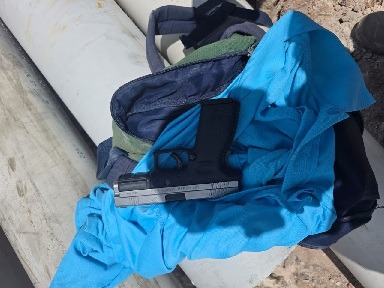
    Follow-up investigative work led officers to a secondary location in the region, where they recovered a loaded Glock handgun, complete with a ammunition magazine and three live rounds. A third suspect, a 32-year-old gold miner from Golden Grove on East Coast Demerara, was arrested in connection with the seized illegal firearm. All recovered weaponry has been secured by authorities for forensic ballistics testing.

    The victim told investigators that at least one of the three assailants was openly carrying the handgun during the robbery, and that multiple shots were fired during the attack. First responders located the injured man shortly after the incident and transported him to Mahdia Regional Hospital for urgent care. As of the latest police update, the victim remains hospitalized in serious but stable condition.

    Local law enforcement has not yet announced formal charges, and investigations into the incident are still ongoing.

  • Deadly Stabbing at Ranguana Caye Under Investigation

    Deadly Stabbing at Ranguana Caye Under Investigation

    On a Wednesday fishing excursion off the coast of Belize at Ranguana Caye, a routine work trip ended in sudden tragedy, leaving one experienced fisherman dead and another hospitalized, with conflicting narratives from law enforcement and the victim’s family clouding the early investigation. The deceased has been identified as 35-year-old Jose Arteaga, a long-time fisherman from Belize City, while his 33-year-old relative Marvin Arteaga remains in medical care following the incident.

    Authorities with Belize’s law enforcement have stated that the fatal violence erupted after a verbal altercation broke out between several fishermen on board the working vessel. Following the attack, officers have taken a 33-year-old fisherman into custody for questioning as the prime suspect in the case. However, the Arteaga family is pushing back against this official account, offering a starkly different version of the events that unfolded on the boat that day.

    In an exclusive interview with local outlet News Five, Arteaga’s niece shared the family’s understanding of what led to the killing, disputing claims that any pre-existing argument or conflict preceded the attack. According to the niece, who recounted accounts from the other 13 crew members on the vessel, the suspect was intoxicated at the time of the attack, and there was no tension between the men on the trip. All crew members had been in good spirits, she said, as they went about their daily fishing work.

    Her account lays out a sudden, unprovoked attack: after Arteaga finished washing his diving gear, the suspect threw the equipment overboard. When Arteaga turned to retrieve his property from the water, the suspect stabbed him from behind without warning. Marvin Arteaga, she added, was stabbed in the chest while he was asleep below deck, with no opportunity to avoid the attack. The other crew members on board were able to subdue the attacker immediately after the stabbings, she confirmed.

    The niece also remembered Jose Arteaga as a devoted, responsible father of five who dedicated all of his effort to providing for his children, noting that he kept to himself and had no ongoing disputes with the suspect. As of the latest update, Marvin Arteaga remains hospitalized but is in stable condition, with medical teams monitoring his progress.

    Local law enforcement has not yet issued a revised statement in response to the family’s claims, and investigators are still working to piece together a clear timeline of events and confirm a motive for the attack. The original report is a transcript of a televised evening newscast, with Kriol language quotes preserved in their original spelling for accuracy.

  • Man remanded after indecent assault of tourist

    Man remanded after indecent assault of tourist

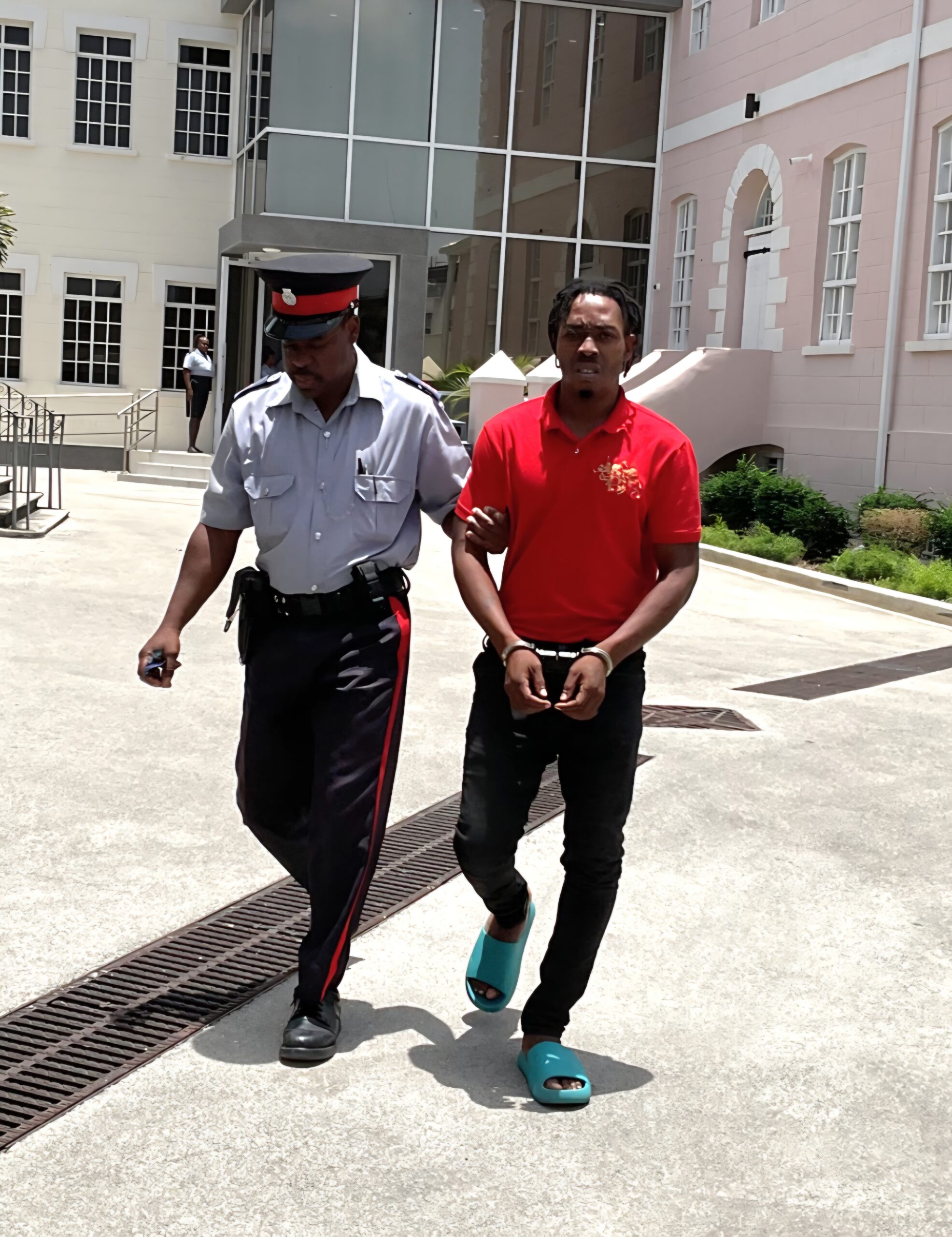
    A resident of Hothersal Turning has been ordered to be held at Dodds Prison ahead of his sentencing, after he pleaded guilty to indecently assaulting an out-of-country visitor in Bridgetown. In court proceedings, Jeffrey David Yearwood acknowledged the incident, which unfolded while he was impaired by a combination of illicit drugs and alcohol, as a serious mistake.

    The case was heard before Acting Chief Magistrate Douglas Frederick at the No. 1 District ‘A’ Magistrates’ Court, where the details of the attack last Friday were laid out. According to official testimony, the female tourist, a Canadian national visiting Barbados, had stopped for a drink on Fairchild Street before making her way to Freedom Park, the location where Yearwood approached and attacked her.

    The victim immediately resisted Yearwood, pushing him away and calling out for assistance. Witnesses at the scene noted Yearwood appeared heavily intoxicated, with heavily slurred speech that confirmed his impaired state. Bystanders stepped in to detain Yearwood until the victim could contact local law enforcement to take him into custody.

    Prosecuting Sergeant Reginald Blackman told the court that during a formal interview with police following his arrest, Yearwood admitted he had consumed both marijuana and cocaine in addition to alcohol before the incident. When given the opportunity to address the court, Yearwood pleaded for leniency, framing the attack as an out-of-character mistake driven by his intoxication. He described himself as a family man with school-aged children who need supplies for the upcoming term, saying he did not want to let his family down. Yearwood requested he be released on personal bail or receive a fine rather than pre-sentencing detention, noting he held no passport and could not be considered a flight risk.

    However, Magistrate Frederick rejected these arguments, making clear that intoxication is never a legal defense for violent, violating acts against another person. “It is no defence for a man to get drunk and do these types of things,” Frederick told the defendant. The magistrate emphasized that sexual and indecent assault are extremely serious offenses; only recently were such cases reclassified to allow magistrate’s courts to hear them, he noted, as historically they were reserved exclusively for High Court proceedings due to their severity.

    Frederick acknowledged that while intoxication can be considered as a minor mitigating factor during sentencing, it does not excuse the harm done to the victim. “You have also said that it was not you, in the sense that you were intoxicated or under the influence of drugs or whatever, but let me tell you for your knowledge that intoxication is really not a defense to these types of matters. [Being] under the influence of drugs or drink is no defense,” he added.

    The magistrate also noted that Yearwood has a prior assault conviction dating back to 2021, reinforcing that he poses a current threat to public safety. After ordering a full presentence report to inform his final sentencing decision, Frederick ruled Yearwood must be held in pre-sentencing custody to protect the general public. “It seems as though there is a need for a type of intervention, because you are obviously a clear and present danger to the society to be walking about doing these things,” he said.

    Yearwood will remain at Dodds Prison until his next scheduled court date on September 10, when his sentencing will be finalized.

  • Community emergency managers push self-help preparedness

    Community emergency managers push self-help preparedness

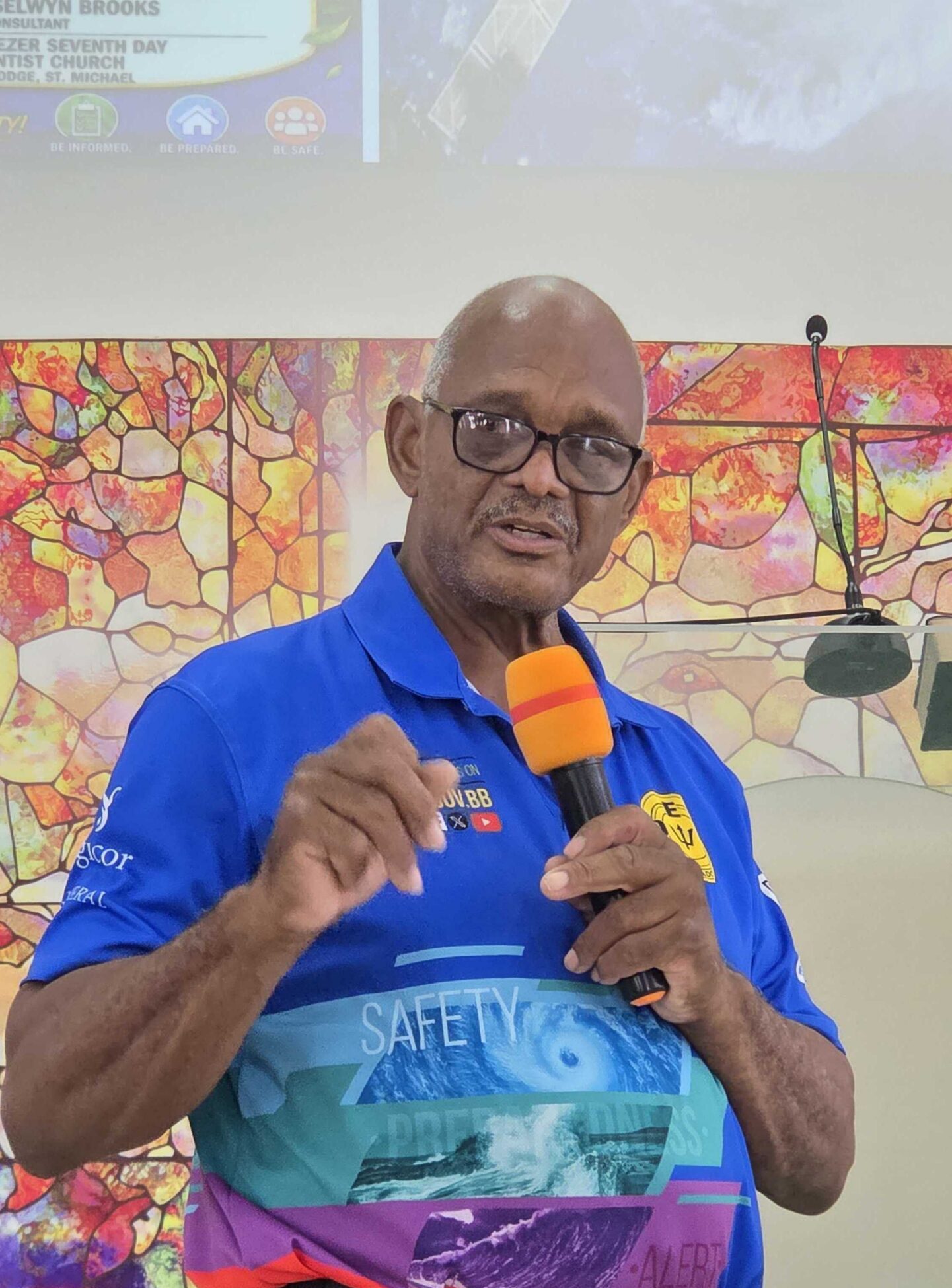
    As the Atlantic hurricane season progresses, a senior Barbadian community emergency management official has sounded a stark alarm over widespread public complacency, warning that this dangerous lack of urgency could significantly weaken the island nation’s overall ability to withstand and recover from major storm events. Speaking Thursday, Selwyn Brooks — liaison officer for the country’s Community Resilience Programme, which works hand-in-hand with local district emergency organisations (DEOs) across the island — emphasized that building robust national disaster resilience must start with individual action and local community engagement, rather than relying exclusively on government-led initiatives.

    “There is still an unacceptably high level of complacency among the public,” Brooks cautioned. “National resilience does not originate at the government level. It grows from the ground up, starting with individual preparation and local community capability. When more community members master key emergency skills and build preparedness habits, that collective effort is what strengthens the entire country’s ability to bounce back from disaster.”

    Brooks’ call to action comes as emergency management teams across Barbados have ramped up training and outreach efforts in recent months, aimed at equipping both first responders and ordinary residents with the practical skills needed to respond immediately after a severe weather event. These sessions have focused on high-priority, life-saving capabilities including basic first aid, emergency tarpaulin installation for damaged roofs, and the safe operation of chainsaws to clear blocked roadways. The Barbados Statistical Service has also rolled out specialized damage assessment training open to both emergency personnel and general community members.

    According to Brooks, training is an ongoing, adaptive process that is adjusted to match the unique needs of each community and depends entirely on broad public participation to succeed. “Our goal right now is to engage and recruit more community members to join our preparedness efforts,” he explained. “We are already ramping up preparations even for next year’s hurricane season. That will be our next major outreach initiative, launching by the end of this month. It will support readiness for the current season, but its core focus is building long-term capacity for 2025 and beyond.”

    Insights from a recently concluded national conference on community resilience are already guiding these new outreach campaigns, helping emergency officials develop a flexible, constantly improving emergency response framework, Brooks added. Behind the public training sessions, technical teams have been working steadily to strengthen critical communication infrastructure, which is often one of the first systems to fail during a major hurricane. Radio emergency teams now conduct weekly coordinated network exercises to refine operator protocols, test equipment reliability, and map geographic “blind spots” where radio frequency coverage is weak or non-existent. Regular testing ensures that operators can perform under pressure when a disaster strikes, and lets officials address gaps in coverage before a storm makes landfall.

    While current meteorological forecasts predict that this year’s hurricane season will see slightly below-average storm activity across the Atlantic, emergency officials are stressing that the public should not dismiss this prediction as a reason to skip preparation. Even slow-moving, low-category tropical storms can trigger catastrophic damage across the island through prolonged heavy rainfall, widespread flash flooding, soil saturation that causes widespread landslides, and fallen trees that block critical evacuation routes and cut off access for first responders.

    When asked directly whether Barbados is currently fully prepared for a major storm this season, Brooks noted that disaster preparedness is never a fixed, finished goal, and readiness levels shift dramatically depending on the intensity of an approaching storm system. “If you ask if we are fully prepared for a Category 3 or Category 4 hurricane, I would be honest and say we still have significant challenges to address,” he said. “We have made solid progress to get to where we are today, but there is always more work to do to strengthen our capabilities.”

    Emergency management leaders across the country echo Brooks’ assessment, identifying widespread public indifference as the single largest barrier to effective preparedness. They stress that consistent individual vigilance and personal preparation is the most critical factor in reducing storm-related damage, protecting lives, and speeding up recovery after a disaster.

  • California visitor creates heritage travel initiative inspired by Barbados

    California visitor creates heritage travel initiative inspired by Barbados

    What began as a routine tropical vacation for California native Rufiena Jones in 2022 evolved into a life-altering mission that is redefining how members of the African diaspora engage with Caribbean history. What Jones expected to be a relaxing getaway quickly shifted when she uncovered a critical, under-shared chapter of African diaspora history rooted in Barbados — and left the island knowing she had to return to share that story with others.

    “The day I landed, I knew I was meant to come back, and I knew I was meant to bring other people with me,” Jones shared in an interview, reflecting on that first fateful trip. Now, on her eighth visit to the Caribbean island, Jones has turned that personal calling into the Sankofa Wellness Project, a heritage tourism initiative launched in 2022 that will soon rebrand to Sankofa Heritage Travel. Unlike standard beach-focused tourism, the project frames Barbados not just as a vacation destination, but as a vital stop for people of African descent seeking to reconnect with their ancestral history, cultural identity, and collective roots.

    Jones argues that Caribbean nations like Barbados are often overlooked by diaspora communities prioritizing West African countries such as Ghana and Senegal when tracing their ancestry — an oversight that leaves a major gap in understanding the full scope of the transatlantic slave trade and the cultures enslaved Africans built after crossing the Atlantic. “If we want to understand our past as descendants of Africa, we can’t leave the Caribbean out,” she explained. “We must come here. We must experience the culture here and hear the stories here because this is a major part of that history.”

    Before her first trip, Jones herself shared that same gap in knowledge. It wasn’t until she encountered an atlas two years before her first visit that she learned just how many enslaved Africans were trafficked to Barbados, a statistic rarely taught in mainstream education. Further research revealed that Barbados was one of Britain’s earliest and most influential slave societies, whose plantation system became a model that spread across the entire Caribbean. That discovery fundamentally reshaped her understanding of the island’s central role in Black Atlantic history.

    “I didn’t know Barbados had such a rich history,” she said. “We don’t necessarily learn that. So to be here, the way that it feels here, the way that I can feel and sense this deep, rich African connection… I know that there’s a story here that needs to be told that the diaspora needs to hear and engage with.”

    A former Fulbright scholar with nearly a year of teaching experience in Thailand, Jones has long viewed travel as a tool for cross-cultural understanding, but she says Barbados offered a unique, visceral connection she never found elsewhere. Though she emphasizes she is still learning and does not identify as a professional historian, Jones has identified distinct African influences woven into every layer of Barbadian life, from music and movement to language and community structures, that have persisted beneath centuries of British colonial rule.

    A lifelong dancer with decades of experience studying Afro-Cuban, Afro-Brazilian, Afro-Haitian, and traditional West African dance forms, Jones has centered that cultural insight into the itineraries she curates. The Sankofa project brings small groups of visitors to the island for key cultural events, including the annual Barbados Food and Rum Festival and Crop Over, a historic harvest festival that marks the end of the sugar cane growing season. Her programming blends guided historical tours, immersive community experiences, and cultural excursions designed to help participants deepen their understanding of their ancestral roots, with the Emancipation Day and Crop Over season featuring prominently in trip schedules due to its historical significance.

    Jones welcomed her first official group of 11 clients to Barbados in November 2025, alongside two representatives from the Barbados Association of Southern California who won their trips through Barbados Tourism Marketing Inc.’s We Gatherin’ Southern California initiative. She returned earlier this year with three more California travelers to experience the 2025 Crop Over festival.

    Jones’ long-term vision extends far beyond Barbados. She hopes to grow the initiative into a interconnected travel network that links the Caribbean, West Africa, and African diaspora communities in the United States, including the Gullah Geechee people of South Carolina’s Lowcountry. “I want to keep expanding it,” she said. “I want to keep people coming to the Caribbean so that after that we can go to West Africa and see those cultural connections and then also go to the south of the United States… It’s one big story.”

  • STATEMENT: Honourable Dr. Cassandra Williams, Minister of State with Responsibility for Social Services, on the tragic death of Jerbiah  Paul

    STATEMENT: Honourable Dr. Cassandra Williams, Minister of State with Responsibility for Social Services, on the tragic death of Jerbiah Paul

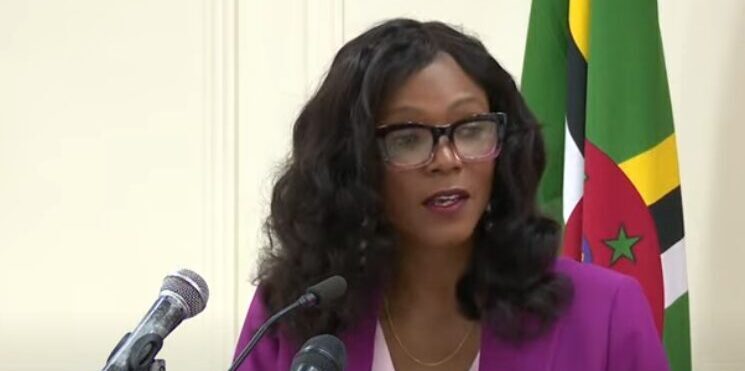
    Three weeks of collective hope across Dominica have given way to overwhelming national grief, after law enforcement confirmed the discovery of 16-year-old Jerbia Paul’s remains in the Capuchin region. In an official address to the nation, Dr. Cassandra Williams, Minister of State with oversight for Seniors Security, Children at Risk, Gender Affairs, and Persons with Disabilities, extended heartfelt condolences and solidarity to Paul’s family, friends, and all communities touched by the tragedy.

    For nearly 21 days, Paul’s disappearance gripped the country: her family held out for a safe return, local communities coordinated search efforts and shared appeals, and ordinary Dominicans joined in prayer for the missing teen. That collective hope has now shifted to mourning, prompting Dr. Williams to use this moment to confront a long-simmering national crisis that the tragedy has thrown into sharp relief: the urgent need to strengthen safeguards for girls and young women across the country.

    Dr. Williams emphasized that sexual abuse, exploitation, and gender-based violence can never be normalized, excused, hidden, or ignored in any society. “No child should live in fear of the adult entrusted to protect them,” she stated, rejecting the harmful, widespread cultural narrative that shifts blame for abuse onto child victims, rather than the adult perpetrators who exploit their vulnerability. “A child cannot be held responsible for being exploited. Adults have a duty to protect children, not prey upon their innocence, trust, and disadvantaged circumstances.”

    This collective responsibility to protect vulnerable youth falls on every segment of Dominican society, the minister argued. Parents and guardians must stay actively engaged in their children’s lives, watching for sudden shifts in behavior, relationships, or personal circumstances that may signal harm. Communities must resist the impulse to look away when red flags of abuse appear, while frontline stakeholders including teachers, healthcare workers, social service providers, faith leaders, and youth organizations must strengthen their commitment to identifying and reporting suspected abuse. Anyone who suspects a child is at risk must understand that silence only enables further harm, Dr. Williams stressed.

    Addressing directly the adult population of Dominica, Dr. Williams made clear that there is no justification for the sexual exploitation of children. No form of leverage—whether authority, money, gifts, transportation, housing, influence, or emotional manipulation—can ever justify sexual access to a minor. Existing Dominican law already requires people who become aware of suspected child sexual abuse to report the issue to authorities, and Dr. Williams urged all residents to take this legal and ethical obligation seriously.

    “Our girls and young women are not objects, not commodities to be exploited,” Dr. Williams said. “They are our daughters, sisters, students, and young citizens, entitled to grow up in safety, dignity, and freedom from violence. The responsibility to protect them, respect their boundaries, and reject exploitation rests on every adult around them.”

    The Ministry of Social Services will continue expanding its collaborative work with families, communities, schools, law enforcement, and partner institutions to strengthen child safeguarding systems, improve early identification of at-risk children, streamline reporting and referral mechanisms, and expand access to psychosocial support for vulnerable youth and their families. But Dr. Williams acknowledged that government action alone is not enough to reverse the culture of silence that enables abuse.

    “This moment demands collective responsibility and collective national introspection,” she said. “We must all ask what more we can do—whether as family members, community members, or as a nation—to spot vulnerability sooner, listen when children speak up, act quickly when warning signs emerge, and create a culture where perpetrators cannot hide behind fear, stigma, and silence.”

    Dr. Williams urged the public to give law enforcement the space and cooperation needed to conduct a full, impartial investigation into the circumstances of Paul’s death, calling on residents to avoid unsubstantiated speculation, the spread of unverified information, and commentary that could jeopardize the investigation or cause further harm to Paul’s grieving family. Anyone with information that could assist the probe was strongly encouraged to share it directly with police.

    Even in the depths of this national grief, Dr. Williams called for the tragedy to ignite a renewed national commitment to ending child exploitation. “Not one more girl should suffer because adults stayed silent. Not one more child should be exploited because warning signs were ignored. Not one more young woman should be made to believe that violence and abuse are an inevitable part of life,” she said. “We must speak out. We must report. We must intervene. And above all, we must protect our girls and women.”

    In a direct message to the girls and young women of Dominica, Dr. Williams reaffirmed their inherent worth and right to safety: “Your life has value. Your body belongs to you. You deserve to be safe. You deserve to be heard. You deserve to grow, learn, and chase your dreams without fear of violence, exploitation, or abuse.”

    The Ministry of Social Services has made free counselling and psychosocial support services available to all individuals, families, and communities affected by the tragedy. Those in need of support are encouraged to contact the Department of Social Services to access care from qualified counsellors and psychologists, which will remain available throughout the grieving process.

    Closing her address, Dr. Williams extended the full compassion of the Dominican government and people to Paul’s family, amid what she called an unfathomable period of grief and pain. “May God strengthen you, and may you find comfort in the support of your family, your community, and an entire nation that has stood with you throughout this painful search,” she said. “May this tragedy awaken in all of us a deeper, unwavering commitment to protecting our children and young women.”