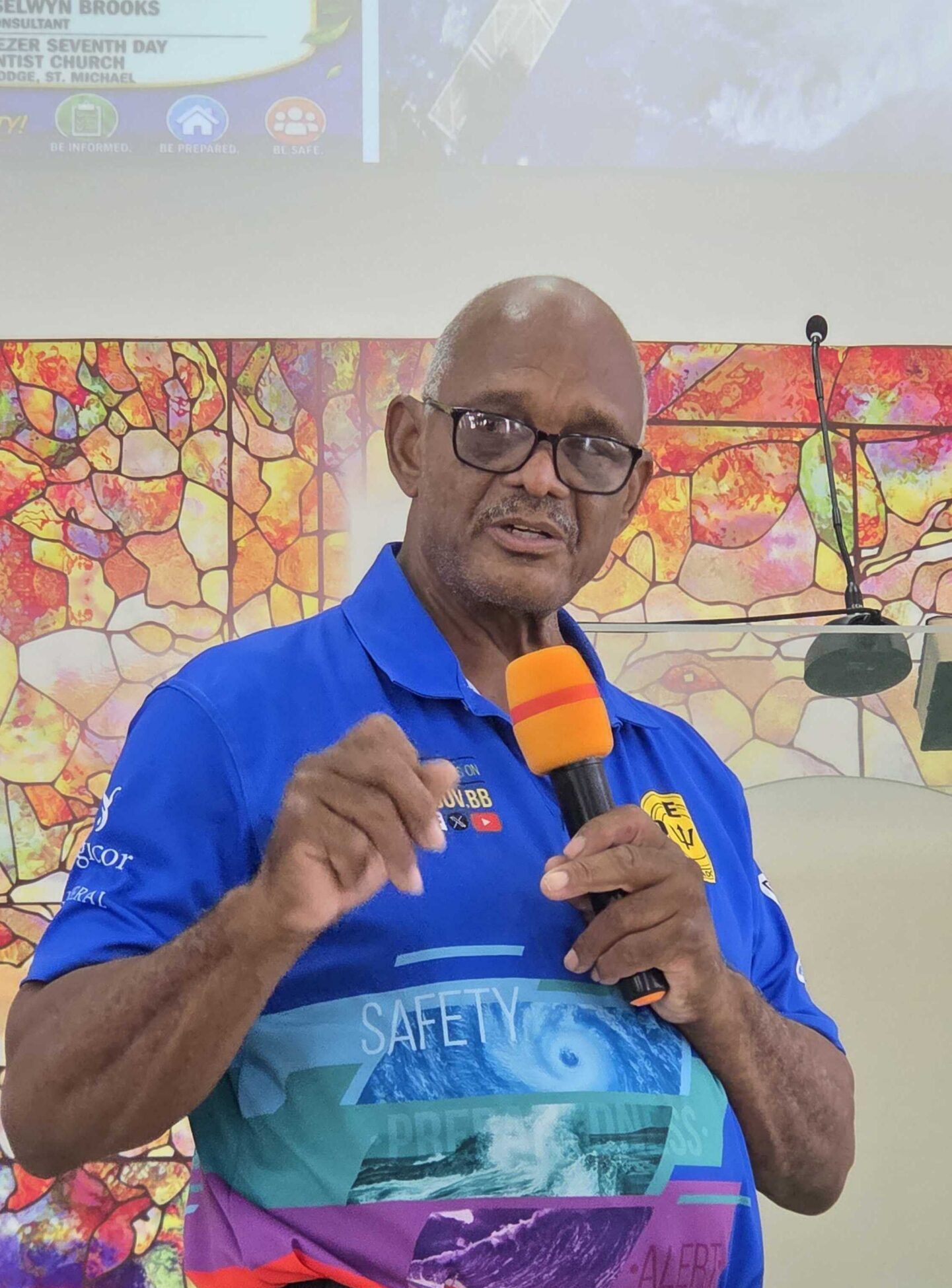
As the Atlantic hurricane season progresses, a senior Barbadian community emergency management official has sounded a stark alarm over widespread public complacency, warning that this dangerous lack of urgency could significantly weaken the island nation’s overall ability to withstand and recover from major storm events. Speaking Thursday, Selwyn Brooks — liaison officer for the country’s Community Resilience Programme, which works hand-in-hand with local district emergency organisations (DEOs) across the island — emphasized that building robust national disaster resilience must start with individual action and local community engagement, rather than relying exclusively on government-led initiatives.
“There is still an unacceptably high level of complacency among the public,” Brooks cautioned. “National resilience does not originate at the government level. It grows from the ground up, starting with individual preparation and local community capability. When more community members master key emergency skills and build preparedness habits, that collective effort is what strengthens the entire country’s ability to bounce back from disaster.”
Brooks’ call to action comes as emergency management teams across Barbados have ramped up training and outreach efforts in recent months, aimed at equipping both first responders and ordinary residents with the practical skills needed to respond immediately after a severe weather event. These sessions have focused on high-priority, life-saving capabilities including basic first aid, emergency tarpaulin installation for damaged roofs, and the safe operation of chainsaws to clear blocked roadways. The Barbados Statistical Service has also rolled out specialized damage assessment training open to both emergency personnel and general community members.
According to Brooks, training is an ongoing, adaptive process that is adjusted to match the unique needs of each community and depends entirely on broad public participation to succeed. “Our goal right now is to engage and recruit more community members to join our preparedness efforts,” he explained. “We are already ramping up preparations even for next year’s hurricane season. That will be our next major outreach initiative, launching by the end of this month. It will support readiness for the current season, but its core focus is building long-term capacity for 2025 and beyond.”
Insights from a recently concluded national conference on community resilience are already guiding these new outreach campaigns, helping emergency officials develop a flexible, constantly improving emergency response framework, Brooks added. Behind the public training sessions, technical teams have been working steadily to strengthen critical communication infrastructure, which is often one of the first systems to fail during a major hurricane. Radio emergency teams now conduct weekly coordinated network exercises to refine operator protocols, test equipment reliability, and map geographic “blind spots” where radio frequency coverage is weak or non-existent. Regular testing ensures that operators can perform under pressure when a disaster strikes, and lets officials address gaps in coverage before a storm makes landfall.
While current meteorological forecasts predict that this year’s hurricane season will see slightly below-average storm activity across the Atlantic, emergency officials are stressing that the public should not dismiss this prediction as a reason to skip preparation. Even slow-moving, low-category tropical storms can trigger catastrophic damage across the island through prolonged heavy rainfall, widespread flash flooding, soil saturation that causes widespread landslides, and fallen trees that block critical evacuation routes and cut off access for first responders.
When asked directly whether Barbados is currently fully prepared for a major storm this season, Brooks noted that disaster preparedness is never a fixed, finished goal, and readiness levels shift dramatically depending on the intensity of an approaching storm system. “If you ask if we are fully prepared for a Category 3 or Category 4 hurricane, I would be honest and say we still have significant challenges to address,” he said. “We have made solid progress to get to where we are today, but there is always more work to do to strengthen our capabilities.”
Emergency management leaders across the country echo Brooks’ assessment, identifying widespread public indifference as the single largest barrier to effective preparedness. They stress that consistent individual vigilance and personal preparation is the most critical factor in reducing storm-related damage, protecting lives, and speeding up recovery after a disaster.