分类: society

  • OP-ED: The Oldest Story in the Book

    OP-ED: The Oldest Story in the Book

    In a powerful address originally delivered to church congregations, Professor C. Justin Robinson draws striking parallels between biblical narratives of oppressed peoples and the contemporary Caribbean condition. The analysis reveals how ancient stories of survival under empire rule mirror modern regional challenges, offering both sobering reflections and hopeful pathways forward.

    The biblical journey from Genesis to Revelation consistently portrays small nations navigating domination by powerful empires—from Abraham’s departure from Mesopotamia to Jesus’s execution under Roman authority. This framework provides a compelling lens through which to examine Caribbean history and current realities. The region’s economic structures echo Pharaoh’s Egypt, where enslaved populations built infrastructure for their own oppression. Similarly, Caribbean nations historically produced commodities for foreign consumers under arrangements dictated from distant capitals, creating economic dependencies that persist today.

    Professor Robinson identifies tourism dependence, food importation despite fertile lands, and brain drain masked as development strategy as modern manifestations of this colonial legacy. The post-war international order that once provided protective walls for small nations is now being dismantled by the very powers that established it, leaving Caribbean countries vulnerable in an increasingly volatile global landscape.

    The analysis turns to biblical wisdom for guidance in navigating contemporary challenges. Jesus’s instruction to “render unto Caesar what is Caesar’s” provides a framework for engaging with powerful nations without surrendering cultural identity or sovereignty. The prophet Jeremiah’s counsel to build houses and plant gardens during Babylonian exile offers a blueprint for self-reliance—investing in local institutions, developing agricultural sovereignty, and creating sustainable communities rather than waiting for external rescue.

    Caribbean strengths are reframed as modern-day David’s stones against Goliath: climate expertise, digital potential, energy sovereignty capabilities, proven models of regional integration through the OECS, and the power of unified voice. The parable of the Good Samaritan underscores the necessity of regional cooperation, questioning why successful integration models for smaller populations cannot scale across CARICOM.

    The address concludes with an urgent call to action, invoking Esther’s courage and Isaiah’s willingness to serve. The most liberating realization, according to Professor Robinson, is recognizing that no external savior will emerge—true freedom requires Caribbean people to build economies their citizens choose rather than endure, embracing self-determination as both practical necessity and moral imperative.

  • Saint Mary Academy teachers stage brief industrial action over salary delays

    Saint Mary Academy teachers stage brief industrial action over salary delays

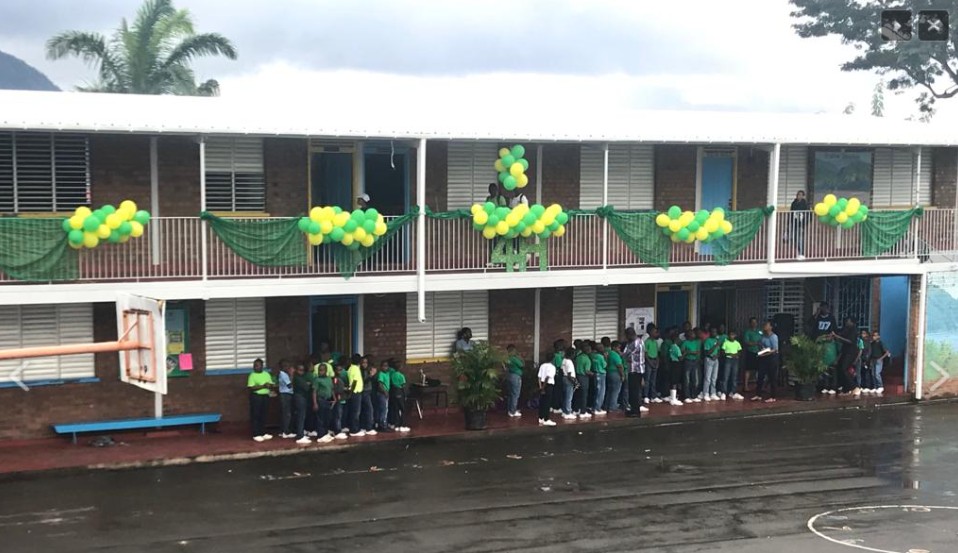
    Educators at Saint Mary Academy initiated a brief work stoppage on Monday, February 2nd, in response to the non-payment of January salaries by the Ministry of Education. This industrial action serves to spotlight systemic compensation issues plaguing teachers within government-assisted educational institutions across Dominica.

    According to an official communiqué released by the faculty, salary disbursements that were historically punctual have experienced consistent delays since December 2018. Similar to other assisted secondary schools nationwide, Saint Mary Academy relies on monthly governmental grants for payroll funding. Staff representatives report that school administrators now routinely undertake multiple personal visits to the Treasury Department, frequently receiving explanations that necessary checks remain either unprepared or awaiting signatures.

    The teaching body emphasized that this compensation crisis extends beyond their institution, affecting educators throughout Dominica’s network of government-assisted schools. They detailed how belated payments create substantial financial distress, preventing teachers from meeting critical obligations including loan repayments that often accumulate penalty fees and additional interest charges.

    “The normalization of end-month or post-month salary payments must cease,” the statement asserted, highlighting that assisted-school teachers remain excluded from the timely payment protocols granted to other educational professionals. Staff further noted that while certain public officials receive advance compensation during national holidays like Creole Day and Christmas, educators at assisted institutions consistently face financial disadvantage.

    Faculty members are demanding equitable treatment through several specific measures: implementation of consistent timely salary payments, immediate disbursement of overdue back pay, and salary reclassification parity with government secondary school teachers based on equivalent qualifications and experience. Additionally, they urge full implementation of existing agreements between the Dominican government and assisted schools, characterizing these changes as fundamental to achieving professional fairness and justice.

    Despite these operational challenges, Saint Mary Academy maintains exceptional educational standards, achieving consistent 100% pass rates in multiple subjects and regularly securing top rankings in national and regional academic comparisons. Teachers expressed profound pride in their contributions to Dominica’s educational excellence while reaffirming their unwavering commitment to student development.

    The academic staff recognized ongoing advocacy efforts by educational trade unions and requested continued support from the Catholic Schools’ Board of Management and other supervisory bodies. They issued a final appeal to the Ministry of Education’s sense of justice, framing resolution of these compensation issues as both a moral imperative and a matter of professional dignity.

  • Four found dead in vessel at Georgetown wharf

    Four found dead in vessel at Georgetown wharf

    A tragic industrial incident at Georgetown’s Courtney Benn wharf has resulted in the deaths of four maritime workers, casting a somber shadow over Guyana’s port operations. The fatalities occurred aboard the MV Captain Virat, a split barge owned by vessel construction firm Guyana Port Inc., on Wednesday evening around 6:30 p.m.

    According to official statements from the Guyana Police Force, preliminary investigations indicate the victims were conducting routine inspection work within a dry compartment of the engine room when they were suddenly overcome by suspected noxious fumes. The confined space, located in the lower section of the vessel, apparently contained hazardous atmospheric conditions that proved immediately fatal.

    The deceased have been identified as Brandon Deonarine (18), a seaman from Support, East Bank Demerara; Nerwaine Persaud (57), a boat captain from Cummings Lodge, East Coast Demerara; Dominic Alexis (33), a seaman from De Kendren, West Coast Demerara; and Getindra Sanchara (25), an engineer from Cummings Lodge, East Coast Demerara.

    Emergency protocols were activated when fellow crew members raised the alarm, prompting response teams from the Guyana Fire Service and emergency medical technicians to rush to the scene. Despite their efforts, all four men were pronounced dead after being transported to the Georgetown Public Hospital Corporation. Their bodies currently await post-mortem examinations at the hospital’s mortuary.

    Pritipaul Singh, Jr., Managing Director of Guyana Port Inc., confirmed in an exclusive interview with Demerara Waves Online News that all four victims were company employees. Express profound grief, Singh stated, ‘It is absolutely unfortunate and it is the saddest thing. I am lost for words right now.’ The company has pledged full cooperation with ongoing police investigations.

    The Ministry of Labour and Manpower Planning, under Minister Keoma Griffith, has been notified of the incident and is preparing to launch its own investigation in accordance with the Occupational Safety and Health Act, which mandates prompt employer reporting of workplace incidents.

  • Police Detain ‘Yellowman’ Ahead of Protest, Motive Disputed

    Police Detain ‘Yellowman’ Ahead of Protest, Motive Disputed

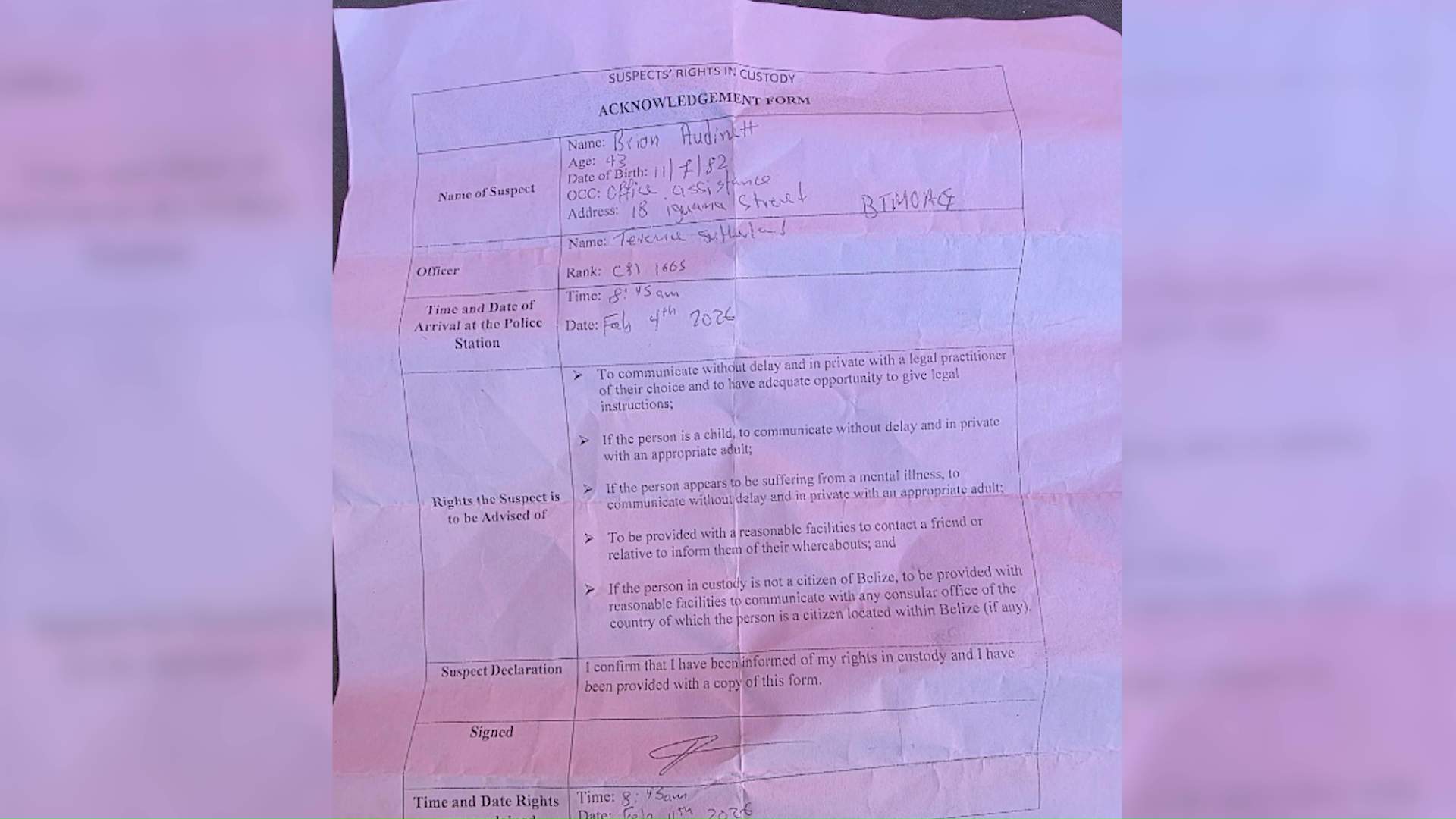
    BELIZE CITY – Tensions escalated in Belize on February 4, 2026, when police authorities detained prominent activist Brian “Yellowman” Audinett hours before a scheduled public demonstration. The controversial apprehension occurred in the Mesopotamia Division, with Audinett subsequently transported to Queen Street Police Station where he remained detained throughout the morning.

    The incident has ignited a sharp legal and political confrontation between law enforcement and civil rights advocates. Attorney Orson Elrington, representing Audinett, asserts that his client was targeted solely based on his alleged gang affiliations rather than concrete evidence of wrongdoing. Elrington provided detailed accounts indicating Audinett was coordinating protest participation from his constituency when police initiated contact and subsequent detention.

    Contradicting this narrative, Police Commissioner Dr. Richard Rosado presented an entirely different justification for the detention. According to Rosado, Audinett had been disseminating text messages explicitly inciting violence, prompting what he characterized as a necessary law enforcement response. The Commissioner emphasized the police department’s theoretical support for lawful protest while maintaining that Audinett’s actions crossed legal boundaries.

    The conflicting accounts have raised questions about police transparency and protest rights in Belize. Investigators from the GI3 unit, led by Officer Sutherland, are conducting an ongoing investigation into the alleged inflammatory messages. Legal experts note the case highlights the delicate balance between maintaining public order and protecting civil liberties, particularly regarding pre-protest detainments.

    Audinett’s detention period and potential charges remain uncertain as investigations continue. The situation has drawn attention to police protocols regarding protest organization and the evidentiary standards required for preventive detention in potentially volatile situations.

  • Unions Protest at SSB Headquarters, Draw Line from Party Politics

    Unions Protest at SSB Headquarters, Draw Line from Party Politics

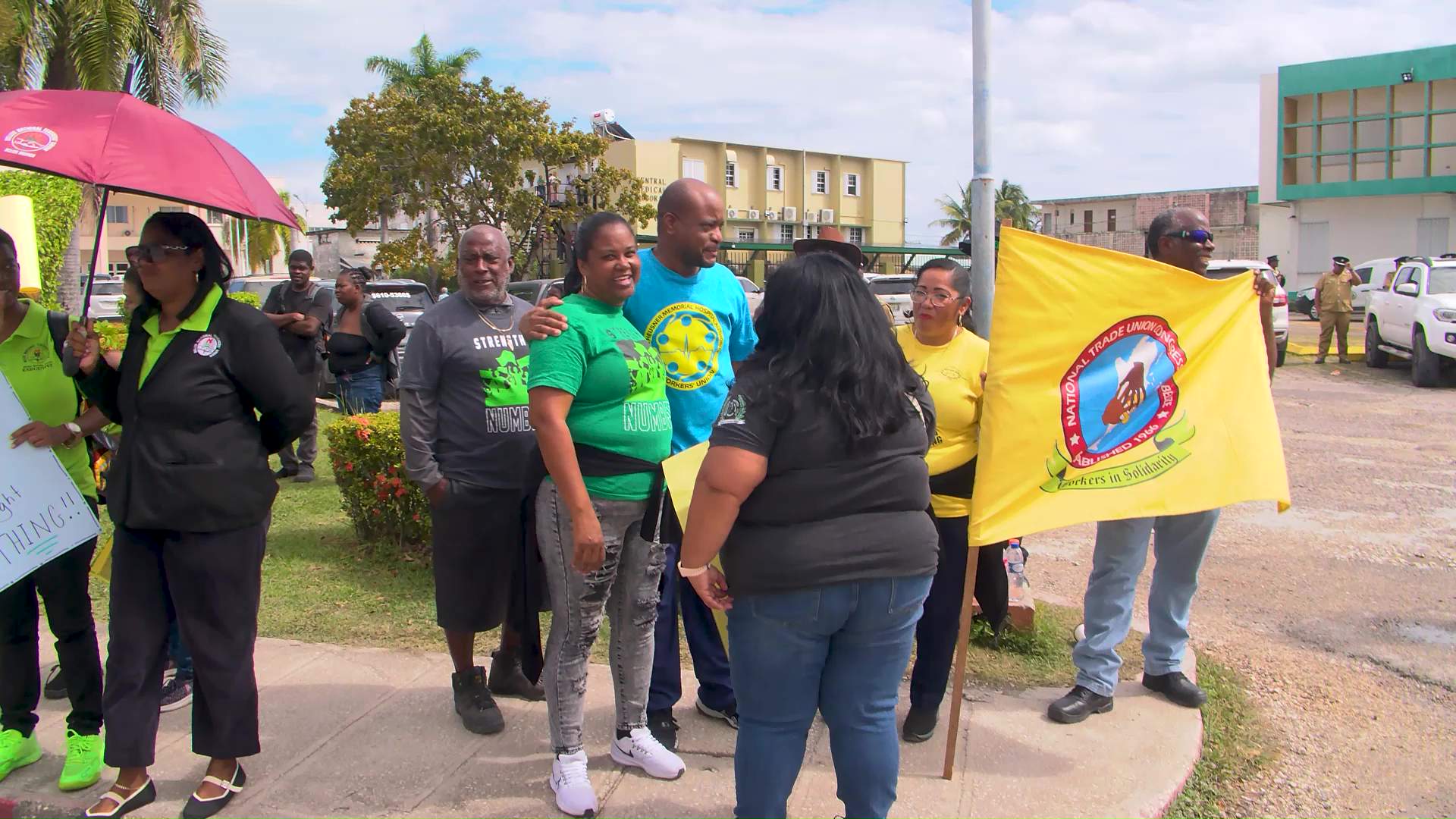
    BELIZE CITY – In a significant display of labor mobilization, Belize’s National Trade Union Congress (NTUCB) staged an unsanctioned protest outside the Social Security Board headquarters on February 4, 2026, despite being denied official permission by authorities. The labor action occurred alongside but deliberately separate from a demonstration organized by the opposition United Democratic Party (UDP), creating a complex tableau of dissent.

    Union leaders emphasized their demonstration focused exclusively on worker rights and transparency regarding management of Social Security funds, explicitly distancing themselves from political party agendas. NTUCB President Ella Waight asserted the protest represented workers’ constitutional rights, stating, “We need to ensure there is public consultation. Citizens must understand the risks and benefits to make sober decisions.”

    The protest gained substantial momentum with participation from multiple influential unions, including the Belize Communications Workers for Justice and the powerful Belize National Teachers’ Union (BNTU). BNTU President Nadia Caliz characterized their involvement as a calculated response to growing discrepancies in Social Security management, noting, “When you know your power you don’t rush. It’s the silence that is deadly.”

    Tensions escalated when UDP supporters moved toward the Social Security Board compound, which union leaders said endangered workers inside the building. Waight condemned this development as unacceptable, stating it prevented Social Security Board employees from joining the protest due to safety concerns.

    The demonstration highlighted broader opposition to the proposed Speednet acquisition and unresolved severance payments for former Belize Telecommunications Limited employees. Emily Turner of the Communications Workers emphasized the connection: “If BTL already owes a debt to its former employees, it needs to settle it before any acquisition.”

    Support extended beyond traditional labor circles, with healthcare workers, youth representatives, and professionals joining the action. Andrew Baird, past president of the Karl Heusner Memorial Hospital Authority Union, called it “a matter of national interest,” while youth representative Ashley Langford emphasized the protest’s significance for future generations of workers.

    Union leaders concluded by reaffirming their commitment to non-political worker advocacy, insisting their demands centered on transparency, consultation, and protection of worker contributions to the Social Security system.

  • Family Alleges Ambush in Fatal La Democracia Shooting

    Family Alleges Ambush in Fatal La Democracia Shooting

    A devastating shooting in La Democracia village has left a family in mourning and raised questions about longstanding internal conflicts. Twenty-one-year-old Paul Smith Jr., a figure previously known to law enforcement, was fatally shot on Tuesday in what relatives describe as a premeditated ambush.

    The incident occurred shortly after Smith engaged in a heated argument with his girlfriend. According to eyewitness accounts, armed assailants emerged from nearby bushes and opened fire. Smith sustained multiple gunshot wounds to his chest, abdomen, and arms. Despite being rushed to Karl Heusner Memorial Hospital alongside his injured companion Tyrece Allen, Smith succumbed to his injuries during treatment.

    Smith’s cousin, Tamara Gillett, provided a harrowing account of the incident: “We heard the gunshots from inside our house. When we rushed outside, we learned our cousin had been shot. Initially we hoped the injuries were minor, but then we received the devastating news that he had died.”

    The deceased had a complex history with the judicial system. Previously charged with offenses ranging from firearms possession to attempted murder, Smith had been acquitted in 2024 for the 2022 killing of La Democracia resident Tyreak August. Following his release from Belize Central Prison less than six months ago, his attorney Ronell Gonzalez had encouraged Smith to pursue a positive path forward.

    Family members acknowledge Smith’s troubled past but maintain that his death resulted from internal family tensions rather than random violence. Gillett revealed: “This was a family issue that escalated unnecessarily. There had been previous attempts on his life—they shot his mother, shot another cousin, and even burned down his sister’s house.”

    Despite his controversial background, relatives remember Smith’s positive qualities. Cousin Angel Estrada reflected: “Regardless of everything, we knew his goodness. We’re not saying he was perfect, but we recognized his value as a person.”

    Law enforcement officials have detained multiple suspects for questioning, though no formal arrests have been made as investigations continue. The case highlights ongoing concerns about violence resolution and the complex social dynamics within communities.

  • Mother And Daughter Charged in Punta Gorda Cocaine Bust

    Mother And Daughter Charged in Punta Gorda Cocaine Bust

    A Punta Gorda mother and her teenage daughter are confronting severe narcotics charges following a targeted police operation that uncovered a significant cache of crack cocaine. Law enforcement officials executed a search warrant at a Cerro Road residence on Tuesday, leading to the apprehension of 47-year-old Cheryl Garbutt and her 18-year-old daughter Kailah Bahadur.

    During the systematic search of the property, investigators discovered substantial evidence of drug distribution activities. The most critical find was a plastic bag containing exactly 100 individually wrapped parcels of crack cocaine, meticulously sealed in foil. The total weight of the confiscated narcotics exceeded 15 grams, indicating potential intent for street-level distribution rather than personal use.

    Police authorities emphasized the gravity of the charges, noting that both women now face accusations of possession of controlled substances with intent to supply—a charge that carries significantly heavier penalties than simple possession. The operation demonstrates law enforcement’s continued focus on disrupting local drug distribution networks.

    Following their arrest, both suspects were processed and remain in custody as the investigation continues. The case has drawn attention to intergenerational drug involvement and the challenges faced by communities combating narcotics trafficking. Legal experts suggest the charges could result in substantial prison sentences if convictions are secured, particularly given the organized nature of the packaging and quantity of drugs involved.

  • Police Intercept Fisherman with Unlicensed Firearm

    Police Intercept Fisherman with Unlicensed Firearm

    Authorities in Belize City have detained a local fisherman following an intercepted attempt to dispose of an unlicensed weapon during a police patrol operation. The incident unfolded on Monday morning around 10:00 AM along Riverside Street, where motorcycle officers observed 24-year-old Kyle Cadle traveling by bicycle. According to official reports, Cadle abruptly altered his course upon noticing the police presence, accelerating into a nearby residential property in an apparent evasion attempt. Law enforcement personnel pursued the suspect and witnessed him discarding an object adjacent to a zinc fence. Subsequent investigation of the area yielded a concealed firearm accompanied by a magazine containing eight 9mm live rounds. Cadle was taken into custody without further incident and now faces formal charges of possessing both an illegal firearm and ammunition without appropriate licensing. The case highlights ongoing efforts by Belizean authorities to combat the circulation of unregistered weapons in urban communities.

  • Health : Drinking water crisis in Haiti

    Health : Drinking water crisis in Haiti

    Haiti is confronting an escalating drinking water emergency that now poses severe threats to public health and national stability, according to alarming assessments from the Ecological Intervention Group Écovert-Haiti. The organization has issued urgent warnings about systemic failures in water resource management that have brought the nation to a dangerous tipping point.

    The crisis stems from multiple compounding factors: widespread pollution of water sources, complete regulatory breakdown, and the unchecked expansion of the bottled water industry. Haiti’s water resources—from natural springs to underground aquifers—are experiencing massive contamination due to absent environmental protection policies, degradation of watersheds from unregulated agricultural practices, and inadequate sanitation infrastructure that allows fecal matter and chemical residues to infiltrate groundwater systems.

    Compounding these challenges, the plastic sachet and bottled water industry has proliferated without oversight since the 2000s. This unregulated sector has become Haiti’s primary source of plastic pollution, clogging urban drainage systems and coastal areas while exacerbating flood risks and waterborne disease transmission.

    Écovert-Haiti highlights the catastrophic failure of Haiti’s National Directorate of Drinking Water and Sanitation (DINEPA), which serves only 20% of the population’s drinking water needs in metropolitan areas. This institutional collapse has forced households and government institutions alike to depend on tanker trucks and unregulated private suppliers whose water quality remains questionable.

    The environmental group expressed astonishment at recent statements from Commerce and Industry Minister James Monazar, who denounced contaminated water consumption while overseeing two regulatory bodies—the Directorate of Quality Control and the Haitian Bureau of Standards—that have remained inactive for over two decades.

    In response to this multidimensional crisis, Écovert-Haiti has proposed a five-point emergency plan: immediate implementation of adopted quality standards, rigorous land-use policies to protect water recharge areas, strengthened oversight of water treatment companies, national restoration of aquatic ecosystems, and formal recognition of drinking water as a fundamental human right requiring transparent governance.

  • Bullet Tree Falls Gets Upgraded Community Centre

    Bullet Tree Falls Gets Upgraded Community Centre

    The rural community of Bullet Tree Falls has officially unveiled its comprehensively rehabilitated community center following an extensive nine-month renovation initiative completed in February 2026. The infrastructure enhancement project, which commenced in April 2025, transformed the facility with critical upgrades including modernized bathroom fixtures, energy-efficient windows and doors, complete electrical system rewiring, structural roofing improvements, and comprehensive interior and exterior repainting.

    During the inauguration ceremony, officials emphasized the center’s profound significance beyond its physical structure. “For generations, this establishment has transcended being merely concrete and steel. It has served as the foundational venue where memories were forged and life milestones celebrated—hosting innumerable community assemblies, quinceañeras, wedding receptions, birthday festivities, family reunions, and events that unified us as one collective,” stated Chebat, highlighting its role in fostering social cohesion.

    Addressing inquiries regarding tourism fund allocation for the project, Mahler provided justification: “I frequently face scrutiny for initiatives such as this—questioning why tourism resources are directed toward a community center. My consistent response remains: ‘This is not an investment in a facility; it is an investment in the community itself. It is an investment in our people.’”

    The celebratory event featured cultural performances, including traditional music by the Los Hijos del West marimba ensemble, alongside participation from local schoolchildren who led the national anthem and ceremonial prayer.

    Beyond its primary function as a hub for cultural programming and community activities, the newly upgraded center will additionally operate as a designated emergency hurricane shelter, enhancing regional disaster preparedness infrastructure.