分类: society

  • Father and son killed in Manchester

    Father and son killed in Manchester

    MANCHESTER, JAMAICA – Law enforcement investigators spent hours working through the night into early Friday, carefully documenting and processing the site of a brutal double homicide that claimed the lives of a father and his son in the New Forest district of southwestern Jamaica’s Manchester parish.

    Unnamed law enforcement sources familiar with the preliminary investigation confirmed that the two victims were targeted in a premeditated shooting close to their family residence in the quiet south Manchester community. Initial evidence collected at the scene indicates that the pair had their hands bound by their attackers before being gunned down in the incident, which unfolded just around midnight Thursday.

    So far, local authorities have only publicly released the stage name of one victim, who was known in local circles by the artist alias Fido. The identities of both victims have not been fully released to the public as police continue working to notify all next of kin and complete preliminary procedural steps.

    As of the latest update, investigators have not uncovered a definitive motive for the killing. No suspects have been taken into custody in connection with the attack, and police are urging any members of the public with information that could advance the investigation to come forward confidentially.

    The violence comes amid a worrying upward trend in homicides across the parish this year. Jamaica Constabulary Force data shows that between January 1 and May 31 of this year, Manchester recorded 14 murders, a 75 percent jump from the eight murders reported in the same five-month period last year. Friday’s double homicide pushes the total number of murder victims in Manchester to 16 since the calendar year began, deepening concerns over rising violent crime in the region.

    Reporting by Kasey Williams

  • WATCH: Six charged in Mandeville highway vending clampdown

    WATCH: Six charged in Mandeville highway vending clampdown

    MANCHESTER, Jamaica — A coordinated law enforcement operation targeting unregulated street vending along Jamaica’s Winston Jones Highway in Mandeville concluded on Thursday with six vendors arrested and formally charged with violating the island’s Towns and Communities Act. Five additional vendors caught in the clampdown received official warnings, local law enforcement confirmed this week.

    The multi-agency sweep was carried out jointly by personnel from the Manchester Municipal police force, the Area Three Agricultural Protection Branch, and the central Manchester police command. According to law enforcement officials, the enforcement action is part of a broader ongoing push to reestablish public safety and orderly movement across Mandeville and its surrounding neighborhoods.

    Unregulated roadside vending has grown increasingly prevalent in recent months along the busy highway corridor, particularly near the Williamsfield and New Green roundabouts. The unchecked activity has created significant traffic disruption, slowing vehicle flow through key junctions and raising major safety concerns for both motorists and vendors themselves.

    A senior anonymous police source explained the urgency of the intervention, noting that many vendors have been stepping directly onto the active lanes of the Winston Jones Highway to approach moving vehicles to sell their goods. This dangerous practice puts both vendors and drivers at severe risk of collisions, the source added.

    In the wake of the operation, law enforcement is calling on all local vendors to move their operations to the officially designated Mandeville Market, where dedicated vending space is available. Police also reminded all vendors operating in the region that they are required to comply with all existing public health and workplace safety regulations to protect both vendors and customers.

  • Heavy rain threat prompts green alert in eight areas across Dominican Republic

    Heavy rain threat prompts green alert in eight areas across Dominican Republic

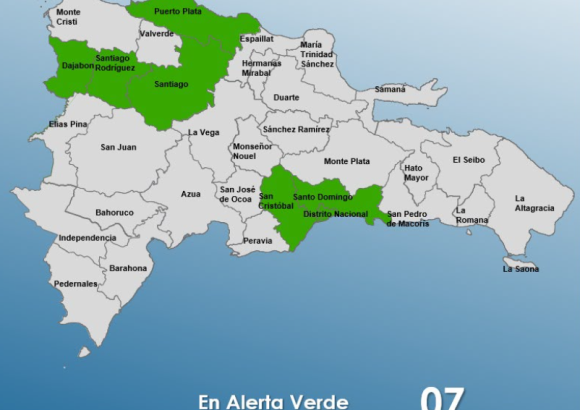
    Residents of the Dominican Republic are facing an extended period of heightened weather risk, as the country’s Emergency Operations Center (COE) has opted to prolong a green weather alert covering seven provinces and the National District. The extended warning comes as a complex combination of atmospheric conditions — a low-pressure trough, residual moisture from a tropical wave, and localized environmental factors — conspire to raise the chance of disruptive extreme weather across multiple parts of the island nation.

    The jurisdictions placed under the continued green alert include Santiago Rodríguez, Puerto Plata, Santiago, Dajabón, San Cristóbal, Santo Domingo, and the National District, which hosts the country’s capital. Forecasters from the Dominican Institute of Meteorology note that the combined weather system will drive moderate to locally intense rainfall across wide swathes of the country, with the highest concentration of showers expected along the Caribbean coastline, the northern and northwestern inland regions, the Central Mountain Range, and areas along the country’s border with Haiti.

    While only seven provinces and the National District carry the formal green alert, emergency officials are also cautioning that a number of neighboring regions could see just as much heavy precipitation. These additional at-risk areas include La Altagracia, San Pedro de Macorís, Monte Plata, Barahona, La Vega, Espaillat, Valverde, and Monseñor Nouel.

    In line with the extended alert, COE has rolled out clear precautionary guidance for the public. The agency has specifically urged residents living in low-lying, vulnerable zones near rivers, streams, and steep ravines to prepare for the potential of widespread flooding and fast-moving flash floods. To reduce preventable risk, officials have also advised the public to avoid attempting to cross swollen creeks or rivers, and to steer clear of recreational sites located within the alert zones.

    Juan Manuel Méndez García, a representative of COE, emphasized that emergency management teams will continue closely tracking the evolving weather system. He called on all Dominican citizens to stay up to date on official weather forecasts and follow all guidance issued by emergency response authorities to keep themselves and their families safe throughout the event.

  • Power outages reported across several parishes

    Power outages reported across several parishes

    KINGSTON, Jamaica — A sudden wave of power blackouts has swept across multiple parishes across Jamaica, cutting electricity supply to countless residential and commercial areas across the island nation. As local communities grapple with disrupted daily routines, attempts to reach the Jamaica Public Service (JPS) — the country’s main electricity provider — for clarification on what triggered the outages and when service can be expected to be fully restored have gone unanswered so far.

    The utility company has not yet released any formal public statement addressing the widespread service interruptions, leaving affected residents and business owners without clear guidance on how long the disruption will last. Local media outlets are continuing to monitor developments on this unfolding event, and updates will be provided as more information becomes available from company officials.

  • WATCH: Fire breaks out at Up Park Camp

    WATCH: Fire breaks out at Up Park Camp

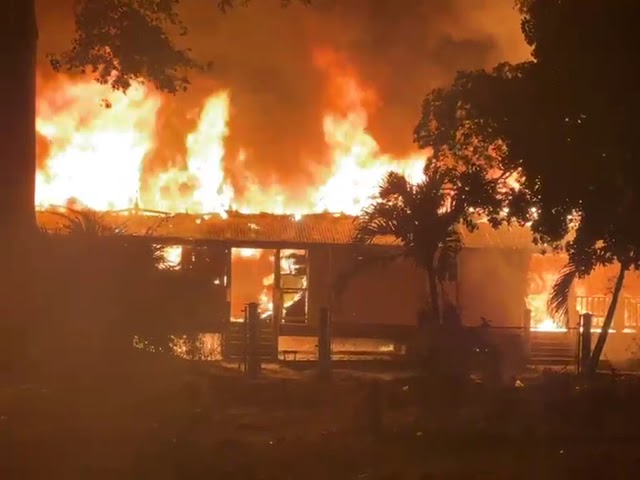
    On Friday evening, emergency responders were called to tackle an unexpected blaze that broke out at the iconic Up Park Camp military compound in central Kingston, Jamaica. Stewart Beckford, the top official leading the Jamaica Fire Brigade, has publicly confirmed the outbreak of the fire, but the agency has not yet released concrete information regarding the potential origin of the blaze or the full scale of property and structural damage caused by the incident.

    As of the latest update, no reports of casualties or injuries have been circulated to the public, though official assessments of the site are still ongoing. Local digital news outlet Observer Online has assigned a dedicated team to follow this fast-developing situation closely, and has committed to publishing additional verified details, including updates on cause, damage assessments, and any impacts on local operations, as new information is cleared for release by authorities.

  • Fire at Up Park Camp extinguished – JDF

    Fire at Up Park Camp extinguished – JDF

    A destructive blaze that broke out in the barracks section of Jamaica’s historic Up Park Camp military installation on Friday evening has been fully brought under control and extinguished, the Jamaica Defence Force (JDF) has confirmed in an official statement.

    The emergency was first reported at approximately 7:41 pm, according to details released by the JDF. In addition to the JDF’s own internal Fire Unit, five regional fire brigades from across the Kingston metropolitan area and surrounding parishes—including Rollington Town, Half Way Tree, York Park, Trench Town, and Spanish Town Fire Stations—were dispatched to the scene immediately after the alarm was raised.

    First responders worked in close coordination across agencies to contain the spread of the fire, preventing it from extending to other structures on the large Up Park Camp base. After sustained combined efforts, emergency crews successfully fully extinguished the blaze.

    As of the JDF’s latest update, the root cause of the fire has not yet been identified. Military officials noted that a formal, thorough investigation into the incident will not begin until safety inspectors from relevant government agencies clear the damaged area for entry, ruling out hazards like unstable structure and residual hotspots.

    In the release, the JDF extended its gratitude to all participating fire crews for their rapid mobilization and effective collaborative work that limited the damage from the incident. The military force also pledged to share additional updates with the public as more details about the cause and extent of damage emerge through the investigation process.

  • Family returns from airport to find home in flames

    Family returns from airport to find home in flames

    A retired couple from Trinidad and Tobago returned to a devastating scene on Tuesday afternoon, when they found their Tunapuna family home completely overtaken by a sudden blaze, mere 70 minutes after they had left the property to drop their son off for a work trip.

    The property, a two-storey concrete structure located at the intersection of Maingot Road and Monroe Road, belongs to 63-year-old Kungebeharry Samlal, a former checker for the Chaguanas Borough Corporation, and his 62-year-old wife Phulmatee Kadoo Samlal, a retired customer service representative with the Water and Sewerage Authority of Trinidad and Tobago (WASA).

    Local police received the first emergency call about the fire at approximately 2:30 p.m. Responding officers arrived on scene within minutes to find the entire residential building already engulfed in dense, hot flames. A team of fire fighters, led by Sub Fire Officer Cooseelal, was deployed immediately to tackle the blaze, and after an intensive firefighting operation, they successfully brought the fire under control and extinguished it completely.

    A post-fire structural inspection carried out by authorities confirmed that the entire upper floor and roof of the home were completely lost to the fire. The upper level, which held two bedrooms, a private study, and a full bathroom, suffered such severe structural damage that it eventually collapsed onto the ground floor below. The remaining sections of the home also sustained widespread water damage from the thousands of gallons of water used to put out the blaze.

    Investigation into the incident have confirmed that the couple left their home at roughly 1:15 p.m. to drive their 28-year-old son to Piarco International Airport for a work-related international trip. The couple’s adult daughter was also not at the property at the time, as she was away at her workplace. A nearby neighbour spotted the fire breaking out, contacted emergency services, and then alerted the Samlal family, who rushed back to their home from the airport area to find firefighters already working to contain the blaze. Miraculously, neither of the retired couple suffered any injuries during the incident, no other residents or first responders were hurt either.

  • Gunmen invade Las Lomas home, rob 68-year-old pensioner

    Gunmen invade Las Lomas home, rob 68-year-old pensioner

    A violent home invasion robbery targeted a 68-year-old local pensioner in Las Lomas on Tuesday morning, leaving the elderly resident shaken after three armed intruders stole thousands of dollars in valuables from her property. The incident unfolded shortly after the victim returned to her private residence on Rodney Road, located in the Las Lomas No. 2 district, at approximately 11:30 a.m., according to local law enforcement.

    When the woman walked through her front door, she was immediately confronted by the three men, who had already gained unauthorized entry to the home and were waiting inside. One of the suspects brandished a handgun, pressing the weapon directly toward the victim’s face before threatening her to stay silent and move to a living room couch to comply with their demands.

    Over the course of the robbery, the three assailants looted the home and stripped the victim of her personal property, including multiple pieces of jewelry: a gold chain, her wedding bands, an additional gold ring, and two silver bracelets. Beyond the jewelry, the intruders took $1,200 in cash from the victim’s purse and also absconded with two of her Samsung mobile phones. Once they had collected all the stolen items, the suspects made their escape by climbing over the home’s front perimeter fence, disappearing before police arrived on scene.

    Following the attack, authorities have released a detailed description of the armed suspect to aid in public tips and the ongoing manhunt. The gunman is described as a person of African descent, standing roughly 5 feet 8 inches tall with a dark brown complexion and short hair. He was wearing a black jersey at the time of the invasion, and used a piece of cloth to cover his nose and mouth to obscure his identifying features. Investigations remain ongoing as police work to identify and apprehend all three involved suspects.

  • Beachgoers welcome Macqueripe Bay reopening

    Beachgoers welcome Macqueripe Bay reopening

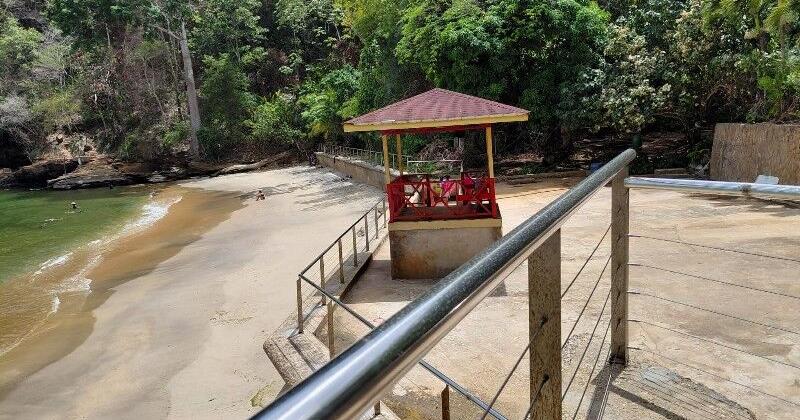
    After weeks of temporary closure for critical infrastructure repairs, Trinidad and Tobago’s Macqueripe Bay in Chaguaramas has officially welcomed back visitors, with local families flocking to the popular coastal spot to enjoy the newly renovated amenities on Tuesday.

    The Chaguaramas Development Authority (CDA) first shuttered the beach facility back on May 11, launching a project to replace the site’s decaying original wooden handrails with a new sturdier metal structure. At the time of the closure announcement, the CDA emphasized that the temporary shutdown was a non-negotiable safety measure to protect all patrons and out-of-town visitors.

    When a local reporter from the Express visited the newly reopened site on Tuesday, many beachgoers expressed clear approval for the completed railing upgrade, noting the tangible improvement to the site’s safety and appearance. Still, many visitors also pointed out that multiple aging and hazardous areas across the facility continue to go unaddressed—most notably a large unmarked, unbarriered hole located directly along the beachfront that poses a major risk to visitors.

    Nasser Khan, an award-winning journalist and frequent Macqueripe Bay visitor who toured the site with his family this week, shared that he was pleased the long-awaited railing repairs were finally complete. For years, Khan has repeatedly submitted formal requests to the CDA calling for facility upgrades, as decaying infrastructure at the beloved coastal spot has been a top complaint among regular visitors for decades. That said, Khan raised pressing questions about whether the new metal railing is built to withstand the harsh tropical marine environment, where constant exposure to salt spray and high humidity causes rapid corrosion of unprotected materials.

    “The upgrade has been a long time coming, but better late than never,” Khan explained. “From a quick look it looks fantastic. My only real hope is that the CDA chose materials that can hold up to these conditions—salt and moisture cause severe rusting here, that’s why the old wooden railing rotted away completely. The new metal option looks good, it works well, and I really hope it lasts and receives regular upkeep moving forward.”

    Khan described Macqueripe Bay as one of Trinidad and Tobago’s most underappreciated natural treasures, adding that chronic under-maintenance has been a persistent problem plaguing the popular recreational site for years. “Macqueripe is genuinely a paradise right here. For years, it got almost no regular maintenance. I’m hoping this railing upgrade is just the first step toward more consistent care for this facility.”

    For some visitors, the timing of the reopening could not have been better. One family from San Juan chose the newly reopened beach as the spot to celebrate a family birthday. “When we found out it was reopening the same week as our celebration, we were thrilled,” said Thomas Sylvester, the group’s organizer. “We love coming down here whenever we can, it’s such a beautiful beach. We just hope they keep up the good work going forward.”

    Another frequent visitor, Clyde Barnes, echoed Khan’s calls for additional upgrades and repairs across the facility. “The CDA should add shaded huts and picnic tables under the existing tree canopy for visitors to use,” Barnes noted. “I understand they may have bigger plans for future upgrades, but that gaping hole on the beachfront needs to be fixed right away—it’s a serious safety hazard.”

    As of Thursday, multiple requests for comment from the CDA regarding visitors’ additional concerns and future plans for the facility have not received a response.

  • COMMENTARY: Cycling for a greener future

    COMMENTARY: Cycling for a greener future

    For centuries, the bicycle has quietly reshaped human society, yet its transformative legacy often flies under the radar of popular history. Dubbed the “people’s nag” — a reference to the expensive, elite horses 19th century working classes could not access — the bicycle democratized personal travel more than 200 years ago, giving ordinary people an affordable, self-reliant way to move freely across their communities. Many observers now draw parallels between the disruptive, world-altering impact of the bicycle’s invention and the rise of artificial intelligence in the 21st century, framing the two as equally revolutionary shifts in how people live and work.

    The modern bicycle as we know it traces its origins to 1885, when 30-year-old English inventor John Kemp Starley began testing new designs in his Coventry workshop. After iterating through multiple prototypes, he unveiled the Rover Safety Bicycle: a 45-pound chain-driven model with two equally sized wheels, a design that remains the baseline for bicycles produced today. From its earliest days, the bicycle rippled through every corner of culture, leaving lasting marks on art, music, literature, and fashion that endure to this day.

    In recognition of the bicycle’s centuries-long contributions to global progress, the United Nations established World Bicycle Day in 2018, observed annually on June 3. The 2026 iteration of the event centers on two interconnected themes: “Cycling for a Greener Future” and “Advancing Sustainable Mobility and Inclusive Transport.” Both campaigns position the simple two-wheeled vehicle as a practical, low-cost solution to two of the world’s most pressing challenges: accelerating climate change and overcrowded, inequitable urban transport systems.

    Beyond its environmental benefits, global health bodies have long emphasized cycling’s far-reaching positive impacts on public health. The United Nations notes that regular moderate physical activity — including cycling — delivers extensive health benefits for people of all age groups, and even small amounts of activity offer greater gains than no activity at all. The World Health Organization (WHO) adds that building safe infrastructure for walking and cycling is also a critical pathway to advancing health equity. For low-income urban communities that cannot afford private motor vehicles, active transport like cycling cuts the risk of heart disease, stroke, several types of cancer, and diabetes, all while providing accessible mobility for work, school, and daily needs. This makes expanded cycling infrastructure both a cost-effective and equitable investment for communities worldwide.

    The bicycle’s history of advancing social progress stretches back to the 19th century, when it became a core tool for women’s liberation, granting women unprecedented mobility and personal autonomy at a time when strict social norms restricted their movement. Today, that legacy of inclusion continues through adaptive bicycle designs that make cycling accessible to people of all physical abilities. The bicycle also helps expand access to critical public services: by offering low-cost transport, it makes education, healthcare, and economic opportunity more reachable for marginalized and vulnerable populations across the globe.

    The shift toward prioritizing cycling in public policy gained new momentum after the COVID-19 pandemic, which reshaped global transport needs and prompted many cities to reimagine their mobility systems as part of “build back better” recovery efforts. In March 2022, the UN General Assembly codified this momentum with a resolution calling for the integration of bicycling into mainstream public transport systems to advance sustainable development. The resolution reaffirms the bicycle’s role as a tool of sustainable transport that encourages sustainable consumption and production, and delivers tangible benefits for climate action. It also commits national governments to promote cycling for all segments of society — across ages, rural and urban communities — and foster a widespread culture of bicycling worldwide.

    As communities around the globe observe World Bicycle Day 2026, organizers call on people everywhere to take actionable steps to support the day’s goals: opt for cycling over motorized transport when possible to cut carbon emissions and boost personal health, and advocate for protected, safe cycling infrastructure in local communities. Far more than just a machine for getting from point A to point B, the bicycle stands as a unifying symbol that connects people, communities, the health of the planet, and shared global progress. In the words of former U.S. President John F. Kennedy, “Nothing compares to the simple pleasure of riding a bicycle.”

    This commentary was written by Wayne Campbell, an educator and social commentator focused on how development policy intersects with culture and gender issues. All views expressed in this piece are the author’s alone and have not been independently verified.