分类: society

  • Anglican Canon Massiah dies at 79

    Anglican Canon Massiah dies at 79

    One of Barbados’ most venerated senior Anglican religious leaders, The Reverend Canon F. Errington Massiah, has passed away at the age of 79. His death came early Monday morning, following a short stay for medical care at a local hospital, closing a 45-year career of spiritual and public service that left an indelible mark on the Caribbean nation.

    Widely recognized for his straightforward, unfiltered approach to both pastoral care and public commentary, Massiah built a reputation across Barbados for his vibrant oratory style and unflinching willingness to confront pressing social problems that affected everyday citizens. His decades of consistent, dedicated service earned him respect across religious and political circles, and tributes poured in immediately from across the country after news of his passing broke.

    The Right Reverend Michael Maxwell, Bishop of Barbados, described the cleric’s death as a moment of profound sorrow for the entire Anglican Diocese of the nation. “It is with deep sadness that we note the passing of The Rev’d Canon Errington Massiah, one of our retired Anglican clerics who served the Church faithfully and devotedly for over 35 years in active ministry,” Maxwell shared in his official statement.

    Massiah’s journey in ordained ministry began in August 1980, when he was ordained to the diaconate, followed by ordination to the priesthood just 11 months later in July 1981. He cut his teeth in parish leadership early, serving his curacy at three congregations: St Leonard, St John the Baptist, and St Cyprian. In January 1984, he received his first appointment as Priest-in-Charge of All Souls Church, setting the stage for the tenure that would define his career.

    Later that same year, Massiah took up the post of Rector at St Joseph Parish Church, one of the oldest ecclesiastical sites on the island of Barbados. He would hold this role for more than 25 years, ultimately adding responsibility for St Aidan’s at Bathsheba to his portfolio before retiring from full-time active ministry in August 2016. Two years prior to his retirement, in recognition of his decades of outstanding service, then-Archbishop John Holder conferred on him the honorary title of Canon. Bishop Maxwell called the award “a fitting tribute to a life poured out in ministry to both Church and society.”

    Beyond his pastoral work within parish walls, Massiah carved out a prominent role as a public voice on social and religious issues in Barbados. For many years, he penned a regular column titled “Outside the Pulpit” for the *Weekend Nation* newspaper, where he shared thoughtful social commentary and updates on church activities for readers across the country. He also took on a number of public service roles, including serving as Chaplain to the Senate of Barbados during the 2013–2018 parliamentary session, and working as a supervisor for the Caribbean Secondary Education Certificate (CSEC) national examinations.

    Prime Minister Mia Mottley joined Bishop Maxwell in paying tribute to the late cleric, noting that Barbados has lost “a devoted son of the soil…. A faithful priest, a steady shepherd, and a man whose ministry touched both Church and country.”

    Mottley emphasized that over decades of service, Massiah “served with conviction, care and consistency, and many Barbadians came to know him through his long service at St Joseph Parish Church, where he led with quiet strength and deep faith. His life was one of duty, pastoral grace and deep commitment to the people he was called to serve.”

    The prime minister also highlighted Massiah’s contributions to national life outside his religious work, noting that “His role in the life of Parliament, including as Chaplain of the Senate, reflected a ministry that understood the importance of conscience, moral guidance and national responsibility. At a time when this country needs strong religious voices, steady spiritual leadership and men and women who can help call us back to faith, decency and deeper values, his passing will be felt even more keenly.”

    Bishop Maxwell extended his condolences not only to Massiah’s family but to all the congregations he served over his career, “especially the people of the Cure of St Joseph with St Aidan, among whom he served for many years.” He closed his tribute with the traditional Anglican blessing for the departed: “May our departed brother rest in peace, and rise in glory.”

    Massiah is survived by his widow Denise Massiah and their two daughters, Kean and Andrea.

  • NIA Empowers Women Through “Her Future Blueprint: Financial Security for Women 40+” Seminar

    NIA Empowers Women Through “Her Future Blueprint: Financial Security for Women 40+” Seminar

    CHARLESTOWN, Nevis – April 14, 2026 – The Nevis Island Administration (NIA) is moving forward with its ongoing mission to close the gender economic gap, announcing a targeted upcoming seminar designed specifically to boost financial security for women aged 40 and above.

    Organized by NIA’s Department of Gender Affairs, the event, titled “Her Future Blueprint: Financial Security for Women 40+”, carries the core theme “Own Your Future: Women, Wealth & Homeownership”. It is scheduled to run from 5:00 PM to 7:00 PM on May 11, 2026, at the Malcolm Guishard Recreational Park, and registration is now open to interested participants via an online Google Forms portal.

    This initiative is not an isolated outreach effort; it is developed and hosted under the umbrella of Nevis’ National Gender Equality Policy and Action Plan (NGEPAP), a national framework that prioritizes inclusive economic advancement for all groups of women. Event planners designed the seminar specifically to address the unique, often overlooked financial barriers that women over 40 face in Nevis, with a particular focus on marginalized subsets of this demographic: women working in the informal sector, those nearing retirement, and women living with disabilities.

    Despite the significant contributions these women make to Nevis’ society and local economy, the NIA notes that many face persistent systemic barriers that block access to critical financial tools including credit, insurance, and evidence-based long-term financial planning resources. The seminar aims to fill that gap with practical, actionable learning rather than abstract discussion.

    Attendees will take part in interactive, solution-focused sessions covering four key pillars of long-term financial stability: tailored insurance protection, accessible savings and investment strategies, foundational education on loans and credit access, and methods to maximize retirement income. The core goal of the program is to leave participants with both the knowledge and confidence to make informed financial choices, and to take tangible steps toward building personal assets, including homeownership, and achieving full economic independence.

    As part of a broader national strategy to advance gender equity in Nevis, the seminar aligns with government priorities to expand equal access to opportunity, strengthen the economic resilience of women across the island, and support sustainable, long-term livelihoods for all. The Department of Gender Affairs has issued an open invitation to all eligible women in Nevis to register, encouraging them to use the event as a space to evaluate their current financial goals and take proactive steps toward a more secure future.

  • Teachers still footing school costs, says BUT

    Teachers still footing school costs, says BUT

    At its Annual General Conference held this week at the Lloyd Erskine Sandiford Centre, the Barbados Union of Teachers (BUT) has laid out a clear set of demands and observations for the island nation’s ongoing education transformation push, led by its president Rudy Lovell. Opening his address to union members and education stakeholders, Lovell cut straight to the most pressing funding gap facing the country’s public schools: the absence of a dedicated, ring-fenced annual budget earmarked exclusively for classroom resources. Against the backdrop of the government’s widely promoted education reform agenda, Lovell stressed that meaningful, lasting change to the education system cannot be achieved if classrooms remain underresourced. To date, the burden of filling that resource gap has fallen unfairly on frontline educators, with thousands of teachers still spending their own personal salaries to purchase basic supplies needed for day-to-day learning – a practice Lovell described as both inequitable and completely unsustainable. He called on the Ministry of Education Transformation to move forward immediately with implementing a realistic, fully funded annual budget that delivers essential learning materials to every school across the country, regardless of its location or student population.

    Turning to one of the most hotly debated components of the government’s broader reform push – the future of the Common Entrance Examination, widely known as the 11-Plus – Lovell delivered a definitive statement: the century-old assessment is not going anywhere. He confirmed that union leadership met with ministry officials in October 2024 to clarify the government’s proposed changes to the exam, and that the BUT is now prepared to collaborate on aligned elements of the reform process, while actively consulting its nationwide membership to gather on-the-ground feedback and share educator insights with policymakers.

    Lovell did not limit his address to grievances, using the platform to acknowledge significant progress across multiple areas of the education sector over the past 12 months. Positive developments highlighted included expanded access to ongoing teacher training, enhanced support systems for students with special educational needs, strengthened foundational literacy and numeracy programs, and the successful hiring of more than 350 new teachers to fill long-standing vacancies across primary and secondary schools. He also celebrated the long-awaited restoration of teachers’ term vacation leave to its pre-2014 structure, a win secured through constructive negotiations with the ministry earlier this year, alongside improved institutional responses to school health and safety concerns and a full return to the pre-pandemic normal academic calendar. Lovell extended explicit gratitude to senior government leaders, including Prime Minister Mia Mottley, Education Minister Chad Blackman, and Permanent Secretary Kim Belle, noting that a new culture of collaborative dialogue between the union and the ministry has helped resolve dozens of long-standing issues that previously impacted educator working conditions.

    Despite these wins, Lovell made clear that a host of persistent systemic challenges continue to undermine both educator well-being and student learning outcomes. Foremost among these is widespread teacher burnout, a crisis exacerbated by ballooning workloads that now include mandatory expanded online reporting requirements and additional teaching periods for primary school educators. Lovell framed teaching as one of the most intellectually and emotionally demanding professions in the public service, explaining that the unrelenting cycle of lesson planning, classroom management, and student assessment inevitably leads to chronic fatigue and burnout if left unaddressed.

    The union also raised urgent concerns about substandard physical infrastructure and basic working conditions across many schools. Widespread issues include overcrowded classrooms, insufficient and poorly maintained bathroom facilities, a total lack of dedicated staffroom space at some institutions, and even a shortage of basic furniture such as teacher desks and chairs – a gap Lovell called deeply troubling amid the government’s transformation agenda. Additionally, while the government mobilized replacement teachers during last year’s mass sickout, permanent vacancies often remain unfilled when teachers take approved, legitimate leave, creating avoidable disruption to learning that impacts both primary and secondary schools. Further issues identified by members include conflicting guidance from multiple overlapping reading programs rolled out across different schools, a lack of targeted training to implement new curricula effectively, rising student behavioral issues, and additional administrative workload tied to Caribbean Examinations Council (CXC) school-based assessment requirements. Delays in processing job appointments, salary adjustments, and other routine administrative requests continue to drag down educator morale, the union confirmed.

    School violence emerged as another top priority for action, with Lovell detailing a string of serious incidents recorded across the island this year, ranging from weapons possession on campus to physical attacks on educators and large-scale student altercations. These events have created widespread fear among both teaching staff and parents, with Lovell noting that educators are increasingly forced to act as de facto security mediators rather than focusing on their core instructional role. He issued an urgent call for the immediate rollout of a long-promised national school security protocol to address the growing crisis.

    The BUT also shone a light on the escalating youth mental health crisis impacting classrooms across Barbados. Citing data from the national mental health hotline, Lovell shared that 40 percent of all calls received by the service come from children and teenagers – a statistic he described as stark proof of the growing emotional and psychological strain facing young Barbadians, which in turn impacts learning outcomes and classroom dynamics. Looking ahead to the future of education, Lovell emphasized that the sector will require significant systemic adaptations to keep pace with digital transformation, warning that hybrid learning models are set to become the new normal. To avoid student disengagement and educator frustration, he stressed that the government must prioritize investment in modern edtech infrastructure, universal reliable high-speed internet access for all schools, and targeted training for teachers on artificial intelligence and other emerging digital tools.

    On the topic of proposed policy changes, the BUT reiterated its firm opposition to the planned introduction of mandatory teacher licensing. Lovell argued that existing professional requirements for Barbadian educators are already clearly defined and robust, and that a new licensing regime would only add unnecessary bureaucratic red tape without delivering any improvements to teaching quality or student outcomes. Instead of licensing, the union advocates for expanded investment in continuous professional development, upskilling, and retraining for existing teaching staff. Lovell also called on the Ministry of the Public Service and Talent Development to approve the BUT’s request for a full-time paid union officer, recognizing the critical role that union representatives play in supporting frontline teachers and advancing collective concerns with government officials.

    Even with the long list of unaddressed challenges, Lovell reaffirmed the BUT’s commitment to remaining a constructive collaborative partner to the Ministry of Education Transformation and other government stakeholders as the reform process moves forward. “We see ourselves as a partner in national development,” Lovell said, closing his address by calling for the BUT to be included as a core stakeholder in all future discussions related to education policy, reform, and transformation across the country.

  • APUA Nears Completion of Tyrells Booster Station, Promises Improved Water Pressure for Liberta Communities

    APUA Nears Completion of Tyrells Booster Station, Promises Improved Water Pressure for Liberta Communities

    ST. JOHN’S, Antigua – April 13, 2026 – A critical upgrade to Antigua’s regional water distribution network is entering its final completion phase, with the Antigua Public Utilities Authority (APUA) confirming that a new water booster station in the community of Tyrells will be fully commissioned within days.

    In an official public notice released this Monday, APUA’s Water Business Unit outlined that the facility, which has undergone months of planning, construction and safety testing, is on track to be fully operational by the end of this week. The core goal of this infrastructure investment is to address uneven water access that has plagued higher elevation neighborhoods across the region for decades.

    Once the new booster station is brought online, the entire local water network will see improved hydraulic function, a change that project managers say will deliver far more consistent and dependable water delivery to homes and businesses across the service area. The communities positioned to see the most immediate and tangible benefits include Liberta and its surrounding sub-neighborhoods, specifically Green Hill, Evergreen Tree Road and Horsford Hill, where residents have long struggled with underwhelming water pressure and intermittent supply.

    APUA officials emphasized that the Tyrells booster station is just one component of a broader, multi-year initiative to overhaul outdated water infrastructure across Antigua. The authority has prioritized upgrading distribution systems in high-elevation zones, where geographic challenges have historically created systemic low pressure that undermines supply reliability for local residents.

  • Son demands justice

    Son demands justice

    A shocking case of prolonged captivity and abuse has emerged in Trinidad and Tobago, where a 42-year-old domestic worker was held against her will and tortured for seven months, leading to the arrest of two suspects and a tearful emotional reunion with her family after her escape. Sabita Basdeo, the victim, told law enforcement officers that her captors repeatedly beat her, burned her body, and slammed her head into walls during her confinement at a private residence in Penal. The two people taken into custody on Saturday are a 38-year-old woman and her 17-year-old son, who are currently being held by police as investigators build their case, with charges including potential false imprisonment already on the table.

    The case came to official attention after social activist and Trinidad and Tobago Red Cross Society Vice-President Edward Moodie spotted circulating online videos detailing the abuse allegations. Acting quickly to protect Basdeo, Moodie shared the footage of the assault and captivity with top regional and national security officials, including Minister of Homeland Security Roger Alexander, Commissioner of Police Allister Guevarro, and the senior superintendent of the local TTPS district. On the same day of the arrest, the two suspects brought Basdeo to Barrackpore Police Station, where she formally identified them as her abusers before being transferred to a local hospital for urgent medical care. She was treated for visible bruises covering her body and face, alongside other unexplained marks of harm from the months of abuse.

    At the family’s home in Barrackpore’s Ramlal Road, off Platinite Trace, Basdeo’s husband 56-year-old Krishendeo Basdeo and 17-year-old son Brandon Basdeo spoke publicly yesterday through tears about their years-long separation and their fight for justice. Brandon, who had been cut off from his mother for years before her rescue, described the emotional first meeting at the police station over the weekend. “The police picked me up and carried me to the station. As she saw me, she started to cry. She said it was a long time she did not see me. She hugged me. She asked for my brother. He was outside the station and didn’t get to come inside. Then they carried her to the hospital,” he recounted.

    Expressing deep anger at the suspects, Brandon Basdeo told reporters: “I hope they get locked up and never come out again.” Despite the trauma of the ordeal, the teenager said he felt overwhelming relief that his mother is finally free from harm. “I feel better seeing she, knowing she will be out of there. I know nobody will be beating she, doing she nuttin. She will be better and making she self stronger now. I am glad for her,” he said.

    The family told reporters they had believed Basdeo was gainfully employed as a housekeeper for the suspects, and had no idea she was being held captive, abused, and denied pay for her work. On multiple occasions when they tried to visit Basdeo at the property, they were attacked and forced off the land. “Not knowing that she was being abused and people were taking advantage of her, not getting paid,” Brandon explained. “On two occasions, my father went there, and they beat him. Then about a month ago, I went there with a man to pick up some manure, and when (one of the suspects) saw me, (the suspect) hit me a slap on my back and run me out from the place. I left.” It was only when the family saw an online video of Basdeo roughly a month ago that they learned of the ongoing abuse, he added.

    As of yesterday, the two suspects remain in police custody, and formal charges have not yet been filed. In a WhatsApp statement to the *Express*, TTPS Head of Corporate Communications ASP Joanne Archie confirmed that investigators are still working to document the full scope of the abuse, with ongoing interviews between Basdeo, investigative officers, and staff from the Victims and Witness Support Unit to gather all relevant evidence before charges are formally laid. Investigations are continuing to uncover all circumstances surrounding the seven-month captivity.

  • Wayne Yip Choy dies by suicide

    Wayne Yip Choy dies by suicide

    Trinidad and Tobago’s industrial and manufacturing community is mourning the loss of one of its most prominent figures, Wayne Yip Choy, who died by suicide at his Westmoorings residence on Tuesday. Local law enforcement officials confirmed that preliminary investigations place the time of death around 2 p.m. local time.

    Yip Choy’s 40-plus year career left an indelible mark on the nation’s business landscape, starting with his first major appointment in 1976 as managing director of Sweetheart Cakes Ltd. The small bakery operation would eventually rebrand to become Kiss Baking Company Ltd, one of the most recognizable household food brands across the twin-island nation. Beyond the baking sector, he went on to lead the Caribbean Development Company in the same top executive role, and also served a term as president of the Trinidad and Tobago Manufacturers’ Association, the leading industry body representing the country’s production sector.

    Many industry observers point to his tenure at the helm of Angostura Holdings Ltd as the most high-profile chapter of his professional life. Yip Choy was brought in to lead the regional beverage and spirits conglomerate in 2009, stepping into the role immediately after the collapse of parent company CL Financial. At the time of his appointment, Angostura was saddled with massive unpaid debt and facing existential uncertainty, and Yip Choy was widely credited with steering the company through a successful financial turnaround that stabilized its operations and restored profitability.

    His time at Angostura ended abruptly in 2011, however, amid a public and acrimonious dispute over performance-based compensation. Yip Choy claimed he was owed a $20 million performance bonus tied to the company’s improved financial results, a payment that Angostura’s leadership refused to authorize. The disagreement escalated into a lengthy legal battle that ultimately reached the nation’s High Court, where Justice James Aboud ruled fully in Yip Choy’s favor, awarding him $28 million in total compensation at the conclusion of the proceedings.

    Outside of his core executive roles, Yip Choy also brought his decades of industry expertise to the boardrooms of two of the country’s leading construction materials firms, Readymix and Trinidad Cement Ltd, where he served as a board member for multiple terms. Tributes have begun to pour in from across Trinidad and Tobago’s business community this week, honoring Yip Choy’s decades of contributions to growing the nation’s manufacturing sector.

  • Jet ski victim died from multiple traumatic injuries

    Jet ski victim died from multiple traumatic injuries

    A post-mortem examination conducted Wednesday on the body of 7-year-old Angelica Jogie has confirmed that the young girl died as a result of multiple severe traumatic injuries, according to local law enforcement and medical officials in Tobago.

    The forensic analysis was performed by leading pathologist Dr. Hubert Daisley at the Scarborough Mortuary, bringing official clarity to the cause of last week’s fatal incident that shocked the small coastal community. The tragedy unfolded on Pigeon Point Beach, one of Tobago’s most popular public recreational shorelines, when an out-of-control jet ski collided with Angelica, her father Arnold Jogie, and her uncle Darren Jogie last Wednesday. Angelica was pronounced dead at the scene, while her family members suffered non-life-threatening injuries in the crash.

    In the days following the incident, police took a 32-year-old jet ski operator, a resident of Canaan Feeder Road in Tobago, into custody as the primary person of interest connected to the collision. As of Wednesday, the suspect remained in police detention while investigators work to complete their evidentiary review. Once all case details are compiled, law enforcement officials confirmed the full investigative file will be forwarded to Director of Public Prosecutions Roger Gaspard, who will make a final determination on what criminal charges, if any, will be filed.

    Top regional officials have weighed in on the tragedy, expressing deep grief and calling for greater attention to recreational water safety. Orlando Kerr, Education Secretary for the Tobago House of Assembly, told reporters Wednesday that he is convinced this fatal outcome could have been prevented entirely. “It’s a tragedy, it is something that could have been avoided—totally could have been avoided,” Kerr said. Speaking from personal experience as a parent, he shared his sympathy for Angelica’s grieving family, noting, “I could only imagine what they are going through. It is going to be very difficult for them; I’m hoping that they would get some form of counselling.”

    Kerr emphasized that preventable water-based accidents like this do not stem from gaps in legislation or regulation, but rather a need for greater consistent care and awareness among people operating recreational watercraft. “This has nothing to do with legislation or laws or nothing, is something just as human beings we have to be more concerned about people and people’s wellbeing. I think that it really is a tragedy,” he added. “Condolences to her family; but you know, it is really a loss of life at such a tender age…all that potential that has not been tapped—it is a sad thing, it is very sad.”

    In the wake of Angelica’s death, the Tobago House of Assembly is coordinating logistical support to help the family complete funeral arrangements. Administrative teams are currently working to transfer Angelica’s body from Scarborough Mortuary back to Trinidad, where the young girl will receive her final burial rites according to her family’s wishes.

  • PCA probes police shooting death

    PCA probes police shooting death

    An independent oversight body has launched a official investigation into the fatal shooting of 43-year-old Shakeel Smart by law enforcement officers that took place late Sunday night in the Cascade community of Trinidad. David West, director of the Police Complaints Authority (PCA), confirmed the ongoing enquiry to reporters this week, noting that Smart’s death marks the ninth fatal shooting involving police personnel in the country since the start of the calendar year.

    According to initial accounts from the Trinidad and Tobago Police Service, the incident unfolded just after 10 p.m. Sunday, when officers assigned to the Guard and Emergency Branch were conducting routine patrols along Cascade Main Road. During their patrol, the officers spotted a white Nissan AD Wagon carrying three male occupants that drew their attention. When the vehicle’s occupants noticed the police presence, the driver immediately accelerated away from the scene, triggering a high-speed pursuit that wound through local roads all the way to Hololo Mountain Road.

    Police officials stated that during the cross-community chase, individuals inside the fleeing vehicle fired gunshots at the pursuing officers, prompting the officers to return fire in response. The pursuit came to a halt close to a private villa along Hololo Mountain Road, when the driver lost control of the vehicle and crashed off the paved roadway. All three men exited the damaged vehicle immediately after the crash; two of the suspects managed to escape into the surrounding wooded terrain on foot, while Smart remained at the scene, having collapsed from his gunshot injuries.

    Emergency medical responders transported the wounded Smart to Port of Spain General Hospital, but medical staff pronounced him dead upon his arrival at the facility. Law enforcement teams launched an immediate manhunt for the two remaining at-large suspects, but as of the latest update, no arrests have been made and the two men remain at large. A forensic post-mortem examination, scheduled to determine the exact cause and manner of Smart’s death, is set to be conducted this week at the Forensic Science Centre located in Federation Park. The PCA’s independent investigation will examine whether the officers’ use of deadly force complied with official police protocols and national law.

  • Woman bitten by dogs on Lady Chancellor

    Woman bitten by dogs on Lady Chancellor

    Early yesterday morning, a female jogger was attacked and bitten by two dogs, widely reported to be pitbulls, on Lady Chancellor Hill – a popular recreational trail adjacent to Queen’s Park Savannah in Port of Spain, according to initial local reports.

    Law enforcement officials confirmed they have received informal notification of the incident, which unfolded at approximately 6 a.m., but as of press time, the victim has not yet lodged a formal complaint with the Belmont Police Station.

    In response to the attack, Superintendent Raymond Thom, head of the Port of Spain Police Division, ordered immediate stepped-up patrols on Lady Chancellor Hill. Thom also extended the enhanced security measures to other high-traffic outdoor exercise areas across Port of Spain, including Nelson Mandela Park and the broader Queen’s Park Savannah grounds. The move comes after months of repeated public complaints from recreational users about un-muzzled and untethered dogs roaming freely across these public spaces.

    When reporters from the Express visited the Lady Chancellor Hill trail yesterday afternoon, most regular joggers they spoke to said they were aware of the morning attack but had no plans to abandon the trail, noting it remains one of the safest and most accessible places for outdoor fitness in the capital.

    One couple who spoke to reporters said they learned of the attack shortly after it occurred, and drove up the hill specifically to check whether the aggressive dogs were still loose. “We were worried, so we drove up ahead of our walk to make sure the dogs weren’t here and the area was safe,” a woman in the couple explained. “But there will always be that lingering concern now, because this could happen to anyone at any time.”

    A local jogger who asked to only be identified by his initials TC said he is a dog lover, but believes owners of potentially dangerous breeds have a non-negotiable responsibility to keep their animals contained in public. “Dogs really are man’s best friend, but owners need to stay with their pets at all times and keep them leashed so they can control them,” he said. “We all get to enjoy these public spaces, so it’s up to owners to make sure their pets don’t put other visitors at risk.”

    The attack has brought renewed attention to the existing Dog Control Act enacted between 2013 and 2014, which outlines strict regulations for restricted breeds in Trinidad and Tobago. Under the legislation, six breeds classified as high-risk – including the American Pit Bull Terrier, American Staffordshire Terrier, American Bully, Dogo Argentino, Japanese Tosa and Fila Brasileiro – are required to be licensed, carry a minimum of $250,000 in insurance coverage per animal, and remain muzzled and leashed any time they are in public spaces.

    Owners who violate these rules by keeping unlicensed or unsecured restricted dogs face heavy penalties, ranging from fines of $50,000 to $100,000 to up to one year of imprisonment. If a restricted dog injures or kills a person, the animal’s owner is held fully legally liable for the outcome. The Act also grants police officers explicit authority to seize and impound any dog that is not kept in compliance with regulations. Seized dogs may be placed with a new responsible owner, transferred to a stray dog facility, or humanely euthanized by a licensed veterinarian if necessary.

  • Weather update: COE maintains 18 provinces on yellow alert

    Weather update: COE maintains 18 provinces on yellow alert

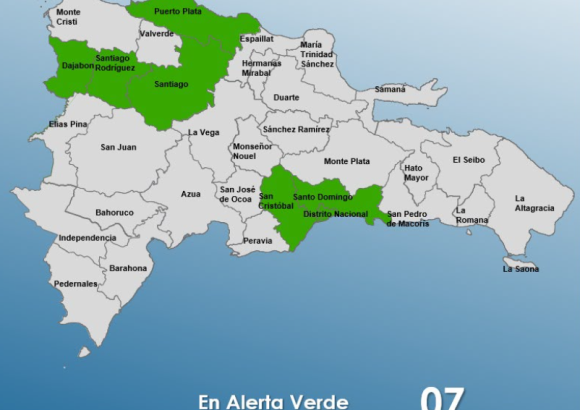
    Residents of the Dominican Republic are navigating heightened weather risk this week, after national emergency officials rolled out multi-level alerts across nearly the entire country in response to sustained downpours and rapidly worsening soil saturation.

    The Emergency Operations Center (COE), relying on real-time data and forecasts from two leading national agencies—the Dominican Institute of Meteorology and the National Institute of Hydraulic Resources—implemented the alert system, placing 18 provinces and the country’s National District under yellow alert, with an additional nine provinces classified under green alert.

    Weather officials have cautioned that current atmospheric conditions remain primed for continued precipitation across much of the nation, which in turn amplifies a range of dangerous threats for communities in affected zones. These risks include flash urban flooding, overflowing riverbanks, landslides on saturated hillsides, and other weather-related emergencies that can threaten both life and property.

    In a series of public advisories released alongside the alert declaration, COE has pushed clear safety guidance to help residents mitigate harm. The agency strongly urges the public to avoid attempting to cross swollen rivers, streams, and ravines, even if the water appears shallow enough to traverse. It also asks people living in alert zones to steer clear of recreational bodies of water, where hidden hazards from shifting currents and debris can create unexpected danger.

    Maritime safety guidance has also been issued for coastal operators. Small and medium-sized watercraft working along the Dominican Republic’s Atlantic coast, stretching from Cabo San Rafael in the east to Punta de Manzanillo in the west, are told to exercise extreme caution while navigating, and to refrain from traveling far offshore due to dangerous rough sea conditions. By contrast, COE confirmed that sea conditions along the country’s Caribbean coastline remain stable and normal for commercial and recreational activity.