分类: society

  • Man Beaten, Robbed and Left Unconscious at West Bus Station

    Man Beaten, Robbed and Left Unconscious at West Bus Station

    A brutal, unprovoked assault and robbery in the early hours of Saturday at Antigua’s West Bus Station has left a local man recovering at home, while reigniting widespread community anxiety over rising violent crime and insufficient public safety measures across high-traffic transit hubs.

    Details of the shocking attack, shared by a close relative of the victim, outline that the assault unfolded sometime after midnight, when multiple unknown attackers ambushed the man. In a particularly dehumanizing turn, the assailants stole every possession the man carried with him – even stripping him of his outer clothing, including his pants and shoes, leaving him only in his underwear before fleeing the scene. The attackers left the man unconscious from the beating on the concrete floor of the bus station, where he remained undiscovered for hours.

    It was not until a passing member of the public stumbled upon the injured victim that emergency services were notified. Responders rushed the man via ambulance to the territory’s primary healthcare facility, Sir Lester Bird Medical Centre. Once at the hospital, the man regained consciousness, received urgent care for traumatic head injuries sustained during the attack, and was ultimately deemed stable enough for discharge to continue his recovery at home.

    To date, law enforcement officials have not made any arrests in connection with the case. The victim, still recovering from the assault, has been unable to provide detailed identifying information about his attackers to aid the investigation. Police authorities have confirmed that they have launched a formal probe into the incident, though no new updates have been released as of press time.

    The brazen nature of the attack has sent ripples of concern through the local community. The victim’s relatives have spoken publicly about their shock, noting that the violent attack could easily have resulted in a fatal outcome given the severity of the man’s head injuries and the hours he lay untreated. Community organizers and local residents have echoed this worry, pointing to a recent string of violent incidents in public transit areas as evidence that more proactive safety measures are needed to protect residents and commuters.

  • Van Dijk-Silos lanceert stichting voor leiderschap en nationale ontwikkeling

    Van Dijk-Silos lanceert stichting voor leiderschap en nationale ontwikkeling

    On a Friday in mid-June, prominent Surinamese jurist Jennifer van Dijk-Silos officially launched Stichting Passie voor Land en Volk (Passion for Land and People Foundation), a new independent civil society organization designed to steer Suriname toward equitable, sustainable national development as the country enters a transformative era driven by its emerging oil and gas sector.

    The foundation has outlined five core priorities: cultivating responsible leadership across all sectors, strengthening active civic participation, advancing inclusive nation-building, expanding a progressive local content policy, and building a targeted strategy to leverage the global Surinamese diaspora for national growth. At the launch event, van Dijk-Silos, who serves as the foundation’s chair, emphasized that Suriname stands at a historic crossroads. The projected economic windfall from new hydrocarbon resources should not only boost state revenues but deliver tangible, widespread benefits to every segment of Surinamese society, she argued.

    “The critical question is not how much natural wealth a country holds, but how much of that wealth actually reaches and improves the lives of ordinary people,” van Dijk-Silos stated during her launch address.

    Rejecting the narrow common definition of local content that limits the framework to contract and procurement requirements, van Dijk-Silos called for a much broader, more inclusive approach to the policy. Under her vision, local content should ensure that Surinamese small and medium business owners, local workers, and national knowledge institutions directly capture meaningful gains from the country’s oil and gas expansion. “Local content is fundamentally about how Surinamese people can actively participate in building the economic future of their own nation,” she explained.

    The foundation chair stressed that long-term sustainable development cannot be achieved through natural resource extraction alone. True national prosperity depends on intentional investment in people: through accessible high-quality education, support for domestic entrepreneurship, continuous knowledge development, and the strengthening of inclusive public institutions. “Countries do not become wealthy from natural resources alone – they grow wealthy from investing in their people,” van Dijk-Silos noted.

    A key pillar of the foundation’s work is targeted engagement with the global Surinamese diaspora. With hundreds of thousands of Surinamese migrants living across the globe, the community holds untapped potential in the form of specialized skills, professional experience, capital, and international networks that can accelerate national development, van Dijk-Silos argued. Instead of framing the diaspora as people who left Suriname, the foundation reframes them as Surinamese citizens who have simply expanded their sphere of influence, and invites them to contribute to national progress. “We must see the diaspora not as those who abandoned our country, but as Surinamers who have extended their reach across borders,” she said.

    Structured as an independent cross-sector platform, the foundation will facilitate open dialogue between diverse stakeholders: ordinary citizens, domestic entrepreneurs, young people, civil society groups, academic institutions, and national government. Planned activities include public discussion forums, guest lecture series, leadership training programs, and independent research projects on key national challenges. A top priority for the organization is developing the next generation of ethical, effective young leaders, as van Dijk-Silos argues that sustainable leadership is a non-negotiable foundation for good governance, social stability, and long-term economic growth.

    Beyond economic development, the foundation is committed to advancing inclusive nation-building in Suriname, a country known for its deep cultural, ethnic, and religious diversity. Van Dijk-Silos emphasized that this diversity is not a barrier to national unity, but one of Suriname’s greatest strategic strengths. Instead of centering divisions of origin, religion, or political affiliation, the foundation calls on all Surinamers to embrace shared responsibility for the country’s future. “A strong nation is built on shared values: integrity, respect, solidarity, justice, and active civic responsibility,” she said.

    Closing her launch address, van Dijk-Silos framed the foundation’s creation as more than just the launch of a new civil society organization. It is, she said, an open invitation to all Surinamers – both those living in the country and those part of the global diaspora – to collaborate on building a future where economic growth goes hand in hand with broad social progress, shared national identity, and sustainable, people-centered leadership. “Suriname’s future will not be defined by oil alone,” she concluded. “It will be defined by the quality of our institutions, the resilience of our entrepreneurs, the potential of our people, and our willingness to work together toward a common goal.”

  • ‘Environmental giant’ Agard dies at 71

    ‘Environmental giant’ Agard dies at 71

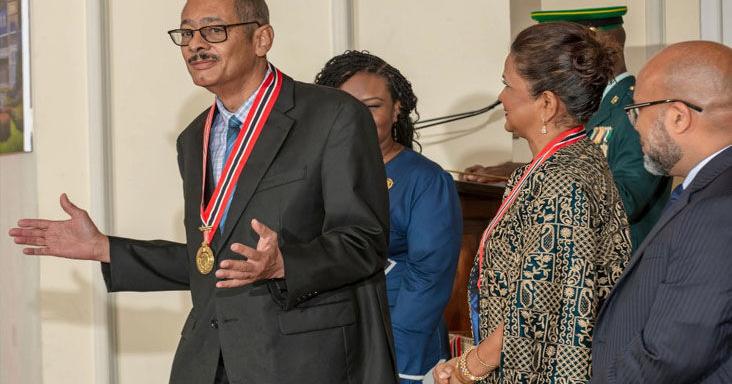
    The global environmental community is mourning the passing of John Agard, 71, the former chairman of Trinidad and Tobago’s Environmental Management Authority (EMA) and emeritus professor at The University of the West Indies (The UWI), who died on Friday.

    Widely regarded as one of the most influential conservation voices and scientific minds across the Caribbean, Agard’s decades of groundbreaking work in sustainable development and climate action earned him respect from colleagues and leaders at home and abroad, with tributes flooding in from across sectors in the days following his death.

    A decorated scholar and public servant, Agard was awarded the Order of the Republic of Trinidad and Tobago, the nation’s highest honor, in 2023. His international reputation was cemented through key contributions to global climate research: he served as a lead author for the “Small Islands” chapter of the Intergovernmental Panel on Climate Change’s (IPCC) Fourth Assessment Report, a work that jointly received the 2007 Nobel Peace Prize alongside former U.S. Vice President Al Gore.

    Beyond the IPCC, Agard held critical roles in other landmark global environmental assessments. He led author teams for the “Small Island Systems” and “Scenarios” chapters of the 2005 Millennium Ecosystem Assessment, work that earned him the prestigious Zayed Prize for the Environment. He also served as coordinating lead author for the “Scenarios” chapter of the United Nations Environment Programme’s 2007 *Global Environmental Outlook*, and co-led the 2007 Caribbean Sea Assessment (CARSEA) in partnership with the Cropper Foundation.

    Closer to home, Agard left an indelible mark on Trinidad and Tobago’s environmental governance. During his tenure as EMA chairman, he played a central role in drafting the nation’s foundational National Environmental Policy, and shaped landmark local environmental legislation including the 2001 Certificate of Environmental Clearance Rules, Noise Pollution Rules, and Water Pollution Rules. He also spearheaded the designation of some of the country’s most critical protected areas: Matura National Park was named an Environmentally Sensitive Area in 2004 under his leadership, Nariva Swamp became a Managed Resource Protected Area in 2006, and the Aripo Savannahs received designation as a Strict Scientific Reserve in 2007.

    Rose-Marie Belle Antoine, principal of The UWI’s St. Augustine campus, remembered Agard as a multi-faceted leader whose impact extended far beyond research. “A giant in the intellectual world, especially in relation to the environment and climate change sciences, he was committed to sharing his knowledge and worked just as tirelessly as a mentor,” Antoine said in an official statement. She added that Agard, a long-time faculty member at the university, was a brilliant, innovative public servant who gave immeasurably to The UWI, the local community, and the global environmental movement.

    Courtenay Rooks, a veteran environmental conservationist and former president of the Trinidad and Tobago Incoming Tour Operators Association, honored Agard’s lifelong commitment to protecting Trinidad and Tobago’s unique natural heritage. “The country has lost a patriot whose life was dedicated to the future of Trinidad and Tobago,” Rooks said, describing Agard as one of the most generous and remarkable people he had ever encountered. “He was passionate about Trinidad and Tobago and always pushed to save our environment. His work at The UWI and the Institute of Marine Affairs was done selflessly, with the same passion and strong focus to help save the planet. The world has lost a giant.”

    Colleagues who worked alongside Agard at the EMA and across the Caribbean environmental sector have called for greater permanent recognition of his contributions, particularly his foundational work in development planning, disaster risk reduction, and climate adaptation policy for Small Island Developing States, a group disproportionately vulnerable to climate impacts. They emphasized that his decades of work should not be forgotten by future generations.

    Agard’s alma mater, Fatima College, also joined in paying tribute via a social media post, noting that the alumnus did not only transform academic environmental science but dedicated his career to leveraging research to improve quality of life for all. Agard was among the first group of inductees into the Fatima College Hall of Achievement in 2015, honored in the Pioneers category for his trailblazing work.

    In its official announcement of Agard’s passing, The UWI reflected on his lifelong mantra, which summed up his core mission: his passion was “to make the world a better place. To make my country a better place. To make my region a better place.” The university remembered him first as a groundbreaking scientist, and above all, as a leader fiercely committed to protecting the planet’s natural environments for current and future generations.

  • Cases of missing teenagers down

    Cases of missing teenagers down

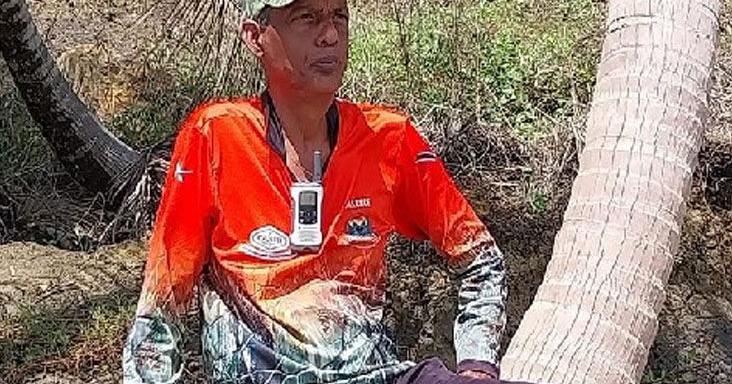
    As the Caribbean Secondary Education Certificate (CSEC) examinations wrapped up on June 19, the head of one of Trinidad and Tobago’s leading volunteer search and rescue organizations is sounding a warning: historical data points to an upcoming uptick in reported cases of missing teenage girls, even as overall missing person statistics have dropped sharply so far this year.

    Vallence Rambharat, leader of the Hunters Search and Rescue Team (HSRT), shared his analysis in an interview with the Sunday Express from Chase Village last month, noting that recurring patterns around major public holidays, seasonal events, and school break periods have consistently shaped missing person case volumes. From Christmas and Carnival to Point Fortin Borough Day and the annual August school vacation, Rambharat explained, these post-event periods almost always see an increase in young people leaving difficult home environments.

    Current data already shows a dramatic downward shift in the share of missing person cases involving runaway teenage girls. In 2022, this group made up 38% of all missing person reports across Trinidad and Tobago. Through the first part of 2026, that share has fallen to just 14%, Rambharat said. The overall volume of missing person reports has also dropped significantly, averaging only 22 new cases per month this year compared to higher numbers in previous years.

    But despite these encouraging trends, Rambharat emphasized that teenage girls who go missing remain the most widely misunderstood group of missing persons in the country. He pushed back against the widespread public perception that most of these young people run away from home simply to pursue romantic relationships, a harmful stereotype he said leads to premature judgment and underinvestment in resolving cases.

    “Most people just say they run away with a man, and that is not the full story,” Rambharat explained. “While that may sometimes be the outcome, the root cause is almost always severe instability and hardship at home. These girls are dealing with chaotic, unsafe home environments, and they are just looking for a way out.”

    Rambharat detailed the core underlying issues that drive many teenage runaways: physical, emotional, and sexual abuse, chronic neglect, incest, and persistent socio-economic hardship that makes home life untenable for minors as young as 16 and 17. In many cases, he added, vulnerable teenagers who leave home end up falling for manipulative relationships outside the home that compound their original problems, leaving them in far more dangerous situations than they left behind.

    Because of these complex underlying issues, the HSRT often partners with the Children’s Authority and Child Protection Unit to conduct deeper investigations into cases of missing teenage girls, rather than treating them as routine runaways. Rambharat noted that many of these young people open up to rescue team members once they are located, confirming the pattern of domestic hardship that led them to leave.

    Beyond teenage girls, Rambharat highlighted two other high-priority groups that require more public awareness and systemic support. The HSRT’s most concerning caseload involves adults between the ages of 20 and 50, the majority of whom are women who intentionally leave toxic situations and do not want to be located by family or authorities. When the HSRT locates these individuals, Rambharat said the team honors their requests for privacy, keeping their location confidential to allow them to build new, safe lives.

    The second most misunderstood group, Rambharat added, is elderly adults, particularly those living with undiagnosed dementia. He urged family members to educate themselves on the early warning signs of cognitive decline and to seek regular medical check-ups for all relatives over the age of 60. Catching dementia early, he explained, can help families put safeguards in place to prevent elderly adults from wandering off and becoming lost.

    When asked if Trinidad and Tobago is facing a hidden crisis of missing persons, Rambharat framed it as a manageable but underaddressed problem, not a full-blown crisis. He credited the HSRT’s widespread use of social media to publicize missing person cases with helping to bring broader public attention to the issue in recent years.

    To improve the country’s overall response to missing person cases, Rambharat is calling on the Trinidad and Tobago government to establish a dedicated, centralized missing persons unit that unifies search and rescue resources across the Police Service, Fire Service, Coast Guard, and Defence Force. Currently, Rambharat argued, different agencies operate in isolated silos, creating unnecessary coordination delays and slowing response times for critical cases.

    He also called for increased public investment in specialized search and rescue equipment, including upgraded drones, advanced sonar technology, purpose-built utility vehicles, and a dedicated emergency response helicopter. Rambharat pointed to a recent high-profile extraction of a hiker with a broken leg from a remote trail to illustrate the gap in current resources: it took the Defence Force 48 hours to deploy assistance, a delay that could have been avoided entirely if a dedicated helicopter was available for emergency response.

    A dedicated unified unit and upgraded equipment, Rambharat said, would drastically cut response times and improve outcomes for the most urgent missing person and search and rescue cases across the country.

  • ‘Total blackout’

    ‘Total blackout’

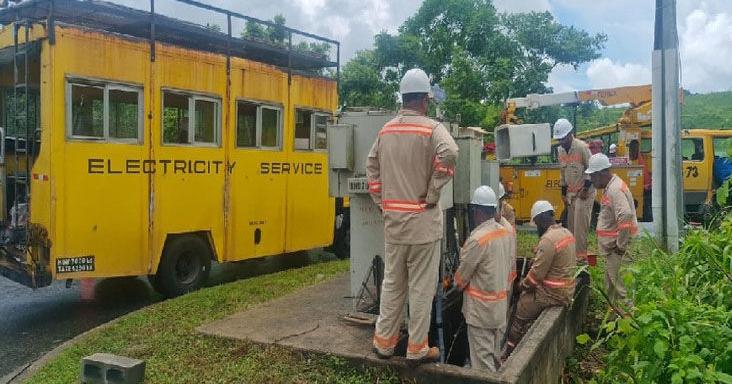
    A deliberate act of cable vandalism in Princes Town, Trinidad and Tobago, left hundreds of residents across multiple local communities without power for nearly a day between Friday and Saturday, marking the second major attack on national electricity infrastructure in less than a month. The sabotage targeted critical high-voltage power infrastructure at the intersection of Seebalack Avenue and Pagee Trace, where perpetrators severed cables connected to a 12,000-volt circuit breaker. The damage also cut four primary high-voltage cables that feed 30 pad-mounted transformers serving the Housing Development Corporation’s (HDC) large-scale Fairfield housing development, triggering a widespread blackout that extended far beyond the development itself.

    The affected areas included the full Fairfield Housing Development, as well as adjacent neighborhoods of Craignish, Indian Walk, Buen Intento, Mathilda and New Grant, leaving approximately 450 residential and commercial customers without power, according to an official statement released Saturday by the Trinidad and Tobago Electricity Commission (T&TEC). T&TEC emergency working crews deployed immediately after the outage was reported, working overnight through Friday and into Saturday to fully repair the damaged distribution hub. Power restoration was rolled out in phases: the first disconnected neighborhoods regained service four hours after crews arrived, the second phase of the Fairfield development had service restored by 11:05 a.m. Saturday, and the first phase of the development was fully reconnected by 12:30 p.m.

    Local and national officials have issued urgent appeals for public assistance to identify and apprehend the perpetrators, warning that vandalism of critical public infrastructure carries severe risks for both the community and the vandals themselves. Dr. Aiyna Ali, Member of Parliament for Princes Town, emphasized that attacks on public utilities disrupt essential services that all residents rely on, and called on anyone with information about the responsible parties to contact Crime Stoppers anonymously at 474-TIPS (8477). “Together, we can help protect our communities and the services we all depend on,” Ali noted.

    T&TEC echoed the appeal, adding a critical safety warning for the public: any tampering with high-voltage power infrastructure carries extreme risk of severe injury or fatal electrocution. The commission advised residents to avoid all unauthorised access to overhead lines, substations and related power equipment, and urged anyone with details of the vandalism to call T&TEC’s anonymous tip line at 474-8467.

    Latchmi Narine, a local government councillor, described the incident as a total blackout that upended daily life across the affected region for hours. Speaking to the *Sunday Express*, Narine pointed out that vandalism against public infrastructure has become an increasingly serious problem across Trinidad and Tobago. She noted that the perpetrators appeared to have prior knowledge of power systems, as they managed to tamper with live high-voltage cables without being electrocuted – a dangerous coincidence that Narine called “really a sad situation for the country.” To prevent future attacks, Narine revealed plans to install permanent security cameras across vulnerable communities to deter potential vandals.

    Many affected residents expressed frustration over the disruption to their daily routines. Kelly Williams, a Fairfield resident, told reporters he was in the middle of watching a World Cup football match when the neighborhood suddenly went dark, after he heard a loud bang that sounded like a transformer explosion. Williams said local rumors indicate the vandals targeted the cables to steal copper wiring, adding that outsiders were almost certainly responsible for the disruption. The outage left him particularly worried about the aquarium fish he keeps for relaxation, which rely on electric-powered filtration systems to survive.

    Another resident, Anton Layne, called for harsh legal action against vandals to deter future attacks. “The authorities need to put strict laws and measures in place against vandalism. When they pick up with them, put them inside and throw away the keys,” Layne said.

    This latest incident is not an isolated one: less than a month prior, on June 10, a would-be vandal suffered severe burn injuries after being electrocuted while attempting to tamper with infrastructure at T&TEC’s Brechin Castle substation. The intruder made contact with a 132-kilovolt breaker, triggering a system-wide voltage dip across large parts of the country at 9:45 a.m. that day. Security camera footage from the substation captured the man being stunned by the shock and falling to the ground, before he recovered, fled the scene and left his tools behind. He was apprehended shortly after the incident and taken for emergency medical treatment for his severe burns. T&TEC noted at the time that the national grid’s protective safety mechanisms worked as designed to prevent widespread outages, and the grid remained stable after the incident. The commission repeated its longstanding public safety warning following the June incident, reminding the public that any interference with power infrastructure carries potentially fatal risks.

  • Former MP hails blind student’s historic CPEA success, urges corporate support

    Former MP hails blind student’s historic CPEA success, urges corporate support

    An 11-year-old blind student from St. Vincent and the Grenadines (SVG) has captured national attention for her extraordinary performance in the 2024 Caribbean Primary Exit Assessment (CPEA), earning a spot at one of the country’s most prestigious secondary institutions. Former East St. George Member of Parliament and ex-finance minister Camillo Gonsalves, who left office after November 2023’s general election, shared the inspiring news in a public Facebook video posted Saturday, highlighting what he calls a defining milestone for inclusive education in the nation.

    Faith Grant, who was born without sight, completed her primary education at Fair Hall Government School, an institution that has pioneered a mainstream inclusive education programme for students with physical and learning disabilities. Out of 1,760 CPEA test-takers across SVG, Grant ranked 43rd overall and 19th among all female students — a result that secured her admission to the elite Girls’ High School (GHS).

    Gonsalves emphasized that Grant took the exact same standardized examination as every other student, with only targeted accommodations made to help her access test content. A trained invigilator read all questions aloud to her, and for visual components such as geometric diagrams, test staff described shapes by tracing their outlines on her hand or back to help her conceptualize the information. Despite these additional barriers, Grant not only passed the high-stakes exam but outperformed the vast majority of her sighted peers.

    The former MP, who has followed Grant’s academic journey closely for years, shared that the young student has long dreamed of attending GHS, a goal that has now become a reality. He described Grant as a multilingual, high-energy learner with an insatiable love of literature and a natural aptitude for mathematics and science. At Fair Hall Government School’s graduation ceremony held June 12, Grant already received multiple academic awards, and she now stands as the school’s highest-ranking CPEA graduate in this year’s cohort.

    Gonsalves credited much of Grant’s success to the intentional inclusive education model implemented at Fair Hall Government School, led by principal Angella Kydd Roberts. Several years ago, school leadership made a deliberate decision to integrate students with physical and learning challenges into the general student body, providing them with the same core curriculum as their peers while offering specialized support. The school counts a number of faculty with formal special education training, and even uncertified staff have embraced the institution’s mission, adapting their teaching methods to meet diverse student needs with creativity and care. Grant is not the first student with special needs from Fair Hall to advance to secondary education, but Gonsalves confirmed she is the highest-achieving in the school’s history based on CPEA outcomes.

    Placing Grant’s achievement in historical context, Gonsalves noted that when he was a child, blind students in SVG were excluded from mainstream primary education entirely, let alone offered access to elite secondary schools. Grant’s admission to GHS marks a historic first for the nation, and Gonsalves framed her success as both a personal victory and a national milestone for SVG’s evolving education system. While he acknowledged that additional accommodations will be needed to support Grant during her secondary studies, he expressed full confidence in her ability to overcome any future obstacles.

    To support Grant’s transition to GHS, Gonsalves has issued a public appeal to corporate entities and good corporate citizens across SVG to provide financial support for specialized assistive technology. Grant is currently learning braille, but many advanced secondary school textbooks and learning materials — particularly those with complex diagrams and illustrations — are not available in braille format. Modern adaptive tools can convert these materials into accessible formats for Grant, but the equipment carries a high price tag that is out of reach for most families. Gonsalves urged local businesses to connect with Grant’s mother to offer support that will remove barriers to her continued academic success.

    Closing his message, Gonsalves emphasized that Grant’s achievement was a collective effort, thanking her family, the school’s principal, and all of her teachers for the support that brought her to this point. “It really has been a village that has taken Faith to this point,” he said. He ended with a hopeful pun on Grant’s first name, echoing the SVG national anthem: “I know she’ll go further, and I know that our faith will see us through. Big up.”

  • Chain Snatcher caught in tape

    Chain Snatcher caught in tape

    A serial street thief who targeted women walking through crowded residential corridors of a mid-sized city has finally been taken into custody, after weeks of coordinated police work aided by widely circulated closed-circuit television footage. The suspect, who has been linked to at least seven separate chain-snatching incidents over the past two months, was identified by members of the public after local law enforcement released grainy but recognizable surveillance clips to local media and community social media groups last week.

    The string of offenses had left residents on edge, particularly elderly women and female commuters who often travel alone through the busy market area where most of the thefts occurred. In each incident, the snatcher would grab gold chains from victims’ necks from behind, before fleeing on a speeding motorcycle before bystanders could react. The total value of stolen property is estimated to exceed $12,000, according to police statements.

    Within 48 hours of the footage being published, three separate tipsters contacted police to provide the suspect’s name and common hangouts, leading to a sting operation that arrested the man late Saturday night as he prepared for another attempted theft near a local bus station. Police have recovered three of the stolen chains, and are working to trace the remaining stolen items that were reportedly sold to a local pawn shop. Investigators also noted that the suspect has prior convictions for similar theft offenses dating back to 2019. Local community leaders have praised the collaborative effort between police and residents, highlighting the role of public surveillance in solving petty street crime quickly.

  • Clothesline display sparks conversation on challenges facing men and boys

    Clothesline display sparks conversation on challenges facing men and boys

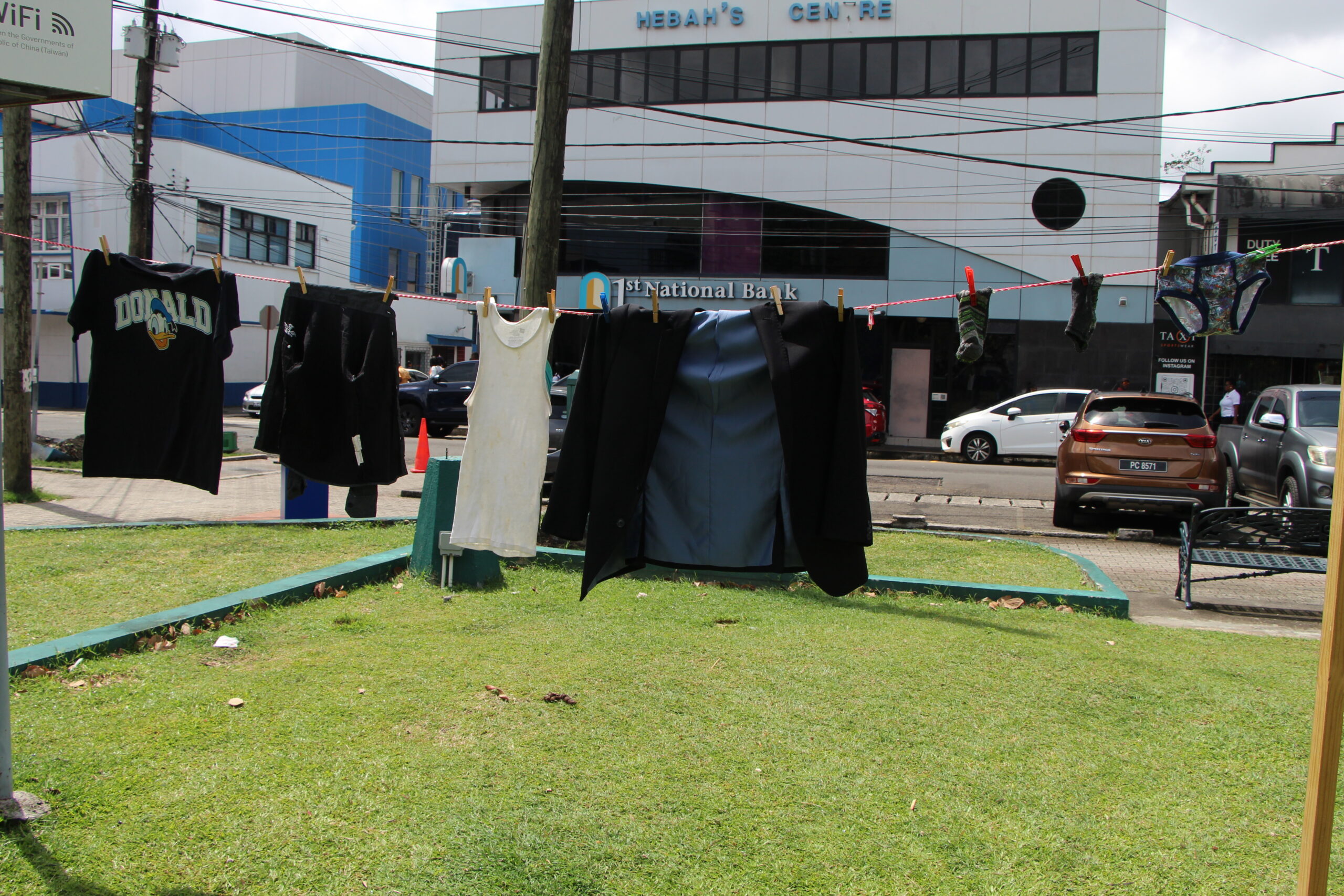
    In the heart of Castries at Derek Walcott Square, a unique public art installation — strings of clotheslines strung across the green, holding everyday garments for men and boys of all ages — has become an unexpected catalyst for open, vulnerable dialogue about the rarely centered struggles of men across Saint Lucia.

    Organized earlier this week by the Department of Gender Affairs under the Ministry of Equity, Social Justice, Gender and Older Persons, the interactive display is part of a series of lead-up events for Father’s Day, and aligns with the ministry’s newly launched national campaign, *Fathers Who Care: Men Raising the Next Generation*. Unlike traditional awareness events that rely on lectures or printed materials, the unassuming clothing installation was designed to draw the curiosity of everyday passersby, turning a casual stop in the public square into an opportunity for reflection and connection.

    Janey Joseph, Director of the Department of Gender Affairs, explained that the project grew out of a longstanding gap in public discourse: issues facing men and boys are often sidelined in conversations about social development and gender equity, even as they grapple with unique, unaddressed barriers to personal and familial well-being. “The clothing display worked exactly as we hoped it would — it caught the eye of people who would otherwise never stop to engage with this topic, and gave us a natural opening to talk about what men in our country actually go through,” Joseph shared in an interview after the event. “Our goal was to create a low-pressure public space where people could unpack what fatherhood really means, celebrate the critical role fathers play in children’s lives, and talk openly about the hurdles that hold too many men back.”

    To the team’s delight, public response — especially from men in attendance — far exceeded initial expectations. Dozens of participants opened up about their personal experiences as fathers, guardians, and young men navigating social expectations of masculinity, with many openly acknowledging the gaps in support they face to show up as the parents they aspire to be. “What struck us most was how many men were hungry for this space,” Joseph noted. “They didn’t hold back — they talked about the pressures they feel, the uncertainty they experience when raising kids, and how little access they have to resources that are made for them.”

    The impact of the day extended beyond just conversation: one participating father was directly connected to a local development partner that offers specialized parenting guidance and support for men, delivering on the campaign’s core goal of turning dialogue into tangible action. “That is exactly the kind of outcome we worked toward,” Joseph said. “It’s one thing to talk about issues — it’s another to connect someone to the help they need to thrive as a parent.”

    Joseph emphasized that the initiative marks a critical shift in Saint Lucia’s approach to gender equity and social development, marking a growing recognition that supporting men and boys is not an afterthought, but a core component of building a more inclusive society. “As a department and a ministry, we know that men and boys face challenges that are specific to their experiences,” she explained. “These issues matter, and they deserve intentional attention. When we talk about gender equality, lifting up men and boys isn’t separate from that work — it’s essential to building stronger families, healthier communities, and a country that leaves no one behind.”

    Moving forward, the clothing display is just one piece of the ongoing *Fathers Who Care* campaign, which has a broader mandate to promote responsible, supported fatherhood, strengthen intergenerational family bonds, and expand access to resources for men as they take on roles as parents, mentors, and positive community role models.

  • Tropical Wave Set to Bring Thunderstorms and Gusty Winds to Antigua and Barbuda

    Tropical Wave Set to Bring Thunderstorms and Gusty Winds to Antigua and Barbuda

    A low-pressure tropical disturbance currently traversing the Eastern Caribbean is set to bring unstable, stormy conditions to the twin-island nation of Antigua and Barbuda through the afternoon and evening hours of the current day. Local meteorological officials have already issued formal advisories urging the public to stay on high alert for severe thunderstorms and other dangerous weather events tied to the moving system.

    Leading climatologist Dale Destin detailed the projected impacts of the tropical wave, noting that the system will primarily trigger scattered rain showers and thunderstorm outbreaks across the islands. Most areas can expect total rainfall accumulation between 3 and 12 millimeters, equal to 0.12 to 0.5 inches, which falls well outside the threshold for widespread extreme precipitation.

    Even though widespread heavy rainfall is not on the forecast, Destin emphasized that isolated thunderstorm cells could strengthen quickly into intense events. These stronger storms have the potential to produce short bursts of heavy downpours, sudden strong wind gusts and repeated cloud-to-ground lightning. That combination creates a measurable risk of localized flash flooding in low-lying areas, as well as temporary disruptions to daily travel and routine activities across affected communities.

    Forecast models indicate the unsettled conditions will be short-lived. As the tropical wave continues its westward track and exits the Antigua and Barbuda region by Sunday, weather patterns across the islands are projected to improve markedly. Sunday’s forecast calls for just a 30% probability of any rain showers, with steady easterly winds blowing between 12 and 18 miles per hour, with occasional gusts peaking at 28 mph.

    In their public advisory, officials have encouraged all residents to stay updated on changing weather conditions through official local channels. They also advise households to secure loose outdoor furniture and other unsecured objects ahead of the stormy period, and to follow standard safety protocols whenever thunderstorms are active in their area. Once the system fully departs the islands, Destin confirmed that calm, stable weather will return to Antigua and Barbuda, closing his statement with a note of well-wishing for the public’s upcoming weekend: “Happy weekend.”

  • Abiamofo: Wanbetaling overheid aan SWM belemmert uitbreiding drinkwatervoorziening

    Abiamofo: Wanbetaling overheid aan SWM belemmert uitbreiding drinkwatervoorziening

    Planned expansions to Suriname’s national drinking water network are facing significant delays, driven by a combination of crippling unpaid utility bills from state agencies and chronic underfunding, Natural Resources Minister David Abiamofo has confirmed. Speaking Friday during budget debates in the country’s National Assembly, Minister Abiamofo outlined the multiple overlapping challenges that have derailed the timeline for improving access to clean piped water across the nation.

    At the top of the list of issues is the severe financial strain weighing on the Suriname Water Supply Company (SWM), the public utility responsible for managing and expanding the country’s drinking water infrastructure. Minister Abiamofo revealed that government agencies collectively owe SWM approximately 100 million Surinamese dollars in unpaid water bills, a sum large enough to move several stalled expansion projects to completion if it were collected. Beyond this accumulated debt, the minister added that the annual budget allocated to national drinking water projects has long been structurally insufficient to meet the country’s needs.

    As a result of the funding gap, only a small number of communities will be connected to the national drinking water network this year, even as expansion projects launched between 2023 and 2025 remain incomplete. “With the amount allocated in the current budget, we can only connect a handful of communities,” Abiamofo told lawmakers.

    The minister also noted that the national government is continuing ongoing efforts to secure additional financing from multilateral development organizations, bilateral international partners and private sector investors to close the funding gap. Beyond core budget shortfalls and unpaid public sector debt, Abiamofo highlighted two additional barriers putting extra pressure on SWM’s limited resources.

    First, many new residential subdivision developers fail to complete the required water connection infrastructure before selling lots and moving in residents. When homeowners are left without access to piped water, they turn to SWM to complete the work, forcing the already cash-strapped utility to cover unplanned costs. Second, low water pressure across many regions of Suriname remains a persistent, well-documented problem. While the government has already developed a formal Water Supply Masterplan to address this and other longstanding infrastructure issues, full implementation of the plan is entirely dependent on securing enough outside funding to move forward.