分类: society

  • London police failed to vet thousands of recruits — report

    London police failed to vet thousands of recruits — report

    An internal investigation has uncovered systemic failures within London’s Metropolitan Police Service regarding officer recruitment vetting procedures, prompting a government-announced independent inquiry into the force’s hiring practices. The review revealed that inadequate background checks during the 2019-2023 recruitment drive resulted in dozens of officers with concerning histories being hired, many of whom subsequently committed criminal offenses or engaged in serious misconduct.

    The damning report identified two particularly egregious cases: David Carrick, who became one of Britain’s most notorious serial sex offenders, was hired in 2017 without proper vetting that would have uncovered prior domestic abuse allegations. Similarly, Cliff Mitchell, later convicted of multiple rapes, joined the force in 2020 after a special diversity-focused vetting panel overturned his initial rejection despite previous child rape allegations.

    Metropolitan Police leadership attributed these critical lapses to intense pressure to meet government-mandated recruitment targets. The now-disbanded vetting panel, originally established to enhance diversity within the force, ultimately approved 114 previously rejected applicants—25 of whom subsequently faced misconduct allegations or criminal charges.

    This revelation compounds existing institutional challenges for the Met, which a landmark 2023 report found to be fundamentally racist, sexist, and homophobic in its structures and practices. The force has been rocked by multiple scandals involving serving officers convicted of sexual offenses in recent years.

    In response to the findings, the UK Home Office announced an urgent independent inspection of the Metropolitan Police’s recruitment and vetting standards. Interior Minister Shabana Mahmood condemned the failures as “a dereliction of the Met’s duty to keep London safe,” while Assistant Commissioner Rachel Williams characterized the report as part of the force’s commitment to transparency regarding past practices that allowed “unsuitable people” to join the police service.

  • Ardenne Prep/Extension PTA executive resigns over school fee dispute

    Ardenne Prep/Extension PTA executive resigns over school fee dispute

    KINGSTON, Jamaica — In a dramatic demonstration of institutional discord, the entire executive committee of Ardenne Preparatory and Extension High School’s Parent-Teacher Association (PTA) has tendered its immediate resignation. The mass departure stems from profound disagreements with the school’s governing board regarding financial transparency, administrative communication, and overall governance practices.

    The rupture follows months of strained relations between the PTA and school administration, culminating in a contentious proposal to raise term fees to $150,000 for preparatory students and $130,000 for extension division attendees starting January 2026. School authorities justified the increases as necessary measures to address rising operational costs, including teacher compensation, technological resources, and facility maintenance, which they stated have created a growing budgetary deficit.

    According to the resignation letter disseminated to the school community on Thursday, the PTA executive accused the board of exhibiting ‘complete disregard’ for collaborative dialogue during fee adjustment negotiations. Particularly galling to the resigning members was the board’s decision to communicate the fee changes directly to parents via email, effectively bypassing a prearranged meeting between the board chair and PTA leadership.

    The departing executive highlighted critical concerns regarding financial accountability, noting the absence of a clear strategic plan demonstrating how the increased revenue would enhance the institution’s long-term financial sustainability. Parents remain uncertain about potential future increases as the school provided no transparency regarding the scale or timing of additional fee adjustments.

    Despite their resignation, the outgoing committee reaffirmed strong support for teaching and administrative staff, emphasizing the need for competitive salary structures to attract and retain qualified professionals. In a gesture of continued commitment to school improvement, the executive confirmed the transfer of $304,913 in net proceeds from the December 2025 Christmas Concert to their successors. These funds, originally designated for the Resource Centre project transformation, will support the ongoing redevelopment of the former school library facilities.

  • Jamaican appointed as chancellor of New York City public education system

    Jamaican appointed as chancellor of New York City public education system

    NEW YORK — In a significant development for American education, Jamaican-born educator Kamar Samuels has been appointed as the new chancellor of New York City’s public school system, the nation’s largest school district. The appointment, effective January 1, was announced by New York City Mayor Zohran Mamdani and has received enthusiastic endorsement from Bronx Borough President Vanessa Gibson.

    Samuels brings over two decades of educational leadership experience to the role, having previously served as superintendent for Manhattan’s District 3 and Brooklyn’s District 13. His professional journey within the NYC public school system began through the NYC Teaching Fellows program as an elementary school teacher in the Bronx, followed by leadership positions including principal of the Bronx Writing Academy (MS 323) and executive roles in NYCPS central offices.

    Bronx Borough President Gibson, herself of Caribbean heritage with a Trinidadian father, expressed strong support for the appointment. ‘With decades of experience as a veteran educator, school leader and public school parent, Chancellor Samuels brings a deep understanding of the public education system to this role,’ Gibson stated. She emphasized that his dedication to academic excellence, culturally responsive learning, and student achievement aligns with the fundamental belief that every child in New York City deserves access to safe, inclusive, and high-quality education.

    The NYC Public Schools system highlighted Samuels’ educational philosophy, noting his focus on creating ‘schools that are safe, academically rigorous and truly integrated.’ According to the district, Samuels believes schools should reflect New York City’s unique diversity through learning experiences grounded in cultural understanding and respect. His approach emphasizes high expectations, meaningful support, and family partnership as essential components of student success.

    Samuels’ educational background includes attendance at Jamaica College in St. Andrew, Jamaica, before continuing his studies at Baruch College, City University of New York (CUNY). His appointment comes as the city administration continues significant investment in educational infrastructure, with Gibson noting over $85 million in capital funding allocated for Bronx schools alone.

    Gibson emphasized the importance of continued collaboration with the chancellor’s office to ensure students have the resources and opportunities needed to excel academically. She expressed commitment to advancing partnerships that will further invest in schools, eliminate barriers to academic success, bridge the digital divide, and equip youth with resources for successful futures.

  • Historic Manning’s School to benefit from 2026 National Leadership Prayer Breakfast

    Historic Manning’s School to benefit from 2026 National Leadership Prayer Breakfast

    The Manning’s School in Westmoreland, a historic Jamaican institution severely damaged by Hurricane Melissa in October 2025, will receive substantial reconstruction support for its wellness center through this year’s National Leadership Prayer Breakfast (NLPB) initiative.

    The 46th annual NLPB has designated western Jamaica as its primary focus area, specifically targeting the Thomas Manning Building structure – believed to be the earliest surviving section of the educational facility dating back to the early 1900s.

    Reverend Wayneford McFarlane, secretary of the NLPB Committee, confirmed during a Wednesday media briefing that both the VM Group and NLPB had jointly identified Manning’s School as this year’s charitable beneficiary. “We are concentrating our efforts on the sick bay facility which demands considerable rehabilitation,” McFarlane stated.

    Reverend Sam McCook, former NLPB Committee chairman, revealed the project carries an estimated value of $2.8 million Jamaican dollars. The undertaking will be executed in partnership with the Manning’s School Past Students Association. McCook elaborated: “The initiative allocates approximately $2.5 million for a modular structure with an additional $300,000 designated for ancillary components. This substantially exceeds our traditional fundraising scope, but the alumni association has welcomed our supportive participation.”

    VM Group President and CEO Courtney Campbell emphasized his organization’s commitment to the NLPB’s core principles: “We affirm the power of faith, the effectiveness of prayer, the necessity of unity, and share the conviction that righteousness elevates a nation.”

    In recognition of Hurricane Melissa’s devastating impact on western parishes, the NLPB Committee additionally announced the 2025 National Week of Prayer will commence in that region. The inaugural service is scheduled at Montego Bay’s First Church of the Open Bible in St. James, culminating with the January 15th NLPB event under the thematic banner ‘Caring for our neighbour’.

  • Gonzales: Constituents being harassed

    Gonzales: Constituents being harassed

    Opposition MP Marvin Gonzales has raised serious concerns about aggressive law enforcement tactics targeting his Lopinot/Bon Air West constituents, linking the alleged harassment to recently intensified penalties for traffic violations. The PNM chairman and Opposition Chief Whip detailed numerous complaints from community members who endured extensive transportation delays and widespread inconvenience during January 7 enforcement operations.

    In a formal Facebook statement dated January 8, Gonzales described how vulnerable demographics—including elderly citizens, students, young women, and children—faced hours-long waits for transportation due to the stringent enforcement measures. He characterized the situation as creating an atmosphere of ‘great fear and anxiety’ within the community, further exacerbating social tensions.

    The former national security minister condemned what he termed the ‘weaponization of law enforcement,’ emphasizing that successful policing requires citizen cooperation and community engagement. Gonzales advocated for educational initiatives and collaborative approaches rather than punitive measures, warning that oppressive tactics would ultimately undermine social order and stability.

    In response to inquiries about his planned course of action, Gonzales committed to leveraging his parliamentary position to address these concerns, stating: ‘I will use my voice as an MP.’

    The developments occur against the backdrop of Prime Minister Kamla Persad-Bissessar’s announced parliamentary reforms regarding traffic enforcement. Through social media channels on January 7, the Prime Minister revealed plans to implement mandatory grace periods allowing drivers to rectify vehicle defects before fines are imposed. Persad-Bissessar simultaneously defended the strengthened enforcement measures, citing rampant traffic infractions and deliberate lawlessness as justification for the crackdown.

  • Diego’s deadly dawn: Residents cry for hangman’s return

    Diego’s deadly dawn: Residents cry for hangman’s return

    The community of Diego Martin finds itself grappling with a surge of violence that starkly contrasts with Trinidad and Tobago’s overall improvement in homicide rates. While the nation closed 2025 with its lowest murder count in ten years, this western region has witnessed three of the country’s eleven murders within the first week of 2026, creating palpable tension among residents.

    The latest victim, 33-year-old Elijah Williams from Blue Basin, was fatally shot on January 7th, marking the second homicide in that specific area within 24 hours. Newsday’s visit to the borough on January 8th revealed a community oscillating between somber resignation and simmering anger, with residents proposing radically different solutions to the escalating violence.

    Larry Duprey, a local resident speaking from Beausejour Road, advocated vehemently for the reinstatement of capital punishment. “When criminals realize there is a life-or-death consequence for their actions, they will reconsider more seriously,” Duprey asserted while acknowledging that chronic unemployment and economic desperation contribute significantly to criminal behavior among youth.

    Further along at Patna Recreational Ground, Zachary Looney (known locally as “DJ Versatile”) offered an alternative perspective while spending time with his young son. Rejecting purely political solutions, Looney suggested utilizing sentenced offenders for community maintenance under police supervision instead of defunct social employment programs. “It solves two problems in one—it saves taxpayer money and actually gets the work done,” he reasoned.

    Amanda Francis represented another viewpoint, opposing the death penalty while emphasizing socio-economic empowerment and judicial reform. “We need to focus on improving detection rates and court processing times,” Francis argued, noting that rehabilitation should become the prison system’s primary focus rather than pure punishment.

    At Bagatelle Junction, longtime resident Ms. Judy highlighted foundational issues, stating, “It starts at home with good family values,” while acknowledging the challenges of guiding youth amid negative peer influences. She expressed appreciation for visible police presence but called for intensified patrols.

    The political context surrounding this debate has gained renewed momentum following the 2025 General Election. Prime Minister Kamla Persad-Bissessar, who had campaigned on reinstating executions, has instructed her security and legal teams to investigate the death penalty’s resumption. However, despite these campaign promises, the government has not provided a definitive timeline for any policy changes. Newsday’s attempts to obtain current government stance on the matter remained unanswered at press time.

  • Over one month after Monos Island kidnapping: Tardieu, wife reunited

    Over one month after Monos Island kidnapping: Tardieu, wife reunited

    In a dramatic development following a month-long kidnapping crisis, Claribel Tardieu has been successfully rescued by Trinidad and Tobago police forces. The 47-year-old was discovered bound and blindfolded but without visible injuries during an intelligence-led operation conducted along North Coast Road, Maracas Bay between January 7-8.

    The sophisticated rescue mission involved multiple elite police units working in coordination, including the Anti-Kidnapping Unit, Northern Division Gang Unit, Northern Division Task Force, and National Operations Task Force. The operation was overseen by senior police officials including ACP Smith, ACP Singh, W/Snr Supt Maynard-Wilson, Supt McKenzie and Supt Pariman.

    This conclusion comes after the December 6 abduction of Claribel and her husband Derrick Tardieu, a 70-year-old former powerboat racer and businessman, from their Monos Island residence. The couple’s captivity gained public attention when kidnappers released a disturbing video showing them held at gunpoint with a grenade positioned near Derrick’s face. The captors initially demanded US$2.5 million ransom, later reducing it to $100,000.

    Derrick was previously recovered on December 17 along the same North Coast Road area, with reports indicating partial ransom payments totaling $150,000 and US$5,000. Family attorney Leslie-Ann Lucky-Samaroo had previously issued statements requesting privacy and emphasizing the need for medical recovery following the traumatic experience.

    Mental health professionals have highlighted the potential long-term psychological impact of such traumatic events. Psychologist Kelly McFarlane previously emphasized to Newsday that respecting victims’ boundaries and addressing their specific needs are critical components of the recovery process.

    Police authorities continue their investigation into the abduction case while the reunited family focuses on recovery from their prolonged ordeal.

  • ‘Save yourselves!’

    ‘Save yourselves!’

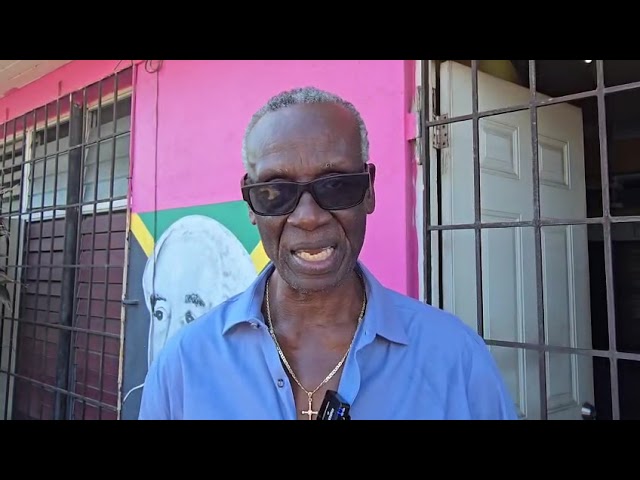
    In a powerful address at the ‘Heal the Family, Heal the Nation’ National Day of Prayer service, Jamaican Prime Minister Andrew Holness delivered a direct message to criminals despite celebrating a historic milestone: the nation has recorded fewer than 700 murders in 2025 for the first time in 31 years.

    Speaking at Power of Faith Ministries in Portmore, St Catherine on Wednesday, Holness made an emotional appeal to those engaged in criminal activities, urging them to abandon violence. “Today, I appeal to the criminals and the gunmen, and those who are involved in criminal activities, to save yourselves. Turn away from violence. Put away the gun. In fact, turn it in,” the prime minister charged.

    The significant crime reduction represents a dramatic 42% decrease in murders from the previous year, building on a 19% reduction in 2024 and a 7% decrease in 2023. Holness noted that Jamaica is approaching the regional average of 15 murders per 100,000 population, currently standing between 20-25 per 100,000.

    While acknowledging progress primarily driven by actions against organized crime—which accounts for over 70% of murders—Holness highlighted persistent challenges including domestic violence and juvenile delinquency. He emphasized that policing alone cannot solve these deeply embedded social issues.

    The prime minister called on religious institutions to expand their role beyond prayer into active community intervention. “We’re going to need the army of the church to pull in those youngsters and divert them away from the gangs and criminal activities,” Holness stated, noting that many youth join gangs simply because criminal elements reach them before community organizations do.

    Holness unveiled forthcoming government policies specifically targeting family strengthening as the next phase in crime reduction. “What is now needed is a more coordinated and concentrated policy that is instrumental and directly targeting and promoting and supporting the family in Jamaica,” he announced, emphasizing that both children and parents need educational support.

    The prime minister concluded with a sobering statistic: 95% of both perpetrators and victims of killings are young men. “It pains my heart to see our young men being killed,” Holness expressed, reinforcing his appeal for Jamaicans to value every life and work collectively toward sustaining the nation’s progress toward peace.

  • The dry season has started

    The dry season has started

    The Trinidad and Tobago Meteorological Service (TTMS) has formally announced the commencement of the 2026 dry season, marking a significant climatic transition for the Caribbean nation. In an official statement released on January 8, the TTMS detailed the atmospheric changes indicating this seasonal shift, including the intensification of the North Atlantic Sub-Tropical High-Pressure system and the establishment of upper-level westerly winds across the region.

    This meteorological transition results from complex interactions between several climatic phenomena: the equatorward migration of pressure systems, strengthened trade-wind inversion patterns, and the southward positioning of the Inter-Tropical Convergence Zone. While characterized by substantially reduced precipitation compared to wet season months, the dry season does not eliminate rainfall entirely, instead featuring different meteorological mechanisms for precipitation formation.

    During the initial phase (January-March 2026), forecasts indicate above-average rainfall and warmer temperatures, potentially alleviating vegetative stress and enhancing groundwater recharge. This unexpected moisture surplus may positively impact water security while simultaneously creating favorable conditions for mosquito breeding in standing water collections. The latter portion of the season (April-May) is projected to maintain typical precipitation patterns, though with reduced groundwater replenishment capabilities.

    Notably, the TTMS highlights increased probability of Saharan dust-haze events, which could significantly degrade air quality throughout the period. The meteorological authority has issued specific recommendations, urging water conservation measures and strict adherence to fire prevention protocols under the Agricultural Fires Act. Government agencies and relevant ministries have been advised to implement appropriate mitigation strategies addressing both water management and public health concerns during the five-month dry period.

  • Of increased fines, and PBR fees

    Of increased fines, and PBR fees

    A contentious debate has emerged regarding Trinidad and Tobago’s escalating traffic penalty system, with recent developments drawing criticism from citizens and public transport operators alike. The government’s decision to double most road traffic fines has raised fundamental questions about economic fairness and regulatory overreach.

    Historical context reveals this trend began during the United National Congress administration (2010-2015) under then-Minister Jack Warner, who initiated substantial increases in traffic penalties. The current People’s National Movement government has continued this trajectory, implementing further hikes that are projected to generate hundreds of millions for state coffers.

    Critics argue that penalty structures are being determined by high-income officials who remain disconnected from average citizens’ financial realities. There are growing calls for including middle-income representatives in decision-making processes to ensure fines remain proportionate to typical earnings rather than becoming unduly burdensome.

    The controversy extends to public transportation, where maxi taxi drivers now face increased fees from $300 to $600 for using the Priority Bus Route—equivalent to less than three dollars daily. This minimal increase contrasts sharply with drivers’ previous actions during the COVID-19 pandemic, when they raised passenger fares citing reduced ridership but failed to reduce them post-pandemic.

    Commentator Sterling Manchouk of D’Abadie suggests that state regulation of maxi taxi fares might be preferable to the current system where drivers and associations set prices arbitrarily. The ongoing situation highlights the tension between revenue generation and equitable public policy in transportation governance.