
A respected leader in Barbados’ fisheries sector, 38-year-old Chief Fisheries Officer Dr Shelly-Ann Latoya Cox, will be honored with an official state-sanctioned funeral on Monday, July 13, following her unexpected passing last month. The official funeral service is scheduled to kick off at 1 p.m. at the Wildey Gymnasium, and a private cremation ceremony will be held for close family and loved ones after the public service. For community members wishing to pay their respects ahead of the funeral, a public viewing will be held on Sunday, July 12, from 1 p.m. to 6 p.m. at the Lyndhurst Funeral Home Chapel located on Passage Road in St Michael. Condolence books will also be available at the chapel during the viewing hours for members of the public to sign and leave messages of sympathy for Cox’s family, friends and colleagues. Cox stepped into the senior role of Chief Fisheries Officer earlier this year, assuming her official duties in January 2023, and served the nation’s fishing industry for just five months before her death on June 13. The announcement of Cox’s funeral arrangements was made jointly by the Cabinet Office and the Barbados Government Information Service (BGIS).
分类: society
-
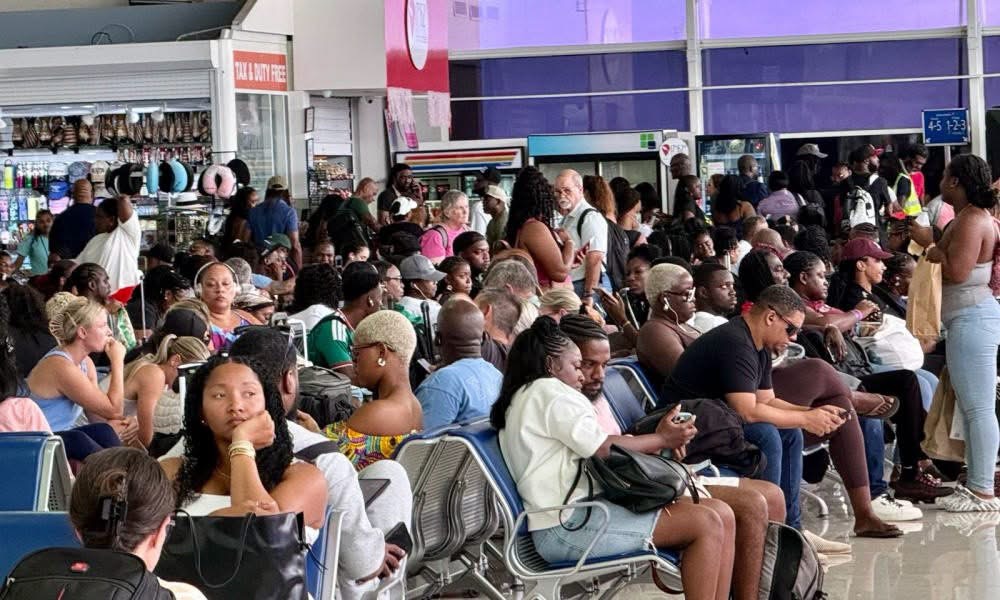
LIAT Passengers Left Stranded for Hours as Communication Breaks Down
On Monday, hundreds of passengers flying with Caribbean regional carrier LIAT Air endured major travel disruptions on routes departing from St Kitts, bound for destinations including Trinidad and Tobago and Saint Lucia, leaving them stranded for hours and prompting widespread criticism of the airline’s customer service failures.
Travelers told reporters that they received almost no updates about the delays even after making repeated inquiries to airline staff, with many stuck in airport terminals for more than five hours without guidance. Beyond the lack of information, multiple passengers also condemned LIAT Air for failing to offer even basic complimentary meals, water or other refreshments to stranded travelers during the extended wait.
One traveler, who was booked on a 9 a.m. scheduled departure, said the flight had not even begun boarding by the early afternoon, with no timeline provided for when service would resume. Another passenger heading to Saint Lucia explained that the airline never made a single public announcement about the delay, forcing all passengers to actively track down information on their own instead of receiving proactive updates.
For many travelers, the sudden disruption upended long-planned schedules and ruined what had been a positive trip: many visitors had traveled to St Kitts for the annual St Kitts Music Festival, and the delay forced them to miss upcoming work commitments back home. In one extreme case, a passenger was left stranded overnight in Antigua following an eight-hour delay, who described the airline’s communication as completely “non-existent.”
Unconfirmed local media reports have speculated that the widespread delays could be tied to unresolved documentation issues that prevented the airline from refueling its aircraft at the St Kitts airport, though these claims have not been independently verified by third-party outlets or local aviation authorities. As of press time, LIAT 20, the current operating entity of the regional carrier, has not issued any public statement addressing the flood of passenger complaints, nor has it released an official explanation for the day-long operational disruptions.
-

Police Officer Comes Under Gunfire
A shocking ambush attack targeting an off-duty Belizean police officer has launched a full criminal investigation in the Cayo District, law enforcement officials confirmed this week. The incident unfolded Saturday night along a remote stretch of road in the Young Gal area, located just outside Teakettle Village, when the officer identified as Eric Usher, a member of the department’s Special Patrol Unit, was traveling alone through the sparsely populated region.
According to official accounts from the National Crimes Investigation Branch, two unidentified suspects emerged from thick vegetation lining the roadway as Usher passed, with one assailant immediately opening fire on the officer’s moving vehicle. Reacting quickly to the sudden attack, Usher sped away from the ambush site to safety, only discovering after escaping that multiple rounds had struck his vehicle, leaving several clear bullet holes across the car’s body.
ACP Hilberto Romero, head of the National Crimes Investigation Branch, shared details of the ongoing probe with reporters, noting that investigators are leaving no stone unturned in their effort to identify and apprehend the attackers. At present, the investigation team is conducting a thorough review of all available evidence from the scene, and plans to carry out formal ballistics testing to corroborate the officer’s account and trace potential links to the weapons used in the attack.
Key investigative details have also emerged that complicate the early stages of the case. Usher was off duty at the time of the shooting, and was in possession of his personally licensed firearm; that weapon has now been seized by investigators for forensic testing to rule out any alternative accounts of the gunfire. Compounding the challenge for investigators, the Young Gal area where the attack occurred is described as a dark, isolated stretch of road with no public or private surveillance cameras in place, eliminating the possibility of capturing footage of the suspects or their vehicle prior to the ambush.
As of Tuesday, no suspects have been named in connection with the attack, and investigators have not released any information about potential motives for the shooting. Romero confirmed that the investigation remains active and ongoing, with updates to be released as additional evidence is processed.
-

Car driver in fatal Essequibo Coast accident was intoxicated- police
Guyana law enforcement have confirmed that the driver involved in a fatal weekend collision that claimed the life of a local motorcyclist was operating his vehicle under the influence of alcohol, exceeding the country’s legal blood alcohol breath limit at the time of the crash. The fatal incident unfolded on the afternoon of June 27, 2026, along Reliance Public Road on the Essequibo Coast, leaving a 45-year-old construction worker dead just minutes after the collision.
According to official statements released by the Guyana Police Force this Monday, June 29, the driver of the sedan involved in the crash, registered under plate number PAM 8929 and a resident of Coffee Grove, Essequibo Coast, registered a breath alcohol content of 48 micrograms during a mandatory breathalyzer test administered following the collision. Guyana’s legal limit for breath alcohol content is set at 35 micrograms, meaning the driver was more than a third over the permitted threshold. He has since been taken into police custody as investigations continue, and authorities have not yet released his identity to the public.
The victim has been formally identified as Satesh Persaud, a 45-year-old construction worker based in the local Reliance Housing Scheme. Persaud was operating his motorcycle, registered under plate CM 2631, when the collision occurred. Police accounts of the incident outline that Persaud was traveling east, exiting an access road on the western side of the main public road, when he pulled onto the highway to cross to a connecting access road on the eastern side. As he entered the main roadway, he moved directly into the path of the oncoming sedan, which was traveling south along the road at the time of the incident.
The high-impact collision threw Persaud from his motorcycle onto the pavement, where he sustained severe traumatic head injuries. Good Samaritans who witnessed the crash immediately pulled the unconscious motorcyclist from the roadway and rushed him to the nearby Lima Regional Hospital. Unfortunately, medical staff at the facility pronounced Persaud dead on arrival, shortly after he was admitted.
Following the crash, Persaud’s remains were transferred to the mortuary at Suddie Public Hospital, where a post-mortem examination is scheduled to be carried out to confirm the official cause of death. Police investigations into the full circumstances of the collision remain ongoing as of Monday afternoon.
-

Here is What Police Know of the San Pedro Double Murder
On a quiet Sunday night in the coastal community of San Pedro Town, a shocking act of violence left two people dead and two others wounded, sending ripples of fear through this normally tranquil island community. According to top law enforcement officials, the coordinated attack unfolded when four heavily armed gunmen stormed the Island Supermarket, an established local business frequented by residents and visitors alike.
Once inside the premises, the attackers immediately opened fire on a group of four men who were present in the store: David Harmouch, Iman Harmouch, Ahmad Harmouch, and Daniel Jones. The gunfire was rapid and targeted, killing David Harmouch and Daniel Jones instantly at the scene. Iman Harmouch and Ahmad Harmouch, who owns the Island Supermarket, sustained critical gunshot wounds and were urgently transported across the border for emergency medical care.
Assistant Commissioner of Police Hilberto Romero, who leads the National Crimes Investigation Branch, outlined the preliminary sequence of events in an official briefing. “The information we have confirmed is that all four targeted individuals were inside Island Supermarket when four armed male suspects arrived and opened fire in their direction, resulting in two fatalities and two non-fatal injuries,” Romero stated.
In the immediate aftermath of the attack, the four suspects managed to evade initial capture by fleeing the scene on a waiting water vessel, which subsequently traveled south away from the island. Investigators have already confirmed a key detail that rules out robbery as a motive: no cash, goods, or assets were taken from the supermarket during the incident, pointing to a targeted attack rather than a botched commercial robbery.
Romero confirmed that investigators have already taken multiple persons into custody for questioning as they work to untangle the motive and identify all responsible parties. Law enforcement teams are currently working to recover and review surveillance footage from the supermarket and surrounding areas, which is expected to provide critical clues about the attackers’ identities and movement before and after the shooting.
One key line of inquiry that investigators are actively pursuing centers on pending civil court cases involving David Harmouch. “We are aware that David Harmouch has active matters before the civil court, and this is one angle we are thoroughly exploring,” Romero added. Beyond the ongoing investigation, the attack has left one family shattered: David Harmouch is survived by six children, ranging in age from just six months to 12 years old, who will now grow up without their father.
Local residents have expressed shock and outrage over the brazen daytime (correction: night time) attack in a public business, with many calling for quick action from law enforcement to bring all those responsible to justice. As of the latest update, the investigation remains active and ongoing, with law enforcement following every lead to close this case.
-

Senator Says Men Continue to Bear Brunt of Road Traffic Injuries
During a pivotal senate debate on the newly introduced Fatal Accidents Bill 2026, Government Senator Shaquan O’Neill delivered a urgent call for improved driver accountability on Monday, laying out stark official data that confirms men make up the disproportionate majority of people injured in road traffic collisions across Antigua and Barbuda.
Addressing the upper legislative chamber, O’Neill shared verified figures compiled by the Statistics Unit of the Royal Police Force of Antigua and Barbuda’s Traffic Department to underscore the urgent need for updated legislation and heightened public awareness. The data reveals that in 2023, out of 337 total people harmed in road crashes across the nation, 206 of those injured were men. The following year, the trend held consistent: 239 of the 417 people injured in collisions were male. O’Neill emphasized that this persistent demographic pattern cannot be sidelined by national policymakers, as road safety continues to rank among the country’s most pressing public safety priorities.
Beyond injury figures, O’Neill outlined the growing overall volume of road incidents in recent years. Antigua and Barbuda documented 2,448 traffic collisions and 10 crash-related fatalities in 2023. That total rose to 2,610 collisions in 2024, though the number of deaths fell to five that year. By 2025, reported collisions had climbed further to 2,749, with nine fatalities recorded over the 12-month period. While O’Neill acknowledged that the Fatal Accidents Bill 2026 covers all categories of wrongful death — including industrial incidents and medical malpractice — he stressed that road traffic crashes stand as one of the most prevalent and preventable causes of fatal accidental deaths in the nation.
“We cannot simply overlook that this is the leading cause of fatal accidents,” O’Neill told the chamber, before sharing a firsthand account that reinforced his push for reform. The senator recounted a recent experience responding to the scene of a hit-and-run collision, after a colleague contacted him to report a pedestrian had been struck by a departing driver. “I took it upon myself, Madam President, to not only call the emergency services, but to also race to the scene. I could not believe that someone could be so wicked. To not only hit someone, but to also drive away,” he said.
O’Neill explained that experiences like this firsthand encounter underscore the critical need for both broader public education around responsible driving and updated legislation that delivers meaningful support and compensation to families that lose a loved one due to another road user’s negligence. Following the debate, the Fatal Accidents Bill 2026 secured final approval from the Senate, replacing Antigua and Barbuda’s century-old 1924 Fatal Accidents Act with a modernized legal framework for handling wrongful death compensation claims.
-
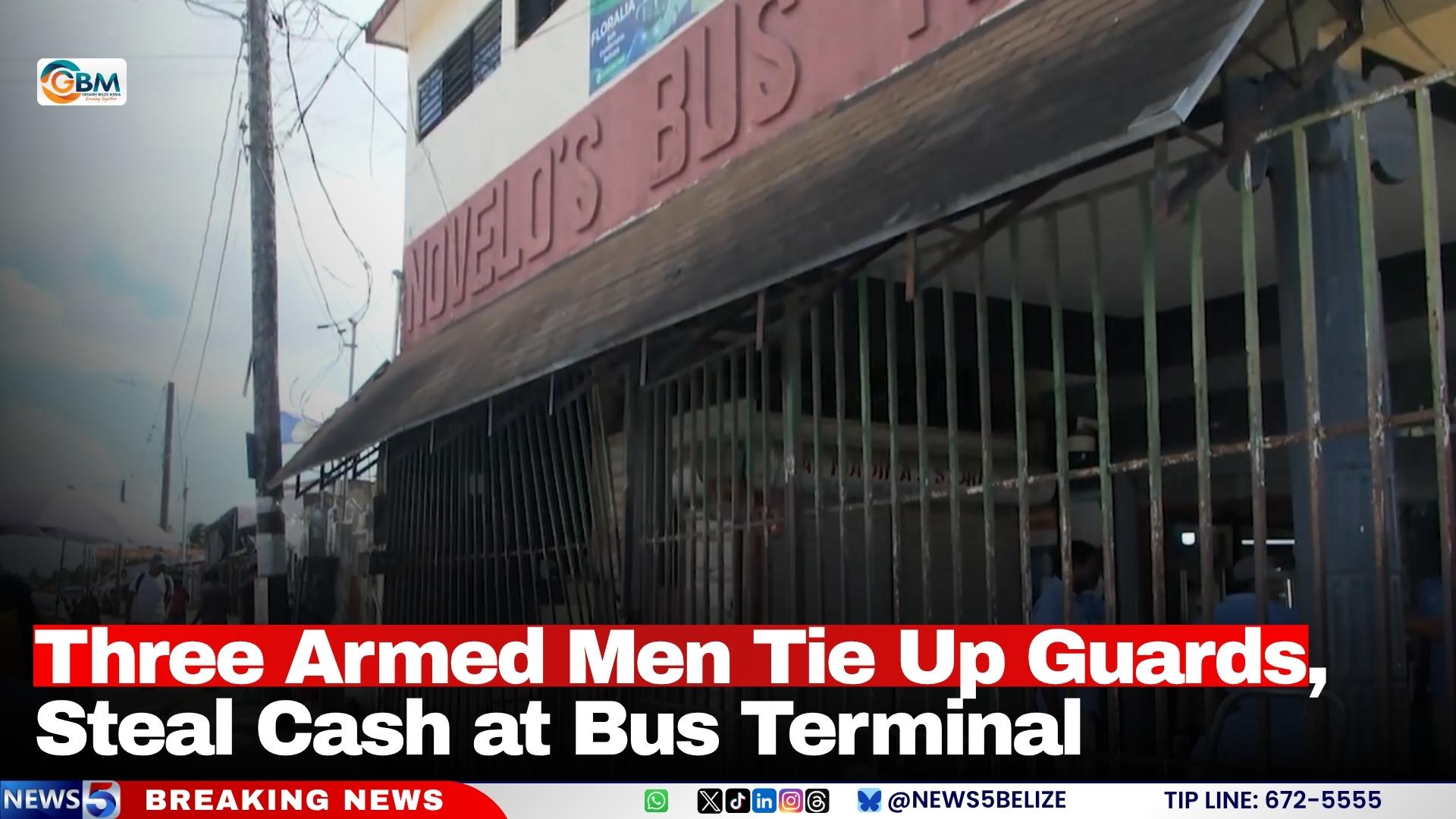
Three Armed Men Tie Up Guards, Steal Cash at Bus Terminal
An early-morning armed robbery at Novelo’s bus terminal in Belize District has left local law enforcement launching a full investigation after three gun-wielding suspects bound on-duty security guards and stole cash and personal electronics, authorities confirmed this week.
According to Assistant Commissioner of Police Hilberto Romero, who leads the country’s National Crimes Investigation Branch, the Belize Police Department first received the alert about the brazen attack at approximately 2:30 a.m. on Monday. Romero told media outlets that the perpetrators targeted the terminal’s working security team, overpowering the guards before restraining them with bindings. The three male suspects carried loaded firearms during the incident to threaten the staff into compliance.
After securing the guards, the attackers seized the terminal office keys from the victims. They then gained unauthorised access to the terminal’s administrative office, where they looted an undisclosed amount of cash — totalling less than 800 Belize dollars — along with two personal cell phones that belonged to the bound security guards. No injuries to the guards were reported beyond the trauma of the incident, as of the latest update from law enforcement.
In the days following the attack, investigative teams have moved forward with processing evidence from the scene. A key part of the ongoing probe centres on reviewing closed-circuit surveillance footage from the terminal and surrounding area, which authorities hope will capture clear images of the suspects and help identify them for arrest. As of the latest update, no suspects have been taken into custody, and the investigation remains active.
-

Man shot dead in Marchand hours before birthday
A devastating act of violence has shaken the small community of Marchand, Saint Lucia, after a 29-year-old man was gunned down Sunday night, mere hours before he was set to celebrate his birthday. The incident unfolded just after 10 p.m. in the vicinity of Mindoo Phillip Park’s main entrance, prompting a rapid response from local law enforcement.
Officers assigned to the Marchand Police Station were dispatched to the scene immediately after receiving an emergency report of shots fired. Upon arrival, first responders discovered the victim, identified as Jordon Lansiquot, a resident of Millet, Anse La Raye, lying supine on the ground with multiple penetrating gunshot wounds to the head, abdomen and thigh. Emergency medical personnel transported the injured man quickly to the Owen King EU Hospital for urgent care, but medical staff were unable to save him, and he was officially pronounced dead at 10:24 p.m.
The timing of the senseless killing has amplified the grief of Lansiquot’s loved ones, who had been preparing to mark his birthday just a few hours after the shooting. What was meant to be a joyous celebration has instead turned into an unforeseen tragedy, leaving family members and close friends reeling from the sudden, heartbreaking loss.
At present, the Royal Saint Lucia Police Force has launched a full investigation into the events that led to the shooting. The motive behind the attack remains unclear, and investigators have not yet released details about potential suspects or what may have precipitated the confrontation. Law enforcement is actively appealing to members of the public who may have information related to the incident to come forward to assist with the inquiry. Any person with relevant details can contact the Marchand Police Station directly at 456-3885. For those who wish to share information without revealing their identity, anonymous tips can be submitted via the national Crime Hotline at 555 or through the official Crime Hotline mobile application.
-
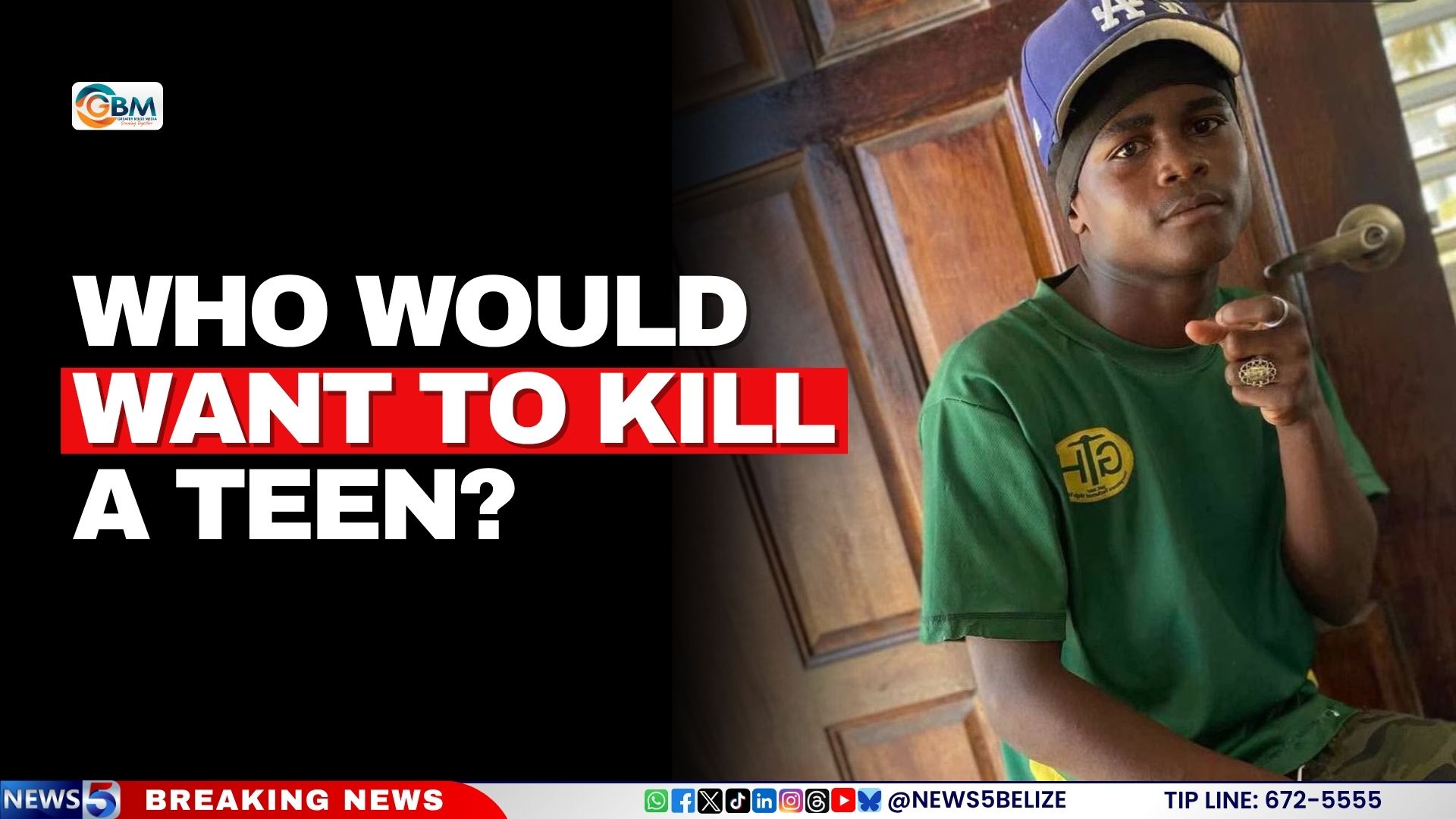
Who Would Want To Kill A Teen?
A shocking act of youth violence has left the coastal community of Dangriga, Belize reeling after a 16-year-old boy was gunned down in a targeted shooting early Sunday morning, with law enforcement confirming two suspects are now in custody connected to the fatal incident.
The tragedy unfolded at approximately 5:30 a.m. on June 29, 2026, when local police received an emergency call reporting a shooting in the Benguche neighborhood of the Stann Creek District town, according to Assistant Commissioner of Police Hilberto Romero, who leads the country’s National Crimes Investigation Branch. Responding officers arrived at the scene quickly, where they found 16-year-old Isiah Norales suffering from multiple gunshot wounds. First responders immediately transported the teen to a local medical facility for urgent care, but medical professionals were unable to save him, and he was pronounced dead shortly after arrival from his injuries.
Initial investigative work has painted a clear picture of the attack: Norales was riding his bicycle alone through the quiet neighborhood when two individuals riding a motorcycle pulled alongside him. One of the two riders pulled a weapon and opened fire directly at the teen, inflicting the wounds that would ultimately kill him.
Romero told reporters that preliminary inquiries have uncovered a pre-existing conflict between Norales and the two suspects, who are both from the Dangriga area. That unresolved dispute is believed to be the direct motive for the early-morning attack. The law enforcement leader also confirmed that both suspects, who are described as older than the 16-year-old victim, already have prior interactions with police and were known to law enforcement before the shooting. As of the latest update, both have been taken into police custody as investigators continue to build their case and piece together the full details of the killing that has left the small community stunned.
-
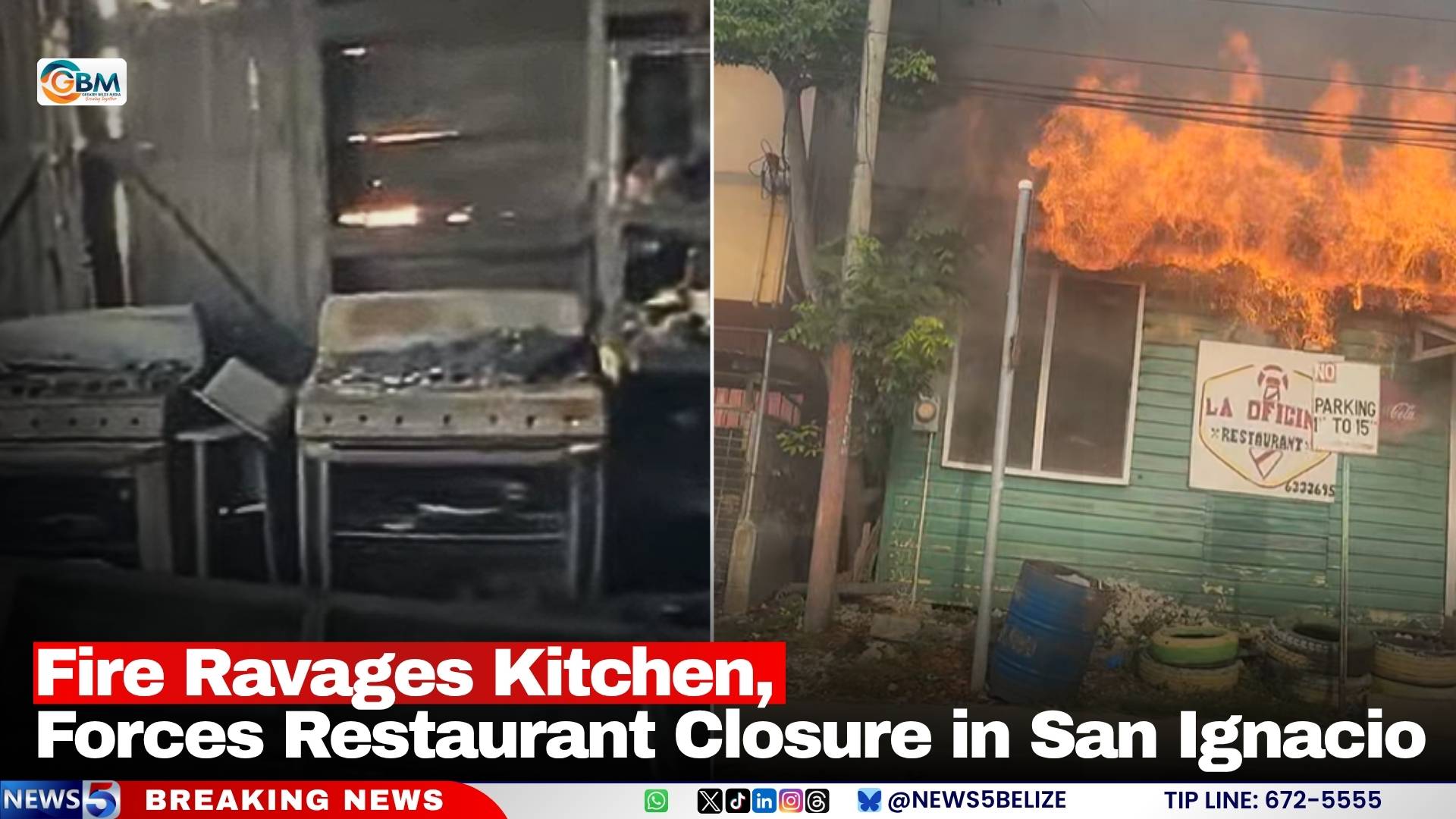
Fire Ravages Kitchen, Forces Restaurant Closure in San Ignacio
In a sudden incident that has rocked the small business community of San Ignacio, Cayo District, a devastating fire has forced the indefinite closure of La Oficina, a local staple that has served residents and visitors alike for nearly 13 years.
Owner Lilia shared that while the restaurant’s main dining area avoided catastrophic damage, the kitchen — the operational core of the beloved eatery — was completely destroyed by the blaze. Rebuilding and repairing the damaged space will be a lengthy process, Lilia explained, leaving her searching for an affordable temporary venue that would allow her to get her business running again quickly.
“Starting from zero is not easy,” Lilia said in an interview. “If there is a place I can rent for the time being, I need to work.”
Beyond the damage to property, the closure has left four of the restaurant’s staff out of work while rebuilding efforts proceed. The sudden loss hit close to home for local residents, many of whom have lifelong ties to the eatery. One local resident shared the news in a social media post, writing: “Five families in our beloved community are in a very challenging and painful situation at the moment. La Oficina, which has been a popular restaurant serving great food for many, many years, was suddenly taken away from us due to fire.”
The outpouring of sympathy that followed the news quickly turned into concrete community support. Another local business owner in San Ignacio launched a grassroots fundraising initiative called the “Just a Dollar” campaign, designed to collect small donations from community members to help Lilia and her team cover rebuilding costs.
The campaign organizer emphasized that the effort is about more than just raising funds. “We want them to know there is Community Love, Community Support and Community Hope,” the organizer said. “Hopefully we can help them get back on their business feet.”