分类: society

  • Dominica receives security paper after certificate delays

    Dominica receives security paper after certificate delays

    After weeks of constrained operations caused by limited stock of specialized security paper, Dominica’s Civil Registry has announced it is returning to full, normal operations for processing and issuing birth, marriage and death certificates, following the delivery of a long-awaited new shipment of the required printing material.

    At an official press briefing hosted by the Ministry of National Security and Legal Affairs, Acting Registrar General Nuraiyah Sebastian clarified the situation that had slowed services in recent weeks. She confirmed that while inventory had been tight, the agency never completely exhausted its supply of the specialized security paper. Throughout the period of constrained stock, the registry continued to issue certificates, but implemented a priority system that focused exclusively on emergency and time-sensitive requests, meaning routine and pre-submitted non-urgent applications could not be fulfilled within the agency’s standard processing timelines.

    Now that new stock has arrived, all applicants who have been waiting for their completed certificates can visit the Civil Registry offices to collect their documents, and the agency is once again accepting new routine applications at its normal capacity, Sebastian said.

    National Security Minister Rayburn Blackmoore provided additional details on the shipment and long-term planning to avoid future service disruptions. He confirmed that the latest delivery brought 9,000 additional sheets of security paper to the registry, and the government has already placed a follow-up order for 100,000 more sheets to build up a robust reserve. To prevent repeated delays, officials have arranged for scheduled, recurring deliveries of the material moving forward.

    Blackmoore also explained the root cause of the recent supply shortage. The shortage emerged after the government implemented a temporary waiver of application fees for certificate requests during a national identity confirmation process. This fee waiver led many members of the public to request multiple copies of their vital documents, creating far higher demand than officials had initially projected.

    Between the start of April and August 24 alone, the Civil Registry issued 8,282 birth certificates, Blackmoore reported. Full issuance data for September has not yet been compiled.

    This specialized security paper is used for all three types of vital event certificates issued by the registry: birth, marriage and death certificates. Government officials note that the secure, anti-counterfeiting stock is a critical tool to lower the risk of document duplication and identity fraud, protecting residents from fraudulent use of their personal identifying information.

  • Govt launches accessibility project at Parliament

    Govt launches accessibility project at Parliament

    Barbadian Minister of People Empowerment Adrian Forde unveiled a sweeping national accessibility campaign on Monday, kickstarting the effort with a pre-audited improvement project at the country’s Parliament Buildings. The initiative, crafted to expand disabled people’s access to public spaces and amplify their influence in lawmaking, is a joint effort between the government and the national Council for the Disabled, and will roll out to all federal government agencies after launching at the legislative complex.

    Forde made the announcement alongside the formal launch of a new life skills training program designed for autistic people. In his remarks, he explained that Parliament was the logical starting point for the “Access for All” project, which will have its official public launch in the coming weeks. As the heart of the country’s legislative process, the parliamentary complex must be accessible to the very communities that laws impact, he argued.

    “You cannot craft effective, inclusive policy for disabled people if they do not have a physical space to contribute and have their perspectives heard,” Forde said. Preparatory work for the parliamentary upgrade is already complete: an accessibility audit of the historic buildings has been finalized, and construction and adjustment work will move forward shortly before the project expands across government offices island-wide.

    The accessibility push forms a core part of the government’s broader agenda to build a fully inclusive Barbados, Forde added. Beyond the infrastructure upgrades, the administration has committed financial support to a number of other disability-focused initiatives, including funding for a custom transport bus for disabled residents.

    The minister also used the event to confront widespread misinformation and stigma surrounding autism, pushing back against harmful narratives that frame neurodivergence as a personal tragedy. “Autism is not a tragedy. The real tragedy is the ignorance that surrounds it,” Forde emphasized. He argued that autism should be framed as a different life experience, not an inherent limitation, noting that autistic people can thrive and excel across every sector of Barbadian society. “I will repeat that a hundred times over until all of Barbados recognizes that autistic people can succeed just like any other person here,” he said.

    Forde also confirmed that he has fulfilled a campaign promise made earlier in April to deliver a fully accessible recreational space for autistic people, where they can use swings, climbing equipment and park benches just like any other visitor. “That promise was straightforward: build a space where they can play and relax just like everyone else,” he noted.

    Closing his remarks, Forde emphasized that the government remains committed to centering equal consideration for disabled people across all policy decisions. He reminded the public that disability is a universal possibility that can impact anyone at any time, noting “It could be you today, me tomorrow. A single accident in a split second can change everything.” He called on all Barbadians to embrace greater empathy and support for disabled community members, arguing that when given equal access and opportunity, disabled people can become some of the nation’s greatest champions.

  • BAS rejects claims Paul was fired or barred from meeting

    BAS rejects claims Paul was fired or barred from meeting

    Rumors of a sudden, forced departure for former Barbados Agricultural Society (BAS) chief executive James Paul have been emphatically rejected by top leaders of the 181-year-old organization, who have clarified that Paul’s exit aligns with long-planned leadership transition and organizational restructuring efforts.

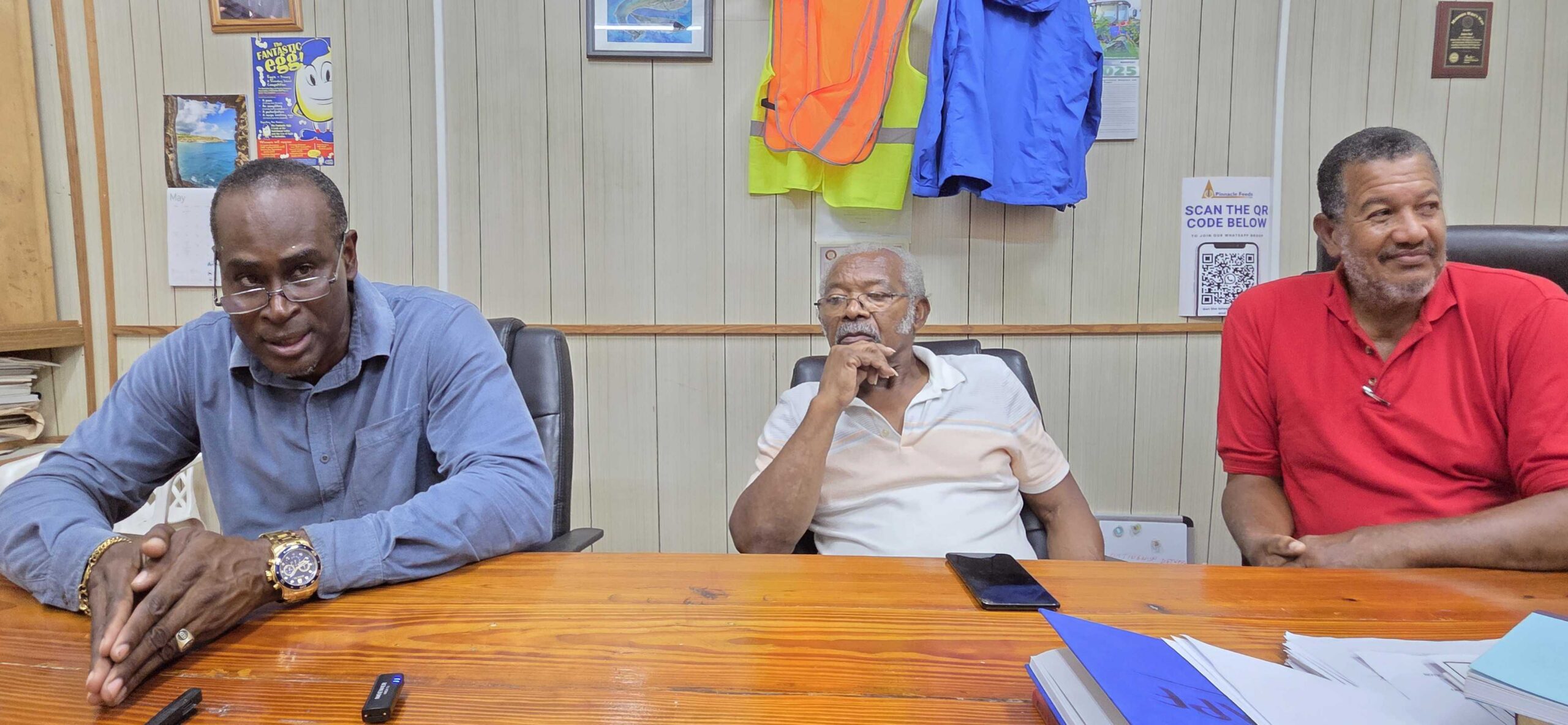
    Amid growing public speculation about the circumstances of Paul’s exit, BAS President Henderson Williams and board member McDonald Stevenson have pushed back against claims that the 70-something former CEO was fired abruptly or intentionally barred from a recent sectoral membership meeting. Speaking on behalf of the society’s 12-member governing board, Stevenson confirmed that the leadership transition process had been in development for an extended period, noting that Paul had reached standard retirement age and the board was implementing structural adjustments to strengthen the institution for the future.

    “This was never a case of dismissing Mr. Paul – it was simply a matter of him reaching the pre-established retirement age for the role,” Stevenson explained. He added that board leaders held multiple discussions with Paul throughout the year, giving him months of advance notice of his planned exit and even offering him a consultancy position to support a smooth handover of responsibilities during the transition. According to Stevenson, Paul never raised objections to the plan during these negotiations and was fully aware of his official retirement date long before it took effect.

    Williams reinforced the board’s position, emphasizing that the transition was a collective, board-level decision – not a unilateral personal move – designed to secure the long-term viability of Barbados’ oldest non-governmental organization. “The organization cannot stagnate while the board stands by and does nothing to revitalize it,” Williams said. “I have no issue with senior leaders in their 70s continuing to work, but at the end of the day, we have a responsibility to ensure this institution remains fit to serve its purpose for the farming community.”

    Williams also addressed the most high-profile rumor fueling public speculation: claims that Paul was deliberately locked out of a recent pig farmers association meeting held under the BAS umbrella. The BAS president clarified that attendance at the meeting was strictly limited to registered commodity group members, a standard rule that applied to all non-members, including Paul. As a non-registered pig farmer, Paul was not eligible to attend, Williams explained, adding that it is longstanding protocol for the BAS chief executive to maintain independence from individual commodity groups to ensure they remain impartial to all sectors of the farming community.

    Williams added that the strict attendance rule was also implemented in response to unusual circumstances surrounding the meeting: organizers received multiple warnings of a coordinated effort to oust the current pig farmers association president, with unusually high registrations from external stakeholders. “We got repeated calls about a large-scale canvassing effort underway, involving people who should have remained independent,” Williams said. “Amid all that uncertainty, we decided the best way to protect the integrity of the meeting and the participants was to bar non-member attendance.”

    Stevenson urged the public and Barbados’ farming community to remember that the BAS is governed by a collective board of management, not controlled by any single individual.

    Founded by an Act of Parliament in 1845 – just seven years after the abolition of slavery in Barbados, as thousands of newly emancipated people joined the island’s society and economy as wage laborers and smallholder farmers – the BAS has evolved dramatically over its nearly two centuries of operation. Originally created to represent the interests of white planter former enslavers, the organization has transformed into an umbrella non-governmental body supporting all Barbadian farmers, commodity groups and rural producers. Its core mandates include advancing agricultural diversification beyond the historic sugar industry, supporting farmers with marketing access, strengthening national food security, and organizing the annual flagship Agrofest agricultural exhibition. Much of the organization’s modern transformation starting in the late 1970s has been attributed to former long-time general manager Haynesley Benn and his successor James Paul.

  • Walker Raises Alarm Over Weekly Break-Ins in Barbuda

    Walker Raises Alarm Over Weekly Break-Ins in Barbuda

    A sitting member of Parliament for the Caribbean island of Barbuda has sounded a urgent public alarm over a sharp, destabilizing rise in residential break-ins, telling national legislators that property crimes are now occurring every single week on the small island. Trevor Walker brought the pressing public safety issue to the floor of Parliament during ongoing debate over the 2026 Firearms (Amendment) Bill, a legislative package crafted to introduce harsher penalties and stricter regulatory measures aimed at curbing gun-related violence and other high-priority criminal offenses across the nation of Antigua and Barbuda.

    During his remarks to the legislative body, Walker shared a personal, recent example of the crisis, confirming that a home owned by a relative of his wife was targeted by burglars just last Friday. The MP went on to connect the growing frequency of break-ins to a longstanding concern he has held: the relocation of convicted repeat offenders and individuals with active criminal histories from the larger island of Antigua to Barbuda following their release from incarceration.

    Walker told fellow lawmakers that dozens of relocated offenders currently residing in Barbuda are legally required to check in regularly with local police, and that on any given day, multiple people can be seen completing this mandatory reporting at the island’s central police station. He even shared that he wishes he held the legal authority to remove these individuals from Barbuda, a remark that comes despite the fact that free movement between Antigua and Barbuda is guaranteed as unrestricted domestic travel within the single sovereign nation.

    The MP’s comments aligned with the broader goals of the proposed firearms legislation, as he made clear he fully supports government efforts to crack down on violent crime and emphasized he holds a stance of “zero tolerance” for the current elevated levels of criminal activity on his constituent island. Walker also used the opportunity to call for increased and improved resourcing for the small detachment of police officers permanently stationed in Barbuda, specifically highlighting the need for additional patrol vehicles to help officers respond more effectively to emerging reports of crime.

    He was careful to acknowledge and praise the existing work of police leadership and frontline officers in Barbuda, noting that local law enforcement already responds actively and diligently to every reported incident. Even with that recognition, he stressed that the current volume of criminal activity outpaces the resources available to local police, making additional investments non-negotiable.

    Walker doubled down on his concern about repeat offenders, noting that the recent break-in at his relative’s home was especially disconcerting because the primary suspect is believed to be someone who has already been convicted of multiple prior offenses. Closing his remarks, the MP argued that meaningful progress on the island’s crime crisis requires both tougher, clearer legislation and consistent, effective enforcement. He emphasized that local residents should not be forced to accept weekly burglaries and persistent criminal activity as a normal part of daily life on the island.

  • LETTER: Demand For Fairness And Proper Treatment Of Crossing Guards

    LETTER: Demand For Fairness And Proper Treatment Of Crossing Guards

    Across school districts, a group of school crossing guards has submitted an open letter to the Minister of Education, calling for urgent reforms to unfair working conditions that have been overlooked for far too long. The frontline safety workers, who protect child pedestrians at primary and secondary school crossings every school day, are pushing for two core changes: location-specific scheduling aligned to actual school hours, and a meaningful wage increase that reflects the risks and importance of their role.

    Currently, all crossing guards are bound to a uniform one-size-fits-all shift schedule, requiring attendance from 7:00 a.m. to 9:15 a.m. and 1:30 p.m. to 3:30 p.m. regardless of the schools they are assigned to. This rigid structure ignores the stark differences in opening and dismissal times between primary and secondary institutions: most secondary schools start classes as early as 7:45 a.m., meaning the bulk of student morning traffic clears long before the 9:15 a.m. end of the mandatory shift. For primary schools, which typically start closer to 9:00 a.m., the early 7:00 a.m. start of the uniform shift requires guards to report for duty hours before any students begin arriving.

    The crossing guards have put forward evidence-based, flexible adjustments that would match shift times to actual student traffic patterns. For secondary school posts, they propose shifts of 7:00 a.m. to 8:30 a.m. and 1:30 p.m. to 2:30 p.m., adjusted for local traffic volumes where needed. For primary school crossings, the proposed schedule of 8:00 a.m. to 9:15 a.m. and 2:30 p.m. to 3:30 p.m. would align coverage with when students actually need protection, eliminating redundant unpaid standing time.

    Beyond inefficient scheduling, the letter also highlights a problematic power dynamic: a small number of guards assigned to one school tier have been allowed to influence or dictate shift terms for all guards, even though primary and secondary school operations are entirely separate. This has resulted in mandatory idle time for many guards, who are forced to stay at posts with no student crossings simply to comply with rules written for a different school schedule. The workers emphasize that this is not a request to cut working hours, but to align working time with actual public safety needs.

    The second core demand addresses longstanding inadequate compensation. Crossing guards note that their role places them in constant proximity to moving traffic on busy roads, requiring constant alertness and carrying inherent risks to their own safety to protect children and other pedestrians. Despite this critical public responsibility, wages have stagnated, forcing many guards to take on second jobs just to cover basic living costs.

    While the workers explicitly recognize the value of work done by teachers and other education staff, they argue that their own contribution to student safety is no less important. Every worker supporting children’s education and well-being deserves to feel their work is recognized and fairly compensated, they say.

    In addition to adjusted scheduling and wage reform, the crossing guards are calling for three key procedural changes: full consultation with guard representatives before any changes to working conditions, clear official guidelines to prevent any single group of guards from setting terms for all other workers, and formal formal recognition of the unique risks and responsibilities tied to the role.

    The letter closes with a powerful reminder that crossing guards are core members of the school safety ecosystem, showing up to their posts in rain, extreme heat, heavy traffic, and other challenging conditions to fulfill their responsibility to protect children. They are not invisible workers, the letter stresses, and they deserve fair treatment, dignity, respect, and pay that matches the importance of their life-saving work.

    The crossing guards have called on the Ministry of Education to take their concerns seriously, meet with elected worker representatives to discuss the demands, and deliver meaningful policy changes that advance fairness for all frontline crossing safety staff.

  • Ambassador Calls for Revival of Workers’ Voice as Digital Labour News Platform

    Ambassador Calls for Revival of Workers’ Voice as Digital Labour News Platform

    At the 87th Annual Delegates’ Conference of the Antigua Trades and Labour Union, Ambassador Dr. Clarence E. Pilgrim has put forward a compelling call to bring back a cornerstone of the country’s labor movement: the iconic *Workers’ Voice* publication, reimagined for today’s digital age.

    In his keynote feature address to assembled union delegates, Pilgrim walked attendees through the deep historical legacy of the original *Workers’ Voice*, emphasizing that its impact stretched far beyond simply updating members on internal union business. For decades, the publication filled a critical gap in public access to relevant information, served as a free educational resource for working people, and consistently encouraged readers to engage critically with issues affecting their working lives and broader communities.

    One of the publication’s most beloved and remembered features, Pilgrim recalled, was its popular “Question Box” column. Though the column often carried a sharp, spicy satirical edge that stirred conversation, it played an indispensable role: it gave voice to the questions that countless working people were already asking privately, but had few public spaces to raise openly.

    Pilgrim also shared a vivid anecdote of the publication’s grassroots roots, recalling how early activists including Ms. Shervington and her closest friend dedicated countless hours to distributing *Workers’ Voice* door-to-door across communities on foot, building a loyal readership one copy at a time.

    While the original print publication has long been absent from the national labor landscape, Pilgrim argues that the core need it filled remains as urgent today as it was decades ago. “The technology has changed. The need for a workers’ voice has not,” he told delegates.

    Under his proposal, the revived *Workers’ Voice* would not be a return to the print model of the past, but a fully modern digital platform tailored to 21st century workers’ needs. Pilgrim outlined a broad range of content for the new outlet, including up-to-date labor news, interactive workplace education modules, accessible financial literacy resources, evidence-based occupational health guidance, deep dives into labor history, original podcasts, and curated commentary from working people across Antigua and Barbuda. He also added that the iconic “Question Box” could be reintroduced as a popular interactive feature for the digital iteration, adapting its core mission to modern social media and digital engagement tools.

    The push to revive *Workers’ Voice* is not an isolated proposal, but rather a central part of Pilgrim’s broader vision for the evolution of modern trade unionism. He argued that today’s unions must move beyond their traditional core role of defending workers in employment disputes and workplace conflicts. To remain relevant and serve their members effectively, Pilgrim said, unions must take an active role in supporting workers’ holistic development across five key areas: economic, technological, social, intellectual, and civic. For Pilgrim, the mission of a 21st century union is clear: it should “not only defend the worker at work” but also “help develop the worker for life.”

  • Nine-year-old in medically induced coma after apartment blaze

    Nine-year-old in medically induced coma after apartment blaze

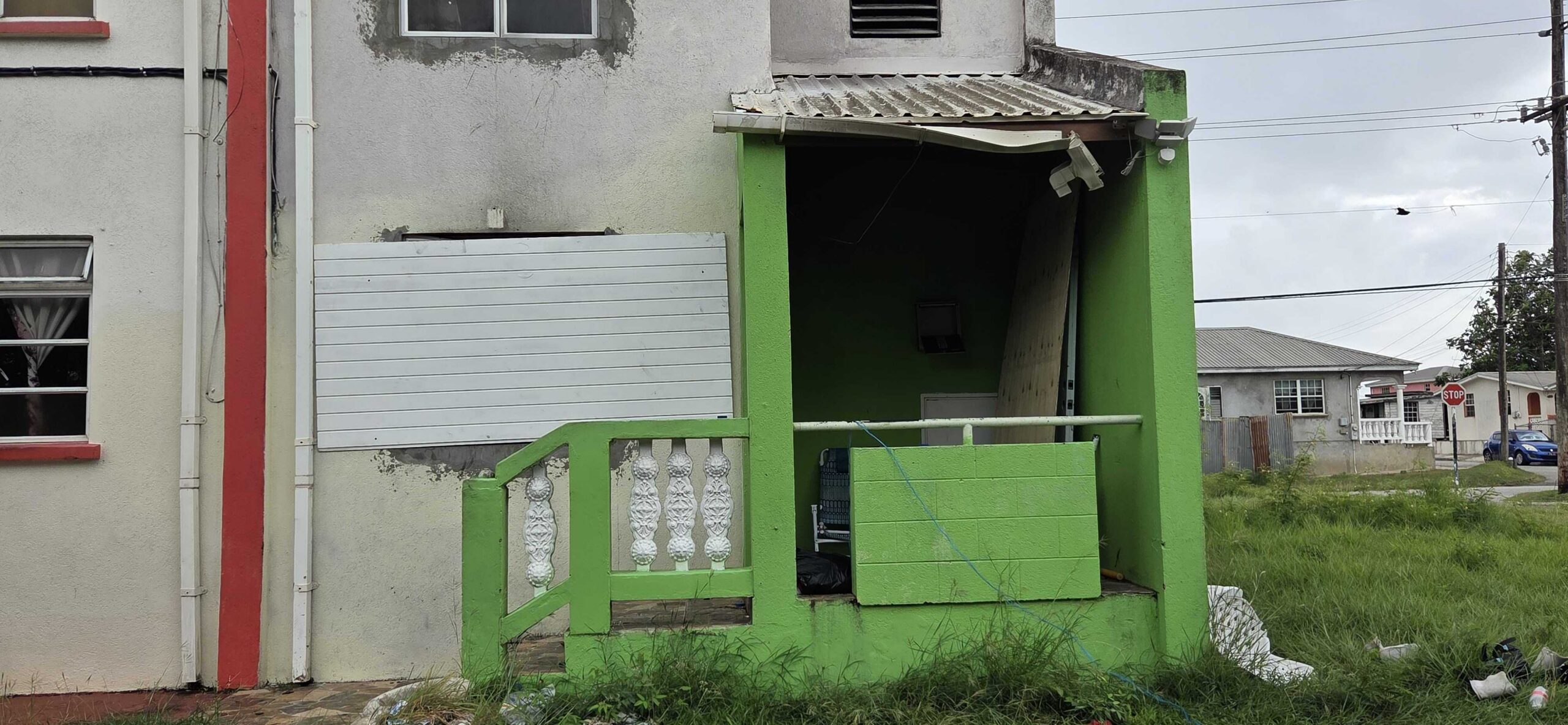
    A young Barbadian child remains in critical condition, fighting for survival in a medically induced coma, after a devastating early-morning apartment fire in the Maynards area of St Peter left his family displaced and prompted public safety officials to renew urgent warnings about common household electrical hazards.

    The emergency unfolded just before 4 a.m. on Sunday, when the Barbados Fire Service received a distressing emergency call reporting an active blaze at a 10-unit residential housing complex. Two water tankers and a team of trained firefighters were immediately dispatched to the scene, where crews arrived to find one ground-floor apartment fully engulfed in intense flames.

    In a chaotic race against time, local community members acted before emergency crews could reach the trapped nine-year-old, pulling the child from the burning unit after he suffered severe smoke inhalation. The boy was rushed straight to a nearby hospital for urgent treatment. Divisional Commander Patrick Edwards, speaking to local outlet Barbados TODAY, confirmed the details of the initial rescue.

    Neighbor Donna O’Neil, who lives in the adjacent unit, described the terrifying moment she was woken to the crisis. “My sister was saying, ‘Get up, it is a fire.’ I saw fire and I thought she meant outside, but she said: ‘No, the apartment next door is burning,’” O’Neil recalled. She told reporters of a loud explosion that shook the complex, as neighbors scrambled to evacuate and coordinate efforts to reach the trapped child. “I heard something say ‘boom’. The neighbours from below came and tried to help get the little boy out of the bedroom,” she said. “I had to run back up, put on clothes, and try to get my mom and my daughter down. That was the only thing I was worrying about. We had to run out and leave everything in the house.”

    By Monday, updated reports confirmed medical teams had placed the young boy in a medically induced coma after he was unable to breathe independently. The boy’s mother also required emergency hospital care after suffering heavy smoke inhalation while rushing into the burning unit to rescue her son. O’Neil confirmed the mother was placed on oxygen to treat her smoke exposure, and both mother and child remained in care as of Monday.

    Firefighters were eventually able to bring the blaze under full control, but the property suffered catastrophic structural damage. Commander Edwards explained that while the upper level of the unit avoided direct flame damage, extreme heat from the fire and water damage from suppression efforts left the entire apartment completely uninhabitable.

    Officials from the National Housing Corporation quickly attended the scene to secure the damaged property, boarding up broken windows and changing locks as they work to arrange temporary alternative housing for the displaced four-person family.

    In the wake of the incident, Commander Edwards issued a public advisory urging all Barbadian residents to exercise greater caution around household electrical equipment. While he stressed that this general warning is not an official confirmation of the cause of the Maynards fire, he highlighted a growing, alarming trend of domestic fire incidents across the island linked to unsafe electrical practices.

    “I want to make public the plea of asking people to be a little bit more careful, especially when they are using electrical devices,” Edwards said. He named low-quality uncertified mobile phone chargers, overloaded electrical circuits, and substandard extension cords as the leading causes of preventable home fires across the country. Edwards expressed particular concern that many consumers prioritize low prices over certified safety standards, accidentally purchasing wiring that cannot handle the basic electrical current required by common household devices.

    “Because much of the wire is not designed to carry the load that is being demanded by that particular electrical device, this eventually poses problems,” he explained, adding that many residents amplify the risk by leaving these inadequate devices plugged in constantly, even when not in use.

    The senior fire official also noted that residential properties face far greater risk of destructive, deadly fires than commercial buildings, due to the absence of mandatory safety regulations, required fire extinguishers, and regular emergency evacuation drills in private homes. He urged the public to take simple, immediate preventative steps to reduce their risk of a similar tragedy.

    “If they can install smoke alarms, it is highly recommended that they do,” Edwards said. “This will go a long way to reducing the events that we experienced this morning.”

  • Govt, funeral homes agree emergency measures to clear burial backlog

    Govt, funeral homes agree emergency measures to clear burial backlog

    For weeks, grieving families across Barbados have faced agonizing delays in laying their loved ones to rest, trapped by a growing backlog of death documentation and bottlenecks in issuing burial and cremation warrants. But following a crisis meeting between top government officials and funeral industry leaders, emergency interventions are now in place to clear the backlog, with long-term structural reforms already planned to prevent a repeat of the crisis.

    On Monday morning, Minister of Legal Affairs and Criminal Justice Michael Lashley and Attorney General Wilfred Abrahams sat down with Ian Griffith, president of the Barbados Association of Funeral Directors, to address persistent delays at the Coroner’s Office that had ground the death processing system to a near halt. In post-meeting comments to Barbados TODAY, Lashley confirmed the discussions had yielded actionable solutions, with immediate work underway to resolve technical glitches and administrative backlogs.

    Lashley outlined that the agreement reached includes both immediate short-term fixes to clear the backlog and a long-term strategy led by a newly established joint working group between government and the funeral industry. The core of the immediate crisis stemmed from technology networking failures at the Coroner’s Office, which had halted digital processing of essential death documents. Lashley explained that relevant technical teams had already been engaged, with many issues expected to be resolved within 24 hours.

    To bypass the ongoing network outages at the Forde and Simmons Complex, where the Coroner’s Office is based, the government will immediately establish a designated processing hub at the Registry to handle documentation. “We would have a dedicated desk dealing with the matter. The staff member affected by the network issues will be moved over to the Registry so that we can have the documentation dealt with in a safe manner,” Lashley explained. Last week, the government already deployed manual processing systems and brought in an acting coroner to work through the pile of pending documents, a step that Lashley says demonstrates the full commitment of his office and the Attorney General to ending the delays as quickly as possible.

    For funeral directors across the island, the government’s intervention comes after weeks of growing frustration. While official data on the size of the backlog has not been released, industry leaders confirm the delays have affected nearly all funeral homes, with some families waiting weeks for the required documentation to hold a service, and at least one or two services forced to be postponed entirely.

    Griffith, speaking for the association, says he is optimistic that the new measures will bring immediate relief to families waiting to bury their loved ones, and will put systems in place to stop this crisis from happening again. “I believe that we should start to see some relative ease,” he said. “As long as what came up in the meeting is put in place, we should have some signs of ease, and going forward for the future, there should be further developments so that we are not back in this position.”

    But Griffith also stressed that the recent technical glitches exposed far deeper, long-standing systemic flaws in Barbados’ system for handling deaths and processing remains. He called for updated operational protocols across the entire process, from the moment a person dies at home or in a medical facility through to the transfer of remains to a funeral home, and ultimately to burial or cremation.

    Most critically, the funeral industry is pushing for comprehensive legislative reform, noting that current laws governing death processing are decades out of date. Griffith explained that the goal is to completely revamp the entire process to make it more efficient and resilient to future disruptions. “It is hoped that eventually we can see changes to the legislation, because it has been there for quite a number of years and is actually very outdated,” he said. “We are looking to revamp the whole process and make it more efficient so that going forward we wouldn’t have such issues.”

    In the coming weeks, the newly formed joint working group between government and the funeral industry will begin its work, reviewing broader legislative changes and developing permanent, updated operational protocols to modernize Barbados’ death handling system for the long term.

  • Elite Basketball Player Shot Dead Near Antelope Extension

    Elite Basketball Player Shot Dead Near Antelope Extension

    On a Sunday night in late September 2026, a promising young sporting talent in Belize was killed in a targeted shooting that has left the nation’s tight-knit basketball community and the victim’s family engulfed in grief. Twenty-five-year-old Antonio Flowers, a celebrated elite player hailing from Dangriga, was ambushed from behind while walking on a side street near Antelope Street Extension in Belize City. According to official law enforcement details, an unidentified male assailant wearing a black shirt and a face covering followed Flowers before opening fire at close range, striking the athlete multiple times. Though Flowers attempted to flee the attack, he collapsed on the street nearby and succumbed to his injuries before medical personnel could save him.

    Authorities have launched a full investigation into the fatal shooting, working to identify the attacker and uncover the motive behind the killing. ACP Hilberto Romero, head of Belize’s National Crimes Investigation Branch, confirmed that law enforcement is currently reviewing all surveillance footage captured by cameras in the Antelope Extension area to generate leads and identify the suspect. As of the latest update, no suspects have been taken into custody, and no clear motive has been publicly confirmed.

    The victim’s mother, Tanya Lobo, recalled the devastating moment she received news of her son’s death. She was at home when her younger daughter called with the alert, urging her to rush to the shooting site. By the time Lobo arrived, crowds had already gathered, and witnesses confirmed Flowers had been shot. Lobo was later called to identify her son’s body after police confirmed he had died from his injuries.

    Beyond his athletic talent, Flowers is remembered by his community as a warm, joyful presence that lifted up everyone around him. As an Independence Day baby born September 21, Flowers grew up known for his playful sense of humor and ability to make any gathering lighter. Carolyn Jang, an executive member of the Griga Dream Ballers basketball program, told reporters that Flowers was a core member of the local basketball community, serving as the team’s star sixth man who consistently stepped up off the bench to secure wins for the team. Off the court, he turned routine team workouts into fun events and made a point of motivating teammates to perform their best. “No matter what happens with the team, he was always there to motivate everyone to let them do better on game days,” Jang said. “Everybody’s just remembering him as that person who was always there to make us smile and to push us.”

    Tributes and condolence messages have flooded in from across Belize’s sporting community, with friends, opponents, and fans sharing memories of Flowers’ kindness and competitive spirit. The killing marks yet another senseless loss of life to gun violence in the country, leaving another family shattered as investigators work to deliver answers and justice.

  • Senior Superintendent Chris Noble Confronts Ladyville Burglars

    Senior Superintendent Chris Noble Confronts Ladyville Burglars

    In the pre-dawn hours of Sunday, September 28, 2026, a routine response to a neighborhood alarm erupted into a violent exchange of gunfire in Ladyville, Belize, leaving a 30-year-old man wounded and law enforcement authorities working to untangle the details of the botched break-in attempt.

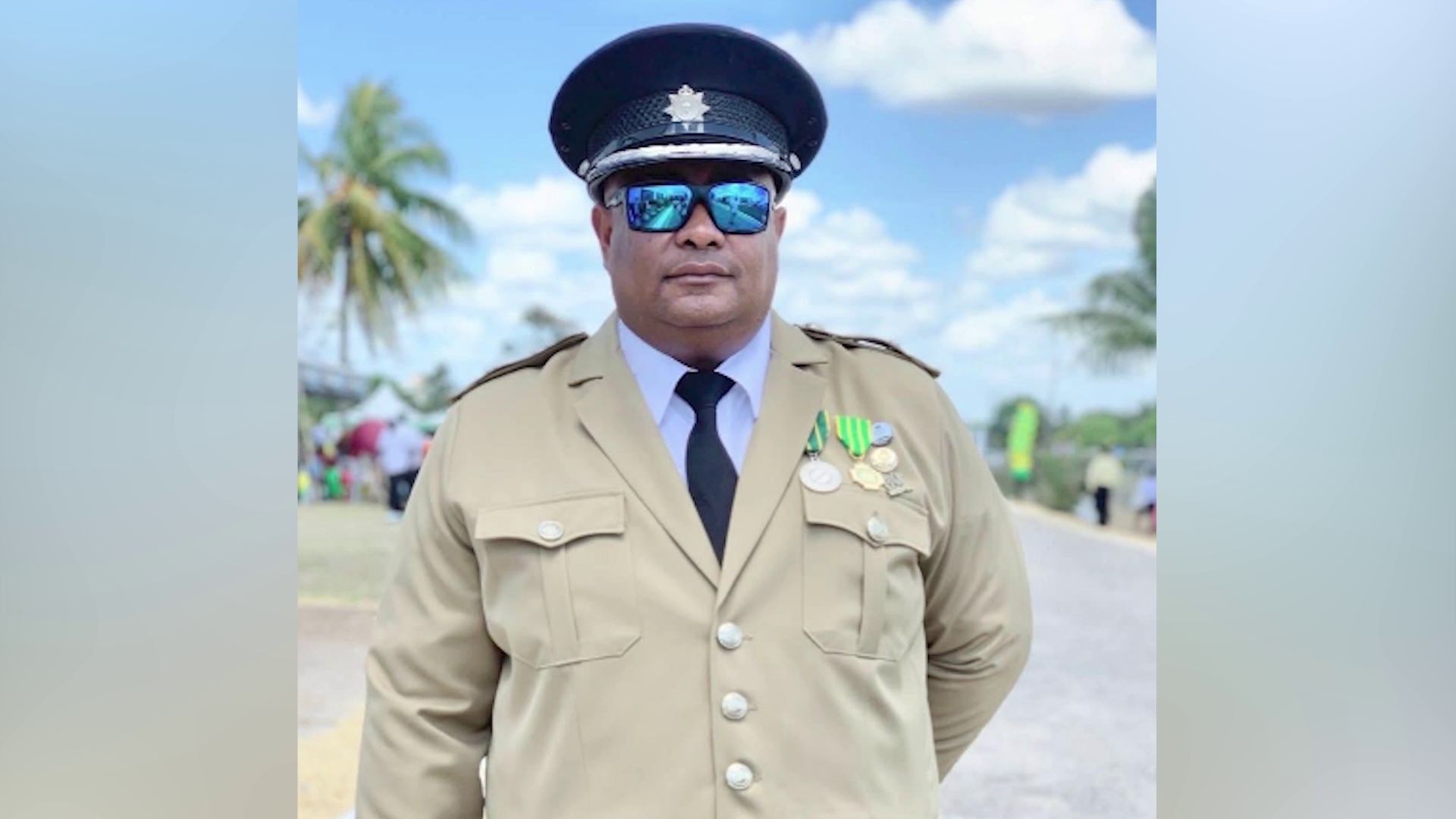
    The incident began when nearby residents alerted police to two individuals acting suspiciously and attempting to force entry into a private residence on Compassion Lane. Senior Superintendent Christopher Noble, a high-ranking local police official, was the first to reach the scene and confronted the pair as they pried at the property’s bedroom window with a crowbar, damaging the home’s external burglar bars.

    According to official accounts from the National Crimes Investigation Branch, when Noble ordered the men to stop, one of the suspects drew a weapon and fired multiple shots in the senior officer’s direction. Noble took cover immediately before returning fire at the suspects. Remarkably, the senior officer emerged from the encounter unharmed, but both suspects managed to flee the scene before additional units arrived.

    When forensic teams processed the site, they recovered the abandoned crowbar left wedged against the targeted window, a section of cut burglar bars that had been dislodged and fallen to the ground, and multiple spent bullet casings scattered across the residential property.

    The investigation expanded hours later when 30-year-old Devon Grant of Belize City arrived at the Karl Heusner Memorial Hospital (KHMH) seeking medical treatment for gunshot wounds. Police have not yet officially linked Grant to the Ladyville burglary attempt, but investigators are working to confirm his connection to the incident. As of the latest update, Grant remains in stable condition at the hospital, per Assistant Commissioner of Police Hilberto Romero, head of the National Crimes Investigation Branch.

    “On Sunday around four a.m. police responded to a shooting at Compassion Lane in Ladyville,” Romero stated in an official briefing. “Upon the arrival they received information from a senior officer in the area who reported he responded to a burglary in progress where he saw two male persons armed with crowbars. He shouted at them to stop. Thereafter, one of the male persons fired shots towards his direction. He then took cover and returned fire. Thereafter, a male person showed up at the KHMH with gunshot injuries. He was identified as Devon Grant of Belize City. We are carrying out an investigation into this report. The scene was processed where several expended shells were found. Grant remains in stable condition at the KHMH. The crowbars were recovered, expanded shells and there are damages on the window and the door.”

    The unfolding incident has already drawn comparisons to two previous fatal police shootings in the Ladyville area. Back in 2013, law enforcement officers fatally shot Travis McKay and Ryan Lozano in separate incidents after the pair were allegedly caught attempting to steal private property. Local community observers have noted the parallels between the older cases and the current shooting, though investigations into the 2026 encounter are still in early stages.

    This report is adapted from a transcript of an evening television news broadcast, with all original statements preserved in their official context. Authorities have asked anyone with additional information about the Compassion Lane burglary attempt or the identity of the second suspect to contact the Belize District Police Department immediately.