分类: society

  • Regering zet woningbouwprogramma in gang: hypotheken vanaf 3 procent

    Regering zet woningbouwprogramma in gang: hypotheken vanaf 3 procent

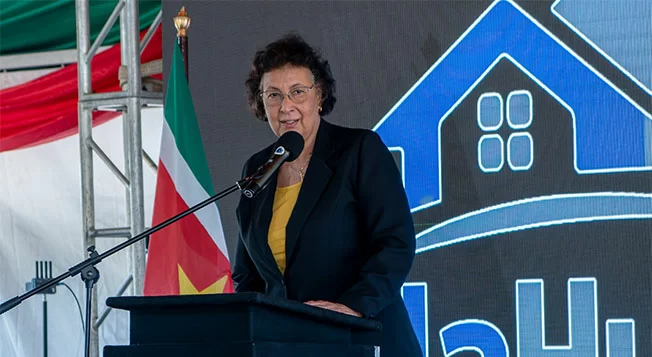
    On July 9, the government of Suriname officially inaugurated its long-awaited National Housing Program in Reeberg, a landmark initiative designed to address the country’s growing acute housing shortage by expanding access to affordable financing for homebuyers and homeowners.

    At the core of the new policy is the activation of the National Housing Fund, a legal entity established in 2019 that had remained non-operational until the launch event. The fund will enable low- and middle-income households to access subsidized mortgages through local commercial banks, with preferential interest rates tailored to income brackets. Households with a combined net monthly income of up to 2,000 Surinamese dollars (SRD) qualify for a 3% interest rate, while those earning between SRD 2,001 and SRD 3,500 can access mortgages at 5% interest. Maximum loan amounts are capped at SRD 750,000 for lower-income applicants and SRD 1.2 million for middle-income applicants. Financing is available not only for new home construction and purchases, but also for renovations and expansions of existing properties, with repayment terms stretching up to 30 years to keep monthly installments manageable.

    During the launch ceremony, officials also unveiled the program’s official logo and held the ceremonial first stone laying for model homes at the Reeberg housing development project in Wanica. President Jennifer Simons, who contributed to drafting the National Housing Fund legislation during her tenure as a member of parliament, framed housing as a fundamental social issue that underpins community and family stability. She emphasized that the program was intentionally enshrined in national law to ensure long-term sustainability, allowing future administrations to continue expanding housing construction and to guarantee that all applicants access financing based on transparent, objective criteria rather than political connections.

    Simons moved to temper public expectations immediately, noting that the 2026 budget allocates just SRD 250 million to the initiative, enough to finance approximately 300 to 350 units this year. This initial allocation will not meet the full unmet demand for housing in the country, which officials estimate reaches roughly 30,000 households. To help the government refine its future planning and better match supply to actual need, Simons urged all prospective home seekers to complete official registration once the application portal goes live.

    Vice President Gregory Rusland called the program’s launch the fulfillment of a long-held national priority, noting that addressing the housing crisis was marked as a top policy goal from the very first discussions surrounding the formation of the current administration. “A home is far more than just a roof over one’s head,” Rusland said. “It provides stability, security, and the foundation for strong, thriving families.” He echoed Simons’ commitment to depoliticizing access to housing finance, stressing that the program will be open to all Surinamese citizens who meet eligibility criteria regardless of their political affiliation. Like the president, Rusland acknowledged that the full housing crisis will not be resolved in a single government term, but emphasized that the initiative lays a durable, structural foundation to outperform housing policies implemented by previous administrations.

    National Housing Fund director Anoushka Ramdjilal confirmed that the previously dormant fund is now fully operational, with a dual mandate: to expand access to affordable housing for low- and middle-income Surinamese, and to stimulate growth in the domestic construction sector. Sigmund Proeve, chair of the fund’s supervisory board, added that applicants retain full freedom to choose their own contractor and participating bank, and that the fund will enforce strict oversight of both construction quality and public fund management to ensure accountability.

    Public Works and Spatial Planning Minister Stephen Tsang described the program as a critical step toward decoupling homeownership access from political patronage, while also noting that it will deliver a meaningful economic boost by driving activity in the construction sector and creating new local jobs. Social Affairs and Housing Minister Diana Pokie reinforced the urgency of the initiative, highlighting that the country’s backlog of unmet housing demand has reached approximately 30,000 households, with vulnerable groups including low-income families and people living with disabilities as the government’s primary focus.

    In the coming weeks, the government will launch a dedicated public information website and national outreach campaign to inform prospective applicants of eligibility requirements, application procedures, and available home models. Applications will be submitted through participating local banks rather than directly to the National Housing Fund, streamlining the process for applicants and leveraging existing financial infrastructure.

  • Tight restrictions on digital devices for very young children- Human Services Minister

    Tight restrictions on digital devices for very young children- Human Services Minister

    On Wednesday, July 8, 2026, Guyana’s national Early Childhood Development Conference opened in Georgetown, bringing together policymakers, international partners, community caregivers and child welfare advocates to advance the country’s early childhood development (ECD) agenda. The event, hosted by Guyana’s Childcare and Protection Agency (CPA) in partnership with UNICEF and the Government of Canada, delivered new public health guidance for young children while highlighting progress on the country’s landmark National Integrated Early Childhood Development Policy.

    Speaking to attendees at the conference opening, Minister of Human Services and Social Security Dr. Vindhya Persaud issued a clear public warning: children under 2 years old must be completely barred from using smartphones, tablets and other personal digital devices, citing critical developmental risks during this period of early brain growth.

    “Many parents reach for a phone or tablet to calm an active or fussy young child, but this habit carries real long-term consequences,” Dr. Persaud told delegates. “The first two years of life are a foundational period for brain development. Every stimulus a child encounters shapes their long-term cognitive and social growth, and unregulated screen time from digital devices is not a healthy input. If you are giving young children these devices, it is time to stop.” For children older than two, the minister recommended capping total screen time to just two hours per week to balance exposure with healthy developmental activity.

    Beyond screen time guidance, the conference highlighted the government’s ongoing investment in accessible, high-quality community-based early childhood care across the country. A core pillar of this work is the GY$1.2 billion ECD co-investment initiative, which provides financing to local care centre owners to upgrade facilities, purchase child-friendly learning furniture, access professional training, and expand sustainable operations. To date, 700 care providers have already registered to access the funding, which is designed to build safe, welcoming learning and play spaces while keeping care affordable for working families.

    Dr. Persaud emphasized that the initiative’s core requirement for receiving public co-investment is that services remain accessible to all community members. “Locating these centres in the heart of local communities eliminates transportation barriers for parents, and lets families build trust with the caregivers looking after their children,” she explained. “Our goal is to make high-quality early care affordable and accessible for every family, regardless of income.”

    As of the conference, Guyana has formally licensed 352 early childhood care centres, with another 376 providers completing registration. Twenty-five facilities have been designated as Centres of Excellence, staffed by specially trained ECD professionals. The government has already disbursed the equivalent of GY$10 million to 100 centre owners to support their upgrade to the higher Centres of Excellence standards. Additionally, 460 families with children enrolled in registered, licensed care centres have received three months of financial support totaling GY$25 million, to help families access safe, regulated care arrangements.

    Levine Gouveia, Director of Children Services at CPA, outlined the five core pillars of Guyana’s National Integrated Early Childhood Development Policy: cross-sectoral collaboration and coordination, child safety and security, universal access, service quality, and inclusive care for all children. The policy also integrates targeted work across child health and nutrition, parenting and family support, ECD research, and infrastructure expansion, Gouveia explained. “All these work streams come together to build a robust child protection and development system for our youngest children, from birth through the pre-nursery years up to age three,” she said.

    Adam Loyer, Chargé D’Affaires at Canada’s High Commission to Guyana, noted that Canadian support has helped expand quality ECD services to more than 48,000 children and over 35,000 parents and caregivers across Guyana. ECD programming has now reached 156 Guyanese communities, exceeding the original outreach target set when the policy initiative launched. Loyer called the formal adoption of Guyana’s National Integrated Early Childhood Development Policy one of the most significant milestones of the partnership to date.

    Anna Azaryeva Valente, UNICEF Representative for Guyana and Suriname, echoed partners’ commitments to advancing ECD work, while noting that significant gaps remain to be addressed. While Guyana has made notable progress addressing systemic social challenges affecting children, Valente said many vulnerable communities still lack access to quality ECD services, and service quality can be improved across multiple regions.

    “There are still key milestones ahead of us: improving child health, nutrition and protection across all communities, empowering parents and caregivers with information and ongoing support rather than just assigning responsibility, grounding our work in evidence, and securing sustainable long-term public investment in early childhood services backed by clear policy and guidelines,” Valente said. She urged conference attendees, including ECD experts, caregivers, parents and service providers, to engage actively throughout the event: identify unmet needs, critique existing frameworks, ask critical questions, and help set collective priorities for future ECD investment across the country.

  • New campaign warns: Harbouring criminals will cost you

    New campaign warns: Harbouring criminals will cost you

    Barbados’ government is taking a proactive, community-centered step to curb gang-related violence and organized crime, launching a nationwide public education campaign designed to deter citizens from harboring fugitive gang members and assisting criminal gang operations. The initiative comes directly on the heels of the recent passage of the landmark Criminal Gangs (Prevention and Control) Act, legislation that introduces harsh, mandatory penalties for a range of gang-connected offenses to disrupt criminal networks across the island.

    Under the new law, a broad set of gang-specific activities have been formalized as criminal offenses, with nearly all carrying mandatory minimum prison sentences ranging from 10 to 25 years. For particularly severe offenses – including targeted attacks on law enforcement personnel, and individuals holding leadership roles or providing critical organizational support to gangs – maximum sentences can stretch up to 35 years behind bars.

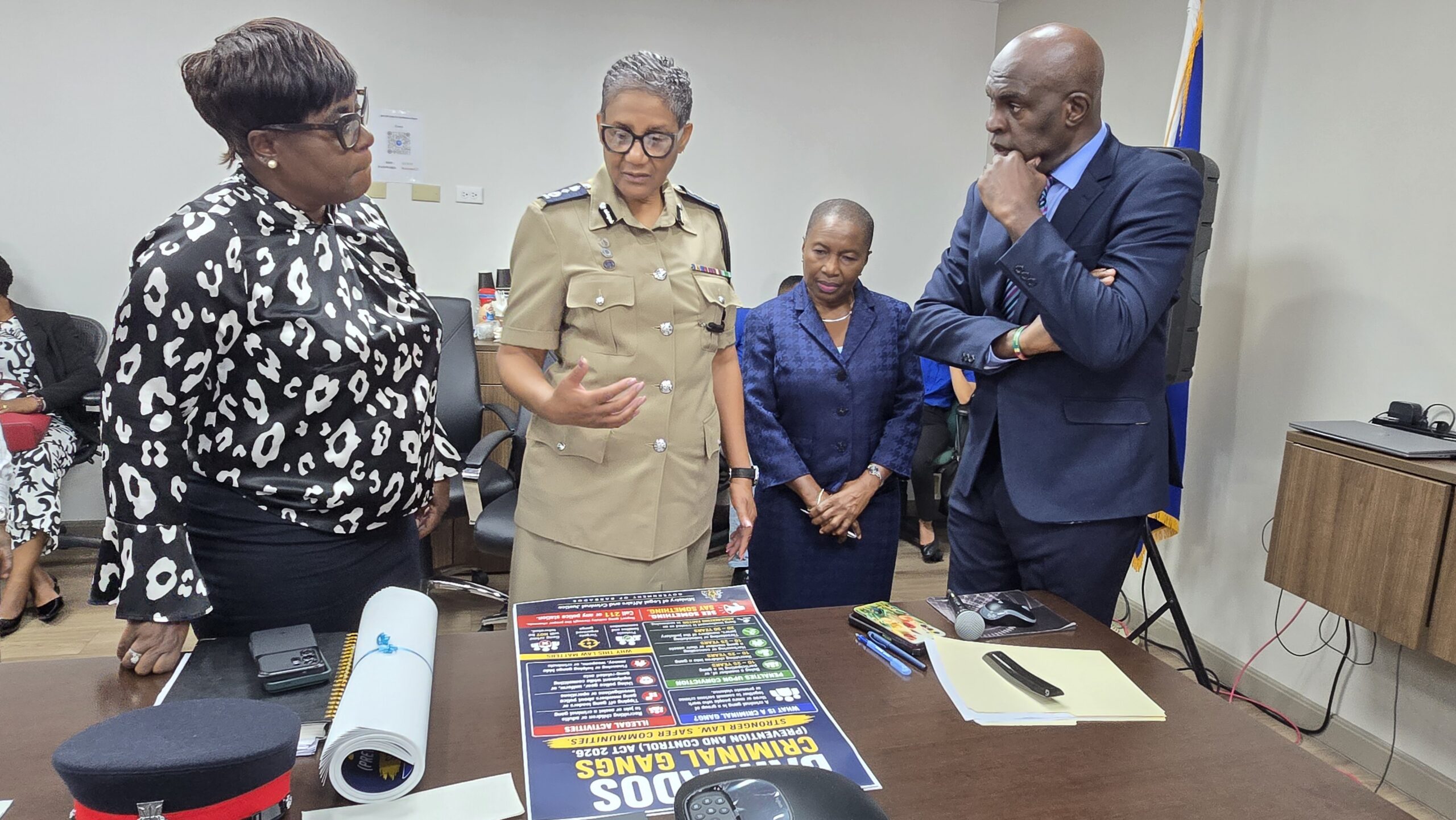
    The official launch of the campaign was hosted at the Office of the Attorney General, drawing attendance from newly appointed Commissioner of Police Sonia Boyce, senior ministry officials, and representatives from the Barbados Association of Principals of Public Secondary Schools, who accepted batches of campaign posters to distribute across secondary institutions nationwide. A photo from the event captured Lashley and Boyce unveiling the campaign’s central public awareness poster (Credit: Lourianne Graham/Barbados TODAY).

    Minister of Legal Affairs and Criminal Justice Michael Lashley outlined the structure of the multi-channel campaign, which forms a core component of the national government’s broader crime prevention strategy. At its center are two distinct public service announcements (PSAs): one that breaks down the specific provisions and penalties outlined in the new Criminal Gangs Act, and a second that delivers a general message about the legal risks of harboring wanted gang members. Lashley emphasized that the new legislation imposes “very stiff penalties” for anyone found hiding gang affiliates or facilitating recruitment of new members into criminal organizations.

    Beyond broadcast PSAs, the campaign will expand into communities across the country, deploying printed posters, in-person outreach to secondary schools, local community groups, and national service clubs. Lashley stressed that cross-sector collaboration is critical to the initiative’s success, noting that every stakeholder with a role in crime prevention must be brought into the effort. To maximize reach, particularly among younger audiences, the campaign will also leverage major social media platforms including WhatsApp, Instagram, and Facebook to spread its message.

    Notably, community members played a central role in developing the two PSAs, a deliberate choice that Lashley says marks the start of a broader community-centered engagement strategy. He encouraged all Barbadians to see the campaign not just as a formal warning about legal consequences, but as a collective call to action to join the national fight against organized crime.

    Lashley also expressed full confidence in newly appointed Police Commissioner Sonia Boyce’s leadership, while underlining that law enforcement action alone cannot solve Barbados’ gang crime crisis. “We cannot solve it by just enforcement,” he explained. “You have to solve it by reaching into communities and getting persons who are at the brink of touching the criminal justice system, and persons who are young. That we believe are vulnerable, who might not be part of the criminal justice system but might be vulnerable to gang leaders and drug dealers.”

    The outreach to secondary schools reflects this focus on prevention: by engaging young people early, the government hopes to cut off recruitment pipelines that gangs rely on to expand their membership and criminal operations across the island.

  • No Gunfire, But No Full Answers in Kevaughn Gabriel Case

    No Gunfire, But No Full Answers in Kevaughn Gabriel Case

    On July 8, 2026, new developments in the death of 25-year-old Kevaughn Gabriel have resolved one critical question but left the broader case far from closed. A formal post-mortem examination has confirmed that Gabriel did not die from gunfire, contradicting earlier public speculation. Instead, his cause of death has been pinned on internal bleeding matching the injury profile of a blunt force traffic accident. According to official statements from Belize’s law enforcement agency, the incident unfolded when Gabriel and three responding police officers were struck by an unattended vehicle that rolled backward down a steep slope located at the junction of Fidel Castro Street and Intelco Hill. The officers had been on site responding to a routine domestic violence call when the unforeseen event occurred, with police already labeling it an unforeseen tragedy. Still, critical pieces of public information remain outstanding. The local news organization investigating the case has yet to receive the full official incident report, the public identification of the three officers involved in the response, or a clear, minute-by-minute timeline laying out exactly how events unfolded on the day of Gabriel’s death. Julius Espat, the country’s Minister of Home Affairs, called the incident “deeply unfortunate” during public comments on the case, confirming that a full formal investigation remains ongoing. “I’ve received a brief initial overview of the incident that took the life of this young man,” Espat told reporters. “I have not yet dug into the full details of what happened, but my understanding is that the investigation is moving forward. If any individual is found to be at fault for this outcome, we will ensure that accountability is properly carried out. No matter how you frame it, this is a devastating situation.” When pressed by reporter Shane Williams on whether the government is preparing for potential civil litigation over Gabriel’s death, Espat offered a straightforward response: “If a lawsuit comes, it comes.” Members of the press have attempted to secure comment from Kevaughn Gabriel’s family multiple times as new details emerge. Most recently, Gabriel’s mother stated that the family intends to keep all discussions of the case private as they process their loss. This report is a transcript of a televised evening newscast; any comments originally delivered in Kriol have been transcribed using a standardized spelling system for accessibility.

  • Woman Charged for Knocking Down Jehovah’s Witness

    Woman Charged for Knocking Down Jehovah’s Witness

    Nearly three days after a 55-year-old community volunteer was left with severe head injuries in a Belize hit-and-run collision, law enforcement officials have formally filed criminal charges against the driver accused of fleeing the scene. The case, which has drawn local attention over claims of preferential treatment for the defendant, moves forward as the victim’s family pushes for full accountability.

    The victim, Cheryl August, is a dedicated Jehovah’s Witness who has long been a familiar figure in the Hillview neighborhood of Santa Elena. Neighbors and congregants know her for her daily bicycle trips, which she uses to travel to worship services, check in on fellow members of her congregation, and care for elderly community members in need. On the evening of the incident, August took all appropriate safety precautions: she wore a high-visibility reflective vest, and her bicycle was fitted with additional reflective gear to make her visible to oncoming traffic. Despite these measures, she was struck by a passing vehicle on Friday night, and the driver, identified as Stephanie Young, left the scene immediately after the collision. August suffered life-altering serious head injuries in the crash.

    In the wake of the incident, August’s family has spoken out to raise concerns about how the case has been processed. Young was released on police bail just two days after the collision, on Sunday, and the family says the quick release has left them convinced Young is receiving favorable treatment that would not be extended to other defendants. As of the latest update, law enforcement has not yet released a full public incident report detailing the circumstances of the crash, including whether speed, alcohol, or distracted driving were contributing factors. Despite the lack of a public police report, Young has already been arraigned at the San Ignacio Magistrates Court, where she faces multiple criminal charges connected to the hit-and-run. For August’s family, the filing of formal charges marks a small but important step toward achieving justice for the injured community activist, though questions about the case’s processing remain unanswered.

    This report is adapted from a transcript of a televised evening news broadcast, with Kriol language portions transcribed using a standardized spelling system for accessibility.

  • McDonald Cyberbullying Case Heads to High Court

    McDonald Cyberbullying Case Heads to High Court

    In a significant development in a high-profile legal matter out of Belize, the cyberbullying case brought by Nichole McDonald against former Commissioner of Police Chester Williams has been officially transferred to the country’s High Court for further proceedings. As of July 8, 2026, the 38-year-old home care nurse and mother of five remains in custody at Belize Central Prison, after her bail was revoked last month.

    During a hearing held on Monday at the Belize City Magistrate’s Court, prosecutors confirmed that the Director of Public Prosecutions (DPP) has issued a directive that the case proceed by way of indictment, moving it out of the lower court’s summary trial jurisdiction. McDonald, who is currently representing herself after being unable to secure legal counsel, was provided with 30 pages of evidentiary disclosure from the prosecution, and the court scheduled two upcoming court dates: a preliminary inquiry set for July 27, with a subsequent hearing scheduled for August 3.

    Court observers noted that McDonald appeared visibly confused when the magistrate explained the procedural shift, which means her case will no longer be adjudicated in the lower magistrate’s court. Her placement in remand follows a bail revocation ruling last month, after new criminal allegations were filed involving a neighbor, multiple police officers, a doctor, and a nurse. Belizean courts had previously granted McDonald bail, with a condition that she avoid any additional arrests or criminal charges while released; the new allegations violated that condition, leading Supreme Court justices to revoke bail and order her to remain behind bars pending further proceedings.

    McDonald has formally entered a plea of not guilty to the earlier charges lodged against her. Addressing the court during the recent hearing, she stated that she feels targeted and victimized by the legal process. She also voiced deep concern for her five minor children, who are currently being cared for by her two oldest adult daughters in her absence.

    This report is adapted from a televised evening newscast originally published online, with transcription completed in line with the outlet’s editorial standards.

  • Fire Victims Struggle Months After Losing Everything

    Fire Victims Struggle Months After Losing Everything

    It has been months since an unexpected early-morning blaze turned a family’s home into ash, and the survivors of the disaster are still fighting to reclaim any semblance of normal life after losing everything they owned. The fire broke out on Good Friday 2026, striking when most residents of the neighborhood were still asleep, and has left Ashanti Garnett, her 4-year-old daughter, and her husband grappling with the long aftermath of sudden homelessness.

  • Five Months Later, Fire Victim Still Needs Help

    Five Months Later, Fire Victim Still Needs Help

    It has been nearly five months since an early-morning blaze turned a Belize City family’s home into unrecognizable ash, but the road to recovery remains incomplete, leaving the household in desperate need of public assistance to cross the finish line of their rebuilding journey.

    The disaster unfolded in the early hours of Good Friday this year, when Ashanti Garnett, the 34-year-old head of the household, woke to a nightmare. At 1 a.m., she opened her eyes to find half of her residence already engulfed in roaring flames. Her husband was away at his overnight shift when the fire broke out, leaving Garnett alone with her four-year-old daughter to escape. With mere seconds to react, she grabbed her young child and fled the burning structure, leaving every possession behind except for a single blanket they carried out.

    Following an on-site investigation, the Belize Fire Department concluded the fire was sparked by an unexpected electrical surge, a freak accident that left the family with no warning and no time to prepare. For Garnett, the destruction was total. Not only did the family lose every piece of furniture, clothing, and personal item they owned, but a number of their household pets also died trapped inside the burning home.

    Garnett, a self-employed nail technician, operated her small business out of her home. When the fire destroyed the property, it also wiped out her entire source of income overnight. Today, the family lives in cramped conditions, renting a single small room as they slowly work to lay the foundation for a new permanent home. What started as a devastating loss has grown into an overwhelming financial burden that the family can no longer bear on their own. That is why Garnett has taken the step of reaching out directly to the general public for any support that can be offered.

    “Even if it’s a few pieces of lumber, or a secondhand stove, anything at all will make a difference,” Garnett said in an emotional appeal. “Every small donation helps, and I would be forever grateful for any help the community can give us right now.”

  • NCCU supports Morne Jaune–Rivière Cyrique reunion with community outreach initiatives

    NCCU supports Morne Jaune–Rivière Cyrique reunion with community outreach initiatives

    A long-standing financial cooperative in Dominica has cemented its ties to rural communities in the country’s southeast region through a new partnership focused on cultural celebration and grassroots development. The National Cooperative Credit Union (NCCU) has joined forces with the Morne Jaune–Rivière Cyrique Reunion organization to roll out a slate of community-centered projects that honor the cultural heritage of the two connected villages while advancing local progress.

    As outlined in an official press statement from NCCU, the first wave of collaborative work launched on Monday, July 7, when a team of NCCU staff joined local residents to complete a road improvement scheme in the Morne Frayal area. Beyond infrastructure investment, the credit union also delivered critical donations to the Rivière Cyrique Health Centre, bolstering the facility’s ability to deliver essential healthcare services to local families.

    The day of activities wrapped up with a community networking gathering hosted at Morne Jaune Primary School. During the event, NCCU representatives connected with cooperative members, emphasizing the value of their ongoing partnership amid ongoing shifts across the global financial industry. Representatives encouraged members to keep deepening their engagement with the cooperative movement as the sector evolves.

    For NCCU, the partnership is far more than a one-off community gesture: it is a reflection of the institution’s 15-year commitment to serving southeast Dominica, where it operates three regional sub-offices in St. David’s, Grand Fond and La Plaine. The credit union notes that its support for the Morne Jaune–Rivière Cyrique Reunion aligns with its core organizational mission: investing in locally led projects that generate long-term public good, and nurturing the close, trusting bonds that have long defined its relationship with members and communities across the island.

    Officials added that the collaborative activities created valuable space for the credit union to strengthen connections with local residents, build deeper reciprocal relationships, and contribute to initiatives that will leave a lasting positive imprint on quality of life in the twin villages.

  • Autistic Child Reported Missing After Attending Camp

    Autistic Child Reported Missing After Attending Camp

    A urgent search operation is underway across Antigua and Barbuda after an autistic child disappeared in the days following his attendance at a local community camp on Wednesday. Local law enforcement has issued a widespread public appeal for assistance, sharing critical identifying details to help members of the public recognize the boy. Alongside confirming the child’s diagnosis of autism spectrum disorder, authorities have released an up-to-date photograph of the missing minor, designed to help community members match the child’s current appearance to the information being circulated. The Royal Police Force of Antigua and Barbuda is leading the search effort, and has outlined clear channels for any person holding information about the child’s current location to come forward immediately. Officials are asking anyone who has seen the child or has knowledge of where he may be to either reach out to their closest regional police detachment or contact the central command of the Royal Police Force of Antigua and Barbuda without delay, stressing that even the smallest tip could help bring the child safely back to his family. Community organizations across the islands have also shared the appeal to expand its reach, as investigators work to trace the child’s movements after he left the camp earlier this week.