分类: society

  • Canadian Drug Accused Complains of Bed Bugs at His Majesty’s Prison

    Canadian Drug Accused Complains of Bed Bugs at His Majesty’s Prison

    A high-stakes court appearance in Grenada took an unexpected turn Wednesday, when a Canadian national accused of smuggling hundreds of thousands of Eastern Caribbean dollars worth of cannabis used his time before the judge to highlight a pressing, unsanitary issue in the country’s main correctional facility: a widespread bed bug infestation at His Majesty’s Prison.

    Twenty-three-year-old Semand Vivan Shammo Aljndo has remained in pre-trial remand at the facility since March, after courts ruled he posed a significant flight risk ahead of his trial. During his latest scheduled court hearing, Aljndo chose to bypass standard legal procedure and directly raise his complaints about the parasitic infestation to the sitting judge, formally requesting an immediate transfer to a different holding cell away from the bed bug outbreak.

    In response to the defendant’s direct appeal, the judge directed Aljndo to coordinate the request through his appointed legal defense counsel, attorney Michael Archibald, to move the transfer request through official administrative channels at the prison. The case of the drug importation charge remains ongoing, with no updates yet on whether Aljndo’s request for a new cell will be approved by prison officials.

  • Has the Search for Deborah “Bree” Arthurs Gone Cold?

    Has the Search for Deborah “Bree” Arthurs Gone Cold?

    It has now been 48 days since 28-year-old Deborah “Bree” Arthurs, a Belize City resident and single mother, was last seen by members of the public, leaving her loved ones and the local community grappling with growing uncertainty over her fate.

    Arthurs was last documented in public on Friday, March 27, near La Popular Bakery, where witnesses observed her getting into a silver Chevrolet Equinox. No contact from her has been reported to authorities or family members since that date.

    As the weeks tick by with no breakthrough, the Belizean Police Department has not shared any new public briefings on the progress of its investigation, and no credible, confirmed leads pointing to Arthurs’ current whereabouts have come to light. Early on, investigators launched a probe into a potential link between Arthurs’ unexplained disappearance and the fatal shooting of Jevon Clare that occurred nearby, but that line of inquiry remains open and unresolved, with no new findings disclosed to the public.

    Initial ground searches covered broad swathes of territory across both the Belize and Cayo districts, and in an April 7 update, Assistant Superintendent of Police Stacy Smith confirmed that investigators had identified a vehicle of interest tied to the case. However, no subsequent updates regarding that vehicle or any developments stemming from that identification have been released.

    With law enforcement remaining tight-lipped on the case, Arthurs’ family has stepped in to encourage new tips, boosting the total reward for information that leads to actionable answers to $10,000 Belize dollars. More than six weeks after she went missing, the family continues to wait in limbo for any news that can help resolve the mystery of her disappearance.

  • Sagicor to host virtual ‘Mom’s Masterclass’ webinar in celebration of mothers

    Sagicor to host virtual ‘Mom’s Masterclass’ webinar in celebration of mothers

    As Mother’s Day approaches across the Caribbean, leading regional financial and wellness-focused institution Sagicor is expanding its annual holiday programming with a purpose-driven virtual initiative designed to lift up and support women in their roles as mothers.

    Scheduled to take place on Thursday, May 14, 2026 at 7:00 PM, the brand-new interactive online event, dubbed “Mom’s Masterclass,” will bring together a multi-disciplinary panel of experts to unpack the most pressing topics facing modern mothers navigating work, family, and personal growth. According to an official press announcement from the company, the panel discussion will cover a wide range of actionable topics, from children’s health management and evidence-based contemporary parenting strategies to maternal self-care and long-term personal financial wellness.

    This accessible, no-cost webinar forms part of Sagicor’s long-standing regional commitment to advancing public wellness, strengthening family units, and expanding financial empowerment for women across the Caribbean. Unlike one-off holiday greetings or promotional gestures, the company designed the event to deliver tangible, ongoing value to mothers, emphasizing that support for maternal well-being should not be limited to a single annual observance.

    The diverse speaker lineup brings together professional insight from across multiple sectors to address mothers’ varied needs. Confirmed panelists include Nicole McClaren-Campbell, a best-selling author, successful entrepreneur and prominent digital content creator; Dr. Maria Chase, a board-certified practicing pediatrician; Carolyn Shepherd, Assistant Vice President of Digital and Alternate Channels at Sagicor Life Inc; Renee Ottley, Senior Manager of Investments and Wealth Management at Sagicor Investments Trinidad and Tobago Limited; and Kizzy Flood, a seasoned Sagicor Advisor with Sagicor Life (Eastern Caribbean) Inc.

    Organizers note that the conversation will be structured to deliver practical, actionable guidance, real-world lived experience insights, and much-needed encouragement for mothers balancing the competing demands of parenting, professional careers, household finances, and their own personal health and well-being. To add an element of celebration to the occasion, attendees who join the live session will also be entered to win special giveaways and prizes.

    The company encourages all interested individuals to register for the event in advance to reserve their spot, as virtual capacity is limited. Full registration details and additional updates about the “Mom’s Masterclass” are posted now across all of Sagicor’s official social media channels.

  • Bush fire reported along Utility Drive near car dealership

    Bush fire reported along Utility Drive near car dealership

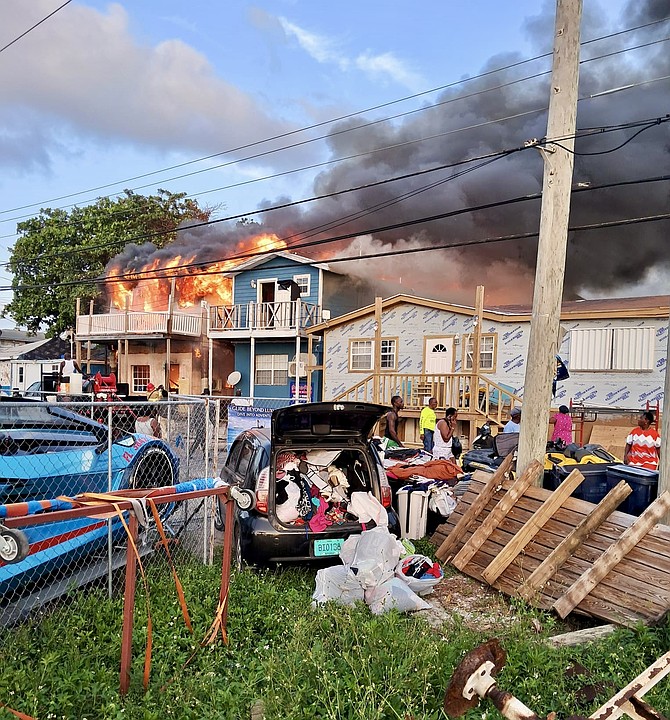
    A fresh uncontrolled bush fire erupted along Utility Drive in Antigua on Tuesday, billowing thick columns of dark smoke into the sky that were visible for miles across the surrounding area, triggering immediate alarm from local residents and passing drivers. As of press time, emergency officials had not yet released full details on the size of the blaze or confirmed whether any residential properties, public facilities, or critical infrastructure were in the fire’s active path or at imminent risk of damage. Local emergency management teams have been deployed to contain the spread of the fire, which continues to burn across unmanaged bushland in the area as crews work to gain control of the blaze. For the past several weeks, Antigua has faced a elevated risk of fast-moving wildfires, with sustained dry conditions and frequent strong gusty winds creating the perfect kindling that has already sparked multiple large grass and bush fires across the island. In an official advisory, authorities have urged all residents living near the Utility Drive area and motorists traveling along nearby routes to remain extra vigilant, avoid unnecessary travel near the fire zone, and follow any emergency instructions issued by first responders. Conditions remain dynamic, with updates on containment and threat levels expected to be released as more information becomes available.

  • OWRO werkt aan ontwatering getroffen gebieden; kampt met tekort aan middelen

    OWRO werkt aan ontwatering getroffen gebieden; kampt met tekort aan middelen

    In the wake of severe Sunday rainfall that triggered widespread flooding across low-lying communities in Suriname, the country’s Ministry of Public Works and Spatial Planning (OWRO) has launched urgent drainage clearance operations across the hardest-hit regions, progressing through key outlet pipelines as crews work against constrained resource limits to mitigate flood damage.

    Work has already been completed on clearing pipelines 7A and 8A, with the ministry’s Drainage Division now shifting focus to Pipeline 10A – a project that is expected to bring much-needed flood relief to the residential area of Sophiaslust. Additional clearance work is also ongoing in Manjadam (Domburg), Welgedacht C, Kasabaholokreek, and along Abigaëlslustweg, targeting the most acutely waterlogged zones.

    Vinodh Ramautar, head of the Drainage Division, told local reporters that core clearing operations are being run in-house by the ministry, with a small number of private contractors also supporting targeted outlet clearance projects. However, severe resource gaps are slowing the response: the ministry currently only operates one long-arm excavator, and two additional machines have been borrowed from the Ministry of Agriculture, Livestock and Fisheries to supplement the fleet. There are not enough available resources to deploy more heavy equipment to speed up work across all affected areas.

    Longer-term plans to address chronic drainage issues have already been drafted and submitted, calling for the clearance and upgrading of 200 kilometers of drainage outlets and trenches across Paramaribo and Wanica districts, but the proposal has not yet received final approval. Without additional funding and equipment, Ramautar explained, the division cannot address the flood-related complaints flooding into the department. Crews prioritize on-site assessments before deploying limited machinery, to ensure teams focus on the most urgent crisis points first. “We are inundated with complaints, and we are doing everything possible to alleviate the worst distress,” Ramautar stated.

    At present, a private contractor is carrying out outlet clearing work in Pontbuiten and Winti Wai. Two weeks ago, the ministry completed drainage work in Rehamal, but the intervention has proven insufficient to resolve persistent flooding. A new contract has now been signed with a private contractor to carry out additional work, which has not yet started, alongside a separate contract for the deployment of a sewage suction truck. Drainage improvement work is also underway along Hendrikstraat, near Tweede Rijweg, where multiple residential properties have been submerged by floodwater.

    Ramautar emphasized that additional funding and heavy equipment are critical to addressing the full scope of the country’s drainage problems. The ministry does not own a sewage suction truck of its own, forcing it to rely on private contractors for this key work, and it is impossible to clear all drainage pipelines across the country with current resources. While the long-term national drainage plan calls for full clearing of all drainage pipelines, crews are currently limited to clearing pipeline mouthings wherever possible to maximize water flow into the Saramaccakanaal and reduce local flood buildup.

  • Sagicor “Mom’s Masterclass” webinar

    Sagicor “Mom’s Masterclass” webinar

    Against a backdrop of growing recognition that maternal support demands more than just a single annual day of recognition, Caribbean financial and wellness leader Sagicor is extending its annual motherhood celebrations with a purpose-driven, empowering virtual event tailored to lift up women in their foundational role as mothers.

    Scheduled for Thursday, 14 May 2026 at 7:00 pm, the upcoming “Mom’s Masterclass” webinar will convene a diverse, expert panel spanning healthcare, business, entrepreneurship, and finance to tackle the most pressing topics modern mothers and their families face. The curated discussion agenda covers four critical domains: children’s physical health, maternal self-care, long-term financial wellness, and navigating the unique challenges of 21st-century parenting.

    This no-cost online gathering aligns with Sagicor’s long-standing institutional commitment to advancing wellness, family stability, and financial empowerment across the entire Caribbean region. The cross-sector panel brings together five accomplished voices to share their unique perspectives: Nicole McClaren-Campbell, a published author, entrepreneur, and prominent digital content creator; Dr. Maria Chase, a board-certified pediatrician; Carolyn Shepherd, Assistant Vice President of Digital and Alternate Channels at Sagicor Life Inc; Renee Ottley, Senior Manager of Investments and Wealth Management at Sagicor Investments Trinidad and Tobago Limited; and Kizzy Flood, a dedicated Sagicor Advisor with Sagicor Life (Eastern Caribbean) Inc.

    Organizers designed the interactive session to deliver more than just theoretical discussion: attendees will walk away with actionable, practical advice, unfiltered honest insights, and targeted encouragement to help mothers balance the competing demands of parenting, professional careers, personal financial planning, and their own physical and mental well-being. Unlike traditional Mother’s Day observances that limit recognition to a 24-hour period, the masterclass was developed to affirm that ongoing support and celebration for mothers is a year-round priority. To add to the engagement, attendees who join the live broadcast will also be entered to win a selection of attractive giveaways.

    Event organizers urge all interested participants to register for the webinar as early as possible to reserve their spot, given expected high demand for the free event.

  • Enough is enough: The blood of our daughters cries out

    Enough is enough: The blood of our daughters cries out

    On the night of February 6, 2026, a senseless act of brutal violence cut short the life of 22-year-old Aleandra Lett–Hypolite, a promising nursing student at St George’s University who had dedicated her life’s ambition to caring for others. Aleandra was raped and murdered in the quiet Grenadian parish of St Andrew, her body discarded in bushes in the remote community of Café, Crochu. The man charged with her murder and rape is a convicted sexual predator who was granted early bail despite a documented history of violent sexual offenses. Just days after Aleandra’s killing, a second young life was lost: 18-year-old Terrecheal Sebastian was shot dead in Tivoli, also in St Andrew.\n\nThese two tragedies are not isolated incidents. They are the most recent high-profile examples of a growing, horrifying pattern of femicide that has shaken Grenada and spread across the broader Caribbean region, where young women are being killed by men of all ages in streets, homes, and public spaces that should be safe.\n\nPublic outrage over the killings has been widespread and deeply felt, with community vigils, candlelight memorials, and an outpouring of condolences for the victims’ families. But the author of this commentary, Francis Amèdé, MD, argues that gestures of sympathy are not enough. For years, Grenada has fallen into a repeating cycle: communities mourn after a brutal killing, express frustration, and then nothing changes. Dangerous offenders remain free on bail, court cases drag on for years, and the death penalty — which Amèdé calls the ultimate deterrent for violent crime — has been sidelined by international pressure from human rights groups like Amnesty International, while the Grenadian government has moved toward full abolition on human rights grounds.\n\nFor Amèdé, the blood of Aleandra, Terrecheal, and dozens of other women killed before them demands swift, decisive justice. He cites the Bible’s Ecclesiastes 8:11, which warns: “Because the sentence against an evil deed is not executed speedily, the heart of the children of man is fully set to do evil.” This is not a call for vengeance, he emphasizes, but a demand for biblical justice, improved public safety, and the long-term survival of Grenada as a safe nation. He argues that Grenada and other Caribbean nations must immediately reinstate and enforce the death penalty for deliberate, premeditated murder — particularly in aggravated cases involving rape, repeat offending, or attacks on vulnerable people. Beyond capital punishment, he calls for sweeping reform: police must aggressively investigate violent gender-based crimes and deny bail to dangerous repeat offenders; courts must deliver timely verdicts, ending the decades-long delays caused by extended appeal processes; and governments must reject pressure from foreign non-governmental organizations to abolish the death penalty, instead leading with courage to protect their citizens. While prevention programs are an important part of addressing violence against women, Amèdé argues they are useless without harsh, certain consequences for offenders — “Band-Aids on a haemorrhage.”\n\n## The Scale of the Crisis: Data on Femicide and Violence Across the Region\n\nGrenada is a small island nation with a total population of just 125,000 to 130,000, meaning every homicide has an outsize impact on the tight-knit community. 2023 data from Macrotrends (2025) puts the country’s homicide rate at 13.67 per 100,000 people — a relatively high rate for a nation of its size, translating to roughly 16 to 17 murders per year. While 2025 saw a welcome drop to around 10 total homicides (all of which were reportedly solved), the early 2026 spike in brutal killings of young women has reversed that progress. Grenada’s femicide rate currently stands at approximately 1.714 per 100,000 women, placing it among the highest rankings for gender-based killing regionally and globally.\n\nThe picture is even grimmer across the rest of the Caribbean. Saint Vincent and the Grenadines has recorded homicide rates as high as 40 to 54 per 100,000 in recent years, driven by gang activity and the illegal drug trade. Neighboring nations including Trinidad and Tobago and Jamaica consistently rank among the most violent countries in the world. Data from the United Nations Office on Drugs and Crime (UNODC) and the UN Economic Commission for Latin America and the Caribbean (ECLAC) for 2025 shows that Latin America and the Caribbean account for a disproportionate share of global femicides. Between 2021 and 2023, thousands of women were killed across the region, with 45% to 74% of all female homicides linked to intimate partners or family members, depending on the sub-region. In small island nations like Grenada, an even higher share of female homicides are classified as gender-based.\n\nSurveys show that one in four Grenadian women have experienced physical violence, nearly one in ten have endured sexual violence, and three in ten have suffered emotional abuse at the hands of a partner. The economic cost of violence against women and girls in Grenada is estimated at US$63 million per year — equal to 5.24% of the country’s total GDP — according to 2025 data from UN Women Caribbean and the World Bank. This cost comes from lost productivity, healthcare spending, burdens on the justice system, and intergenerational trauma passed to survivors’ children. The data also confirms that Grenada’s femicide rate rose during the COVID-19 pandemic, alongside entrenched patriarchal social norms, controlling behavior in romantic relationships, and stark gender gaps in employment: recent data puts female unemployment at 31.8%, compared to just 17.8% for men. Studies also confirm that lower educational attainment correlates with a higher risk of intimate partner violence.\n\nAmèdé argues these killings are not random “crimes of passion” — they are symptoms of deeper systemic failures: repeat violent offenders are repeatedly released on bail, law enforcement agencies face crippling forensic backlogs and underfunding, and the justice system allows convicted murderers to linger on death row for decades without resolution, due to repeated legal challenges and rulings from the Privy Council, the region’s highest appellate court.\n\n## How the Crisis Evolved: From Post-Independence Hope to Modern Crisis\n\nGrenada’s trajectory mirrors that of most other English-speaking Caribbean nations. Gained independence in 1974, the country saw a period of idealistic political change followed by upheaval during the 1979–1983 revolutionary government. The 1983 U.S. intervention and the execution of former Prime Minister Maurice Bishop and 16 other supporters left deep national scars. Economic shifts away from agriculture toward tourism and services created growing income inequality. The 1980s and 1990s saw a boom in drug transhipment, as cocaine moved from South America through Caribbean islands to markets in Europe and North America, flooding local communities with illegal guns, cash, and gang culture. Firearms violence rose dramatically, while traditional community social controls eroded.\n\nChanging economic conditions also fractured family structures: widespread migration of working-age young men created gaps in family life, and welfare policies sometimes inadvertently discouraged the formation of stable two-parent households. Childhood exposure to domestic violence normalized aggressive behavior toward women. The traditional Caribbean “macho” culture that glorifies male control over women, combined with high rates of substance abuse, fuels a sense of male entitlement that can explode into lethal violence. Social media has amplified these toxic influences, normalizing the objectification of women, spreading revenge porn, and enabling cultural dynamics that sometimes shield abusive men while blaming victims for their own attacks.\n\nBy the 2000s and 2010s, intimate partner femicide and random stranger attacks on young women had become a “perennial scourge.” Convicted rapists and abusers regularly received bail or overly lenient sentences, were released back into communities, and reoffended — often killing. Aleandra’s alleged killer fits this pattern exactly: a repeat sexual offender who was granted release before he attacked her. Courts, constrained by human rights appeals and chronic resource shortages, move far too slowly to deliver justice. Police often launch aggressive manhunts after killings, but lack access to advanced forensics and struggle to build trust with communities in high-crime areas. The Grenadian government has maintained a de facto moratorium on executions since 1978, after the Privy Council ruled mandatory death sentences unconstitutional in high-profile cases, even though the death penalty remains on the country’s statute books for murder. The last execution carried out in Grenada was in 1978.\n\nThe result of this system is widespread impunity for killers, Amèdé argues, fulfilling the warning of Ecclesiastes 8:11 in real time. When offenders see other killers serve only 10 to 20 years (or less) or remain free pending appeals, “the heart of the children of man is fully set to do evil.” Young men learn that violating and killing women carries very little risk, while women live in constant fear — on public buses, walking home from university, even in their own yards.\n\nThis pattern holds across the entire Caribbean. High rates of single-mother households (reaching 40% to 60% in some islands), chronic youth unemployment, weak gun control enabled by porous national borders, and cultural tolerance for “discipline” of women that crosses into abuse have created fertile ground for violence. After the COVID-19 pandemic began in 2020, lockdowns caused a sharp spike in domestic violence, and uneven economic recovery has left widespread frustration that often boils over into gender-based violence.\n\n## A Biblical Case for Swift Capital Justice\n\nAmèdé argues that the Bible is unambiguous in its support for capital punishment for premeditated murder. After the Flood, God’s covenant with Noah states in Genesis 9:6: “Whoever sheds the blood of man, by man shall his blood be shed, for God made man in his own image.” This is not a rule tied to a specific cultural moment, he argues: it is a foundational principle rooted in the sanctity of human life, which demands an equivalent consequence for the intentional destruction of an innocent life.\n\nMultiple passages in the Old Testament reinforce this principle: Exodus 21:12 commands that anyone who kills another person must be put to death; Exodus 21:23–25 codifies the principle of lex talionis — life for life — as measured justice, not a call for vigilante violence; Numbers 35:30–31 explicitly rules out offering ransom or showing pity to a convicted murderer, stating “he shall surely be put to death”; Deuteronomy 19:11–13 commands the community to remove guilty murderers from the land, lest their unpunished bloodshed pollute the entire community, saying “Your eye shall not pity him, but you shall purge the guilt of innocent blood from Israel, that it may be well with you.”\n\nProverbs 6:16–19 lists “hands that shed innocent blood” among the things that God hates, and Ecclesiastes 8:11 explicitly warns of the harm of delayed justice. The New Testament affirms the right and responsibility of the state to deliver justice: Romans 13:1–4 states that governing authorities “do not bear the sword in vain” but are “God’s servant… an avenger who carries out God’s wrath on the wrongdoer.” Amèdé notes that Jesus’ teaching to “turn the other cheek” in Matthew 5 applies to personal revenge, not official state justice or self-defense, and the Apostle Paul appealed to the Roman state court system (which practiced capital punishment) in Acts 25:11, acknowledging the state’s legitimate authority to impose the ultimate penalty.\n\nAbolitionist groups like Amnesty International often cite the Ten Commandments’ command “Thou shalt not kill” to oppose capital punishment, but Amèdé argues this ignores the full context of Scripture: the same Torah commands capital punishment dozens of times for murder and other grave sins. Abolitionists prioritize the “dignity” of convicted offenders over the life of the victim and the community’s right to protection, he says, calling this selective theology. True biblical compassion, he argues, protects vulnerable people — including the young women being killed — by deterring predators. Delayed or absent justice mocks the sanctity of life (the Imago Dei) in both the victim and the perpetrator.\n\nGrenada’s strong Christian heritage, where a large majority of the population identifies as Protestant or Catholic, should embolden leaders to act on these principles, Amèdé argues. He notes that the verse “Vengeance is mine, I will repay, says the Lord” (Romans 12:19) prohibits private revenge, not state-administered justice, which the Bible ordains for magistrates.\n\n## Reassessing the Death Penalty in the Caribbean Context\n\nCritics of capital punishment often argue there is no conclusive evidence that the death penalty deters violent crime. But Amèdé points to classical criminological theory, which emphasizes that deterrence works through three core principles: the certainty that an offender will be caught and punished, the celerity (speed) of that punishment, and the severity of the penalty. Grenada’s current broken system fails all three of these tests: certainty is undermined by the routine grant of bail to repeat rapists, celerity is destroyed by years of appeals, and severity is neutered by the de facto moratorium on executions.\n\nWhile global empirical studies on deterrence are mixed, Amèdé notes this is because implementation of the death penalty varies wildly across countries. Some analyses show that U.S. states that carry out executions regularly see a measurable marginal reduction in homicides, and Singapore’s strict regime, which uses the death penalty for serious crimes, has one of the lowest homicide rates in the world at just 0.2 per 100,000 people. Public opinion across the Caribbean overwhelmingly supports retaining the death penalty: a 2025 poll from the Death Penalty Project shows 89% of Trinidadian respondents support capital punishment for murder, and while opinion leaders in the Eastern Caribbean are divided, a large share support keeping the death penalty as an option, and the public outrage after the recent killings in Grenada shows strong public support for action.\n\nRetribution, Amèdé argues, is not barbarism — it is moral balance. A rapist-murderer who destroyed the life of a young nurse with her whole future ahead of her deserves the ultimate penalty that society can impose. Capital punishment also provides absolute incapacitation: a executed offender will never reoffend or traumatize another victim. While the risk of wrongful execution exists everywhere, Amèdé argues this risk is minimized in a small, tight-knit nation like Grenada, where modern forensics, independent judicial review, and time-limited appeals can reduce the chance of error. He argues that life without parole is no substitute, especially in the Caribbean where prisons are chronically overcrowded, escapes happen, and early releases are common.\n\nAmnesty’s successful lobbying has forced moratoriums on executions across the Caribbean, framing the death penalty as “cruel and unusual punishment.” But Amèdé asks: whose cruelty is greater? Executing a proven violent offender after full due process, or allowing that offender to go on to kill another young woman like Aleandra because human rights frameworks shield the guilty? He notes that many sovereign nations around the world — including Japan, India, Singapore, and parts of the United States — maintain the death penalty without descending into tyranny, and that Grenada has a right to reclaim its sovereign right to set its own justice policy. In 2025, the Grenadian government signaled it planned to move forward with full abolition after public consultation, but recent public protests and polling after the 2026 killings show the public opposes this move. Amèdé calls for a national referendum to let Grenadian voters decide the issue.\n\n## A Three-Prong Plan to End Impunity\n\nAmèdé lays out a practical, three-part plan to address the femicide crisis and end impunity for violent offenders, focusing reform on police, the courts, and national government.\n\n### First: Police Reform for Frontline Deterrence\n\nAmèdé calls for increased funding for the Royal Grenada Police Force to build fully functioning DNA forensic labs, equip all officers with body-worn cameras, expand community intelligence gathering, and create specialized, well-trained Gender-Based Violence (GBV) units. He demands an immediate ban on bail for any defendant charged with murder, rape, or aggravated assault who has prior violent convictions, and requires mandatory risk-assessment tools to flag repeat violent offenders. Police should partner with communities to expand neighborhood watch programs and anonymous tip lines, and train officers in trauma-informed victim support to encourage more women to report violence early before it escalates to lethal violence. While the manhunt for Aleandra’s killer was swift, true prevention requires locking up dangerous offenders before they can attack.\n\n### Second: Court Reform to Deliver Speed and Certainty\n\nAmèdé calls for legislative reform to end repeated mandatory challenges to death sentences, replacing the old mandatory system with clear discretionary guidelines for aggravated murder — defined as premeditated killing, rape-murder, serial killing, killing of a child, or murder by an offender with prior violent convictions. All GBV homicide trials should be fast-tracked, with limits on adjournments for trivial reasons and mandatory inclusion of victim impact statements. The appeals process should be reformed to impose a strict two to three year limit on all appeals for death penalty cases, with automatic review by the Judicial Committee of the Privy Council (JCPC) only granted for clear constitutional errors, not endless re-litigation of cases. Specialized courts should be created to handle family and sexual violence cases, judges and prosecutors should receive specialized training on gender-based violence patterns, and all conviction and sentencing data should be published transparently for public accountability.\n\n### Third: Government Leadership for Lasting Change\n\nThe Grenadian government should immediately reinstate an enforceable death penalty through constitutional amendment or targeted legislation for premeditated aggravated murder. Amèdé calls on leaders to resist pressure from Amnesty International and United Nations bodies, noting that Article 6 of the International Covenant on Civil and Political Rights (ICCPR) explicitly allows the death penalty for “most serious crimes” when full due process is followed. Beyond criminal justice reform, the government should fund a massive expansion of women’s shelters, 24/7 crisis hotlines, and economic empowerment programs for at-risk women and young people. School curricula should be updated starting in primary school to teach consent, emotional intelligence, and healthy masculinity. The government should subsidize job training and employment programs for idle young men to reduce the economic frustration

  • NSWMA Mourns Death of Worker Okeen Lightfoot Following Road Tragedy

    NSWMA Mourns Death of Worker Okeen Lightfoot Following Road Tragedy

    The National Solid Waste Management Authority (NSWMA) is in mourning this week after one of its frontline workers, Okeen Lightfoot, lost his life in a devastating traffic accident that unfolded on All Saints Road Tuesday morning. The dedicated sanitation employee was struck by a passing motor vehicle while he was completing his routine roadside work duties, leaving a community of colleagues and local residents reeling from the sudden loss.

    Within hours of the incident, NSWMA issued an official condolence statement honoring Lightfoot’s service and remembering his time with the agency. “We extend our deepest heartfelt condolences on the tragic passing of our colleague, Okeen Lightfoot,” the organization wrote in the release. “All of our prayers and thoughts are with his family, friends, and fellow teammates during this unimaginably difficult time.”

    The tragedy has sent shockwaves through both the NSWMA workforce and the broader local community. Longstanding concerns over the safety of roadside employees, who often work close to moving traffic to keep public spaces clean and functional, have been reignited in the wake of Lightfoot’s death. Many safety advocates and community members are now reiterating urgent calls for all motorists to exercise increased care and attention when traveling near zones where workers are operating along roadways.

    Earlier on the same day of the accident, Jamaica’s Health Minister Michael Joseph traveled to the site of the collision to assess the situation. During his visit, the minister echoed the growing calls for heightened road vigilance, urging all drivers across the country to embrace greater responsibility behind the wheel to prevent similar preventable tragedies from occurring in the future.

  • 53 Y/O Man Charged for Mark Longsworth Murder

    53 Y/O Man Charged for Mark Longsworth Murder

    A deadly early-morning attack on a Belize City street has ended with a local man facing formal murder charges, court documents confirm.

    On May 11, 2026, at approximately 12:30 a.m., patrolling police officers responding to routine checks stumbled upon an injured 56-year-old Mark Longsworth, a working caretaker, at the intersection of Mopan and Ebony Streets. First responders immediately rushed Longsworth to the nearest local medical facility for emergency care, but he ultimately succumbed to his stab wounds a short time after arrival.

    One day after the fatal incident, law enforcement officials took 53-year-old Ralph Sherlock Martinez Sr, an unemployed resident of Belize City, into custody. On Tuesday, May 12, Martinez was arraigned on a single charge of murder for his alleged role in Longsworth’s death.

    Longsworth, who leaves behind an estranged wife of more than two decades, is being mourned by his family and community as local legal proceedings move forward against the accused. Police have not released additional details about a possible motive for the stabbing as of press time.

  • Man charged with murder over killing of prophetess

    Man charged with murder over killing of prophetess

    A murder case involving a well-known local spiritual leader has taken a new procedural turn in Kingstown, St. Vincent and the Grenadines, after a 60-year-old woman identified as RoseClaire Williams was found dead in her own yard earlier this year. Bronson Parris, a Diamond resident with a documented history of mental illness, has been formally charged with Williams’ murder and made his first court appearance on Wednesday at the territory’s Serious Offences Court.

    The fatal incident unfolded on April 21, when local authorities responded to reports of violence at Williams’ Diamond property. When first responders arrived at the scene just after 1:15 p.m., they found Williams’ body bearing clear signs of multiple stab wounds. Williams, who served as a prophetess at the local Victory Kingdom Covenant Ministries Int’l, was in her garden tending to personal plants when the attack unfolded, according to evidence pulled from neighborhood closed-circuit television footage reviewed by investigators.

    Following the identification of Parris as the prime suspect, law enforcement officers took him into custody swiftly. Given his documented history of mental health conditions, officials immediately transferred him to a local health facility for initial medical care and preliminary evaluation. That initial assessment concluded Parris was mentally fit to participate in a police interview ahead of formal charges being filed.

    During his Wednesday court appearance, Parris’s defense counsel Grant Connell raised a key procedural question: whether the ruling that Parris was fit to be interviewed automatically translated to a finding that he was also competent to stand trial on the serious murder charge. Under standard legal procedures for indictable offenses in the jurisdiction, Parris was not required to enter a formal plea to the murder charge during this early hearing stage.

    After reviewing the arguments and the facts of the case, Chief Magistrate Colon John issued a ruling ordering Parris to be held at the territory’s Mental Health Centre to undergo a full formal psychiatric evaluation. The assessment will deliver a definitive determination on whether Parris meets the legal standard for competency to stand trial for Williams’ murder. The entire case has been adjourned until June 15, when the court will receive the evaluation results and proceed with next steps in the legal process.