Barbados stands on the brink of a potential agricultural transformation that could dramatically reduce its dependence on imported papaya within the coming years. This optimistic outlook emerges from groundbreaking research into disease-tolerant papaya varieties and innovative integrated pest-management techniques currently undergoing validation in local trials, according to senior agricultural officials.
Acting Chief Agricultural Officer Michael James disclosed these significant developments to Barbados TODAY during the inauguration of a specialized workshop focused on papaya nutrition and pest management. The initiative represents a collaborative effort involving the Ministry of Agriculture, local farmers, the University of the West Indies (UWI), the Caribbean Agricultural Research and Development Institute (CARDI), and the Inter-American Institute for Cooperation on Agriculture (IICA), working in partnership with major agricultural input suppliers.
The research specifically targets the devastating bunchy top disease that decimated Barbados’s once-thriving papaya industry. Unlike sudden agricultural collapses, the decline of papaya cultivation occurred gradually over decades. Barbados previously maintained commercial-scale papaya production, particularly during the 1970s and early 1980s, before the viral disease obliterated most orchards.
By 2024, national production had deteriorated to such an extent that the island nation became heavily reliant on imports to satisfy domestic demand. This concerning dependency has catalyzed a renewed governmental and institutional push to revitalize papaya cultivation as an integral component of Barbados’s broader food security strategy.
James explained the scientific challenge: “The major problem with the papaya industry in Barbados is bunchy top. It is a disease vectored by an insect, and the causal agent is, at this present time that we know, a bacterium, a fastidious bacterium.”
The ministry initiated an extensive research project several years ago after agricultural scientists observed that certain trees demonstrated unexpected tolerance to the disease. “The whole idea was to get some of those seeds, get some other seeds that are around, and see how well they perform,” James elaborated. “You would like to get resistance… but really and truly we’re looking for tolerance, that it can tolerate the disease but still give you production.”
Researchers have evaluated at least ten different varieties to date, with “one or two” demonstrating particularly promising tolerance levels. However, the most remarkable outcomes emerged when trials incorporated comprehensive integrated pest-management practices alongside the tolerant varieties.
“They eventually can know the bunchy top,” James noted, “but you still managed to get some good yields, which is important… better than having to grow the crop and it coming down with the bunchy top and you’re not getting as much yield.”
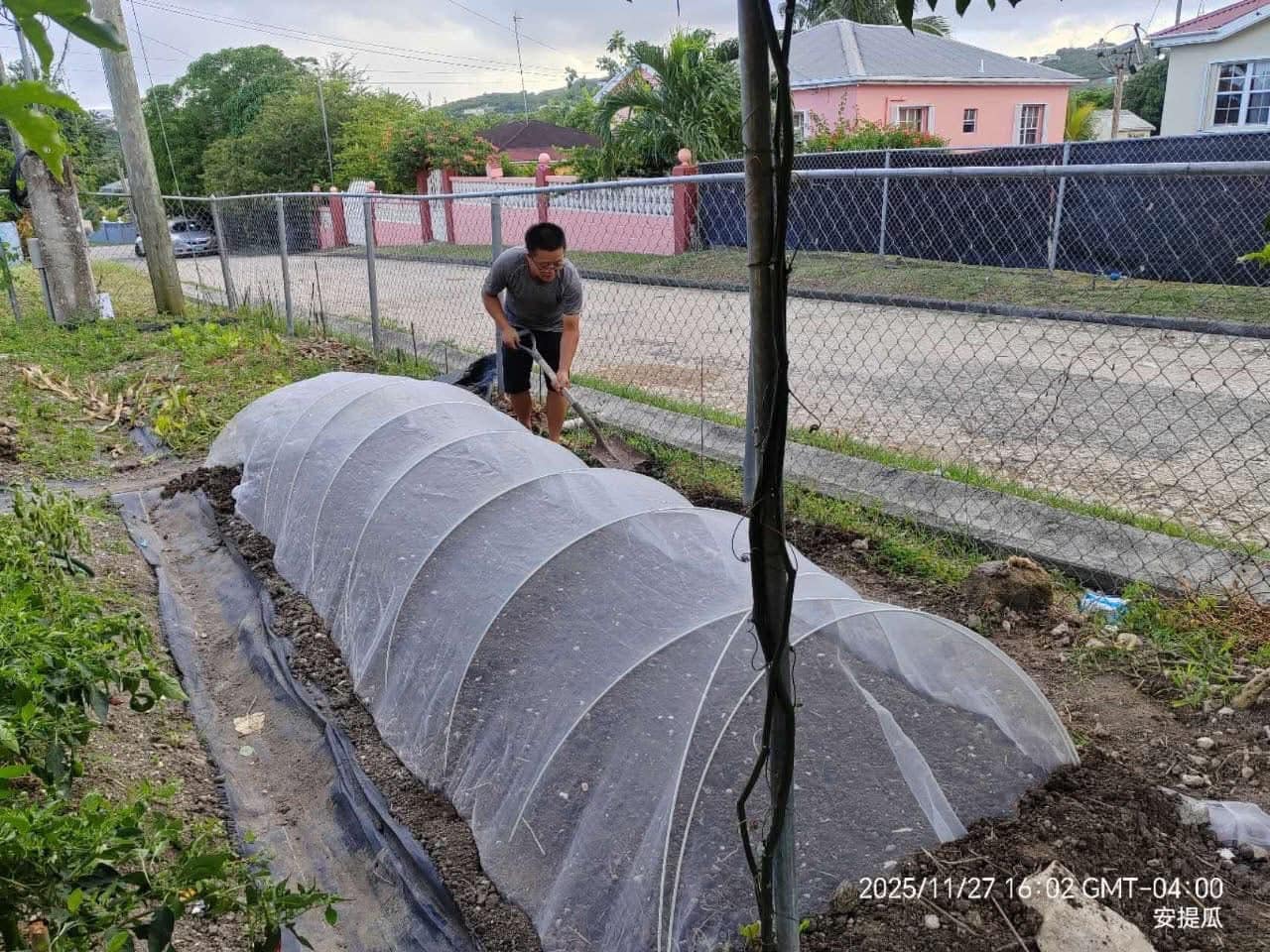
Both ministry experimental plots and participating farmers conducting off-site trials have successfully produced marketable yields using these integrated methods. The primary challenge now lies in achieving widespread farmer adoption of these techniques.
James addressed the economic realities: “It can only do that if you have greater uptake with farmers. Farmers are in it to make a profit… so I think this workshop will go somewhere in assuaging those fears by saying: ‘Yes, we think if you follow this prescription, you can get yields that can give you a profit.’”
While acknowledging that papaya cultivation with these new methods demands more intensive management than other crops—requiring meticulous attention to nutrition, field conditions, and pest control—James emphasized that the potential returns justify the additional effort.
“It is worth it,” he asserted, referencing planning unit data indicating that Barbados imported approximately 44,000 to 47,000 kilograms of papaya last year—equivalent to an entire acre’s yield. “We don’t have to import it, or we might reduce the imports, if you get persons more interested.”
The crop’s exceptional nutritional profile and culinary versatility further strengthen the argument for industry expansion. “It can be used as a fruit; it can be used as a vegetable,” James highlighted.
Allister Glean, IICA Representative, appealed directly to Barbadians to support the agricultural revival through conscious consumption choices. “How many of you all are deciding, ‘I am going to eat papaya?’” he challenged attendees during the opening ceremony. “We talk about food security… but if we really want to be independent, then we have to consider food security as a key tenet to that overall independence.”
Glean outlined the committee’s objective to “resuscitate the industry” and encourage both agricultural producers and consumers to embrace locally grown papaya as part of a national effort to reduce dependency on imported fruits.
“We need a cadre… a troop… a platoon of farmers who are willing to carry along the cause,” he stated, applauding participants. “This information is what will lead to transformation. Knowledge equates to power.”
The two-day workshop convenes researchers, farmers, agronomists, extension officers, and regional agencies in a coordinated effort to stabilize production and reestablish papaya as a viable commercial agricultural option for Barbados.