分类: science

  • Trio wins physics Nobel for quantum mechanical tunnelling

    Trio wins physics Nobel for quantum mechanical tunnelling

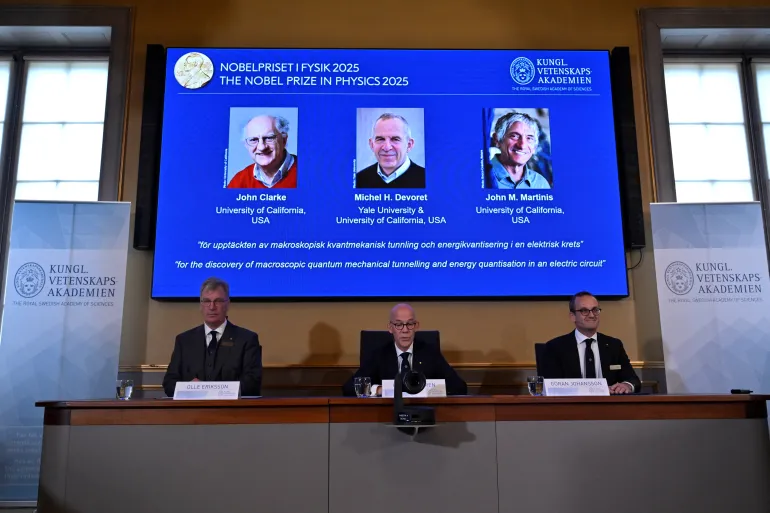
    STOCKHOLM, Sweden — The 2025 Nobel Prize in Physics has been awarded to John Clarke of the United Kingdom, Michel Devoret of France, and John Martinis of the United States for their pioneering work in quantum mechanics, which has revolutionized digital technology. Their discoveries have laid the foundation for advancements in quantum cryptography, quantum computers, and quantum sensors, transforming fields ranging from telecommunications to computing.

    The Nobel Committee highlighted that their research demonstrated quantum tunneling on a macroscopic scale using superconductors, a breakthrough that has made quantum mechanics accessible and measurable in human terms. Ulf Danielsson, secretary of the Nobel physics committee, emphasized the significance of their experiments in the 1980s, which bridged the gap between theoretical physics and practical applications.

    Quantum mechanics, which governs the behavior of particles at the smallest scales, underpins all modern digital technology. For instance, the functionality of mobile phones is directly linked to their discoveries. Clarke, a professor at the University of California, Berkeley, described the award as ‘the surprise of my life,’ noting that the practical implications of their work were not immediately apparent during their experiments.

    The trio’s collaboration exemplifies the global nature of scientific research. However, their work also underscores the ‘brain drain’ phenomenon, as Devoret and Martinis conducted their research in the United States, a hub for scientific innovation due to its investment in basic science and academic freedom. Eleanor Crane, a quantum physicist at King’s College London, pointed out that recent U.S. budget cuts to science programs threaten to erode this leadership.

    The physics prize follows the Nobel in Medicine, awarded to a US-Japanese trio for their work on the human immune system. The Nobel season continues with awards in chemistry, literature, peace, and economics, culminating in the formal ceremonies on December 10, the anniversary of Alfred Nobel’s death. Each laureate receives a diploma, a gold medal, and a share of the $1.2-million prize.
  • Million-year-old skull could change human evolution timeline

    Million-year-old skull could change human evolution timeline

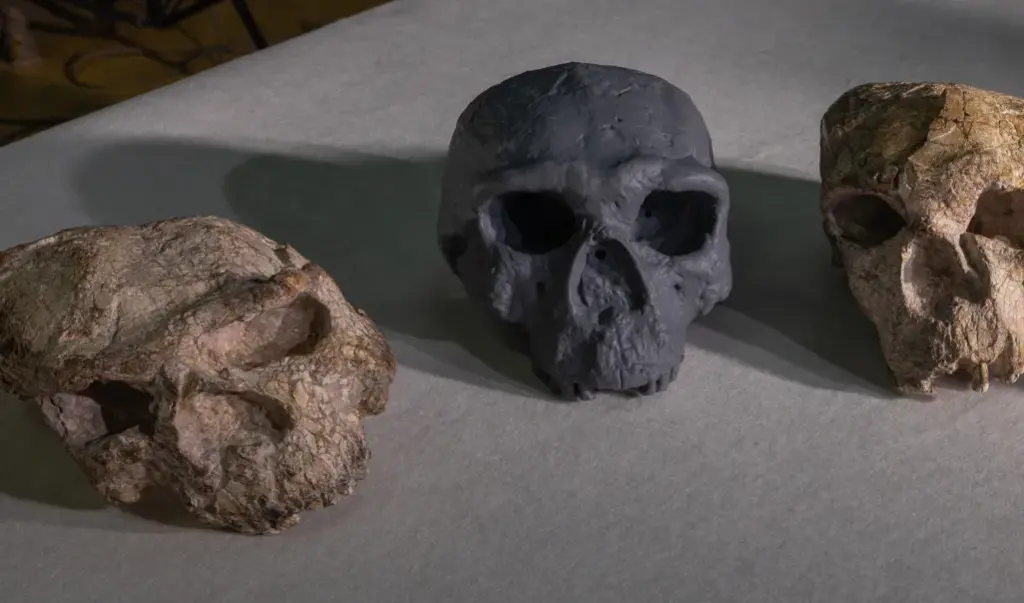
    A groundbreaking study published on Friday has revealed that humans may have diverged from our ancient ancestors 400,000 years earlier than previously believed, and in Asia rather than Africa. The findings, based on a digital reconstruction of a million-year-old skull discovered in China in 1990, could reshape our understanding of human evolution and resolve the so-called ‘Muddle in the Middle’ period of human history. The skull, labeled Yunxian 2, was initially thought to belong to Homo erectus, an early human ancestor. However, advanced reconstruction technologies, including CT scanning and virtual modeling, revealed features more closely aligned with later species such as Homo longi and Homo sapiens. Chris Stringer, an anthropologist at London’s Natural History Museum and a member of the research team, stated, ‘This changes a lot of thinking. It suggests that by one million years ago, our ancestors had already split into distinct groups, pointing to a much earlier and more complex evolutionary split than previously believed.’ The study, published in the journal Science, also challenges the long-held assumption that early humans dispersed exclusively from Africa. Michael Petraglia, director of Griffith University’s Australian Research Centre for Human Evolution, noted, ‘There’s a big change potentially happening here, where east Asia is now playing a very key role in hominin evolution.’ However, some experts remain skeptical, cautioning that the findings are likely to be disputed. Andy Herries, an archaeologist at La Trobe University, argued that fossil morphology alone may not be a reliable indicator of human evolution, emphasizing the importance of genetic analysis. The study underscores the complexity of human origins and highlights the need for further research to unravel the mysteries of our evolutionary past.

  • Super Harvest Moon, 2 meteor showers to light up October nights

    Super Harvest Moon, 2 meteor showers to light up October nights

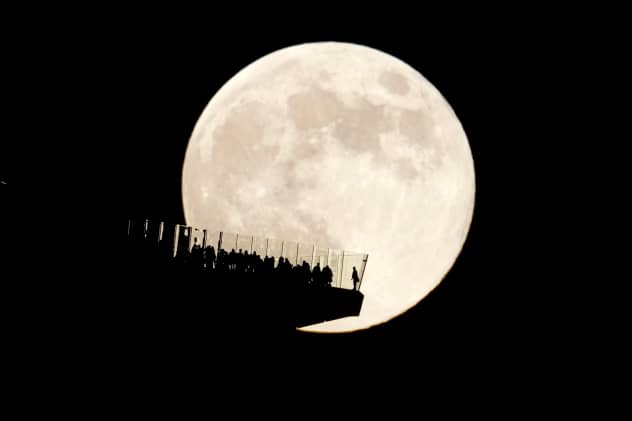
    October 2025 promises to be a celestial extravaganza for stargazers, featuring a series of astronomical events that will light up the night sky. The month kicks off with the Super Harvest Moon, the first of three consecutive supermoons, which will appear larger and brighter than usual due to its closer proximity to Earth. This rare occurrence, typically seen in September, will grace the skies on October 6, marking a unique start to the autumn season. Following this lunar spectacle, the Draconid meteor shower will peak on October 8-9. Although it is a minor shower, producing up to 10 meteors per hour, the nearly full moon may obscure some fainter streaks, but brighter meteors will still be visible. The Orionid meteor shower, one of the best of the season, will take center stage on October 22-23. Coinciding with the new moon, the dark skies will enhance visibility, with up to 20 shooting stars per hour expected. Named after the constellation Orion, the meteors will radiate from this iconic star pattern, offering a breathtaking display for night sky enthusiasts. These events, set against the backdrop of crisp autumn nights, provide a perfect opportunity for people of all ages to marvel at the wonders of the universe.

  • UWI researchers contribute to the IPCC’s Seventh Assessment Report offering fresh Caribbean perspectives

    UWI researchers contribute to the IPCC’s Seventh Assessment Report offering fresh Caribbean perspectives

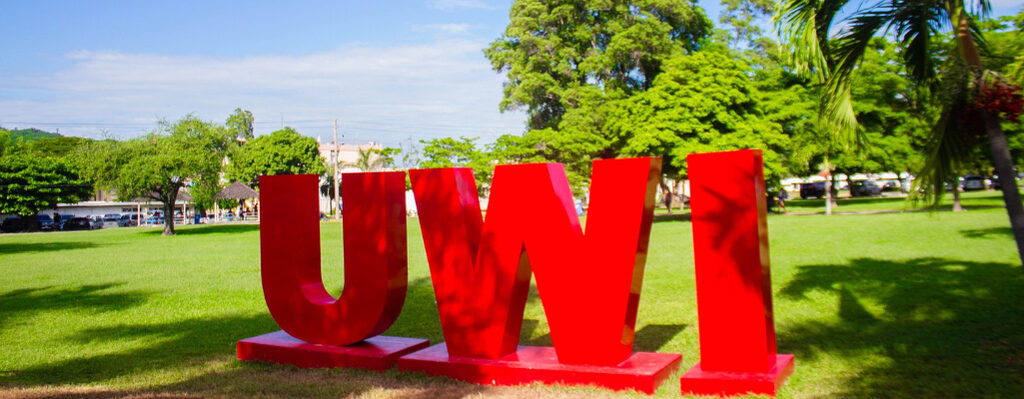
    Six distinguished researchers from The University of the West Indies (UWI) have been selected as contributing authors for the Intergovernmental Panel on Climate Change’s (IPCC) Seventh Assessment Report (AR7) cycle. This marks a significant milestone for the Caribbean region, as these scholars join the ranks of seasoned experts like Professor Michelle Mycoo, who previously served as a Coordinating Lead Author in the sixth assessment cycle. The new contributors will play pivotal roles across all four major AR7 reports, including a Special Report on Climate Change and Cities, as well as Working Group reports on climate science, adaptation, and mitigation. Professor Mycoo’s expanded responsibilities include serving as a Review Editor for Working Group II and as a Lead Author for the Cities report, further cementing her influence in shaping regional and global climate discourse. The inclusion of these fresh voices ensures that the perspectives of Small Island Developing States (SIDS), particularly from the Caribbean, are prominently represented in the global climate science arena. The IPCC’s commitment to diversity is evident, with 51% of its 664 appointed experts hailing from developing nations and economies in transition, and 46% being women. This represents a significant increase from the AR6 cycle, which featured 44% representation from similar regions and 33% female authors. Among the new Caribbean contributors are Dr. Jhordanne Jones, Dr. Preeya Mohan, Dr. Georgiana Gordon-Strachan, Dr. Rose-Ann Smith, Dr. Natalie Dietrich-Jones, and Dr. Randy Ramadhar Singh, each bringing unique expertise to their respective Working Groups. UWI Vice-Chancellor Professor Sir Hilary Beckles lauded the university’s role in fostering regional climate experts, emphasizing the importance of their insights in shaping adaptation strategies for small island nations. He also commended Professor Mycoo for her dual contributions, highlighting her leadership in advancing regional climate efforts. The IPCC, the UN’s official body for evaluating climate science, received an impressive 3,771 nominations globally for the AR7 cycle, underscoring the prestige of this appointment. UWI’s strong representation in this prestigious group reflects its unwavering commitment to advancing globally relevant climate research and policy development.

  • In Fidel’s forward-thinking vision lies the root of a scientific feat

    In Fidel’s forward-thinking vision lies the root of a scientific feat

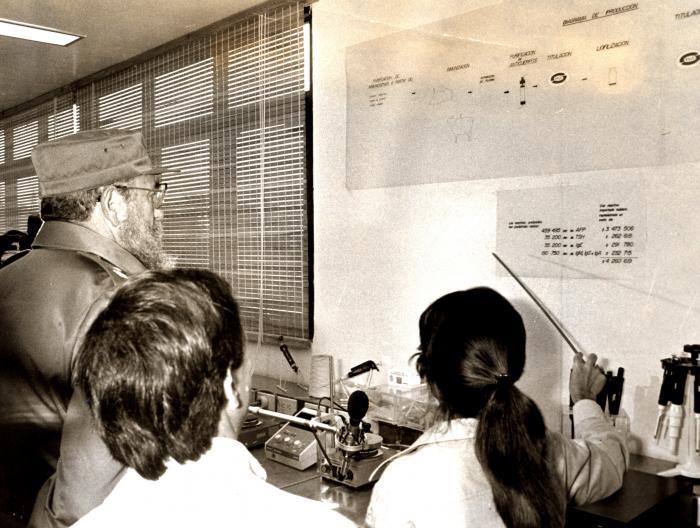
    Five years ago, on August 19, 2020, Cuba marked a historic milestone in its fight against COVID-19. Just months after detecting its first case, the nation unveiled its first vaccine candidate, Soberana, a testament to the strategic foresight of Fidel Castro in developing Cuba’s biotechnology industry. This achievement was rooted in the creation of Havana’s Western Scientific Pole, which adopted a closed-cycle system of research, development, production, and commercialization, enabling rapid scientific progress. Dr. Vicente Vérez Bencomo, Director of the Finlay Institute of Vaccines (IFV), presented the vaccine candidate to President Miguel Díaz-Canel and the National Expert Group for pandemic response. The announcement, though anticipated, renewed hope in Cuba’s scientific capabilities. Clinical trials for Soberana began on August 24, 2020, after receiving authorization from Cuba’s Center for State Control of Medicines (Cecmed). The vaccine’s development was a collaborative effort involving young scientists, institutions like the Center for Molecular Immunology, and the University of Havana’s Faculty of Chemistry. By mid-2021, both Soberana and Abdala, another Cuban vaccine, were authorized for public use. The rapid development and deployment of these vaccines showcased Cuba’s scientific rigor and commitment to sovereignty. Today, IFV continues to innovate, developing pneumococcal and multivalent meningococcal vaccines, while exploring MRNA technology for future epidemic preparedness.