分类: politics

  • Network in Defense of Humanity calls for defense of Cuban sovereignty

    Network in Defense of Humanity calls for defense of Cuban sovereignty

    A Cuban publication has issued a stark warning against what it characterizes as imperialist and fascist tendencies within the United States government, asserting that these developments represent a grave threat rather than isolated extremist rhetoric. The analysis presents a comprehensive indictment of current U.S. foreign policy under the Trump administration, drawing direct historical parallels to fascist regimes.

    The publication contends that recent evidence demonstrates the American government, facing multiple domestic crises including the Epstein scandal, Immigration and Customs Enforcement (ICE) controversies, and declining international credibility, is adopting Hitler-like tactics to divert attention from internal problems. This strategic shift occurs against the backdrop of what the article identifies as the irreversible emergence of a multipolar world order.

    Emphasizing Cuba’s sovereign rights, the text accuses the Trump administration and Senator Marco Rubio of consistently disregarding established international legal frameworks. The article further develops its critique through an extended metaphor, comparing U.S. imperialism to a ‘predatory dog’ that attacks with ‘brutal rage’ at the slightest perception of weakness in other nations.

    From this perspective, the publication argues that American foreign policy treats populations in developing nations and economically disadvantaged communities as expendable assets in geopolitical calculations. In response to what it terms the current administration’s ‘genocidal and aggressive course,’ the Cuban chapter of the Network in Defense of Humanity (REDH) has issued a mobilization call. The organization urges intellectuals, artists, and social movements worldwide to unite in solidarity and strengthen defensive alliances to protect national sovereignty against perceived American aggression.

  • Venezuela thanks international solidarity from the Culture sector

    Venezuela thanks international solidarity from the Culture sector

    The international literary community has rallied behind Venezuela following what prominent writers describe as an unlawful U.S. intervention resulting in the abduction of President Nicolás Maduro and First Lady Cilia Flores. A powerful declaration endorsed by Venezuelan intellectuals condemns the operation that precipitated significant human casualties and material devastation.

    This coordinated statement, backed by the World Poetry Movement, emphasizes the global poetry community’s firsthand experience with Venezuela’s peaceful and democratic character. The document celebrates Venezuela’s participatory democracy framework, anchored by a constitution ratified through overwhelming popular mandate in 1999. It highlights the nation’s robust electoral systems and recently revitalized community participation mechanisms as evidence of its democratic legitimacy.

    The author categorically refutes ideological justifications for foreign aggression, identifying economic motives—specifically Venezuela’s substantial natural resource wealth—as the true driver behind international stigmatization. The statement contextualizes current hostilities within a historical pattern of external interference affecting Venezuelan leaders across the political spectrum.

    Despite ongoing threats to national sovereignty, the writer affirms the constitutional continuity of the Venezuelan state through the establishment of an interim presidency, presenting this as a testament to the nation’s resilience against external pressures.

  • Top Mexican and US diplomats meet

    Top Mexican and US diplomats meet

    In a strategic diplomatic move, Mexican Foreign Minister Juan Ramon de la Fuente has engaged in high-level discussions with U.S. Secretary of State Marco Rubio, following direct instructions from President Claudia Sheinbaum. The dialogue, confirmed through official communications from Mexico’s Secretariat of Foreign Affairs via social media platform X, represents a concerted effort to navigate escalating tensions regarding cross-border security cooperation.

    The conversation specifically addressed the Border Security and Law Enforcement Cooperation Program, with Mexican officials emphasizing that all collaboration must operate under strict adherence to fundamental principles including unconditional respect for national sovereignty, territorial integrity, and a framework of shared responsibility. The Mexican government further underscored the importance of mutual trust and collaborative engagement without subordination as non-negotiable components of any bilateral agreement.

    This diplomatic outreach comes as a direct response to recent statements from former U.S. President Donald Trump suggesting potential ground operations against Mexican drug cartels. President Sheinbaum has affirmed Mexico’s commitment to strengthening communication channels with United States officials while maintaining the nation’s sovereign rights. When questioned about Trump’s comments, Sheinbaum indicated openness to potential dialogue with the Republican figure to enhance coordination within established diplomatic frameworks.

    The political context surrounding these developments includes recent aggressive actions by Washington against Venezuela, where President Nicolás Maduro and First Lady Cilia Flores were reportedly apprehended and transported to U.S. territory to face narcoterrorism allegations. This incident has heightened sensitivities throughout Latin America regarding cross-border military and law enforcement operations, making Mexico’s firm stance on sovereignty particularly significant in current geopolitical dynamics.

  • European agreement with Mercosur in the spotlight

    European agreement with Mercosur in the spotlight

    In a landmark decision concluding over a quarter-century of negotiations, the European Union has formally approved a comprehensive trade agreement with the Southern Common Market (Mercosur). The Council of the European Union secured the necessary majority from its 27 member states, overcoming vocal opposition from several nations including France, Poland, and Ireland.

    The breakthrough follows intensive negotiations that incorporated specific clauses to address European agricultural concerns, a primary sticking point throughout the lengthy discussions. European Commission President Ursula von der Leyen is now set to travel to Paraguay to formally sign the accord with Mercosur leadership.

    This agreement establishes the framework for what will become the world’s most extensive free trade zone upon full implementation. However, the process requires one additional ratification step: following the signing ceremony, the pact must return to Europe for approval by the European Parliament, with a vote anticipated in the coming weeks.

  • The AU Committee of Permanent Representatives will meet in Ethiopia

    The AU Committee of Permanent Representatives will meet in Ethiopia

    The African Union has commenced a crucial series of preparatory meetings in Addis Ababa, marking the beginning of intensive diplomatic engagements leading to the 39th Ordinary Session of the Assembly of Heads of State and Government. The Committee of Permanent Representatives, comprising ambassadors from all member states accredited to the AU, alongside senior officials from the Commission and various continental bodies, convened on January 30 to deliberate on an extensive agenda of pan-African significance.

    Central to their discussions are comprehensive evaluations of the implementation progress regarding last year’s thematic focus on reparatory justice for Africans and people of African descent. The assembly will also examine strategic roadmaps for achieving sustainable water security and safe sanitation infrastructure across the continent by 2026, addressing critical development challenges.

    The diplomatic agenda further encompasses multifaceted issues including continental humanitarian response mechanisms, the advancement of free movement protocols for African citizens, and operational reviews of specialized technical committees. Particular attention will be given to the activities of the China Subcommittees, reflecting the AU’s strategic international partnerships, along with performance assessments of the AU Commission and its specialized agencies.

    This preliminary meeting establishes the foundational framework for the subsequent Executive Council’s 48th Ordinary Session scheduled for February 11-12, where African foreign ministers and designated officials will convene to refine policy recommendations and oversee implementation mechanisms. These ministerial deliberations will directly inform the final agenda and decision-making processes for the heads of state summit on February 14-15, where continental policies receive ultimate ratification and strategic direction for the coming year.

  • Trump administration revokes more than 100,000 visas in first year back

    Trump administration revokes more than 100,000 visas in first year back

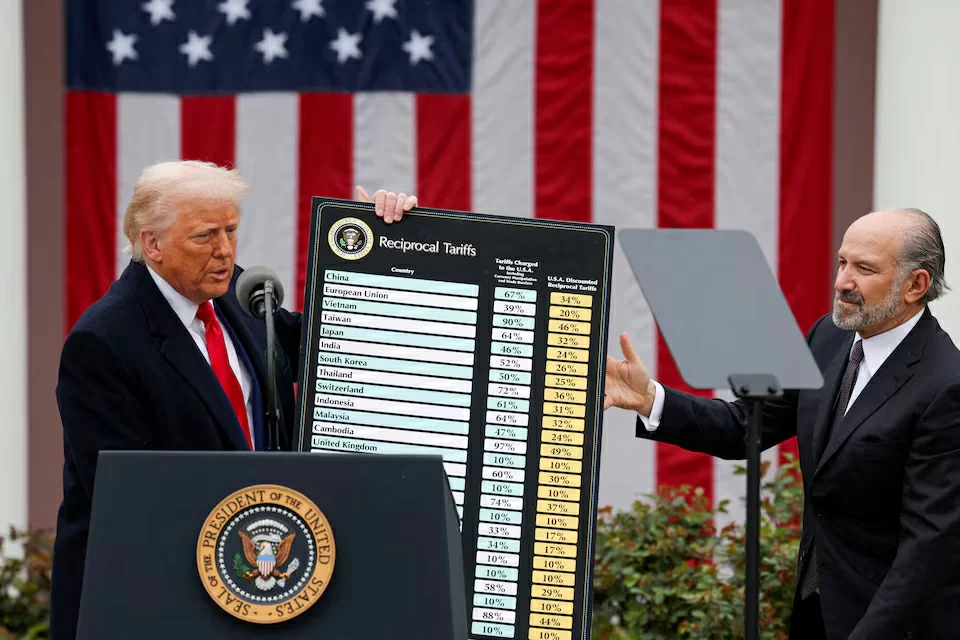
    In an unprecedented enforcement action, the U.S. State Department invalidated over 100,000 foreign visas throughout 2025—a figure that more than doubles the 40,000 revocations recorded during the final year of the Biden administration and establishes a new historical record. This aggressive policy shift implements President Donald Trump’s day-one executive order mandating rigorous foreign national vetting, signaling a substantial hardening of U.S. immigration enforcement.

    The majority of revoked visas belonged to business and tourist travelers who had overstayed their authorized periods. However, the crackdown extended significantly beyond typical visa violations, affecting approximately 8,000 international students and 2,500 specialized workers. According to State Department officials, the vast majority of these individuals had encountered law enforcement, resulting in criminal charges that triggered their loss of legal status.

    Detailed breakdowns reveal that among specialized workers, half of the revocations stemmed from drunken driving arrests, while 30% involved assault, battery, or confinement charges. The remaining 20% were linked to offenses including theft, child abuse, substance-related crimes, fraud, and embezzlement. Particularly alarming were the nearly 500 students who lost visas due to drug possession and distribution violations, alongside hundreds of workers removed over child abuse concerns.

    This enforcement surge forms part of a broader administration initiative announced in August 2025 to review all 55 million currently valid U.S. visas. Under Secretary Marco Rubio’s leadership, the State Department has implemented markedly stricter visa standards, including the November 2025 reinstatement of the “public charge” rule. This provision allows denial of visas to applicants considered likely to depend on public benefits, with evaluations based on health factors (placing older and overweight applicants under heightened scrutiny), English proficiency, financial stability, and potential long-term care needs.

    State Department principal deputy spokesperson Tommy Piggott emphasized the administration’s commitment to maintaining this aggressive posture through a newly established “continuous vetting center,” stating: “The Trump administration will continue to put America first and protect our nation from foreign nationals who pose a risk to public safety or national security.”

  • Iran ‘prepared for war’ but signals openness to US talks as protests intensify

    Iran ‘prepared for war’ but signals openness to US talks as protests intensify

    Iran stands at a critical juncture as nationwide protests enter their third week, with human rights organizations reporting a death toll exceeding 500. The regime has adopted a paradoxical stance—issuing war readiness declarations while simultaneously extending diplomatic overtures to the United States. This complex dynamic unfolds against President Donald Trump’s explicit warning that American interests would trigger retaliatory strikes.

    According to US-based monitoring group HRANA, the civil unrest has resulted in 490 protester fatalities and 48 security personnel deaths, with arrests surpassing 10,600 individuals. Iranian authorities have intensified their response through a nationwide communications blackout exceeding 72 hours, effectively isolating the country from global digital networks.

    The protests, representing the most significant challenge to Tehran’s authority since 2022, have ignited international solidarity demonstrations. These gatherings have occasionally turned confrontational—Los Angeles witnessed a vehicular assault on anti-regime protesters, while London saw the Iranian embassy’s flag desecration, prompting Tehran to summon Britain’s ambassador.

    State media broadcasted pro-government rallies featuring President Masoud Pezeshkian and Foreign Minister Abbas Araghchi, who urged citizens to demonstrate resilience against what officials termed ‘foreign-instigated riots.’ Simultaneously, security forces have escalated efforts to disrupt Starlink satellite internet services, with IranWire reporting equipment confiscations and terminal jamming operations.

    Amid the turmoil, diplomatic channels show subtle activity. Iranian diplomats have reestablished contact with US envoy Steve Witkoff through communication pathways originally created during nuclear negotiations. Though President Trump claims Iranian leaders seek direct talks, the foreign ministry only acknowledges that ‘certain points and ideas have been presented by the other side.’

    The European Parliament has taken a firm stance, announcing a comprehensive ban on Iranian diplomats from its premises. President Roberta Metsola declared the EU legislature would not ‘legitimize a regime sustained through torture, repression and murder.’

    As Israel heightens alert levels following US intervention threats, Washington prepares to evaluate response options including military strikes, cyber operations, sanctions expansion, and digital support for protesters. This multilayered crisis—combining domestic rebellion, international diplomacy, and potential armed conflict—poses the most severe test to Iran’s political stability in recent history.

  • Iran ‘Prepared for War’ as Protests Turn Deadly

    Iran ‘Prepared for War’ as Protests Turn Deadly

    Iran stands at a critical juncture as nationwide anti-government protests enter their third week, resulting in hundreds of casualties and escalating tensions with the international community. Iranian authorities have issued stark warnings of their preparedness for military confrontation, even as diplomatic channels with the United States remain technically operational.

    According to CNN reporting, Iranian Foreign Minister Abbas Araghchi confirmed the maintenance of communication links with U.S. Special Envoy Steve Witkoff. Araghchi emphasized Tehran’s conditional openness to negotiations, stating any discussions must proceed on foundations of “mutual respect and interests” while simultaneously asserting the nation’s combat readiness.

    The protest movement, initially sparked by economic grievances including rampant inflation and governance concerns, has evolved into broader demands for systemic change. The Human Rights Activist News Agency documents at least 495 fatalities and over 10,600 arrests since demonstrations commenced. Iranian authorities have implemented an extensive internet blackout now entering its fourth day, severely restricting information flow and external monitoring.

    International response has intensified with the European Parliament implementing a comprehensive ban against Iranian diplomats and representatives from accessing its facilities. Parliament President Roberta Metsola declared the EU would not “legitimize this regime,” signaling strengthened European opposition to Tehran’s handling of the crisis.

    The current unrest represents the most significant challenge to Iranian leadership since the 2022 demonstrations triggered by the custody death of Mahsa Amini, a Kurdish woman detained by morality police for alleged hijab violations. Protesters are now explicitly demanding an end to clerical governance structures.

    U.S. President Donald Trump has asserted that Iran initiated negotiation overtures while Washington contemplates potential military options. Iranian officials have counter-warned that U.S. and Israeli interests would become legitimate targets should military action occur, further elevating regional security concerns.

  • Venezuela Frees Prisoners After U.S. Capture of Maduro

    Venezuela Frees Prisoners After U.S. Capture of Maduro

    In a significant development following the unprecedented capture of Venezuelan President Nicolás Maduro by U.S. authorities, the Venezuelan government has announced the release of 116 prisoners. The Penitentiary Services Ministry confirmed these releases occurred “in the past few hours” on Thursday, though the exact timing relative to Maduro’s court appearance in New York on drug trafficking charges remains unclear.

    The announcement comes amid intense scrutiny from human rights organizations, with Foro Penal—a group monitoring political detentions in Venezuela—directly contradicting the government’s figures. The organization maintains only 41 individuals have actually been freed, highlighting the ongoing information war surrounding Venezuela’s political crisis.

    U.S. President Donald Trump immediately claimed credit for the prisoner releases through social media, characterizing them as a direct consequence of American intervention. “Venezuela has started the process, in a big WAY, of releasing their political prisoners. Thank you!” Trump posted, adding a veiled warning that former prisoners should remember their liberation resulted from U.S. actions.

    The releases follow intensified pressure from Nobel Peace Prize winner and opposition leader María Corina Machado, alongside various human rights organizations. These groups contend that many detainees were imprisoned not for criminal activities but for expressing dissent, participating in protests, or sharing political opinions contrary to the government’s stance.

    Despite these releases, human rights advocates estimate between 800 and 1,200 political prisoners remain incarcerated in Venezuela, indicating this initial gesture addresses only a fraction of the ongoing human rights concerns within the country.

  • Nicholas attends renewable energy talks in Abu Dhabi

    Nicholas attends renewable energy talks in Abu Dhabi

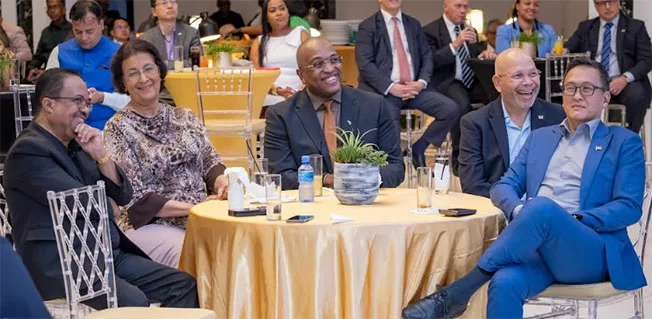
    ABU DHABI, UAE – January 10, 2026 – The Honorable Melford Nicholas, Antigua and Barbuda’s Minister of Energy, is spearheading the nation’s delegation at the pivotal 16th Session of the International Renewable Energy Agency (IRENA) Assembly. The high-level gathering, convening global leaders from January 10th to 12th, is focused on accelerating the worldwide shift to sustainable energy sources.

    Minister Nicholas’s delegation comprises key national figures, including Climate Change Ambassador H.E. Ruleta Camacho-Thomas, Ambassador H.E. Theon Ali, Senior Advisor H.E. Brian Challenger, and Ms. Karen Burton, Director of Operations & Energy. In his capacity as a member of the IRENA Assembly Bureau, the Minister held a strategic meeting with IRENA Director-General Francesco La Camera. Their discussions centered on establishing actionable strategies to fast-track renewable energy implementation across Small Island Developing States (SIDS), with a specific emphasis on mobilizing critical investments and forging robust delivery partnerships.

    The Minister’s agenda on the opening day featured participation in two cornerstone events: a roundtable of the Global Coalition for Energy Planning (GCEP) and a dedicated SIDS Ministerial dialogue. These forums are designed to address the unique challenges island nations face, exploring innovative investment pathways, regional cooperation models, and collaborative frameworks to expedite their energy transition.

    In a demonstration of the nation’s growing influence in global energy governance, Minister Nicholas is scheduled to chair a ministerial-level session on January 11th. This leadership role underscores Antigua and Barbuda’s dedicated commitment to developing finance-ready project pipelines that yield resilient and affordable renewable energy solutions for vulnerable nations.