分类: politics

  • LETTER: Kentish seen as the best choice to replace Watts in St. George

    LETTER: Kentish seen as the best choice to replace Watts in St. George

    The United Progressive Party (UPP) has finalized candidates for fifteen constituencies, with only the substantial St. George electoral district remaining undecided. This key constituency, which boasted over 5,100 voters in the last election cycle, has become a competitive arena with multiple contenders vying to succeed outgoing MP Algernon ‘Serpent’ Watt.

    The primary race features three prominent figures: Antigua Barbuda Workers Union President Kem Riley, newly qualified lawyer Kelton Dalso, and media personality Jermaine ‘Buffy’ Kentish. An analysis of the political landscape suggests significant disparities in candidate viability. Two contenders face substantial challenges—one lacks name recognition beyond his immediate community, while another demonstrates inconsistent political positioning. Conversely, Kentish emerges as a formidable candidate with nationwide recognition, charismatic appeal, and deep community connections transcending traditional political boundaries.

    Kentish’s candidacy is bolstered by his multi-generational roots throughout the constituency. Born in New Winthorpes and raised in Barnes Hill, his family connections extend through Pigotts (his father’s birthplace) and Potters. His political heritage traces back to his grandfather, Samuel Kentish, an early member of the Progressive Labour Movement renowned for advocating workers’ rights and agricultural community interests.

    Political observers note Kentish’s potential to disrupt the electoral dominance of the Antigua and Barbuda Labour Party’s Michael Freeland. His widespread popularity and cross-party appeal could potentially achieve vote totals exceeding 3,000 ballots—a threshold unmatched since Sir Adolphus’s political era. The January 19th primary at Potters Primary School represents a critical juncture for UPP’s electoral strategy and St. George’s political future.

  • SVG’s laws online this year; halls of justice a ‘medium-term objective’

    SVG’s laws online this year; halls of justice a ‘medium-term objective’

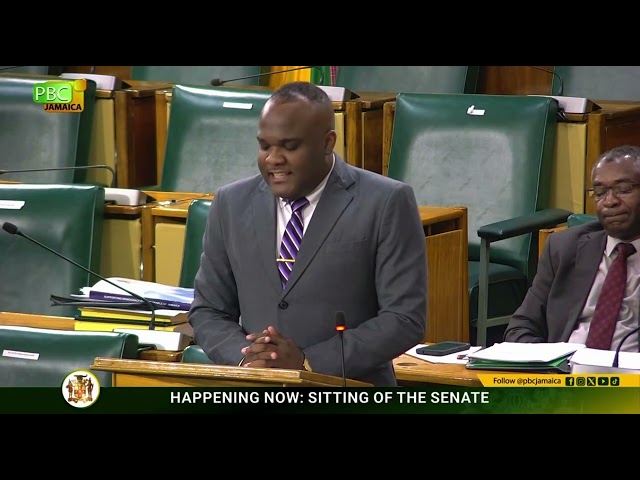
    The government of St. Vincent and the Grenadines has initiated a comprehensive million-dollar legal modernization program that will digitize the nation’s entire body of laws. Attorney General Louise Mitchell announced the landmark initiative during her address marking the commencement of the judicial year, revealing plans to make all national legislation accessible online through a complete consolidation and revision process.

    The ambitious project, which will incorporate all laws passed through December 31, 2025, represents the first major revision since 2009. The government has engaged the Regional Law Revision Centre in Anguilla, signaling a strategic shift toward regional collaboration while maintaining sovereignty over the legal framework. Notably, the finalized compilation will be government-owned and produced in MS Word format to facilitate knowledge sharing and enhance investor confidence through transparent legal frameworks.

    In parallel developments, Mitchell addressed infrastructure concerns within the judicial system, acknowledging reports of mold, termite infestations, and inadequate facilities in both the High Court and magistrates’ courts. While confirming that the previous administration’s proposed halls of justice project remains a medium-term objective, the current government has prioritized immediate digital advancements over new construction.

    The Attorney General also outlined progress on the digitization of the Land Registry Project, with approximately 250,000 deeds from 1939-2025 already scanned ahead of the anticipated 2028 completion. Additionally, the Legal Professions Bill, carried over from the previous administration, is scheduled for parliamentary agenda placement in the first quarter, aiming to establish enhanced ethical standards for legal practitioners.

    A feasibility study commissioned for 2024 will evaluate comparative costs and suitability of locations for the proposed halls of justice, with a final decision on location and concept design expected by late 2026. The government projects funding acquisition for the construction project to commence in 2027, pending study outcomes.

  • CARICOM SG underscores importance of effective public finance management at SPEM certification ceremony

    CARICOM SG underscores importance of effective public finance management at SPEM certification ceremony

    In a landmark address at the Certification Ceremony for the Strengthening Public Expenditure Management (SPEM) Project, CARICOM Secretary-General Dr. Carla Barnett celebrated the pioneering cohort of Belizean public officials who completed the groundbreaking fiscal training initiative. The ceremony marked a significant milestone in collaborative governance, bringing together the Government of Belize, the University of Belize, and the Inter-American Development Bank (IDB) in a tripartite commitment to fiscal excellence.

    Dr. Barnett emphasized that robust public financial management constitutes the bedrock of sustainable development for small developing states like Belize, which face disproportionate vulnerabilities to global economic volatility and climate-induced disruptions. She articulated that every dollar of public expenditure carries profound implications for national development outcomes, directly influencing critical sectors including healthcare, education infrastructure, and community resilience building.

    The Secretary-General positioned Belize’s fiscal advancement within broader regional and international contexts, noting that the country’s participation in the CARICOM Single Market and Economy necessitates sophisticated financial management capabilities. She underscored that transparent fiscal systems enable more effective regional trade engagement, cross-border collaboration, and foreign investment attraction.

    Beyond technical proficiency, Dr. Barnett highlighted the program’s alignment with global development frameworks, particularly the United Nations Financing for Development agenda emphasizing domestic resource mobilization. She framed fiscal discipline as a strategic imperative for reducing external dependency and building self-reliant economies capable of withstanding external shocks.

    Addressing the graduates directly, Barnett charged them with transforming their acquired expertise into tangible improvements in public service delivery and fiscal accountability. She characterized their certification not merely as personal achievement but as a critical contribution to strengthening public trust in governance institutions through demonstrable development outcomes.

    The SPEM Project represents a continuous commitment to institutional capacity building, incorporating digital financial systems, advanced data analytics, and modern auditing techniques while maintaining core principles of accountability and inclusive governance.

  • STATEMENT: ERC public forum – A call  to action for Dominica – How did we get here and how are we getting out?

    STATEMENT: ERC public forum – A call to action for Dominica – How did we get here and how are we getting out?

    The Commonwealth of Dominica confronts an unprecedented national emergency as it grapples with severe diplomatic repercussions from the United States. For the first time in history, Dominican citizens face stringent U.S. visa restrictions, mandatory visa bonds, and mounting pressure to accept third-country deportees merely to restore basic travel privileges. These developments signal a critical erosion of the nation’s international standing and credibility.

    This crisis stems directly from the controversial management of Dominica’s Citizenship by Investment Programme (CBI), which critics allege was transformed into a ‘passport mill’ operation. Under this scheme, national sovereignty was effectively commodified, with citizenship traded for immediate financial gain without adequate consideration of long-term consequences. While benefiting a select few, this approach has now jeopardized the travel freedom and global reputation of all Dominican citizens.

    The Electoral Reform Coalition (ERC) has announced a major public forum to address this escalating situation. Scheduled for January 13, 2026, at the DPSU Conference Room, the gathering will feature united opposition leadership, immigration experts including attorney Tamika Jude, and influential voices from the global Dominican diaspora. The forum aims to comprehensively examine how irresponsible passport sales damaged international relations, analyze the tangible threats posed by current visa restrictions, and formulate concrete strategies for national recovery.

    This initiative represents a rare moment of political unity, transcending partisan interests to address fundamental questions of national survival and dignity. The collective response underscores a determined effort to reclaim control of Dominica’s future and restore the integrity of its national identity on the world stage.

  • Sheinbaum: Mexico can be a vehicle for US-Cuba communication

    Sheinbaum: Mexico can be a vehicle for US-Cuba communication

    Mexican President Claudia Sheinbaum has reaffirmed her nation’s longstanding diplomatic relationship with Cuba, emphasizing that bilateral ties transcend political party affiliations in both countries. The statement came during a press engagement where Sheinbaum addressed questions regarding potential oil shipments to Cuba and broader geopolitical dynamics.

    President Sheinbaum highlighted that Mexico consistently opposed the United States’ economic blockade against Cuba from its inception, establishing a historical precedent for diplomatic solidarity. “The Mexico-Cuba relationship is historic,” Sheinbaum stated on December 22. “Mexico was the only country that opposed the blockade imposed by the United States from the outset. Therefore, regardless of the political party in power, there has always been a Mexico-Cuba relationship.”

    The comments followed Sheinbaum’s recent telephone discussion with former US President Donald Trump, wherein the Republican figure announced intentions to initiate ground operations against cartels. This development occurs against a backdrop of escalating US aggression toward Venezuela and continued threats against Cuba and other nations.

    Sheinbaum elaborated on the multidimensional cooperation between Mexico and Cuba, citing energy collaboration and frequent diplomatic exchanges spanning decades. These interactions have persisted irrespective of changing political leadership in Washington, demonstrating the resilience and continuity of Mexico-Cuba relations despite external pressures.

    The Mexican leader’s remarks directly addressed inquiries about sustaining oil exports to Cuba, which continues to endure a comprehensive economic, commercial, and financial embargo imposed by Washington over sixty years ago. Experts universally recognize this embargo as the primary impediment to Cuba’s economic development and international integration.

  • Colombian Solidarity Movement decry US threats on Cuba

    Colombian Solidarity Movement decry US threats on Cuba

    A prominent international solidarity movement has issued a forceful condemnation of United States policies toward Cuba, characterizing recent US government declarations as “fascist” attempts to undermine Cuban self-determination. The organization expressed unwavering support for Cuba’s sovereignty and endorsed calls by Cuban intellectuals and artists to resist perceived threats from Washington.

    The movement specifically endorsed the Cuban Chapter of the Network of Intellectuals and Artists in Defense of Humanity’s position regarding escalating tensions between the two nations. In its comprehensive statement, the group reaffirmed its steadfast commitment to defending Cuba’s sovereign rights and national integrity.

    Beyond mere condemnation, the movement issued a broad mobilization appeal to Colombian civil society, urging social organizations, labor unions, artistic communities, student groups, and the general public to unite in defense of Cuba. The solidarity platform specifically acknowledged gratitude for Cuba’s “tireless struggle to achieve peace” in Colombia, highlighting the island nation’s historical role in regional conflict resolution.

    The statement concluded with a historical reference to Cuban revolutionary leader Fidel Castro, whose centennial year is currently being commemorated. Invoking Castro’s “absolute conviction and faith in victory,” the movement drew inspiration from Cuba’s 1961 victory at the Bay of Pigs (known as Giron in Cuba) as motivation to resist what it termed “the barbarity that surrounds us.”

    This development follows earlier condemnation from Cuban President Miguel Diaz-Canel, who characterized recent US government statements as immoral. Responding to remarks attributed to former US President Donald Trump, Diaz-Canel questioned America’s moral authority to criticize Cuba, asserting that “those who turn everything into a business, even human lives, have no moral authority to point the finger at Cuba in any way.” The Cuban leader reaffirmed his nation’s readiness to defend itself against external pressure.

  • Guyana’s President to Pay State Visit

    Guyana’s President to Pay State Visit

    In a significant diplomatic development for the Caribbean Community, Guyana’s President Dr. Mohamed Irfaan Ali will undertake an official state visit to Belize from February 1-3, 2026. The three-day visit marks a strategic effort to deepen bilateral relations between the two CARICOM member nations through high-level political engagement and economic cooperation.

    President Ali’s itinerary includes a prominent address to Belize’s parliamentary assembly during the opening of its new legislative session, where he is expected to outline shared regional priorities. As CARICOM’s designated Lead Head of Government for agricultural affairs, the Guyanese leader will conduct specialized meetings with Belize’s productive sectors to advance regional food security initiatives, cross-border investment opportunities, and trade expansion.

    The diplomatic agenda features bilateral discussions with Belize’s highest leadership, including Governor-General Dame Froyla T’zalam and Prime Minister John Briceño. These meetings are anticipated to yield multiple cooperation agreements spanning economic, agricultural, and developmental sectors, reflecting both nations’ commitment to enhanced integration.

    This visit builds upon longstanding friendly relations between Georgetown and Belmopan, rooted in mutual dedication to Caribbean solidarity and sustainable development. The carefully structured program underscores the growing strategic importance of South-South cooperation within the CARICOM framework as member states seek to address shared challenges through collaborative governance.

  • Network in Defense of Humanity calls for defense of Cuban sovereignty

    Network in Defense of Humanity calls for defense of Cuban sovereignty

    A Cuban publication has issued a stark warning against what it characterizes as imperialist and fascist tendencies within the United States government, asserting that these developments represent a grave threat rather than isolated extremist rhetoric. The analysis presents a comprehensive indictment of current U.S. foreign policy under the Trump administration, drawing direct historical parallels to fascist regimes.

    The publication contends that recent evidence demonstrates the American government, facing multiple domestic crises including the Epstein scandal, Immigration and Customs Enforcement (ICE) controversies, and declining international credibility, is adopting Hitler-like tactics to divert attention from internal problems. This strategic shift occurs against the backdrop of what the article identifies as the irreversible emergence of a multipolar world order.

    Emphasizing Cuba’s sovereign rights, the text accuses the Trump administration and Senator Marco Rubio of consistently disregarding established international legal frameworks. The article further develops its critique through an extended metaphor, comparing U.S. imperialism to a ‘predatory dog’ that attacks with ‘brutal rage’ at the slightest perception of weakness in other nations.

    From this perspective, the publication argues that American foreign policy treats populations in developing nations and economically disadvantaged communities as expendable assets in geopolitical calculations. In response to what it terms the current administration’s ‘genocidal and aggressive course,’ the Cuban chapter of the Network in Defense of Humanity (REDH) has issued a mobilization call. The organization urges intellectuals, artists, and social movements worldwide to unite in solidarity and strengthen defensive alliances to protect national sovereignty against perceived American aggression.

  • Venezuela thanks international solidarity from the Culture sector

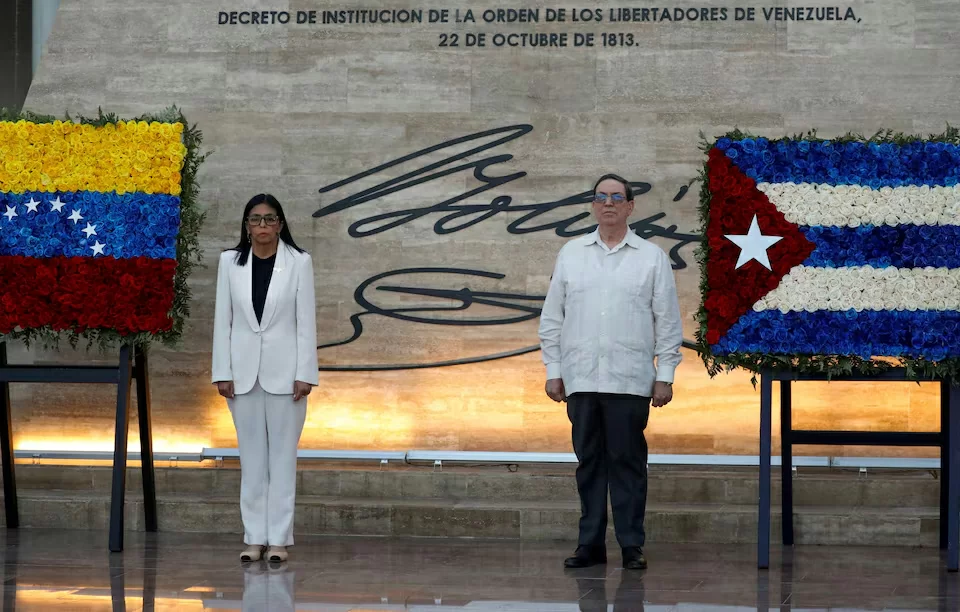
    Venezuela thanks international solidarity from the Culture sector

    The international literary community has rallied behind Venezuela following what prominent writers describe as an unlawful U.S. intervention resulting in the abduction of President Nicolás Maduro and First Lady Cilia Flores. A powerful declaration endorsed by Venezuelan intellectuals condemns the operation that precipitated significant human casualties and material devastation.

    This coordinated statement, backed by the World Poetry Movement, emphasizes the global poetry community’s firsthand experience with Venezuela’s peaceful and democratic character. The document celebrates Venezuela’s participatory democracy framework, anchored by a constitution ratified through overwhelming popular mandate in 1999. It highlights the nation’s robust electoral systems and recently revitalized community participation mechanisms as evidence of its democratic legitimacy.

    The author categorically refutes ideological justifications for foreign aggression, identifying economic motives—specifically Venezuela’s substantial natural resource wealth—as the true driver behind international stigmatization. The statement contextualizes current hostilities within a historical pattern of external interference affecting Venezuelan leaders across the political spectrum.

    Despite ongoing threats to national sovereignty, the writer affirms the constitutional continuity of the Venezuelan state through the establishment of an interim presidency, presenting this as a testament to the nation’s resilience against external pressures.

  • Top Mexican and US diplomats meet

    Top Mexican and US diplomats meet

    In a strategic diplomatic move, Mexican Foreign Minister Juan Ramon de la Fuente has engaged in high-level discussions with U.S. Secretary of State Marco Rubio, following direct instructions from President Claudia Sheinbaum. The dialogue, confirmed through official communications from Mexico’s Secretariat of Foreign Affairs via social media platform X, represents a concerted effort to navigate escalating tensions regarding cross-border security cooperation.

    The conversation specifically addressed the Border Security and Law Enforcement Cooperation Program, with Mexican officials emphasizing that all collaboration must operate under strict adherence to fundamental principles including unconditional respect for national sovereignty, territorial integrity, and a framework of shared responsibility. The Mexican government further underscored the importance of mutual trust and collaborative engagement without subordination as non-negotiable components of any bilateral agreement.

    This diplomatic outreach comes as a direct response to recent statements from former U.S. President Donald Trump suggesting potential ground operations against Mexican drug cartels. President Sheinbaum has affirmed Mexico’s commitment to strengthening communication channels with United States officials while maintaining the nation’s sovereign rights. When questioned about Trump’s comments, Sheinbaum indicated openness to potential dialogue with the Republican figure to enhance coordination within established diplomatic frameworks.

    The political context surrounding these developments includes recent aggressive actions by Washington against Venezuela, where President Nicolás Maduro and First Lady Cilia Flores were reportedly apprehended and transported to U.S. territory to face narcoterrorism allegations. This incident has heightened sensitivities throughout Latin America regarding cross-border military and law enforcement operations, making Mexico’s firm stance on sovereignty particularly significant in current geopolitical dynamics.