分类: politics

  • Reyme: Staatsbezoek moet leiden tot helende samenwerking en perspectief samenleving

    Reyme: Staatsbezoek moet leiden tot helende samenwerking en perspectief samenleving

    In a landmark address during the extraordinary parliamentary session marking the state visit of King Willem-Alexander and Queen Máxima, A20 faction leader Steven Reyme articulated a compelling vision for transforming Suriname-Netherlands relations. The Monday session became a platform for Reyme to outline principles of mutual respect, equality, and future-oriented cooperation that should define bilateral ties.

    Reyme emphasized the symbolic significance of the royal visit occurring exactly fifty years after Suriname’s independence, noting the historical parallel between the former Queen and Prime Minister who witnessed independence and today’s female President and King. This chronological symmetry, he suggested, creates an ideal moment to inaugurate a new chapter in relations where historical acknowledgment progresses alongside societal development and perspective.

    The parliamentarian highlighted the crucial role of the Surinamese diaspora in the Netherlands, numbering over 360,000 individuals, whom he described as “living bridges between our nations.” Reyme praised their contributions to Dutch society while maintaining strong connections to Suriname, seeing this dual allegiance as embodying the strength of shared history, culture, and future aspirations.

    Addressing Suriname’s contemporary challenges, Reyme noted the nation stands at the threshold of significant transformations: youth demanding opportunities, an economy requiring diversification, and communities seeking stability and development. He expressed openness to cooperation facilitating knowledge transfer, trade, investments, education, security, sports, and culture—but emphasized this must occur “without dependency, through mutual respect.”

    The faction leader acknowledged and appreciated recent Dutch steps toward recognition and apologies, stating that “the path of healing cooperation, historical acknowledgment, and shared responsibility must continue to be pursued.” Reyme expressed hope that this state visit might initiate a new period of respectful collaboration focused on peace, development, justice, and mutual understanding between the two nations.

  • Hilaire reacts to win, calls Election Day “brutal”

    Hilaire reacts to win, calls Election Day “brutal”

    Dr. Ernest Hilaire, the reelected Member of Parliament for Castries South, characterized the recent election day as an exceptionally demanding experience, labeling it “brutal” following one of the most arduous campaigns of his political tenure. His remarks came as the Saint Lucia Labour Party (SLP) achieved a decisive return to governance, capturing 14 parliamentary seats. With two independent candidates openly pledging support to the incoming administration, political analysts are already interpreting the results as an effective 16-1 triumph.

    Addressing supporters shortly after his electoral success, Hilaire acknowledged the tremendous strain the election had placed on both himself and his campaign team. He attributed their victory to remarkable perseverance and shared commitment to their constituency’s development agenda. “I possess the most exceptional team, truly, because today proved extraordinarily difficult,” Hilaire stated. “They comprehend the transformative vision we champion for Castries South… Substantial work remains ahead of us.”

    While expressing profound gratitude toward his supporters, the parliamentarian did not refrain from critiquing his political opponent, Tommy Descartes of the United Workers Party (UWP). Hilaire accused Descartes of perpetuating outdated political tactics rather than pioneering a refreshed approach to public service. “Rather than establishing a novel trajectory for political engagement in our nation, he entrenched the familiar patterns of negativity,” Hilaire remarked.

    Looking forward, Hilaire emphasized that the priority now transitions to effective governance and advancing the developmental projects and policy initiatives outlined for the Castries South constituency during the campaign.

  • OECS Member States make strong showing at MEDays Forum 2025

    OECS Member States make strong showing at MEDays Forum 2025

    Against a backdrop of escalating geopolitical fractures, the 17th MEDays Forum convened in Morocco from November 26-29, 2025, under the royal patronage of King Mohammed VI. The high-level international gathering, organized around the theme ‘Fractures and Polarisation: Reinventing the Global Equation,’ featured a significant delegation from the Organisation of Eastern Caribbean States (OECS) that included Dominica’s President Sylvanie Burton, Antigua and Barbuda’s Prime Minister Gaston Browne, and Grenada’s Prime Minister Dickon Mitchell.

    The forum emerged as a critical platform for addressing mounting global challenges, including fractured multilateral systems, economic volatility, and accelerating climate disruptions. For Caribbean leaders, these issues represent immediate threats rather than abstract concepts, as small island developing states remain disproportionately vulnerable to global systemic shocks.

    Prime Minister Mitchell delivered a powerful address calling for the transformation of historical trauma into contemporary partnership. He emphasized that the Africa-Atlantic-Caribbean corridor, once defined by the transatlantic slave trade, should be reimagined as a modern avenue of cooperation and shared prosperity. Mitchell advocated for a revitalized multilateral framework that acknowledges the existential threats facing small nations.

    During the closing ceremonies, President Burton drew upon Dominica’s indigenous Kalinago heritage to emphasize the importance of cultural wisdom and mutual respect in addressing contemporary challenges. She stressed the critical need for accessible financing mechanisms and coordinated international action to support vulnerable states.

    Prime Minister Browne addressed the compounding ‘poly-crisis’ affecting small island nations, demanding urgent financial system reforms, vulnerability-based assessment metrics, and meaningful inclusion of small states in global decision-making processes concerning climate, trade, technology, and security.

    His Excellency Ian M Queeley, Ambassador of the Eastern Caribbean States in Rabat, expressed satisfaction with the strong OECS representation, noting that the participation demonstrated the region’s commitment to forging strategic partnerships with African nations. The ambassador reaffirmed the embassies’ dedication to maintaining this diplomatic channel for future cooperation.

    The collective interventions of Caribbean leaders underscored their vital role in shaping global transformation narratives and reaffirmed their commitment to fostering a more inclusive, equitable, and resilient international order through strengthened Africa-Caribbean cooperation.

  • Skerrit congratulates St. Lucia’s Phillip J. Pierre on second consecutive election victory

    Skerrit congratulates St. Lucia’s Phillip J. Pierre on second consecutive election victory

    In a significant display of regional political solidarity, Dominica’s Prime Minister Roosevelt Skerrit has extended heartfelt congratulations to St. Lucia’s Prime Minister-elect Phillip J. Pierre following his party’s decisive electoral victory. The St. Lucia Labour Party secured an overwhelming mandate, capturing 14 of the 17 parliamentary seats in what analysts are calling a remarkable affirmation of public trust.

    The electoral outcome represents a substantial political triumph for Pierre, who has maintained continuous parliamentary representation since 1997. His principal opponent, United Workers Party leader Allen Chastanet, managed to retain only his personal constituency seat, while independent candidates secured the remaining two positions in the legislative assembly.

    Prime Minister Skerrit characterized the victory as “massive” in scale and significance, attributing the success to Pierre’s unwavering commitment to accessible governance. “When leadership remains proximate to the citizens and acknowledges that ultimate authority resides with the populace, they willingly entrust you with their power,” Skerrit observed in his post-election analysis.

    The Dominican leader elaborated on the philosophical underpinnings of effective political leadership, emphasizing that longevity in public service derives not from temporal endurance but from sustained emotional connection with constituents. “The critical factor isn’t material provision or rhetorical eloquence,” Skerrit noted, “but rather the capacity to make citizens feel understood, valued, and represented in their aspirations and challenges.”

    Drawing historical parallels, Skerrit referenced veteran politician Stephenson King’s enduring parliamentary presence since the late 1980s as exemplary of this people-centered approach. The commentary suggests a emerging regional governance model where political success correlates directly with leaders’ demonstrated empathy and relational consistency with their electorate.

    This electoral endorsement, according to Skerrit’s assessment, validates the principle that governmental legitimacy and effectiveness emerge from continuous engagement with citizen needs rather than ideological positioning or policy promises alone. The victory stands as testament to the enduring relevance of empathetic leadership in contemporary Caribbean politics.

  • COMMENTARY: A note on the electoral defeat of Ralph Gonsalves, the decline of the 1970s Caribbean left, and lessons earned across a lifetime

    COMMENTARY: A note on the electoral defeat of Ralph Gonsalves, the decline of the 1970s Caribbean left, and lessons earned across a lifetime

    The recent electoral defeat of Dr. Ralph Gonsalves in St. Vincent & the Grenadines represents far more than the conclusion of a lengthy political career. This watershed moment signifies the ultimate collapse of a progressive tradition that once dominated Caribbean political thought during the 1970s—a movement that inspired generations but ultimately failed to develop into a sustainable, democratic force capable of institution-building.

    The historical context traces back to the Black Power Revolution of 1970, when the Trinidad Regiment mutinied under Geddes Granger’s leadership. This anti-colonial uprising inspired young Sandhurst graduates like Rafiq Shah and Rex LaSalle to challenge established structures. Across Dominica and other islands, educational institutions such as St. Mary’s Academy became hotbeds of revolutionary thinking, with students including the late Dr. Wellsworth Christian embracing calls for Black dignity and regional sovereignty.

    While the socialist ideals of that era provided a necessary antidote to colonial oppression, retrospective analysis reveals critical shortcomings. The movement fundamentally misunderstood democratic principles, undervalued the rule of law, and dismissed the importance of private enterprise in economic development. Ironically, certain colonial-era institutions—independent judiciary systems, competent healthcare frameworks, and professional civil services—proved more effective than their replacements despite their problematic origins.

    The progressive generation that produced leaders like Gonsalves ultimately succumbed to power’s corrupting influence. Rather than building sustainable institutions, they created political machines prioritizing spectacle over substance. The region now faces multiple crises: collapsing scientific innovation, epidemic crime rates, and systemic corruption that has transformed civil services into extensions of political parties.

    This analysis identifies deeper philosophical failures—the abandonment of fundamental values like nonpartisan service and moral integrity that were once taught in Caribbean households. True development requires rebuilding institutional frameworks based on humility, restraint, and genuine public service rather than dynastic ambition and power consolidation.

    The Caribbean’s future stability depends on cultivating sober thinking, disciplined citizenship, and robust institutions that can withstand political turbulence. This necessitates honest historical reckoning and courageous breaks from the intoxication of power that has characterized regional politics for decades.

  • Triumphant Pierre Makes History With Longest Unbroken Run as MP

    Triumphant Pierre Makes History With Longest Unbroken Run as MP

    In a monumental political achievement, Prime Minister Philip J. Pierre has carved his legacy in Saint Lucian history by securing an unprecedented seventh consecutive term as Member of Parliament for Castries East. His Saint Lucia Labour Party (SLP) delivered a decisive mandate in the December 1, 2025 general election, capturing 14 of 15 parliamentary seats.

    Addressing supporters from his constituency office in Marchand on Monday evening, the 71-year-old leader expressed profound gratitude toward his supporters and campaign team. He emphasized the ‘special relationship’ he has cultivated with Castries East constituents since first contesting the seat in 1997, noting that some original campaign team members remain with him nearly three decades later.

    The Prime Minister condemned the personal attacks directed at his daughter during the campaign, describing them as representing a troubling low in Saint Lucian political discourse. Despite these challenges, Pierre extended conciliatory gestures toward the opposition, specifically congratulating Allen Chastanet, the sole United Workers Party candidate to retain a parliamentary seat.

    Reflecting on his political journey from parliamentary representative to cabinet minister and ultimately Prime Minister, Pierre acknowledged former Prime Minister Kenny Anthony for initially bringing him into cabinet leadership. He pledged immediate action on campaign promises, including implementing VAT-free days and ensuring public servants receive promised back pay.

    The Prime Minister is scheduled to be formally sworn in by week’s end, with his new cabinet appointments expected shortly thereafter. Pierre concluded with a forward-looking statement: ‘This country is on the right trajectory, and we have to move forward together.’

  • Grenada congratulates Philip J Pierre on his re-election

    Grenada congratulates Philip J Pierre on his re-election

    The Government of Grenada has formally extended its congratulations to Prime Minister Philip J Pierre following his resounding electoral victory in St. Lucia’s recent general elections. Prime Minister Pierre’s Saint Lucia Labour Party achieved a commanding mandate, securing an overwhelming 14 out of 17 parliamentary seats in the legislative body.

    This decisive electoral outcome demonstrates strong public confidence in Prime Minister Pierre’s leadership capabilities and his administration’s developmental vision for the nation. Grenadian officials particularly noted the successful execution of the electoral process, highlighting it as a testament to St. Lucia’s robust democratic traditions and institutional stability.

    The two Eastern Caribbean nations maintain deep historical connections through shared cultural heritage and regional cooperation frameworks. Grenada anticipates strengthened bilateral engagement with St. Lucia across multiple sectors, with particular emphasis on enhanced collaboration within the Caribbean Community (CARICOM) architecture.

    Grenadian Prime Minister Dickon Mitchell personally conveyed his government’s well-wishes for Prime Minister Pierre’s new term, expressing confidence that his leadership will bring continued progress and prosperity to the people of St. Lucia. Both administrations have signaled commitment to advancing regional integration initiatives and addressing common challenges through coordinated policy approaches.

    The Office of the Prime Minister of Grenada issued the formal statement of congratulations, reaffirming the nation’s dedication to maintaining and strengthening diplomatic relations with its Caribbean neighbor throughout Prime Minister Pierre’s upcoming term.

  • Simons tijdens staatsbanket: Dit is het moment om Suriname te laten schitteren

    Simons tijdens staatsbanket: Dit is het moment om Suriname te laten schitteren

    In a ceremonious evening at the Prince Ballroom, President Jennifer Simons extended a warm welcome to Dutch King Willem-Alexander and Queen Máxima during their inaugural state visit to Suriname. The historic occasion coincides precisely with the nation’s fiftieth independence anniversary, a symbolic convergence that the president emphasized as profoundly significant.

    President Simons reflected on the 1975 independence celebrations attended by then-Crown Princess Beatrix and Prince Claus, noting that this royal visit “reaffirms the enduring friendship and deep connection between Suriname and the Netherlands that transcends generations.”

    Looking beyond commemorative reflections, Simons articulated Suriname’s forward-looking vision encapsulated in the theme “Srefidensi is Srefidenki” (Independence is Self-Reliance). She unveiled the ambitious “Make Suriname Shine” initiative, positioning it as a global invitation to rediscover the nation’s potential. The president outlined plans to leverage Suriname’s natural resources, creativity, human capital, and cultural diversity to establish the country as a paradigm of sustainable development and international cooperation.

    In one of her speech’s most poignant segments, Simons defined Suriname’s national identity through its unique composition of cultures, languages, and religions. “Suriname is diversity,” she declared, “and precisely therein lies our strength. Our differences don’t form obstacles but rather a source of inspiration and resilience.”

    The president announced enhanced preservation efforts for Suriname’s rich heritage, including UNESCO monuments in Paramaribo, with an extensive heritage month scheduled for 2026. Additionally, she highlighted the government’s commitment to developing youth through sports, culture, and community engagement programs in collaboration with international partners.

    Simons characterized the bilateral relationship as extending beyond diplomatic formalities to encompass deep personal and familial bonds strengthened through migration and shared history. She envisioned the royal visit as an opportunity to deepen partnership based on equality, mutual respect, and shared ambitions.

    Concluding her address, the president acknowledged Surinamese and Dutch institutions that facilitated the state visit and invited attendees to toast renewed cooperation, lasting friendship between both nations, and the health of the Dutch royal family.

  • Asabina: Slavernij verleden roept nog altijd emoties op

    Asabina: Slavernij verleden roept nog altijd emoties op

    In a landmark address during the extraordinary public assembly attended by Dutch King Willem-Alexander and Queen Máxima, BEP faction leader Ronny Asabina emphasized the profound emotional resonance of colonial history in contemporary Surinamese-Dutch relations. The high-profile meeting, marking the first visit by a Dutch head of state in 47 years, served as a pivotal platform for addressing historical grievances and forging new bilateral frameworks.

    Asabina characterized the royal visit as an unprecedented opportunity to deepen Netherlands-Suriname relations through mutual respect, awareness building, and sustainable cooperation. He advocated for mature and prominent treatment of colonial history within educational systems, asserting that comprehensive historical knowledge contributes significantly to identity formation, citizenship development, and national integration.

    A central concern raised by the parliamentarian involves access to historical archives. “We seek to understand and learn about historical connections and their contemporary manifestations,” Asabina stated, invoking the liberating power of historical truth. The BEP faction perceives the state visit as a catalyst for embracing new relational dynamics and developing future-oriented visions that prioritize human dignity and sustainable development.

    The political leader framed this diplomatic engagement as transcending mere intellectual understanding, encouraging bilateral relations to be experienced with emotional authenticity and heartfelt connection. This approach, he suggested, would transform historical baggage into constructive pathways for mutual understanding and progressive collaboration between the former colonizer and formerly colonized nation.

  • Antigua Hosts Fourth US–Caribbean Talks on Citizenship by Investment Oversight

    Antigua Hosts Fourth US–Caribbean Talks on Citizenship by Investment Oversight

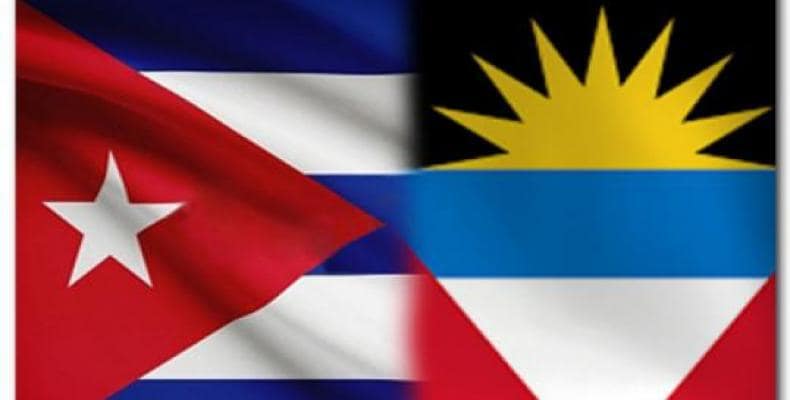
    In a significant diplomatic development, officials from five Eastern Caribbean nations operating Citizenship by Investment (CBI) programs convened with United States representatives to review substantial governance enhancements within the region’s economic citizenship framework. The high-level roundtable, hosted in Antigua and Barbuda, marked the fourth such collaborative meeting in approximately thirty months.

    Co-chaired by Eastern Caribbean Central Bank Governor Timothy NJ Antoine and US Treasury Acting Deputy Assistant Secretary Warren Ryan, the discussions included participation from international partners including the United Kingdom, European Commission, Organisation of Eastern Caribbean States Commission, and CARICOM IMPACS/Joint Regional Communications Centre. US Departments of State and Homeland Security also contributed to the multilateral dialogue.

    Participants acknowledged the region’s considerable advancements in implementing the comprehensive risk mitigation framework known as the ‘Six Principles,’ initially established during the inaugural US-Caribbean Roundtable in February 2023. These principles encompass collective agreements on application denials, mandatory interviews, enhanced background checks, systematic audits, retrieval mechanisms for revoked passports, and standardized protocols regarding applicants from Russia and Belarus.

    The timing of this meeting follows the landmark September 2025 signing of the agreement establishing the Eastern Caribbean Citizenship by Investment Regulatory Authority (ECCIRA), which all five participating nations have subsequently enacted into domestic legislation. This independent regional regulatory body is poised to commence operations in 2026, tasked with establishing uniform industry standards, enforcing compliance, and publishing annual transparency reports.

    The reform initiative has been characterized by extensive stakeholder consultations and robust political support, reflecting the critical importance of CBI programs to the economic resilience and socio-development objectives of Eastern Caribbean nations. The participating countries reaffirmed their commitment to ECCIRA’s successful implementation while welcoming continued international partnership in strengthening program integrity and sustainability.